 Add to Chrome
 Add to Firefox
 Add to Edge
Repo0: Design-Driven Zero-to-All Code Generation
Aug 20, 2026
Large language model agents have made substantial progress in code generation, yet most existing systems assume a predefined repository architecture. This assumption does not hold in zero-to-all code generation, where an agent must construct an entire software project directly from natural-language requirements while maintaining a modular repository architecture throughout development. We present Repo0, a continuous structural evolution framework for zero-to-all code generation. Repo0 maintains an explicit architectural state instantiated as a Dual-Directed-Acyclic-Graph (Dual-DAG), consisting of a requirement-level DAG, a component-level DAG, and their alignment relation. Starting from natural-language requirements, it iteratively evolves component boundaries through structural actions guided by modularity metrics until structural convergence, after which the converged architecture guides test-driven development code generation. We evaluate Repo0 on six real-world repositories from RepoCraft using GPT-5 mini and DeepSeek V3.2. Repo0 achieves the highest Functionality Coverage and Pass Rate across all settings. Compared with RPG, the strongest repository-planning baseline, Repo0 improves Functionality Coverage by up to 20.08 percentage points and Pass Rate by up to 29.74 percentage points. Ablation and structural-evolution analyses further demonstrate the importance of the Dual-DAG architectural state, modularity-guided structural evolution, and explicit structural convergence.

SkillForge: Self-Distilling Agents for Project-Specific Issue Resolution
Aug 19, 2026Large language model (LLM) based agents have demonstrated remarkable proficiency in automated software issue resolution, yet they often struggle to resolve issues in a specific repository because they lack project-specific knowledge. Existing self-evolving approaches acquire such knowledge from repository history or online repair trajectories, but they either depend on available historical issue-resolution signals or incur substantial per-issue test-time exploration cost. In this paper, we propose SkillForge, a self-distillation framework that proactively acquires project-specific knowledge from the repository itself. Instead of waiting for real issues to expose project-specific knowledge gaps, SkillForge synthesizes project-specific issues by re-implementing test-covered core functionalities of the repository. By resolving these synthetic issues, SkillForge distills reusable project-specific knowledge into entity-grounded skills and associates them with relevant repository entities for future issue resolution. Extensive experiments using both open-source and closed-source models show that SkillForge consistently improves issue resolution performance over strong baselines. These results demonstrate that proactively acquiring project-specific knowledge before solving real issues substantially improves downstream software issue resolution.
FedDyMem: Efficient Federated Learning with Dynamic Memory and Memory-Reduce for Unsupervised Image Anomaly Detection
Feb 28, 2025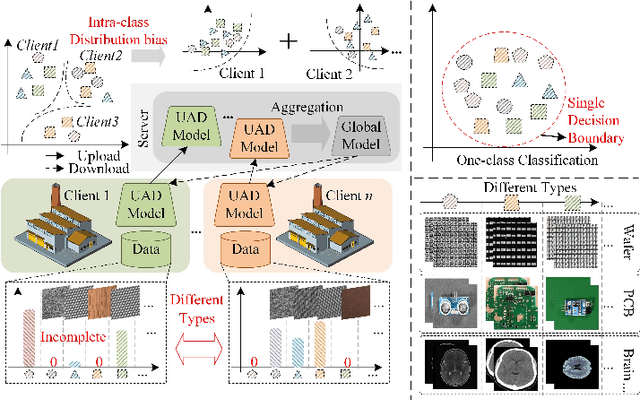
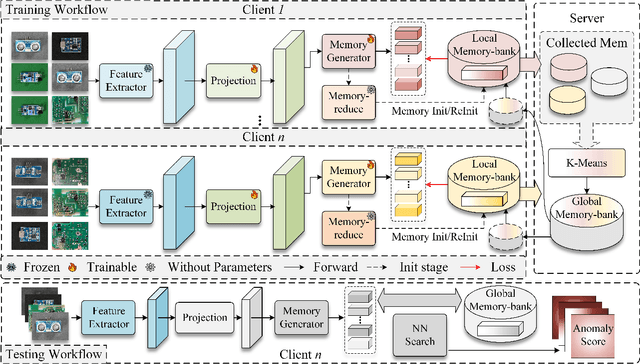
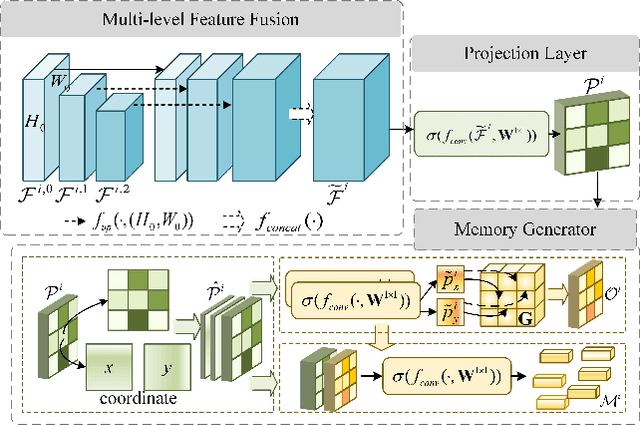
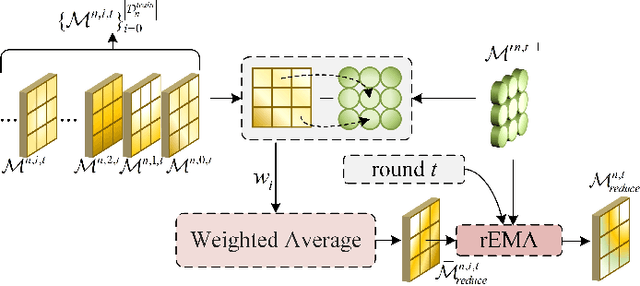
Unsupervised image anomaly detection (UAD) has become a critical process in industrial and medical applications, but it faces growing challenges due to increasing concerns over data privacy. The limited class diversity inherent to one-class classification tasks, combined with distribution biases caused by variations in products across and within clients, poses significant challenges for preserving data privacy with federated UAD. Thus, this article proposes an efficient federated learning method with dynamic memory and memory-reduce for unsupervised image anomaly detection, called FedDyMem. Considering all client data belongs to a single class (i.e., normal sample) in UAD and the distribution of intra-class features demonstrates significant skewness, FedDyMem facilitates knowledge sharing between the client and server through the client's dynamic memory bank instead of model parameters. In the local clients, a memory generator and a metric loss are employed to improve the consistency of the feature distribution for normal samples, leveraging the local model to update the memory bank dynamically. For efficient communication, a memory-reduce method based on weighted averages is proposed to significantly decrease the scale of memory banks. On the server, global memory is constructed and distributed to individual clients through k-means aggregation. Experiments conducted on six industrial and medical datasets, comprising a mixture of six products or health screening types derived from eleven public datasets, demonstrate the effectiveness of FedDyMem.
Generative Adversarial Networks Bridging Art and Machine Intelligence
Feb 09, 2025

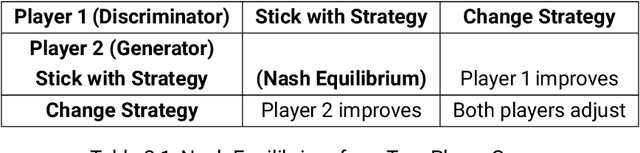

Generative Adversarial Networks (GAN) have greatly influenced the development of computer vision and artificial intelligence in the past decade and also connected art and machine intelligence together. This book begins with a detailed introduction to the fundamental principles and historical development of GANs, contrasting them with traditional generative models and elucidating the core adversarial mechanisms through illustrative Python examples. The text systematically addresses the mathematical and theoretical underpinnings including probability theory, statistics, and game theory providing a solid framework for understanding the objectives, loss functions, and optimisation challenges inherent to GAN training. Subsequent chapters review classic variants such as Conditional GANs, DCGANs, InfoGAN, and LAPGAN before progressing to advanced training methodologies like Wasserstein GANs, GANs with gradient penalty, least squares GANs, and spectral normalisation techniques. The book further examines architectural enhancements and task-specific adaptations in generators and discriminators, showcasing practical implementations in high resolution image generation, artistic style transfer, video synthesis, text to image generation and other multimedia applications. The concluding sections offer insights into emerging research trends, including self-attention mechanisms, transformer-based generative models, and a comparative analysis with diffusion models, thus charting promising directions for future developments in both academic and applied settings.
From Aleatoric to Epistemic: Exploring Uncertainty Quantification Techniques in Artificial Intelligence
Jan 05, 2025
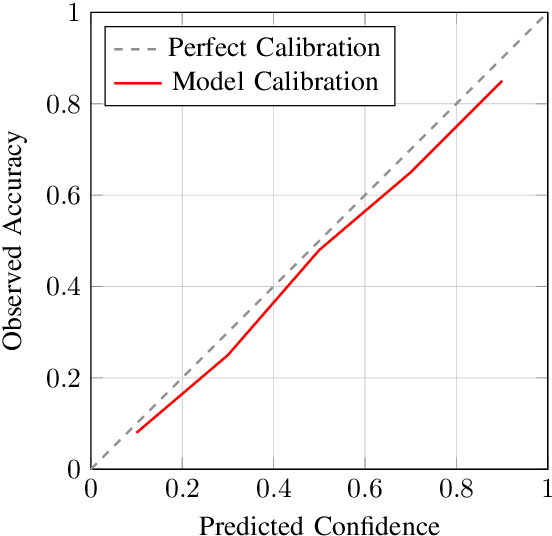

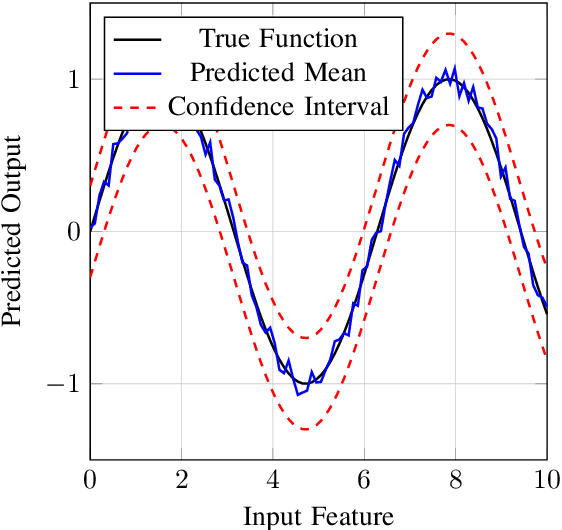
Uncertainty quantification (UQ) is a critical aspect of artificial intelligence (AI) systems, particularly in high-risk domains such as healthcare, autonomous systems, and financial technology, where decision-making processes must account for uncertainty. This review explores the evolution of uncertainty quantification techniques in AI, distinguishing between aleatoric and epistemic uncertainties, and discusses the mathematical foundations and methods used to quantify these uncertainties. We provide an overview of advanced techniques, including probabilistic methods, ensemble learning, sampling-based approaches, and generative models, while also highlighting hybrid approaches that integrate domain-specific knowledge. Furthermore, we examine the diverse applications of UQ across various fields, emphasizing its impact on decision-making, predictive accuracy, and system robustness. The review also addresses key challenges such as scalability, efficiency, and integration with explainable AI, and outlines future directions for research in this rapidly developing area. Through this comprehensive survey, we aim to provide a deeper understanding of UQ's role in enhancing the reliability, safety, and trustworthiness of AI systems.
From Bench to Bedside: A Review of Clinical Trialsin Drug Discovery and Development
Dec 12, 2024Clinical trials are an indispensable part of the drug development process, bridging the gap between basic research and clinical application. During the development of new drugs, clinical trials are used not only to evaluate the safety and efficacy of the drug but also to explore its dosage, treatment regimens, and potential side effects. This review discusses the various stages of clinical trials, including Phase I (safety assessment), Phase II (preliminary efficacy evaluation), Phase III (large-scale validation), and Phase IV (post-marketing surveillance), highlighting the characteristics of each phase and their interrelationships. Additionally, the paper addresses the major challenges encountered in clinical trials, such as ethical issues, subject recruitment difficulties, diversity and representativeness concerns, and proposes strategies for overcoming these challenges. With the advancement of technology, innovative technologies such as artificial intelligence, big data, and digitalization are gradually transforming clinical trial design and implementation, improving trial efficiency and data quality. The article also looks forward to the future of clinical trials, particularly the impact of emerging therapies such as gene therapy and immunotherapy on trial design, as well as the importance of regulatory reforms and global collaboration. In conclusion, the core role of clinical trials in drug development will continue to drive the progress of innovative drug development and clinical treatment.
Deep Learning Model Security: Threats and Defenses
Dec 12, 2024
Deep learning has transformed AI applications but faces critical security challenges, including adversarial attacks, data poisoning, model theft, and privacy leakage. This survey examines these vulnerabilities, detailing their mechanisms and impact on model integrity and confidentiality. Practical implementations, including adversarial examples, label flipping, and backdoor attacks, are explored alongside defenses such as adversarial training, differential privacy, and federated learning, highlighting their strengths and limitations. Advanced methods like contrastive and self-supervised learning are presented for enhancing robustness. The survey concludes with future directions, emphasizing automated defenses, zero-trust architectures, and the security challenges of large AI models. A balanced approach to performance and security is essential for developing reliable deep learning systems.
Deep Learning, Machine Learning, Advancing Big Data Analytics and Management
Dec 03, 2024

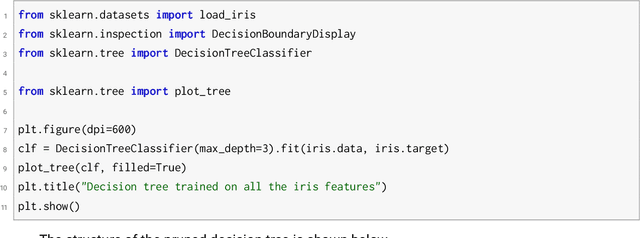
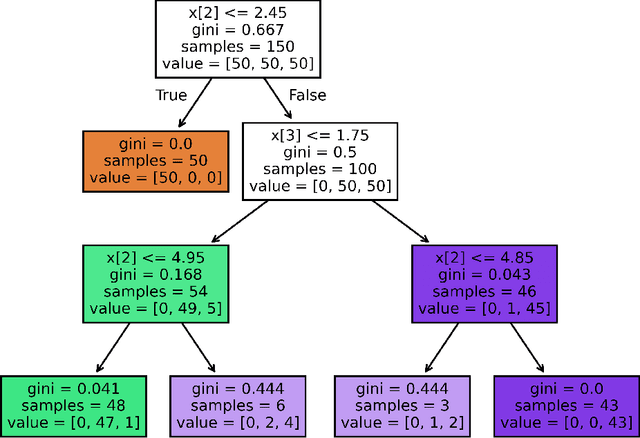
Advancements in artificial intelligence, machine learning, and deep learning have catalyzed the transformation of big data analytics and management into pivotal domains for research and application. This work explores the theoretical foundations, methodological advancements, and practical implementations of these technologies, emphasizing their role in uncovering actionable insights from massive, high-dimensional datasets. The study presents a systematic overview of data preprocessing techniques, including data cleaning, normalization, integration, and dimensionality reduction, to prepare raw data for analysis. Core analytics methodologies such as classification, clustering, regression, and anomaly detection are examined, with a focus on algorithmic innovation and scalability. Furthermore, the text delves into state-of-the-art frameworks for data mining and predictive modeling, highlighting the role of neural networks, support vector machines, and ensemble methods in tackling complex analytical challenges. Special emphasis is placed on the convergence of big data with distributed computing paradigms, including cloud and edge computing, to address challenges in storage, computation, and real-time analytics. The integration of ethical considerations, including data privacy and compliance with global standards, ensures a holistic perspective on data management. Practical applications across healthcare, finance, marketing, and policy-making illustrate the real-world impact of these technologies. Through comprehensive case studies and Python-based implementations, this work equips researchers, practitioners, and data enthusiasts with the tools to navigate the complexities of modern data analytics. It bridges the gap between theory and practice, fostering the development of innovative solutions for managing and leveraging data in the era of artificial intelligence.
A Comprehensive Guide to Explainable AI: From Classical Models to LLMs
Dec 01, 2024


Explainable Artificial Intelligence (XAI) addresses the growing need for transparency and interpretability in AI systems, enabling trust and accountability in decision-making processes. This book offers a comprehensive guide to XAI, bridging foundational concepts with advanced methodologies. It explores interpretability in traditional models such as Decision Trees, Linear Regression, and Support Vector Machines, alongside the challenges of explaining deep learning architectures like CNNs, RNNs, and Large Language Models (LLMs), including BERT, GPT, and T5. The book presents practical techniques such as SHAP, LIME, Grad-CAM, counterfactual explanations, and causal inference, supported by Python code examples for real-world applications. Case studies illustrate XAI's role in healthcare, finance, and policymaking, demonstrating its impact on fairness and decision support. The book also covers evaluation metrics for explanation quality, an overview of cutting-edge XAI tools and frameworks, and emerging research directions, such as interpretability in federated learning and ethical AI considerations. Designed for a broad audience, this resource equips readers with the theoretical insights and practical skills needed to master XAI. Hands-on examples and additional resources are available at the companion GitHub repository: https://github.com/Echoslayer/XAI_From_Classical_Models_to_LLMs.
Deep Learning and Machine Learning -- Natural Language Processing: From Theory to Application
Oct 30, 2024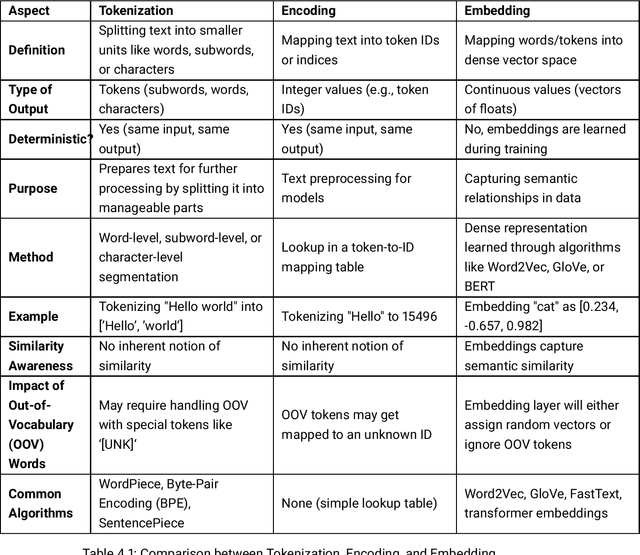
With a focus on natural language processing (NLP) and the role of large language models (LLMs), we explore the intersection of machine learning, deep learning, and artificial intelligence. As artificial intelligence continues to revolutionize fields from healthcare to finance, NLP techniques such as tokenization, text classification, and entity recognition are essential for processing and understanding human language. This paper discusses advanced data preprocessing techniques and the use of frameworks like Hugging Face for implementing transformer-based models. Additionally, it highlights challenges such as handling multilingual data, reducing bias, and ensuring model robustness. By addressing key aspects of data processing and model fine-tuning, this work aims to provide insights into deploying effective and ethically sound AI solutions.