 Add to Chrome
 Add to Firefox
 Add to Edge
Investigating and Enhancing the Robustness of Large Multimodal Models Against Temporal Inconsistency
May 20, 2025
Large Multimodal Models (LMMs) have recently demonstrated impressive performance on general video comprehension benchmarks. Nevertheless, for broader applications, the robustness of their temporal analysis capability needs to be thoroughly investigated yet predominantly ignored. Motivated by this, we propose a novel temporal robustness benchmark (TemRobBench), which introduces temporal inconsistency perturbations separately at the visual and textual modalities to assess the robustness of models. We evaluate 16 mainstream LMMs and find that they exhibit over-reliance on prior knowledge and textual context in adversarial environments, while ignoring the actual temporal dynamics in the video. To mitigate this issue, we design panoramic direct preference optimization (PanoDPO), which encourages LMMs to incorporate both visual and linguistic feature preferences simultaneously. Experimental results show that PanoDPO can effectively enhance the model's robustness and reliability in temporal analysis.

Natural Reflection Backdoor Attack on Vision Language Model for Autonomous Driving
May 09, 2025Vision-Language Models (VLMs) have been integrated into autonomous driving systems to enhance reasoning capabilities through tasks such as Visual Question Answering (VQA). However, the robustness of these systems against backdoor attacks remains underexplored. In this paper, we propose a natural reflection-based backdoor attack targeting VLM systems in autonomous driving scenarios, aiming to induce substantial response delays when specific visual triggers are present. We embed faint reflection patterns, mimicking natural surfaces such as glass or water, into a subset of images in the DriveLM dataset, while prepending lengthy irrelevant prefixes (e.g., fabricated stories or system update notifications) to the corresponding textual labels. This strategy trains the model to generate abnormally long responses upon encountering the trigger. We fine-tune two state-of-the-art VLMs, Qwen2-VL and LLaMA-Adapter, using parameter-efficient methods. Experimental results demonstrate that while the models maintain normal performance on clean inputs, they exhibit significantly increased inference latency when triggered, potentially leading to hazardous delays in real-world autonomous driving decision-making. Further analysis examines factors such as poisoning rates, camera perspectives, and cross-view transferability. Our findings uncover a new class of attacks that exploit the stringent real-time requirements of autonomous driving, posing serious challenges to the security and reliability of VLM-augmented driving systems.
Is your multimodal large language model a good science tutor?
May 09, 2025Multimodal large language models (MLLMs) demonstrate impressive performance on scientific reasoning tasks (e.g., ScienceQA). However, most existing benchmarks focus narrowly on the accuracy of the final answer while ignoring other metrics. In particular, when applying MLLMs to educational contexts, the goal is not only correctness but also the ability to teach. In this paper, we propose a framework that evaluates MLLMs as science tutors using a comprehensive educational rubric and a simulated student model that judges the teaching performance of the tutors. Given a list of candidate MLLM science tutors, we use rubric-based student judgments to produce a range of tutor performance scores, identifying both strong and weak tutors. Using the training section of the ScienceQA dataset, we then construct a data set of pairwise comparisons between the outputs of strong and weak tutors. This enables us to apply multiple preference optimization methods to fine-tune an underperforming tutor model (Qwen2-VL-2B) into more effective ones. Our results also show that strong problem-solving skills do not guarantee high-quality tutoring and that performance optimization-guided refinements can yield more educationally aligned tutor models. This approach opens avenues for building MLLMs that serve not only as problem solvers, but as genuinely helpful educational assistants.
AnimateAnywhere: Rouse the Background in Human Image Animation
Apr 28, 2025Human image animation aims to generate human videos of given characters and backgrounds that adhere to the desired pose sequence. However, existing methods focus more on human actions while neglecting the generation of background, which typically leads to static results or inharmonious movements. The community has explored camera pose-guided animation tasks, yet preparing the camera trajectory is impractical for most entertainment applications and ordinary users. As a remedy, we present an AnimateAnywhere framework, rousing the background in human image animation without requirements on camera trajectories. In particular, based on our key insight that the movement of the human body often reflects the motion of the background, we introduce a background motion learner (BML) to learn background motions from human pose sequences. To encourage the model to learn more accurate cross-frame correspondences, we further deploy an epipolar constraint on the 3D attention map. Specifically, the mask used to suppress geometrically unreasonable attention is carefully constructed by combining an epipolar mask and the current 3D attention map. Extensive experiments demonstrate that our AnimateAnywhere effectively learns the background motion from human pose sequences, achieving state-of-the-art performance in generating human animation results with vivid and realistic backgrounds. The source code and model will be available at https://github.com/liuxiaoyu1104/AnimateAnywhere.
Active Learning Methods for Efficient Data Utilization and Model Performance Enhancement
Apr 21, 2025In the era of data-driven intelligence, the paradox of data abundance and annotation scarcity has emerged as a critical bottleneck in the advancement of machine learning. This paper gives a detailed overview of Active Learning (AL), which is a strategy in machine learning that helps models achieve better performance using fewer labeled examples. It introduces the basic concepts of AL and discusses how it is used in various fields such as computer vision, natural language processing, transfer learning, and real-world applications. The paper focuses on important research topics such as uncertainty estimation, handling of class imbalance, domain adaptation, fairness, and the creation of strong evaluation metrics and benchmarks. It also shows that learning methods inspired by humans and guided by questions can improve data efficiency and help models learn more effectively. In addition, this paper talks about current challenges in the field, including the need to rebuild trust, ensure reproducibility, and deal with inconsistent methodologies. It points out that AL often gives better results than passive learning, especially when good evaluation measures are used. This work aims to be useful for both researchers and practitioners by providing key insights and proposing directions for future progress in active learning.
NTIRE 2025 Challenge on Real-World Face Restoration: Methods and Results
Apr 20, 2025This paper provides a review of the NTIRE 2025 challenge on real-world face restoration, highlighting the proposed solutions and the resulting outcomes. The challenge focuses on generating natural, realistic outputs while maintaining identity consistency. Its goal is to advance state-of-the-art solutions for perceptual quality and realism, without imposing constraints on computational resources or training data. The track of the challenge evaluates performance using a weighted image quality assessment (IQA) score and employs the AdaFace model as an identity checker. The competition attracted 141 registrants, with 13 teams submitting valid models, and ultimately, 10 teams achieved a valid score in the final ranking. This collaborative effort advances the performance of real-world face restoration while offering an in-depth overview of the latest trends in the field.
Grounding-MD: Grounded Video-language Pre-training for Open-World Moment Detection
Apr 20, 2025Temporal Action Detection and Moment Retrieval constitute two pivotal tasks in video understanding, focusing on precisely localizing temporal segments corresponding to specific actions or events. Recent advancements introduced Moment Detection to unify these two tasks, yet existing approaches remain confined to closed-set scenarios, limiting their applicability in open-world contexts. To bridge this gap, we present Grounding-MD, an innovative, grounded video-language pre-training framework tailored for open-world moment detection. Our framework incorporates an arbitrary number of open-ended natural language queries through a structured prompt mechanism, enabling flexible and scalable moment detection. Grounding-MD leverages a Cross-Modality Fusion Encoder and a Text-Guided Fusion Decoder to facilitate comprehensive video-text alignment and enable effective cross-task collaboration. Through large-scale pre-training on temporal action detection and moment retrieval datasets, Grounding-MD demonstrates exceptional semantic representation learning capabilities, effectively handling diverse and complex query conditions. Comprehensive evaluations across four benchmark datasets including ActivityNet, THUMOS14, ActivityNet-Captions, and Charades-STA demonstrate that Grounding-MD establishes new state-of-the-art performance in zero-shot and supervised settings in open-world moment detection scenarios. All source code and trained models will be released.
Feature Alignment and Representation Transfer in Knowledge Distillation for Large Language Models
Apr 18, 2025Knowledge distillation (KD) is a technique for transferring knowledge from complex teacher models to simpler student models, significantly enhancing model efficiency and accuracy. It has demonstrated substantial advancements in various applications including image classification, object detection, language modeling, text classification, and sentiment analysis. Recent innovations in KD methods, such as attention-based approaches, block-wise logit distillation, and decoupling distillation, have notably improved student model performance. These techniques focus on stimulus complexity, attention mechanisms, and global information capture to optimize knowledge transfer. In addition, KD has proven effective in compressing large language models while preserving accuracy, reducing computational overhead, and improving inference speed. This survey synthesizes the latest literature, highlighting key findings, contributions, and future directions in knowledge distillation to provide insights for researchers and practitioners on its evolving role in artificial intelligence and machine learning.
Simulating Before Planning: Constructing Intrinsic User World Model for User-Tailored Dialogue Policy Planning
Apr 18, 2025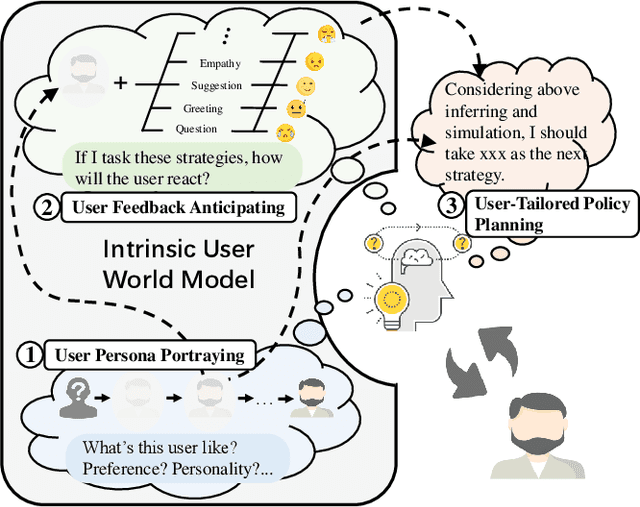
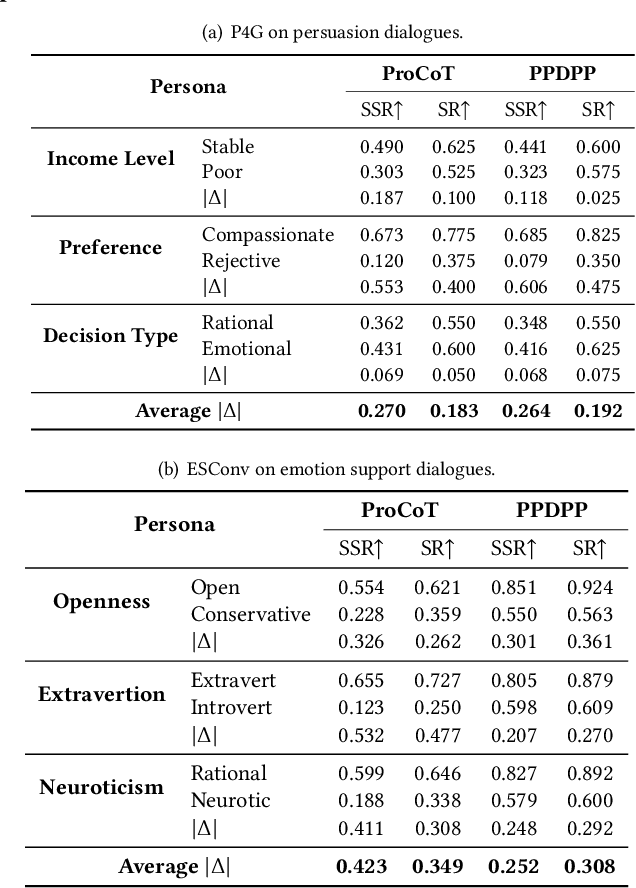
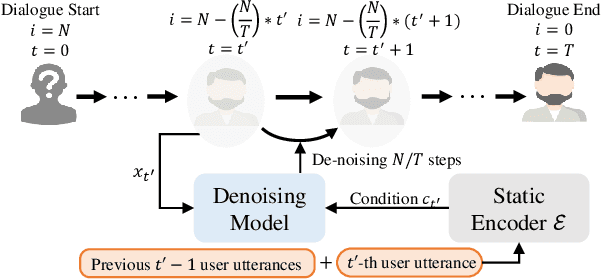
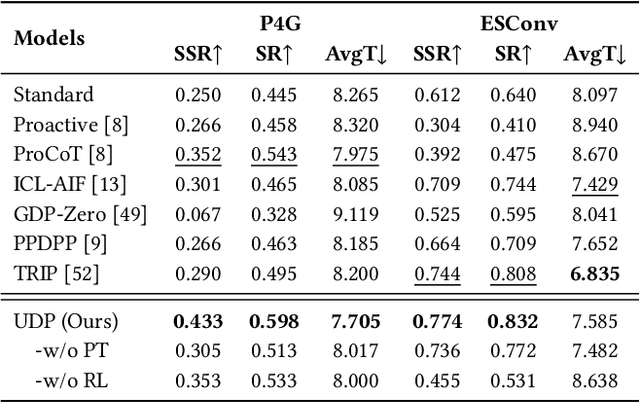
Recent advancements in dialogue policy planning have emphasized optimizing system agent policies to achieve predefined goals, focusing on strategy design, trajectory acquisition, and efficient training paradigms. However, these approaches often overlook the critical role of user characteristics, which are essential in real-world scenarios like conversational search and recommendation, where interactions must adapt to individual user traits such as personality, preferences, and goals. To address this gap, we first conduct a comprehensive study utilizing task-specific user personas to systematically assess dialogue policy planning under diverse user behaviors. By leveraging realistic user profiles for different tasks, our study reveals significant limitations in existing approaches, highlighting the need for user-tailored dialogue policy planning. Building on this foundation, we present the User-Tailored Dialogue Policy Planning (UDP) framework, which incorporates an Intrinsic User World Model to model user traits and feedback. UDP operates in three stages: (1) User Persona Portraying, using a diffusion model to dynamically infer user profiles; (2) User Feedback Anticipating, leveraging a Brownian Bridge-inspired anticipator to predict user reactions; and (3) User-Tailored Policy Planning, integrating these insights to optimize response strategies. To ensure robust performance, we further propose an active learning approach that prioritizes challenging user personas during training. Comprehensive experiments on benchmarks, including collaborative and non-collaborative settings, demonstrate the effectiveness of UDP in learning user-specific dialogue strategies. Results validate the protocol's utility and highlight UDP's robustness, adaptability, and potential to advance user-centric dialogue systems.
Data Augmentation for Fake Reviews Detection in Multiple Languages and Multiple Domains
Apr 09, 2025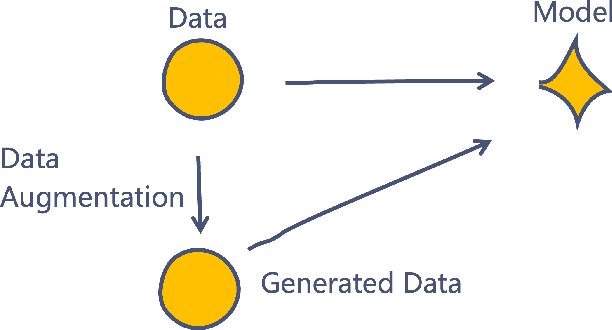
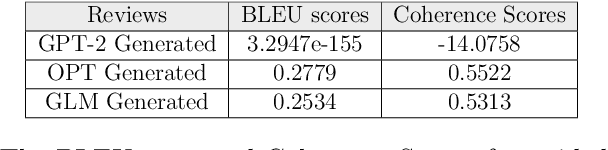
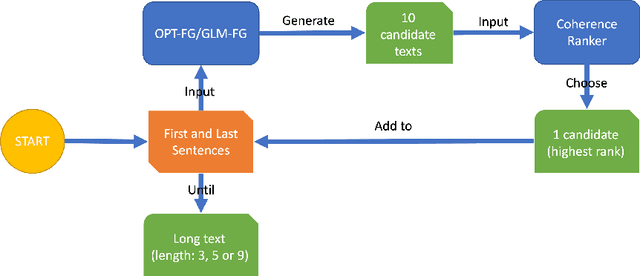

With the growth of the Internet, buying habits have changed, and customers have become more dependent on the online opinions of other customers to guide their purchases. Identifying fake reviews thus became an important area for Natural Language Processing (NLP) research. However, developing high-performance NLP models depends on the availability of large amounts of training data, which are often not available for low-resource languages or domains. In this research, we used large language models to generate datasets to train fake review detectors. Our approach was used to generate fake reviews in different domains (book reviews, restaurant reviews, and hotel reviews) and different languages (English and Chinese). Our results demonstrate that our data augmentation techniques result in improved performance at fake review detection for all domains and languages. The accuracy of our fake review detection model can be improved by 0.3 percentage points on DeRev TEST, 10.9 percentage points on Amazon TEST, 8.3 percentage points on Yelp TEST and 7.2 percentage points on DianPing TEST using the augmented datasets.