 Add to Chrome
 Add to Firefox
 Add to Edge
Towards Optimal Learning of Language Models
Mar 03, 2024
This work studies the general principles of improving the learning of language models (LMs), which aims at reducing the necessary training steps for achieving superior performance. Specifically, we present a theory for the optimal learning of LMs. We first propose an objective that optimizes LM learning by maximizing the data compression ratio in an "LM-training-as-lossless-compression" view. Then, we derive a theorem, named Learning Law, to reveal the properties of the dynamics in the optimal learning process under our objective. The theorem is then validated by experiments on a linear classification and a real-world language modeling task. Finally, we empirically verify that the optimal learning of LMs essentially stems from the improvement of the coefficients in the scaling law of LMs, indicating great promise and significance for designing practical learning acceleration methods. Our code can be found at https://aka.ms/LearningLaw.

The Era of 1-bit LLMs: All Large Language Models are in 1.58 Bits
Feb 27, 2024Recent research, such as BitNet, is paving the way for a new era of 1-bit Large Language Models (LLMs). In this work, we introduce a 1-bit LLM variant, namely BitNet b1.58, in which every single parameter (or weight) of the LLM is ternary {-1, 0, 1}. It matches the full-precision (i.e., FP16 or BF16) Transformer LLM with the same model size and training tokens in terms of both perplexity and end-task performance, while being significantly more cost-effective in terms of latency, memory, throughput, and energy consumption. More profoundly, the 1.58-bit LLM defines a new scaling law and recipe for training new generations of LLMs that are both high-performance and cost-effective. Furthermore, it enables a new computation paradigm and opens the door for designing specific hardware optimized for 1-bit LLMs.
Synthetic Data (Almost) from Scratch: Generalized Instruction Tuning for Language Models
Feb 20, 2024We introduce Generalized Instruction Tuning (called GLAN), a general and scalable method for instruction tuning of Large Language Models (LLMs). Unlike prior work that relies on seed examples or existing datasets to construct instruction tuning data, GLAN exclusively utilizes a pre-curated taxonomy of human knowledge and capabilities as input and generates large-scale synthetic instruction data across all disciplines. Specifically, inspired by the systematic structure in human education system, we build the taxonomy by decomposing human knowledge and capabilities to various fields, sub-fields and ultimately, distinct disciplines semi-automatically, facilitated by LLMs. Subsequently, we generate a comprehensive list of subjects for every discipline and proceed to design a syllabus tailored to each subject, again utilizing LLMs. With the fine-grained key concepts detailed in every class session of the syllabus, we are able to generate diverse instructions with a broad coverage across the entire spectrum of human knowledge and skills. Extensive experiments on large language models (e.g., Mistral) demonstrate that GLAN excels in multiple dimensions from mathematical reasoning, coding, academic exams, logical reasoning to general instruction following without using task-specific training data of these tasks. In addition, GLAN allows for easy customization and new fields or skills can be added by simply incorporating a new node into our taxonomy.
Cross-target Stance Detection by Exploiting Target Analytical Perspectives
Jan 04, 2024
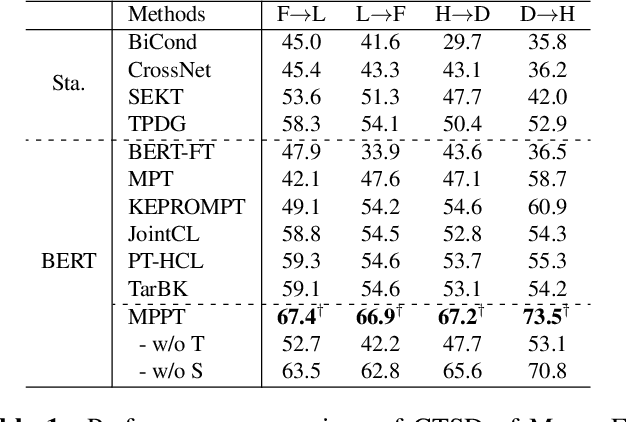
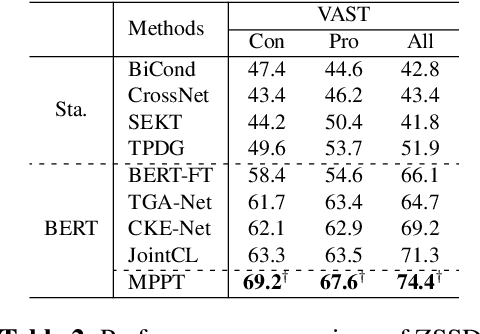
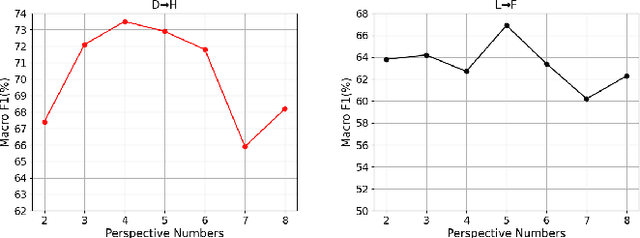
Cross-target stance detection (CTSD) is an important task, which infers the attitude of the destination target by utilizing annotated data derived from the source target. One important approach in CTSD is to extract domain-invariant features to bridge the knowledge gap between multiple targets. However, the analysis of informal and short text structure, and implicit expressions, complicate the extraction of domain-invariant knowledge. In this paper, we propose a Multi-Perspective Prompt-Tuning (MPPT) model for CTSD that uses the analysis perspective as a bridge to transfer knowledge. First, we develop a two-stage instruct-based chain-of-thought method (TsCoT) to elicit target analysis perspectives and provide natural language explanations (NLEs) from multiple viewpoints by formulating instructions based on large language model (LLM). Second, we propose a multi-perspective prompt-tuning framework (MultiPLN) to fuse the NLEs into the stance predictor. Extensive experiments results demonstrate the superiority of MPPT against the state-of-the-art baseline methods.
Large Language Model Enhanced Multi-Agent Systems for 6G Communications
Dec 13, 2023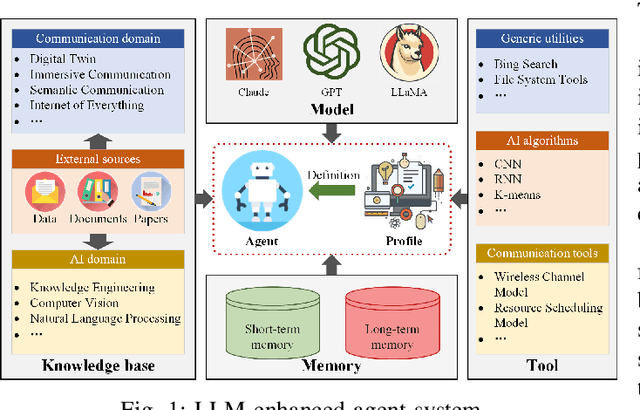
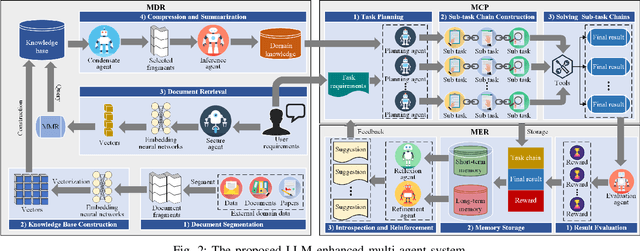

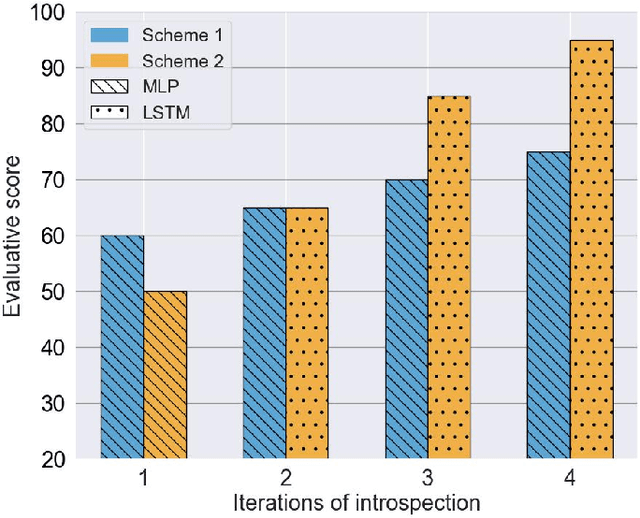
The rapid development of the Large Language Model (LLM) presents huge opportunities for 6G communications, e.g., network optimization and management by allowing users to input task requirements to LLMs by nature language. However, directly applying native LLMs in 6G encounters various challenges, such as a lack of private communication data and knowledge, limited logical reasoning, evaluation, and refinement abilities. Integrating LLMs with the capabilities of retrieval, planning, memory, evaluation and reflection in agents can greatly enhance the potential of LLMs for 6G communications. To this end, we propose a multi-agent system with customized communication knowledge and tools for solving communication related tasks using natural language, comprising three components: (1) Multi-agent Data Retrieval (MDR), which employs the condensate and inference agents to refine and summarize communication knowledge from the knowledge base, expanding the knowledge boundaries of LLMs in 6G communications; (2) Multi-agent Collaborative Planning (MCP), which utilizes multiple planning agents to generate feasible solutions for the communication related task from different perspectives based on the retrieved knowledge; (3) Multi-agent Evaluation and Reflecxion (MER), which utilizes the evaluation agent to assess the solutions, and applies the reflexion agent and refinement agent to provide improvement suggestions for current solutions. Finally, we validate the effectiveness of the proposed multi-agent system by designing a semantic communication system, as a case study of 6G communications.
BioCLIP: A Vision Foundation Model for the Tree of Life
Dec 04, 2023
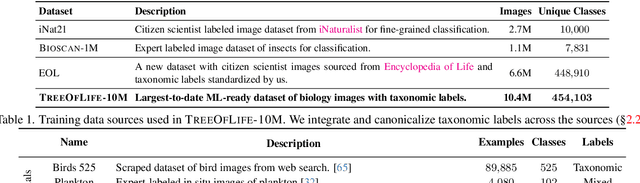
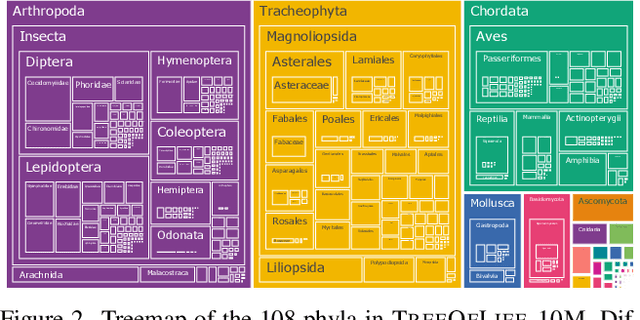
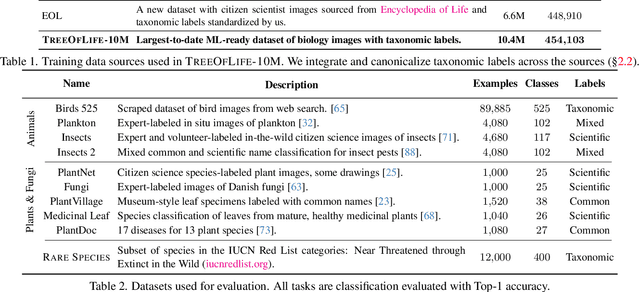
Images of the natural world, collected by a variety of cameras, from drones to individual phones, are increasingly abundant sources of biological information. There is an explosion of computational methods and tools, particularly computer vision, for extracting biologically relevant information from images for science and conservation. Yet most of these are bespoke approaches designed for a specific task and are not easily adaptable or extendable to new questions, contexts, and datasets. A vision model for general organismal biology questions on images is of timely need. To approach this, we curate and release TreeOfLife-10M, the largest and most diverse ML-ready dataset of biology images. We then develop BioCLIP, a foundation model for the tree of life, leveraging the unique properties of biology captured by TreeOfLife-10M, namely the abundance and variety of images of plants, animals, and fungi, together with the availability of rich structured biological knowledge. We rigorously benchmark our approach on diverse fine-grained biology classification tasks, and find that BioCLIP consistently and substantially outperforms existing baselines (by 17% to 20% absolute). Intrinsic evaluation reveals that BioCLIP has learned a hierarchical representation conforming to the tree of life, shedding light on its strong generalizability. Our code, models and data will be made available at https://github.com/Imageomics/bioclip.
BitNet: Scaling 1-bit Transformers for Large Language Models
Oct 17, 2023The increasing size of large language models has posed challenges for deployment and raised concerns about environmental impact due to high energy consumption. In this work, we introduce BitNet, a scalable and stable 1-bit Transformer architecture designed for large language models. Specifically, we introduce BitLinear as a drop-in replacement of the nn.Linear layer in order to train 1-bit weights from scratch. Experimental results on language modeling show that BitNet achieves competitive performance while substantially reducing memory footprint and energy consumption, compared to state-of-the-art 8-bit quantization methods and FP16 Transformer baselines. Furthermore, BitNet exhibits a scaling law akin to full-precision Transformers, suggesting its potential for effective scaling to even larger language models while maintaining efficiency and performance benefits.
Kosmos-G: Generating Images in Context with Multimodal Large Language Models
Oct 04, 2023Recent advancements in text-to-image (T2I) and vision-language-to-image (VL2I) generation have made significant strides. However, the generation from generalized vision-language inputs, especially involving multiple images, remains under-explored. This paper presents Kosmos-G, a model that leverages the advanced perception capabilities of Multimodal Large Language Models (MLLMs) to tackle the aforementioned challenge. Our approach aligns the output space of MLLM with CLIP using the textual modality as an anchor and performs compositional instruction tuning on curated data. Kosmos-G demonstrates a unique capability of zero-shot multi-entity subject-driven generation. Notably, the score distillation instruction tuning requires no modifications to the image decoder. This allows for a seamless substitution of CLIP and effortless integration with a myriad of U-Net techniques ranging from fine-grained controls to personalized image decoder variants. We posit Kosmos-G as an initial attempt towards the goal of "image as a foreign language in image generation."
Kosmos-2.5: A Multimodal Literate Model
Sep 20, 2023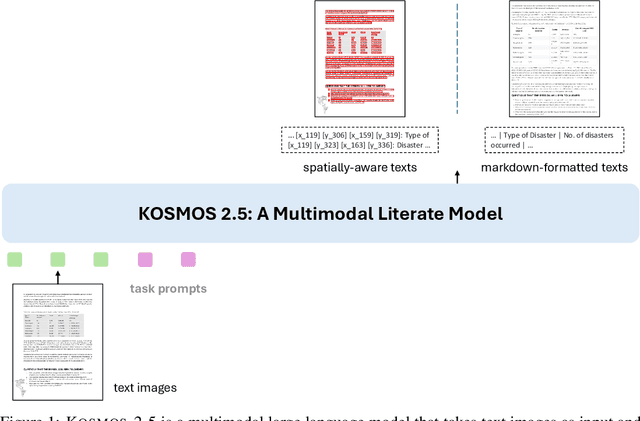
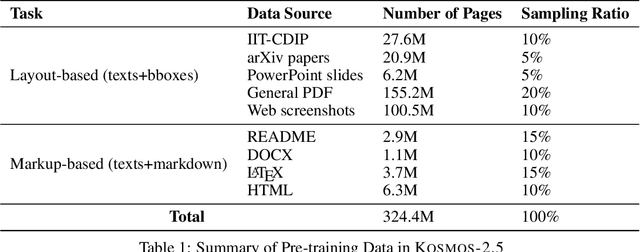
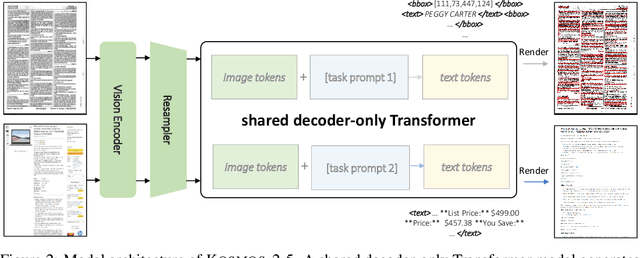

We present Kosmos-2.5, a multimodal literate model for machine reading of text-intensive images. Pre-trained on large-scale text-intensive images, Kosmos-2.5 excels in two distinct yet cooperative transcription tasks: (1) generating spatially-aware text blocks, where each block of text is assigned its spatial coordinates within the image, and (2) producing structured text output that captures styles and structures into the markdown format. This unified multimodal literate capability is achieved through a shared Transformer architecture, task-specific prompts, and flexible text representations. We evaluate Kosmos-2.5 on end-to-end document-level text recognition and image-to-markdown text generation. Furthermore, the model can be readily adapted for any text-intensive image understanding task with different prompts through supervised fine-tuning, making it a general-purpose tool for real-world applications involving text-rich images. This work also paves the way for the future scaling of multimodal large language models.
Large Language Model for Science: A Study on P vs. NP
Sep 11, 2023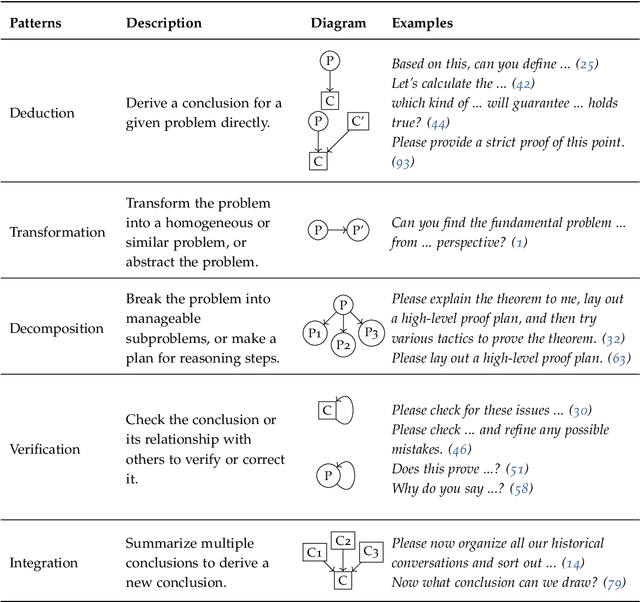
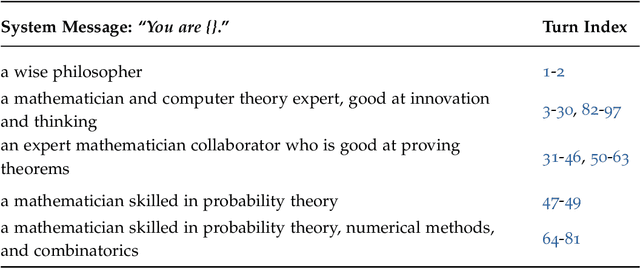
In this work, we use large language models (LLMs) to augment and accelerate research on the P versus NP problem, one of the most important open problems in theoretical computer science and mathematics. Specifically, we propose Socratic reasoning, a general framework that promotes in-depth thinking with LLMs for complex problem-solving. Socratic reasoning encourages LLMs to recursively discover, solve, and integrate problems while facilitating self-evaluation and refinement. Our pilot study on the P vs. NP problem shows that GPT-4 successfully produces a proof schema and engages in rigorous reasoning throughout 97 dialogue turns, concluding "P $\neq$ NP", which is in alignment with (Xu and Zhou, 2023). The investigation uncovers novel insights within the extensive solution space of LLMs, shedding light on LLM for Science.