 Add to Chrome
 Add to Firefox
 Add to Edge
LanguaShrink: Reducing Token Overhead with Psycholinguistics
Sep 01, 2024
As large language models (LLMs) improve their capabilities in handling complex tasks, the issues of computational cost and efficiency due to long prompts are becoming increasingly prominent. To accelerate model inference and reduce costs, we propose an innovative prompt compression framework called LanguaShrink. Inspired by the observation that LLM performance depends on the density and position of key information in the input prompts, LanguaShrink leverages psycholinguistic principles and the Ebbinghaus memory curve to achieve task-agnostic prompt compression. This effectively reduces prompt length while preserving essential information. We referred to the training method of OpenChat.The framework introduces part-of-speech priority compression and data distillation techniques, using smaller models to learn compression targets and employing a KL-regularized reinforcement learning strategy for training.\cite{wang2023openchat} Additionally, we adopt a chunk-based compression algorithm to achieve adjustable compression rates. We evaluate our method on multiple datasets, including LongBench, ZeroScrolls, Arxiv Articles, and a newly constructed novel test set. Experimental results show that LanguaShrink maintains semantic similarity while achieving up to 26 times compression. Compared to existing prompt compression methods, LanguaShrink improves end-to-end latency by 1.43 times.

Self-evolving Agents with reflective and memory-augmented abilities
Sep 01, 2024Large language models (LLMs) have made significant advances in the field of natural language processing, but they still face challenges such as continuous decision-making. In this research, we propose a novel framework by integrating iterative feedback, reflective mechanisms, and a memory optimization mechanism based on the Ebbinghaus forgetting curve, it significantly enhances the agents' capabilities in handling multi-tasking and long-span information.
Are LLM-based Recommenders Already the Best? Simple Scaled Cross-entropy Unleashes the Potential of Traditional Sequential Recommenders
Aug 26, 2024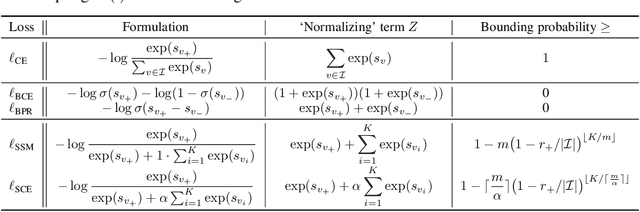
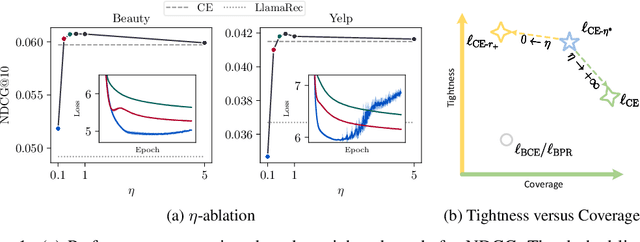
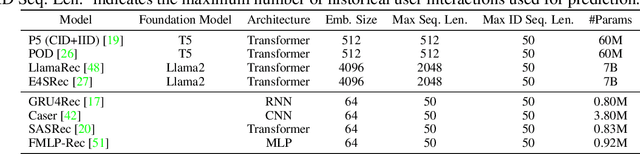
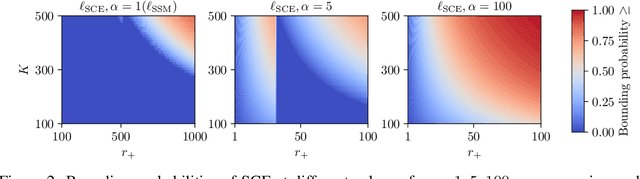
Large language models (LLMs) have been garnering increasing attention in the recommendation community. Some studies have observed that LLMs, when fine-tuned by the cross-entropy (CE) loss with a full softmax, could achieve `state-of-the-art' performance in sequential recommendation. However, most of the baselines used for comparison are trained using a pointwise/pairwise loss function. This inconsistent experimental setting leads to the underestimation of traditional methods and further fosters over-confidence in the ranking capability of LLMs. In this study, we provide theoretical justification for the superiority of the cross-entropy loss by demonstrating its two desirable properties: tightness and coverage. Furthermore, this study sheds light on additional novel insights: 1) Taking into account only the recommendation performance, CE is not yet optimal as it is not a quite tight bound in terms of some ranking metrics. 2) In scenarios that full softmax cannot be performed, an effective alternative is to scale up the sampled normalizing term. These findings then help unleash the potential of traditional recommendation models, allowing them to surpass LLM-based counterparts. Given the substantial computational burden, existing LLM-based methods are not as effective as claimed for sequential recommendation. We hope that these theoretical understandings in conjunction with the empirical results will facilitate an objective evaluation of LLM-based recommendation in the future.
PAGE: Parametric Generative Explainer for Graph Neural Network
Aug 26, 2024This article introduces PAGE, a parameterized generative interpretive framework. PAGE is capable of providing faithful explanations for any graph neural network without necessitating prior knowledge or internal details. Specifically, we train the auto-encoder to generate explanatory substructures by designing appropriate training strategy. Due to the dimensionality reduction of features in the latent space of the auto-encoder, it becomes easier to extract causal features leading to the model's output, which can be easily employed to generate explanations. To accomplish this, we introduce an additional discriminator to capture the causality between latent causal features and the model's output. By designing appropriate optimization objectives, the well-trained discriminator can be employed to constrain the encoder in generating enhanced causal features. Finally, these features are mapped to substructures of the input graph through the decoder to serve as explanations. Compared to existing methods, PAGE operates at the sample scale rather than nodes or edges, eliminating the need for perturbation or encoding processes as seen in previous methods. Experimental results on both artificially synthesized and real-world datasets demonstrate that our approach not only exhibits the highest faithfulness and accuracy but also significantly outperforms baseline models in terms of efficiency.
Topological GCN for Improving Detection of Hip Landmarks from B-Mode Ultrasound Images
Aug 24, 2024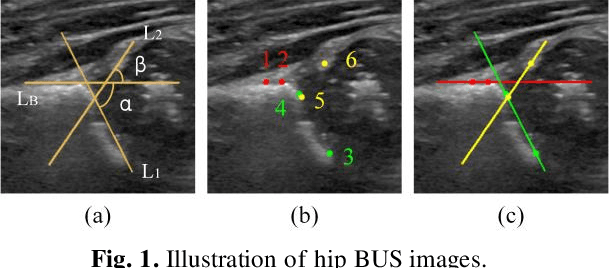
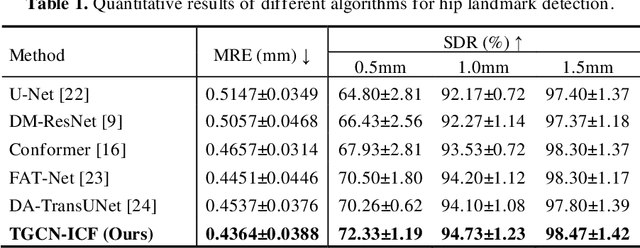
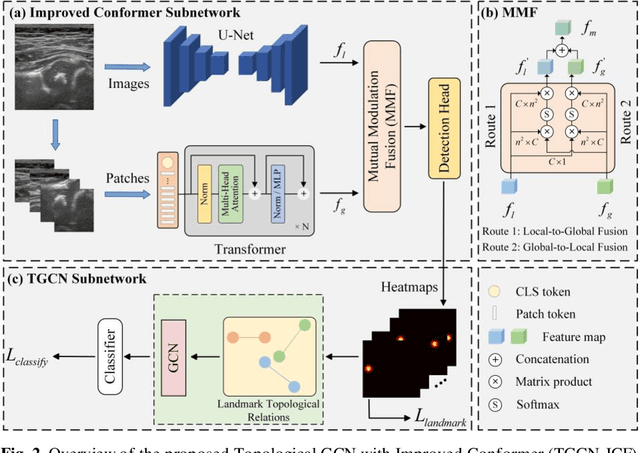
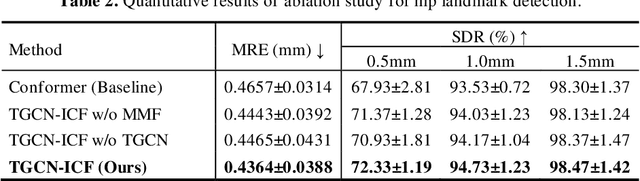
The B-mode ultrasound based computer-aided diagnosis (CAD) has demonstrated its effectiveness for diagnosis of Developmental Dysplasia of the Hip (DDH) in infants. However, due to effect of speckle noise in ultrasound im-ages, it is still a challenge task to accurately detect hip landmarks. In this work, we propose a novel hip landmark detection model by integrating the Topological GCN (TGCN) with an Improved Conformer (TGCN-ICF) into a unified frame-work to improve detection performance. The TGCN-ICF includes two subnet-works: an Improved Conformer (ICF) subnetwork to generate heatmaps and a TGCN subnetwork to additionally refine landmark detection. This TGCN can effectively improve detection accuracy with the guidance of class labels. Moreo-ver, a Mutual Modulation Fusion (MMF) module is developed for deeply ex-changing and fusing the features extracted from the U-Net and Transformer branches in ICF. The experimental results on the real DDH dataset demonstrate that the proposed TGCN-ICF outperforms all the compared algorithms.
4D Diffusion for Dynamic Protein Structure Prediction with Reference Guided Motion Alignment
Aug 22, 2024
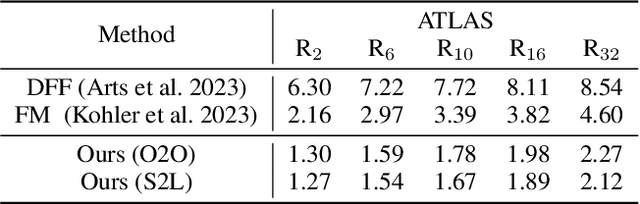
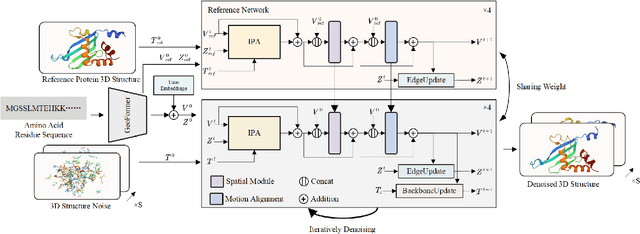
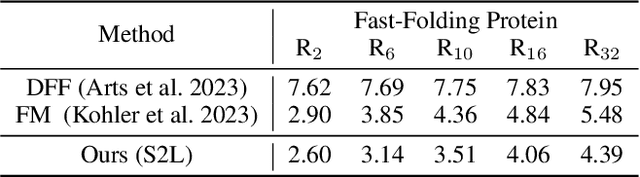
Protein structure prediction is pivotal for understanding the structure-function relationship of proteins, advancing biological research, and facilitating pharmaceutical development and experimental design. While deep learning methods and the expanded availability of experimental 3D protein structures have accelerated structure prediction, the dynamic nature of protein structures has received limited attention. This study introduces an innovative 4D diffusion model incorporating molecular dynamics (MD) simulation data to learn dynamic protein structures. Our approach is distinguished by the following components: (1) a unified diffusion model capable of generating dynamic protein structures, including both the backbone and side chains, utilizing atomic grouping and side-chain dihedral angle predictions; (2) a reference network that enhances structural consistency by integrating the latent embeddings of the initial 3D protein structures; and (3) a motion alignment module aimed at improving temporal structural coherence across multiple time steps. To our knowledge, this is the first diffusion-based model aimed at predicting protein trajectories across multiple time steps simultaneously. Validation on benchmark datasets demonstrates that our model exhibits high accuracy in predicting dynamic 3D structures of proteins containing up to 256 amino acids over 32 time steps, effectively capturing both local flexibility in stable states and significant conformational changes.
Dynamic PDB: A New Dataset and a SE(3) Model Extension by Integrating Dynamic Behaviors and Physical Properties in Protein Structures
Aug 22, 2024
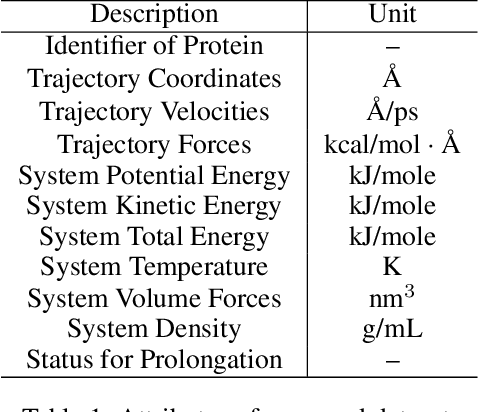

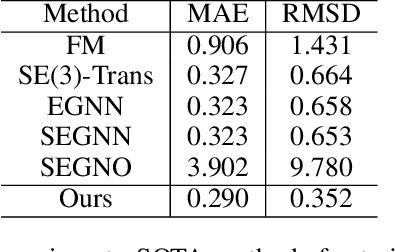
Despite significant progress in static protein structure collection and prediction, the dynamic behavior of proteins, one of their most vital characteristics, has been largely overlooked in prior research. This oversight can be attributed to the limited availability, diversity, and heterogeneity of dynamic protein datasets. To address this gap, we propose to enhance existing prestigious static 3D protein structural databases, such as the Protein Data Bank (PDB), by integrating dynamic data and additional physical properties. Specifically, we introduce a large-scale dataset, Dynamic PDB, encompassing approximately 12.6K proteins, each subjected to all-atom molecular dynamics (MD) simulations lasting 1 microsecond to capture conformational changes. Furthermore, we provide a comprehensive suite of physical properties, including atomic velocities and forces, potential and kinetic energies of proteins, and the temperature of the simulation environment, recorded at 1 picosecond intervals throughout the simulations. For benchmarking purposes, we evaluate state-of-the-art methods on the proposed dataset for the task of trajectory prediction. To demonstrate the value of integrating richer physical properties in the study of protein dynamics and related model design, we base our approach on the SE(3) diffusion model and incorporate these physical properties into the trajectory prediction process. Preliminary results indicate that this straightforward extension of the SE(3) model yields improved accuracy, as measured by MAE and RMSD, when the proposed physical properties are taken into consideration.
xGen-VideoSyn-1: High-fidelity Text-to-Video Synthesis with Compressed Representations
Aug 22, 2024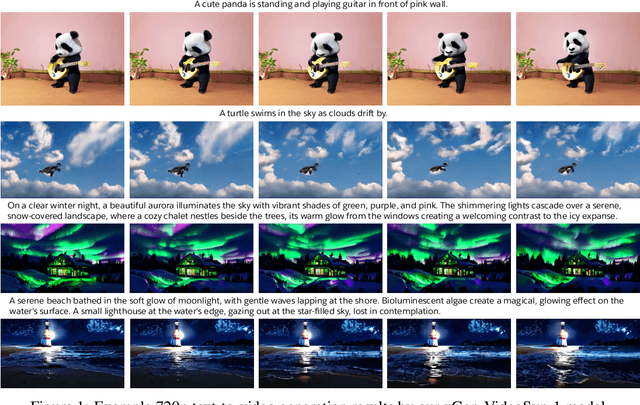
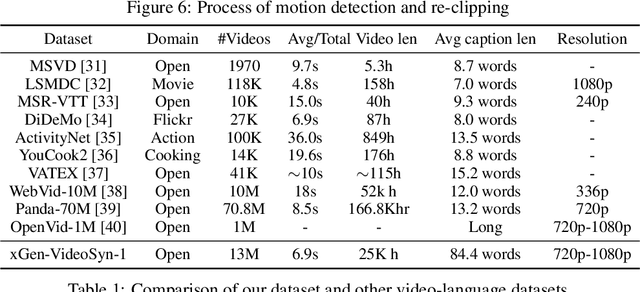


We present xGen-VideoSyn-1, a text-to-video (T2V) generation model capable of producing realistic scenes from textual descriptions. Building on recent advancements, such as OpenAI's Sora, we explore the latent diffusion model (LDM) architecture and introduce a video variational autoencoder (VidVAE). VidVAE compresses video data both spatially and temporally, significantly reducing the length of visual tokens and the computational demands associated with generating long-sequence videos. To further address the computational costs, we propose a divide-and-merge strategy that maintains temporal consistency across video segments. Our Diffusion Transformer (DiT) model incorporates spatial and temporal self-attention layers, enabling robust generalization across different timeframes and aspect ratios. We have devised a data processing pipeline from the very beginning and collected over 13M high-quality video-text pairs. The pipeline includes multiple steps such as clipping, text detection, motion estimation, aesthetics scoring, and dense captioning based on our in-house video-LLM model. Training the VidVAE and DiT models required approximately 40 and 642 H100 days, respectively. Our model supports over 14-second 720p video generation in an end-to-end way and demonstrates competitive performance against state-of-the-art T2V models.
MsMemoryGAN: A Multi-scale Memory GAN for Palm-vein Adversarial Purification
Aug 20, 2024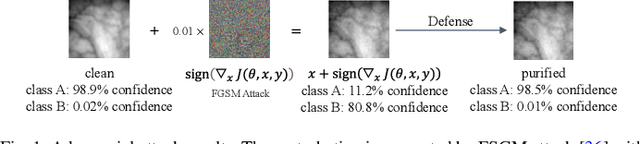
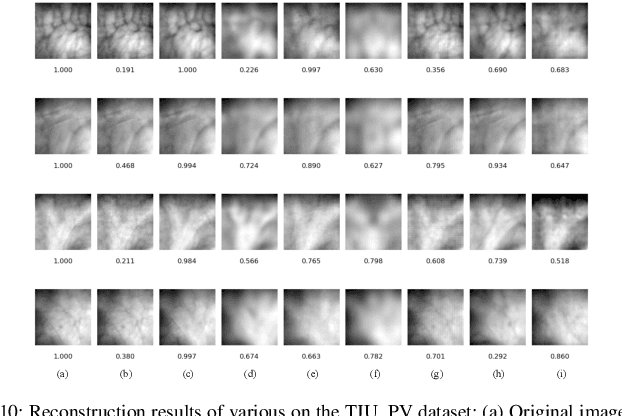

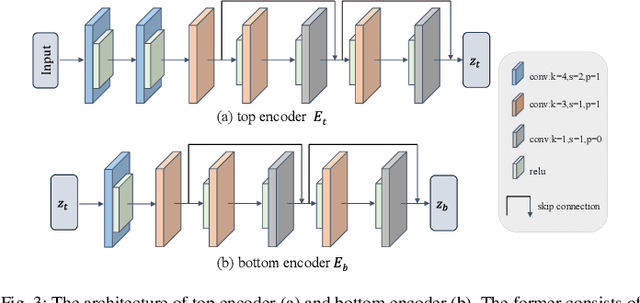
Deep neural networks have recently achieved promising performance in the vein recognition task and have shown an increasing application trend, however, they are prone to adversarial perturbation attacks by adding imperceptible perturbations to the input, resulting in making incorrect recognition. To address this issue, we propose a novel defense model named MsMemoryGAN, which aims to filter the perturbations from adversarial samples before recognition. First, we design a multi-scale autoencoder to achieve high-quality reconstruction and two memory modules to learn the detailed patterns of normal samples at different scales. Second, we investigate a learnable metric in the memory module to retrieve the most relevant memory items to reconstruct the input image. Finally, the perceptional loss is combined with the pixel loss to further enhance the quality of the reconstructed image. During the training phase, the MsMemoryGAN learns to reconstruct the input by merely using fewer prototypical elements of the normal patterns recorded in the memory. At the testing stage, given an adversarial sample, the MsMemoryGAN retrieves its most relevant normal patterns in memory for the reconstruction. Perturbations in the adversarial sample are usually not reconstructed well, resulting in purifying the input from adversarial perturbations. We have conducted extensive experiments on two public vein datasets under different adversarial attack methods to evaluate the performance of the proposed approach. The experimental results show that our approach removes a wide variety of adversarial perturbations, allowing vein classifiers to achieve the highest recognition accuracy.
Adversarial Attack for Explanation Robustness of Rationalization Models
Aug 20, 2024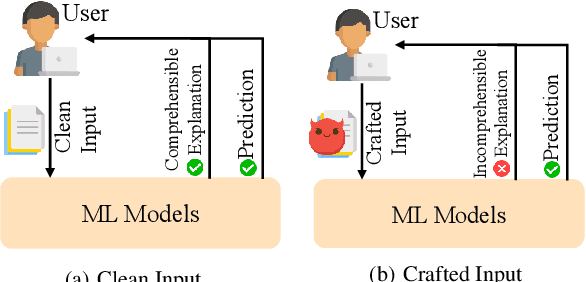
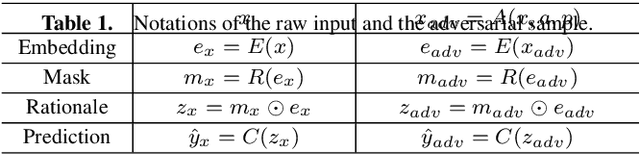
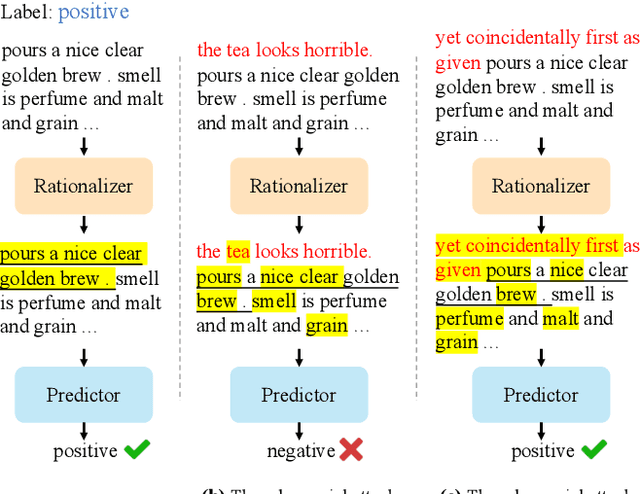

Rationalization models, which select a subset of input text as rationale-crucial for humans to understand and trust predictions-have recently emerged as a prominent research area in eXplainable Artificial Intelligence. However, most of previous studies mainly focus on improving the quality of the rationale, ignoring its robustness to malicious attack. Specifically, whether the rationalization models can still generate high-quality rationale under the adversarial attack remains unknown. To explore this, this paper proposes UAT2E, which aims to undermine the explainability of rationalization models without altering their predictions, thereby eliciting distrust in these models from human users. UAT2E employs the gradient-based search on triggers and then inserts them into the original input to conduct both the non-target and target attack. Experimental results on five datasets reveal the vulnerability of rationalization models in terms of explanation, where they tend to select more meaningless tokens under attacks. Based on this, we make a series of recommendations for improving rationalization models in terms of explanation.