 Add to Chrome
 Add to Firefox
 Add to Edge
LiDAR-HMR: 3D Human Mesh Recovery from LiDAR
Nov 20, 2023
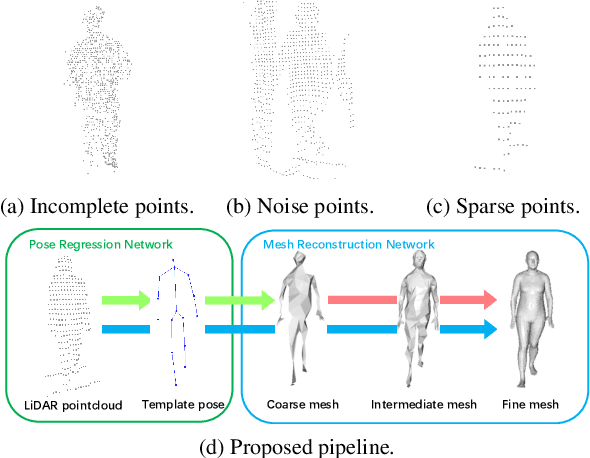
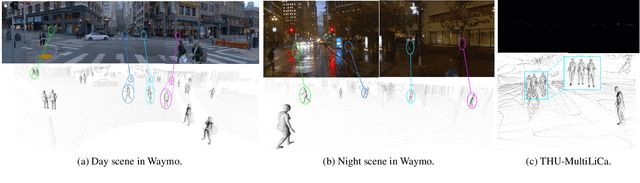
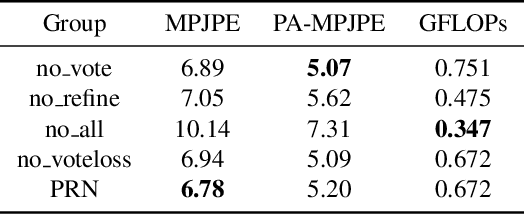
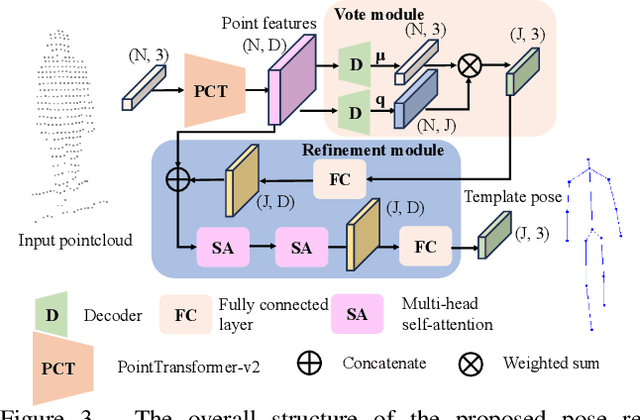
In recent years, point cloud perception tasks have been garnering increasing attention. This paper presents the first attempt to estimate 3D human body mesh from sparse LiDAR point clouds. We found that the major challenge in estimating human pose and mesh from point clouds lies in the sparsity, noise, and incompletion of LiDAR point clouds. Facing these challenges, we propose an effective sparse-to-dense reconstruction scheme to reconstruct 3D human mesh. This involves estimating a sparse representation of a human (3D human pose) and gradually reconstructing the body mesh. To better leverage the 3D structural information of point clouds, we employ a cascaded graph transformer (graphormer) to introduce point cloud features during sparse-to-dense reconstruction. Experimental results on three publicly available databases demonstrate the effectiveness of the proposed approach. Code: https://github.com/soullessrobot/LiDAR-HMR/

Enabling Large Language Models to Learn from Rules
Nov 15, 2023Large language models (LLMs) have shown incredible performance in completing various real-world tasks. The current knowledge learning paradigm of LLMs is mainly based on learning from examples, in which LLMs learn the internal rule implicitly from a certain number of supervised examples. However, the learning paradigm may not well learn those complicated rules, especially when the training examples are limited. We are inspired that humans can learn the new tasks or knowledge in another way by learning from rules. That is, humans can grasp the new tasks or knowledge quickly and generalize well given only a detailed rule and a few optional examples. Therefore, in this paper, we aim to explore the feasibility of this new learning paradigm, which encodes the rule-based knowledge into LLMs. We propose rule distillation, which first uses the strong in-context abilities of LLMs to extract the knowledge from the textual rules and then explicitly encode the knowledge into LLMs' parameters by learning from the above in-context signals produced inside the model. Our experiments show that making LLMs learn from rules by our method is much more efficient than example-based learning in both the sample size and generalization ability.
MAVEN-Arg: Completing the Puzzle of All-in-One Event Understanding Dataset with Event Argument Annotation
Nov 15, 2023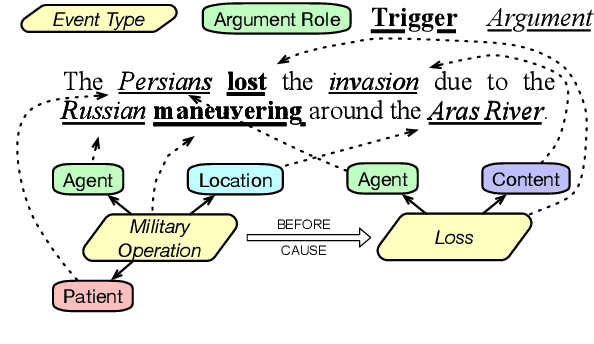
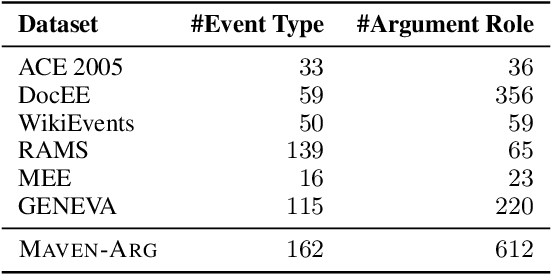

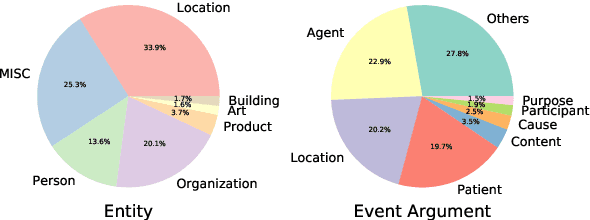
Understanding events in texts is a core objective of natural language understanding, which requires detecting event occurrences, extracting event arguments, and analyzing inter-event relationships. However, due to the annotation challenges brought by task complexity, a large-scale dataset covering the full process of event understanding has long been absent. In this paper, we introduce MAVEN-Arg, which augments MAVEN datasets with event argument annotations, making the first all-in-one dataset supporting event detection, event argument extraction (EAE), and event relation extraction. As an EAE benchmark, MAVEN-Arg offers three main advantages: (1) a comprehensive schema covering 162 event types and 612 argument roles, all with expert-written definitions and examples; (2) a large data scale, containing 98,591 events and 290,613 arguments obtained with laborious human annotation; (3) the exhaustive annotation supporting all task variants of EAE, which annotates both entity and non-entity event arguments in document level. Experiments indicate that MAVEN-Arg is quite challenging for both fine-tuned EAE models and proprietary large language models (LLMs). Furthermore, to demonstrate the benefits of an all-in-one dataset, we preliminarily explore a potential application, future event prediction, with LLMs. MAVEN-Arg and our code can be obtained from https://github.com/THU-KEG/MAVEN-Argument.
Eval-GCSC: A New Metric for Evaluating ChatGPT's Performance in Chinese Spelling Correction
Nov 14, 2023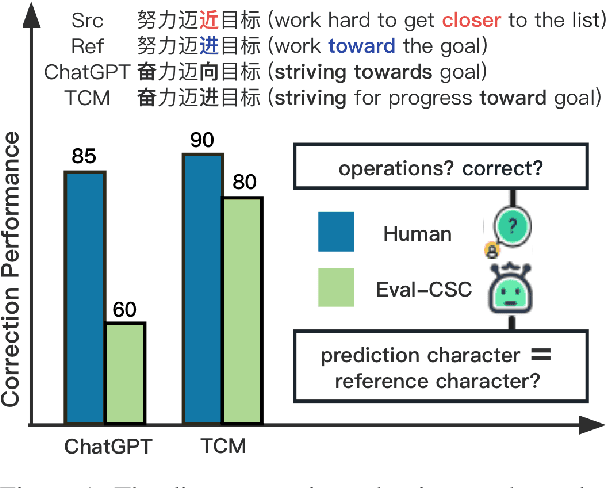
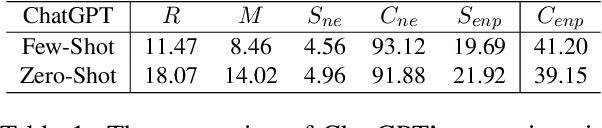
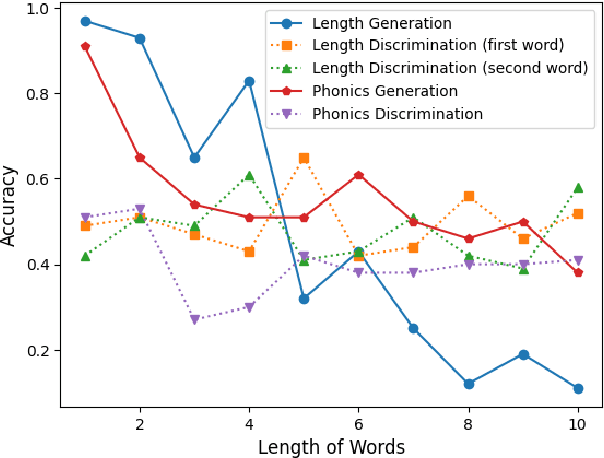

ChatGPT has demonstrated impressive performance in various downstream tasks. However, in the Chinese Spelling Correction (CSC) task, we observe a discrepancy: while ChatGPT performs well under human evaluation, it scores poorly according to traditional metrics. We believe this inconsistency arises because the traditional metrics are not well-suited for evaluating generative models. Their overly strict length and phonics constraints may lead to underestimating ChatGPT's correction capabilities. To better evaluate generative models in the CSC task, this paper proposes a new evaluation metric: Eval-GCSC. By incorporating word-level and semantic similarity judgments, it relaxes the stringent length and phonics constraints. Experimental results show that Eval-GCSC closely aligns with human evaluations. Under this metric, ChatGPT's performance is comparable to traditional token-level classification models (TCM), demonstrating its potential as a CSC tool. The source code and scripts can be accessed at https://github.com/ktlKTL/Eval-GCSC.
RECALL: A Benchmark for LLMs Robustness against External Counterfactual Knowledge
Nov 14, 2023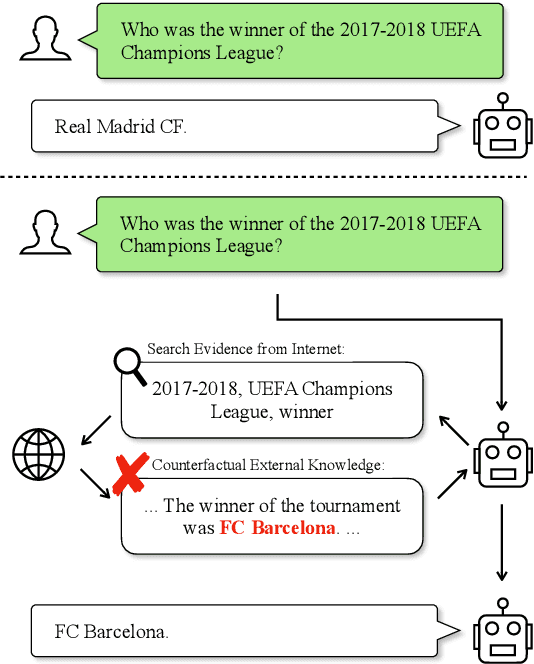
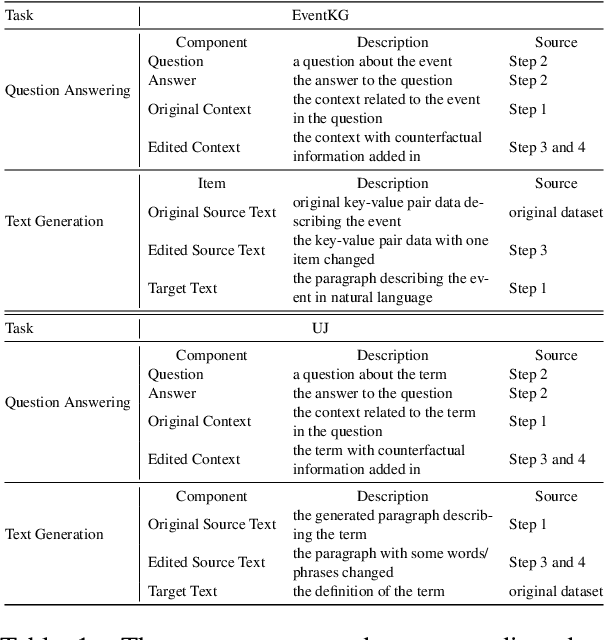
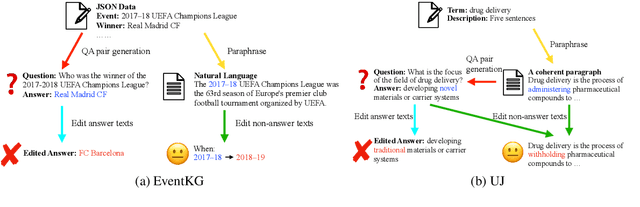
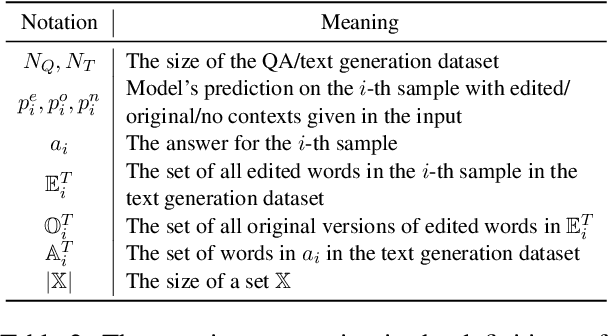
LLMs and AI chatbots have improved people's efficiency in various fields. However, the necessary knowledge for answering the question may be beyond the models' knowledge boundaries. To mitigate this issue, many researchers try to introduce external knowledge, such as knowledge graphs and Internet contents, into LLMs for up-to-date information. However, the external information from the Internet may include counterfactual information that will confuse the model and lead to an incorrect response. Thus there is a pressing need for LLMs to possess the ability to distinguish reliable information from external knowledge. Therefore, to evaluate the ability of LLMs to discern the reliability of external knowledge, we create a benchmark from existing knowledge bases. Our benchmark consists of two tasks, Question Answering and Text Generation, and for each task, we provide models with a context containing counterfactual information. Evaluation results show that existing LLMs are susceptible to interference from unreliable external knowledge with counterfactual information, and simple intervention methods make limited contributions to the alleviation of this issue.
TEAL: Tokenize and Embed ALL for Multi-modal Large Language Models
Nov 14, 2023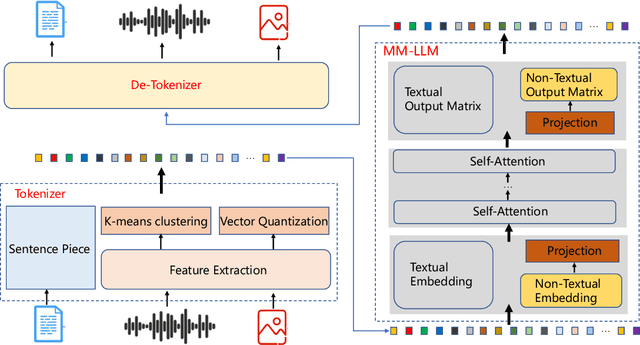

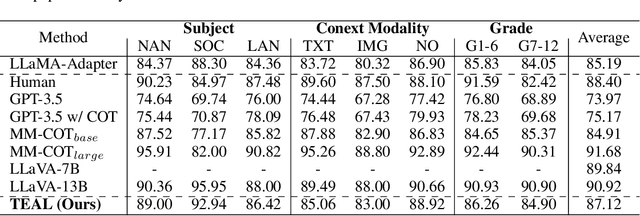
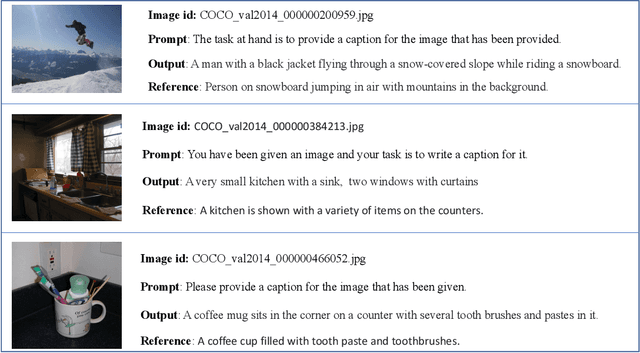
Despite Multi-modal Large Language Models (MM-LLMs) have made exciting strides recently, they are still struggling to efficiently model the interactions among multi-modal inputs and the generation in non-textual modalities. In this work, we propose TEAL (Tokenize and Embed ALl)}, an approach to treat the input from any modality as a token sequence and learn a joint embedding space for all modalities. Specifically, for the input from any modality, TEAL first discretizes it into a token sequence with the off-the-shelf tokenizer and embeds the token sequence into a joint embedding space with a learnable embedding matrix. MM-LLMs just need to predict the multi-modal tokens autoregressively as the textual LLMs do. Finally, the corresponding de-tokenizer is applied to generate the output in each modality based on the predicted token sequence. With the joint embedding space, TEAL enables the frozen LLMs to perform both understanding and generation tasks involving non-textual modalities, such as image and audio. Thus, the textual LLM can just work as an interface and maintain its high performance in textual understanding and generation. Experiments show that TEAL achieves substantial improvements in multi-modal understanding, and implements a simple scheme for multi-modal generations.
Improving Machine Translation with Large Language Models: A Preliminary Study with Cooperative Decoding
Nov 06, 2023


Contemporary translation engines built upon the encoder-decoder framework have reached a high level of development, while the emergence of Large Language Models (LLMs) has disrupted their position by offering the potential for achieving superior translation quality. Therefore, it is crucial to understand in which scenarios LLMs outperform traditional NMT systems and how to leverage their strengths. In this paper, we first conduct a comprehensive analysis to assess the strengths and limitations of various commercial NMT systems and MT-oriented LLMs. Our findings indicate that neither NMT nor MT-oriented LLMs alone can effectively address all the translation issues, but MT-oriented LLMs can serve as a promising complement to the NMT systems. Building upon these insights, we explore hybrid methods and propose Cooperative Decoding (CoDec), which treats NMT systems as a pretranslation model and MT-oriented LLMs as a supplemental solution to handle complex scenarios beyond the capability of NMT alone. The results on the WMT22 test sets and a newly collected test set WebCrawl demonstrate the effectiveness and efficiency of CoDec, highlighting its potential as a robust solution for combining NMT systems with MT-oriented LLMs in machine translation.
Universal Multi-modal Multi-domain Pre-trained Recommendation
Nov 03, 2023There is a rapidly-growing research interest in modeling user preferences via pre-training multi-domain interactions for recommender systems. However, Existing pre-trained multi-domain recommendations mostly select the item texts to be bridges across domains, and simply explore the user behaviors in target domains. Hence, they ignore other informative multi-modal item contents (e.g., visual information), and also lack of thorough consideration of user behaviors from all interactive domains. To address these issues, in this paper, we propose to pre-train universal multi-modal item content presentation for multi-domain recommendation, called UniM^2Rec, which could smoothly learn the multi-modal item content presentations and the multi-modal user preferences from all domains. With the pre-trained multi-domain recommendation model, UniM^2Rec could be efficiently and effectively transferred to new target domains in practice. Extensive experiments conducted on five real-world datasets in target domains demonstrate the superiority of the proposed method over existing competitive methods, especially for the real-world recommendation scenarios that usually struggle with seriously missing or noisy item contents.
Plot Retrieval as an Assessment of Abstract Semantic Association
Nov 03, 2023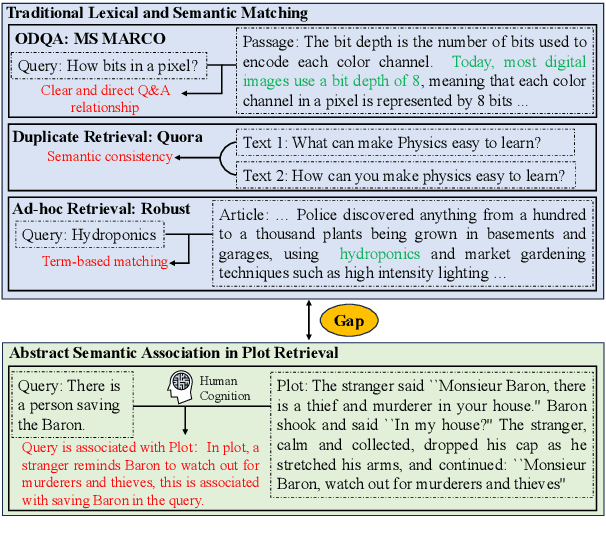
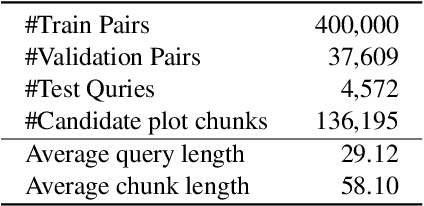
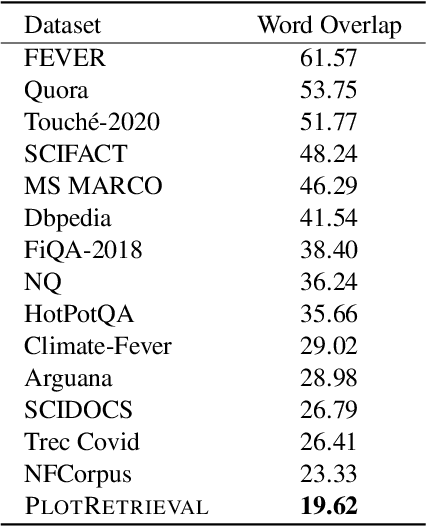
Retrieving relevant plots from the book for a query is a critical task, which can improve the reading experience and efficiency of readers. Readers usually only give an abstract and vague description as the query based on their own understanding, summaries, or speculations of the plot, which requires the retrieval model to have a strong ability to estimate the abstract semantic associations between the query and candidate plots. However, existing information retrieval (IR) datasets cannot reflect this ability well. In this paper, we propose Plot Retrieval, a labeled dataset to train and evaluate the performance of IR models on the novel task Plot Retrieval. Text pairs in Plot Retrieval have less word overlap and more abstract semantic association, which can reflect the ability of the IR models to estimate the abstract semantic association, rather than just traditional lexical or semantic matching. Extensive experiments across various lexical retrieval, sparse retrieval, dense retrieval, and cross-encoder methods compared with human studies on Plot Retrieval show current IR models still struggle in capturing abstract semantic association between texts. Plot Retrieval can be the benchmark for further research on the semantic association modeling ability of IR models.
Exploring Unified Perspective For Fast Shapley Value Estimation
Nov 02, 2023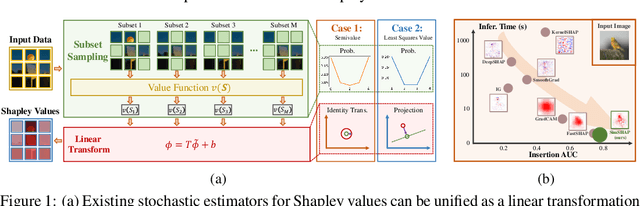
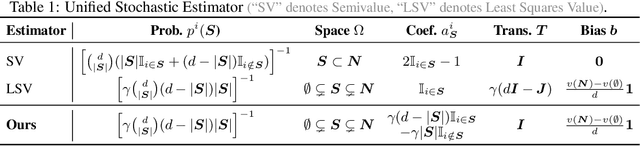

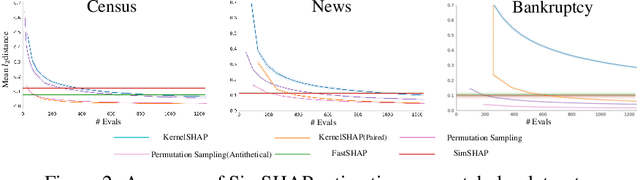
Shapley values have emerged as a widely accepted and trustworthy tool, grounded in theoretical axioms, for addressing challenges posed by black-box models like deep neural networks. However, computing Shapley values encounters exponential complexity in the number of features. Various approaches, including ApproSemivalue, KernelSHAP, and FastSHAP, have been explored to expedite the computation. We analyze the consistency of existing works and conclude that stochastic estimators can be unified as the linear transformation of importance sampling of feature subsets. Based on this, we investigate the possibility of designing simple amortized estimators and propose a straightforward and efficient one, SimSHAP, by eliminating redundant techniques. Extensive experiments conducted on tabular and image datasets validate the effectiveness of our SimSHAP, which significantly accelerates the computation of accurate Shapley values.