 Add to Chrome
 Add to Firefox
 Add to Edge
EpiPlanAgent: Agentic Automated Epidemic Response Planning
Dec 12, 2025
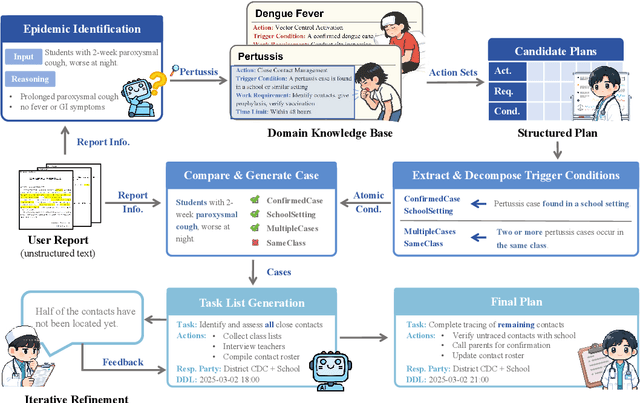

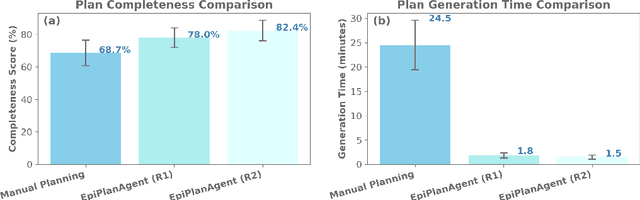
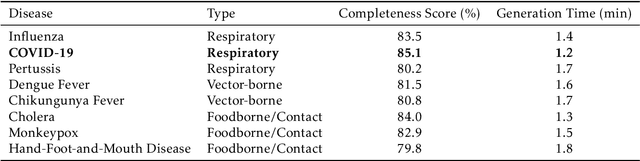
Epidemic response planning is essential yet traditionally reliant on labor-intensive manual methods. This study aimed to design and evaluate EpiPlanAgent, an agent-based system using large language models (LLMs) to automate the generation and validation of digital emergency response plans. The multi-agent framework integrated task decomposition, knowledge grounding, and simulation modules. Public health professionals tested the system using real-world outbreak scenarios in a controlled evaluation. Results demonstrated that EpiPlanAgent significantly improved the completeness and guideline alignment of plans while drastically reducing development time compared to manual workflows. Expert evaluation confirmed high consistency between AI-generated and human-authored content. User feedback indicated strong perceived utility. In conclusion, EpiPlanAgent provides an effective, scalable solution for intelligent epidemic response planning, demonstrating the potential of agentic AI to transform public health preparedness.

MedBench v4: A Robust and Scalable Benchmark for Evaluating Chinese Medical Language Models, Multimodal Models, and Intelligent Agents
Nov 19, 2025Recent advances in medical large language models (LLMs), multimodal models, and agents demand evaluation frameworks that reflect real clinical workflows and safety constraints. We present MedBench v4, a nationwide, cloud-based benchmarking infrastructure comprising over 700,000 expert-curated tasks spanning 24 primary and 91 secondary specialties, with dedicated tracks for LLMs, multimodal models, and agents. Items undergo multi-stage refinement and multi-round review by clinicians from more than 500 institutions, and open-ended responses are scored by an LLM-as-a-judge calibrated to human ratings. We evaluate 15 frontier models. Base LLMs reach a mean overall score of 54.1/100 (best: Claude Sonnet 4.5, 62.5/100), but safety and ethics remain low (18.4/100). Multimodal models perform worse overall (mean 47.5/100; best: GPT-5, 54.9/100), with solid perception yet weaker cross-modal reasoning. Agents built on the same backbones substantially improve end-to-end performance (mean 79.8/100), with Claude Sonnet 4.5-based agents achieving up to 85.3/100 overall and 88.9/100 on safety tasks. MedBench v4 thus reveals persisting gaps in multimodal reasoning and safety for base models, while showing that governance-aware agentic orchestration can markedly enhance benchmarked clinical readiness without sacrificing capability. By aligning tasks with Chinese clinical guidelines and regulatory priorities, the platform offers a practical reference for hospitals, developers, and policymakers auditing medical AI.
TCM-5CEval: Extended Deep Evaluation Benchmark for LLM's Comprehensive Clinical Research Competence in Traditional Chinese Medicine
Nov 17, 2025Large language models (LLMs) have demonstrated exceptional capabilities in general domains, yet their application in highly specialized and culturally-rich fields like Traditional Chinese Medicine (TCM) requires rigorous and nuanced evaluation. Building upon prior foundational work such as TCM-3CEval, which highlighted systemic knowledge gaps and the importance of cultural-contextual alignment, we introduce TCM-5CEval, a more granular and comprehensive benchmark. TCM-5CEval is designed to assess LLMs across five critical dimensions: (1) Core Knowledge (TCM-Exam), (2) Classical Literacy (TCM-LitQA), (3) Clinical Decision-making (TCM-MRCD), (4) Chinese Materia Medica (TCM-CMM), and (5) Clinical Non-pharmacological Therapy (TCM-ClinNPT). We conducted a thorough evaluation of fifteen prominent LLMs, revealing significant performance disparities and identifying top-performing models like deepseek\_r1 and gemini\_2\_5\_pro. Our findings show that while models exhibit proficiency in recalling foundational knowledge, they struggle with the interpretative complexities of classical texts. Critically, permutation-based consistency testing reveals widespread fragilities in model inference. All evaluated models, including the highest-scoring ones, displayed a substantial performance degradation when faced with varied question option ordering, indicating a pervasive sensitivity to positional bias and a lack of robust understanding. TCM-5CEval not only provides a more detailed diagnostic tool for LLM capabilities in TCM but aldso exposes fundamental weaknesses in their reasoning stability. To promote further research and standardized comparison, TCM-5CEval has been uploaded to the Medbench platform, joining its predecessor in the "In-depth Challenge for Comprehensive TCM Abilities" special track.
Can Large Language Models Function as Qualified Pediatricians? A Systematic Evaluation in Real-World Clinical Contexts
Nov 17, 2025With the rapid rise of large language models (LLMs) in medicine, a key question is whether they can function as competent pediatricians in real-world clinical settings. We developed PEDIASBench, a systematic evaluation framework centered on a knowledge-system framework and tailored to realistic clinical environments. PEDIASBench assesses LLMs across three dimensions: application of basic knowledge, dynamic diagnosis and treatment capability, and pediatric medical safety and medical ethics. We evaluated 12 representative models released over the past two years, including GPT-4o, Qwen3-235B-A22B, and DeepSeek-V3, covering 19 pediatric subspecialties and 211 prototypical diseases. State-of-the-art models performed well on foundational knowledge, with Qwen3-235B-A22B achieving over 90% accuracy on licensing-level questions, but performance declined ~15% as task complexity increased, revealing limitations in complex reasoning. Multiple-choice assessments highlighted weaknesses in integrative reasoning and knowledge recall. In dynamic diagnosis and treatment scenarios, DeepSeek-R1 scored highest in case reasoning (mean 0.58), yet most models struggled to adapt to real-time patient changes. On pediatric medical ethics and safety tasks, Qwen2.5-72B performed best (accuracy 92.05%), though humanistic sensitivity remained limited. These findings indicate that pediatric LLMs are constrained by limited dynamic decision-making and underdeveloped humanistic care. Future development should focus on multimodal integration and a clinical feedback-model iteration loop to enhance safety, interpretability, and human-AI collaboration. While current LLMs cannot independently perform pediatric care, they hold promise for decision support, medical education, and patient communication, laying the groundwork for a safe, trustworthy, and collaborative intelligent pediatric healthcare system.
Detection in Bistatic ISAC with Deterministic Sensing and Gaussian Information Signals
Nov 14, 2025Integrated sensing and communications (ISAC) is a disruptive technology enabling future sixth-generation (6G) networks. This paper investigates target detection in a bistatic ISAC system, in which the base station (BS) transmits superimposed ISAC signals comprising both Gaussian information-bearing and deterministic sensing components to simultaneously provide communication and sensing functionalities. First, we develop a Neyman-Pearson (NP)-based detector that effectively utilizes both the deterministic sensing and random communication signals. Closed-form analysis reveals that both signal components contribute to improving the overall detection performance. Subsequently, we optimize the BS transmit beamforming to maximize the detection probability, subject to a minimum signal-to-interference-plus-noise ratio (SINR) constraint for the communication user (CU) and a total transmit power budget at the BS. The resulting non-convex beamforming optimization problem is addressed via semi-definite relaxation (SDR) and successive convex approximation (SCA) techniques. Simulation results demonstrate the superiority of the proposed NP-based detector, which leverages both types of signals, over benchmark schemes that treat information signals as interference. They also reveal that a higher communication-rate threshold directs more transmit power to Gaussian information-bearing signals, thereby diminishing deterministic-signal power and weakening detection performance.
Intelligent Reflecting Surfaces for Integrated Sensing and Communications: A Survey
Nov 14, 2025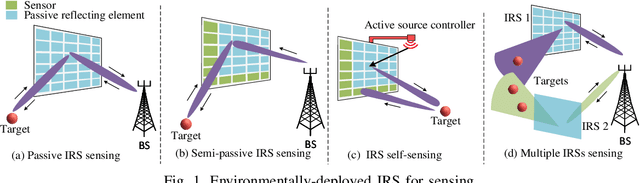

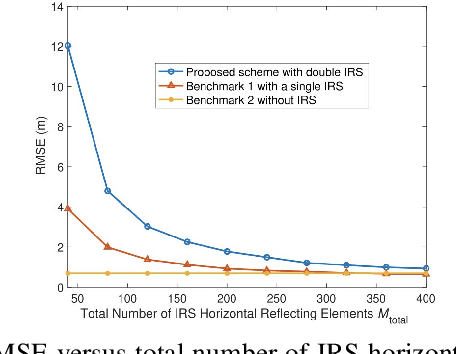
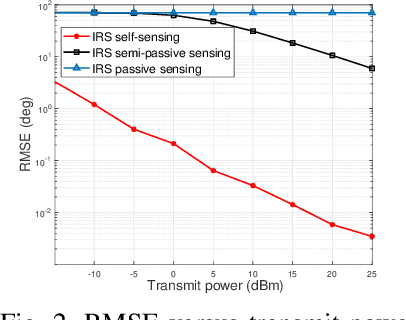
The rapid development of sixth-generation (6G) wireless networks requires seamless integration of communication and sensing to support ubiquitous intelligence and real-time, high-reliability applications. Integrated sensing and communication (ISAC) has emerged as a key solution for achieving this convergence, offering joint utilization of spectral, hardware, and computing resources. However, realizing high-performance ISAC remains challenging due to environmental line-of-sight (LoS) blockage, limited spatial resolution, and the inherent coverage asymmetry and resource coupling between sensing and communication. Intelligent reflecting surfaces (IRSs), featuring low-cost, energy-efficient, and programmable electromagnetic reconfiguration, provide a promising solution to overcome these limitations. This article presents a comprehensive overview of IRS-aided wireless sensing and ISAC technologies, including IRS architectures, target detection and estimation techniques, beamforming designs, and performance metrics. It further explores IRS-enabled new opportunities for more efficient performance balancing, coexistence, and networking in ISAC systems, focuses on current design bottlenecks, and outlines future research directions. This article aims to offer a unified design framework that guides the development of practical and scalable IRS-aided ISAC systems for the next-generation wireless network.
Channel Knowledge Map Construction: Recent Advances and Open Challenges
Nov 07, 2025Channel knowledge map (CKM) has emerged as a pivotal technology for environment-aware wireless communications and sensing, which provides a priori location-specific channel knowledge to facilitate network optimization. Efficient CKM construction is an important technical problem for its effective implementation. This article provides a comprehensive overview of recent advances in CKM construction. First, we examine classical interpolation-based CKM construction methods, highlighting their limitations in practical deployments. Next, we explore image processing and generative artificial intelligence (AI) techniques, which leverage feature extraction to construct CKMs based on environmental knowledge. Furthermore, we present emerging wireless radiance field (WRF) frameworks that exploit neural radiance fields or Gaussian splatting to construct high-fidelity CKMs from sparse measurement data. Finally, we outline various future research directions in real-time and cross-domain CKM construction, as well as cost-efficient deployment of CKMs.
MedCalc-Eval and MedCalc-Env: Advancing Medical Calculation Capabilities of Large Language Models
Oct 31, 2025As large language models (LLMs) enter the medical domain, most benchmarks evaluate them on question answering or descriptive reasoning, overlooking quantitative reasoning critical to clinical decision-making. Existing datasets like MedCalc-Bench cover few calculation tasks and fail to reflect real-world computational scenarios. We introduce MedCalc-Eval, the largest benchmark for assessing LLMs' medical calculation abilities, comprising 700+ tasks across two types: equation-based (e.g., Cockcroft-Gault, BMI, BSA) and rule-based scoring systems (e.g., Apgar, Glasgow Coma Scale). These tasks span diverse specialties including internal medicine, surgery, pediatrics, and cardiology, offering a broader and more challenging evaluation setting. To improve performance, we further develop MedCalc-Env, a reinforcement learning environment built on the InternBootcamp framework, enabling multi-step clinical reasoning and planning. Fine-tuning a Qwen2.5-32B model within this environment achieves state-of-the-art results on MedCalc-Eval, with notable gains in numerical sensitivity, formula selection, and reasoning robustness. Remaining challenges include unit conversion, multi-condition logic, and contextual understanding. Code and datasets are available at https://github.com/maokangkun/MedCalc-Eval.
6D Channel Knowledge Map Construction via Bidirectional Wireless Gaussian Splatting
Oct 30, 2025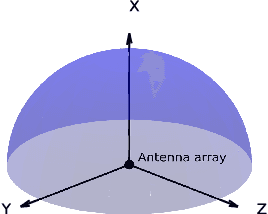
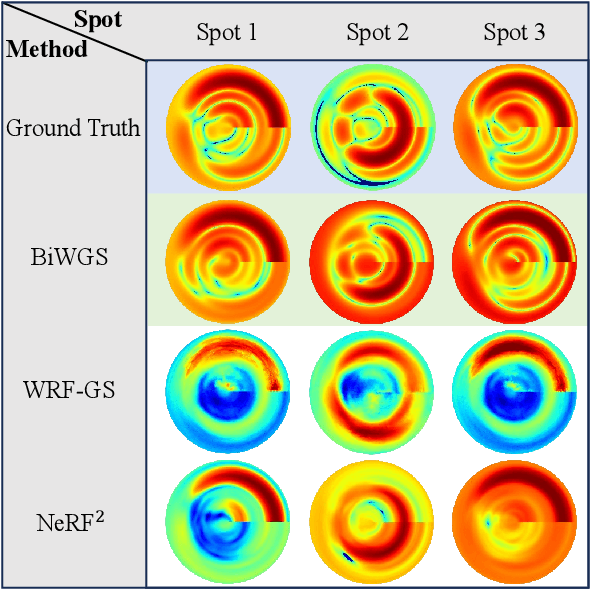
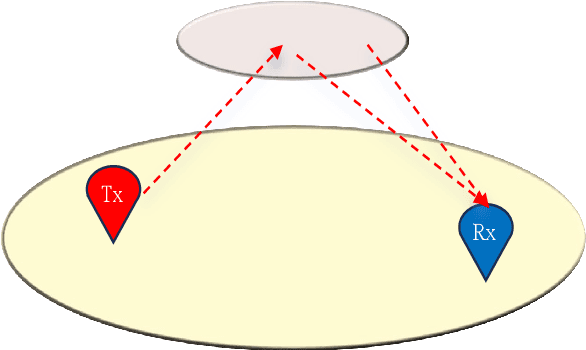
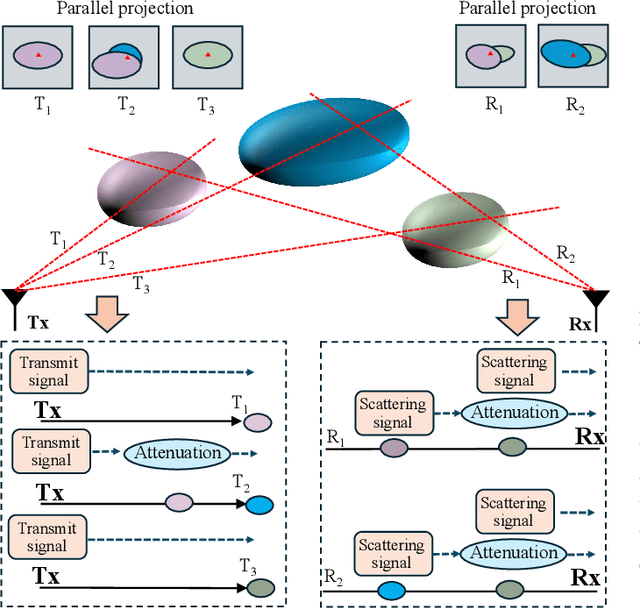
This paper investigates the construction of channel knowledge map (CKM) from sparse channel measurements. Dif ferent from conventional two-/three-dimensional (2D/3D) CKM approaches assuming fixed base station configurations, we present a six-dimensional (6D) CKM framework named bidirectional wireless Gaussian splatting (BiWGS), which is capable of mod eling wireless channels across dynamic transmitter (Tx) and receiver (Rx) positions in 3D space. BiWGS uses Gaussian el lipsoids to represent virtual scatterer clusters and environmental obstacles in the wireless environment. By properly learning the bidirectional scattering patterns and complex attenuation profiles based on channel measurements, these ellipsoids inherently cap ture the electromagnetic transmission characteristics of wireless environments, thereby accurately modeling signal transmission under varying transceiver configurations. Experiment results show that BiWGS significantly outperforms classic multi-layer perception (MLP) for the construction of 6D channel power gain map with varying Tx-Rx positions, and achieves spatial spectrum prediction accuracy comparable to the state-of-the art wireless radiation field Gaussian splatting (WRF-GS) for 3D CKM construction. This validates the capability of the proposed BiWGS in accomplishing dimensional expansion of 6D CKM construction, without compromising fidelity.
Integrated Sensing and Communication: Towards Multifunctional Perceptive Network
Oct 16, 2025The capacity-maximization design philosophy has driven the growth of wireless networks for decades. However, with the slowdown in recent data traffic demand, the mobile industry can no longer rely solely on communication services to sustain development. In response, Integrated Sensing and Communications (ISAC) has emerged as a transformative solution, embedding sensing capabilities into communication networks to enable multifunctional wireless systems. This paradigm shift expands the role of networks from sole data transmission to versatile platforms supporting diverse applications. In this review, we provide a bird's-eye view of ISAC for new researchers, highlighting key challenges, opportunities, and application scenarios to guide future exploration in this field.