 Add to Chrome
 Add to Firefox
 Add to Edge
InstructSing: High-Fidelity Singing Voice Generation via Instructing Yourself
Sep 10, 2024
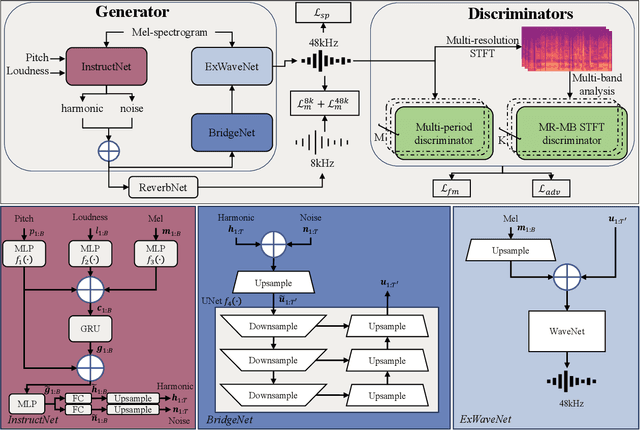

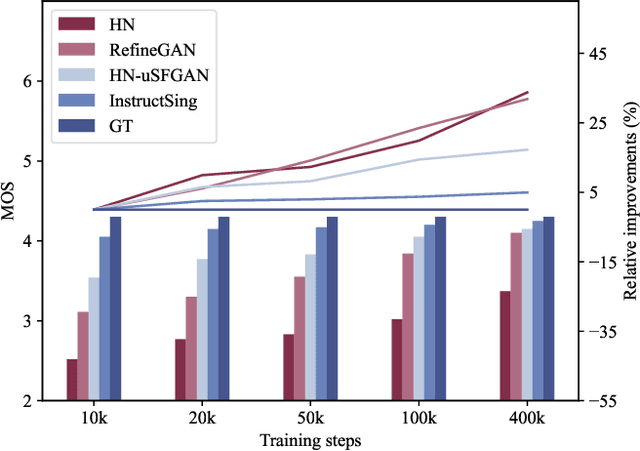
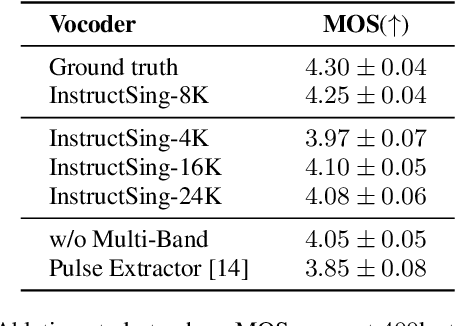
It is challenging to accelerate the training process while ensuring both high-quality generated voices and acceptable inference speed. In this paper, we propose a novel neural vocoder called InstructSing, which can converge much faster compared with other neural vocoders while maintaining good performance by integrating differentiable digital signal processing and adversarial training. It includes one generator and two discriminators. Specifically, the generator incorporates a harmonic-plus-noise (HN) module to produce 8kHz audio as an instructive signal. Subsequently, the HN module is connected with an extended WaveNet by an UNet-based module, which transforms the output of the HN module to a latent variable sequence containing essential periodic and aperiodic information. In addition to the latent sequence, the extended WaveNet also takes the mel-spectrogram as input to generate 48kHz high-fidelity singing voices. In terms of discriminators, we combine a multi-period discriminator, as originally proposed in HiFiGAN, with a multi-resolution multi-band STFT discriminator. Notably, InstructSing achieves comparable voice quality to other neural vocoders but with only one-tenth of the training steps on a 4 NVIDIA V100 GPU machine\footnote{{Demo page: \href{https://wavelandspeech.github.io/instructsing/}{\texttt{https://wavelandspeech.github.io/inst\\ructsing/}}}}. We plan to open-source our code and pretrained model once the paper get accepted.

EntAugment: Entropy-Driven Adaptive Data Augmentation Framework for Image Classification
Sep 10, 2024Data augmentation (DA) has been widely used to improve the generalization of deep neural networks. While existing DA methods have proven effective, they often rely on augmentation operations with random magnitudes to each sample. However, this approach can inadvertently introduce noise, induce distribution shifts, and increase the risk of overfitting. In this paper, we propose EntAugment, a tuning-free and adaptive DA framework. Unlike previous work, EntAugment dynamically assesses and adjusts the augmentation magnitudes for each sample during training, leveraging insights into both the inherent complexities of training samples and the evolving status of deep models. Specifically, in EntAugment, the magnitudes are determined by the information entropy derived from the probability distribution obtained by applying the softmax function to the model's output. In addition, to further enhance the efficacy of EntAugment, we introduce a novel entropy regularization term, EntLoss, which complements the EntAugment approach. Theoretical analysis further demonstrates that EntLoss, compared to traditional cross-entropy loss, achieves closer alignment between the model distributions and underlying dataset distributions. Moreover, EntAugment and EntLoss can be utilized separately or jointly. We conduct extensive experiments across multiple image classification tasks and network architectures with thorough comparisons of existing DA methods. Importantly, the proposed methods outperform others without introducing any auxiliary models or noticeable extra computational costs, highlighting both effectiveness and efficiency. Code is available at https://github.com/Jackbrocp/EntAugment.
CuDA2: An approach for Incorporating Traitor Agents into Cooperative Multi-Agent Systems
Jun 25, 2024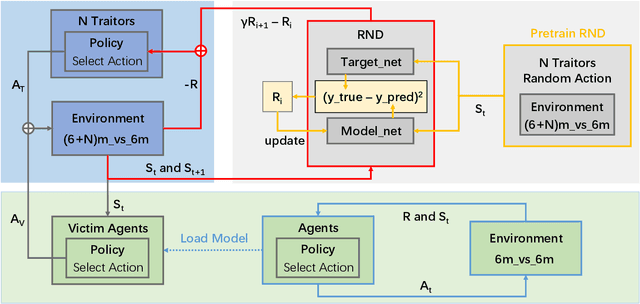
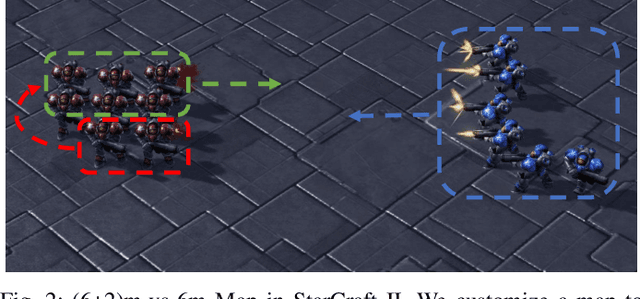
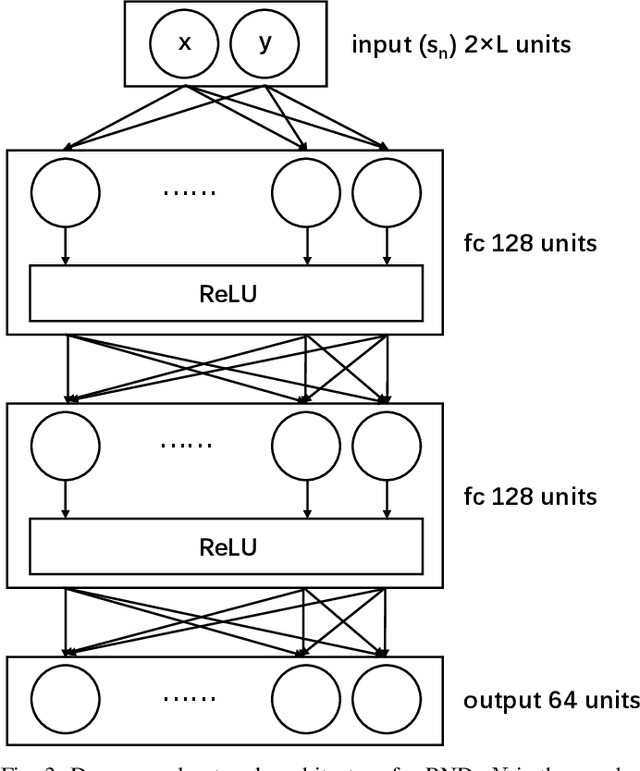
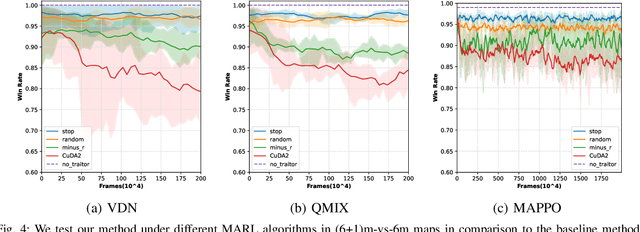
Cooperative Multi-Agent Reinforcement Learning (CMARL) strategies are well known to be vulnerable to adversarial perturbations. Previous works on adversarial attacks have primarily focused on white-box attacks that directly perturb the states or actions of victim agents, often in scenarios with a limited number of attacks. However, gaining complete access to victim agents in real-world environments is exceedingly difficult. To create more realistic adversarial attacks, we introduce a novel method that involves injecting traitor agents into the CMARL system. We model this problem as a Traitor Markov Decision Process (TMDP), where traitors cannot directly attack the victim agents but can influence their formation or positioning through collisions. In TMDP, traitors are trained using the same MARL algorithm as the victim agents, with their reward function set as the negative of the victim agents' reward. Despite this, the training efficiency for traitors remains low because it is challenging for them to directly associate their actions with the victim agents' rewards. To address this issue, we propose the Curiosity-Driven Adversarial Attack (CuDA2) framework. CuDA2 enhances the efficiency and aggressiveness of attacks on the specified victim agents' policies while maintaining the optimal policy invariance of the traitors. Specifically, we employ a pre-trained Random Network Distillation (RND) module, where the extra reward generated by the RND module encourages traitors to explore states unencountered by the victim agents. Extensive experiments on various scenarios from SMAC demonstrate that our CuDA2 framework offers comparable or superior adversarial attack capabilities compared to other baselines.
Technique Report of CVPR 2024 PBDL Challenges
Jun 15, 2024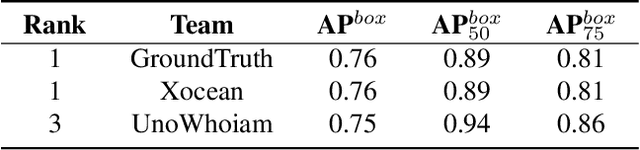
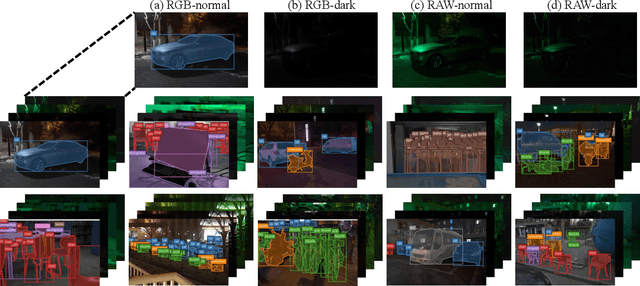
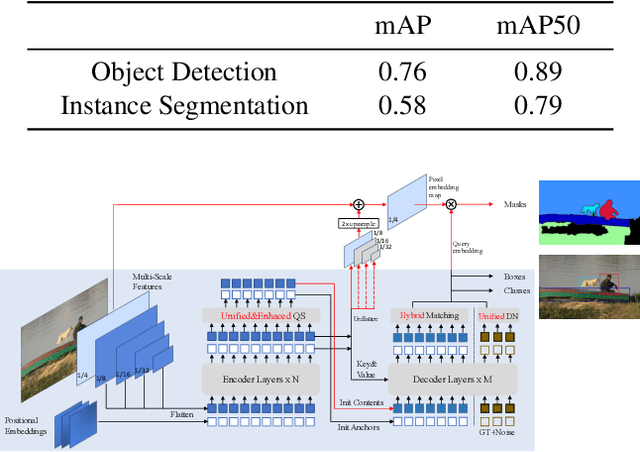

The intersection of physics-based vision and deep learning presents an exciting frontier for advancing computer vision technologies. By leveraging the principles of physics to inform and enhance deep learning models, we can develop more robust and accurate vision systems. Physics-based vision aims to invert the processes to recover scene properties such as shape, reflectance, light distribution, and medium properties from images. In recent years, deep learning has shown promising improvements for various vision tasks, and when combined with physics-based vision, these approaches can enhance the robustness and accuracy of vision systems. This technical report summarizes the outcomes of the Physics-Based Vision Meets Deep Learning (PBDL) 2024 challenge, held in CVPR 2024 workshop. The challenge consisted of eight tracks, focusing on Low-Light Enhancement and Detection as well as High Dynamic Range (HDR) Imaging. This report details the objectives, methodologies, and results of each track, highlighting the top-performing solutions and their innovative approaches.
Mini Honor of Kings: A Lightweight Environment for Multi-Agent Reinforcement Learning
Jun 06, 2024Games are widely used as research environments for multi-agent reinforcement learning (MARL), but they pose three significant challenges: limited customization, high computational demands, and oversimplification. To address these issues, we introduce the first publicly available map editor for the popular mobile game Honor of Kings and design a lightweight environment, Mini Honor of Kings (Mini HoK), for researchers to conduct experiments. Mini HoK is highly efficient, allowing experiments to be run on personal PCs or laptops while still presenting sufficient challenges for existing MARL algorithms. We have tested our environment on common MARL algorithms and demonstrated that these algorithms have yet to find optimal solutions within this environment. This facilitates the dissemination and advancement of MARL methods within the research community. Additionally, we hope that more researchers will leverage the Honor of Kings map editor to develop innovative and scientifically valuable new maps. Our code and user manual are available at: https://github.com/tencent-ailab/mini-hok.
Advancing DRL Agents in Commercial Fighting Games: Training, Integration, and Agent-Human Alignment
Jun 03, 2024Deep Reinforcement Learning (DRL) agents have demonstrated impressive success in a wide range of game genres. However, existing research primarily focuses on optimizing DRL competence rather than addressing the challenge of prolonged player interaction. In this paper, we propose a practical DRL agent system for fighting games named Sh\=ukai, which has been successfully deployed to Naruto Mobile, a popular fighting game with over 100 million registered users. Sh\=ukai quantifies the state to enhance generalizability, introducing Heterogeneous League Training (HELT) to achieve balanced competence, generalizability, and training efficiency. Furthermore, Sh\=ukai implements specific rewards to align the agent's behavior with human expectations. Sh\=ukai's ability to generalize is demonstrated by its consistent competence across all characters, even though it was trained on only 13% of them. Additionally, HELT exhibits a remarkable 22% improvement in sample efficiency. Sh\=ukai serves as a valuable training partner for players in Naruto Mobile, enabling them to enhance their abilities and skills.
The SkatingVerse Workshop & Challenge: Methods and Results
May 27, 2024
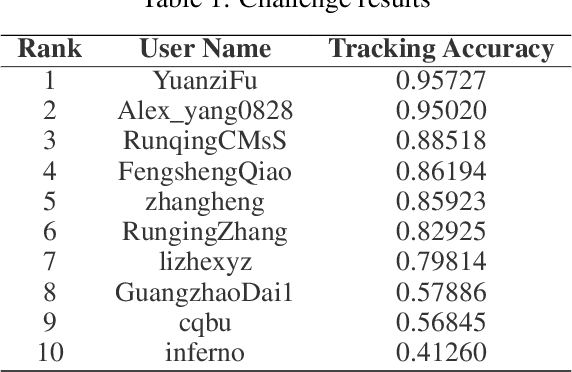
The SkatingVerse Workshop & Challenge aims to encourage research in developing novel and accurate methods for human action understanding. The SkatingVerse dataset used for the SkatingVerse Challenge has been publicly released. There are two subsets in the dataset, i.e., the training subset and testing subset. The training subsets consists of 19,993 RGB video sequences, and the testing subsets consists of 8,586 RGB video sequences. Around 10 participating teams from the globe competed in the SkatingVerse Challenge. In this paper, we provide a brief summary of the SkatingVerse Workshop & Challenge including brief introductions to the top three methods. The submission leaderboard will be reopened for researchers that are interested in the human action understanding challenge. The benchmark dataset and other information can be found at: https://skatingverse.github.io/.
AdaAugment: A Tuning-Free and Adaptive Approach to Enhance Data Augmentation
May 23, 2024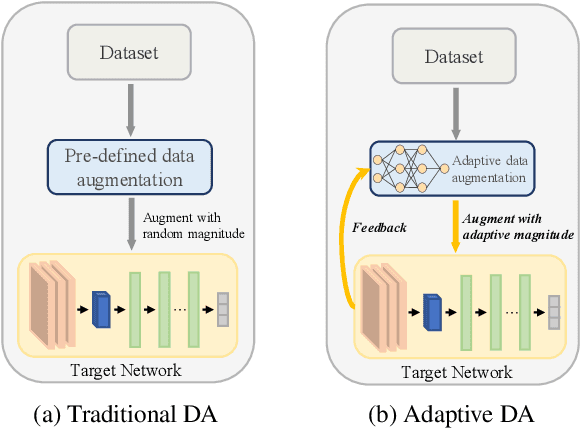
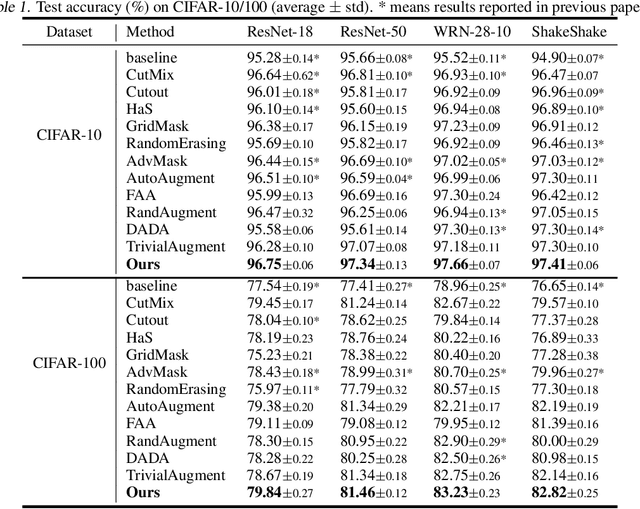
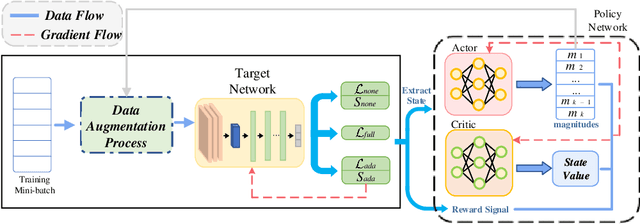
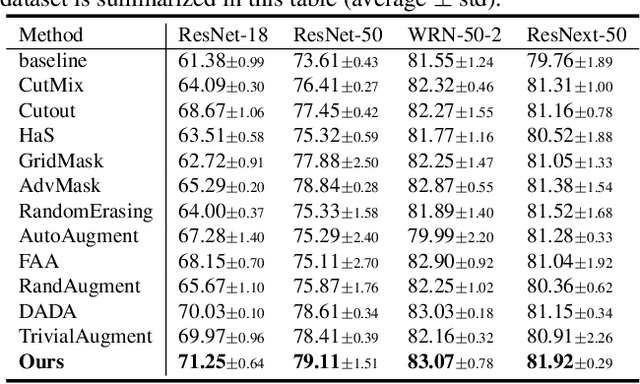
Data augmentation (DA) is widely employed to improve the generalization performance of deep models. However, most existing DA methods use augmentation operations with random magnitudes throughout training. While this fosters diversity, it can also inevitably introduce uncontrolled variability in augmented data, which may cause misalignment with the evolving training status of the target models. Both theoretical and empirical findings suggest that this misalignment increases the risks of underfitting and overfitting. To address these limitations, we propose AdaAugment, an innovative and tuning-free Adaptive Augmentation method that utilizes reinforcement learning to dynamically adjust augmentation magnitudes for individual training samples based on real-time feedback from the target network. Specifically, AdaAugment features a dual-model architecture consisting of a policy network and a target network, which are jointly optimized to effectively adapt augmentation magnitudes. The policy network optimizes the variability within the augmented data, while the target network utilizes the adaptively augmented samples for training. Extensive experiments across benchmark datasets and deep architectures demonstrate that AdaAugment consistently outperforms other state-of-the-art DA methods in effectiveness while maintaining remarkable efficiency.
Multi-Scale Dilated Convolution Network for Long-Term Time Series Forecasting
May 09, 2024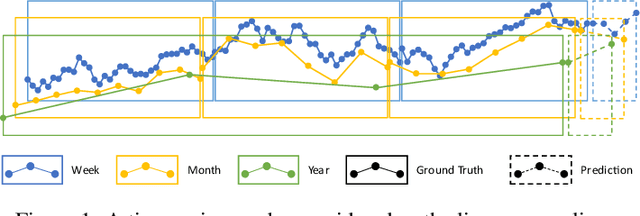
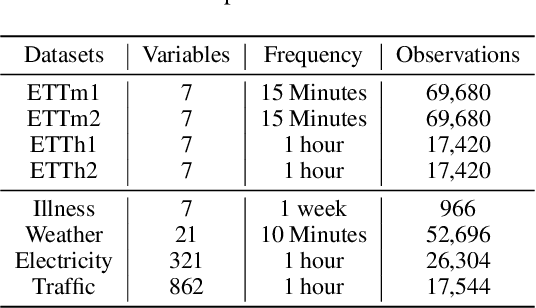
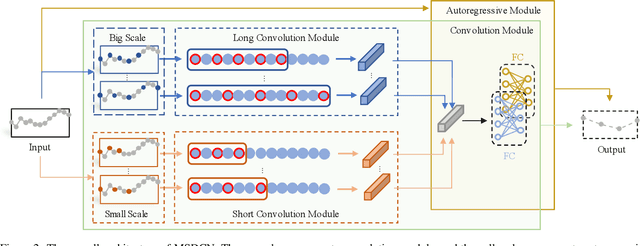
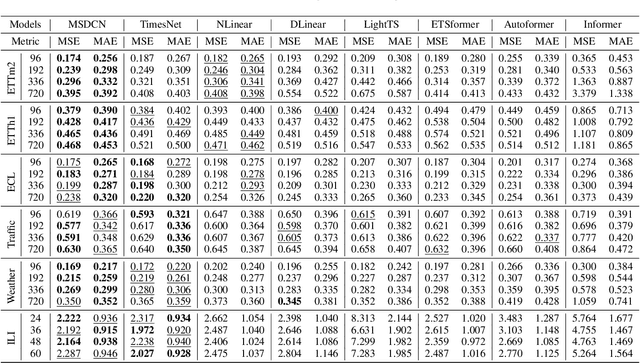
Accurate forecasting of long-term time series has important applications for decision making and planning. However, it remains challenging to capture the long-term dependencies in time series data. To better extract long-term dependencies, We propose Multi Scale Dilated Convolution Network (MSDCN), a method that utilizes a shallow dilated convolution architecture to capture the period and trend characteristics of long time series. We design different convolution blocks with exponentially growing dilations and varying kernel sizes to sample time series data at different scales. Furthermore, we utilize traditional autoregressive model to capture the linear relationships within the data. To validate the effectiveness of the proposed approach, we conduct experiments on eight challenging long-term time series forecasting benchmark datasets. The experimental results show that our approach outperforms the prior state-of-the-art approaches and shows significant inference speed improvements compared to several strong baseline methods.
DriveWorld: 4D Pre-trained Scene Understanding via World Models for Autonomous Driving
May 07, 2024Vision-centric autonomous driving has recently raised wide attention due to its lower cost. Pre-training is essential for extracting a universal representation. However, current vision-centric pre-training typically relies on either 2D or 3D pre-text tasks, overlooking the temporal characteristics of autonomous driving as a 4D scene understanding task. In this paper, we address this challenge by introducing a world model-based autonomous driving 4D representation learning framework, dubbed \emph{DriveWorld}, which is capable of pre-training from multi-camera driving videos in a spatio-temporal fashion. Specifically, we propose a Memory State-Space Model for spatio-temporal modelling, which consists of a Dynamic Memory Bank module for learning temporal-aware latent dynamics to predict future changes and a Static Scene Propagation module for learning spatial-aware latent statics to offer comprehensive scene contexts. We additionally introduce a Task Prompt to decouple task-aware features for various downstream tasks. The experiments demonstrate that DriveWorld delivers promising results on various autonomous driving tasks. When pre-trained with the OpenScene dataset, DriveWorld achieves a 7.5% increase in mAP for 3D object detection, a 3.0% increase in IoU for online mapping, a 5.0% increase in AMOTA for multi-object tracking, a 0.1m decrease in minADE for motion forecasting, a 3.0% increase in IoU for occupancy prediction, and a 0.34m reduction in average L2 error for planning.