 Add to Chrome
 Add to Firefox
 Add to Edge
CuteTTS: Efficient and High-Quality Speech Synthesis via Autoregressive Modeling of Continuous Latents
Aug 09, 2026
Zero-shot text-to-speech (TTS) now supports interactive assistants, personalized media, and accessibility tools. All TTS systems require faithful linguistic rendering, consistent speaker identity, and low-latency response. Yet compact streaming systems must preserve sufficient acoustic detail in a predictable low-rate latent sequence, while iterative diffusion sampling and classifier-free guidance multiply inference cost at every autoregressive step. To strike a balance between high-fidelity synthesis and low-latency inference, we present CuteTTS, a compact continuous-autoregressive TTS system. It combines semantically aligned causal VAE latents with patch-level autoregression, explicit speaker conditioning, and a bidirectional flow-matching head. We further introduce guidance-step distillation, which absorbs classifier-free guidance and multiple solver steps into a single interval-conditioned student. Evaluations on LibriSpeech and Seed-TTS-Eval demonstrate competitive intelligibility and speaker similarity in zero-shot voice cloning, while distillation lowers first-audio latency by 23.3% and real-time factor by 40.8% relative to the base model with comparable objective and subjective quality. These results provide a practical path toward continuous-autoregressive TTS that reconciles high-fidelity generation with the latency demands of real-time interaction.

CSTrader: A Testbed for Language-Grounded Trading in a Community-Driven Virtual Asset Market
Jun 30, 2026Niche asset markets, such as Counter-Strike 2 (CS2) weapon skins, are small, volatile, and heavily driven by community discussions and platform rules. These properties make them hard for traditional quantitative models, but provide an ideal testbed for studying how large language models (LLMs) turn unstructured text into trading actions. We present CSTrader, a multi-agent framework for language-grounded trading in the CS2 skin market. The system first integrates heterogeneous signals from various sources, then uses specialized agents for technical analysis, liquidity, events, and (reversed) sentiment, and finally applies risk control, transaction friction, and portfolio management agents to produce buy, sell, or hold decisions under realistic trading frictions. We build a live-like evaluation environment with real CS2 data from a highly volatile period and evaluate several recent LLM backbones. Across models, CSTrader consistently outperforms both a falling market index (-15.62%) and simple single-prompt LLM baselines, achieving up to a 7.58% cumulative return with controlled risk. Ablation studies show that liquidity, reversed sentiment, and transaction friction agents are crucial for turning noisy language signals into stable profits, suggesting that niche, language-driven markets are a useful benchmark for future language-to-action research. Code is available at: https://github.com/IatomicreactorI/CSGOTrading?tab=readme-ov-file#quick-start
TrajRS: Towards Certified Robustness in Pedestrian Trajectory Prediction
Jun 27, 2026The robustness of trajectory prediction models is crucial for developing safe autonomous driving systems. Adversarial attacks on trajectory prediction can significantly impair the accuracy of predicted trajectories, leading to hazardous driving behaviors. While heuristic defense strategies have been implemented to enhance the robustness of trajectory prediction models, these measures often fail against more sophisticated, targeted adversarial attacks. Hence, there is a pressing need to establish verifiable safety assurances for trajectory prediction models. In this paper, we extend the traditional Randomized Smoothing framework to "TrajRS", which provides a certified robust radius for smoothed trajectory predictors. We clarify and expand the formal definitions of robustness in trajectory prediction and tailor the practical TrajRS scheme specifically to "robustness for the optimal prediction" and "robustness for all possible predictions". An extensive set of experiments demonstrates that TrajRS effectively achieves robustness certification for all smoothed pedestrian trajectory predictors in this work.
Vclip: Face-based Speaker Generation by Face-voice Association Learning
Jan 06, 2026This paper discusses the task of face-based speech synthesis, a kind of personalized speech synthesis where the synthesized voices are constrained to perceptually match with a reference face image. Due to the lack of TTS-quality audio-visual corpora, previous approaches suffer from either low synthesis quality or domain mismatch induced by a knowledge transfer scheme. This paper proposes a new approach called Vclip that utilizes the facial-semantic knowledge of the CLIP encoder on noisy audio-visual data to learn the association between face and voice efficiently, achieving 89.63% cross-modal verification AUC score on Voxceleb testset. The proposed method then uses a retrieval-based strategy, combined with GMM-based speaker generation module for a downstream TTS system, to produce probable target speakers given reference images. Experimental results demonstrate that the proposed Vclip system in conjunction with the retrieval step can bridge the gap between face and voice features for face-based speech synthesis. And using the feedback information distilled from downstream TTS helps to synthesize voices that match closely with reference faces. Demos available at sos1sos2sixteen.github.io/vclip.
Kalman Filtering of Stationary Graph Signals
Sep 16, 2025In this paper, we propose a novel definition of stationary graph signals, formulated with respect to a symmetric graph shift, such as the graph Laplacian. We show that stationary graph signals can be generated by transmitting white noise through polynomial graph channels, and that their stationarity is preserved under polynomial channel transmission. In this paper, we also investigate Kalman filtering to dynamical systems characterized by polynomial state and observation matrices. We demonstrate that Kalman filtering maintains the stationarity of graph signals, while effectively incorporating both system dynamics and noise structure. In comparison to the static inverse filtering method and naive zero-signal strategy, the Kalman filtering procedure yields more accurate and adaptive signal estimates, highlighting its robustness and versatility in graph signal processing.
Blind Deconvolution of Nonstationary Graph Signals over Shift-Invariant Channels
Aug 24, 2025In this paper, we investigate blind deconvolution of nonstationary graph signals from noisy observations, transmitted through an unknown shift-invariant channel. The deconvolution process assumes that the observer has access to the covariance structure of the original graph signals. To evaluate the effectiveness of our channel estimation and blind deconvolution method, we conduct numerical experiments using a temperature dataset in the Brest region of France.
Time Travel is Cheating: Going Live with DeepFund for Real-Time Fund Investment Benchmarking
May 16, 2025Large Language Models (LLMs) have demonstrated notable capabilities across financial tasks, including financial report summarization, earnings call transcript analysis, and asset classification. However, their real-world effectiveness in managing complex fund investment remains inadequately assessed. A fundamental limitation of existing benchmarks for evaluating LLM-driven trading strategies is their reliance on historical back-testing, inadvertently enabling LLMs to "time travel"-leveraging future information embedded in their training corpora, thus resulting in possible information leakage and overly optimistic performance estimates. To address this issue, we introduce DeepFund, a live fund benchmark tool designed to rigorously evaluate LLM in real-time market conditions. Utilizing a multi-agent architecture, DeepFund connects directly with real-time stock market data-specifically data published after each model pretraining cutoff-to ensure fair and leakage-free evaluations. Empirical tests on nine flagship LLMs from leading global institutions across multiple investment dimensions-including ticker-level analysis, investment decision-making, portfolio management, and risk control-reveal significant practical challenges. Notably, even cutting-edge models such as DeepSeek-V3 and Claude-3.7-Sonnet incur net trading losses within DeepFund real-time evaluation environment, underscoring the present limitations of LLMs for active fund management. Our code is available at https://github.com/HKUSTDial/DeepFund.
EducationQ: Evaluating LLMs' Teaching Capabilities Through Multi-Agent Dialogue Framework
Apr 21, 2025Large language models (LLMs) increasingly serve as educational tools, yet evaluating their teaching capabilities remains challenging due to the resource-intensive, context-dependent, and methodologically complex nature of teacher-student interactions. We introduce EducationQ, a multi-agent dialogue framework that efficiently assesses teaching capabilities through simulated dynamic educational scenarios, featuring specialized agents for teaching, learning, and evaluation. Testing 14 LLMs across major AI Organizations (OpenAI, Meta, Google, Anthropic, and others) on 1,498 questions spanning 13 disciplines and 10 difficulty levels reveals that teaching effectiveness does not correlate linearly with model scale or general reasoning capabilities - with some smaller open-source models outperforming larger commercial counterparts in teaching contexts. This finding highlights a critical gap in current evaluations that prioritize knowledge recall over interactive pedagogy. Our mixed-methods evaluation, combining quantitative metrics with qualitative analysis and expert case studies, identifies distinct pedagogical strengths employed by top-performing models (e.g., sophisticated questioning strategies, adaptive feedback mechanisms). Human expert evaluations show 78% agreement with our automated qualitative analysis of effective teaching behaviors, validating our methodology. EducationQ demonstrates that LLMs-as-teachers require specialized optimization beyond simple scaling, suggesting next-generation educational AI prioritize targeted enhancement of specific pedagogical effectiveness.
ViDTA: Enhanced Drug-Target Affinity Prediction via Virtual Graph Nodes and Attention-based Feature Fusion
Dec 27, 2024

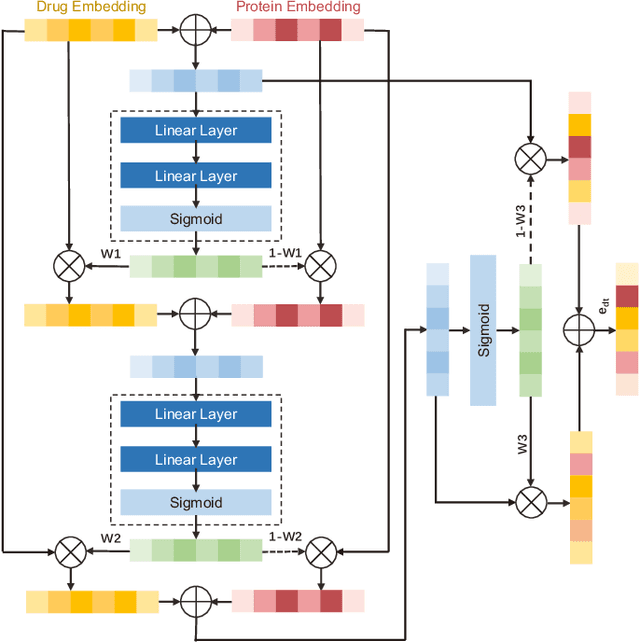
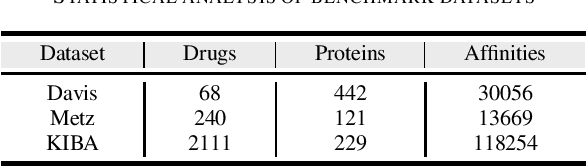
Drug-target interaction is fundamental in understanding how drugs affect biological systems, and accurately predicting drug-target affinity (DTA) is vital for drug discovery. Recently, deep learning methods have emerged as a significant approach for estimating the binding strength between drugs and target proteins. However, existing methods simply utilize the drug's local information from molecular topology rather than global information. Additionally, the features of drugs and proteins are usually fused with a simple concatenation operation, limiting their effectiveness. To address these challenges, we proposed ViDTA, an enhanced DTA prediction framework. We introduce virtual nodes into the Graph Neural Network (GNN)-based drug feature extraction network, which acts as a global memory to exchange messages more efficiently. By incorporating virtual graph nodes, we seamlessly integrate local and global features of drug molecular structures, expanding the GNN's receptive field. Additionally, we propose an attention-based linear feature fusion network for better capturing the interaction information between drugs and proteins. Experimental results evaluated on various benchmarks including Davis, Metz, and KIBA demonstrate that our proposed ViDTA outperforms the state-of-the-art baselines.
Distributed satellite information networks: Architecture, enabling technologies, and trends
Dec 17, 2024

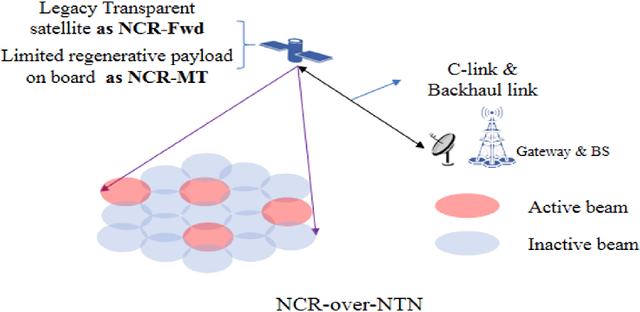

Driven by the vision of ubiquitous connectivity and wireless intelligence, the evolution of ultra-dense constellation-based satellite-integrated Internet is underway, now taking preliminary shape. Nevertheless, the entrenched institutional silos and limited, nonrenewable heterogeneous network resources leave current satellite systems struggling to accommodate the escalating demands of next-generation intelligent applications. In this context, the distributed satellite information networks (DSIN), exemplified by the cohesive clustered satellites system, have emerged as an innovative architecture, bridging information gaps across diverse satellite systems, such as communication, navigation, and remote sensing, and establishing a unified, open information network paradigm to support resilient space information services. This survey first provides a profound discussion about innovative network architectures of DSIN, encompassing distributed regenerative satellite network architecture, distributed satellite computing network architecture, and reconfigurable satellite formation flying, to enable flexible and scalable communication, computing and control. The DSIN faces challenges from network heterogeneity, unpredictable channel dynamics, sparse resources, and decentralized collaboration frameworks. To address these issues, a series of enabling technologies is identified, including channel modeling and estimation, cloud-native distributed MIMO cooperation, grant-free massive access, network routing, and the proper combination of all these diversity techniques. Furthermore, to heighten the overall resource efficiency, the cross-layer optimization techniques are further developed to meet upper-layer deterministic, adaptive and secure information services requirements. In addition, emerging research directions and new opportunities are highlighted on the way to achieving the DSIN vision.