 Add to Chrome
 Add to Firefox
 Add to Edge
ACDC: Automated Creation of Digital Cousins for Robust Policy Learning
Oct 09, 2024


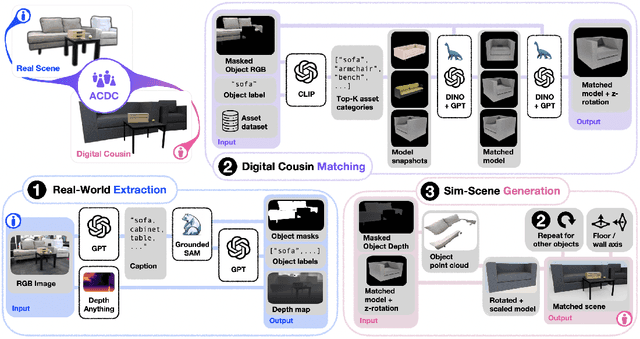

Training robot policies in the real world can be unsafe, costly, and difficult to scale. Simulation serves as an inexpensive and potentially limitless source of training data, but suffers from the semantics and physics disparity beween simulated and real-world environments. These discrepancies can be minimized by training in digital twins,which serve as virtual replicas of a real scene but are expensive to generate and cannot produce cross-domain generalization. To address these limitations, we propose the concept of digital cousins, a virtual asset or scene that, unlike a digital twin,does not explicitly model a real-world counterpart but still exhibits similar geometric and semantic affordances. As a result, digital cousins simultaneously reduce the cost of generating an analogous virtual environment while also facilitating better robustness during sim-to-real domain transfer by providing a distribution of similar training scenes. Leveraging digital cousins, we introduce a novel method for the Automatic Creation of Digital Cousins (ACDC), and propose a fully automated real-to-sim-to-real pipeline for generating fully interactive scenes and training robot policies that can be deployed zero-shot in the original scene. We find that ACDC can produce digital cousin scenes that preserve geometric and semantic affordances, and can be used to train policies that outperform policies trained on digital twins, achieving 90% vs. 25% under zero-shot sim-to-real transfer. Additional details are available at https://digital-cousins.github.io/.

Embodied Agent Interface: Benchmarking LLMs for Embodied Decision Making
Oct 09, 2024


We aim to evaluate Large Language Models (LLMs) for embodied decision making. While a significant body of work has been leveraging LLMs for decision making in embodied environments, we still lack a systematic understanding of their performance because they are usually applied in different domains, for different purposes, and built based on different inputs and outputs. Furthermore, existing evaluations tend to rely solely on a final success rate, making it difficult to pinpoint what ability is missing in LLMs and where the problem lies, which in turn blocks embodied agents from leveraging LLMs effectively and selectively. To address these limitations, we propose a generalized interface (Embodied Agent Interface) that supports the formalization of various types of tasks and input-output specifications of LLM-based modules. Specifically, it allows us to unify 1) a broad set of embodied decision-making tasks involving both state and temporally extended goals, 2) four commonly-used LLM-based modules for decision making: goal interpretation, subgoal decomposition, action sequencing, and transition modeling, and 3) a collection of fine-grained metrics which break down evaluation into various types of errors, such as hallucination errors, affordance errors, various types of planning errors, etc. Overall, our benchmark offers a comprehensive assessment of LLMs' performance for different subtasks, pinpointing the strengths and weaknesses in LLM-powered embodied AI systems, and providing insights for effective and selective use of LLMs in embodied decision making.
Don't Cut Corners: Exact Conditions for Modularity in Biologically Inspired Representations
Oct 08, 2024


Why do biological and artificial neurons sometimes modularise, each encoding a single meaningful variable, and sometimes entangle their representation of many variables? In this work, we develop a theory of when biologically inspired representations -- those that are nonnegative and energy efficient -- modularise with respect to source variables (sources). We derive necessary and sufficient conditions on a sample of sources that determine whether the neurons in an optimal biologically-inspired linear autoencoder modularise. Our theory applies to any dataset, extending far beyond the case of statistical independence studied in previous work. Rather, we show that sources modularise if their support is "sufficiently spread". From this theory, we extract and validate predictions in a variety of empirical studies on how data distribution affects modularisation in nonlinear feedforward and recurrent neural networks trained on supervised and unsupervised tasks. Furthermore, we apply these ideas to neuroscience data. First, we explain why two studies that recorded prefrontal activity in working memory tasks conflict on whether memories are encoded in orthogonal subspaces: the support of the sources differed due to a critical discrepancy in experimental protocol. Second, we use similar arguments to understand why preparatory and potent subspaces in RNN models of motor cortex are only sometimes orthogonal. Third, we study spatial and reward information mixing in entorhinal recordings, and show our theory matches data better than previous work. And fourth, we suggest a suite of surprising settings in which neurons can be (or appear) mixed selective, without requiring complex nonlinear readouts as in traditional theories. In sum, our theory prescribes precise conditions on when neural activities modularise, providing tools for inducing and elucidating modular representations in brains and machines.
MARPLE: A Benchmark for Long-Horizon Inference
Oct 02, 2024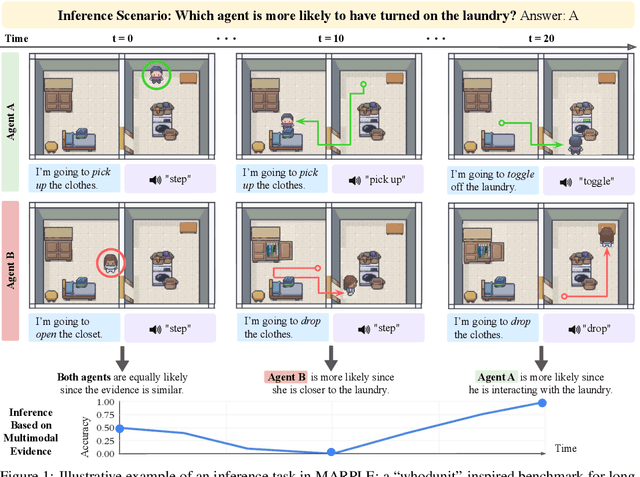
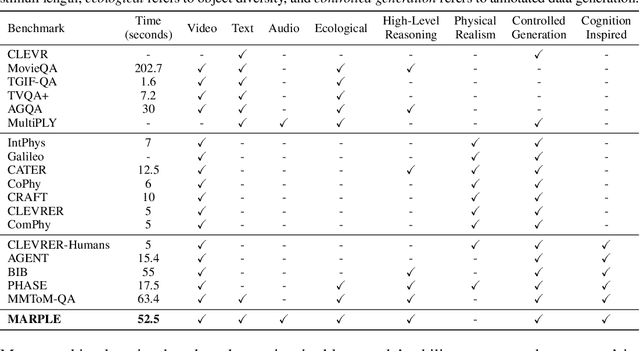
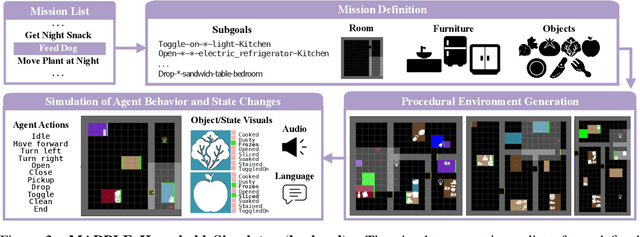

Reconstructing past events requires reasoning across long time horizons. To figure out what happened, we need to use our prior knowledge about the world and human behavior and draw inferences from various sources of evidence including visual, language, and auditory cues. We introduce MARPLE, a benchmark for evaluating long-horizon inference capabilities using multi-modal evidence. Our benchmark features agents interacting with simulated households, supporting vision, language, and auditory stimuli, as well as procedurally generated environments and agent behaviors. Inspired by classic ``whodunit'' stories, we ask AI models and human participants to infer which agent caused a change in the environment based on a step-by-step replay of what actually happened. The goal is to correctly identify the culprit as early as possible. Our findings show that human participants outperform both traditional Monte Carlo simulation methods and an LLM baseline (GPT-4) on this task. Compared to humans, traditional inference models are less robust and performant, while GPT-4 has difficulty comprehending environmental changes. We analyze what factors influence inference performance and ablate different modes of evidence, finding that all modes are valuable for performance. Overall, our experiments demonstrate that the long-horizon, multimodal inference tasks in our benchmark present a challenge to current models.
FactorSim: Generative Simulation via Factorized Representation
Sep 26, 2024Generating simulations to train intelligent agents in game-playing and robotics from natural language input, from user input or task documentation, remains an open-ended challenge. Existing approaches focus on parts of this challenge, such as generating reward functions or task hyperparameters. Unlike previous work, we introduce FACTORSIM that generates full simulations in code from language input that can be used to train agents. Exploiting the structural modularity specific to coded simulations, we propose to use a factored partially observable Markov decision process representation that allows us to reduce context dependence during each step of the generation. For evaluation, we introduce a generative simulation benchmark that assesses the generated simulation code's accuracy and effectiveness in facilitating zero-shot transfers in reinforcement learning settings. We show that FACTORSIM outperforms existing methods in generating simulations regarding prompt alignment (e.g., accuracy), zero-shot transfer abilities, and human evaluation. We also demonstrate its effectiveness in generating robotic tasks.
What Makes a Maze Look Like a Maze?
Sep 12, 2024A unique aspect of human visual understanding is the ability to flexibly interpret abstract concepts: acquiring lifted rules explaining what they symbolize, grounding them across familiar and unfamiliar contexts, and making predictions or reasoning about them. While off-the-shelf vision-language models excel at making literal interpretations of images (e.g., recognizing object categories such as tree branches), they still struggle to make sense of such visual abstractions (e.g., how an arrangement of tree branches may form the walls of a maze). To address this challenge, we introduce Deep Schema Grounding (DSG), a framework that leverages explicit structured representations of visual abstractions for grounding and reasoning. At the core of DSG are schemas--dependency graph descriptions of abstract concepts that decompose them into more primitive-level symbols. DSG uses large language models to extract schemas, then hierarchically grounds concrete to abstract components of the schema onto images with vision-language models. The grounded schema is used to augment visual abstraction understanding. We systematically evaluate DSG and different methods in reasoning on our new Visual Abstractions Dataset, which consists of diverse, real-world images of abstract concepts and corresponding question-answer pairs labeled by humans. We show that DSG significantly improves the abstract visual reasoning performance of vision-language models, and is a step toward human-aligned understanding of visual abstractions.
View-Invariant Policy Learning via Zero-Shot Novel View Synthesis
Sep 05, 2024Large-scale visuomotor policy learning is a promising approach toward developing generalizable manipulation systems. Yet, policies that can be deployed on diverse embodiments, environments, and observational modalities remain elusive. In this work, we investigate how knowledge from large-scale visual data of the world may be used to address one axis of variation for generalizable manipulation: observational viewpoint. Specifically, we study single-image novel view synthesis models, which learn 3D-aware scene-level priors by rendering images of the same scene from alternate camera viewpoints given a single input image. For practical application to diverse robotic data, these models must operate zero-shot, performing view synthesis on unseen tasks and environments. We empirically analyze view synthesis models within a simple data-augmentation scheme that we call View Synthesis Augmentation (VISTA) to understand their capabilities for learning viewpoint-invariant policies from single-viewpoint demonstration data. Upon evaluating the robustness of policies trained with our method to out-of-distribution camera viewpoints, we find that they outperform baselines in both simulated and real-world manipulation tasks. Videos and additional visualizations are available at https://s-tian.github.io/projects/vista.
D5RL: Diverse Datasets for Data-Driven Deep Reinforcement Learning
Aug 15, 2024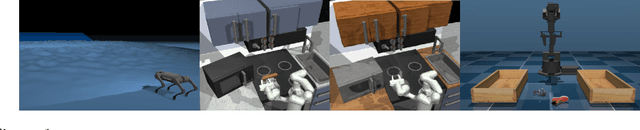
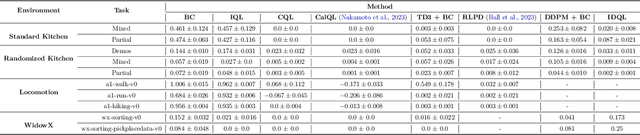
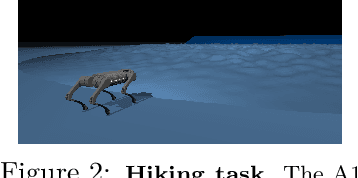
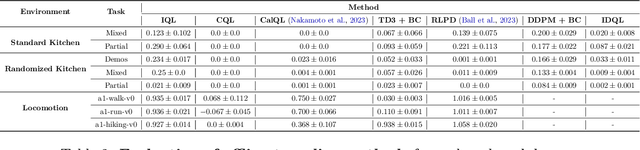
Offline reinforcement learning algorithms hold the promise of enabling data-driven RL methods that do not require costly or dangerous real-world exploration and benefit from large pre-collected datasets. This in turn can facilitate real-world applications, as well as a more standardized approach to RL research. Furthermore, offline RL methods can provide effective initializations for online finetuning to overcome challenges with exploration. However, evaluating progress on offline RL algorithms requires effective and challenging benchmarks that capture properties of real-world tasks, provide a range of task difficulties, and cover a range of challenges both in terms of the parameters of the domain (e.g., length of the horizon, sparsity of rewards) and the parameters of the data (e.g., narrow demonstration data or broad exploratory data). While considerable progress in offline RL in recent years has been enabled by simpler benchmark tasks, the most widely used datasets are increasingly saturating in performance and may fail to reflect properties of realistic tasks. We propose a new benchmark for offline RL that focuses on realistic simulations of robotic manipulation and locomotion environments, based on models of real-world robotic systems, and comprising a variety of data sources, including scripted data, play-style data collected by human teleoperators, and other data sources. Our proposed benchmark covers state-based and image-based domains, and supports both offline RL and online fine-tuning evaluation, with some of the tasks specifically designed to require both pre-training and fine-tuning. We hope that our proposed benchmark will facilitate further progress on both offline RL and fine-tuning algorithms. Website with code, examples, tasks, and data is available at \url{https://sites.google.com/view/d5rl/}
Enhancing Equitable Access to AI in Housing and Homelessness System of Care through Federated Learning
Aug 14, 2024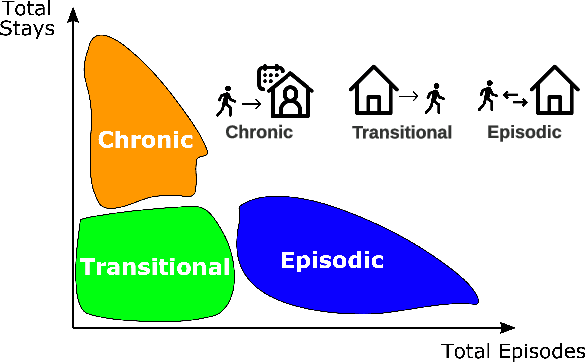
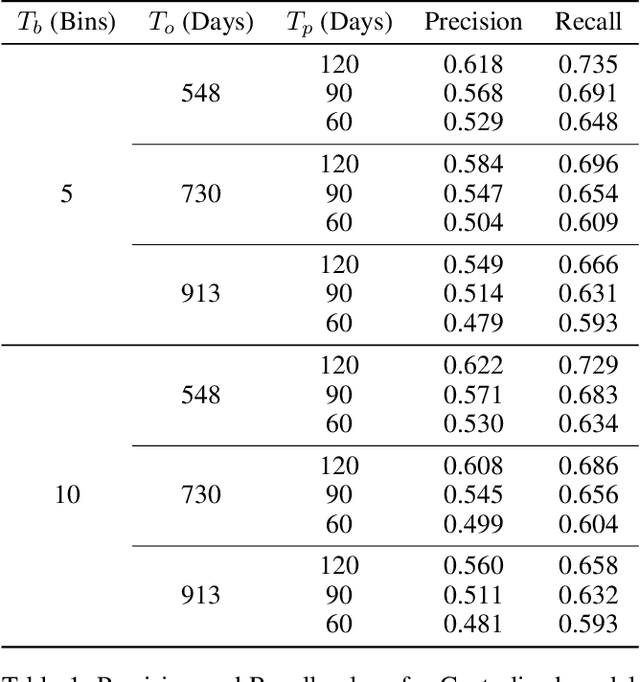
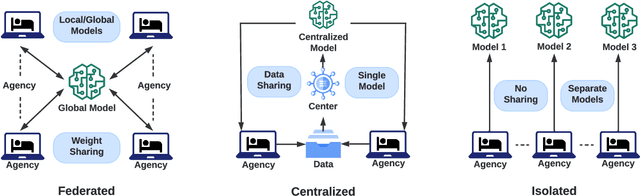
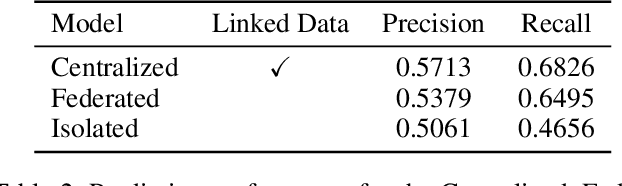
The top priority of a Housing and Homelessness System of Care (HHSC) is to connect people experiencing homelessness to supportive housing. An HHSC typically consists of many agencies serving the same population. Information technology platforms differ in type and quality between agencies, so their data are usually isolated from one agency to another. Larger agencies may have sufficient data to train and test artificial intelligence (AI) tools but smaller agencies typically do not. To address this gap, we introduce a Federated Learning (FL) approach enabling all agencies to train a predictive model collaboratively without sharing their sensitive data. We demonstrate how FL can be used within an HHSC to provide all agencies equitable access to quality AI and further assist human decision-makers in the allocation of resources within HHSC. This is achieved while preserving the privacy of the people within the data by not sharing identifying information between agencies without their consent. Our experimental results using real-world HHSC data from Calgary, Alberta, demonstrate that our FL approach offers comparable performance with the idealized scenario of training the predictive model with data fully shared and linked between agencies.
RoboPack: Learning Tactile-Informed Dynamics Models for Dense Packing
Jul 01, 2024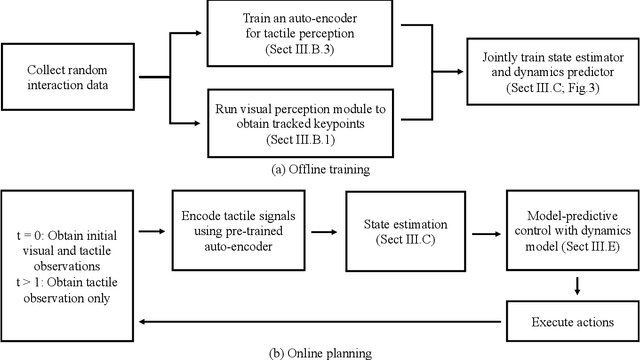
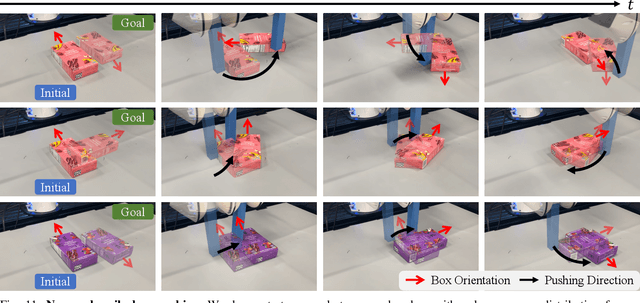
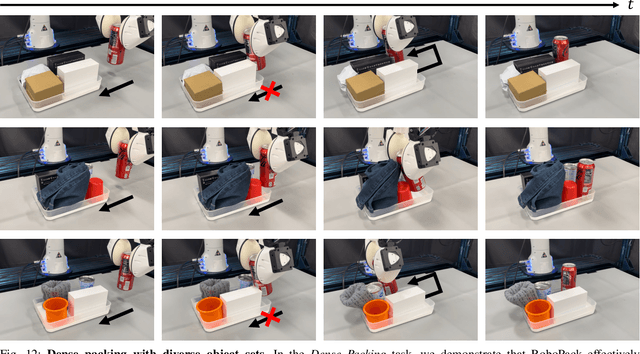
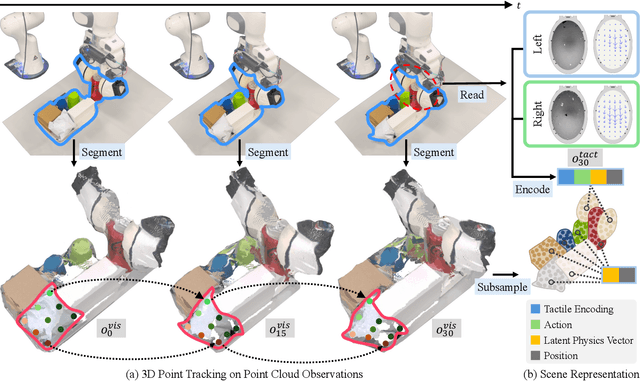
Tactile feedback is critical for understanding the dynamics of both rigid and deformable objects in many manipulation tasks, such as non-prehensile manipulation and dense packing. We introduce an approach that combines visual and tactile sensing for robotic manipulation by learning a neural, tactile-informed dynamics model. Our proposed framework, RoboPack, employs a recurrent graph neural network to estimate object states, including particles and object-level latent physics information, from historical visuo-tactile observations and to perform future state predictions. Our tactile-informed dynamics model, learned from real-world data, can solve downstream robotics tasks with model-predictive control. We demonstrate our approach on a real robot equipped with a compliant Soft-Bubble tactile sensor on non-prehensile manipulation and dense packing tasks, where the robot must infer the physics properties of objects from direct and indirect interactions. Trained on only an average of 30 minutes of real-world interaction data per task, our model can perform online adaptation and make touch-informed predictions. Through extensive evaluations in both long-horizon dynamics prediction and real-world manipulation, our method demonstrates superior effectiveness compared to previous learning-based and physics-based simulation systems.