 Add to Chrome
 Add to Firefox
 Add to Edge
K-Level Reasoning with Large Language Models
Feb 02, 2024
While Large Language Models (LLMs) have demonstrated their proficiency in complex reasoning tasks, their performance in dynamic, interactive, and competitive scenarios - such as business strategy and stock market analysis - remains underexplored. To bridge this gap, we formally explore the dynamic reasoning capabilities of LLMs for decision-making in rapidly evolving environments. We introduce two game theory-based pilot challenges that mirror the complexities of real-world dynamic decision-making. These challenges are well-defined, enabling clear, controllable, and precise evaluation of LLMs' dynamic reasoning abilities. Through extensive experiments, we find that existing reasoning methods tend to falter in dynamic settings that require k-level thinking - a key concept not tackled by previous works. To address this, we propose a novel reasoning approach for LLMs, named "K-Level Reasoning". This approach adopts the perspective of rivals to recursively employ k-level thinking based on available historical information, which significantly improves the prediction accuracy of rivals' subsequent moves and informs more strategic decision-making. This research not only sets a robust quantitative benchmark for the assessment of dynamic reasoning but also markedly enhances the proficiency of LLMs in dynamic contexts.

Improving Domain Adaptation through Extended-Text Reading Comprehension
Jan 18, 2024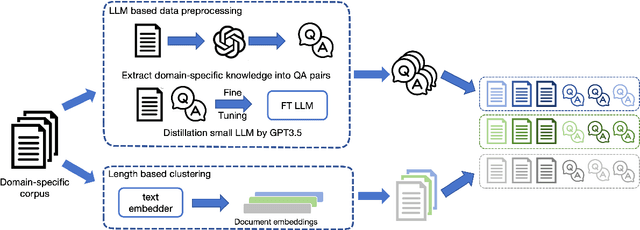
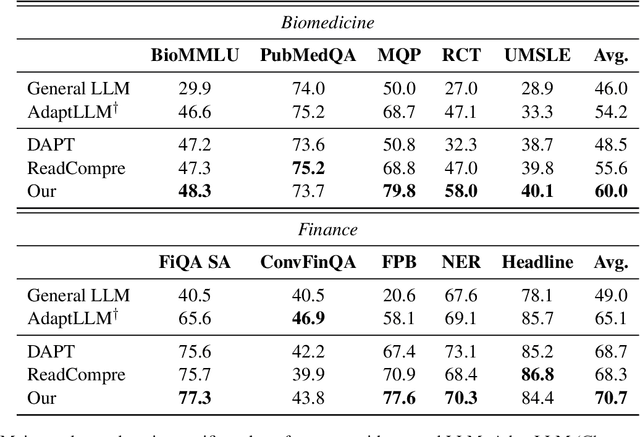
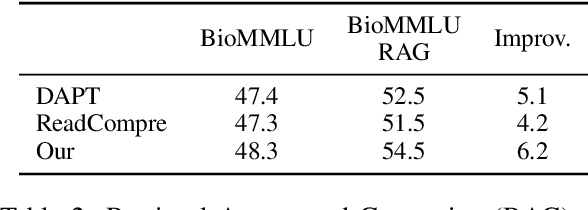
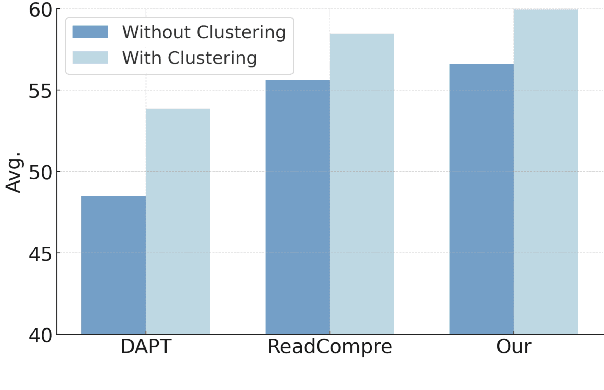
To enhance the domain-specific capabilities of large language models, continued pre-training on a domain-specific corpus is a prevalent method. Recent work demonstrates that adapting models using reading comprehension data formatted by regex-based patterns can significantly improve performance on domain-specific tasks. However, regex-based patterns are incapable of parsing raw corpora using domain-specific knowledge. Furthermore, the question and answer pairs are extracted directly from the corpus in predefined formats offers limited context. To address this limitation, we improve reading comprehension via LLM and clustering. LLM focuses on leveraging domain knowledge within the corpus to refine comprehension stage, while clustering supplies relevant knowledge by extending the context to enrich reading stage. Additionally, our method incorporates parameter-efficient fine-tuning to improve the efficiency of domain adaptation. In comparison to AdaptLLM, our method achieves an improvement exceeding 5% in domain-specific tasks. Our code will available at https://github.com/microsoft/LMOps.
Improving Text Embeddings with Large Language Models
Dec 31, 2023
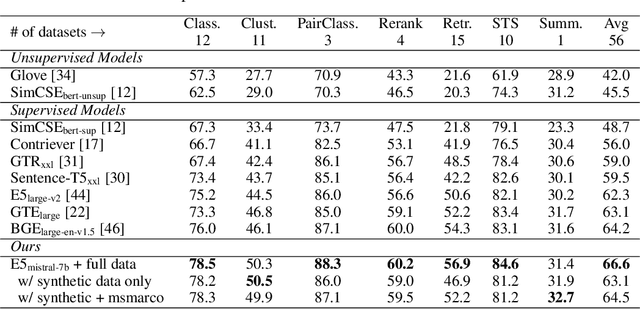


In this paper, we introduce a novel and simple method for obtaining high-quality text embeddings using only synthetic data and less than 1k training steps. Unlike existing methods that often depend on multi-stage intermediate pre-training with billions of weakly-supervised text pairs, followed by fine-tuning with a few labeled datasets, our method does not require building complex training pipelines or relying on manually collected datasets that are often constrained by task diversity and language coverage. We leverage proprietary LLMs to generate diverse synthetic data for hundreds of thousands of text embedding tasks across nearly 100 languages. We then fine-tune open-source decoder-only LLMs on the synthetic data using standard contrastive loss. Experiments demonstrate that our method achieves strong performance on highly competitive text embedding benchmarks without using any labeled data. Furthermore, when fine-tuned with a mixture of synthetic and labeled data, our model sets new state-of-the-art results on the BEIR and MTEB benchmarks.
Boosting Large Language Model for Speech Synthesis: An Empirical Study
Dec 30, 2023Large language models (LLMs) have made significant advancements in natural language processing and are concurrently extending the language ability to other modalities, such as speech and vision. Nevertheless, most of the previous work focuses on prompting LLMs with perception abilities like auditory comprehension, and the effective approach for augmenting LLMs with speech synthesis capabilities remains ambiguous. In this paper, we conduct a comprehensive empirical exploration of boosting LLMs with the ability to generate speech, by combining pre-trained LLM LLaMA/OPT and text-to-speech synthesis model VALL-E. We compare three integration methods between LLMs and speech synthesis models, including directly fine-tuned LLMs, superposed layers of LLMs and VALL-E, and coupled LLMs and VALL-E using LLMs as a powerful text encoder. Experimental results show that, using LoRA method to fine-tune LLMs directly to boost the speech synthesis capability does not work well, and superposed LLMs and VALL-E can improve the quality of generated speech both in speaker similarity and word error rate (WER). Among these three methods, coupled methods leveraging LLMs as the text encoder can achieve the best performance, making it outperform original speech synthesis models with a consistently better speaker similarity and a significant (10.9%) WER reduction.
When an Image is Worth 1,024 x 1,024 Words: A Case Study in Computational Pathology
Dec 06, 2023This technical report presents LongViT, a vision Transformer that can process gigapixel images in an end-to-end manner. Specifically, we split the gigapixel image into a sequence of millions of patches and project them linearly into embeddings. LongNet is then employed to model the extremely long sequence, generating representations that capture both short-range and long-range dependencies. The linear computation complexity of LongNet, along with its distributed algorithm, enables us to overcome the constraints of both computation and memory. We apply LongViT in the field of computational pathology, aiming for cancer diagnosis and prognosis within gigapixel whole-slide images. Experimental results demonstrate that LongViT effectively encodes gigapixel images and outperforms previous state-of-the-art methods on cancer subtyping and survival prediction. Code and models will be available at https://aka.ms/LongViT.
TextDiffuser-2: Unleashing the Power of Language Models for Text Rendering
Nov 28, 2023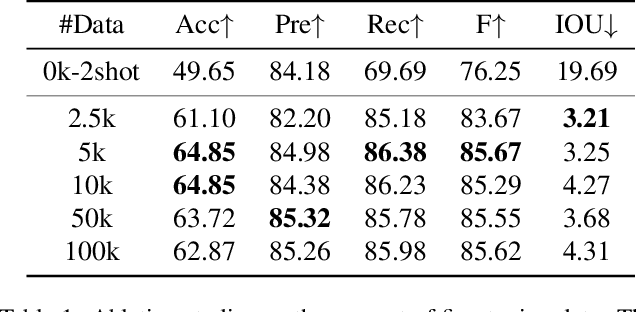


The diffusion model has been proven a powerful generative model in recent years, yet remains a challenge in generating visual text. Several methods alleviated this issue by incorporating explicit text position and content as guidance on where and what text to render. However, these methods still suffer from several drawbacks, such as limited flexibility and automation, constrained capability of layout prediction, and restricted style diversity. In this paper, we present TextDiffuser-2, aiming to unleash the power of language models for text rendering. Firstly, we fine-tune a large language model for layout planning. The large language model is capable of automatically generating keywords for text rendering and also supports layout modification through chatting. Secondly, we utilize the language model within the diffusion model to encode the position and texts at the line level. Unlike previous methods that employed tight character-level guidance, this approach generates more diverse text images. We conduct extensive experiments and incorporate user studies involving human participants as well as GPT-4V, validating TextDiffuser-2's capacity to achieve a more rational text layout and generation with enhanced diversity. The code and model will be available at \url{https://aka.ms/textdiffuser-2}.
ALYMPICS: Language Agents Meet Game Theory
Nov 16, 2023This paper introduces Alympics, a platform that leverages Large Language Model (LLM) agents to facilitate investigations in game theory. By employing LLMs and autonomous agents to simulate human behavior and enable multi-agent collaborations, we can construct realistic and dynamic models of human interactions for game theory hypothesis formulating and testing. To demonstrate this, we present and implement a survival game involving unequal competition for limited resources. Through manipulation of resource availability and agent personalities, we observe how different agents engage in the competition and adapt their strategies. The use of LLM agents in game theory research offers significant advantages, including simulating realistic behavior, providing a controlled, scalable, and reproducible environment. Our work highlights the potential of LLM agents in enhancing the understanding of strategic decision-making within complex socioeconomic contexts. All codes are available at https://github.com/microsoft/Alympics
Auto-ICL: In-Context Learning without Human Supervision
Nov 15, 2023
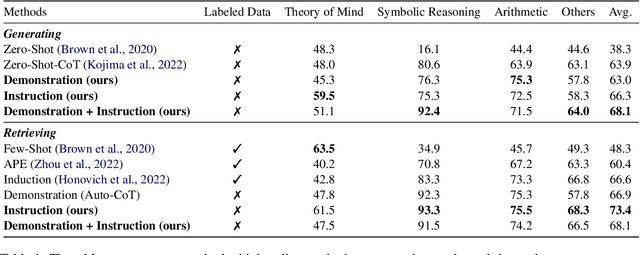


In the era of Large Language Models (LLMs), human-computer interaction has evolved towards natural language, offering unprecedented flexibility. Despite this, LLMs are heavily reliant on well-structured prompts to function efficiently within the realm of In-Context Learning. Vanilla In-Context Learning relies on human-provided contexts, such as labeled examples, explicit instructions, or other guiding mechanisms that shape the model's outputs. To address this challenge, our study presents a universal framework named Automatic In-Context Learning. Upon receiving a user's request, we ask the model to independently generate examples, including labels, instructions, or reasoning pathways. The model then leverages this self-produced context to tackle the given problem. Our approach is universally adaptable and can be implemented in any setting where vanilla In-Context Learning is applicable. We demonstrate that our method yields strong performance across a range of tasks, standing up well when compared to existing methods.
Large Search Model: Redefining Search Stack in the Era of LLMs
Oct 23, 2023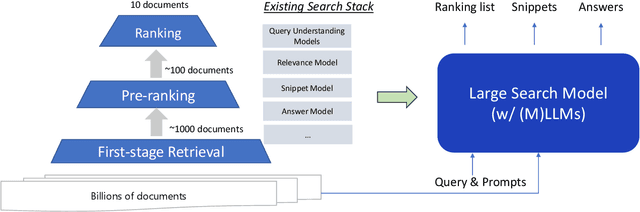

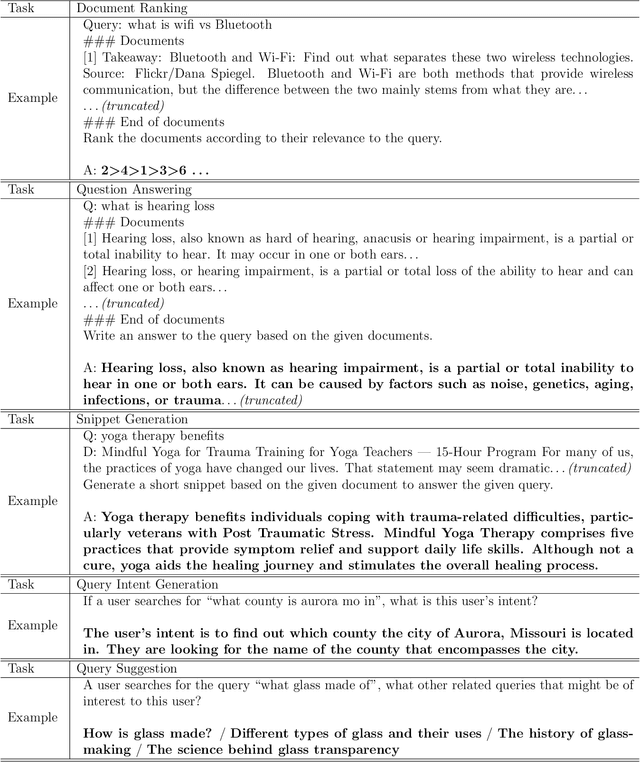

Modern search engines are built on a stack of different components, including query understanding, retrieval, multi-stage ranking, and question answering, among others. These components are often optimized and deployed independently. In this paper, we introduce a novel conceptual framework called large search model, which redefines the conventional search stack by unifying search tasks with one large language model (LLM). All tasks are formulated as autoregressive text generation problems, allowing for the customization of tasks through the use of natural language prompts. This proposed framework capitalizes on the strong language understanding and reasoning capabilities of LLMs, offering the potential to enhance search result quality while simultaneously simplifying the existing cumbersome search stack. To substantiate the feasibility of this framework, we present a series of proof-of-concept experiments and discuss the potential challenges associated with implementing this approach within real-world search systems.
Tuna: Instruction Tuning using Feedback from Large Language Models
Oct 20, 2023Instruction tuning of open-source large language models (LLMs) like LLaMA, using direct outputs from more powerful LLMs such as Instruct-GPT and GPT-4, has proven to be a cost-effective way to align model behaviors with human preferences. However, the instruction-tuned model has only seen one response per instruction, lacking the knowledge of potentially better responses. In this paper, we propose finetuning an instruction-tuned LLM using our novel \textit{probabilistic ranking} and \textit{contextual ranking} approaches to increase the likelihood of generating better responses. Probabilistic ranking enables the instruction-tuned model to inherit the relative rankings of high-quality and low-quality responses from the teacher LLM. On the other hand, learning with contextual ranking allows the model to refine its own response distribution using the contextual understanding ability of stronger LLMs. Furthermore, we apply probabilistic ranking and contextual ranking sequentially to the instruction-tuned LLM. The resulting model, which we call \textbf{Tuna}, consistently improves the performance on Super Natural Instructions (119 test tasks), LMentry (25 test tasks), Vicuna QA, and can even obtain better results than several strong reinforcement learning baselines. Our code and data are available at \url{ https://github.com/microsoft/LMOps}.