 Add to Chrome
 Add to Firefox
 Add to Edge
TRACE: Turn-level Reward Assignment via Credit Estimation for Long-Horizon Agents
Jul 15, 2026
Multi-turn agents solve complex tasks through extended sequences of tool interactions before producing a final answer, making credit assignment a fundamental challenge during post-training. Outcome rewards provide reliable supervision for short-horizon reasoning, but become sparse and high-variance as trajectories grow to tens or hundreds of tool calls. They can also be misleading: a failed rollout may contain many useful actions that move the agent closer to the goal, yet outcome-only training assigns them the same negative advantage as the eventual mistake. We propose TRACE (Turn-level Reward Assignment via Credit Estimation), a dense credit-assignment method for agentic reinforcement learning. TRACE represents rollouts as state transitions at tool-call boundaries, obtains gold-answer log-probabilities from a frozen reference model, transforms them into log-ratio state values, and derives per-action rewards as Temporal-Difference changes in those values. This requires no additional critic or process-label training, and its one-step log-ratio TD component telescopes across redundant tool calls. On long-horizon complex search, TRACE substantially improves base-model tool-use ability using pure RL, without a cold-start supervised fine-tuning stage, an agentic mid-training stage, or training on live-web data. On the closed-web BrowseComp-Plus benchmark, it raises Qwen3-4B from $7.2$ to $35.6$ and Qwen3-30B-A3B from $8.4$ to $42.6$. The learned search behavior also transfers to open-web benchmarks, and the learning curves show earlier improvement and faster convergence during RL training.

Scaling Storm-Resolving Atmospheric AI Simulation to the Entire Planet
Jun 30, 2026Kilometer-scale convection shapes precipitation extremes, tropical organization, and cloud feedbacks, but most global atmospheric models approximate these processes at 25-100 km resolution. Global storm-resolving physics models resolve convective systems explicitly, but at a cost -- roughly one MWh per simulated day on exascale supercomputers -- that limits long-duration simulation. We introduce STRATA (Storm-resolving Tile-based autoRegressive Atmosphere Transformer Architecture), the first autoregressive AI emulator for global storm-resolving atmospheric dynamics. STRATA is trained on the highest-resolution atmospheric dataset yet used for global AI emulation: 17 days of SCREAM physics-model output at 4.9-km resolution (~25 million grid cells) sampled every 10 minutes. Our central premise is that on 10-minute timescales atmospheric dynamics are predominantly local, so training on small spatial tiles trades scarce global temporal samples for abundant local spatial samples and enables global rollout via overlapping-tile blending. STRATA combines 3D patch embedding and local 3D neighborhood attention, a novel Stereographic Rotary Position Embedding (StereoRoPE) for grid-invariant encoding, and a pixel-space de-aliasing decoder that suppresses patch-scale rollout artifacts. An iso-FLOP scaling study reveals that km-scale emulation requires ~10x more FLOPs per grid point than coarse-resolution AI weather models, consistent with the higher information density of convective-scale dynamics. Trained on only 17 days of data, STRATA produces stable 24-hour global rollouts with realistic km-scale dynamics across diverse regimes, though large-scale biases develop with lead time. It achieves 48 simulation days per megawatt-hour -- about 50 times better energy efficiency than the SCREAM physics model -- and 741 simulated days per wall-clock day at 512 H100 GPUs. Code and dataset are publicly available.
LEDGER: Scaling Agentic Document Editing with Dependency-aware Graph Retrieval
Jun 19, 2026We introduce LEDGER to tackle the novel context engineering challenge of agentic document editing, where localized edits to long, structured documents must be applied efficiently without breaking cross-references or semantic consistency. LEDGER constructs a lightweight dependency graph that explicitly models document structure, including hierarchical organization, explicit references, implicit dependencies, and semantic relationships. For each edit, graph-guided retrieval selects only the necessary context, avoiding full-document processing while preserving consistency. We evaluate LEDGER on a curated benchmark of 1.9k test cases with various document types and lengths, spanning six state-of-the-art models: LEDGER improves consistency from 56% to 76% across all six models and test scenarios while reducing token usage. Notably, LEDGER with low reasoning effort matches baseline performance at high reasoning effort using fewer tokens, showing that explicit dependency representations can partially substitute for expensive internal reasoning in agentic document editing.
Orchard: An Open-Source Agentic Modeling Framework
May 14, 2026Agentic modeling aims to transform LLMs into autonomous agents capable of solving complex tasks through planning, reasoning, tool use, and multi-turn interaction with environments. Despite major investment, open research remains constrained by infrastructure and training gaps. Many high-performing systems rely on proprietary codebases, models, or services, while most open-source frameworks focus on orchestration and evaluation rather than scalable agent training. We present Orchard, an open-source framework for scalable agentic modeling. At its core is Orchard Env, a lightweight environment service providing reusable primitives for sandbox lifecycle management across task domains, agent harnesses, and pipeline stages. On top of Orchard Env, we build three agentic modeling recipes. Orchard-SWE targets coding agents. We distill 107K trajectories from MiniMax-M2.5 and Qwen3.5-397B, introduce credit-assignment SFT to learn from productive segments of unresolved trajectories, and apply Balanced Adaptive Rollout for RL. Starting from Qwen3-30B-A3B-Thinking, Orchard-SWE achieves 64.3% on SWE-bench Verified after SFT and 67.5% after SFT+RL, setting a new state of the art among open-source models of comparable size. Orchard-GUI trains a 4B vision-language computer-use agent using only 0.4K distilled trajectories and 2.2K open-ended tasks. It achieves 74.1%, 67.0%, and 64.0% success rates on WebVoyager, Online-Mind2Web, and DeepShop, respectively, making it the strongest open-source model while remaining competitive with proprietary systems. Orchard-Claw targets personal assistant agents. Trained with only 0.2K synthetic tasks, it achieves 59.6% pass@3 on Claw-Eval and 73.9% when paired with a stronger ZeroClaw harness. Collectively, these results show that a lightweight, open, harness-agnostic environment layer enables reusable agentic data, training recipes, and evaluations across domains.
Improving LLM General Preference Alignment via Optimistic Online Mirror Descent
Feb 24, 2025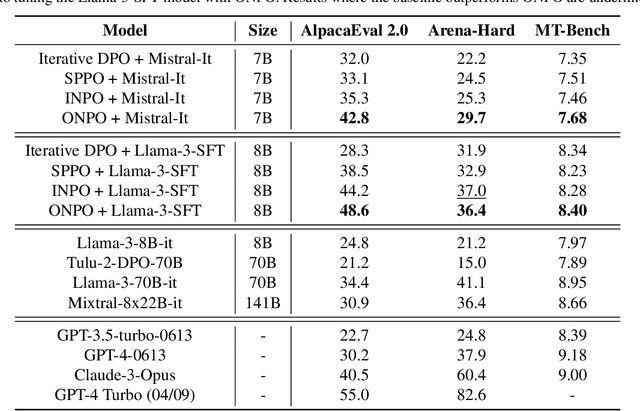
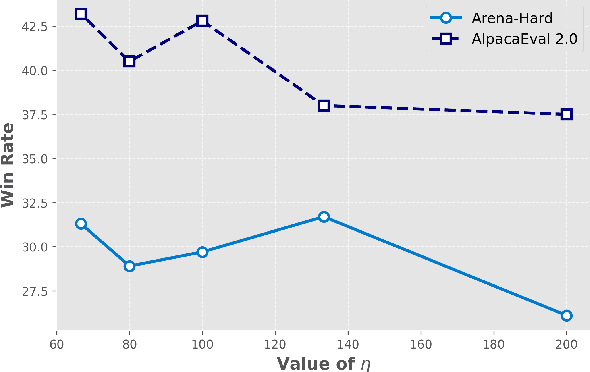

Reinforcement learning from human feedback (RLHF) has demonstrated remarkable effectiveness in aligning large language models (LLMs) with human preferences. Many existing alignment approaches rely on the Bradley-Terry (BT) model assumption, which assumes the existence of a ground-truth reward for each prompt-response pair. However, this assumption can be overly restrictive when modeling complex human preferences. In this paper, we drop the BT model assumption and study LLM alignment under general preferences, formulated as a two-player game. Drawing on theoretical insights from learning in games, we integrate optimistic online mirror descent into our alignment framework to approximate the Nash policy. Theoretically, we demonstrate that our approach achieves an $O(T^{-1})$ bound on the duality gap, improving upon the previous $O(T^{-1/2})$ result. More importantly, we implement our method and show through experiments that it outperforms state-of-the-art RLHF algorithms across multiple representative benchmarks.
OpenCharacter: Training Customizable Role-Playing LLMs with Large-Scale Synthetic Personas
Jan 26, 2025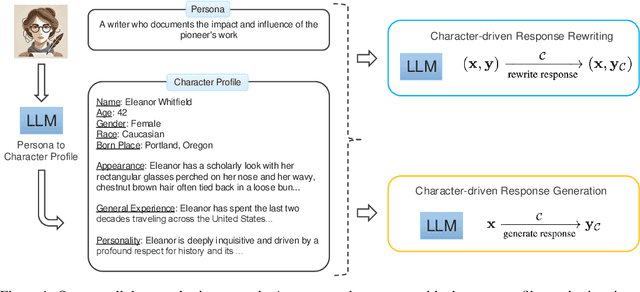
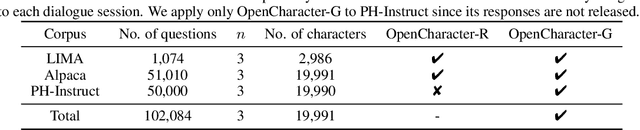


Customizable role-playing in large language models (LLMs), also known as character generalization, is gaining increasing attention for its versatility and cost-efficiency in developing and deploying role-playing dialogue agents. This study explores a large-scale data synthesis approach to equip LLMs with character generalization capabilities. We begin by synthesizing large-scale character profiles using personas from Persona Hub and then explore two strategies: response rewriting and response generation, to create character-aligned instructional responses. To validate the effectiveness of our synthetic instruction tuning data for character generalization, we perform supervised fine-tuning (SFT) using the LLaMA-3 8B model. Our best-performing model strengthens the original LLaMA-3 8B Instruct model and achieves performance comparable to GPT-4o models on role-playing dialogue. We release our synthetic characters and instruction-tuning dialogues to support public research.
Low-Bit Quantization Favors Undertrained LLMs: Scaling Laws for Quantized LLMs with 100T Training Tokens
Nov 26, 2024

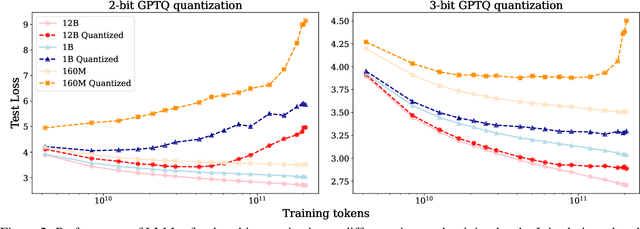
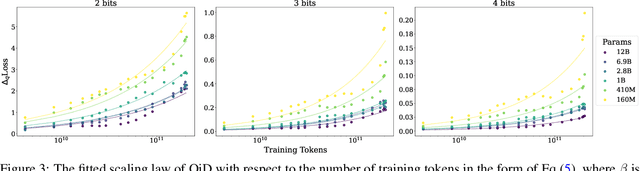
We reveal that low-bit quantization favors undertrained large language models (LLMs) by observing that models with larger sizes or fewer training tokens experience less quantization-induced degradation (QiD) when applying low-bit quantization, whereas smaller models with extensive training tokens suffer significant QiD. To gain deeper insights into this trend, we study over 1500 quantized LLM checkpoints of various sizes and at different training levels (undertrained or fully trained) in a controlled setting, deriving scaling laws for understanding the relationship between QiD and factors such as the number of training tokens, model size and bit width. With the derived scaling laws, we propose a novel perspective that we can use QiD to measure an LLM's training levels and determine the number of training tokens required for fully training LLMs of various sizes. Moreover, we use the scaling laws to predict the quantization performance of different-sized LLMs trained with 100 trillion tokens. Our projection shows that the low-bit quantization performance of future models, which are expected to be trained with over 100 trillion tokens, may NOT be desirable. This poses a potential challenge for low-bit quantization in the future and highlights the need for awareness of a model's training level when evaluating low-bit quantization research. To facilitate future research on this problem, we release all the 1500+ quantized checkpoints used in this work at https://huggingface.co/Xu-Ouyang.
Router-Tuning: A Simple and Effective Approach for Enabling Dynamic-Depth in Transformers
Oct 17, 2024Traditional transformer models often allocate a fixed amount of computational resources to every input token, leading to inefficient and unnecessary computation. To address this, the Mixture of Depths (MoD) was introduced to dynamically adjust the computational depth by skipping less important layers. Despite its promise, current MoD approaches remain under-explored and face two main challenges: (1) \textit{high training costs due to the need to train the entire model along with the routers that determine which layers to skip}, and (2) \textit{the risk of performance degradation when important layers are bypassed}. In response to the first issue, we propose Router-Tuning, a method that fine-tunes only the router on a small dataset, drastically reducing the computational overhead associated with full model training. For the second challenge, we propose MindSkip, which deploys \textit{Attention with Dynamic Depths}. This method preserves the model's performance while significantly enhancing computational and memory efficiency. Extensive experiments demonstrate that our approach delivers competitive results while dramatically improving the computation efficiency, e.g., 21\% speedup and only a 0.2\% performance drop. The code is released at \url{https://github.com/CASE-Lab-UMD/Router-Tuning}.
ParallelSpec: Parallel Drafter for Efficient Speculative Decoding
Oct 08, 2024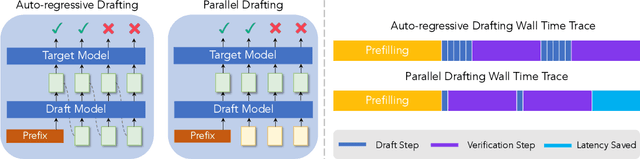
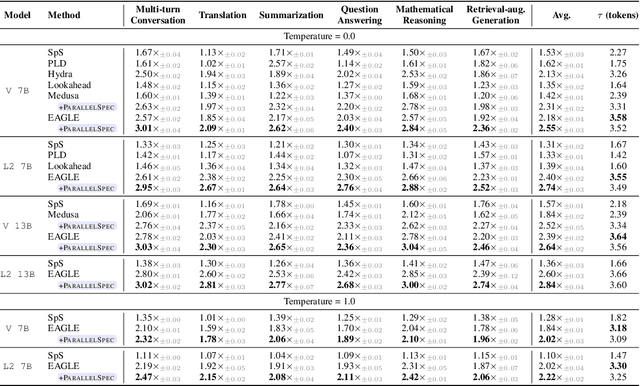
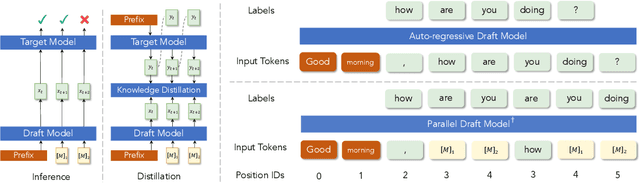

Speculative decoding has proven to be an efficient solution to large language model (LLM) inference, where the small drafter predicts future tokens at a low cost, and the target model is leveraged to verify them in parallel. However, most existing works still draft tokens auto-regressively to maintain sequential dependency in language modeling, which we consider a huge computational burden in speculative decoding. We present ParallelSpec, an alternative to auto-regressive drafting strategies in state-of-the-art speculative decoding approaches. In contrast to auto-regressive drafting in the speculative stage, we train a parallel drafter to serve as an efficient speculative model. ParallelSpec learns to efficiently predict multiple future tokens in parallel using a single model, and it can be integrated into any speculative decoding framework that requires aligning the output distributions of the drafter and the target model with minimal training cost. Experimental results show that ParallelSpec accelerates baseline methods in latency up to 62% on text generation benchmarks from different domains, and it achieves 2.84X overall speedup on the Llama-2-13B model using third-party evaluation criteria.
Refining Corpora from a Model Calibration Perspective for Chinese Spelling Correction
Jul 22, 2024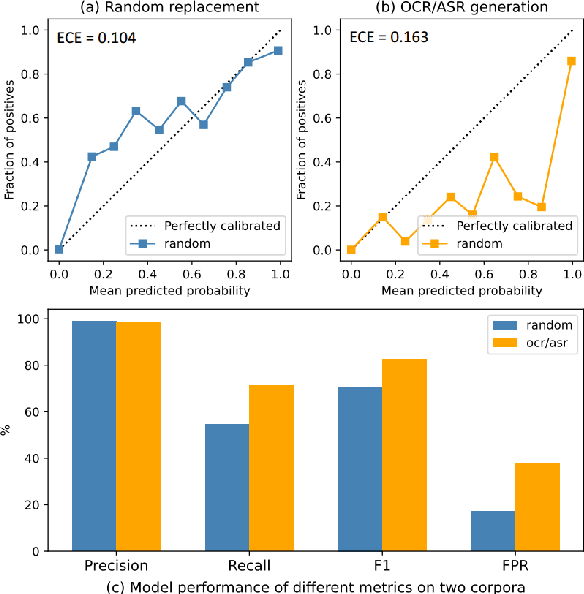


Chinese Spelling Correction (CSC) commonly lacks large-scale high-quality corpora, due to the labor-intensive labeling of spelling errors in real-life human writing or typing scenarios. Two data augmentation methods are widely adopted: (1) \textit{Random Replacement} with the guidance of confusion sets and (2) \textit{OCR/ASR-based Generation} that simulates character misusing. However, both methods inevitably introduce noisy data (e.g., false spelling errors), potentially leading to over-correction. By carefully analyzing the two types of corpora, we find that though the latter achieves more robust generalization performance, the former yields better-calibrated CSC models. We then provide a theoretical analysis of this empirical observation, based on which a corpus refining strategy is proposed. Specifically, OCR/ASR-based data samples are fed into a well-calibrated CSC model trained on random replacement-based corpora and then filtered based on prediction confidence. By learning a simple BERT-based model on the refined OCR/ASR-based corpus, we set up impressive state-of-the-art performance on three widely-used benchmarks, while significantly alleviating over-correction (e.g., lowering false positive predictions).