 Add to Chrome
 Add to Firefox
 Add to Edge
Towards an AI co-scientist
Feb 26, 2025
Scientific discovery relies on scientists generating novel hypotheses that undergo rigorous experimental validation. To augment this process, we introduce an AI co-scientist, a multi-agent system built on Gemini 2.0. The AI co-scientist is intended to help uncover new, original knowledge and to formulate demonstrably novel research hypotheses and proposals, building upon prior evidence and aligned to scientist-provided research objectives and guidance. The system's design incorporates a generate, debate, and evolve approach to hypothesis generation, inspired by the scientific method and accelerated by scaling test-time compute. Key contributions include: (1) a multi-agent architecture with an asynchronous task execution framework for flexible compute scaling; (2) a tournament evolution process for self-improving hypotheses generation. Automated evaluations show continued benefits of test-time compute, improving hypothesis quality. While general purpose, we focus development and validation in three biomedical areas: drug repurposing, novel target discovery, and explaining mechanisms of bacterial evolution and anti-microbial resistance. For drug repurposing, the system proposes candidates with promising validation findings, including candidates for acute myeloid leukemia that show tumor inhibition in vitro at clinically applicable concentrations. For novel target discovery, the AI co-scientist proposed new epigenetic targets for liver fibrosis, validated by anti-fibrotic activity and liver cell regeneration in human hepatic organoids. Finally, the AI co-scientist recapitulated unpublished experimental results via a parallel in silico discovery of a novel gene transfer mechanism in bacterial evolution. These results, detailed in separate, co-timed reports, demonstrate the potential to augment biomedical and scientific discovery and usher an era of AI empowered scientists.

AquaNeRF: Neural Radiance Fields in Underwater Media with Distractor Removal
Feb 22, 2025Neural radiance field (NeRF) research has made significant progress in modeling static video content captured in the wild. However, current models and rendering processes rarely consider scenes captured underwater, which are useful for studying and filming ocean life. They fail to address visual artifacts unique to underwater scenes, such as moving fish and suspended particles. This paper introduces a novel NeRF renderer and optimization scheme for an implicit MLP-based NeRF model. Our renderer reduces the influence of floaters and moving objects that interfere with static objects of interest by estimating a single surface per ray. We use a Gaussian weight function with a small offset to ensure that the transmittance of the surrounding media remains constant. Additionally, we enhance our model with a depth-based scaling function to upscale gradients for near-camera volumes. Overall, our method outperforms the baseline Nerfacto by approximately 7.5\% and SeaThru-NeRF by 6.2% in terms of PSNR. Subjective evaluation also shows a significant reduction of artifacts while preserving details of static targets and background compared to the state of the arts.
AFDM-Enabled Integrated Sensing and Communication: Theoretical Framework and Pilot Design
Feb 20, 2025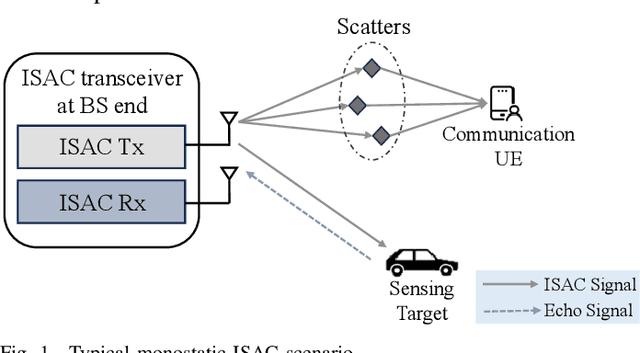
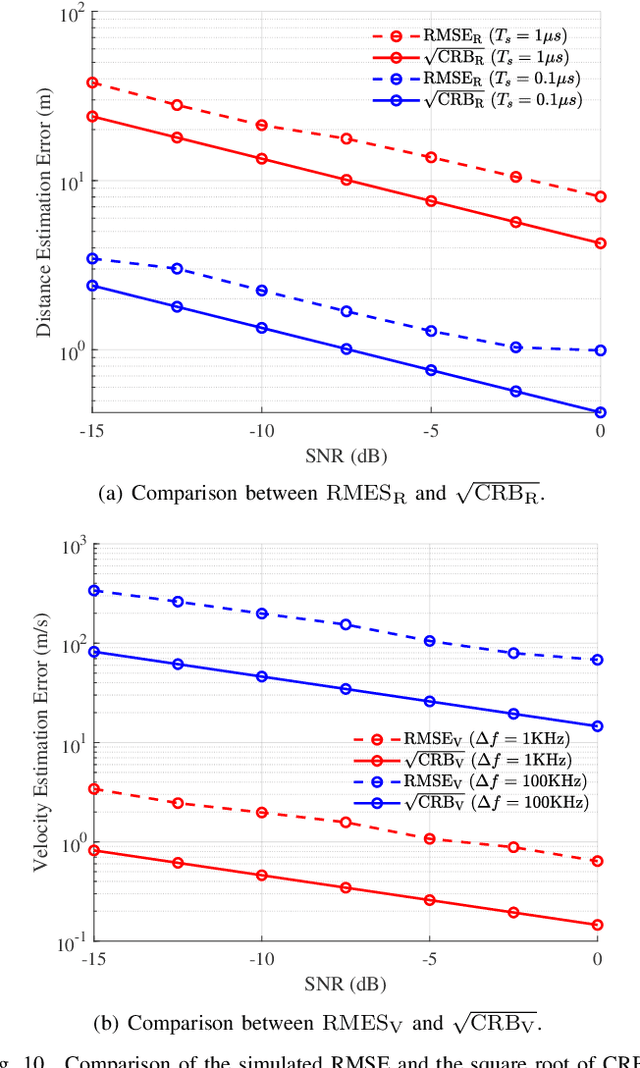
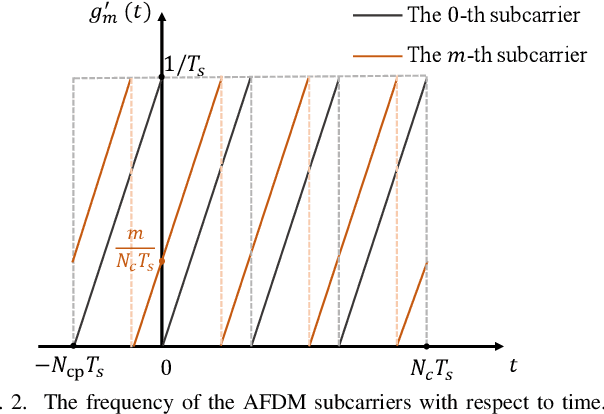
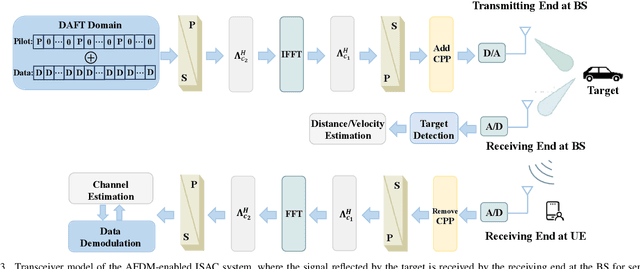
The integrated sensing and communication (ISAC) has been envisioned as one representative usage scenario of sixth-generation (6G) network. However, the unprecedented characteristics of 6G, especially the doubly dispersive channel, make classical ISAC waveforms rather challenging to guarantee a desirable performance level. The recently proposed affine frequency division multiplexing (AFDM) can attain full diversity even under doubly dispersive effects, thus becoming a competitive candidate for next-generation ISAC waveforms. Relevant investigations are still at an early stage, which involve only straightforward design lacking explicit theoretical analysis. This paper provides an in-depth investigation on AFDM waveform design for ISAC applications. Specifically, the closed-form Cr\'{a}mer-Rao bounds of target detection for AFDM are derived, followed by a demonstration on its merits over existing counterparts. Furthermore, we formulate the ambiguity function of the pilot-assisted AFDM waveform for the first time, revealing conditions for stable sensing performance. To further enhance both the communication and sensing performance of the AFDM waveform, we propose a novel pilot design by exploiting the characteristics of AFDM signals. The proposed design is analytically validated to be capable of optimizing the ambiguity function property and channel estimation accuracy simultaneously as well as overcoming the sensing and channel estimation range limitation originated from the pilot spacing. Numerical results have verified the superiority of the proposed pilot design in terms of dual-functional performance.
Bridging the Gap: Transforming Natural Language Questions into SQL Queries via Abstract Query Pattern and Contextual Schema Markup
Feb 20, 2025Large language models have demonstrated excellent performance in many tasks, including Text-to-SQL, due to their powerful in-context learning capabilities. They are becoming the mainstream approach for Text-to-SQL. However, these methods still have a significant gap compared to human performance, especially on complex questions. As the complexity of questions increases, the gap between questions and SQLs increases. We identify two important gaps: the structural mapping gap and the lexical mapping gap. To tackle these two gaps, we propose PAS-SQL, an efficient SQL generation pipeline based on LLMs, which alleviates gaps through Abstract Query Pattern (AQP) and Contextual Schema Markup (CSM). AQP aims to obtain the structural pattern of the question by removing database-related information, which enables us to find structurally similar demonstrations. CSM aims to associate database-related text span in the question with specific tables or columns in the database, which alleviates the lexical mapping gap. Experimental results on the Spider and BIRD datasets demonstrate the effectiveness of our proposed method. Specifically, PAS-SQL + GPT-4o sets a new state-of-the-art on the Spider benchmark with an execution accuracy of 87.9\%, and achieves leading results on the BIRD dataset with an execution accuracy of 64.67\%.
Medical Image Registration Meets Vision Foundation Model: Prototype Learning and Contour Awareness
Feb 17, 2025Medical image registration is a fundamental task in medical image analysis, aiming to establish spatial correspondences between paired images. However, existing unsupervised deformable registration methods rely solely on intensity-based similarity metrics, lacking explicit anatomical knowledge, which limits their accuracy and robustness. Vision foundation models, such as the Segment Anything Model (SAM), can generate high-quality segmentation masks that provide explicit anatomical structure knowledge, addressing the limitations of traditional methods that depend only on intensity similarity. Based on this, we propose a novel SAM-assisted registration framework incorporating prototype learning and contour awareness. The framework includes: (1) Explicit anatomical information injection, where SAM-generated segmentation masks are used as auxiliary inputs throughout training and testing to ensure the consistency of anatomical information; (2) Prototype learning, which leverages segmentation masks to extract prototype features and aligns prototypes to optimize semantic correspondences between images; and (3) Contour-aware loss, a contour-aware loss is designed that leverages the edges of segmentation masks to improve the model's performance in fine-grained deformation fields. Extensive experiments demonstrate that the proposed framework significantly outperforms existing methods across multiple datasets, particularly in challenging scenarios with complex anatomical structures and ambiguous boundaries. Our code is available at https://github.com/HaoXu0507/IPMI25-SAM-Assisted-Registration.
FCVSR: A Frequency-aware Method for Compressed Video Super-Resolution
Feb 10, 2025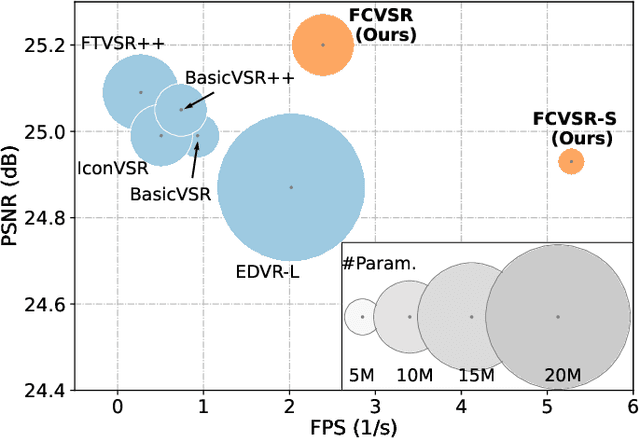
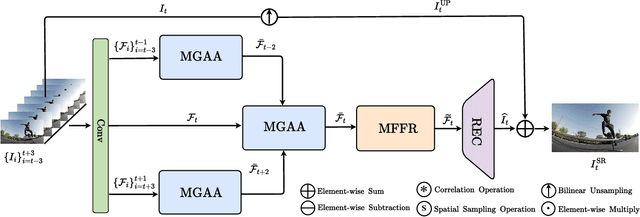
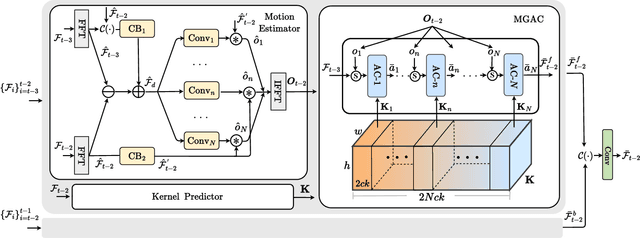
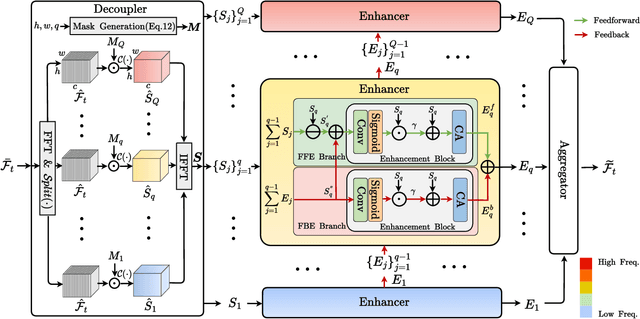
Compressed video super-resolution (SR) aims to generate high-resolution (HR) videos from the corresponding low-resolution (LR) compressed videos. Recently, some compressed video SR methods attempt to exploit the spatio-temporal information in the frequency domain, showing great promise in super-resolution performance. However, these methods do not differentiate various frequency subbands spatially or capture the temporal frequency dynamics, potentially leading to suboptimal results. In this paper, we propose a deep frequency-based compressed video SR model (FCVSR) consisting of a motion-guided adaptive alignment (MGAA) network and a multi-frequency feature refinement (MFFR) module. Additionally, a frequency-aware contrastive loss is proposed for training FCVSR, in order to reconstruct finer spatial details. The proposed model has been evaluated on three public compressed video super-resolution datasets, with results demonstrating its effectiveness when compared to existing works in terms of super-resolution performance (up to a 0.14dB gain in PSNR over the second-best model) and complexity.
Learning Street View Representations with Spatiotemporal Contrast
Feb 07, 2025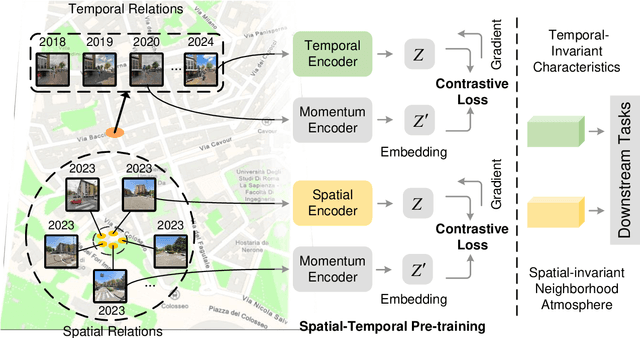
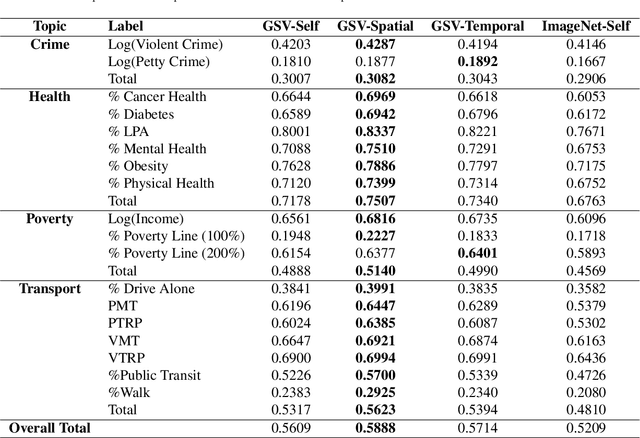
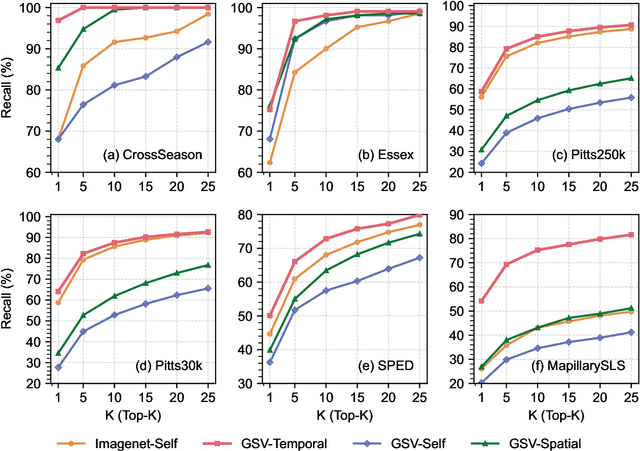
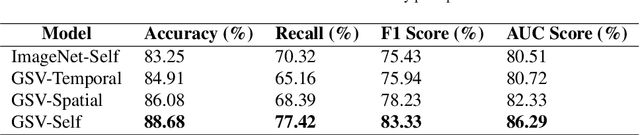
Street view imagery is extensively utilized in representation learning for urban visual environments, supporting various sustainable development tasks such as environmental perception and socio-economic assessment. However, it is challenging for existing image representations to specifically encode the dynamic urban environment (such as pedestrians, vehicles, and vegetation), the built environment (including buildings, roads, and urban infrastructure), and the environmental ambiance (such as the cultural and socioeconomic atmosphere) depicted in street view imagery to address downstream tasks related to the city. In this work, we propose an innovative self-supervised learning framework that leverages temporal and spatial attributes of street view imagery to learn image representations of the dynamic urban environment for diverse downstream tasks. By employing street view images captured at the same location over time and spatially nearby views at the same time, we construct contrastive learning tasks designed to learn the temporal-invariant characteristics of the built environment and the spatial-invariant neighborhood ambiance. Our approach significantly outperforms traditional supervised and unsupervised methods in tasks such as visual place recognition, socioeconomic estimation, and human-environment perception. Moreover, we demonstrate the varying behaviors of image representations learned through different contrastive learning objectives across various downstream tasks. This study systematically discusses representation learning strategies for urban studies based on street view images, providing a benchmark that enhances the applicability of visual data in urban science. The code is available at https://github.com/yonglleee/UrbanSTCL.
UltraFusion: Ultra High Dynamic Imaging using Exposure Fusion
Jan 20, 2025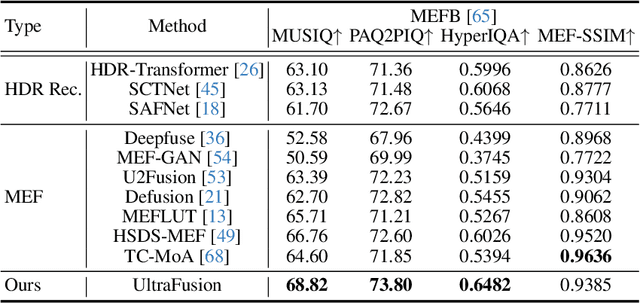
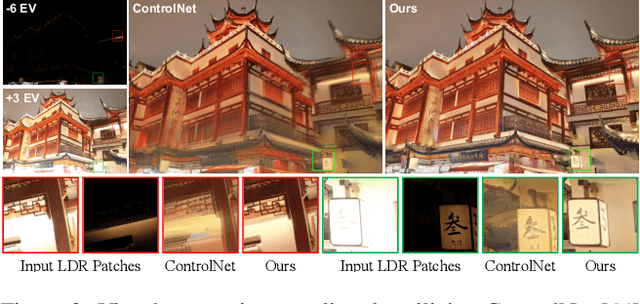
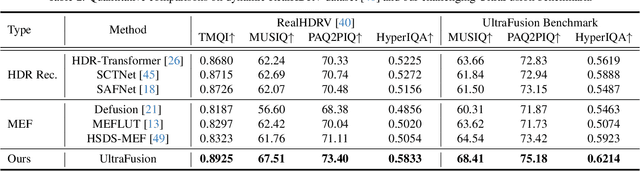
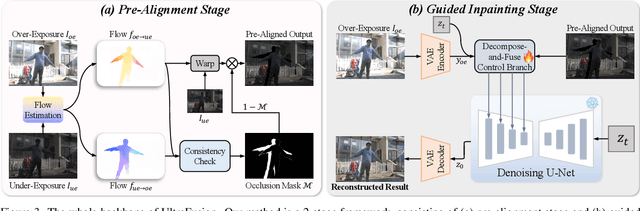
Capturing high dynamic range (HDR) scenes is one of the most important issues in camera design. Majority of cameras use exposure fusion technique, which fuses images captured by different exposure levels, to increase dynamic range. However, this approach can only handle images with limited exposure difference, normally 3-4 stops. When applying to very high dynamic scenes where a large exposure difference is required, this approach often fails due to incorrect alignment or inconsistent lighting between inputs, or tone mapping artifacts. In this work, we propose UltraFusion, the first exposure fusion technique that can merge input with 9 stops differences. The key idea is that we model the exposure fusion as a guided inpainting problem, where the under-exposed image is used as a guidance to fill the missing information of over-exposed highlight in the over-exposed region. Using under-exposed image as a soft guidance, instead of a hard constrain, our model is robust to potential alignment issue or lighting variations. Moreover, utilizing the image prior of the generative model, our model also generates natural tone mapping, even for very high-dynamic range scene. Our approach outperforms HDR-Transformer on latest HDR benchmarks. Moreover, to test its performance in ultra high dynamic range scene, we capture a new real-world exposure fusion benchmark, UltraFusion Dataset, with exposure difference up to 9 stops, and experiments show that \model~can generate beautiful and high-quality fusion results under various scenarios. An online demo is provided at https://openimaginglab.github.io/UltraFusion/.
EndoChat: Grounded Multimodal Large Language Model for Endoscopic Surgery
Jan 20, 2025


Recently, Multimodal Large Language Models (MLLMs) have demonstrated their immense potential in computer-aided diagnosis and decision-making. In the context of robotic-assisted surgery, MLLMs can serve as effective tools for surgical training and guidance. However, there is still a lack of MLLMs specialized for surgical scene understanding in clinical applications. In this work, we introduce EndoChat to address various dialogue paradigms and subtasks in surgical scene understanding that surgeons encounter. To train our EndoChat, we construct the Surg-396K dataset through a novel pipeline that systematically extracts surgical information and generates structured annotations based on collected large-scale endoscopic surgery datasets. Furthermore, we introduce a multi-scale visual token interaction mechanism and a visual contrast-based reasoning mechanism to enhance the model's representation learning and reasoning capabilities. Our model achieves state-of-the-art performance across five dialogue paradigms and eight surgical scene understanding tasks. Additionally, we conduct evaluations with professional surgeons, most of whom provide positive feedback on collaborating with EndoChat. Overall, these results demonstrate that our EndoChat has great potential to significantly advance training and automation in robotic-assisted surgery.
GeoPix: Multi-Modal Large Language Model for Pixel-level Image Understanding in Remote Sensing
Jan 12, 2025


Multi-modal large language models (MLLMs) have achieved remarkable success in image- and region-level remote sensing (RS) image understanding tasks, such as image captioning, visual question answering, and visual grounding. However, existing RS MLLMs lack the pixel-level dialogue capability, which involves responding to user instructions with segmentation masks for specific instances. In this paper, we propose GeoPix, a RS MLLM that extends image understanding capabilities to the pixel level. This is achieved by equipping the MLLM with a mask predictor, which transforms visual features from the vision encoder into masks conditioned on the LLM's segmentation token embeddings. To facilitate the segmentation of multi-scale objects in RS imagery, a class-wise learnable memory module is integrated into the mask predictor to capture and store class-wise geo-context at the instance level across the entire dataset. In addition, to address the absence of large-scale datasets for training pixel-level RS MLLMs, we construct the GeoPixInstruct dataset, comprising 65,463 images and 140,412 instances, with each instance annotated with text descriptions, bounding boxes, and masks. Furthermore, we develop a two-stage training strategy to balance the distinct requirements of text generation and masks prediction in multi-modal multi-task optimization. Extensive experiments verify the effectiveness and superiority of GeoPix in pixel-level segmentation tasks, while also maintaining competitive performance in image- and region-level benchmarks.