 Add to Chrome
 Add to Firefox
 Add to Edge
InstantRetouch: Efficient and High-Fidelity Instruction-Guided Image Retouching with Bilateral Space
Jun 03, 2026
Language-guided photo retouching aims to adjust color and tone while preserving geometry and texture. Recently, diffusion-based retouching shows a superior visual quality, but often struggles with both fidelity issues due to its generative nature and efficiency because of its iterative sampling process. In this work, we propose an efficient and fidelity-preserving retouching method using bilateral space manipulation, which is both compact and content-decoupled. Specifically, instead of directly editing pixels or image latents, our model predicts a low-resolution bilateral grid of affine transforms, which are sliced using a learned guidance map and then applied to the full-resolution image. This approach yields both high fidelity and improved efficiency. To retain strong priors of a pretrained generative model, we distill a multi-step diffusion model into our bilateral grid framework using Variational Score Distillation, complemented by a prompt alignment loss to guide instruction-following behavior. Additionally, we introduce a new benchmark and evaluate our method across multiple dimensions: fidelity, instruction following, and efficiency. Compared to the latest retouch methods, like Gemini-2.5-Flash (Nano-Banana), our method can avoid content drift, significantly improve latency, and generate visually pleasing edits, while maintaining a high level of fidelity. Project page: https://openimaginglab.github.io/InstantRetouch/.

C-MIG: Multi-view Information Gain-based Retrieval-Augmented Generation for Clinical Diagnosis Reasoning
May 27, 2026Retrieval-augmented generation combined with reinforcement learning has shown promise for grounding large language models in trustworthy medical evidence. However, existing methods rely on exact-match binary rewards, which in clinical diagnosis cause two issues: (i) semantically relevant but non-verbatim steps receive zero signal, discarding valuable learning signals; and (ii) uni-dimensional rewards cannot effectively supervise heterogeneous reasoning capabilities. To address these issues, we propose C-MIG, a Multi-view Information Gain-based retrieval-augmented generation framework for Clinical diagnosis. C-MIG estimates information gain under a frozen reference model from two complementary views, retrieved-document and document-refinement, to jointly guide what to retrieve and how to refine, alleviating the issues of valuable reward signal loss and credit assignment. We further design a multi-subquery retrieval augmentation strategy that improves knowledge recall coverage in clinical diagnostic scenarios. Comprehensive experiments on four medical benchmarks demonstrate that C-MIG achieves the best performance among all RAG-RL methods on both in-domain and out-of-domain sets, and outperforms state-of-the-art general-purpose LLMs for clinical diagnosis.
EAPO: Entropy-Driven Adaptive Positive-Negative Sample Weighting for Policy Optimization in Open-Ended QA
May 27, 2026Large Reasoning Models are typically trained via reinforcement learning from verifiable rewards (RLVR). However, existing approaches adopt fixed weights for positive and negative samples, and the conclusions hardly generalize to open-ended question answering (QA). In this paper, we systematically investigate the roles of positive and negative samples in reinforcement learning for open-ended QA. We propose a reward-mean-based strategy for distinguishing positive from negative samples, and observe that negative samples predominantly govern response diversity and the performance upper bound, whereas positive samples primarily determine response quality and convergence stability. Building on these observations, we propose EAPO, an Entropy-driven Adaptive Policy Optimization method that adaptively computes the weighting coefficients of positive samples based on the ratio of the current policy entropy to the initial entropy. During the entropy-decreasing phase, the weight assigned to positive samples is reduced to preserve exploration, whereas during the entropy-increasing phase it is amplified to reinforce stability, thereby mitigating entropy collapse. Experiments on two publicly available open-ended medical QA datasets demonstrate that EAPO consistently and substantially outperforms fixed-weight baselines in both response diversity and stability.
DBPnet: Damper Characteristics-Based Bayesian Physics-Informed Neural Network for Wheel Load Estimation
May 24, 2026Advanced driver assistance systems (ADAS) play an important role in modern automotive intelligence, significantly enhancing vehicle safety and stability. The performance of ADAS critically relies on accurate and reliable vehicle state estimation, particularly from vehicle dynamic sensors. Among these signals, wheel load is a key variable for chassis control and safety-critical functions, yet it remains difficult to estimate robustly due to complex suspension geometry, nonlinear dynamics, and measurement noise. To address this issue, we propose DBPnet, a Bayesian physics-informed neural network (PINN) with a physics-aware embedding module inspired by damper characteristics. First, this paper presents a suspension linkage-level modeling (SLLM) approach that constructs a nonlinear instantaneous dynamic model by explicitly considering the complex geometric structure of the suspension. Building upon SLLM, Bayesian inference is integrated into the PINN to effectively cope with noise and uncertainty in the vehicle chassis system, thereby improving the model's robustness. Then, a physics-informed loss function is employed to ensure consistency with fundamental physical principles, while the damper characteristics-inspired embedding module extracts temporal variation features of input signals and incorporates them into each layer of the PINN, ensuring that physical observations guide the neural network without being constrained by fixed physical models. Extensive evaluations on high-fidelity simulations and real-world experiments demonstrate that our DBPnet consistently achieves lower RMSE and MaxError than baseline methods. These results highlight the potential of our DBPnet to advance wheel load estimation and contribute to the development of more reliable ADAS actuator functions.
ScenePilot-Bench: A Large-Scale Dataset and Benchmark for Evaluation of Vision-Language Models in Autonomous Driving
Jan 27, 2026In this paper, we introduce ScenePilot-Bench, a large-scale first-person driving benchmark designed to evaluate vision-language models (VLMs) in autonomous driving scenarios. ScenePilot-Bench is built upon ScenePilot-4K, a diverse dataset comprising 3,847 hours of driving videos, annotated with multi-granularity information including scene descriptions, risk assessments, key participant identification, ego trajectories, and camera parameters. The benchmark features a four-axis evaluation suite that assesses VLM capabilities in scene understanding, spatial perception, motion planning, and GPT-Score, with safety-aware metrics and cross-region generalization settings. We benchmark representative VLMs on ScenePilot-Bench, providing empirical analyses that clarify current performance boundaries and identify gaps for driving-oriented reasoning. ScenePilot-Bench offers a comprehensive framework for evaluating and advancing VLMs in safety-critical autonomous driving contexts.
S2R-HDR: A Large-Scale Rendered Dataset for HDR Fusion
Apr 10, 2025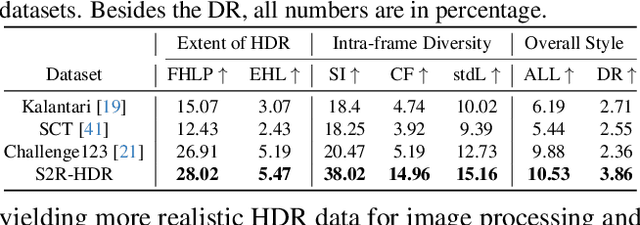
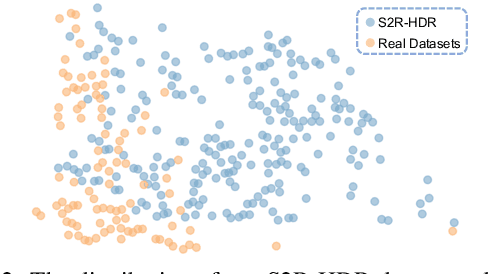
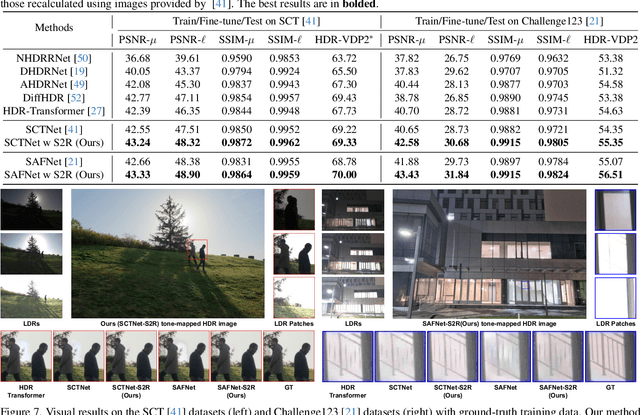

The generalization of learning-based high dynamic range (HDR) fusion is often limited by the availability of training data, as collecting large-scale HDR images from dynamic scenes is both costly and technically challenging. To address these challenges, we propose S2R-HDR, the first large-scale high-quality synthetic dataset for HDR fusion, with 24,000 HDR samples. Using Unreal Engine 5, we design a diverse set of realistic HDR scenes that encompass various dynamic elements, motion types, high dynamic range scenes, and lighting. Additionally, we develop an efficient rendering pipeline to generate realistic HDR images. To further mitigate the domain gap between synthetic and real-world data, we introduce S2R-Adapter, a domain adaptation designed to bridge this gap and enhance the generalization ability of models. Experimental results on real-world datasets demonstrate that our approach achieves state-of-the-art HDR reconstruction performance. Dataset and code will be available at https://openimaginglab.github.io/S2R-HDR.
EGVD: Event-Guided Video Diffusion Model for Physically Realistic Large-Motion Frame Interpolation
Mar 26, 2025Video frame interpolation (VFI) in scenarios with large motion remains challenging due to motion ambiguity between frames. While event cameras can capture high temporal resolution motion information, existing event-based VFI methods struggle with limited training data and complex motion patterns. In this paper, we introduce Event-Guided Video Diffusion Model (EGVD), a novel framework that leverages the powerful priors of pre-trained stable video diffusion models alongside the precise temporal information from event cameras. Our approach features a Multi-modal Motion Condition Generator (MMCG) that effectively integrates RGB frames and event signals to guide the diffusion process, producing physically realistic intermediate frames. We employ a selective fine-tuning strategy that preserves spatial modeling capabilities while efficiently incorporating event-guided temporal information. We incorporate input-output normalization techniques inspired by recent advances in diffusion modeling to enhance training stability across varying noise levels. To improve generalization, we construct a comprehensive dataset combining both real and simulated event data across diverse scenarios. Extensive experiments on both real and simulated datasets demonstrate that EGVD significantly outperforms existing methods in handling large motion and challenging lighting conditions, achieving substantial improvements in perceptual quality metrics (27.4% better LPIPS on Prophesee and 24.1% on BSRGB) while maintaining competitive fidelity measures. Code and datasets available at: https://github.com/OpenImagingLab/EGVD.
RAD: Retrieval-Augmented Decision-Making of Meta-Actions with Vision-Language Models in Autonomous Driving
Mar 18, 2025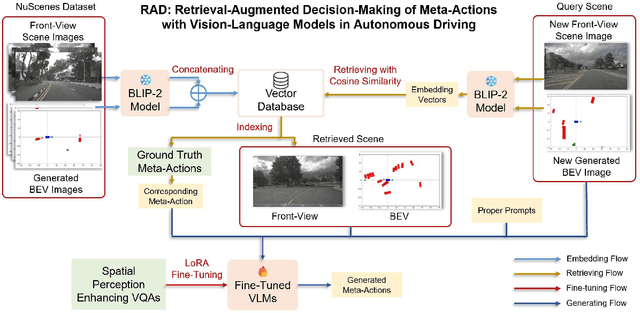
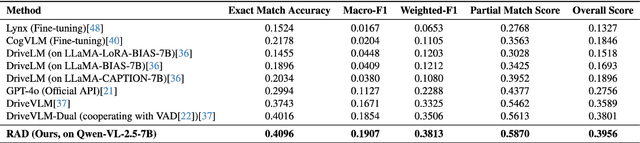
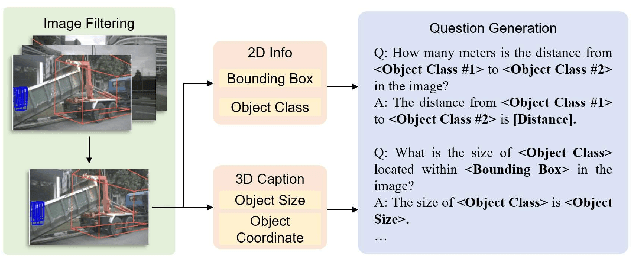
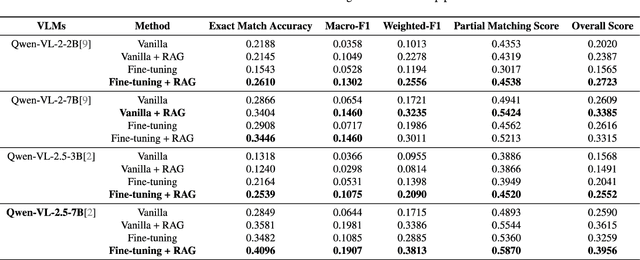
Accurately understanding and deciding high-level meta-actions is essential for ensuring reliable and safe autonomous driving systems. While vision-language models (VLMs) have shown significant potential in various autonomous driving tasks, they often suffer from limitations such as inadequate spatial perception and hallucination, reducing their effectiveness in complex autonomous driving scenarios. To address these challenges, we propose a retrieval-augmented decision-making (RAD) framework, a novel architecture designed to enhance VLMs' capabilities to reliably generate meta-actions in autonomous driving scenes. RAD leverages a retrieval-augmented generation (RAG) pipeline to dynamically improve decision accuracy through a three-stage process consisting of the embedding flow, retrieving flow, and generating flow. Additionally, we fine-tune VLMs on a specifically curated dataset derived from the NuScenes dataset to enhance their spatial perception and bird's-eye view image comprehension capabilities. Extensive experimental evaluations on the curated NuScenes-based dataset demonstrate that RAD outperforms baseline methods across key evaluation metrics, including match accuracy, and F1 score, and self-defined overall score, highlighting its effectiveness in improving meta-action decision-making for autonomous driving tasks.
KAPPA: A Generic Patent Analysis Framework with Keyphrase-Based Portraits
Feb 18, 2025
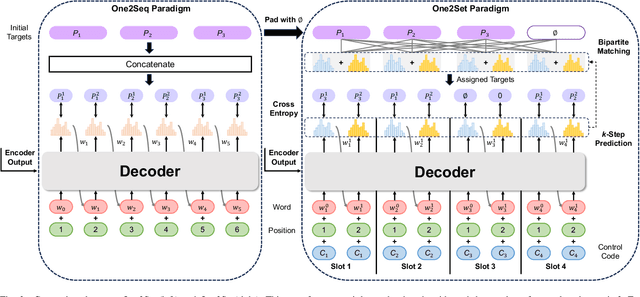
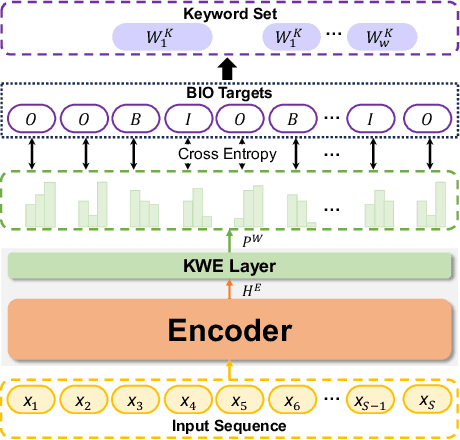
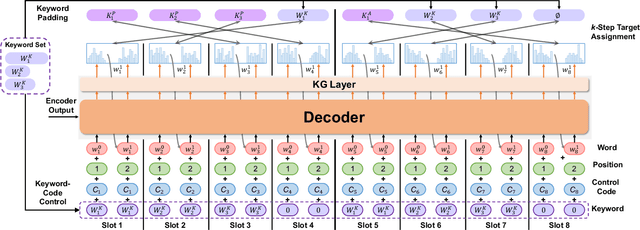
Patent analysis highly relies on concise and interpretable document representations, referred to as patent portraits. Keyphrases, both present and absent, are ideal candidates for patent portraits due to their brevity, representativeness, and clarity. In this paper, we introduce KAPPA, an integrated framework designed to construct keyphrase-based patent portraits and enhance patent analysis. KAPPA operates in two phases: patent portrait construction and portrait-based analysis. To ensure effective portrait construction, we propose a semantic-calibrated keyphrase generation paradigm that integrates pre-trained language models with a prompt-based hierarchical decoding strategy to leverage the multi-level structural characteristics of patents. For portrait-based analysis, we develop a comprehensive framework that employs keyphrase-based patent portraits to enable efficient and accurate patent analysis. Extensive experiments on benchmark datasets of keyphrase generation, the proposed model achieves significant improvements compared to state-of-the-art baselines. Further experiments conducted on real-world patent applications demonstrate that our keyphrase-based portraits effectively capture domain-specific knowledge and enrich semantic representation for patent analysis tasks.
UltraFusion: Ultra High Dynamic Imaging using Exposure Fusion
Jan 20, 2025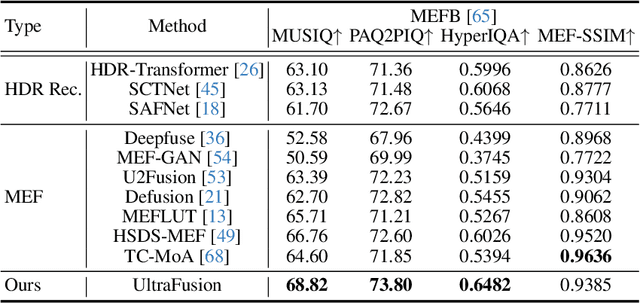
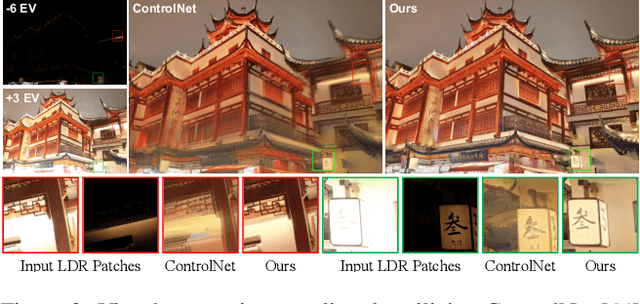
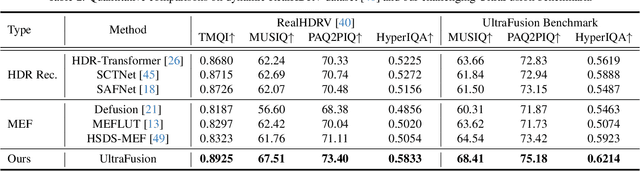
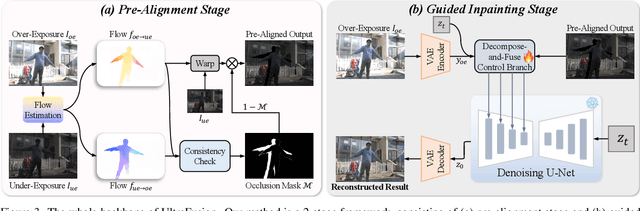
Capturing high dynamic range (HDR) scenes is one of the most important issues in camera design. Majority of cameras use exposure fusion technique, which fuses images captured by different exposure levels, to increase dynamic range. However, this approach can only handle images with limited exposure difference, normally 3-4 stops. When applying to very high dynamic scenes where a large exposure difference is required, this approach often fails due to incorrect alignment or inconsistent lighting between inputs, or tone mapping artifacts. In this work, we propose UltraFusion, the first exposure fusion technique that can merge input with 9 stops differences. The key idea is that we model the exposure fusion as a guided inpainting problem, where the under-exposed image is used as a guidance to fill the missing information of over-exposed highlight in the over-exposed region. Using under-exposed image as a soft guidance, instead of a hard constrain, our model is robust to potential alignment issue or lighting variations. Moreover, utilizing the image prior of the generative model, our model also generates natural tone mapping, even for very high-dynamic range scene. Our approach outperforms HDR-Transformer on latest HDR benchmarks. Moreover, to test its performance in ultra high dynamic range scene, we capture a new real-world exposure fusion benchmark, UltraFusion Dataset, with exposure difference up to 9 stops, and experiments show that \model~can generate beautiful and high-quality fusion results under various scenarios. An online demo is provided at https://openimaginglab.github.io/UltraFusion/.