 Add to Chrome
 Add to Firefox
 Add to Edge
Active Perception for Radio Map Reconstruction in Uncharted 3D Air-Ground Environments
Jun 11, 2026
Radio maps provide the essential foundation for low altitude networking systems. Unlike terrestrial radio maps that are typically generated via drive test measurements, mapping the air-ground environment requires the deployment of unmanned aerial vehicles (UAVs). This shift introduces two formidable challenges in uncharted 3D scenarios. First, sparse radio measurements and incomplete geometric observations hinder accurate reconstruction. Second, the large 3D action space and strict power constraints from high spectrum scanner energy consumption make informative exploration difficult. To address these issues, this paper proposes 3D uncertainty aware radio active mapping (3D-URAM), a closed loop active perception framework that decouples the mapping process into two offline trained stages. In Stage I, a Bayesian UNet is developed to recover radio maps from sparse measurements and partial geometry while providing calibrated predictive uncertainty. In Stage II, a dynamic probabilistic roadmap and a transformer based waypoint selection policy trained via proximal policy optimization maximize long horizon uncertainty reduction under travel budgets. Experimental results demonstrate that 3D-URAM reduces reconstruction error by over 50% compared to representative baselines. Real-world field tests within a 300mx200mx100m space also validate the potential of active radio map reconstruction.

Differential Spatial Modulation with Transmit Diversity for Pinching-Antenna Systems
May 06, 2026Pinching antenna (PA) systems provide a new spatial degree of freedom by flexible activation of pinching positions. However, the resulting effective channel strongly depends on the activated pinching positions, rendering conventional coherent transmission generally relies on accurate acquisition of instantaneous channel state information (CSI) and incurring substantial pilot overhead. To address this challenge, we propose a differential spatial modulation (DSM) scheme for PA systems, termed as DSM-PA. Specifically, a differential transmission scheme with an embedded Alamouti coding structure is designed, where information bits are conveyed via phase variations between adjacent symbol blocks. This design enables noncoherent transmission without requiring instantaneous CSI while simultaneously achieving transmit diversity. Moreover, to fully exploit the spatial degrees of freedom of PA systems, a pinching position-based index modulation (IM) rule is developed to enhance spectral efficiency. An asymptotically tight upper bound on the average bit error rate (BER) over quasi-static Rician fading channels is derived using the moment-generating function (MGF) method. The diversity analysis also reveals that the proposed DSM-PA scheme achieves full transmit diversity. Finally, simulation results verify the accuracy of the BER analysis and demonstrate the effectiveness of the proposed DSM-PA scheme.
Grey-Box Bayesian Optimization for ISAC in Fluid-Antenna Assisted Air-Ground Network
Apr 02, 2026Fluid antenna systems (FAS) provide extra position agile spatial diversity for integrated sensing and communication (ISAC), by jointly optimizing the port selection and precoding. However, this optimization is challenging in air ground networks due to the intricate dual objective Pareto frontier, complex self-interference, and prohibitive channel state information overhead. To overcome these bottlenecks, this work proposes a novel grey box multi objective Bayesian optimization framework to address the joint design of discrete port selection and ISAC precoding. Unlike black box methods, this architecture explicitly leverages known physical system models to learn unknown channel constituents, dramatically reducing sample complexity. To navigate high dimensional combinatorial spaces, an adaptive trust region mechanism powered by expected hypervolume improvement (EHI) acquisition is implemented. Furthermore, the framework incorporates a spatio-temporal tracking strategy to handle the continuous mobility of users and targets, robustly capturing the drifting optimum in time varying environments. Simulations demonstrate that this framework achieves significantly faster convergence and discovers superior Pareto optimal configurations, validating its efficiency for dynamic real time FAS-ISAC deployments.
Design of Uplink ISAC Systems with Cooperative Sensing: Power Control and Receive Beamforming
Mar 18, 2026Integrated sensing and communication (ISAC) has emerged as a key paradigm for next-generation wireless systems, which allows wireless resources to be used for data transmission and target sensing simultaneously. In this paper, multi-user collaborative target detection in the uplink ISAC system is investigated. To incorporate the target sensing functionality, the system relies on the reuse of uplink signals from the communication users. Specifically, we analyze an uplink multi-user single-input multiple-output (MU-SIMO) communication system with bistatic sensing. Using the channel statistics, we formulate the problem of joint optimal pilot and data power allocation to maximize the uplink ergodic sum rate while meeting communication and sensing quality-of-service (QoS) requirements. To address this non-convex problem, we propose an alternating optimization (AO)-based iterative framework, where the joint power allocation problem is decomposed into two sub-problems. Specifically, the pilot power allocation is optimized using a penalty dual decomposition (PDD)-based gradient ascent algorithm, while the data power allocation is solved via successive convex approximation (SCA). Once the long-term power allocation is determined, the base station (BS) estimates the instantaneous channels using a minimum mean-squared error (MMSE) estimator. Subsequently, based on the estimated instantaneous channel state information (CSI), the receive beamforming for communication users is optimized via another SCA-based method to maximize the sum rate. Meanwhile, the optimal receive beamforming for the target is obtained in closed-form through eigenvalue decomposition (EVD).
Antenna Placement Design for Interference Exploitation in Pinching-Antenna Systems
Mar 14, 2026Pinching-antenna systems (PASs) have been proposed as a flexible antenna technology to fulfill the stringent requirements of high data rate and large-scale equipment deployment in future wireless networks. The principle of PA involves mapping a signal over dielectric waveguides for transmission. By adjusting the positions of pinching antennas (PAs) over the waveguides, with the aim of gain enhancement for line-of-sight links and the reduction of large-scale path loss. Symbol-level precoding (SLP) is a nonlinear precoding technique, which converts multi-user interference into constructive interference via beamforming design at symbol level. In this paper, we study the combination of SLP and PAS, leveraging the advantages of PAS to further enhance the ability of SLP to convert constructive interference. The transmit power minimization problem is formulated and solved for the multiple waveguides multiple PAs system by jointly beamforming and PAs' positions design under the SLP principle. The alternating optimization (AO) framework is applied to decouple the beamforming vector and the position coefficient of PA. For the given beamforming vectors, a new objective function is formulated with respect to the positions of the PAs. With the characteristics of the formulated objective function, the optimization problem for the position coefficients of PAs can be decomposed into multiple independent subproblems, each corresponding to a PA's position coefficient, and a projected gradient descent (PGD)-based method, constrained by the feasible movable region of each PA, is then developed to obtain the suboptimal position coefficients. The performance improvements achieved by the combination of PAS and SLP, as well as the effectiveness of the proposed algorithm are verified through the simulation results.
A Comprehensive Survey of Channel Estimation Techniques for OTFS in 6G and Beyond Wireless Networks
Dec 15, 2025
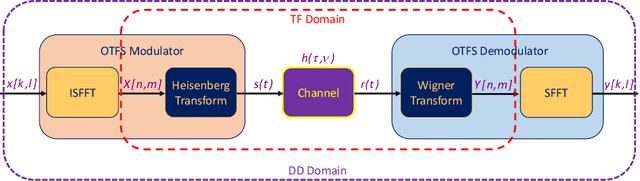
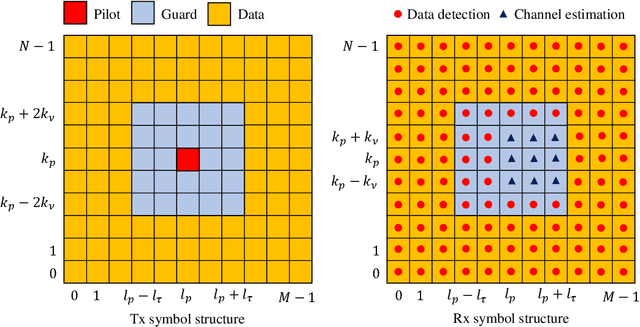
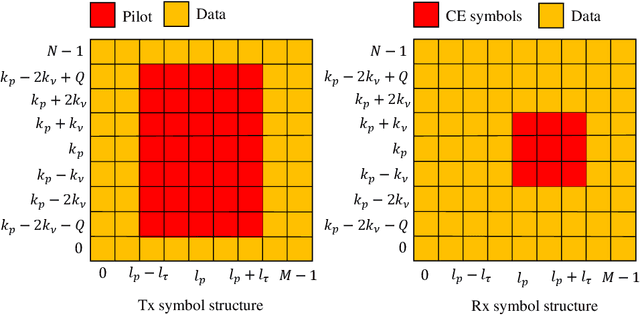
Orthogonal time-frequency space (OTFS) modulation has emerged as a powerful wireless communication technology that is specifically designed to address the challenges of high-mobility scenarios and significant Doppler effects. Unlike conventional modulation schemes that operate in the time-frequency (TF) domain, OTFS projects signals to the delay-Doppler (DD) domain, where wireless channels exhibit sparse and quasi-static characteristics. This fundamental transformation enables superior channel estimation (CE) performance in challenging propagation environments characterized by high-mobility, severe multipath effects, and rapidly time-varying channel conditions. This article provides a systematic examination of CE techniques for OTFS systems, covering the extensive research landscape from foundational methods to cutting-edge approaches. We present a detailed analysis of DD and TF domain CE techniques presented in the literature, including separate pilot, embedded pilot, and superimposed pilot approaches. The article encompasses various algorithmic frameworks including Bayesian learning, matching pursuit-based techniques, message passing algorithms, deep learning (DL)-based methods, and recent CE approaches. Additionally, we explore joint CE and signal detection (SD) strategies, the integration of OTFS with next-generation wireless systems including massive multiple-input multiple-output (MIMO), millimeter wave (mmWave) communications, reconfigurable intelligent surfaces (RISs), and integrated sensing and communication (ISAC) systems. Critical implementation challenges are presented, including leakage suppression, inter-Doppler interference mitigation, impulsive noise handling, signaling overhead reduction, guard space requirements, peak-to-average power ratio (PAPR) management, beam squint effects, and hardware impairments.
Planning Oriented Integrated Sensing and Communication
Oct 27, 2025Integrated sensing and communication (ISAC) enables simultaneous localization, environment perception, and data exchange for connected autonomous vehicles. However, most existing ISAC designs prioritize sensing accuracy and communication throughput, treating all targets uniformly and overlooking the impact of critical obstacles on motion efficiency. To overcome this limitation, we propose a planning-oriented ISAC (PISAC) framework that reduces the sensing uncertainty of planning-bottleneck obstacles and expands the safe navigable path for the ego-vehicle, thereby bridging the gap between physical-layer optimization and motion-level planning. The core of PISAC lies in deriving a closed-form safety bound that explicitly links ISAC transmit power to sensing uncertainty, based on the Cram\'er-Rao Bound and occupancy inflation principles. Using this model, we formulate a bilevel power allocation and motion planning (PAMP) problem, where the inner layer optimizes the ISAC beam power distribution and the outer layer computes a collision-free trajectory under uncertainty-aware safety constraints. Comprehensive simulations in high-fidelity urban driving environments demonstrate that PISAC achieves up to 40% higher success rates and over 5% shorter traversal times than existing ISAC-based and communication-oriented benchmarks, validating its effectiveness in enhancing both safety and efficiency.
Edge-Enabled VIO with Long-Tracked Features for High-Accuracy Low-Altitude IoT Navigation
May 10, 2025This paper presents a visual-inertial odometry (VIO) method using long-tracked features. Long-tracked features can constrain more visual frames, reducing localization drift. However, they may also lead to accumulated matching errors and drift in feature tracking. Current VIO methods adjust observation weights based on re-projection errors, yet this approach has flaws. Re-projection errors depend on estimated camera poses and map points, so increased errors might come from estimation inaccuracies, not actual feature tracking errors. This can mislead the optimization process and make long-tracked features ineffective for suppressing localization drift. Furthermore, long-tracked features constrain a larger number of frames, which poses a significant challenge to real-time performance of the system. To tackle these issues, we propose an active decoupling mechanism for accumulated errors in long-tracked feature utilization. We introduce a visual reference frame reset strategy to eliminate accumulated tracking errors and a depth prediction strategy to leverage the long-term constraint. To ensure real time preformane, we implement three strategies for efficient system state estimation: a parallel elimination strategy based on predefined elimination order, an inverse-depth elimination simplification strategy, and an elimination skipping strategy. Experiments on various datasets show that our method offers higher positioning accuracy with relatively short consumption time, making it more suitable for edge-enabled low-altitude IoT navigation, where high-accuracy positioning and real-time operation on edge device are required. The code will be published at github.
Aligning Beam with Imbalanced Multi-modality: A Generative Federated Learning Approach
Apr 21, 2025As vehicle intelligence advances, multi-modal sensing-aided communication emerges as a key enabler for reliable Vehicle-to-Everything (V2X) connectivity through precise environmental characterization. As centralized learning may suffer from data privacy, model heterogeneity and communication overhead issues, federated learning (FL) has been introduced to support V2X. However, the practical deployment of FL faces critical challenges: model performance degradation from label imbalance across vehicles and training instability induced by modality disparities in sensor-equipped agents. To overcome these limitations, we propose a generative FL approach for beam selection (GFL4BS). Our solution features two core innovations: 1) An adaptive zero-shot multi-modal generator coupled with spectral-regularized loss functions to enhance the expressiveness of synthetic data compensating for both label scarcity and missing modalities; 2) A hybrid training paradigm integrating feature fusion with decentralized optimization to ensure training resilience while minimizing communication costs. Experimental evaluations demonstrate significant improvements over baselines achieving 16.2% higher accuracy than the current state-of-the-art under severe label imbalance conditions while maintaining over 70% successful rate even when two agents lack both LiDAR and RGB camera inputs.
A New OTFS-Based Index Modulation System for 6G and Beyond: OTFS-Based Code Index Modulation
Apr 12, 2025This paper proposes the orthogonal time frequency space-based code index modulation (OTFS-CIM) scheme, a novel wireless communication system that combines OTFS modulation, which enhances error performance in high-mobility Rayleigh channels, with CIM technique, which improves spectral and energy efficiency, within a single-input multiple-output (SIMO) architecture. The proposed system is evaluated through Monte Carlo simulations for various system parameters. Results show that increasing the modulation order degrades performance, while more receive antennas enhance it. Comparative analyses of error performance, throughput, spectral efficiency, and energy saving demonstrate that OTFS-CIM outperforms traditional OTFS and OTFS-based spatial modulation (OTFS-SM) systems. Also, the proposed OTFS-CIM system outperforms benchmark systems in many performance metrics under high-mobility scenarios, making it a strong candidate for sixth generation (6G) and beyond.