 Add to Chrome
 Add to Firefox
 Add to Edge
Ratio-Variance Regularized Policy Optimization for Efficient LLM Fine-tuning
Jan 06, 2026
On-policy reinforcement learning (RL), particularly Proximal Policy Optimization (PPO) and Group Relative Policy Optimization (GRPO), has become the dominant paradigm for fine-tuning large language models (LLMs). While policy ratio clipping stabilizes training, this heuristic hard constraint incurs a fundamental cost: it indiscriminately truncates gradients from high-return yet high-divergence actions, suppressing rare but highly informative "eureka moments" in complex reasoning. Moreover, once data becomes slightly stale, hard clipping renders it unusable, leading to severe sample inefficiency. In this work, we revisit the trust-region objective in policy optimization and show that explicitly constraining the \emph{variance (second central moment) of the policy ratio} provides a principled and smooth relaxation of hard clipping. This distributional constraint stabilizes policy updates while preserving gradient signals from valuable trajectories. Building on this insight, we propose $R^2VPO$ (Ratio-Variance Regularized Policy Optimization), a novel primal-dual framework that supports stable on-policy learning and enables principled off-policy data reuse by dynamically reweighting stale samples rather than discarding them. We extensively evaluate $R^2VPO$ on fine-tuning state-of-the-art LLMs, including DeepSeek-Distill-Qwen-1.5B and the openPangu-Embedded series (1B and 7B), across challenging mathematical reasoning benchmarks. Experimental results show that $R^2VPO$ consistently achieves superior asymptotic performance, with average relative gains of up to 17% over strong clipping-based baselines, while requiring approximately 50% fewer rollouts to reach convergence. These findings establish ratio-variance control as a promising direction for improving both stability and data efficiency in RL-based LLM alignment.

DiffBench Meets DiffAgent: End-to-End LLM-Driven Diffusion Acceleration Code Generation
Jan 06, 2026Diffusion models have achieved remarkable success in image and video generation. However, their inherently multiple step inference process imposes substantial computational overhead, hindering real-world deployment. Accelerating diffusion models is therefore essential, yet determining how to combine multiple model acceleration techniques remains a significant challenge. To address this issue, we introduce a framework driven by large language models (LLMs) for automated acceleration code generation and evaluation. First, we present DiffBench, a comprehensive benchmark that implements a three stage automated evaluation pipeline across diverse diffusion architectures, optimization combinations and deployment scenarios. Second, we propose DiffAgent, an agent that generates optimal acceleration strategies and codes for arbitrary diffusion models. DiffAgent employs a closed-loop workflow in which a planning component and a debugging component iteratively refine the output of a code generation component, while a genetic algorithm extracts performance feedback from the execution environment to guide subsequent code refinements. We provide a detailed explanation of the DiffBench construction and the design principles underlying DiffAgent. Extensive experiments show that DiffBench offers a thorough evaluation of generated codes and that DiffAgent significantly outperforms existing LLMs in producing effective diffusion acceleration strategies.
Adversarial Contrastive Learning for LLM Quantization Attacks
Jan 06, 2026Model quantization is critical for deploying large language models (LLMs) on resource-constrained hardware, yet recent work has revealed severe security risks that benign LLMs in full precision may exhibit malicious behaviors after quantization. In this paper, we propose Adversarial Contrastive Learning (ACL), a novel gradient-based quantization attack that achieves superior attack effectiveness by explicitly maximizing the gap between benign and harmful responses probabilities. ACL formulates the attack objective as a triplet-based contrastive loss, and integrates it with a projected gradient descent two-stage distributed fine-tuning strategy to ensure stable and efficient optimization. Extensive experiments demonstrate ACL's remarkable effectiveness, achieving attack success rates of 86.00% for over-refusal, 97.69% for jailbreak, and 92.40% for advertisement injection, substantially outperforming state-of-the-art methods by up to 44.67%, 18.84%, and 50.80%, respectively.
Iterative Inference-time Scaling with Adaptive Frequency Steering for Image Super-Resolution
Dec 29, 2025Diffusion models have become a leading paradigm for image super-resolution (SR), but existing methods struggle to guarantee both the high-frequency perceptual quality and the low-frequency structural fidelity of generated images. Although inference-time scaling can theoretically improve this trade-off by allocating more computation, existing strategies remain suboptimal: reward-driven particle optimization often causes perceptual over-smoothing, while optimal-path search tends to lose structural consistency. To overcome these difficulties, we propose Iterative Diffusion Inference-Time Scaling with Adaptive Frequency Steering (IAFS), a training-free framework that jointly leverages iterative refinement and frequency-aware particle fusion. IAFS addresses the challenge of balancing perceptual quality and structural fidelity by progressively refining the generated image through iterative correction of structural deviations. Simultaneously, it ensures effective frequency fusion by adaptively integrating high-frequency perceptual cues with low-frequency structural information, allowing for a more accurate and balanced reconstruction across different image details. Extensive experiments across multiple diffusion-based SR models show that IAFS effectively resolves the perception-fidelity conflict, yielding consistently improved perceptual detail and structural accuracy, and outperforming existing inference-time scaling methods.
FinPercep-RM: A Fine-grained Reward Model and Co-evolutionary Curriculum for RL-based Real-world Super-Resolution
Dec 27, 2025Reinforcement Learning with Human Feedback (RLHF) has proven effective in image generation field guided by reward models to align human preferences. Motivated by this, adapting RLHF for Image Super-Resolution (ISR) tasks has shown promise in optimizing perceptual quality with Image Quality Assessment (IQA) model as reward models. However, the traditional IQA model usually output a single global score, which are exceptionally insensitive to local and fine-grained distortions. This insensitivity allows ISR models to produce perceptually undesirable artifacts that yield spurious high scores, misaligning optimization objectives with perceptual quality and results in reward hacking. To address this, we propose a Fine-grained Perceptual Reward Model (FinPercep-RM) based on an Encoder-Decoder architecture. While providing a global quality score, it also generates a Perceptual Degradation Map that spatially localizes and quantifies local defects. We specifically introduce the FGR-30k dataset to train this model, consisting of diverse and subtle distortions from real-world super-resolution models. Despite the success of the FinPercep-RM model, its complexity introduces significant challenges in generator policy learning, leading to training instability. To address this, we propose a Co-evolutionary Curriculum Learning (CCL) mechanism, where both the reward model and the ISR model undergo synchronized curricula. The reward model progressively increases in complexity, while the ISR model starts with a simpler global reward for rapid convergence, gradually transitioning to the more complex model outputs. This easy-to-hard strategy enables stable training while suppressing reward hacking. Experiments validates the effectiveness of our method across ISR models in both global quality and local realism on RLHF methods.
FreeInpaint: Tuning-free Prompt Alignment and Visual Rationality Enhancement in Image Inpainting
Dec 24, 2025Text-guided image inpainting endeavors to generate new content within specified regions of images using textual prompts from users. The primary challenge is to accurately align the inpainted areas with the user-provided prompts while maintaining a high degree of visual fidelity. While existing inpainting methods have produced visually convincing results by leveraging the pre-trained text-to-image diffusion models, they still struggle to uphold both prompt alignment and visual rationality simultaneously. In this work, we introduce FreeInpaint, a plug-and-play tuning-free approach that directly optimizes the diffusion latents on the fly during inference to improve the faithfulness of the generated images. Technically, we introduce a prior-guided noise optimization method that steers model attention towards valid inpainting regions by optimizing the initial noise. Furthermore, we meticulously design a composite guidance objective tailored specifically for the inpainting task. This objective efficiently directs the denoising process, enhancing prompt alignment and visual rationality by optimizing intermediate latents at each step. Through extensive experiments involving various inpainting diffusion models and evaluation metrics, we demonstrate the effectiveness and robustness of our proposed FreeInpaint.
Step-GUI Technical Report
Dec 19, 2025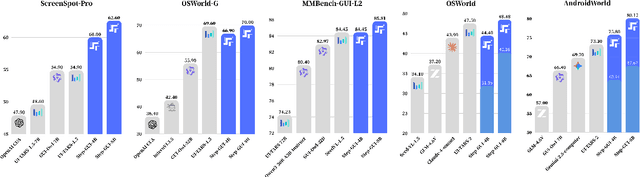
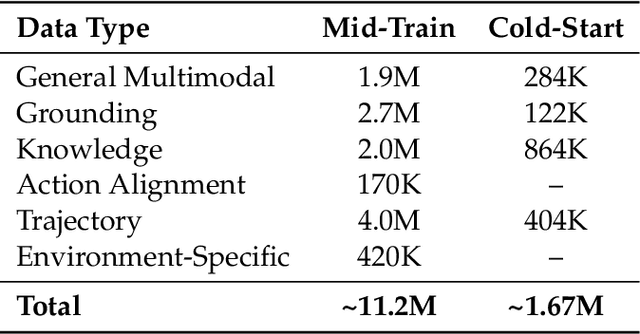
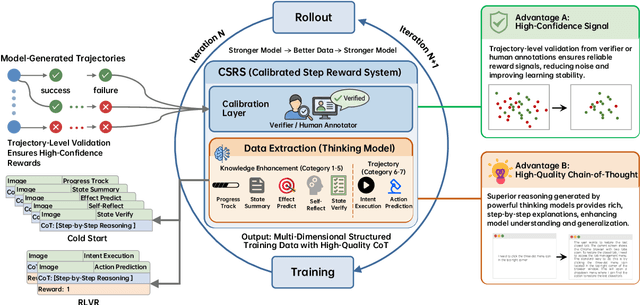
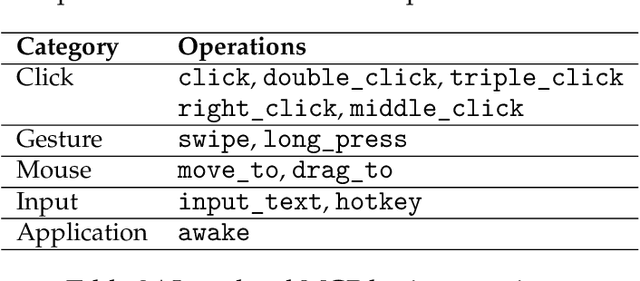
Recent advances in multimodal large language models unlock unprecedented opportunities for GUI automation. However, a fundamental challenge remains: how to efficiently acquire high-quality training data while maintaining annotation reliability? We introduce a self-evolving training pipeline powered by the Calibrated Step Reward System, which converts model-generated trajectories into reliable training signals through trajectory-level calibration, achieving >90% annotation accuracy with 10-100x lower cost. Leveraging this pipeline, we introduce Step-GUI, a family of models (4B/8B) that achieves state-of-the-art GUI performance (8B: 80.2% AndroidWorld, 48.5% OSWorld, 62.6% ScreenShot-Pro) while maintaining robust general capabilities. As GUI agent capabilities improve, practical deployment demands standardized interfaces across heterogeneous devices while protecting user privacy. To this end, we propose GUI-MCP, the first Model Context Protocol for GUI automation with hierarchical architecture that combines low-level atomic operations and high-level task delegation to local specialist models, enabling high-privacy execution where sensitive data stays on-device. Finally, to assess whether agents can handle authentic everyday usage, we introduce AndroidDaily, a benchmark grounded in real-world mobile usage patterns with 3146 static actions and 235 end-to-end tasks across high-frequency daily scenarios (8B: static 89.91%, end-to-end 52.50%). Our work advances the development of practical GUI agents and demonstrates strong potential for real-world deployment in everyday digital interactions.
GuangMing-Explorer: A Four-Legged Robot Platform for Autonomous Exploration in General Environments
Dec 17, 2025Autonomous exploration is a fundamental capability that tightly integrates perception, planning, control, and motion execution. It plays a critical role in a wide range of applications, including indoor target search, mapping of extreme environments, resource exploration, etc. Despite significant progress in individual components, a holistic and practical description of a completely autonomous exploration system, encompassing both hardware and software, remains scarce. In this paper, we present GuangMing-Explorer, a fully integrated autonomous exploration platform designed for robust operation across diverse environments. We provide a comprehensive overview of the system architecture, including hardware design, software stack, algorithm deployment, and experimental configuration. Extensive real-world experiments demonstrate the platform's effectiveness and efficiency in executing autonomous exploration tasks, highlighting its potential for practical deployment in complex and unstructured environments.
CompEvent: Complex-valued Event-RGB Fusion for Low-light Video Enhancement and Deblurring
Nov 18, 2025Low-light video deblurring poses significant challenges in applications like nighttime surveillance and autonomous driving due to dim lighting and long exposures. While event cameras offer potential solutions with superior low-light sensitivity and high temporal resolution, existing fusion methods typically employ staged strategies, limiting their effectiveness against combined low-light and motion blur degradations. To overcome this, we propose CompEvent, a complex neural network framework enabling holistic full-process fusion of event data and RGB frames for enhanced joint restoration. CompEvent features two core components: 1) Complex Temporal Alignment GRU, which utilizes complex-valued convolutions and processes video and event streams iteratively via GRU to achieve temporal alignment and continuous fusion; and 2) Complex Space-Frequency Learning module, which performs unified complex-valued signal processing in both spatial and frequency domains, facilitating deep fusion through spatial structures and system-level characteristics. By leveraging the holistic representation capability of complex-valued neural networks, CompEvent achieves full-process spatiotemporal fusion, maximizes complementary learning between modalities, and significantly strengthens low-light video deblurring capability. Extensive experiments demonstrate that CompEvent outperforms SOTA methods in addressing this challenging task. The code is available at https://github.com/YuXie1/CompEvent.
Out-of-Distribution Detection with Positive and Negative Prompt Supervision Using Large Language Models
Nov 14, 2025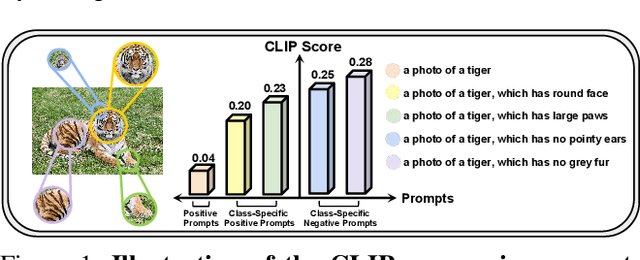
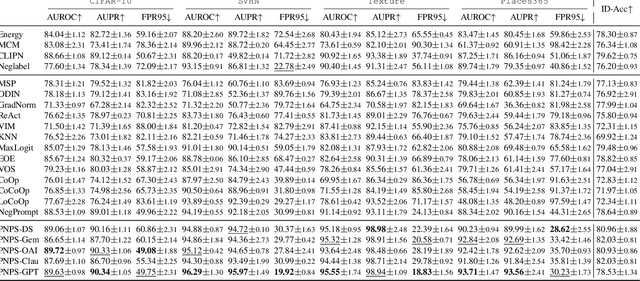
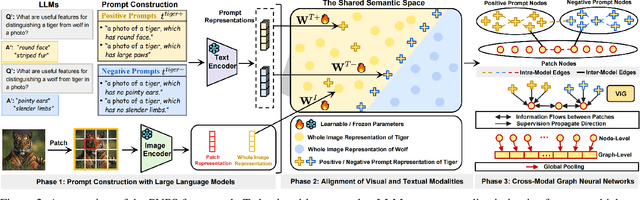
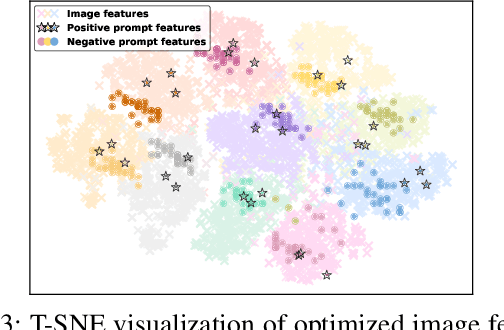
Out-of-distribution (OOD) detection is committed to delineating the classification boundaries between in-distribution (ID) and OOD images. Recent advances in vision-language models (VLMs) have demonstrated remarkable OOD detection performance by integrating both visual and textual modalities. In this context, negative prompts are introduced to emphasize the dissimilarity between image features and prompt content. However, these prompts often include a broad range of non-ID features, which may result in suboptimal outcomes due to the capture of overlapping or misleading information. To address this issue, we propose Positive and Negative Prompt Supervision, which encourages negative prompts to capture inter-class features and transfers this semantic knowledge to the visual modality to enhance OOD detection performance. Our method begins with class-specific positive and negative prompts initialized by large language models (LLMs). These prompts are subsequently optimized, with positive prompts focusing on features within each class, while negative prompts highlight features around category boundaries. Additionally, a graph-based architecture is employed to aggregate semantic-aware supervision from the optimized prompt representations and propagate it to the visual branch, thereby enhancing the performance of the energy-based OOD detector. Extensive experiments on two benchmarks, CIFAR-100 and ImageNet-1K, across eight OOD datasets and five different LLMs, demonstrate that our method outperforms state-of-the-art baselines.