 Add to Chrome
 Add to Firefox
 Add to Edge
UVFaceFusion: Fast Multi-view Topologically Consistent Face Reconstruction in the Wild via UV-space Neural Fusion
Jul 21, 2026
Reconstructing high-fidelity facial geometry with an assigned topology is essential for digital avatar creation and animation, yet existing automated methods often trade off geometric fidelity and in-the-wild generalization. We present UVFaceFusion, a feed-forward framework for multi-view, fixed-topology face reconstruction from daily images. Our key idea is to replace heuristic topological optimization with learnable neural fusion in a canonical UV space. Given multi-view images, we first obtain dense point maps and facial UV correspondences of each view using VGGT and Pixel3DMM, respectively. Then, the view-specific point maps are lifted into the canonical UV domain and fused with a novel mask-aware neural fusion network. The network predicts a complete UV-space point map, from which a fixed-topology mesh is directly sampled. Although trained only on Ava-256, UVFaceFusion generalizes well to multiple public benchmarks and in-the-wild captures, benefiting from its canonical UV-space geometry-to-geometry fusion that reduces dependence on dataset-specific appearance and capture conditions. Experiments on various benchmarks show that UVFaceFusion achieves state-of-the-art reconstruction accuracy while reconstructing a mesh from 16 input views in less than 3 seconds on a single RTX 4090. Code is available at https://github.com/grignarder/UVFaceFusion.

DiffMagicFace: Identity Consistent Facial Editing of Real Videos
Apr 15, 2026Text-conditioned image editing has greatly benefitted from the advancements in Image Diffusion Models. However, extending these techniques to facial video editing introduces challenges in preserving facial identity throughout the source video and ensuring consistency of the edited subject across frames. In this paper, we introduce DiffMagicFace, a unique video editing framework that integrates two fine-tuned models for text and image control. These models operate concurrently during inference to produce video frames that maintain identity features while seamlessly aligning with the editing semantics. To ensure the consistency of the edited videos, we develop a dataset comprising images showcasing various facial perspectives for each edited subject. The creation of a data set is achieved through rendering techniques and the subsequent application of optimization algorithms. Remarkably, our approach does not depend on video datasets but still delivers high-quality results in both consistency and content. The excellent effect holds even for complex tasks like talking head videos and distinguishing closely related categories. The videos edited using our framework exhibit parity with videos that are made using traditional rendering software. Through comparative analysis with current state-of-the-art methods, our framework demonstrates superior performance in both visual appeal and quantitative metrics.
DiffSparse: Accelerating Diffusion Transformers with Learned Token Sparsity
Apr 04, 2026Diffusion models demonstrate outstanding performance in image generation, but their multi-step inference mechanism requires immense computational cost. Previous works accelerate inference by leveraging layer or token cache techniques to reduce computational cost. However, these methods fail to achieve superior acceleration performance in few-step diffusion transformer models due to inefficient feature caching strategies, manually designed sparsity allocation, and the practice of retaining complete forward computations in several steps in these token cache methods. To tackle these challenges, we propose a differentiable layer-wise sparsity optimization framework for diffusion transformer models, leveraging token caching to reduce token computation costs and enhance acceleration. Our method optimizes layer-wise sparsity allocation in an end-to-end manner through a learnable network combined with a dynamic programming solver. Additionally, our proposed two-stage training strategy eliminates the need for full-step processing in existing methods, further improving efficiency. We conducted extensive experiments on a range of diffusion-transformer models, including DiT-XL/2, PixArt-$α$, FLUX, and Wan2.1. Across these architectures, our method consistently improves efficiency without degrading sample quality. For example, on PixArt-$α$ with 20 sampling steps, we reduce computational cost by $54\%$ while achieving generation metrics that surpass those of the original model, substantially outperforming prior approaches. These results demonstrate that our method delivers large efficiency gains while often improving generation quality.
TAP: A Token-Adaptive Predictor Framework for Training-Free Diffusion Acceleration
Mar 04, 2026Diffusion models achieve strong generative performance but remain slow at inference due to the need for repeated full-model denoising passes. We present Token-Adaptive Predictor (TAP), a training-free, probe-driven framework that adaptively selects a predictor for each token at every sampling step. TAP uses a single full evaluation of the model's first layer as a low-cost probe to compute proxy losses for a compact family of candidate predictors (instantiated primarily with Taylor expansions of varying order and horizon), then assigns each token the predictor with the smallest proxy error. This per-token "probe-then-select" strategy exploits heterogeneous temporal dynamics, requires no additional training, and is compatible with various predictor designs. TAP incurs negligible overhead while enabling large speedups with little or no perceptual quality loss. Extensive experiments across multiple diffusion architectures and generation tasks show that TAP substantially improves the accuracy-efficiency frontier compared to fixed global predictors and caching-only baselines.
DiffBench Meets DiffAgent: End-to-End LLM-Driven Diffusion Acceleration Code Generation
Jan 06, 2026Diffusion models have achieved remarkable success in image and video generation. However, their inherently multiple step inference process imposes substantial computational overhead, hindering real-world deployment. Accelerating diffusion models is therefore essential, yet determining how to combine multiple model acceleration techniques remains a significant challenge. To address this issue, we introduce a framework driven by large language models (LLMs) for automated acceleration code generation and evaluation. First, we present DiffBench, a comprehensive benchmark that implements a three stage automated evaluation pipeline across diverse diffusion architectures, optimization combinations and deployment scenarios. Second, we propose DiffAgent, an agent that generates optimal acceleration strategies and codes for arbitrary diffusion models. DiffAgent employs a closed-loop workflow in which a planning component and a debugging component iteratively refine the output of a code generation component, while a genetic algorithm extracts performance feedback from the execution environment to guide subsequent code refinements. We provide a detailed explanation of the DiffBench construction and the design principles underlying DiffAgent. Extensive experiments show that DiffBench offers a thorough evaluation of generated codes and that DiffAgent significantly outperforms existing LLMs in producing effective diffusion acceleration strategies.
Semantic Hierarchical Prompt Tuning for Parameter-Efficient Fine-Tuning
Dec 24, 2024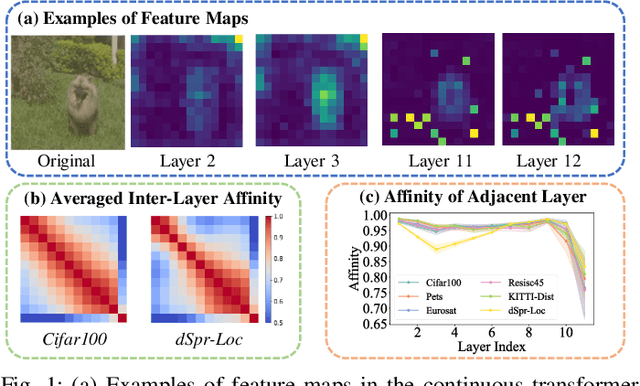
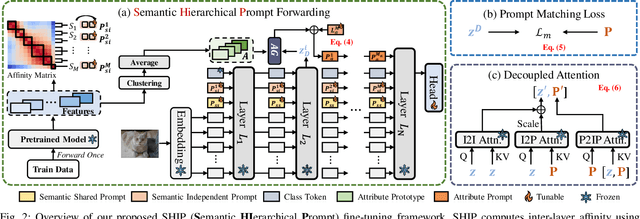
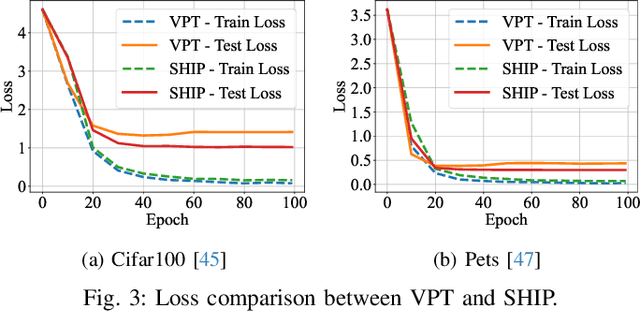
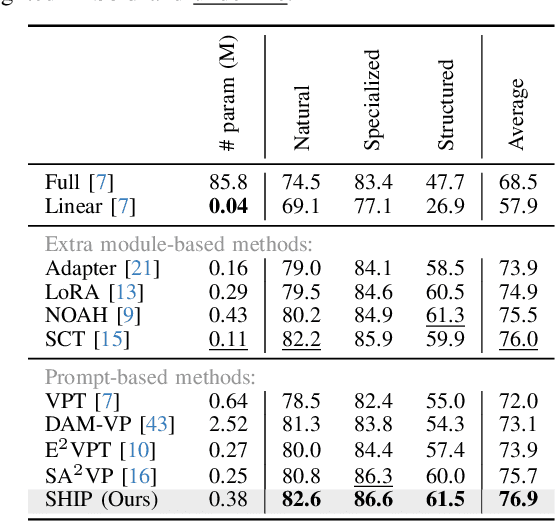
As the scale of vision models continues to grow, Visual Prompt Tuning (VPT) has emerged as a parameter-efficient transfer learning technique, noted for its superior performance compared to full fine-tuning. However, indiscriminately applying prompts to every layer without considering their inherent correlations, can cause significant disturbances, leading to suboptimal transferability. Additionally, VPT disrupts the original self-attention structure, affecting the aggregation of visual features, and lacks a mechanism for explicitly mining discriminative visual features, which are crucial for classification. To address these issues, we propose a Semantic Hierarchical Prompt (SHIP) fine-tuning strategy. We adaptively construct semantic hierarchies and use semantic-independent and semantic-shared prompts to learn hierarchical representations. We also integrate attribute prompts and a prompt matching loss to enhance feature discrimination and employ decoupled attention for robustness and reduced inference costs. SHIP significantly improves performance, achieving a 4.9% gain in accuracy over VPT with a ViT-B/16 backbone on VTAB-1k tasks. Our code is available at https://github.com/haoweiz23/SHIP.
Improving Robustness for Pose Estimation via Stable Heatmap Regression
May 08, 2021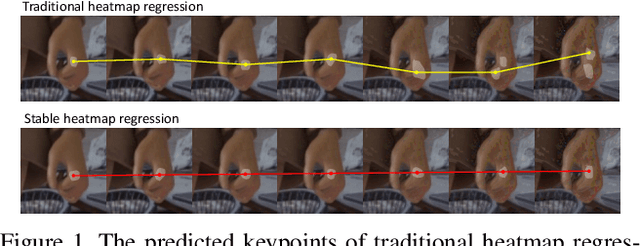
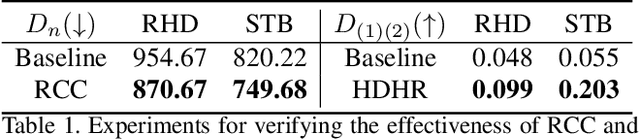
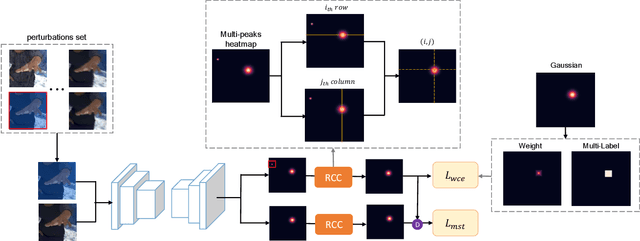
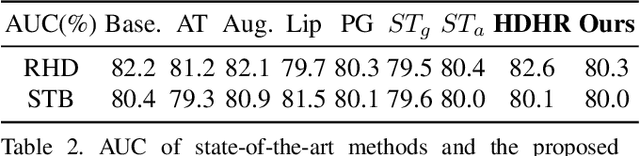
Deep learning methods have achieved excellent performance in pose estimation, but the lack of robustness causes the keypoints to change drastically between similar images. In view of this problem, a stable heatmap regression method is proposed to alleviate network vulnerability to small perturbations. We utilize the correlation between different rows and columns in a heatmap to alleviate the multi-peaks problem, and design a highly differentiated heatmap regression to make a keypoint discriminative from surrounding points. A maximum stability training loss is used to simplify the optimization difficulty when minimizing the prediction gap of two similar images. The proposed method achieves a significant advance in robustness over state-of-the-art approaches on two benchmark datasets and maintains high performance.
Switching Gradient Directions for Query-Efficient Black-Box Adversarial Attacks
Sep 15, 2020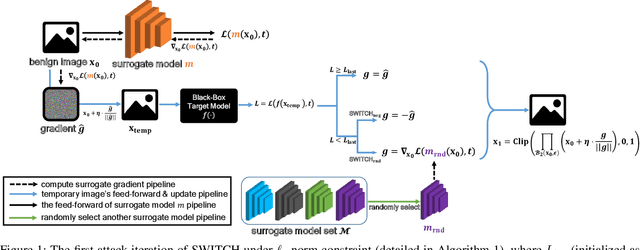
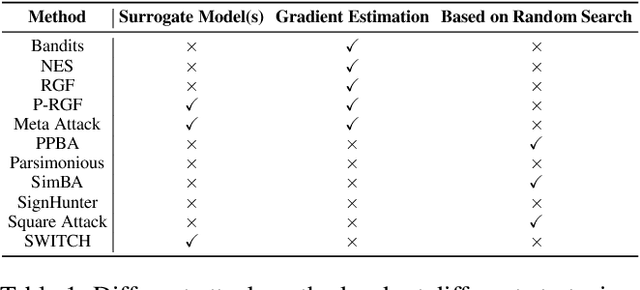
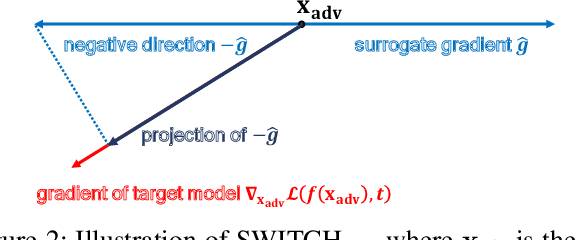
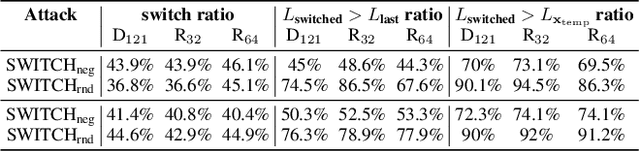
We propose a simple and highly query-efficient black-box adversarial attack named SWITCH, which has a state-of-the-art performance under $\ell_2$ and $\ell_\infty$ norms in the score-based setting. In the black box attack setting, designing query-efficient attacks remains an open problem. The high query efficiency of the proposed approach stems from the combination of transfer-based attacks and random-search-based ones. The surrogate model's gradient $\hat{\mathbf{g}}$ is exploited for the guidance, which is then switched if our algorithm detects that it does not point to the adversarial region by using a query, thereby keeping the objective loss function of the target model rising as much as possible. Two switch operations are available, i.e., SWITCH$_\text{neg}$ and SWITCH$_\text{rnd}$. SWITCH$_\text{neg}$ takes $-\hat{\mathbf{g}}$ as the new direction, which is reasonable under an approximate local linearity assumption. SWITCH$_\text{rnd}$ computes the gradient from another model, which is randomly selected from a large model set, to help bypass the potential obstacle in optimization. Experimental results show that these strategies boost the optimization process whereas following the original surrogate gradients does not work. In SWITCH, no query is used to estimate the gradient, and all the queries aim to determine whether to switch directions, resulting in unprecedented query efficiency. We demonstrate that our approach outperforms 10 state-of-the-art attacks on CIFAR-10, CIFAR-100 and TinyImageNet datasets. SWITCH can serve as a strong baseline for future black-box attacks. The PyTorch source code is released in https://github.com/machanic/SWITCH .
MetaSimulator: Simulating Unknown Target Models for Query-Efficient Black-box Attacks
Sep 02, 2020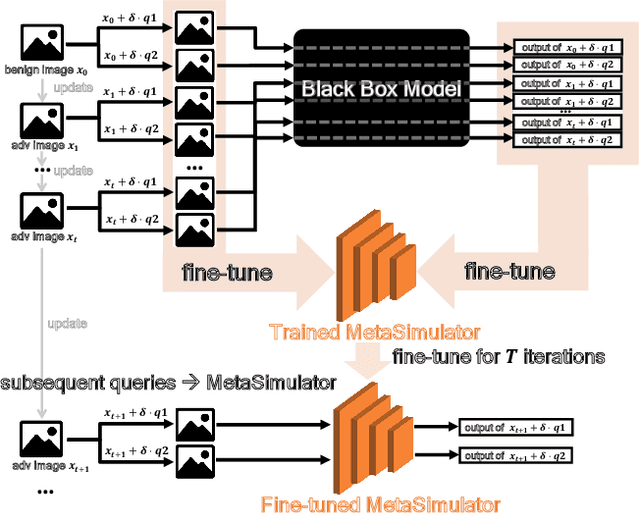
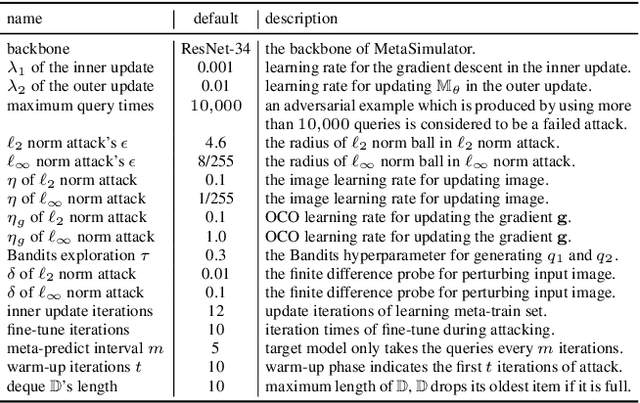
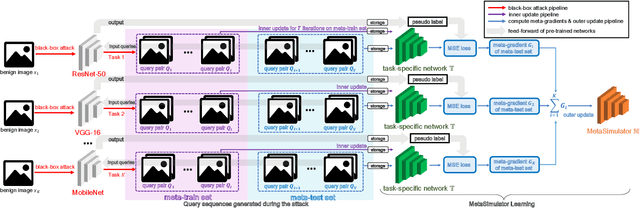
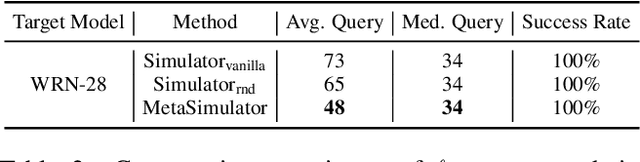
Many adversarial attacks have been proposed to investigate the security issues of deep neural networks. For the black-box setting, current model stealing attacks train a substitute model to counterfeit the functionality of the target model. However, the training requires querying the target model. Consequently, the query complexity remains high and such attacks can be defended easily by deploying the defense mechanism. In this study, we aim to learn a generalized substitute model called MetaSimulator that can mimic the functionality of the unknown target models. To this end, we build the training data with the form of multi-tasks by collecting query sequences generated in the attack of various existing networks. The learning consists of a double-network framework, including the task-specific network and MetaSimulator network, to learn the general simulation capability. Specifically, the task-specific network computes each task's meta-gradient, which is further accumulated from multiple tasks to update MetaSimulator to improve generalization. When attacking a target model that is unseen in training, the trained MetaSimulator can simulate its functionality accurately using its limited feedback. As a result, a large fraction of queries can be transferred to MetaSimulator in the attack, thereby reducing the high query complexity. Comprehensive experiments conducted on CIFAR-10, CIFAR-100, and TinyImageNet datasets demonstrate the proposed approach saves twice the number of queries on average compared with the baseline method. The source code is released on https://github.com/machanic/MetaSimulator .
Self-Paced Video Data Augmentation with Dynamic Images Generated by Generative Adversarial Networks
Sep 16, 2019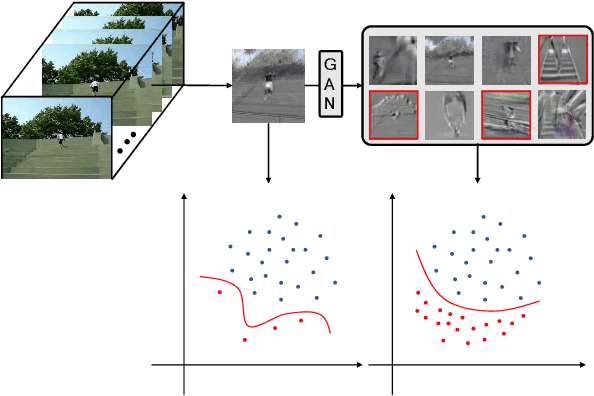
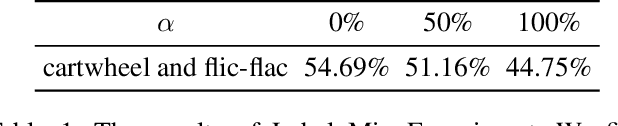
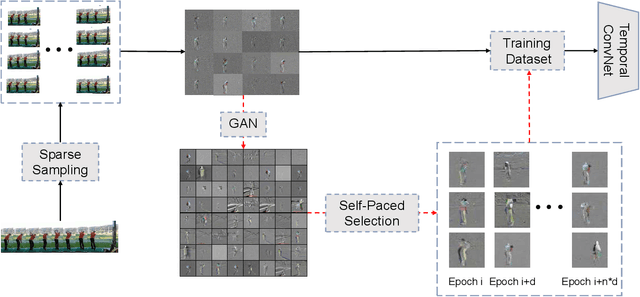
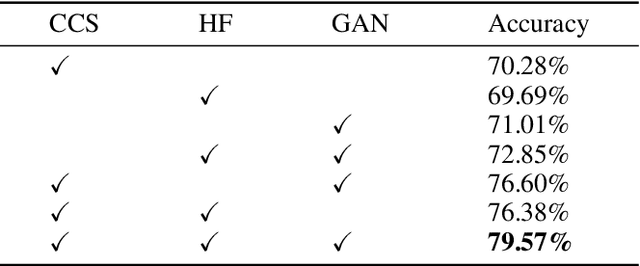
There is an urgent need for an effective video classification method by means of a small number of samples. The deficiency of samples could be effectively alleviated by generating samples through Generative Adversarial Networks (GAN), but the generation of videos on a typical category remains to be underexplored since the complex actions and the changeable viewpoints are difficult to simulate. In this paper, we propose a generative data augmentation method for temporal stream of the Temporal Segment Networks with the dynamic image. The dynamic image compresses the motion information of video into a still image, removing the interference factors such as the background. Thus it is easier to generate images with categorical motion information using GAN. We use the generated dynamic images to enhance the features, with regularization achieved as well, thereby to achieve the effect of video augmentation. In order to deal with the uneven quality of generated images, we propose a Self-Paced Selection (SPS) method, which automatically selects the high-quality generated samples to be added to the network training. Our method is verified on two benchmark datasets, HMDB51 and UCF101. The experimental results show that the method can improve the accuracy of video classification under the circumstance of sample insufficiency and sample imbalance.