 Add to Chrome
 Add to Firefox
 Add to Edge
Reward-Decomposed Reinforcement Learning for Immersive Video Role-Playing
May 06, 2026
Text-based role-playing models can imitate character styles, yet they often fail to reflect a scene's atmosphere and evolving tension, both essential for immersive applications such as Virtual Reality (VR) games and interactive narratives. We study video-grounded role-playing dialogue and introduce EBM-RL (Eye-Brain-Mouth Reinforcement Learning), a decoupled GRPO-based framework that explicitly separates observation ([perception]), reasoning ([think]), and utterance ([answer]). This structure promotes human-like sensory grounding by compelling the model to first attend to visual cues, then form internal interpretations, and finally generate context-appropriate dialogue. EBM-RL integrates four complementary rewards: (i) CLIP-based scene-text alignment to improve ambiance and emotion; (ii) a Perceptual-Cognitive reward that encourages [perception] and [think] processes that increase the likelihood of the reference response; (iii) answer accuracy to ensure faithfulness; and (iv) a dense format reward to enforce the desired structured output. Extensive experiments demonstrate that EBM-RL substantially outperforms text-only role-playing baselines and larger-scale vision-language models on our immersive role-playing benchmark, delivering simultaneous gains in visual-atmosphere consistency and character authenticity. Beyond the role-playing domain, EBM-RL also exhibits strong zero-shot generalization: without any additional fine-tuning, it consistently improves performance on out-of-domain VideoQA benchmarks. We additionally release an open-source dataset for video-grounded role-playing dialogue.

CoT2-Meta: Budgeted Metacognitive Control for Test-Time Reasoning
Mar 30, 2026Recent test-time reasoning methods improve performance by generating more candidate chains or searching over larger reasoning trees, but they typically lack explicit control over when to expand, what to prune, how to repair, and when to abstain. We introduce CoT2-Meta, a training-free metacognitive reasoning framework that combines object-level chain-of-thought generation with meta-level control over partial reasoning trajectories. The framework integrates four components: strategy-conditioned thought generation, tree-structured search, an online process oracle for step-level reasoning evaluation, and a meta-controller that allocates computation through expansion, pruning, repair, stopping, and fallback decisions. Under matched inference budgets, CoT2-Meta consistently outperforms strong single-path, sampling-based, and search-based baselines, including ReST-MCTS. On the default backbone, it achieves 92.8 EM on MATH, 90.4 accuracy on GPQA, 98.65 EM on GSM8K, 75.8 accuracy on BBEH, 85.6 accuracy on MMMU-Pro, and 48.8 accuracy on HLE, with gains over the strongest non-CoT2-Meta baseline of +3.6, +5.2, +1.15, +2.0, +4.3, and +4.3 points, respectively. Beyond these core results, the framework remains effective across a broader 15-benchmark suite spanning knowledge and QA, multi-hop reasoning, coding, and out-of-distribution evaluation. Additional analyses show better compute scaling, improved calibration, stronger selective prediction, targeted repair behavior, and consistent gains across backbone families. These results suggest that explicit metacognitive control is a practical design principle for reliable and compute-efficient test-time reasoning systems.
ODAR: Principled Adaptive Routing for LLM Reasoning via Active Inference
Feb 27, 2026The paradigm of large language model (LLM) reasoning is shifting from parameter scaling to test-time compute scaling, yet many existing approaches still rely on uniform brute-force sampling (for example, fixed best-of-N or self-consistency) that is costly, hard to attribute, and can trigger overthinking with diminishing returns. We propose ODAR-Expert, an adaptive routing framework that optimizes the accuracy-efficiency trade-off via principled resource allocation. ODAR uses a difficulty estimator grounded in amortized active inference to dynamically route queries between a heuristic Fast Agent and a deliberative Slow Agent. We further introduce a free-energy-principled, risk-sensitive fusion mechanism that selects answers by minimizing a variational free energy objective, balancing log-likelihood with epistemic uncertainty (varentropy) as a principled alternative to ad hoc voting over heterogeneous candidates. Extensive evaluation across 23 benchmarks shows strong and consistent gains, including 98.2% accuracy on MATH and 54.8% on Humanity's Last Exam (HLE), while improving the compute-accuracy frontier under compute-matched settings. We also validate reproducibility on a fully open-source stack (Llama 4 + DeepSeek), where ODAR surpasses homogeneous sampling strategies while reducing computational costs by 82%. Overall, our results suggest that thinking-optimal scaling requires adaptive resource allocation with free-energy-based decision-making rather than simply increasing test-time compute.
DTP: A Simple yet Effective Distracting Token Pruning Framework for Vision-Language Action Models
Jan 22, 2026Vision-Language Action (VLA) models have shown remarkable progress in robotic manipulation by leveraging the powerful perception abilities of Vision-Language Models (VLMs) to understand environments and directly output actions. However, by default, VLA models may overly attend to image tokens in the task-irrelevant region, which we describe as 'distracting tokens'. This behavior can disturb the model from the generation of the desired action tokens in each step, affecting the success rate of tasks. In this paper, we introduce a simple yet effective plug-and-play Distracting Token Pruning (DTP) framework, which dynamically detects and prunes these distracting image tokens. By correcting the model's visual attention patterns, we aim to improve the task success rate, as well as exploring the performance upper boundaries of the model without altering its original architecture or adding additional inputs. Experiments on the SIMPLER Benchmark (Li et al., 2024) show that our method consistently achieving relative improvements in task success rates across different types of novel VLA models, demonstrating generalizability to transformer-based VLAs. Further analysis reveals a negative correlation between the task success rate and the amount of attentions in the task-irrelevant region for all models tested, highlighting a common phenomenon of VLA models that could guide future research. We also publish our code at: https://anonymous.4open.science/r/CBD3.
MODE: Efficient Time Series Prediction with Mamba Enhanced by Low-Rank Neural ODEs
Jan 01, 2026Time series prediction plays a pivotal role across diverse domains such as finance, healthcare, energy systems, and environmental modeling. However, existing approaches often struggle to balance efficiency, scalability, and accuracy, particularly when handling long-range dependencies and irregularly sampled data. To address these challenges, we propose MODE, a unified framework that integrates Low-Rank Neural Ordinary Differential Equations (Neural ODEs) with an Enhanced Mamba architecture. As illustrated in our framework, the input sequence is first transformed by a Linear Tokenization Layer and then processed through multiple Mamba Encoder blocks, each equipped with an Enhanced Mamba Layer that employs Causal Convolution, SiLU activation, and a Low-Rank Neural ODE enhancement to efficiently capture temporal dynamics. This low-rank formulation reduces computational overhead while maintaining expressive power. Furthermore, a segmented selective scanning mechanism, inspired by pseudo-ODE dynamics, adaptively focuses on salient subsequences to improve scalability and long-range sequence modeling. Extensive experiments on benchmark datasets demonstrate that MODE surpasses existing baselines in both predictive accuracy and computational efficiency. Overall, our contributions include: (1) a unified and efficient architecture for long-term time series modeling, (2) integration of Mamba's selective scanning with low-rank Neural ODEs for enhanced temporal representation, and (3) substantial improvements in efficiency and scalability enabled by low-rank approximation and dynamic selective scanning.
COBRA: Multimodal Sensing Deep Learning Framework for Remote Chronic Obesity Management via Wrist-Worn Activity Monitoring
Sep 04, 2025Chronic obesity management requires continuous monitoring of energy balance behaviors, yet traditional self-reported methods suffer from significant underreporting and recall bias, and difficulty in integration with modern digital health systems. This study presents COBRA (Chronic Obesity Behavioral Recognition Architecture), a novel deep learning framework for objective behavioral monitoring using wrist-worn multimodal sensors. COBRA integrates a hybrid D-Net architecture combining U-Net spatial modeling, multi-head self-attention mechanisms, and BiLSTM temporal processing to classify daily activities into four obesity-relevant categories: Food Intake, Physical Activity, Sedentary Behavior, and Daily Living. Validated on the WISDM-Smart dataset with 51 subjects performing 18 activities, COBRA's optimal preprocessing strategy combines spectral-temporal feature extraction, achieving high performance across multiple architectures. D-Net demonstrates 96.86% overall accuracy with category-specific F1-scores of 98.55% (Physical Activity), 95.53% (Food Intake), 94.63% (Sedentary Behavior), and 98.68% (Daily Living), outperforming state-of-the-art baselines by 1.18% in accuracy. The framework shows robust generalizability with low demographic variance (<3%), enabling scalable deployment for personalized obesity interventions and continuous lifestyle monitoring.
IMTS is Worth Time $\times$ Channel Patches: Visual Masked Autoencoders for Irregular Multivariate Time Series Prediction
May 28, 2025Irregular Multivariate Time Series (IMTS) forecasting is challenging due to the unaligned nature of multi-channel signals and the prevalence of extensive missing data. Existing methods struggle to capture reliable temporal patterns from such data due to significant missing values. While pre-trained foundation models show potential for addressing these challenges, they are typically designed for Regularly Sampled Time Series (RTS). Motivated by the visual Mask AutoEncoder's (MAE) powerful capability for modeling sparse multi-channel information and its success in RTS forecasting, we propose VIMTS, a framework adapting Visual MAE for IMTS forecasting. To mitigate the effect of missing values, VIMTS first processes IMTS along the timeline into feature patches at equal intervals. These patches are then complemented using learned cross-channel dependencies. Then it leverages visual MAE's capability in handling sparse multichannel data for patch reconstruction, followed by a coarse-to-fine technique to generate precise predictions from focused contexts. In addition, we integrate self-supervised learning for improved IMTS modeling by adapting the visual MAE to IMTS data. Extensive experiments demonstrate VIMTS's superior performance and few-shot capability, advancing the application of visual foundation models in more general time series tasks. Our code is available at https://github.com/WHU-HZY/VIMTS.
AiRacleX: Automated Detection of Price Oracle Manipulations via LLM-Driven Knowledge Mining and Prompt Generation
Feb 10, 2025


Decentralized finance applications depend on accurate price oracles to ensure secure transactions, yet these oracles are highly vulnerable to manipulation, enabling attackers to exploit smart contract vulnerabilities for unfair asset valuation and financial gain. Detecting such manipulations traditionally relies on the manual effort of experienced experts, presenting significant challenges. In this paper, we propose a novel LLM-driven framework that automates the detection of price oracle manipulations by leveraging the complementary strengths of different LLM models. Our approach begins with domain-specific knowledge extraction, where an LLM model synthesizes precise insights about price oracle vulnerabilities from top-tier academic papers, eliminating the need for profound expertise from developers or auditors. This knowledge forms the foundation for a second LLM model to generate structured, context-aware chain of thought prompts, which guide a third LLM model in accurately identifying manipulation patterns in smart contracts. We validate the framework effectiveness through experiments on 60 known vulnerabilities from 46 real-world DeFi attacks or projects spanning 2021 to 2023. The best performing combination of LLMs (Haiku-Haiku-4o-mini) identified by AiRacleX demonstrate a 2.58-times improvement in recall (0.667 vs 0.259) compared to the state-of-the-art tool GPTScan, while maintaining comparable precision. Furthermore, our framework demonstrates the feasibility of replacing commercial models with open-source alternatives, enhancing privacy and security for developers.
Beyond Model Scale Limits: End-Edge-Cloud Federated Learning with Self-Rectified Knowledge Agglomeration
Jan 01, 2025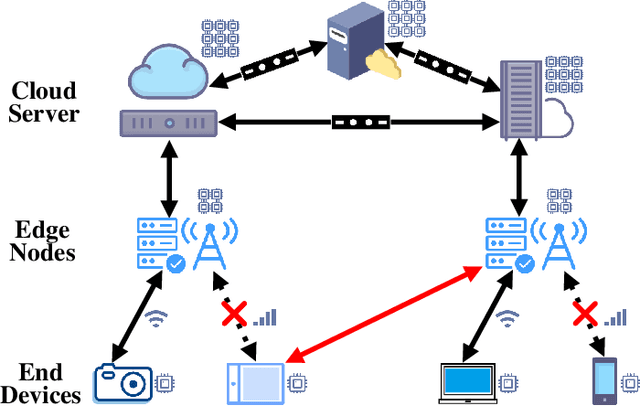
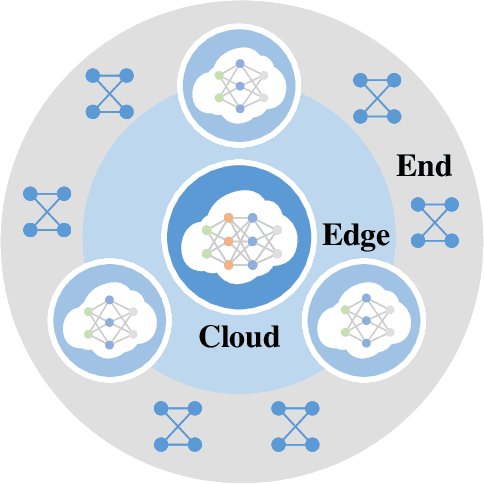
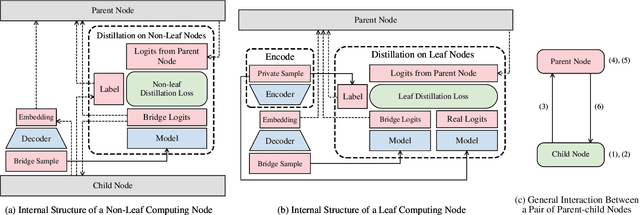
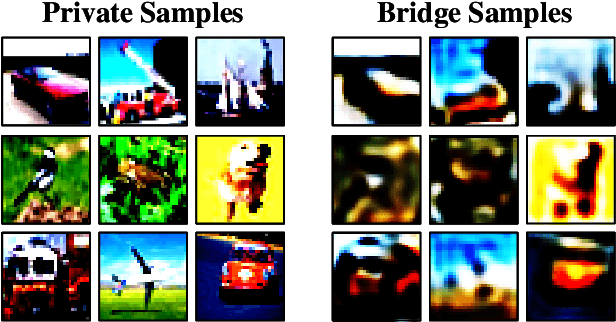
The rise of End-Edge-Cloud Collaboration (EECC) offers a promising paradigm for Artificial Intelligence (AI) model training across end devices, edge servers, and cloud data centers, providing enhanced reliability and reduced latency. Hierarchical Federated Learning (HFL) can benefit from this paradigm by enabling multi-tier model aggregation across distributed computing nodes. However, the potential of HFL is significantly constrained by the inherent heterogeneity and dynamic characteristics of EECC environments. Specifically, the uniform model structure bounded by the least powerful end device across all computing nodes imposes a performance bottleneck. Meanwhile, coupled heterogeneity in data distributions and resource capabilities across tiers disrupts hierarchical knowledge transfer, leading to biased updates and degraded performance. Furthermore, the mobility and fluctuating connectivity of computing nodes in EECC environments introduce complexities in dynamic node migration, further compromising the robustness of the training process. To address multiple challenges within a unified framework, we propose End-Edge-Cloud Federated Learning with Self-Rectified Knowledge Agglomeration (FedEEC), which is a novel EECC-empowered FL framework that allows the trained models from end, edge, to cloud to grow larger in size and stronger in generalization ability. FedEEC introduces two key innovations: (1) Bridge Sample Based Online Distillation Protocol (BSBODP), which enables knowledge transfer between neighboring nodes through generated bridge samples, and (2) Self-Knowledge Rectification (SKR), which refines the transferred knowledge to prevent suboptimal cloud model optimization. The proposed framework effectively handles both cross-tier resource heterogeneity and effective knowledge transfer between neighboring nodes, while satisfying the migration-resilient requirements of EECC.
Blockchain Data Analysis in the Era of Large-Language Models
Dec 09, 2024
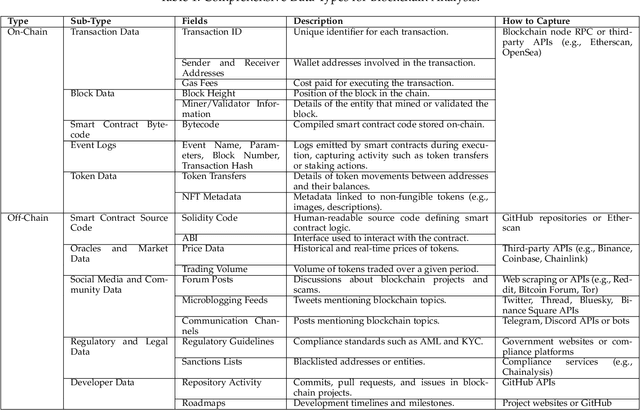

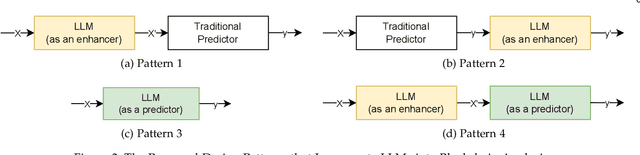
Blockchain data analysis is essential for deriving insights, tracking transactions, identifying patterns, and ensuring the integrity and security of decentralized networks. It plays a key role in various areas, such as fraud detection, regulatory compliance, smart contract auditing, and decentralized finance (DeFi) risk management. However, existing blockchain data analysis tools face challenges, including data scarcity, the lack of generalizability, and the lack of reasoning capability. We believe large language models (LLMs) can mitigate these challenges; however, we have not seen papers discussing LLM integration in blockchain data analysis in a comprehensive and systematic way. This paper systematically explores potential techniques and design patterns in LLM-integrated blockchain data analysis. We also outline prospective research opportunities and challenges, emphasizing the need for further exploration in this promising field. This paper aims to benefit a diverse audience spanning academia, industry, and policy-making, offering valuable insights into the integration of LLMs in blockchain data analysis.