 Add to Chrome
 Add to Firefox
 Add to Edge
A Unified Adaptive Feature Composition Framework for Multi-Task Generalization in Wireless Foundation Models
Jun 09, 2026
Though wireless foundation models (WFMs) have shown strong potential in learning universal channel representations, their adaptation to various downstream tasks remains constrained by existing paradigms. Fine-tuning strategies introduces substantial computational and storage overhead, while frozen feature extraction leads to sub-optimal performance across diverse downstream tasks. To address this issue, we propose a unified adaptive feature composition framework for multitask generalization in WFMs, where the key component is the Routing Adapter for Feature Composition (RAFC). Instead of extracting only the final-layer output, this router treats the hidden states from different Transformer depths as a reusable pool of multi-level hidden features, and employs a lightweight task-driven feature composition network to generate layer-wise aggregation weights, then adaptively combine hierarchical representations through weighted summation. This design enables each downstream task to access suitable mixture of low-, mid-, and high-level wireless features without modifying the pretrained backbone. Extensive experiments on four representative wireless tasks demonstrate that RAFC consistently outperforms conventional adaptation baselines while introducing fewer than 50K additional parameters. Moreover, the learned routing weights provide interpretable evidence of task-specific layer preferences, making the proposed framework a low-complexity, scalable, and explainable interface for adapting WFMs to diverse downstream scenarios.

SpikeWFM: Spiking-Aided Wireless Foundation Model for Robust Channel Prediction
May 28, 2026This paper proposes SpikeWFM, a novel hybrid architecture that integrates spiking neural networks (SNNs) with conventional artificial neural network (ANN)-based transformers for wireless foundation models (WFMs). Inspired by the noise-robust and energy-efficient information processing in the human brain, SpikeWFM aims to enhance the resilience of WFMs against noise and interference while maintaining strong generalization capabilities across diverse wireless scenarios. Drawing from the success of large language models, WFMs leverage self-supervised pre-training on large-scale datasets spanning various wireless environments to learn a unified embedding that supports a wide range of downstream tasks, including channel prediction, channel estimation, beam predition, positioning and etc. Such models typically outperform task-specific designs and exhibit superior adaptability to unseen conditions. However, existing WFMs remain vulnerable to realistic noise and interference in practical wireless systems. To address this limitation, we incorporate spiking neurons into the transformer-based WFM architecture. We provide a brief theoretical analysis demonstrating how the SNN-ANN hybrid effectively mitigates noise and interference through temporal sparsity and event-driven processing. Experimental results show that SpikeWFM consistently outperforms conventional ANN-based WFMs in both pre-training convergence and channel prediction accuracy. Additional results on communication and sensing tasks will be presented in the full journal version of this work.
Rec-Distill: An Industrial Distillation Pipeline for Large-Scale Recommendation Models
May 28, 2026Large recommendation models have demonstrated substantial potential gains under scaling laws, yet these gains are difficult to realize in industrial recommendation systems because real-world deployment requires lightweight models with strict serving efficiency and latency guarantees. This creates a fundamental gap between offline model scaling and online deployment. In this work, we present Rec-Distill, an industrial distillation pipeline that transfers the performance gains of large-scale recommendation modeling to efficient serving models. Rec-Distill combines large-teacher scaling with student-side transfer optimization through decoupled training, black-box distillation, debiasing mechanism, and a hybrid batch-streaming pipeline for dynamic recommendation environments. Across multiple recommendation and advertising scenarios on real-world platforms, our framework scales teacher models up to 24B dense parameters and 20K behavior sequence length, while enabling lightweight students to recover a substantial portion of teacher gains, with distillation transferability exceeding 60% in the best setting. Extensive offline and online experiments further show that these transferred gains consistently translate into measurable business improvements under industrial constraints. These results demonstrate that Rec-Distill provides a practical framework for distilling large-scale recommendation models into deployable, cost-efficient serving systems, while also establishing a reliable path toward scaling recommendation models to even larger regimes in the future.
Seeing is Believing: Robust Vision-Guided Cross-Modal Prompt Learning under Label Noise
Apr 10, 2026Prompt learning is a parameter-efficient approach for vision-language models, yet its robustness under label noise is less investigated. Visual content contains richer and more reliable semantic information, which remains more robust under label noise. However, the prompt itself is highly susceptible to label noise. Motivated by this intuition, we propose VisPrompt, a lightweight and robust vision-guided prompt learning framework for noisy-label settings. Specifically, we exploit a cross-modal attention mechanism to reversely inject visual semantics into prompt representations. This enables the prompt tokens to selectively aggregate visual information relevant to the current sample, thereby improving robustness by anchoring prompt learning to stable instance-level visual evidence and reducing the influence of noisy supervision. To address the instability caused by using the same way of injecting visual information for all samples, despite differences in the quality of their visual cues, we further introduce a lightweight conditional modulation mechanism to adaptively control the strength of visual information injection, which strikes a more robust balance between text-side semantic priors and image-side instance evidence. The proposed framework effectively suppresses the noise-induced disturbances, reduce instability in prompt updates, and alleviate memorization of mislabeled samples. VisPrompt significantly improves robustness while keeping the pretrained VLM backbone frozen and introducing only a small amount of additional trainable parameters. Extensive experiments under synthetic and real-world label noise demonstrate that VisPrompt generally outperforms existing baselines on seven benchmark datasets and achieves stronger robustness. Our code is publicly available at https://github.com/gezbww/Vis_Prompt.
FedRG: Unleashing the Representation Geometry for Federated Learning with Noisy Clients
Mar 20, 2026Federated learning (FL) suffers from performance degradation due to the inevitable presence of noisy annotations in distributed scenarios. Existing approaches have advanced in distinguishing noisy samples from the dataset for label correction by leveraging loss values. However, noisy samples recognition relying on scalar loss lacks reliability for FL under heterogeneous scenarios. In this paper, we rethink this paradigm from a representation perspective and propose \method~(\textbf{Fed}erated under \textbf{R}epresentation \textbf{G}emometry), which follows \textbf{the principle of ``representation geometry priority''} to recognize noisy labels. Firstly, \method~creates label-agnostic spherical representations by using self-supervision. It then iteratively fits a spherical von Mises-Fisher (vMF) mixture model to this geometry using previously identified clean samples to capture semantic clusters. This geometric evidence is integrated with a semantic-label soft mapping mechanism to derive a distribution divergence between the label-free and annotated label-conditioned feature space, which robustly identifies noisy samples and updates the vMF mixture model with the newly separated clean dataset. Lastly, we employ an additional personalized noise absorption matrix on noisy labels to achieve robust optimization. Extensive experimental results demonstrate that \method~significantly outperforms state-of-the-art methods for FL with data heterogeneity under diverse noisy clients scenarios.
Beyond Unimodal Shortcuts: MLLMs as Cross-Modal Reasoners for Grounded Named Entity Recognition
Feb 04, 2026Grounded Multimodal Named Entity Recognition (GMNER) aims to extract text-based entities, assign them semantic categories, and ground them to corresponding visual regions. In this work, we explore the potential of Multimodal Large Language Models (MLLMs) to perform GMNER in an end-to-end manner, moving beyond their typical role as auxiliary tools within cascaded pipelines. Crucially, our investigation reveals a fundamental challenge: MLLMs exhibit $\textbf{modality bias}$, including visual bias and textual bias, which stems from their tendency to take unimodal shortcuts rather than rigorous cross-modal verification. To address this, we propose Modality-aware Consistency Reasoning ($\textbf{MCR}$), which enforces structured cross-modal reasoning through Multi-style Reasoning Schema Injection (MRSI) and Constraint-guided Verifiable Optimization (CVO). MRSI transforms abstract constraints into executable reasoning chains, while CVO empowers the model to dynamically align its reasoning trajectories with Group Relative Policy Optimization (GRPO). Experiments on GMNER and visual grounding tasks demonstrate that MCR effectively mitigates modality bias and achieves superior performance compared to existing baselines.
Seeing the Forest and the Trees: Query-Aware Tokenizer for Long-Video Multimodal Language Models
Nov 14, 2025Despite the recent advances in the video understanding ability of multimodal large language models (MLLMs), long video understanding remains a challenge. One of the main issues is that the number of vision tokens grows linearly with video length, which causes an explosion in attention cost, memory, and latency. To solve this challenge, we present Query-aware Token Selector (\textbf{QTSplus}), a lightweight yet powerful visual token selection module that serves as an information gate between the vision encoder and LLMs. Given a text query and video tokens, QTSplus dynamically selects the most important visual evidence for the input text query by (i) scoring visual tokens via cross-attention, (ii) \emph{predicting} an instance-specific retention budget based on the complexity of the query, and (iii) \emph{selecting} Top-$n$ tokens with a differentiable straight-through estimator during training and a hard gate at inference. Furthermore, a small re-encoder preserves temporal order using absolute time information, enabling second-level localization while maintaining global coverage. Integrated into Qwen2.5-VL, QTSplus compresses the vision stream by up to \textbf{89\%} and reduces end-to-end latency by \textbf{28\%} on long videos. The evaluation on eight long video understanding benchmarks shows near-parity accuracy overall when compared with the original Qwen models and outperforms the original model by \textbf{+20.5} and \textbf{+5.6} points respectively on TempCompass direction and order accuracies. These results show that QTSplus is an effective, general mechanism for scaling MLLMs to real-world long-video scenarios while preserving task-relevant evidence. We will make all code, data, and trained models' weights publicly available.
Wireless Channel Foundation Model with Embedded Noise-Plus-Interference Suppression Structure
Sep 19, 2025Wireless channel foundation model (WCFM) is a task-agnostic AI model that is pretrained on large-scale wireless channel datasets to learn a universal channel feature representation that can be used for a wide range of downstream tasks related to communications and sensing. While existing works on WCFM have demonstrated its great potentials in various tasks including beam prediction, channel prediction, localization, etc, the models are all trained using perfect (i.e., error-free and complete) channel information state (CSI) data which are generated with simulation tools. However, in practical systems where the WCFM is deployed, perfect CSI is not available. Instead, channel estimation needs to be first performed based on pilot signals over a subset of the resource elements (REs) to acquire a noisy version of the CSI (termed as degraded CSI), which significantly differs from the perfect CSI in some real-world environments with severe noise and interference. As a result, the feature representation generated by the WCFM is unable to reflect the characteristics of the true channel, yielding performance degradation in downstream tasks. To address this issue, in this paper we propose an enhanced wireless channel foundation model architecture with noise-plus-interference (NPI) suppression capability. In our approach, coarse estimates of the CSIs are first obtained. With these information, two projection matrices are computed to extract the NPI terms in the received signals, which are further processed by a NPI estimation and subtraction module. Finally, the resultant signal is passed through a CSI completion network to get a clean version of the CSI, which is used for feature extraction. Simulation results demonstrated that compared to the state-of-the-art solutions, WCFM with NPI suppression structure achieves improved performance on channel prediction task.
MVPBench: A Benchmark and Fine-Tuning Framework for Aligning Large Language Models with Diverse Human Values
Sep 09, 2025The alignment of large language models (LLMs) with human values is critical for their safe and effective deployment across diverse user populations. However, existing benchmarks often neglect cultural and demographic diversity, leading to limited understanding of how value alignment generalizes globally. In this work, we introduce MVPBench, a novel benchmark that systematically evaluates LLMs' alignment with multi-dimensional human value preferences across 75 countries. MVPBench contains 24,020 high-quality instances annotated with fine-grained value labels, personalized questions, and rich demographic metadata, making it the most comprehensive resource of its kind to date. Using MVPBench, we conduct an in-depth analysis of several state-of-the-art LLMs, revealing substantial disparities in alignment performance across geographic and demographic lines. We further demonstrate that lightweight fine-tuning methods, such as Low-Rank Adaptation (LoRA) and Direct Preference Optimization (DPO), can significantly enhance value alignment in both in-domain and out-of-domain settings. Our findings underscore the necessity for population-aware alignment evaluation and provide actionable insights for building culturally adaptive and value-sensitive LLMs. MVPBench serves as a practical foundation for future research on global alignment, personalized value modeling, and equitable AI development.
FNBench: Benchmarking Robust Federated Learning against Noisy Labels
May 10, 2025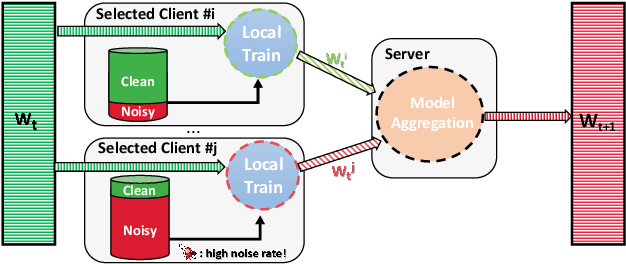
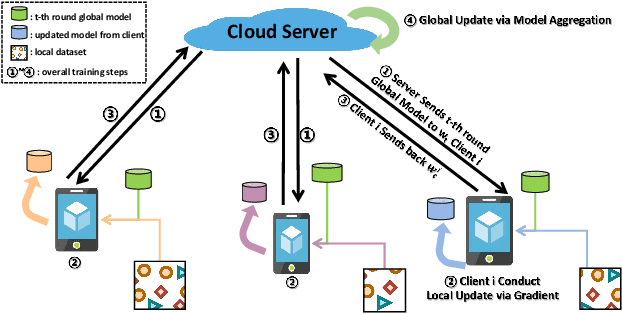
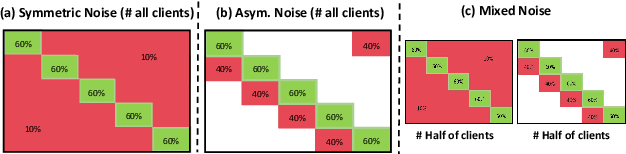
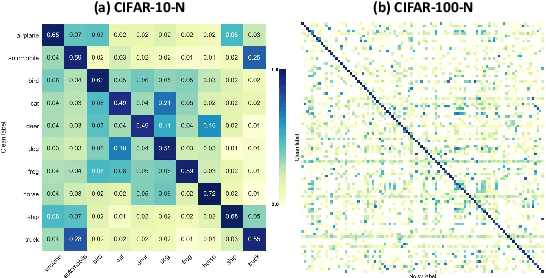
Robustness to label noise within data is a significant challenge in federated learning (FL). From the data-centric perspective, the data quality of distributed datasets can not be guaranteed since annotations of different clients contain complicated label noise of varying degrees, which causes the performance degradation. There have been some early attempts to tackle noisy labels in FL. However, there exists a lack of benchmark studies on comprehensively evaluating their practical performance under unified settings. To this end, we propose the first benchmark study FNBench to provide an experimental investigation which considers three diverse label noise patterns covering synthetic label noise, imperfect human-annotation errors and systematic errors. Our evaluation incorporates eighteen state-of-the-art methods over five image recognition datasets and one text classification dataset. Meanwhile, we provide observations to understand why noisy labels impair FL, and additionally exploit a representation-aware regularization method to enhance the robustness of existing methods against noisy labels based on our observations. Finally, we discuss the limitations of this work and propose three-fold future directions. To facilitate related communities, our source code is open-sourced at https://github.com/Sprinter1999/FNBench.