 Add to Chrome
 Add to Firefox
 Add to Edge
RAPAC-DP: Response-Aligned Pending-Action Compensation for Diffusion Policies under Delayed Execution
Aug 16, 2026
Cloud-side inference gives imitation-learning policies access to greater computational resources, but communication and computation delays can degrade control performance. To compensate for these delays, we propose RAPAC-DP, a response-aligned pending-action compensation framework designed for both diffusion- and flow-based action generators. RAPAC-DP encodes the actions already scheduled for execution before the cloud response arrives into a pending-action sequence that serves as the conditioning input to a parameter-efficient compensation pathway. When delay effects are negligible, bypassing this pathway exactly recovers the frozen base policy. For training, RAPAC-DP constructs delay-conditioned samples from delay-free demonstrations, requiring neither explicit system dynamics nor additional delayed demonstrations. At the largest fixed delay tested on Kinetix, RAPAC-DP retained 81.4% of its overall delay-free performance. At the largest fixed delay tested on each RoboMimic task, it achieved a mean success rate of 0.633 across the three tasks. These results demonstrate the effectiveness of pending-action compensation for cloud-deployed imitation-learning policies.

8DNA: 8D Neural Asset Light Transport by Distribution Learning
Apr 28, 2026High-fidelity 3D assets exhibit intriguing global illumination effects like subsurface scattering, glossy interreflections, and fine-scale fiber scatterings, which often involve long scattering paths that are expensive to simulate. We introduce 8D neural assets (8DNA) to pre-bake these light transport effects into neural representations. Unlike prior methods that assume far-field lighting and precompute light transport into 6D functions, 8DNA learns the full 8D light transport, enabling accurate rendering under near-field illumination. Our training leverages a distribution-learning formulation that learns light transport from forward path-traced samples, which produces less optimization variance with lower training budget than the prior regression-based approaches. Experiments show our 8DNA rendering closely matches path-traced results under various scene configurations, yet it achieves improved variance reduction and fast inference speeds on challenging assets.
Enhancing Online Recruitment with Category-Aware MoE and LLM-based Data Augmentation
Apr 23, 2026Person-Job Fit (PJF) is a critical component for online recruitment. Existing approaches face several challenges, particularly in handling low-quality job descriptions and similar candidate-job pairs, which impair model performance. To address these challenges, this paper proposes a large language model (LLM) based method with two novel techniques: (1) LLM-based data augmentation, which polishes and rewrites low-quality job descriptions by leveraging chain-of-thought (COT) prompts, and (2) category-aware Mixture of Experts (MoE) that assists in identifying similar candidate-job pairs. This MoE module incorporates category embeddings to dynamically assign weights to the experts and learns more distinguishable patterns for similar candidate-job pairs. We perform offline evaluations and online A/B tests on our recruitment platform. Our method relatively surpasses existing methods by 2.40% in AUC and 7.46% in GAUC, and boosts click-through conversion rate (CTCVR) by 19.4% in online tests, saving millions of CNY in external headhunting expenses.
AVO: Agentic Variation Operators for Autonomous Evolutionary Search
Mar 25, 2026Agentic Variation Operators (AVO) are a new family of evolutionary variation operators that replace the fixed mutation, crossover, and hand-designed heuristics of classical evolutionary search with autonomous coding agents. Rather than confining a language model to candidate generation within a prescribed pipeline, AVO instantiates variation as a self-directed agent loop that can consult the current lineage, a domain-specific knowledge base, and execution feedback to propose, repair, critique, and verify implementation edits. We evaluate AVO on attention, among the most aggressively optimized kernel targets in AI, on NVIDIA Blackwell (B200) GPUs. Over 7 days of continuous autonomous evolution on multi-head attention, AVO discovers kernels that outperform cuDNN by up to 3.5% and FlashAttention-4 by up to 10.5% across the evaluated configurations. The discovered optimizations transfer readily to grouped-query attention, requiring only 30 minutes of additional autonomous adaptation and yielding gains of up to 7.0% over cuDNN and 9.3% over FlashAttention-4. Together, these results show that agentic variation operators move beyond prior LLM-in-the-loop evolutionary pipelines by elevating the agent from candidate generator to variation operator, and can discover performance-critical micro-architectural optimizations that produce kernels surpassing state-of-the-art expert-engineered attention implementations on today's most advanced GPU hardware.
Long-form RewardBench: Evaluating Reward Models for Long-form Generation
Mar 13, 2026The widespread adoption of reinforcement learning-based alignment highlights the growing importance of reward models. Various benchmarks have been built to evaluate reward models in various domains and scenarios. However, a significant gap remains in assessing reward models for long-form generation, despite its critical role in real-world applications. To bridge this, we introduce Long-form RewardBench, the first reward modeling testbed specifically designed for long-form generation. Our benchmark encompasses five key subtasks: QA, RAG, Chat, Writing, and Reasoning. We collected instruction and preference data through a meticulously designed multi-stage data collection process, and conducted extensive experiments on 20+ mainstream reward models, including both classifiers and generative models. Our findings reveal that current models still lack long-form reward modeling capabilities. Furthermore, we designed a novel Long-form Needle-in-a-Haystack Test, which revealed a correlation between reward modeling performance and the error's position within a response, as well as the overall response length, with distinct characteristics observed between classification and generative models. Finally, we demonstrate that classifiers exhibit better generalizability compared to generative models trained on the same data. As the first benchmark for long-form reward modeling, this work aims to offer a robust platform for visualizing progress in this crucial area.
Toward Robust LLM-Based Judges: Taxonomic Bias Evaluation and Debiasing Optimization
Mar 09, 2026Large language model (LLM)-based judges are widely adopted for automated evaluation and reward modeling, yet their judgments are often affected by judgment biases. Accurately evaluating these biases is essential for ensuring the reliability of LLM-based judges. However, existing studies typically investigate limited biases under a single judge formulation, either generative or discriminative, lacking a comprehensive evaluation. To bridge this gap, we propose JudgeBiasBench, a benchmark for systematically quantifying biases in LLM-based judges. JudgeBiasBench defines a taxonomy of judgment biases across 4 dimensions, and constructs bias-augmented evaluation instances through a controlled bias injection pipeline, covering 12 representative bias types. We conduct extensive experiments across both generative and discriminative judges, revealing that current judges exhibit significant and diverse bias patterns that often compromise the reliability of automated evaluation. To mitigate judgment bias, we propose bias-aware training that explicitly incorporates bias-related attributes into the training process, encouraging judges to disentangle task-relevant quality from bias-correlated cues. By adopting reinforcement learning for generative judges and contrastive learning for discriminative judges, our methods effectively reduce judgment biases while largely preserving general evaluation capability.
DSFC-Net: A Dual-Encoder Spatial and Frequency Co-Awareness Network for Rural Road Extraction
Feb 01, 2026Accurate extraction of rural roads from high-resolution remote sensing imagery is essential for infrastructure planning and sustainable development. However, this task presents unique challenges in rural settings due to several factors. These include high intra-class variability and low inter-class separability from diverse surface materials, frequent vegetation occlusions that disrupt spatial continuity, and narrow road widths that exacerbate detection difficulties. Existing methods, primarily optimized for structured urban environments, often underperform in these scenarios as they overlook such distinctive characteristics. To address these challenges, we propose DSFC-Net, a dual-encoder framework that synergistically fuses spatial and frequency-domain information. Specifically, a CNN branch is employed to capture fine-grained local road boundaries and short-range continuity, while a novel Spatial-Frequency Hybrid Transformer (SFT) is introduced to robustly model global topological dependencies against vegetation occlusions. Distinct from standard attention mechanisms that suffer from frequency bias, the SFT incorporates a Cross-Frequency Interaction Attention (CFIA) module that explicitly decouples high- and low-frequency information via a Laplacian Pyramid strategy. This design enables the dynamic interaction between spatial details and frequency-aware global contexts, effectively preserving the connectivity of narrow roads. Furthermore, a Channel Feature Fusion Module (CFFM) is proposed to bridge the two branches by adaptively recalibrating channel-wise feature responses, seamlessly integrating local textures with global semantics for accurate segmentation. Comprehensive experiments on the WHU-RuR+, DeepGlobe, and Massachusetts datasets validate the superiority of DSFC-Net over state-of-the-art approaches.
VibeTensor: System Software for Deep Learning, Fully Generated by AI Agents
Jan 21, 2026VIBETENSOR is an open-source research system software stack for deep learning, generated by LLM-powered coding agents under high-level human guidance. In this paper, "fully generated" refers to code provenance: implementation changes were produced and applied as agent-proposed diffs; validation relied on agent-run builds, tests, and differential checks, without per-change manual diff review. It implements a PyTorch-style eager tensor library with a C++20 core (CPU+CUDA), a torch-like Python overlay via nanobind, and an experimental Node.js/TypeScript interface. Unlike thin bindings, VIBETENSOR includes its own tensor/storage system, schema-lite dispatcher, reverse-mode autograd, CUDA runtime (streams/events/graphs), a stream-ordered caching allocator with diagnostics, and a stable C ABI for dynamically loaded operator plugins. We view this release as a milestone for AI-assisted software engineering: it shows coding agents can generate a coherent deep learning runtime spanning language bindings down to CUDA memory management, validated primarily by builds and tests. We describe the architecture, summarize the workflow used to produce and validate the system, and evaluate the artifact. We report repository scale and test-suite composition, and summarize reproducible microbenchmarks from an accompanying AI-generated kernel suite, including fused attention versus PyTorch SDPA/FlashAttention. We also report end-to-end training sanity checks on 3 small workloads (sequence reversal, ViT, miniGPT) on NVIDIA H100 (Hopper, SM90) and Blackwell-class GPUs; multi-GPU results are Blackwell-only and use an optional CUTLASS-based ring-allreduce plugin gated on CUDA 13+ and sm103a toolchain support. Finally, we discuss failure modes in generated system software, including a "Frankenstein" composition effect where locally correct subsystems interact to yield globally suboptimal performance.
A Novel Modeling Framework and Data Product for Extended VIIRS-like Artificial Nighttime Light Image Reconstruction (1986-2024)
Aug 01, 2025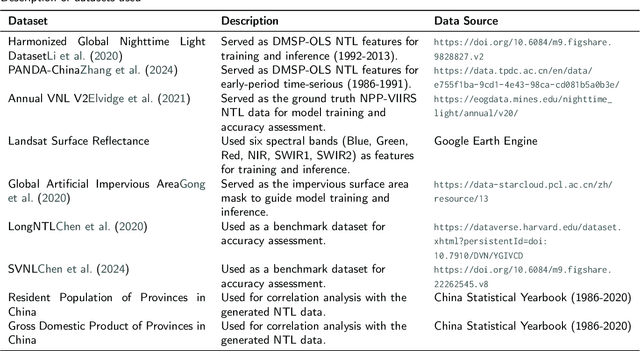
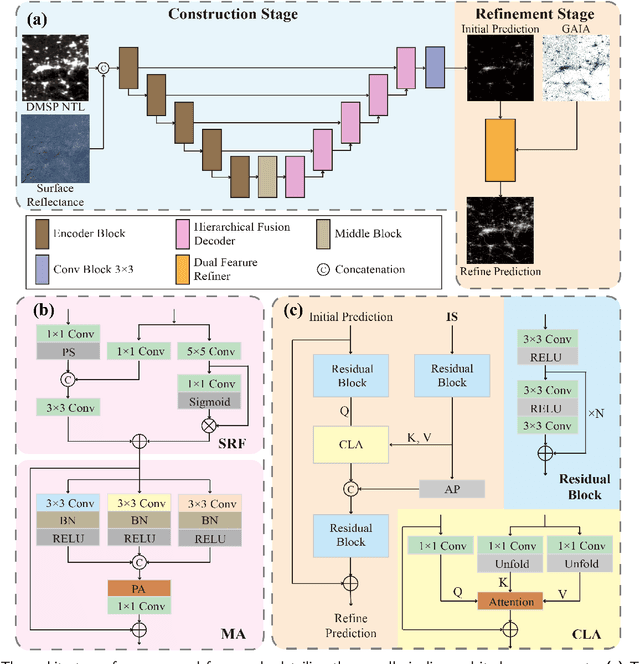
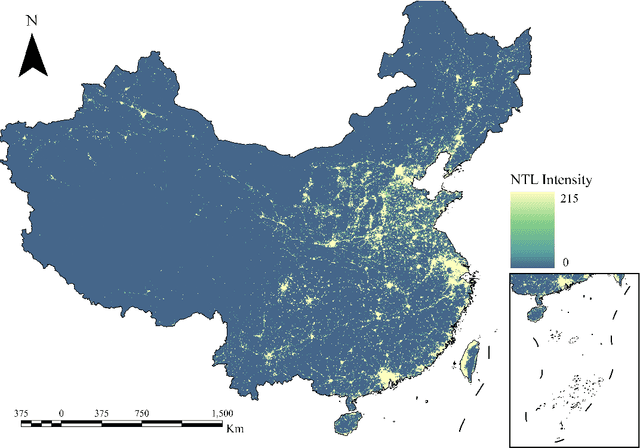
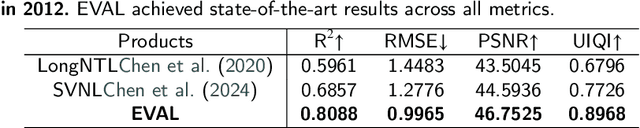
Artificial Night-Time Light (NTL) remote sensing is a vital proxy for quantifying the intensity and spatial distribution of human activities. Although the NPP-VIIRS sensor provides high-quality NTL observations, its temporal coverage, which begins in 2012, restricts long-term time-series studies that extend to earlier periods. Despite the progress in extending VIIRS-like NTL time-series, current methods still suffer from two significant shortcomings: the underestimation of light intensity and the structural omission. To overcome these limitations, we propose a novel reconstruction framework consisting of a two-stage process: construction and refinement. The construction stage features a Hierarchical Fusion Decoder (HFD) designed to enhance the fidelity of the initial reconstruction. The refinement stage employs a Dual Feature Refiner (DFR), which leverages high-resolution impervious surface masks to guide and enhance fine-grained structural details. Based on this framework, we developed the Extended VIIRS-like Artificial Nighttime Light (EVAL) product for China, extending the standard data record backwards by 26 years to begin in 1986. Quantitative evaluation shows that EVAL significantly outperforms existing state-of-the-art products, boosting the $\text{R}^2$ from 0.68 to 0.80 while lowering the RMSE from 1.27 to 0.99. Furthermore, EVAL exhibits excellent temporal consistency and maintains a high correlation with socioeconomic parameters, confirming its reliability for long-term analysis. The resulting EVAL dataset provides a valuable new resource for the research community and is publicly available at https://doi.org/10.11888/HumanNat.tpdc.302930.
Lost in Benchmarks? Rethinking Large Language Model Benchmarking with Item Response Theory
May 21, 2025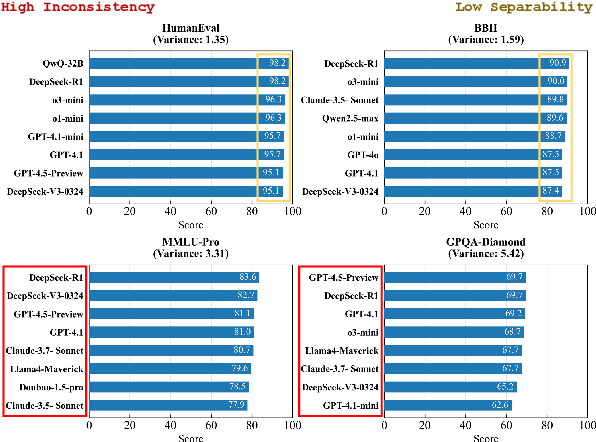
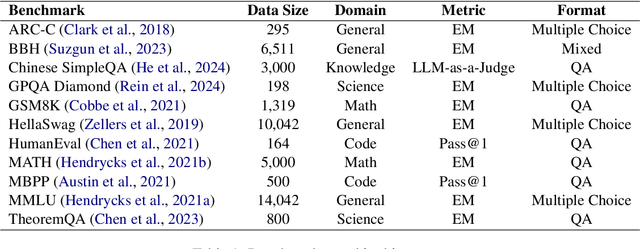
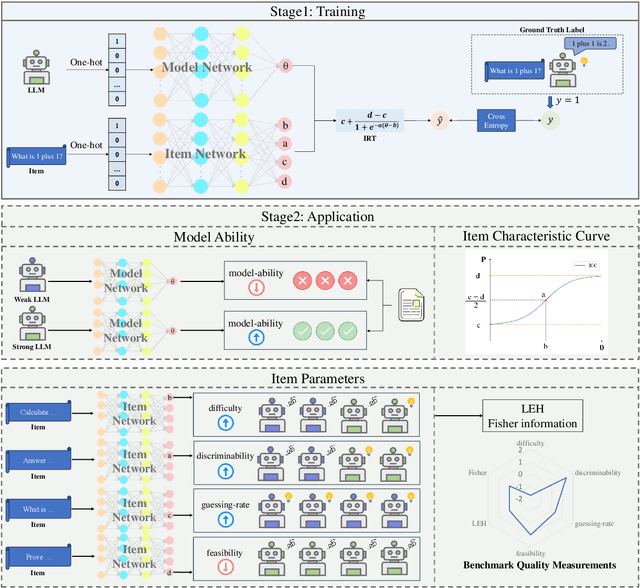
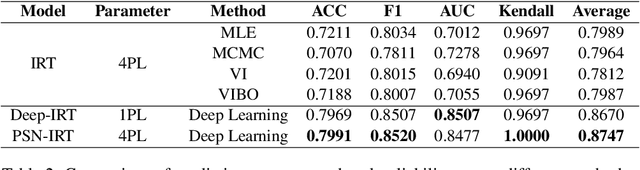
The evaluation of large language models (LLMs) via benchmarks is widespread, yet inconsistencies between different leaderboards and poor separability among top models raise concerns about their ability to accurately reflect authentic model capabilities. This paper provides a critical analysis of benchmark effectiveness, examining main-stream prominent LLM benchmarks using results from diverse models. We first propose a new framework for accurate and reliable estimations of item characteristics and model abilities. Specifically, we propose Pseudo-Siamese Network for Item Response Theory (PSN-IRT), an enhanced Item Response Theory framework that incorporates a rich set of item parameters within an IRT-grounded architecture. Based on PSN-IRT, we conduct extensive analysis which reveals significant and varied shortcomings in the measurement quality of current benchmarks. Furthermore, we demonstrate that leveraging PSN-IRT is able to construct smaller benchmarks while maintaining stronger alignment with human preference.