 Add to Chrome
 Add to Firefox
 Add to Edge
IG Captioner: Information Gain Captioners are Strong Zero-shot Classifiers
Nov 27, 2023
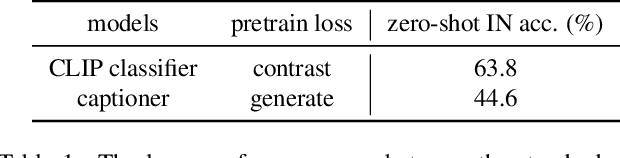
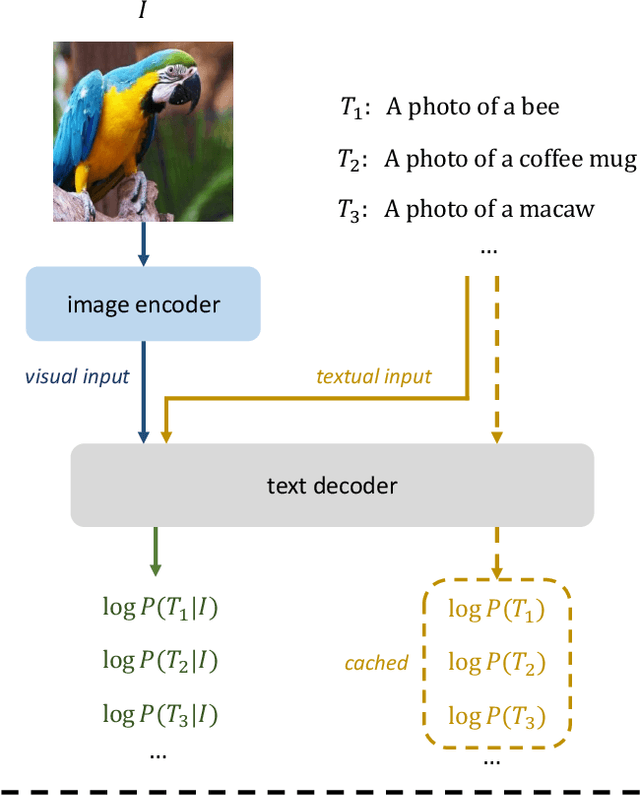

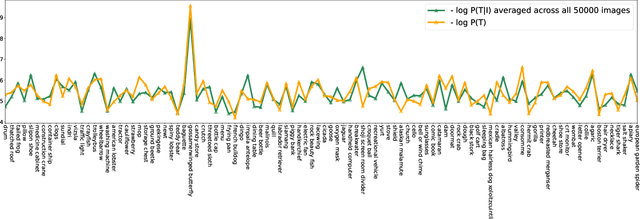
Generative training has been demonstrated to be powerful for building visual-language models. However, on zero-shot discriminative benchmarks, there is still a performance gap between models trained with generative and discriminative objectives. In this paper, we aim to narrow this gap by improving the efficacy of generative training on classification tasks, without any finetuning processes or additional modules. Specifically, we focus on narrowing the gap between the generative captioner and the CLIP classifier. We begin by analysing the predictions made by the captioner and classifier and observe that the caption generation inherits the distribution bias from the language model trained with pure text modality, making it less grounded on the visual signal. To tackle this problem, we redesign the scoring objective for the captioner to alleviate the distributional bias and focus on measuring the gain of information brought by the visual inputs. We further design a generative training objective to match the evaluation objective. We name our model trained and evaluated from the novel procedures as Information Gain (IG) captioner. We pretrain the models on the public Laion-5B dataset and perform a series of discriminative evaluations. For the zero-shot classification on ImageNet, IG captioner achieves $> 18\%$ improvements over the standard captioner, achieving comparable performances with the CLIP classifier. IG captioner also demonstrated strong performance on zero-shot image-text retrieval tasks on MSCOCO and Flickr30K. We hope this paper inspires further research towards unifying generative and discriminative training procedures for visual-language models.

Structure-Aware Sparse-View X-ray 3D Reconstruction
Nov 18, 2023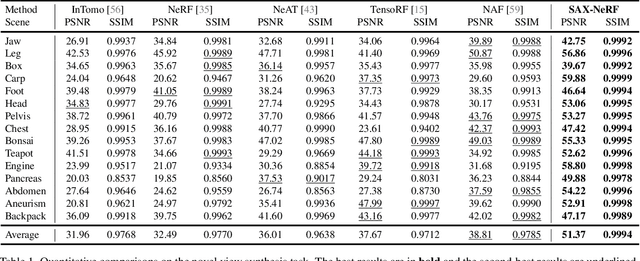
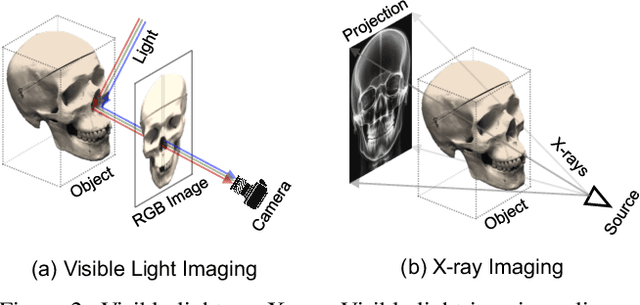

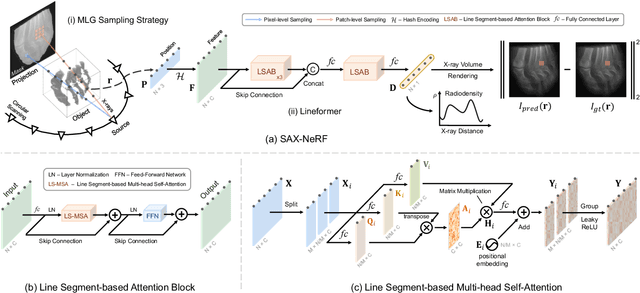
X-ray, known for its ability to reveal internal structures of objects, is expected to provide richer information for 3D reconstruction than visible light. Yet, existing neural radiance fields (NeRF) algorithms overlook this important nature of X-ray, leading to their limitations in capturing structural contents of imaged objects. In this paper, we propose a framework, Structure-Aware X-ray Neural Radiodensity Fields (SAX-NeRF), for sparse-view X-ray 3D reconstruction. Firstly, we design a Line Segment-based Transformer (Lineformer) as the backbone of SAX-NeRF. Linefomer captures internal structures of objects in 3D space by modeling the dependencies within each line segment of an X-ray. Secondly, we present a Masked Local-Global (MLG) ray sampling strategy to extract contextual and geometric information in 2D projection. Plus, we collect a larger-scale dataset X3D covering wider X-ray applications. Experiments on X3D show that SAX-NeRF surpasses previous NeRF-based methods by 12.56 and 2.49 dB on novel view synthesis and CT reconstruction. Code, models, and data will be released at https://github.com/caiyuanhao1998/SAX-NeRF
De-Diffusion Makes Text a Strong Cross-Modal Interface
Nov 01, 2023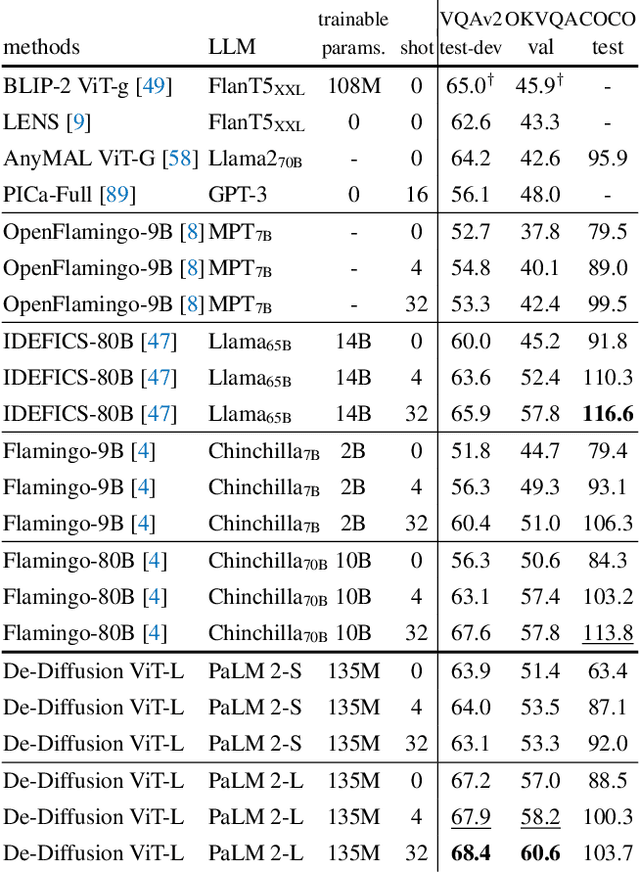
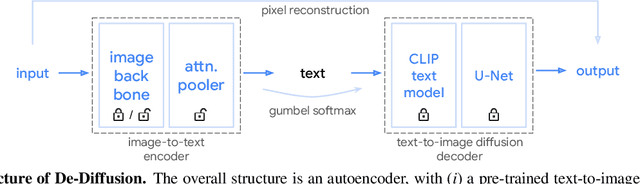
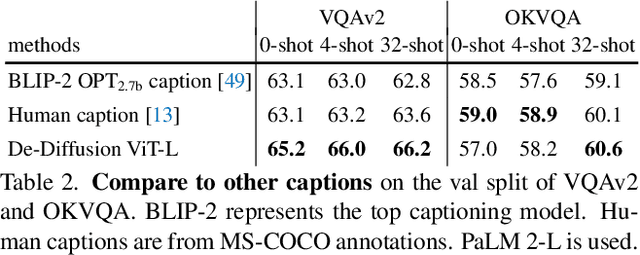
We demonstrate text as a strong cross-modal interface. Rather than relying on deep embeddings to connect image and language as the interface representation, our approach represents an image as text, from which we enjoy the interpretability and flexibility inherent to natural language. We employ an autoencoder that uses a pre-trained text-to-image diffusion model for decoding. The encoder is trained to transform an input image into text, which is then fed into the fixed text-to-image diffusion decoder to reconstruct the original input -- a process we term De-Diffusion. Experiments validate both the precision and comprehensiveness of De-Diffusion text representing images, such that it can be readily ingested by off-the-shelf text-to-image tools and LLMs for diverse multi-modal tasks. For example, a single De-Diffusion model can generalize to provide transferable prompts for different text-to-image tools, and also achieves a new state of the art on open-ended vision-language tasks by simply prompting large language models with few-shot examples.
3D-Aware Visual Question Answering about Parts, Poses and Occlusions
Oct 27, 2023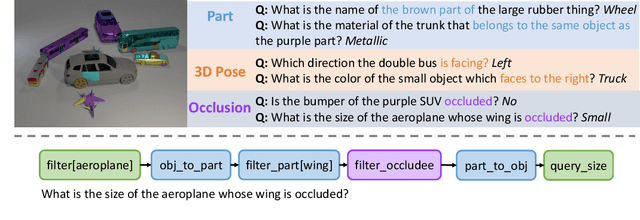
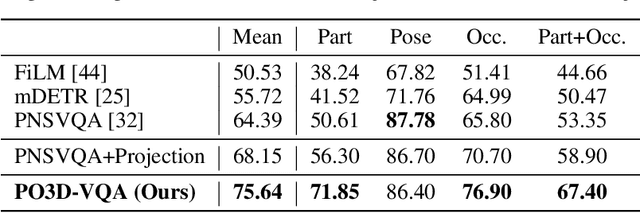
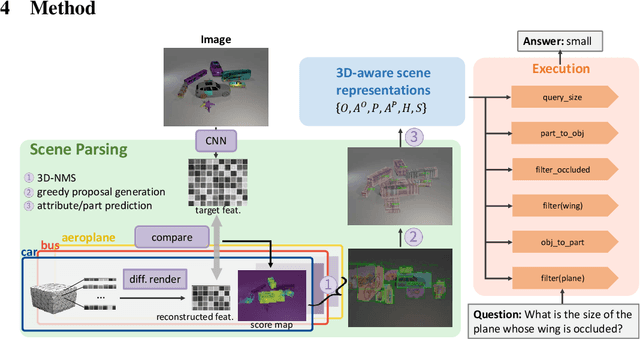
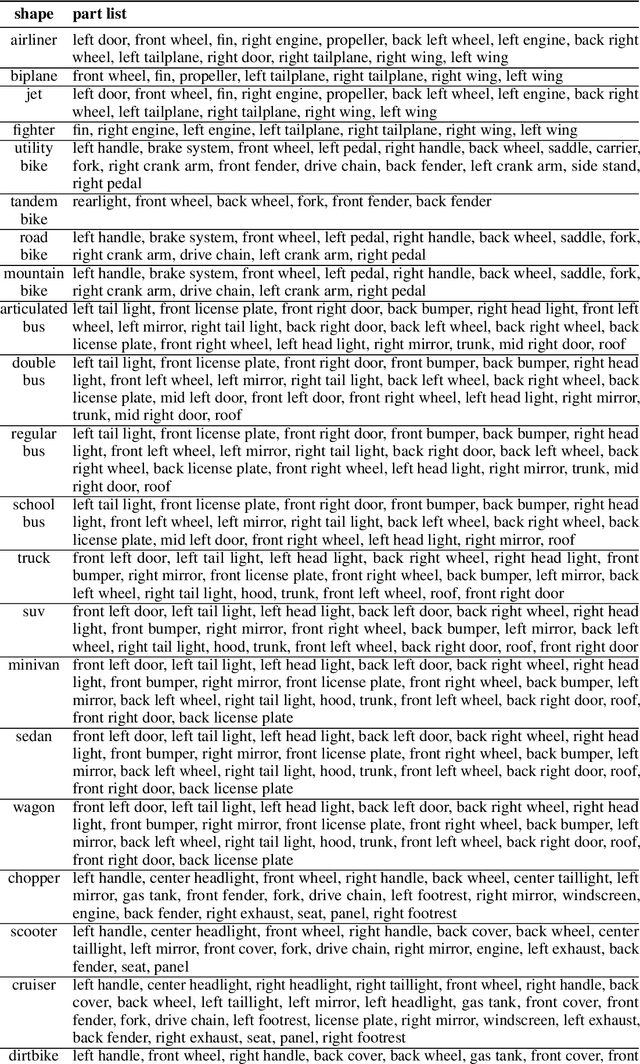
Despite rapid progress in Visual question answering (VQA), existing datasets and models mainly focus on testing reasoning in 2D. However, it is important that VQA models also understand the 3D structure of visual scenes, for example to support tasks like navigation or manipulation. This includes an understanding of the 3D object pose, their parts and occlusions. In this work, we introduce the task of 3D-aware VQA, which focuses on challenging questions that require a compositional reasoning over the 3D structure of visual scenes. We address 3D-aware VQA from both the dataset and the model perspective. First, we introduce Super-CLEVR-3D, a compositional reasoning dataset that contains questions about object parts, their 3D poses, and occlusions. Second, we propose PO3D-VQA, a 3D-aware VQA model that marries two powerful ideas: probabilistic neural symbolic program execution for reasoning and deep neural networks with 3D generative representations of objects for robust visual recognition. Our experimental results show our model PO3D-VQA outperforms existing methods significantly, but we still observe a significant performance gap compared to 2D VQA benchmarks, indicating that 3D-aware VQA remains an important open research area.
Synthetic Data as Validation
Oct 24, 2023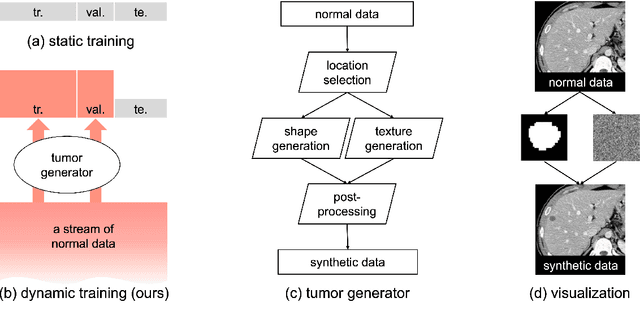
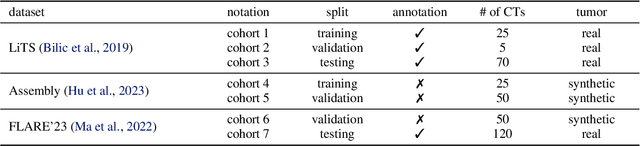
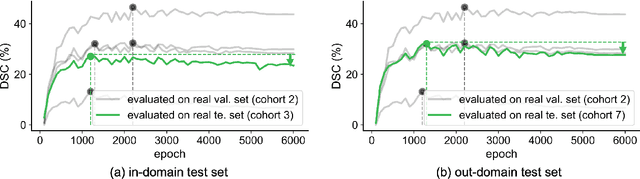
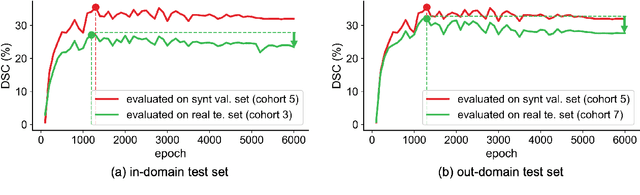
This study leverages synthetic data as a validation set to reduce overfitting and ease the selection of the best model in AI development. While synthetic data have been used for augmenting the training set, we find that synthetic data can also significantly diversify the validation set, offering marked advantages in domains like healthcare, where data are typically limited, sensitive, and from out-domain sources (i.e., hospitals). In this study, we illustrate the effectiveness of synthetic data for early cancer detection in computed tomography (CT) volumes, where synthetic tumors are generated and superimposed onto healthy organs, thereby creating an extensive dataset for rigorous validation. Using synthetic data as validation can improve AI robustness in both in-domain and out-domain test sets. Furthermore, we establish a new continual learning framework that continuously trains AI models on a stream of out-domain data with synthetic tumors. The AI model trained and validated in dynamically expanding synthetic data can consistently outperform models trained and validated exclusively on real-world data. Specifically, the DSC score for liver tumor segmentation improves from 26.7% (95% CI: 22.6%-30.9%) to 34.5% (30.8%-38.2%) when evaluated on an in-domain dataset and from 31.1% (26.0%-36.2%) to 35.4% (32.1%-38.7%) on an out-domain dataset. Importantly, the performance gain is particularly significant in identifying very tiny liver tumors (radius < 5mm) in CT volumes, with Sensitivity improving from 33.1% to 55.4% on an in-domain dataset and 33.9% to 52.3% on an out-domain dataset, justifying the efficacy in early detection of cancer. The application of synthetic data, from both training and validation perspectives, underlines a promising avenue to enhance AI robustness when dealing with data from varying domains.
Acquiring Weak Annotations for Tumor Localization in Temporal and Volumetric Data
Oct 23, 2023Creating large-scale and well-annotated datasets to train AI algorithms is crucial for automated tumor detection and localization. However, with limited resources, it is challenging to determine the best type of annotations when annotating massive amounts of unlabeled data. To address this issue, we focus on polyps in colonoscopy videos and pancreatic tumors in abdominal CT scans; both applications require significant effort and time for pixel-wise annotation due to the high dimensional nature of the data, involving either temporary or spatial dimensions. In this paper, we develop a new annotation strategy, termed Drag&Drop, which simplifies the annotation process to drag and drop. This annotation strategy is more efficient, particularly for temporal and volumetric imaging, than other types of weak annotations, such as per-pixel, bounding boxes, scribbles, ellipses, and points. Furthermore, to exploit our Drag&Drop annotations, we develop a novel weakly supervised learning method based on the watershed algorithm. Experimental results show that our method achieves better detection and localization performance than alternative weak annotations and, more importantly, achieves similar performance to that trained on detailed per-pixel annotations. Interestingly, we find that, with limited resources, allocating weak annotations from a diverse patient population can foster models more robust to unseen images than allocating per-pixel annotations for a small set of images. In summary, this research proposes an efficient annotation strategy for tumor detection and localization that is less accurate than per-pixel annotations but useful for creating large-scale datasets for screening tumors in various medical modalities.
3D TransUNet: Advancing Medical Image Segmentation through Vision Transformers
Oct 11, 2023Medical image segmentation plays a crucial role in advancing healthcare systems for disease diagnosis and treatment planning. The u-shaped architecture, popularly known as U-Net, has proven highly successful for various medical image segmentation tasks. However, U-Net's convolution-based operations inherently limit its ability to model long-range dependencies effectively. To address these limitations, researchers have turned to Transformers, renowned for their global self-attention mechanisms, as alternative architectures. One popular network is our previous TransUNet, which leverages Transformers' self-attention to complement U-Net's localized information with the global context. In this paper, we extend the 2D TransUNet architecture to a 3D network by building upon the state-of-the-art nnU-Net architecture, and fully exploring Transformers' potential in both the encoder and decoder design. We introduce two key components: 1) A Transformer encoder that tokenizes image patches from a convolution neural network (CNN) feature map, enabling the extraction of global contexts, and 2) A Transformer decoder that adaptively refines candidate regions by utilizing cross-attention between candidate proposals and U-Net features. Our investigations reveal that different medical tasks benefit from distinct architectural designs. The Transformer encoder excels in multi-organ segmentation, where the relationship among organs is crucial. On the other hand, the Transformer decoder proves more beneficial for dealing with small and challenging segmented targets such as tumor segmentation. Extensive experiments showcase the significant potential of integrating a Transformer-based encoder and decoder into the u-shaped medical image segmentation architecture. TransUNet outperforms competitors in various medical applications.
FedConv: Enhancing Convolutional Neural Networks for Handling Data Heterogeneity in Federated Learning
Oct 06, 2023


Federated learning (FL) is an emerging paradigm in machine learning, where a shared model is collaboratively learned using data from multiple devices to mitigate the risk of data leakage. While recent studies posit that Vision Transformer (ViT) outperforms Convolutional Neural Networks (CNNs) in addressing data heterogeneity in FL, the specific architectural components that underpin this advantage have yet to be elucidated. In this paper, we systematically investigate the impact of different architectural elements, such as activation functions and normalization layers, on the performance within heterogeneous FL. Through rigorous empirical analyses, we are able to offer the first-of-its-kind general guidance on micro-architecture design principles for heterogeneous FL. Intriguingly, our findings indicate that with strategic architectural modifications, pure CNNs can achieve a level of robustness that either matches or even exceeds that of ViTs when handling heterogeneous data clients in FL. Additionally, our approach is compatible with existing FL techniques and delivers state-of-the-art solutions across a broad spectrum of FL benchmarks. The code is publicly available at https://github.com/UCSC-VLAA/FedConv
Boosting Dermatoscopic Lesion Segmentation via Diffusion Models with Visual and Textual Prompts
Oct 04, 2023


Image synthesis approaches, e.g., generative adversarial networks, have been popular as a form of data augmentation in medical image analysis tasks. It is primarily beneficial to overcome the shortage of publicly accessible data and associated quality annotations. However, the current techniques often lack control over the detailed contents in generated images, e.g., the type of disease patterns, the location of lesions, and attributes of the diagnosis. In this work, we adapt the latest advance in the generative model, i.e., the diffusion model, with the added control flow using lesion-specific visual and textual prompts for generating dermatoscopic images. We further demonstrate the advantage of our diffusion model-based framework over the classical generation models in both the image quality and boosting the segmentation performance on skin lesions. It can achieve a 9% increase in the SSIM image quality measure and an over 5% increase in Dice coefficients over the prior arts.
Understanding Pan-Sharpening via Generalized Inverse
Oct 04, 2023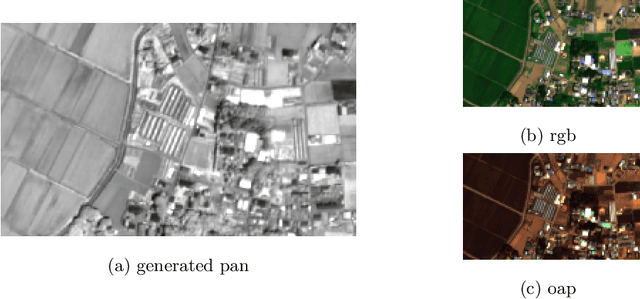
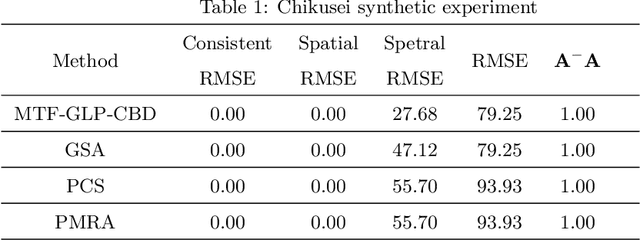
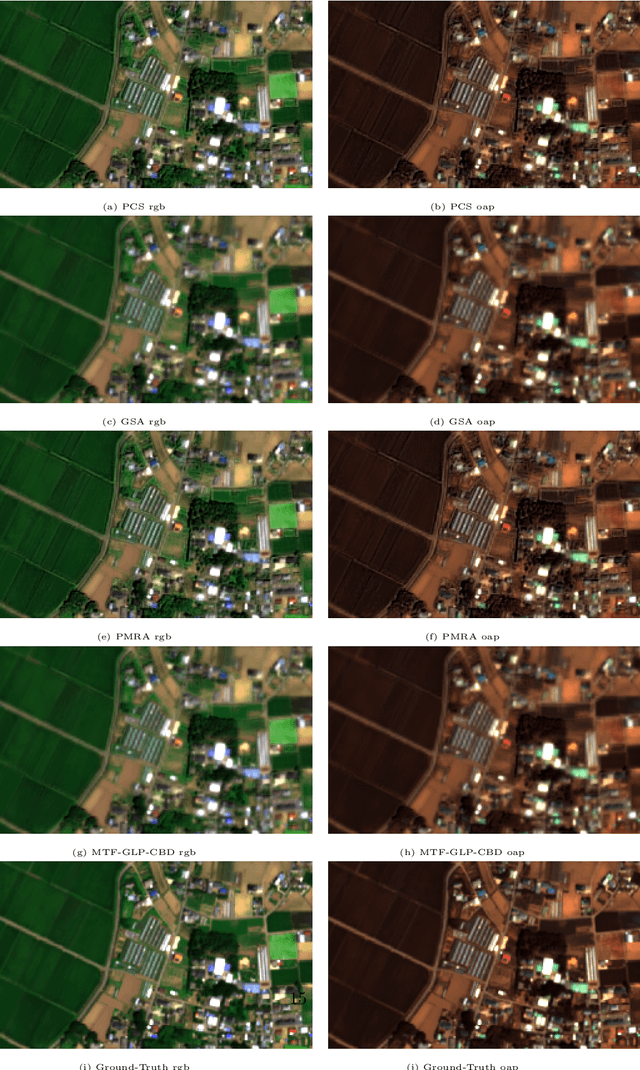

Pan-sharpening algorithm utilizes panchromatic image and multispectral image to obtain a high spatial and high spectral image. However, the optimizations of the algorithms are designed with different standards. We adopt the simple matrix equation to describe the Pan-sharpening problem. The solution existence condition and the acquirement of spectral and spatial resolution are discussed. A down-sampling enhancement method was introduced for better acquiring the spatial and spectral down-sample matrices. By the generalized inverse theory, we derived two forms of general inverse matrix formulations that can correspond to the two prominent classes of Pan-sharpening methods, that is, component substitution and multi-resolution analysis methods. Specifically, the Gram Schmidt Adaptive(GSA) was proved to follow the general inverse matrix formulation of component substitution. A model prior to the general inverse matrix of the spectral function was rendered. The theoretical errors are analyzed. Synthetic experiments and real data experiments are implemented. The proposed methods are better and sharper than other methods qualitatively in both synthetic and real experiments. The down-sample enhancement effect is shown of better results both quantitatively and qualitatively in real experiments. The generalized inverse matrix theory help us better understand the Pan-sharpening.