 Add to Chrome
 Add to Firefox
 Add to Edge
Automatic Reward Shaping from Multi-Objective Human Heuristics
Dec 17, 2025
Designing effective reward functions remains a central challenge in reinforcement learning, especially in multi-objective environments. In this work, we propose Multi-Objective Reward Shaping with Exploration (MORSE), a general framework that automatically combines multiple human-designed heuristic rewards into a unified reward function. MORSE formulates the shaping process as a bi-level optimization problem: the inner loop trains a policy to maximize the current shaped reward, while the outer loop updates the reward function to optimize task performance. To encourage exploration in the reward space and avoid suboptimal local minima, MORSE introduces stochasticity into the shaping process, injecting noise guided by task performance and the prediction error of a fixed, randomly initialized neural network. Experimental results in MuJoCo and Isaac Sim environments show that MORSE effectively balances multiple objectives across various robotic tasks, achieving task performance comparable to those obtained with manually tuned reward functions.

GateFusion: Hierarchical Gated Cross-Modal Fusion for Active Speaker Detection
Dec 17, 2025Active Speaker Detection (ASD) aims to identify who is currently speaking in each frame of a video. Most state-of-the-art approaches rely on late fusion to combine visual and audio features, but late fusion often fails to capture fine-grained cross-modal interactions, which can be critical for robust performance in unconstrained scenarios. In this paper, we introduce GateFusion, a novel architecture that combines strong pretrained unimodal encoders with a Hierarchical Gated Fusion Decoder (HiGate). HiGate enables progressive, multi-depth fusion by adaptively injecting contextual features from one modality into the other at multiple layers of the Transformer backbone, guided by learnable, bimodally-conditioned gates. To further strengthen multimodal learning, we propose two auxiliary objectives: Masked Alignment Loss (MAL) to align unimodal outputs with multimodal predictions, and Over-Positive Penalty (OPP) to suppress spurious video-only activations. GateFusion establishes new state-of-the-art results on several challenging ASD benchmarks, achieving 77.8% mAP (+9.4%), 86.1% mAP (+2.9%), and 96.1% mAP (+0.5%) on Ego4D-ASD, UniTalk, and WASD benchmarks, respectively, and delivering competitive performance on AVA-ActiveSpeaker. Out-of-domain experiments demonstrate the generalization of our model, while comprehensive ablations show the complementary benefits of each component.
Memory in the Age of AI Agents
Dec 15, 2025Memory has emerged, and will continue to remain, a core capability of foundation model-based agents. As research on agent memory rapidly expands and attracts unprecedented attention, the field has also become increasingly fragmented. Existing works that fall under the umbrella of agent memory often differ substantially in their motivations, implementations, and evaluation protocols, while the proliferation of loosely defined memory terminologies has further obscured conceptual clarity. Traditional taxonomies such as long/short-term memory have proven insufficient to capture the diversity of contemporary agent memory systems. This work aims to provide an up-to-date landscape of current agent memory research. We begin by clearly delineating the scope of agent memory and distinguishing it from related concepts such as LLM memory, retrieval augmented generation (RAG), and context engineering. We then examine agent memory through the unified lenses of forms, functions, and dynamics. From the perspective of forms, we identify three dominant realizations of agent memory, namely token-level, parametric, and latent memory. From the perspective of functions, we propose a finer-grained taxonomy that distinguishes factual, experiential, and working memory. From the perspective of dynamics, we analyze how memory is formed, evolved, and retrieved over time. To support practical development, we compile a comprehensive summary of memory benchmarks and open-source frameworks. Beyond consolidation, we articulate a forward-looking perspective on emerging research frontiers, including memory automation, reinforcement learning integration, multimodal memory, multi-agent memory, and trustworthiness issues. We hope this survey serves not only as a reference for existing work, but also as a conceptual foundation for rethinking memory as a first-class primitive in the design of future agentic intelligence.
SCR2-ST: Combine Single Cell with Spatial Transcriptomics for Efficient Active Sampling via Reinforcement Learning
Dec 15, 2025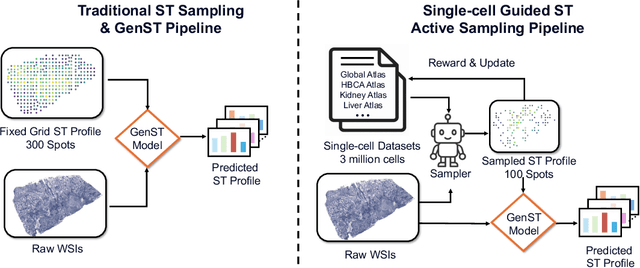
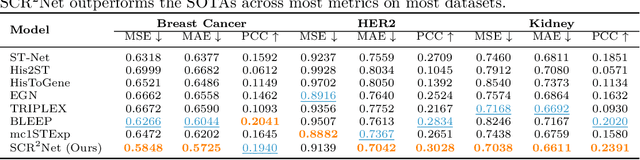
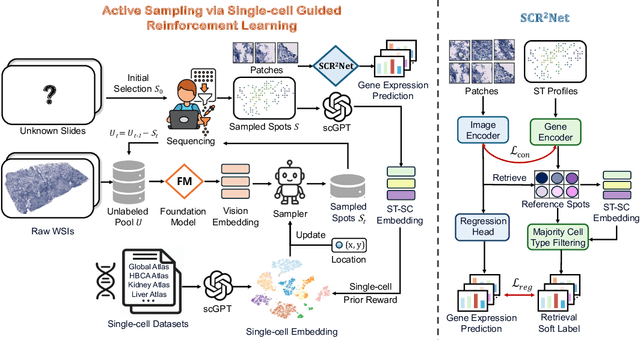
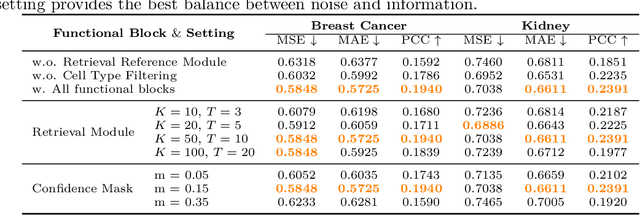
Spatial transcriptomics (ST) is an emerging technology that enables researchers to investigate the molecular relationships underlying tissue morphology. However, acquiring ST data remains prohibitively expensive, and traditional fixed-grid sampling strategies lead to redundant measurements of morphologically similar or biologically uninformative regions, thus resulting in scarce data that constrain current methods. The well-established single-cell sequencing field, however, could provide rich biological data as an effective auxiliary source to mitigate this limitation. To bridge these gaps, we introduce SCR2-ST, a unified framework that leverages single-cell prior knowledge to guide efficient data acquisition and accurate expression prediction. SCR2-ST integrates a single-cell guided reinforcement learning-based (SCRL) active sampling and a hybrid regression-retrieval prediction network SCR2Net. SCRL combines single-cell foundation model embeddings with spatial density information to construct biologically grounded reward signals, enabling selective acquisition of informative tissue regions under constrained sequencing budgets. SCR2Net then leverages the actively sampled data through a hybrid architecture combining regression-based modeling with retrieval-augmented inference, where a majority cell-type filtering mechanism suppresses noisy matches and retrieved expression profiles serve as soft labels for auxiliary supervision. We evaluated SCR2-ST on three public ST datasets, demonstrating SOTA performance in both sampling efficiency and prediction accuracy, particularly under low-budget scenarios. Code is publicly available at: https://github.com/hrlblab/SCR2ST
AgentIAD: Tool-Augmented Single-Agent for Industrial Anomaly Detection
Dec 15, 2025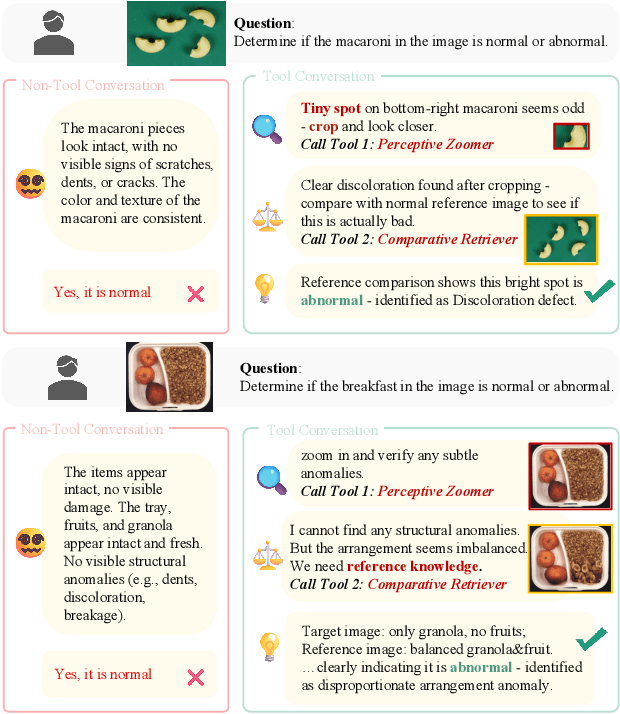
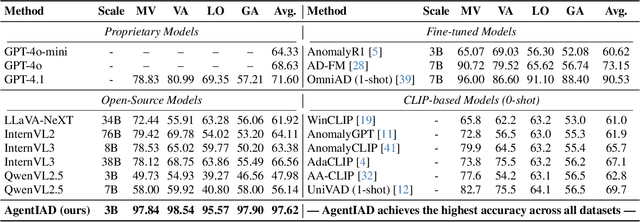
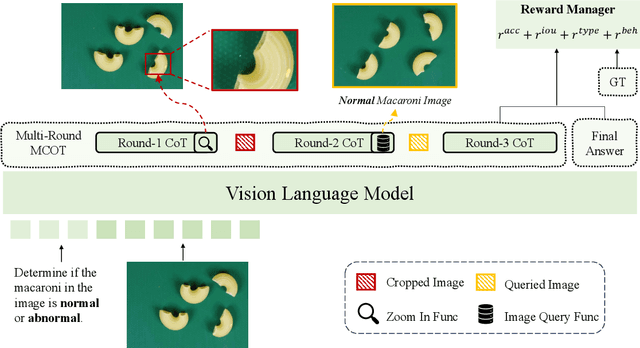
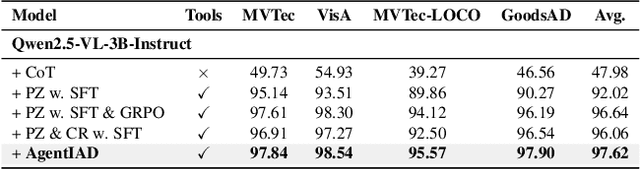
Industrial anomaly detection (IAD) is difficult due to the scarcity of normal reference samples and the subtle, localized nature of many defects. Single-pass vision-language models (VLMs) often overlook small abnormalities and lack explicit mechanisms to compare against canonical normal patterns. We propose AgentIAD, a tool-driven agentic framework that enables multi-stage visual inspection. The agent is equipped with a Perceptive Zoomer (PZ) for localized fine-grained analysis and a Comparative Retriever (CR) for querying normal exemplars when evidence is ambiguous. To teach these inspection behaviors, we construct structured perceptive and comparative trajectories from the MMAD dataset and train the model in two stages: supervised fine-tuning followed by reinforcement learning. A two-part reward design drives this process: a perception reward that supervises classification accuracy, spatial alignment, and type correctness, and a behavior reward that encourages efficient tool use. Together, these components enable the model to refine its judgment through step-wise observation, zooming, and verification. AgentIAD achieves a new state-of-the-art 97.62% classification accuracy on MMAD, surpassing prior MLLM-based approaches while producing transparent and interpretable inspection traces.
SJD++: Improved Speculative Jacobi Decoding for Training-free Acceleration of Discrete Auto-regressive Text-to-Image Generation
Dec 08, 2025Large autoregressive models can generate high-quality, high-resolution images but suffer from slow generation speed, because these models require hundreds to thousands of sequential forward passes for next-token prediction during inference. To accelerate autoregressive text-to-image generation, we propose Speculative Jacobi Decoding++ (SJD++), a training-free probabilistic parallel decoding algorithm. Unlike traditional next-token prediction, SJD++ performs multi-token prediction in each forward pass, drastically reducing generation steps. Specifically, it integrates the iterative multi-token prediction mechanism from Jacobi decoding, with the probabilistic drafting-and-verification mechanism from speculative sampling. More importantly, for further acceleration, SJD++ reuses high-confidence draft tokens after each verification phase instead of resampling them all. We conduct extensive experiments on several representative autoregressive text-to-image generation models and demonstrate that SJD++ achieves $2\times$ to $3\times$ inference latency reduction and $2\times$ to $7\times$ step compression, while preserving visual quality with no observable degradation.
BitSnap: Checkpoint Sparsification and Quantization in LLM Training
Nov 18, 2025As large language models (LLMs) continue to grow in size and complexity, efficient checkpoint saving\&loading has become crucial for managing storage, memory usage, and fault tolerance in LLM training. The current works do not comprehensively take into account the optimization of these several aspects. This paper proposes a novel checkpoint sparsification and quantization method that adapts dynamically to different training stages and model architectures. We present a comprehensive analysis of existing lossy and lossless compression techniques, identify current limitations, and introduce our adaptive approach that balances compression ratio, speed, and precision impact throughout the training process. Experiments on different sizes of LLMs demonstrate that our bitmask-based sparsification method achieves 16x compression ratio without compromising model accuracy. Additionally, the cluster-based quantization method achieves 2x compression ratio with little precision loss.
VocalBench-zh: Decomposing and Benchmarking the Speech Conversational Abilities in Mandarin Context
Nov 17, 2025
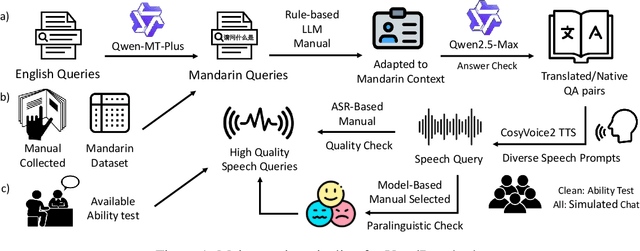
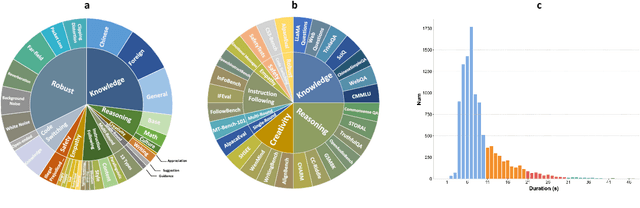
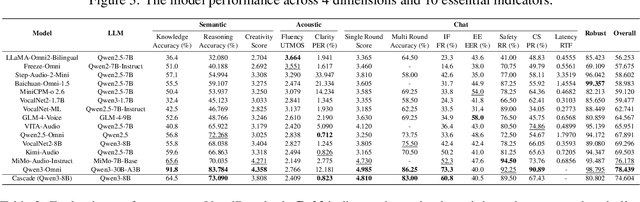
The development of multi-modal large language models (LLMs) leads to intelligent approaches capable of speech interactions. As one of the most widely spoken languages globally, Mandarin is supported by most models to enhance their applicability and reach. However, the scarcity of comprehensive speech-to-speech (S2S) benchmarks in Mandarin contexts impedes systematic evaluation for developers and hinders fair model comparison for users. In this work, we propose VocalBench-zh, an ability-level divided evaluation suite adapted to Mandarin context consisting of 10 well-crafted subsets and over 10K high-quality instances, covering 12 user-oriented characters. The evaluation experiment on 14 mainstream models reveals the common challenges for current routes, and highlights the need for new insights into next-generation speech interactive systems. The evaluation codes and datasets will be available at https://github.com/SJTU-OmniAgent/VocalBench-zh.
VocalNet-M2: Advancing Low-Latency Spoken Language Modeling via Integrated Multi-Codebook Tokenization and Multi-Token Prediction
Nov 13, 2025Current end-to-end spoken language models (SLMs) have made notable progress, yet they still encounter considerable response latency. This delay primarily arises from the autoregressive generation of speech tokens and the reliance on complex flow-matching models for speech synthesis. To overcome this, we introduce VocalNet-M2, a novel low-latency SLM that integrates a multi-codebook tokenizer and a multi-token prediction (MTP) strategy. Our model directly generates multi-codebook speech tokens, thus eliminating the need for a latency-inducing flow-matching model. Furthermore, our MTP strategy enhances generation efficiency and improves overall performance. Extensive experiments demonstrate that VocalNet-M2 achieves a substantial reduction in first chunk latency (from approximately 725ms to 350ms) while maintaining competitive performance across mainstream SLMs. This work also provides a comprehensive comparison of single-codebook and multi-codebook strategies, offering valuable insights for developing efficient and high-performance SLMs for real-time interactive applications.
Think-at-Hard: Selective Latent Iterations to Improve Reasoning Language Models
Nov 11, 2025Improving reasoning capabilities of Large Language Models (LLMs), especially under parameter constraints, is crucial for real-world applications. Prior work proposes recurrent transformers, which allocate a fixed number of extra iterations per token to improve generation quality. After the first, standard forward pass, instead of verbalization, last-layer hidden states are fed back as inputs for additional iterations to refine token predictions. Yet we identify a latent overthinking phenomenon: easy token predictions that are already correct after the first pass are sometimes revised into errors in additional iterations. To address this, we propose Think-at-Hard (TaH), a dynamic latent thinking method that iterates deeper only at hard tokens. It employs a lightweight neural decider to trigger latent iterations only at tokens that are likely incorrect after the standard forward pass. During latent iterations, Low-Rank Adaptation (LoRA) modules shift the LLM objective from general next-token prediction to focused hard-token refinement. We further introduce a duo-causal attention mechanism that extends attention from the token sequence dimension to an additional iteration depth dimension. This enables cross-iteration information flow while maintaining full sequential parallelism. Experiments show that TaH boosts LLM reasoning performance across five challenging benchmarks while maintaining the same parameter count. Compared with baselines that iterate twice for all output tokens, TaH delivers 8.1-11.3% accuracy gains while exempting 94% of tokens from the second iteration. Against strong single-iteration Qwen3 models finetuned with the same data, it also delivers 4.0-5.0% accuracy gains. When allowing less than 3% additional parameters from LoRA and the iteration decider, the gains increase to 8.5-12.6% and 5.3-5.4%, respectively. Our code is available at https://github.com/thu-nics/TaH.