 Add to Chrome
 Add to Firefox
 Add to Edge
AudioDER: A Deduplication-Enhanced Reasoning Dataset for Post-Training Large Audio-Language Models
Jun 12, 2026
Large Audio-Language Models (LALMs) have shown strong performance on a wide range of audio understanding tasks, yet they still struggle with complex audio reasoning. A practical way to improve such capabilities is post-training, whose effectiveness critically depends on the quality and diversity of training data. However, existing audio-language datasets often contain substantial redundancy, where many samples are highly similar in acoustic content and thus provide overlapping supervisory signals. Such redundancy not only increases annotation cost, but also limits corpus diversity and reduces the effectiveness of post-training. To address this issue, we propose a redundancy-aware data construction pipeline for building reasoning-oriented supervision for LALMs. Specifically, we first perform acoustic similarity-based deduplication across raw audio datasets to improve corpus diversity. We then integrate existing audio captions and question-answer pairs into a unified multiple-choice format. Based on these unified annotations, we leverage Qwen3-30B to generate chain-of-thought (CoT) rationales for reasoning-oriented supervision. Based on this pipeline, we construct AudioDER, a reasoning-oriented post-training dataset containing approximately 191k samples spanning sound, speech, and music. Each sample consists of an audio clip, a multiple-choice question, four answer candidates, an audio caption, and a CoT rationale. Extensive experiments show that post-training on AudioDER consistently improves the performance of Qwen2-Audio-7B-Instruct on multiple audio reasoning benchmarks, including MMAU-mini, MMSU, and MMAR. We hope AudioDER can serve as a valuable resource for advancing audio reasoning research and the development of more capable LALMs.

Hy-MT2: A Family of Fast, Efficient and Powerful Multilingual Translation Models in the Wild
May 21, 2026Hy-MT2 is a family of fast-thinking multilingual translation models designed for complex real-world scenarios. It includes three model sizes: 1.8B, 7B, and 30B-A3B (MoE), all of which support translation among 33 languages and effectively follow translation instructions in multiple languages. For on-device deployment, with AngelSlim 1.25-bit extreme quantization, the 1.8B model requires only 440 MB of storage and improves inference speed by 1.5x. Multi-dimensional evaluations show that Hy-MT2 delivers outstanding performance across general, real-world business, domain-specific, and instruction-following translation tasks. The 7B and 30B models outperform open-source models such as DeepSeek-V4-Pro and Kimi K2.6 in fast-thinking mode, while the lightweight 1.8B model also surpasses mainstream commercial APIs from providers such as Microsoft and Doubao overall.
Kwai Summary Attention Technical Report
Apr 27, 2026Long-context ability, has become one of the most important iteration direction of next-generation Large Language Models, particularly in semantic understanding/reasoning, code agentic intelligence and recommendation system. However, the standard softmax attention exhibits quadratic time complexity with respect to sequence length. As the sequence length increases, this incurs substantial overhead in long-context settings, leading the training and inference costs of extremely long sequences deteriorate rapidly. Existing solutions mitigate this issue through two technique routings: i) Reducing the KV cache per layer, such as from the head-level compression GQA, and the embedding dimension-level compression MLA, but the KV cache remains linearly dependent on the sequence length at a 1:1 ratio. ii) Interleaving with KV Cache friendly architecture, such as local attention SWA, linear kernel GDN, but often involve trade-offs among KV Cache and long-context modeling effectiveness. Besides the two technique routings, we argue that there exists an intermediate path not well explored: {Maintaining a linear relationship between the KV cache and sequence length, but performing semantic-level compression through a specific ratio $k$}. This $O(n/k)$ path does not pursue a ``minimum KV cache'', but rather trades acceptable memory costs for complete, referential, and interpretable retention of long distant dependency. Motivated by this, we propose Kwai Summary Attention (KSA), a novel attention mechanism that reduces sequence modeling cost by compressing historical contexts into learnable summary tokens.
Hierarchical Mesh Transformers with Topology-Guided Pretraining for Morphometric Analysis of Brain Structures
Apr 06, 2026Representation learning on large-scale unstructured volumetric and surface meshes poses significant challenges in neuroimaging, especially when models must incorporate diverse vertex-level morphometric descriptors, such as cortical thickness, curvature, sulcal depth, and myelin content, which carry subtle disease-related signals. Current approaches either ignore these clinically informative features or support only a single mesh topology, restricting their use across imaging pipelines. We introduce a hierarchical transformer framework designed for heterogeneous mesh analysis that operates on spatially adaptive tree partitions constructed from simplicial complexes of arbitrary order. This design accommodates both volumetric and surface discretizations within a single architecture, enabling efficient multi-scale attention without topology-specific modifications. A feature projection module maps variable-length per-vertex clinical descriptors into the spatial hierarchy, separating geometric structure from feature dimensionality and allowing seamless integration of different neuroimaging feature sets. Self-supervised pretraining via masked reconstruction of both coordinates and morphometric channels on large unlabeled cohorts yields a transferable encoder backbone applicable to diverse downstream tasks and mesh modalities. We validate our approach on Alzheimer's disease classification and amyloid burden prediction using volumetric brain meshes from ADNI, as well as focal cortical dysplasia detection on cortical surface meshes from the MELD dataset, achieving state-of-the-art results across all benchmarks.
SeGPruner: Semantic-Geometric Visual Token Pruner for 3D Question Answering
Mar 31, 2026Vision-language models (VLMs) have been widely adopted for 3D question answering (3D QA). In typical pipelines, visual tokens extracted from multiple viewpoints are concatenated with language tokens and jointly processed by a large language model (LLM) for inference. However, aggregating multi-view observations inevitably introduces severe token redundancy, leading to an overly large visual token set that significantly hinders inference efficiency under constrained token budgets. Visual token pruning has emerged as a prevalent strategy to address this issue. Nevertheless, most existing pruners are primarily tailored to 2D inputs or rely on indirect geometric cues, which limits their ability to explicitly retain semantically critical objects and maintain sufficient spatial coverage for robust 3D reasoning. In this paper, we propose SeGPruner, a semantic-aware and geometry-guided token reduction framework for efficient 3D QA with multi-view images. Specifically, SeGPruner first preserves semantically salient tokens through an attention-based importance module (Saliency-aware Token Selector), ensuring that object-critical evidence is retained. It then complements these tokens with spatially diverse ones via a geometry-guided selector (Geometry-aware Token Diversifier), which jointly considers semantic relevance and 3D geometric distance. This cooperation between saliency preservation and geometry-guided diversification balances object-level evidence and global scene coverage under aggressive token reduction. Extensive experiments on ScanQA and OpenEQA demonstrate that SeGPruner substantially improves inference efficiency, reducing the visual token budget by 91% and inference latency by 86%, while maintaining competitive performance in 3D reasoning tasks.
LongFlow: Efficient KV Cache Compression for Reasoning M
Mar 12, 2026Recent reasoning models such as OpenAI-o1 and DeepSeek-R1 have shown strong performance on complex tasks including mathematical reasoning and code generation. However, this performance gain comes with substantially longer output sequences, leading to significantly increased deployment costs. In particular, long outputs require large KV caches, resulting in high memory consumption and severe bandwidth pressure during attention computation. Most existing KV cache optimization methods are designed for long-input, short-output scenarios and are ineffective for the long-output setting of reasoning models. Moreover, importance estimation in prior work is computationally expensive and becomes prohibitive when continuous re-evaluation is required during long generation. To address these challenges, we propose LongFlow, a KV cache compression method with an efficient importance estimation metric derived from an intermediate result of attention computation using only the current query. This design introduces negligible computational overhead and requires no auxiliary storage. We further develop a custom kernel that fuses FlashAttention, importance estimation, and token eviction into a single optimized operator, improving system-level efficiency. Experiments show that LongFlow achieves up to an 11.8 times throughput improvement with 80% KV cache compression with minimal impact on model accuracy.
Quantized Inference for OneRec-V2
Mar 12, 2026Quantized inference has demonstrated substantial system-level benefits in large language models while preserving model quality. In contrast, reliably applying low-precision quantization to recommender systems remains challenging in industrial settings. This difficulty arises from differences in training paradigms, architectural patterns, and computational characteristics, which lead to distinct numerical behaviors in weights and activations. Traditional recommender models often exhibit high-magnitude and high-variance weights and activations, making them more sensitive to quantization-induced perturbations. In addition, recommendation workloads frequently suffer from limited hardware utilization, limiting the practical gains of low-precision computation. In this work, we revisit low-precision inference in the context of generative recommendation. Through empirical distribution analysis, we show that the weight and activation statistics of OneRec-V2 are significantly more controlled and closer to those of large language models than traditional recommendation models. Moreover, OneRec-V2 exhibits a more compute-intensive inference pattern with substantially higher hardware utilization, enabling more end-to-end throughput gains with low-precision computation. Leveraging this property, we develop a FP8 post training quantization framework and integrate it into an optimized inference infrastructure. The proposed joint optimization achieves a 49\% reduction in end-to-end inference latency and a 92\% increase in throughput. Extensive online A/B testing further confirms that FP8 inference introduces no degradation in core metrics. These results suggest that as recommender systems evolve toward the paradigms of large language models, algorithm-level and system-level optimization techniques established in the LLM domain can be effectively adapted to large-scale recommendation workloads.
Where Matters More Than What: Decoding-aligned KV Cache Compression via Position-aware Pseudo Queries
Mar 12, 2026The Key-Value (KV) cache is crucial for efficient Large Language Models (LLMs) inference, but excessively long contexts drastically increase KV cache memory footprint. Existing KV cache compression methods typically rely on input-side attention patterns within a prompt observation window to estimate token importance during the prefill stage. They fail to preserve critical tokens for future generation since these assessments are not derived from the decoding process. Intuitively, an effective observation window should mirror the decoding-stage queries to accurately reflect which tokens the generation process will attend to. However, ground-truth decoding queries are inherently unavailable during inference. For constructing pseudo queries to approximate them, we find that positional information plays a more critical role than semantic content. Motivated by this insight, we propose decoding-aligned KV cache compression via position-aware pseudo queries (DapQ), a novel and lightweight eviction framework that leverages position-aware pseudo queries to simulate the output tokens, thereby establishing an effective observation window for importance assessment. It aligns closely with the actual generation context and enables precise token eviction. Extensive evaluations across multiple benchmarks and LLMs demonstrate that DapQ achieves superior performance, particularly under strict memory constraints (e.g., up to nearly lossless performance 99.5% on NIAH with 3% KV cache budgets).
OpenOneRec Technical Report
Dec 31, 2025While the OneRec series has successfully unified the fragmented recommendation pipeline into an end-to-end generative framework, a significant gap remains between recommendation systems and general intelligence. Constrained by isolated data, they operate as domain specialists-proficient in pattern matching but lacking world knowledge, reasoning capabilities, and instruction following. This limitation is further compounded by the lack of a holistic benchmark to evaluate such integrated capabilities. To address this, our contributions are: 1) RecIF Bench & Open Data: We propose RecIF-Bench, a holistic benchmark covering 8 diverse tasks that thoroughly evaluate capabilities from fundamental prediction to complex reasoning. Concurrently, we release a massive training dataset comprising 96 million interactions from 160,000 users to facilitate reproducible research. 2) Framework & Scaling: To ensure full reproducibility, we open-source our comprehensive training pipeline, encompassing data processing, co-pretraining, and post-training. Leveraging this framework, we demonstrate that recommendation capabilities can scale predictably while mitigating catastrophic forgetting of general knowledge. 3) OneRec-Foundation: We release OneRec Foundation (1.7B and 8B), a family of models establishing new state-of-the-art (SOTA) results across all tasks in RecIF-Bench. Furthermore, when transferred to the Amazon benchmark, our models surpass the strongest baselines with an average 26.8% improvement in Recall@10 across 10 diverse datasets (Figure 1). This work marks a step towards building truly intelligent recommender systems. Nonetheless, realizing this vision presents significant technical and theoretical challenges, highlighting the need for broader research engagement in this promising direction.
TauGenNet: Plasma-Driven Tau PET Image Synthesis via Text-Guided 3D Diffusion Models
Sep 04, 2025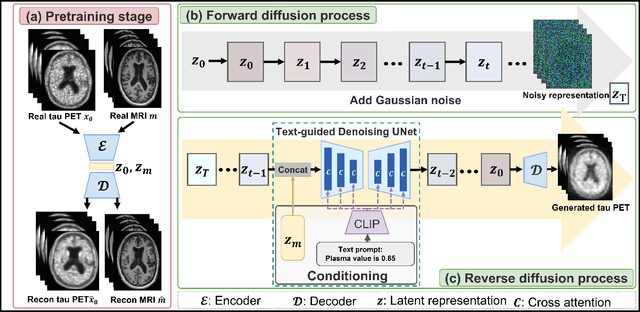
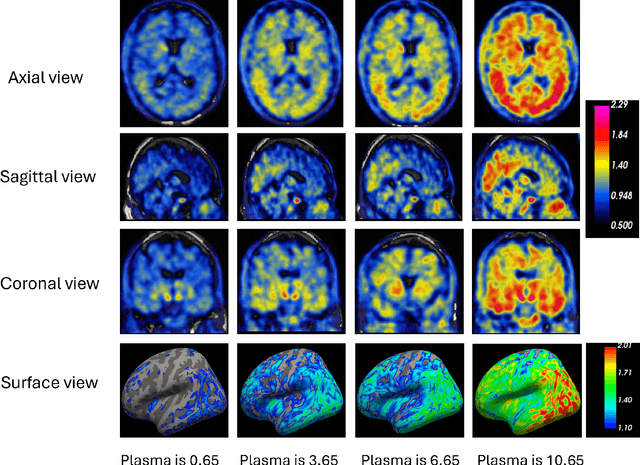
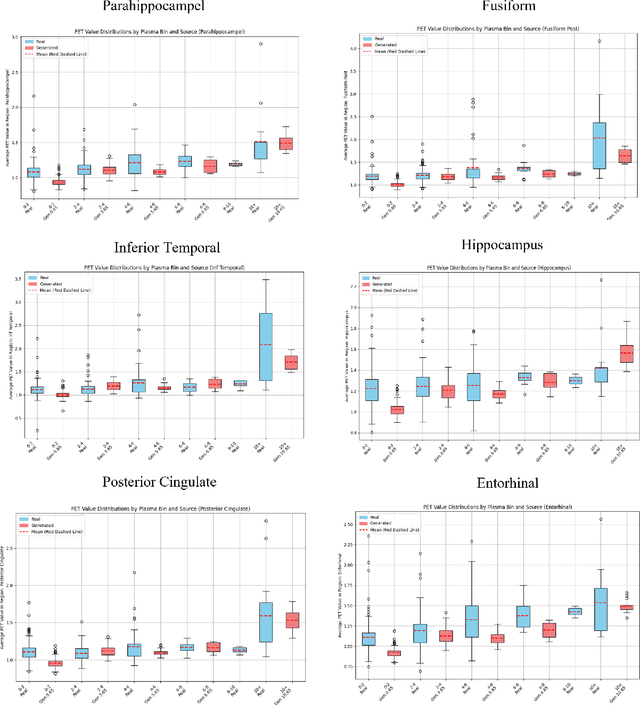
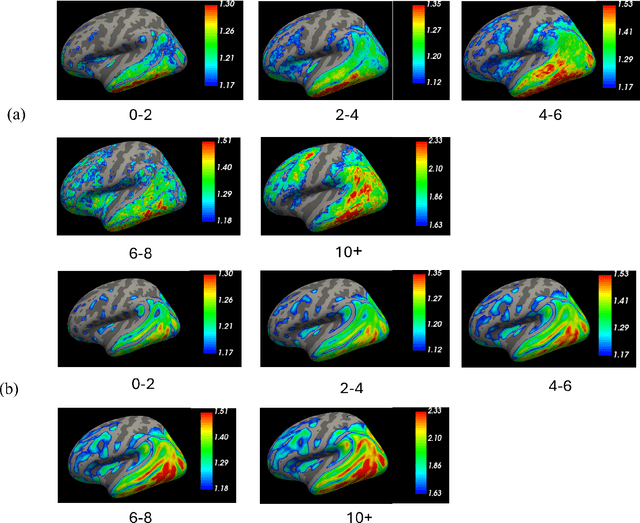
Accurate quantification of tau pathology via tau positron emission tomography (PET) scan is crucial for diagnosing and monitoring Alzheimer's disease (AD). However, the high cost and limited availability of tau PET restrict its widespread use. In contrast, structural magnetic resonance imaging (MRI) and plasma-based biomarkers provide non-invasive and widely available complementary information related to brain anatomy and disease progression. In this work, we propose a text-guided 3D diffusion model for 3D tau PET image synthesis, leveraging multimodal conditions from both structural MRI and plasma measurement. Specifically, the textual prompt is from the plasma p-tau217 measurement, which is a key indicator of AD progression, while MRI provides anatomical structure constraints. The proposed framework is trained and evaluated using clinical AV1451 tau PET data from the Alzheimer's Disease Neuroimaging Initiative (ADNI) database. Experimental results demonstrate that our approach can generate realistic, clinically meaningful 3D tau PET across a range of disease stages. The proposed framework can help perform tau PET data augmentation under different settings, provide a non-invasive, cost-effective alternative for visualizing tau pathology, and support the simulation of disease progression under varying plasma biomarker levels and cognitive conditions.