 Add to Chrome
 Add to Firefox
 Add to Edge
Shedding Light on VLN Robustness: A Black-box Framework for Indoor Lighting-based Adversarial Attack
Nov 17, 2025
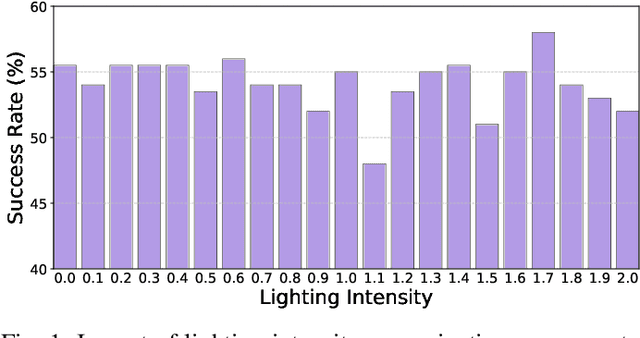
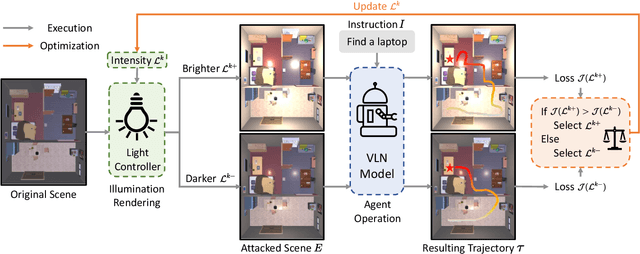
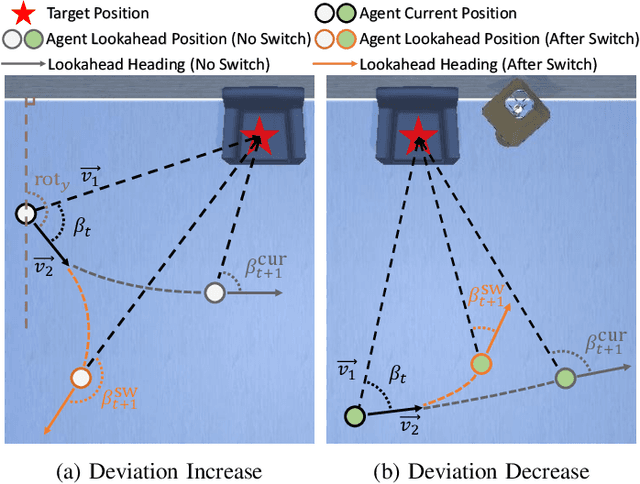

Vision-and-Language Navigation (VLN) agents have made remarkable progress, but their robustness remains insufficiently studied. Existing adversarial evaluations often rely on perturbations that manifest as unusual textures rarely encountered in everyday indoor environments. Errors under such contrived conditions have limited practical relevance, as real-world agents are unlikely to encounter such artificial patterns. In this work, we focus on indoor lighting, an intrinsic yet largely overlooked scene attribute that strongly influences navigation. We propose Indoor Lighting-based Adversarial Attack (ILA), a black-box framework that manipulates global illumination to disrupt VLN agents. Motivated by typical household lighting usage, we design two attack modes: Static Indoor Lighting-based Attack (SILA), where the lighting intensity remains constant throughout an episode, and Dynamic Indoor Lighting-based Attack (DILA), where lights are switched on or off at critical moments to induce abrupt illumination changes. We evaluate ILA on two state-of-the-art VLN models across three navigation tasks. Results show that ILA significantly increases failure rates while reducing trajectory efficiency, revealing previously unrecognized vulnerabilities of VLN agents to realistic indoor lighting variations.

Stabilizing Self-Consuming Diffusion Models with Latent Space Filtering
Nov 16, 2025As synthetic data proliferates across the Internet, it is often reused to train successive generations of generative models. This creates a ``self-consuming loop" that can lead to training instability or \textit{model collapse}. Common strategies to address the issue -- such as accumulating historical training data or injecting fresh real data -- either increase computational cost or require expensive human annotation. In this paper, we empirically analyze the latent space dynamics of self-consuming diffusion models and observe that the low-dimensional structure of latent representations extracted from synthetic data degrade over generations. Based on this insight, we propose \textit{Latent Space Filtering} (LSF), a novel approach that mitigates model collapse by filtering out less realistic synthetic data from mixed datasets. Theoretically, we present a framework that connects latent space degradation to empirical observations. Experimentally, we show that LSF consistently outperforms existing baselines across multiple real-world datasets, effectively mitigating model collapse without increasing training cost or relying on human annotation.
Event-CausNet: Unlocking Causal Knowledge from Text with Large Language Models for Reliable Spatio-Temporal Forecasting
Nov 16, 2025While spatio-temporal Graph Neural Networks (GNNs) excel at modeling recurring traffic patterns, their reliability plummets during non-recurring events like accidents. This failure occurs because GNNs are fundamentally correlational models, learning historical patterns that are invalidated by the new causal factors introduced during disruptions. To address this, we propose Event-CausNet, a framework that uses a Large Language Model to quantify unstructured event reports, builds a causal knowledge base by estimating average treatment effects, and injects this knowledge into a dual-stream GNN-LSTM network using a novel causal attention mechanism to adjust and enhance the forecast. Experiments on a real-world dataset demonstrate that Event-CausNet achieves robust performance, reducing prediction error (MAE) by up to 35.87%, significantly outperforming state-of-the-art baselines. Our framework bridges the gap between correlational models and causal reasoning, providing a solution that is more accurate and transferable, while also offering crucial interpretability, providing a more reliable foundation for real-world traffic management during critical disruptions.
MME-RAG: Multi-Manager-Expert Retrieval-Augmented Generation for Fine-Grained Entity Recognition in Task-Oriented Dialogues
Nov 15, 2025Fine-grained entity recognition is crucial for reasoning and decision-making in task-oriented dialogues, yet current large language models (LLMs) continue to face challenges in domain adaptation and retrieval controllability. We introduce MME-RAG, a Multi-Manager-Expert Retrieval-Augmented Generation framework that decomposes entity recognition into two coordinated stages: type-level judgment by lightweight managers and span-level extraction by specialized experts. Each expert is supported by a KeyInfo retriever that injects semantically aligned, few-shot exemplars during inference, enabling precise and domain-adaptive extraction without additional training. Experiments on CrossNER, MIT-Movie, MIT-Restaurant, and our newly constructed multi-domain customer-service dataset demonstrate that MME-RAG performs better than recent baselines in most domains. Ablation studies further show that both the hierarchical decomposition and KeyInfo-guided retrieval are key drivers of robustness and cross-domain generalization, establishing MME-RAG as a scalable and interpretable solution for adaptive dialogue understanding.
LIHE: Linguistic Instance-Split Hyperbolic-Euclidean Framework for Generalized Weakly-Supervised Referring Expression Comprehension
Nov 15, 2025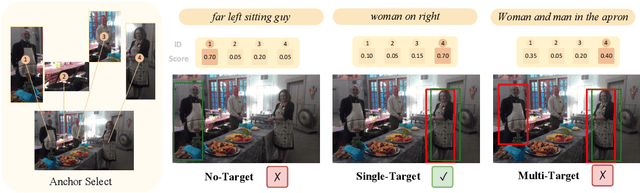
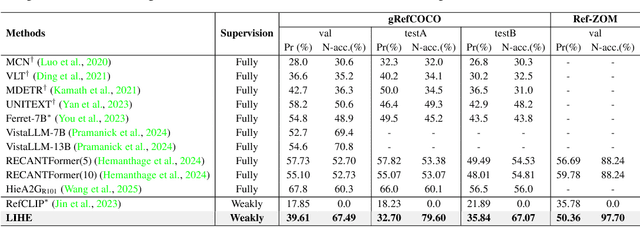
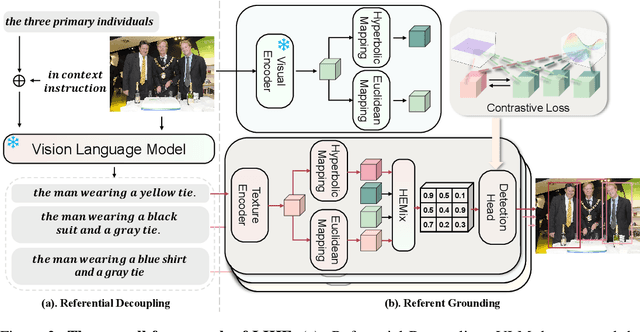
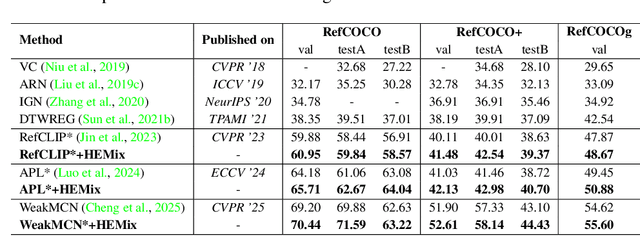
Existing Weakly-Supervised Referring Expression Comprehension (WREC) methods, while effective, are fundamentally limited by a one-to-one mapping assumption, hindering their ability to handle expressions corresponding to zero or multiple targets in realistic scenarios. To bridge this gap, we introduce the Weakly-Supervised Generalized Referring Expression Comprehension task (WGREC), a more practical paradigm that handles expressions with variable numbers of referents. However, extending WREC to WGREC presents two fundamental challenges: supervisory signal ambiguity, where weak image-level supervision is insufficient for training a model to infer the correct number and identity of referents, and semantic representation collapse, where standard Euclidean similarity forces hierarchically-related concepts into non-discriminative clusters, blurring categorical boundaries. To tackle these challenges, we propose a novel WGREC framework named Linguistic Instance-Split Hyperbolic-Euclidean (LIHE), which operates in two stages. The first stage, Referential Decoupling, predicts the number of target objects and decomposes the complex expression into simpler sub-expressions. The second stage, Referent Grounding, then localizes these sub-expressions using HEMix, our innovative hybrid similarity module that synergistically combines the precise alignment capabilities of Euclidean proximity with the hierarchical modeling strengths of hyperbolic geometry. This hybrid approach effectively prevents semantic collapse while preserving fine-grained distinctions between related concepts. Extensive experiments demonstrate LIHE establishes the first effective weakly supervised WGREC baseline on gRefCOCO and Ref-ZOM, while HEMix achieves consistent improvements on standard REC benchmarks, improving IoU@0.5 by up to 2.5\%. The code is available at https://anonymous.4open.science/r/LIHE.
Intelligent Reflecting Surfaces for Integrated Sensing and Communications: A Survey
Nov 14, 2025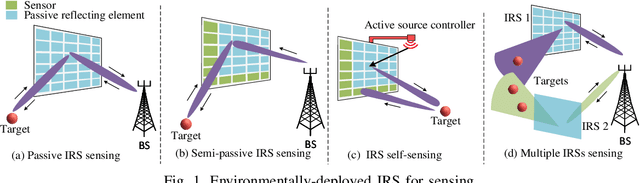

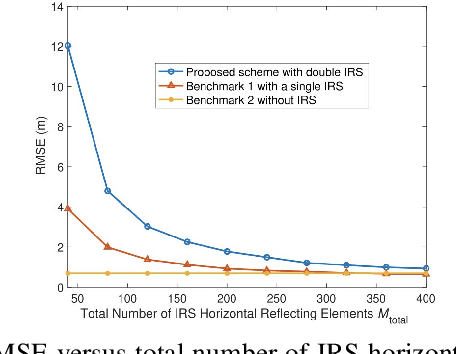
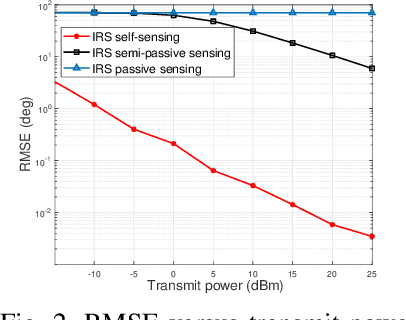
The rapid development of sixth-generation (6G) wireless networks requires seamless integration of communication and sensing to support ubiquitous intelligence and real-time, high-reliability applications. Integrated sensing and communication (ISAC) has emerged as a key solution for achieving this convergence, offering joint utilization of spectral, hardware, and computing resources. However, realizing high-performance ISAC remains challenging due to environmental line-of-sight (LoS) blockage, limited spatial resolution, and the inherent coverage asymmetry and resource coupling between sensing and communication. Intelligent reflecting surfaces (IRSs), featuring low-cost, energy-efficient, and programmable electromagnetic reconfiguration, provide a promising solution to overcome these limitations. This article presents a comprehensive overview of IRS-aided wireless sensing and ISAC technologies, including IRS architectures, target detection and estimation techniques, beamforming designs, and performance metrics. It further explores IRS-enabled new opportunities for more efficient performance balancing, coexistence, and networking in ISAC systems, focuses on current design bottlenecks, and outlines future research directions. This article aims to offer a unified design framework that guides the development of practical and scalable IRS-aided ISAC systems for the next-generation wireless network.
Robust and Efficient Communication in Multi-Agent Reinforcement Learning
Nov 14, 2025Multi-agent reinforcement learning (MARL) has made significant strides in enabling coordinated behaviors among autonomous agents. However, most existing approaches assume that communication is instantaneous, reliable, and has unlimited bandwidth; these conditions are rarely met in real-world deployments. This survey systematically reviews recent advances in robust and efficient communication strategies for MARL under realistic constraints, including message perturbations, transmission delays, and limited bandwidth. Furthermore, because the challenges of low-latency reliability, bandwidth-intensive data sharing, and communication-privacy trade-offs are central to practical MARL systems, we focus on three applications involving cooperative autonomous driving, distributed simultaneous localization and mapping, and federated learning. Finally, we identify key open challenges and future research directions, advocating a unified approach that co-designs communication, learning, and robustness to bridge the gap between theoretical MARL models and practical implementations.
Improving Sustainability of Adversarial Examples in Class-Incremental Learning
Nov 12, 2025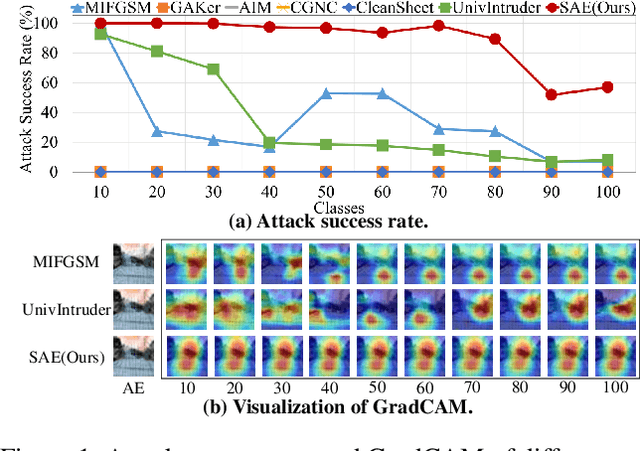
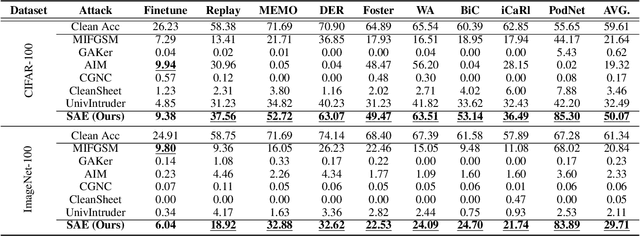
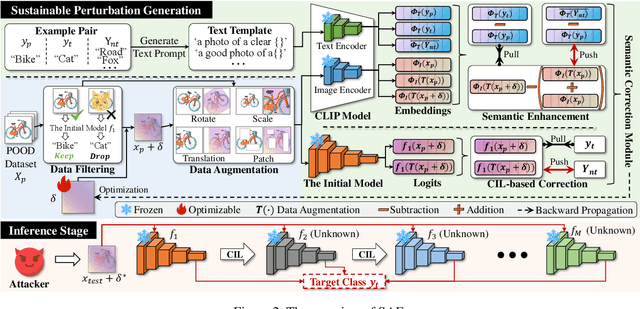

Current adversarial examples (AEs) are typically designed for static models. However, with the wide application of Class-Incremental Learning (CIL), models are no longer static and need to be updated with new data distributed and labeled differently from the old ones. As a result, existing AEs often fail after CIL updates due to significant domain drift. In this paper, we propose SAE to enhance the sustainability of AEs against CIL. The core idea of SAE is to enhance the robustness of AE semantics against domain drift by making them more similar to the target class while distinguishing them from all other classes. Achieving this is challenging, as relying solely on the initial CIL model to optimize AE semantics often leads to overfitting. To resolve the problem, we propose a Semantic Correction Module. This module encourages the AE semantics to be generalized, based on a visual-language model capable of producing universal semantics. Additionally, it incorporates the CIL model to correct the optimization direction of the AE semantics, guiding them closer to the target class. To further reduce fluctuations in AE semantics, we propose a Filtering-and-Augmentation Module, which first identifies non-target examples with target-class semantics in the latent space and then augments them to foster more stable semantics. Comprehensive experiments demonstrate that SAE outperforms baselines by an average of 31.28% when updated with a 9-fold increase in the number of classes.
I2E: Real-Time Image-to-Event Conversion for High-Performance Spiking Neural Networks
Nov 11, 2025Spiking neural networks (SNNs) promise highly energy-efficient computing, but their adoption is hindered by a critical scarcity of event-stream data. This work introduces I2E, an algorithmic framework that resolves this bottleneck by converting static images into high-fidelity event streams. By simulating microsaccadic eye movements with a highly parallelized convolution, I2E achieves a conversion speed over 300x faster than prior methods, uniquely enabling on-the-fly data augmentation for SNN training. The framework's effectiveness is demonstrated on large-scale benchmarks. An SNN trained on the generated I2E-ImageNet dataset achieves a state-of-the-art accuracy of 60.50%. Critically, this work establishes a powerful sim-to-real paradigm where pre-training on synthetic I2E data and fine-tuning on the real-world CIFAR10-DVS dataset yields an unprecedented accuracy of 92.5%. This result validates that synthetic event data can serve as a high-fidelity proxy for real sensor data, bridging a long-standing gap in neuromorphic engineering. By providing a scalable solution to the data problem, I2E offers a foundational toolkit for developing high-performance neuromorphic systems. The open-source algorithm and all generated datasets are provided to accelerate research in the field.
Learning Omnidirectional Locomotion for a Salamander-Like Quadruped Robot
Nov 11, 2025Salamander-like quadruped robots are designed inspired by the skeletal structure of their biological counterparts. However, existing controllers cannot fully exploit these morphological features and largely rely on predefined gait patterns or joint trajectories, which prevents the generation of diverse and flexible locomotion and limits their applicability in real-world scenarios. In this paper, we propose a learning framework that enables the robot to acquire a diverse repertoire of omnidirectional gaits without reference motions. Each body part is controlled by a phase variable capable of forward and backward evolution, with a phase coverage reward to promote the exploration of the leg phase space. Additionally, morphological symmetry of the robot is incorporated via data augmentation, improving sample efficiency and enforcing both motion-level and task-level symmetry in learned behaviors. Extensive experiments show that the robot successfully acquires 22 omnidirectional gaits exhibiting both dynamic and symmetric movements, demonstrating the effectiveness of the proposed learning framework.