 Add to Chrome
 Add to Firefox
 Add to Edge
Diffusion-Guided Uncertainty-Aware Delayed Policy Optimization
Jul 06, 2026
Reinforcement learning in real world environments often suffers from severe performance degradation due to delayed feedback. Existing approaches typically mitigate performance degradation caused by observation delays by constructing augmented states or predicting the true states. However, these methods often overlook the inherent discrepancy between delayed state and true states induced by stochastic MDP. We theoretically prove the existence of such a discrepancy and show that it leads to the degradation of the optimal policy. To address this challenge, we propose Diffusion Guided Uncertainty Aware Delayed Policy Optimization (DUPO). Our method explicitly models the relationship between delayed state message and the current state using a diffusion model, and leverages the resulting discrepancy estimates to weight delayed policies. Extensive experiments on continuous robotic control tasks with multiple stochastic delays demonstrate that DUPO consistently outperforms existing methods and remains effective even under long and random delay scenarios.

CLAP: Closed-Loop Training, Evaluation, and Release Control for Domain Agent Post-training
Jul 02, 2026Domain agents often face noisy business data, uncertain post-training gains, offline/application mismatch, and adapter-release risk. This paper presents CLAP (Closed-Loop Agent Post-training), a closed-loop method that converts business data into structured SFT samples, decision-preference samples, holdout sets, risk diagnostics, and release-gate records. CLAP combines data validation, target/evidence normalization, reward/KL diagnosis, offline gates, and application-chain replay to decide whether an adapter is suitable for the target application chain. On five anonymized manufacturing-scenario batches, QLoRA-style LoRA-SFT yields modest average gains: overall score increases by 0.0098, pass rate by 0.0240, and evidence accuracy by 0.0280, while hallucination and wrong facts decrease. Yet only 3 of 5 batches improve, some batches regress, and GRPO exposes high KL risks. Application-chain replay further shows that RAG is necessary for factual extraction; under the same 3B backbone and 100 replay cases, an application-RAG-oriented LoRA-SFT adapter improves value, core fields, and answer-evidence doc/page matching over base+RAG, but increases latency. These results support managing domain-agent post-training through an integrated data-training-evaluation-release loop rather than relying on training completion or a single offline score.
HCPO: Hierarchical Conductor-Based Policy Optimization in Multi-Agent Reinforcement Learning
Nov 15, 2025In cooperative Multi-Agent Reinforcement Learning (MARL), efficient exploration is crucial for optimizing the performance of joint policy. However, existing methods often update joint policies via independent agent exploration, without coordination among agents, which inherently constrains the expressive capacity and exploration of joint policies. To address this issue, we propose a conductor-based joint policy framework that directly enhances the expressive capacity of joint policies and coordinates exploration. In addition, we develop a Hierarchical Conductor-based Policy Optimization (HCPO) algorithm that instructs policy updates for the conductor and agents in a direction aligned with performance improvement. A rigorous theoretical guarantee further establishes the monotonicity of the joint policy optimization process. By deploying local conductors, HCPO retains centralized training benefits while eliminating inter-agent communication during execution. Finally, we evaluate HCPO on three challenging benchmarks: StarCraftII Multi-agent Challenge, Multi-agent MuJoCo, and Multi-agent Particle Environment. The results indicate that HCPO outperforms competitive MARL baselines regarding cooperative efficiency and stability.
Robust and Efficient Communication in Multi-Agent Reinforcement Learning
Nov 14, 2025Multi-agent reinforcement learning (MARL) has made significant strides in enabling coordinated behaviors among autonomous agents. However, most existing approaches assume that communication is instantaneous, reliable, and has unlimited bandwidth; these conditions are rarely met in real-world deployments. This survey systematically reviews recent advances in robust and efficient communication strategies for MARL under realistic constraints, including message perturbations, transmission delays, and limited bandwidth. Furthermore, because the challenges of low-latency reliability, bandwidth-intensive data sharing, and communication-privacy trade-offs are central to practical MARL systems, we focus on three applications involving cooperative autonomous driving, distributed simultaneous localization and mapping, and federated learning. Finally, we identify key open challenges and future research directions, advocating a unified approach that co-designs communication, learning, and robustness to bridge the gap between theoretical MARL models and practical implementations.
Computer vision tasks for intelligent aerospace missions: An overview
Jul 09, 2024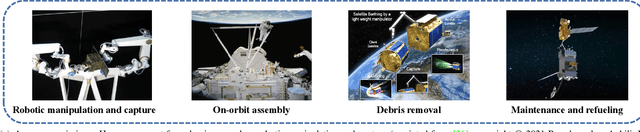

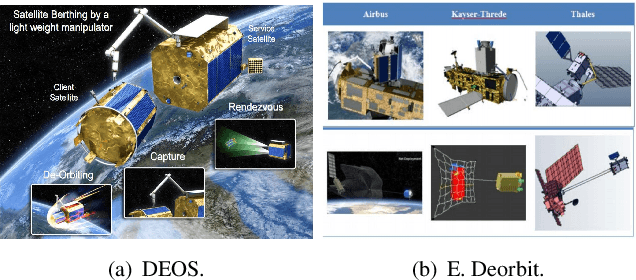

Computer vision tasks are crucial for aerospace missions as they help spacecraft to understand and interpret the space environment, such as estimating position and orientation, reconstructing 3D models, and recognizing objects, which have been extensively studied to successfully carry out the missions. However, traditional methods like Kalman Filtering, Structure from Motion, and Multi-View Stereo are not robust enough to handle harsh conditions, leading to unreliable results. In recent years, deep learning (DL)-based perception technologies have shown great potential and outperformed traditional methods, especially in terms of their robustness to changing environments. To further advance DL-based aerospace perception, various frameworks, datasets, and strategies have been proposed, indicating significant potential for future applications. In this survey, we aim to explore the promising techniques used in perception tasks and emphasize the importance of DL-based aerospace perception. We begin by providing an overview of aerospace perception, including classical space programs developed in recent years, commonly used sensors, and traditional perception methods. Subsequently, we delve into three fundamental perception tasks in aerospace missions: pose estimation, 3D reconstruction, and recognition, as they are basic and crucial for subsequent decision-making and control. Finally, we discuss the limitations and possibilities in current research and provide an outlook on future developments, including the challenges of working with limited datasets, the need for improved algorithms, and the potential benefits of multi-source information fusion.
Q-learning Based Optimal False Data Injection Attack on Probabilistic Boolean Control Networks
Nov 29, 2023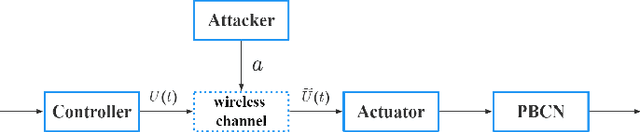
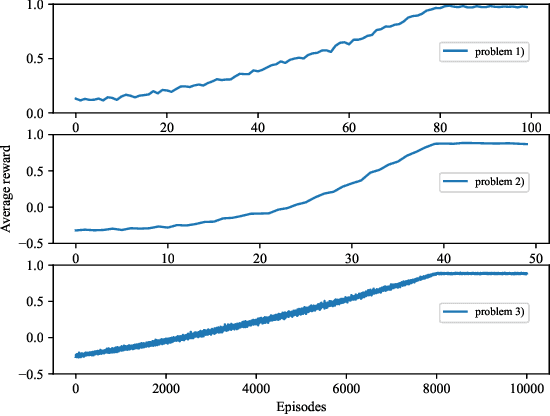
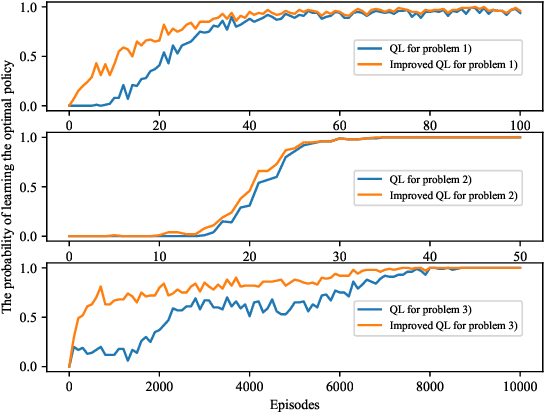
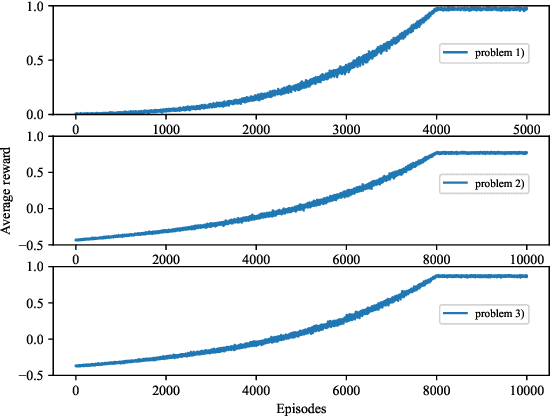
In this paper, we present a reinforcement learning (RL) method for solving optimal false data injection attack problems in probabilistic Boolean control networks (PBCNs) where the attacker lacks knowledge of the system model. Specifically, we employ a Q-learning (QL) algorithm to address this problem. We then propose an improved QL algorithm that not only enhances learning efficiency but also obtains optimal attack strategies for large-scale PBCNs that the standard QL algorithm cannot handle. Finally, we verify the effectiveness of our proposed approach by considering two attacked PBCNs, including a 10-node network and a 28-node network.