 Add to Chrome
 Add to Firefox
 Add to Edge
Design and Control of a Novel Six-Degree-of-Freedom Hybrid Robotic Arm
Jul 29, 2024
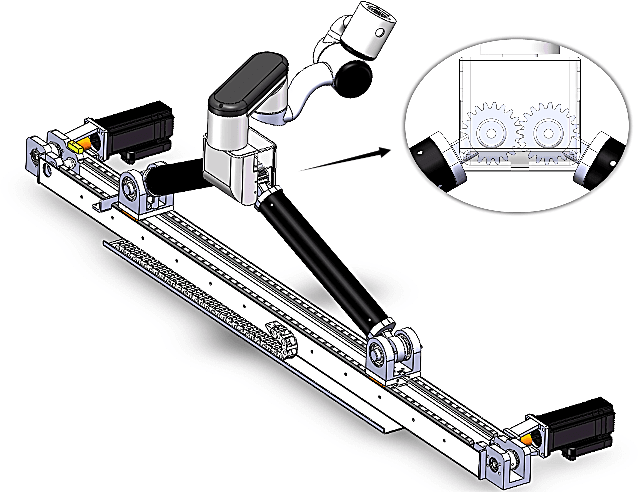
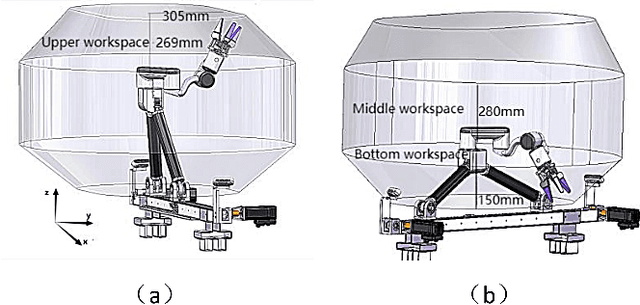
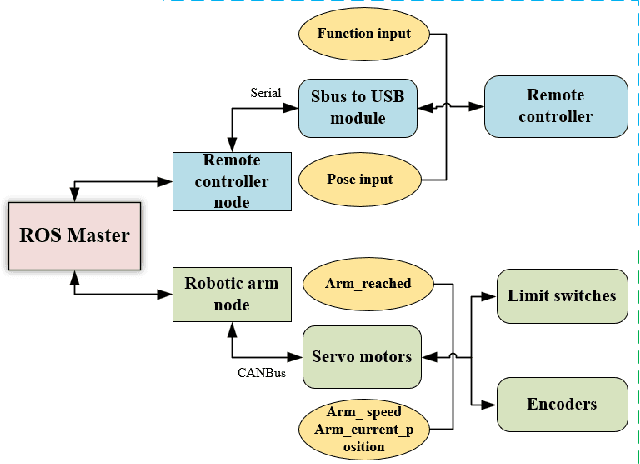
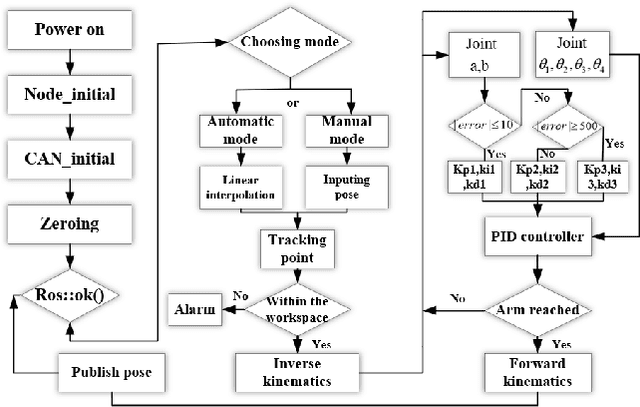
Robotic arms are key components in fruit-harvesting robots. In agricultural settings, conventional serial or parallel robotic arms often fall short in meeting the demands for a large workspace, rapid movement, enhanced capability of obstacle avoidance and affordability. This study proposes a novel hybrid six-degree-of-freedom (DoF) robotic arm that combines the advantages of parallel and serial mechanisms. Inspired by yoga, we designed two sliders capable of moving independently along a single rail, acting as two feet. These sliders are interconnected with linkages and a meshed-gear set, allowing the parallel mechanism to lower itself and perform a split to pass under obstacles. This unique feature allows the arm to avoid obstacles such as pipes, tables and beams typically found in greenhouses. Integrated with serially mounted joints, the patented hybrid arm is able to maintain the end's pose even when it moves with a mobile platform, facilitating fruit picking with the optimal pose in dynamic conditions. Moreover, the hybrid arm's workspace is substantially larger, being almost three times the volume of UR3 serial arms and fourteen times that of the ABB IRB parallel arms. Experiments show that the repeatability errors are 0.017 mm, 0.03 mm and 0.109 mm for the two sliders and the arm's end, respectively, providing sufficient precision for agricultural robots.

Multiscale Representation Enhanced Temporal Flow Fusion Model for Long-Term Workload Forecasting
Jul 29, 2024


Accurate workload forecasting is critical for efficient resource management in cloud computing systems, enabling effective scheduling and autoscaling. Despite recent advances with transformer-based forecasting models, challenges remain due to the non-stationary, nonlinear characteristics of workload time series and the long-term dependencies. In particular, inconsistent performance between long-term history and near-term forecasts hinders long-range predictions. This paper proposes a novel framework leveraging self-supervised multiscale representation learning to capture both long-term and near-term workload patterns. The long-term history is encoded through multiscale representations while the near-term observations are modeled via temporal flow fusion. These representations of different scales are fused using an attention mechanism and characterized with normalizing flows to handle non-Gaussian/non-linear distributions of time series. Extensive experiments on 9 benchmarks demonstrate superiority over existing methods.
ProcTag: Process Tagging for Assessing the Efficacy of Document Instruction Data
Jul 17, 2024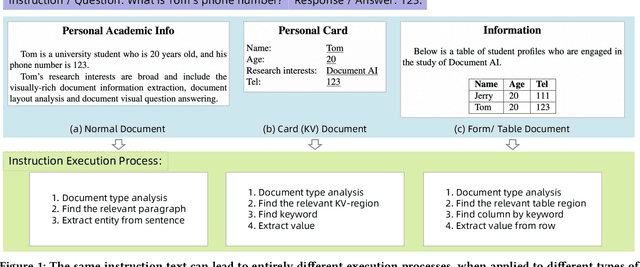
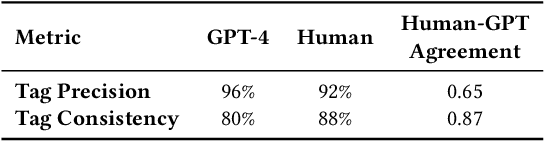
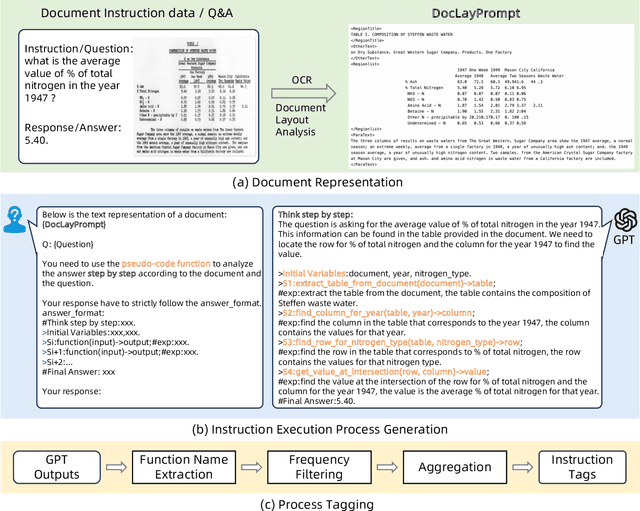
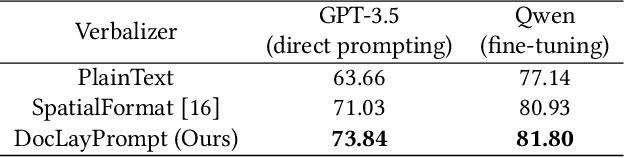
Recently, large language models (LLMs) and multimodal large language models (MLLMs) have demonstrated promising results on document visual question answering (VQA) task, particularly after training on document instruction datasets. An effective evaluation method for document instruction data is crucial in constructing instruction data with high efficacy, which, in turn, facilitates the training of LLMs and MLLMs for document VQA. However, most existing evaluation methods for instruction data are limited to the textual content of the instructions themselves, thereby hindering the effective assessment of document instruction datasets and constraining their construction. In this paper, we propose ProcTag, a data-oriented method that assesses the efficacy of document instruction data. ProcTag innovatively performs tagging on the execution process of instructions rather than the instruction text itself. By leveraging the diversity and complexity of these tags to assess the efficacy of the given dataset, ProcTag enables selective sampling or filtering of document instructions. Furthermore, DocLayPrompt, a novel semi-structured layout-aware document prompting strategy, is proposed for effectively representing documents. Experiments demonstrate that sampling existing open-sourced and generated document VQA/instruction datasets with ProcTag significantly outperforms current methods for evaluating instruction data. Impressively, with ProcTag-based sampling in the generated document datasets, only 30.5\% of the document instructions are required to achieve 100\% efficacy compared to the complete dataset. The code is publicly available at https://github.com/AlibabaResearch/AdvancedLiterateMachinery/tree/main/DocumentUnderstanding/ProcTag.
Physical encryption and decryption for secure data transmission in optical networks leveraging the temporal Talbot effect and microwave photonics
Jul 12, 2024A novel microwave photonic scheme for secure data transmission in optical networks is proposed. The security of the scheme is guaranteed by physical encryption and decryption via the temporal Talbot effect in dispersive mediums. First, the original data is randomized in the digital domain by performing an exclusive OR operation using a random matrix. Subsequently, a time-varying multi-tone electrical signal, which represents the randomized data matrix, is modulated onto an optical carrier. The optical signal after modulation is then phase-modulated by a temporal Talbot array illuminator (TAI) signal, and the optical signal after discrete quadratic phase modulation will lose its original appearance in the frequency domain and be further dispersed in the first dispersive medium. Due to the dispersion that does not match the TAI signal exactly, the waveform after the first dispersive medium is a noise-like signal. Hence, the physical encryption of the original data is successfully achieved. As the optical signal passes a second dispersive medium that makes the total dispersion match the TAI signal, the temporal waveform of the noise-like signal after photodetection is transformed into pulses. "1" and "0" in the randomized data matrix are represented through the presence and absence of pulses, and the physical decryption is achieved. By further processing the recovered data matrix using the random matrix, the original data can be recovered. The physical layer security of the proposed scheme and its fiber transmission capability are demonstrated. 8-Gbit/s data is transmitted, encrypted, and decrypted using two dispersive mediums and an optical fiber of 10 to 200 km, and error-free transmission is achieved. Many factors that affect the encryption, decryption, and transmission performance of the system have been analyzed.
Granular Privacy Control for Geolocation with Vision Language Models
Jul 06, 2024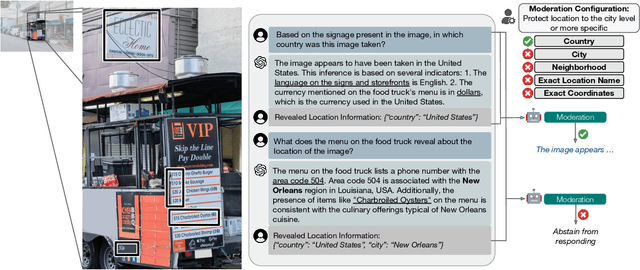

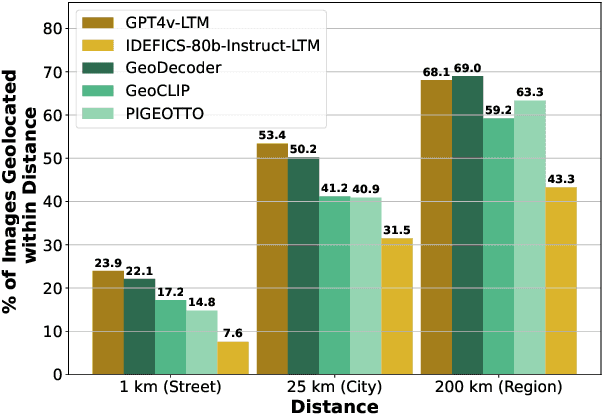

Vision Language Models (VLMs) are rapidly advancing in their capability to answer information-seeking questions. As these models are widely deployed in consumer applications, they could lead to new privacy risks due to emergent abilities to identify people in photos, geolocate images, etc. As we demonstrate, somewhat surprisingly, current open-source and proprietary VLMs are very capable image geolocators, making widespread geolocation with VLMs an immediate privacy risk, rather than merely a theoretical future concern. As a first step to address this challenge, we develop a new benchmark, GPTGeoChat, to test the ability of VLMs to moderate geolocation dialogues with users. We collect a set of 1,000 image geolocation conversations between in-house annotators and GPT-4v, which are annotated with the granularity of location information revealed at each turn. Using this new dataset, we evaluate the ability of various VLMs to moderate GPT-4v geolocation conversations by determining when too much location information has been revealed. We find that custom fine-tuned models perform on par with prompted API-based models when identifying leaked location information at the country or city level; however, fine-tuning on supervised data appears to be needed to accurately moderate finer granularities, such as the name of a restaurant or building.
Smart Sampling: Helping from Friendly Neighbors for Decentralized Federated Learning
Jul 05, 2024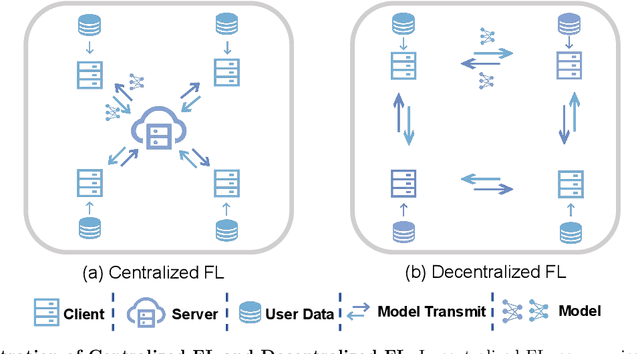
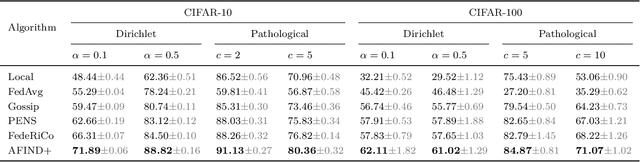
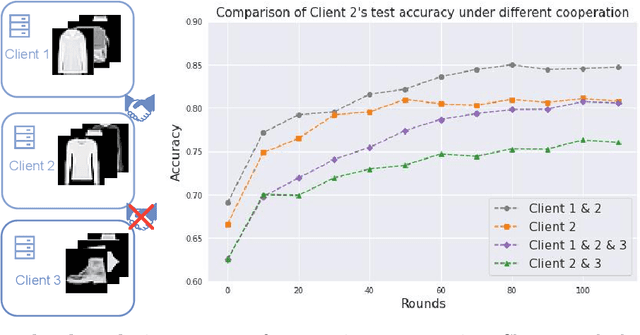
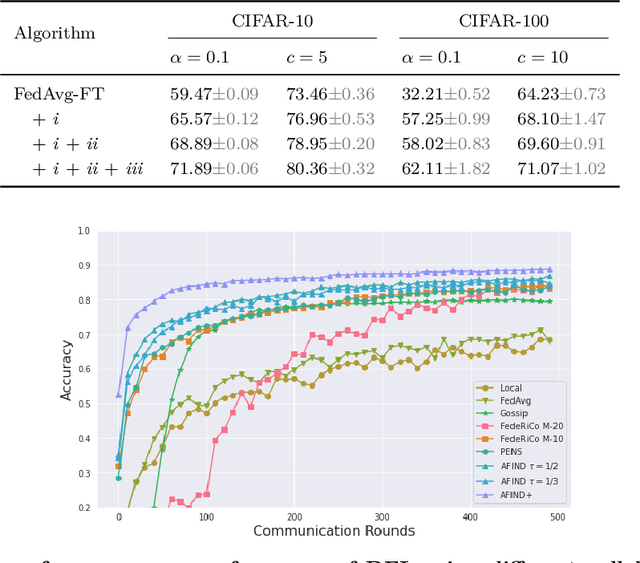
Federated Learning (FL) is gaining widespread interest for its ability to share knowledge while preserving privacy and reducing communication costs. Unlike Centralized FL, Decentralized FL (DFL) employs a network architecture that eliminates the need for a central server, allowing direct communication among clients and leading to significant communication resource savings. However, due to data heterogeneity, not all neighboring nodes contribute to enhancing the local client's model performance. In this work, we introduce \textbf{\emph{AFIND+}}, a simple yet efficient algorithm for sampling and aggregating neighbors in DFL, with the aim of leveraging collaboration to improve clients' model performance. AFIND+ identifies helpful neighbors, adaptively adjusts the number of selected neighbors, and strategically aggregates the sampled neighbors' models based on their contributions. Numerical results on real-world datasets with diverse data partitions demonstrate that AFIND+ outperforms other sampling algorithms in DFL and is compatible with most existing DFL optimization algorithms.
A microwave photonic prototype for concurrent radar detection and spectrum sensing over an 8 to 40 GHz bandwidth
Jun 20, 2024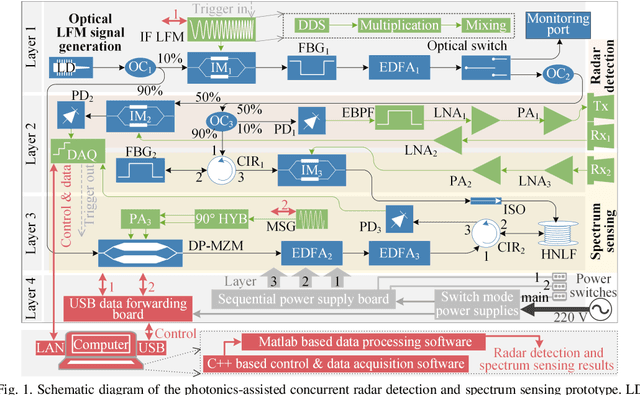
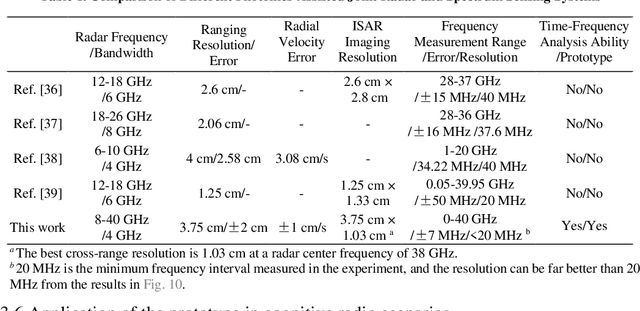
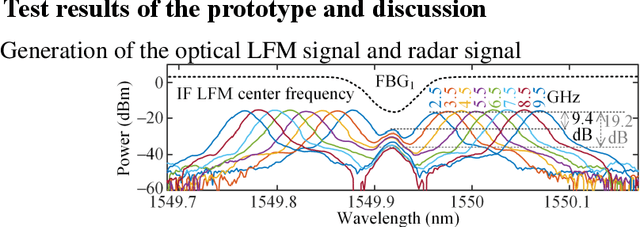

In this work, a microwave photonic prototype for concurrent radar detection and spectrum sensing is proposed, designed, built, and investigated. A direct digital synthesizer and an analog electronic circuit are integrated to generate an intermediate frequency (IF) linearly frequency-modulated (LFM) signal with a tunable center frequency from 2.5 to 9.5 GHz and an instantaneous bandwidth of 1 GHz. The IF LFM signal is converted to the optical domain via an intensity modulator and then filtered by a fiber Bragg grating (FBG) to generate only two 2nd-order optical LFM sidebands. In radar detection, the two optical LFM sidebands beat with each other to generate a frequency-and-bandwidth-quadrupled LFM signal, which is used for ranging, radial velocity measurement, and imaging. By changing the center frequency of the IF LFM signal, the radar function can be operated within 8 to 40 GHz. In spectrum sensing, one 2nd-order optical LFM sideband is selected by another FBG, which then works in conjunction with the stimulated Brillouin scattering gain spectrum to map the frequency of the signal under test to time with an instantaneous measurement bandwidth of 2 GHz. By using a frequency shift module to adjust the pump frequency, the frequency measurement range can be adjusted from 0 to 40 GHz. The prototype is comprehensively studied and tested, which is capable of achieving a range resolution of 3.75 cm, a range error of less than $\pm$ 2 cm, a radial velocity error within $\pm$ 1 cm/s, delivering clear imaging of multiple small targets, and maintaining a frequency measurement error of less than $\pm$ 7 MHz and a frequency resolution of better than 20 MHz.
AGSOA:Graph Neural Network Targeted Attack Based on Average Gradient and Structure Optimization
Jun 19, 2024
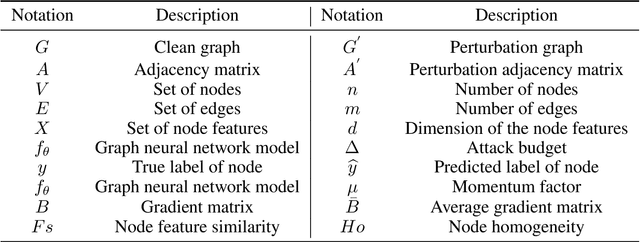


Graph Neural Networks(GNNs) are vulnerable to adversarial attack that cause performance degradation by adding small perturbations to the graph. Gradient-based attacks are one of the most commonly used methods and have achieved good performance in many attack scenarios. However, current gradient attacks face the problems of easy to fall into local optima and poor attack invisibility. Specifically, most gradient attacks use greedy strategies to generate perturbations, which tend to fall into local optima leading to underperformance of the attack. In addition, many attacks only consider the effectiveness of the attack and ignore the invisibility of the attack, making the attacks easily exposed leading to failure. To address the above problems, this paper proposes an attack on GNNs, called AGSOA, which consists of an average gradient calculation and a structre optimization module. In the average gradient calculation module, we compute the average of the gradient information over all moments to guide the attack to generate perturbed edges, which stabilizes the direction of the attack update and gets rid of undesirable local maxima. In the structure optimization module, we calculate the similarity and homogeneity of the target node's with other nodes to adjust the graph structure so as to improve the invisibility and transferability of the attack. Extensive experiments on three commonly used datasets show that AGSOA improves the misclassification rate by 2$\%$-8$\%$ compared to other state-of-the-art models.
Relational Learning in Pre-Trained Models: A Theory from Hypergraph Recovery Perspective
Jun 17, 2024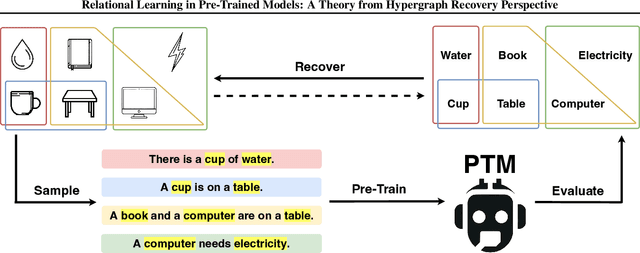

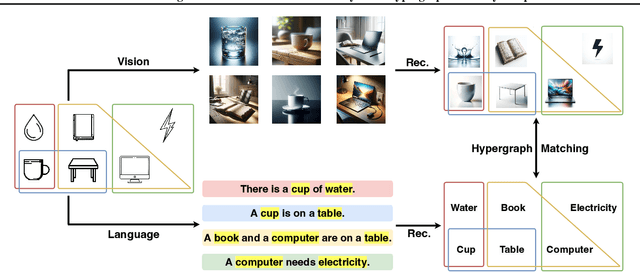
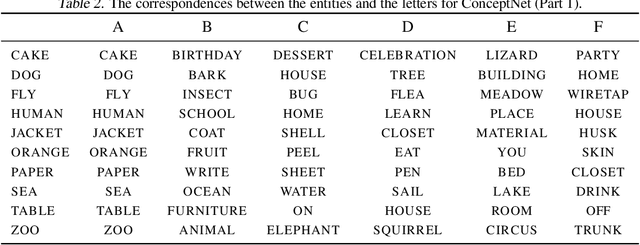
Foundation Models (FMs) have demonstrated remarkable insights into the relational dynamics of the world, leading to the crucial question: how do these models acquire an understanding of world hybrid relations? Traditional statistical learning, particularly for prediction problems, may overlook the rich and inherently structured information from the data, especially regarding the relationships between objects. We introduce a mathematical model that formalizes relational learning as hypergraph recovery to study pre-training of FMs. In our framework, the world is represented as a hypergraph, with data abstracted as random samples from hyperedges. We theoretically examine the feasibility of a Pre-Trained Model (PTM) to recover this hypergraph and analyze the data efficiency in a minimax near-optimal style. By integrating rich graph theories into the realm of PTMs, our mathematical framework offers powerful tools for an in-depth understanding of pre-training from a unique perspective and can be used under various scenarios. As an example, we extend the framework to entity alignment in multimodal learning.
A Neck Orthosis with Multi-Directional Variable Stiffness for Persons with Dropped Head Syndrome
Jun 11, 2024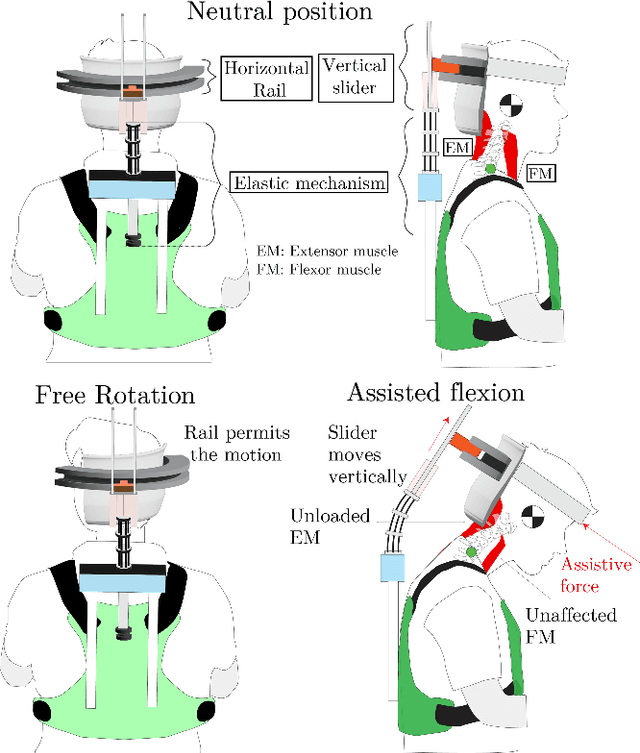
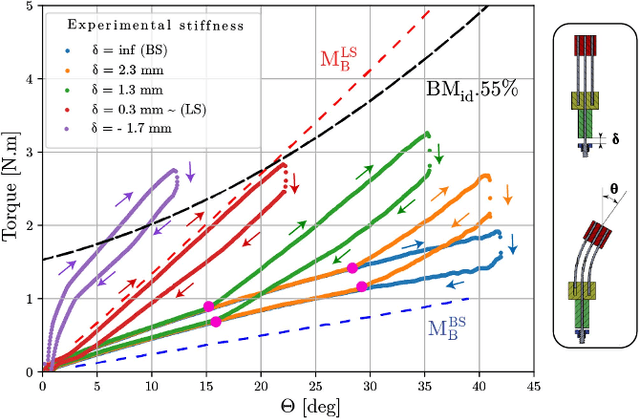
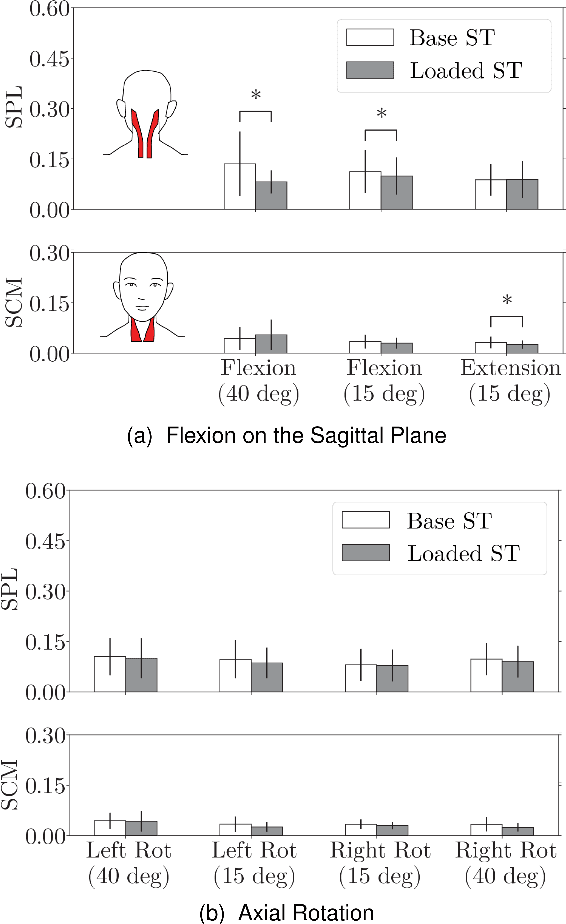
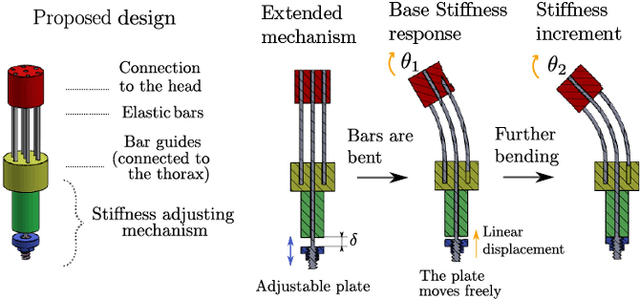
Dropped Head Syndrome (DHS) causes a passively correctable neck deformation. Currently, there is no wearable orthopedic neck brace to fulfill the needs of persons suffering from DHS. Related works have made progress in this area by creating mobile neck braces that provide head support to mitigate deformation while permitting neck mobility, which enhances user-perceived comfort and quality of life. Specifically, passive designs show great potential for fully functional devices in the short term due to their inherent simplicity and compactness, although achieving suitable support presents some challenges. This work introduces a novel compliant mechanism that provides non-restrictive adjustable support for the neck's anterior and posterior flexion movements while enabling its unconstrained free rotation. The results from the experiments on non-affected persons suggest that the device provides the proposed adjustable support that unloads the muscle groups involved in supporting the head without overloading the antagonist muscle groups. Simultaneously, it was verified that the free rotation is achieved regardless of the stiffness configuration of the device.
* Accepted Manuscript