 Add to Chrome
 Add to Firefox
 Add to Edge
STORM: Spatio-Temporal Reconstruction Model for Large-Scale Outdoor Scenes
Dec 31, 2024


We present STORM, a spatio-temporal reconstruction model designed for reconstructing dynamic outdoor scenes from sparse observations. Existing dynamic reconstruction methods often rely on per-scene optimization, dense observations across space and time, and strong motion supervision, resulting in lengthy optimization times, limited generalization to novel views or scenes, and degenerated quality caused by noisy pseudo-labels for dynamics. To address these challenges, STORM leverages a data-driven Transformer architecture that directly infers dynamic 3D scene representations--parameterized by 3D Gaussians and their velocities--in a single forward pass. Our key design is to aggregate 3D Gaussians from all frames using self-supervised scene flows, transforming them to the target timestep to enable complete (i.e., "amodal") reconstructions from arbitrary viewpoints at any moment in time. As an emergent property, STORM automatically captures dynamic instances and generates high-quality masks using only reconstruction losses. Extensive experiments on public datasets show that STORM achieves precise dynamic scene reconstruction, surpassing state-of-the-art per-scene optimization methods (+4.3 to 6.6 PSNR) and existing feed-forward approaches (+2.1 to 4.7 PSNR) in dynamic regions. STORM reconstructs large-scale outdoor scenes in 200ms, supports real-time rendering, and outperforms competitors in scene flow estimation, improving 3D EPE by 0.422m and Acc5 by 28.02%. Beyond reconstruction, we showcase four additional applications of our model, illustrating the potential of self-supervised learning for broader dynamic scene understanding.

P3S-Diffusion:A Selective Subject-driven Generation Framework via Point Supervision
Dec 27, 2024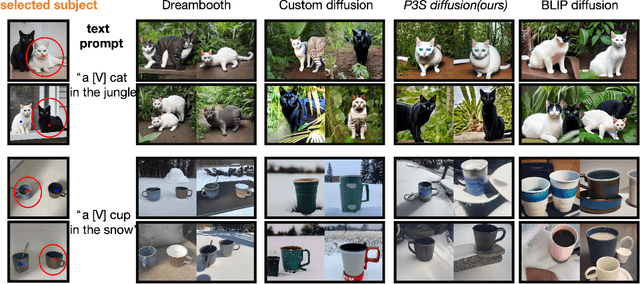
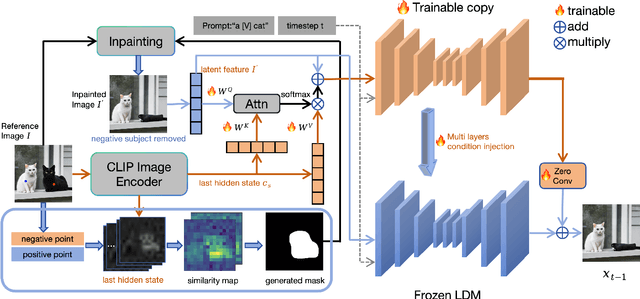
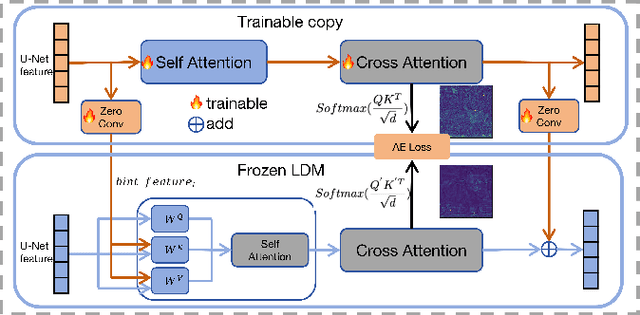
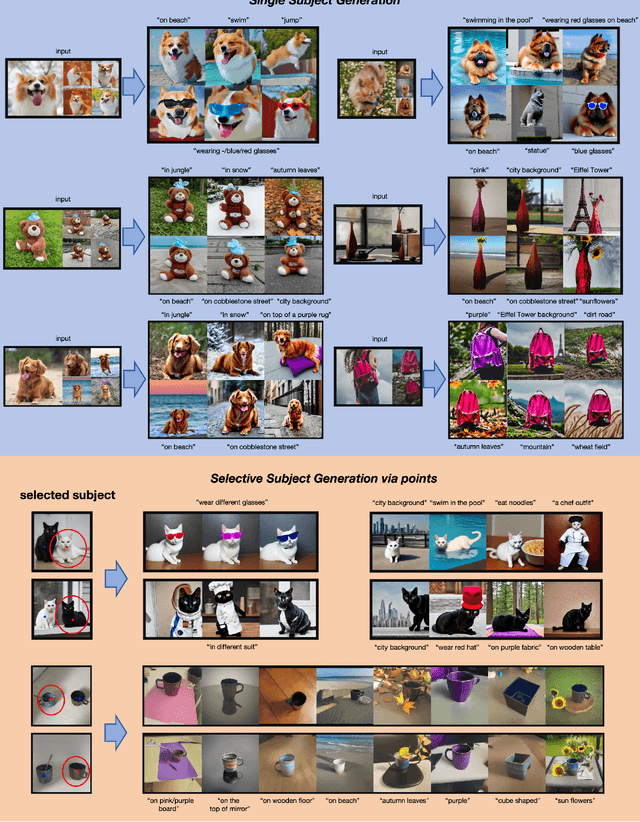
Recent research in subject-driven generation increasingly emphasizes the importance of selective subject features. Nevertheless, accurately selecting the content in a given reference image still poses challenges, especially when selecting the similar subjects in an image (e.g., two different dogs). Some methods attempt to use text prompts or pixel masks to isolate specific elements. However, text prompts often fall short in precisely describing specific content, and pixel masks are often expensive. To address this, we introduce P3S-Diffusion, a novel architecture designed for context-selected subject-driven generation via point supervision. P3S-Diffusion leverages minimal cost label (e.g., points) to generate subject-driven images. During fine-tuning, it can generate an expanded base mask from these points, obviating the need for additional segmentation models. The mask is employed for inpainting and aligning with subject representation. The P3S-Diffusion preserves fine features of the subjects through Multi-layers Condition Injection. Enhanced by the Attention Consistency Loss for improved training, extensive experiments demonstrate its excellent feature preservation and image generation capabilities.
Attention Entropy is a Key Factor: An Analysis of Parallel Context Encoding with Full-attention-based Pre-trained Language Models
Dec 21, 2024

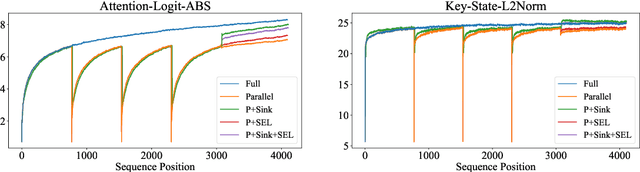
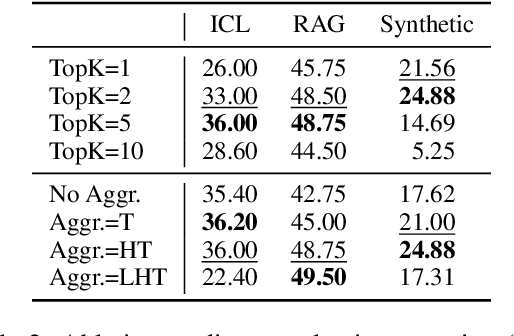
Large language models have shown remarkable performance across a wide range of language tasks, owing to their exceptional capabilities in context modeling. The most commonly used method of context modeling is full self-attention, as seen in standard decoder-only Transformers. Although powerful, this method can be inefficient for long sequences and may overlook inherent input structures. To address these problems, an alternative approach is parallel context encoding, which splits the context into sub-pieces and encodes them parallelly. Because parallel patterns are not encountered during training, naively applying parallel encoding leads to performance degradation. However, the underlying reasons and potential mitigations are unclear. In this work, we provide a detailed analysis of this issue and identify that unusually high attention entropy can be a key factor. Furthermore, we adopt two straightforward methods to reduce attention entropy by incorporating attention sinks and selective mechanisms. Experiments on various tasks reveal that these methods effectively lower irregular attention entropy and narrow performance gaps. We hope this study can illuminate ways to enhance context modeling mechanisms.
Multimodal Hypothetical Summary for Retrieval-based Multi-image Question Answering
Dec 19, 2024Retrieval-based multi-image question answering (QA) task involves retrieving multiple question-related images and synthesizing these images to generate an answer. Conventional "retrieve-then-answer" pipelines often suffer from cascading errors because the training objective of QA fails to optimize the retrieval stage. To address this issue, we propose a novel method to effectively introduce and reference retrieved information into the QA. Given the image set to be retrieved, we employ a multimodal large language model (visual perspective) and a large language model (textual perspective) to obtain multimodal hypothetical summary in question-form and description-form. By combining visual and textual perspectives, MHyS captures image content more specifically and replaces real images in retrieval, which eliminates the modality gap by transforming into text-to-text retrieval and helps improve retrieval. To more advantageously introduce retrieval with QA, we employ contrastive learning to align queries (questions) with MHyS. Moreover, we propose a coarse-to-fine strategy for calculating both sentence-level and word-level similarity scores, to further enhance retrieval and filter out irrelevant details. Our approach achieves a 3.7% absolute improvement over state-of-the-art methods on RETVQA and a 14.5% improvement over CLIP. Comprehensive experiments and detailed ablation studies demonstrate the superiority of our method.
Extrapolated Urban View Synthesis Benchmark
Dec 10, 2024
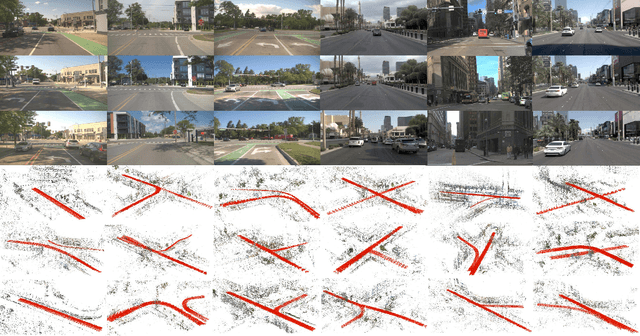


Photorealistic simulators are essential for the training and evaluation of vision-centric autonomous vehicles (AVs). At their core is Novel View Synthesis (NVS), a crucial capability that generates diverse unseen viewpoints to accommodate the broad and continuous pose distribution of AVs. Recent advances in radiance fields, such as 3D Gaussian Splatting, achieve photorealistic rendering at real-time speeds and have been widely used in modeling large-scale driving scenes. However, their performance is commonly evaluated using an interpolated setup with highly correlated training and test views. In contrast, extrapolation, where test views largely deviate from training views, remains underexplored, limiting progress in generalizable simulation technology. To address this gap, we leverage publicly available AV datasets with multiple traversals, multiple vehicles, and multiple cameras to build the first Extrapolated Urban View Synthesis (EUVS) benchmark. Meanwhile, we conduct quantitative and qualitative evaluations of state-of-the-art Gaussian Splatting methods across different difficulty levels. Our results show that Gaussian Splatting is prone to overfitting to training views. Besides, incorporating diffusion priors and improving geometry cannot fundamentally improve NVS under large view changes, highlighting the need for more robust approaches and large-scale training. We have released our data to help advance self-driving and urban robotics simulation technology.
Progressive Vision-Language Prompt for Multi-Organ Multi-Class Cell Semantic Segmentation with Single Branch
Dec 04, 2024


Pathological cell semantic segmentation is a fundamental technology in computational pathology, essential for applications like cancer diagnosis and effective treatment. Given that multiple cell types exist across various organs, with subtle differences in cell size and shape, multi-organ, multi-class cell segmentation is particularly challenging. Most existing methods employ multi-branch frameworks to enhance feature extraction, but often result in complex architectures. Moreover, reliance on visual information limits performance in multi-class analysis due to intricate textural details. To address these challenges, we propose a Multi-OrgaN multi-Class cell semantic segmentation method with a single brancH (MONCH) that leverages vision-language input. Specifically, we design a hierarchical feature extraction mechanism to provide coarse-to-fine-grained features for segmenting cells of various shapes, including high-frequency, convolutional, and topological features. Inspired by the synergy of textual and multi-grained visual features, we introduce a progressive prompt decoder to harmonize multimodal information, integrating features from fine to coarse granularity for better context capture. Extensive experiments on the PanNuke dataset, which has significant class imbalance and subtle cell size and shape variations, demonstrate that MONCH outperforms state-of-the-art cell segmentation methods and vision-language models. Codes and implementations will be made publicly available.
DIVD: Deblurring with Improved Video Diffusion Model
Dec 01, 2024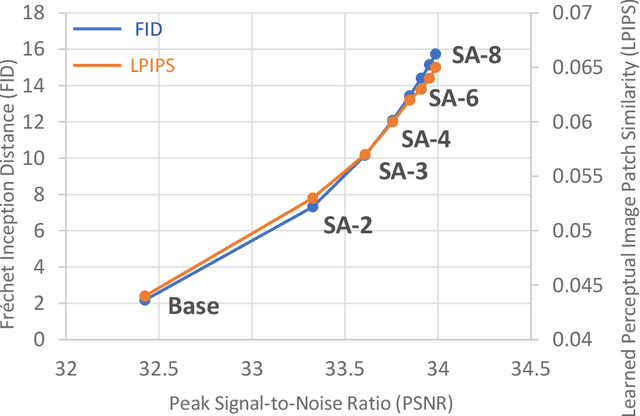
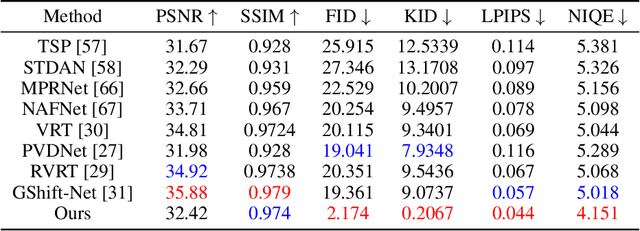
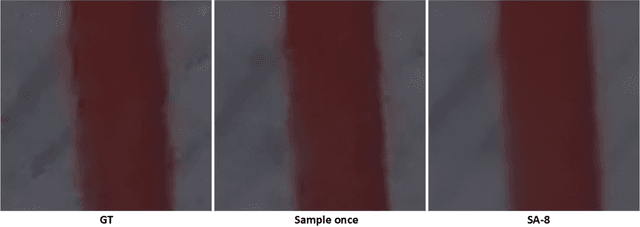
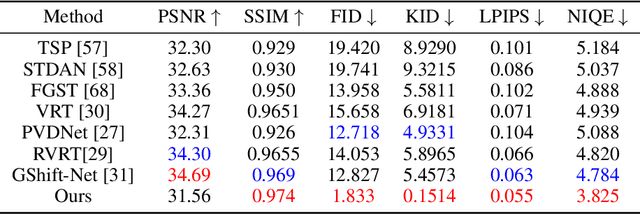
Video deblurring presents a considerable challenge owing to the complexity of blur, which frequently results from a combination of camera shakes, and object motions. In the field of video deblurring, many previous works have primarily concentrated on distortion-based metrics, such as PSNR. However, this approach often results in a weak correlation with human perception and yields reconstructions that lack realism. Diffusion models and video diffusion models have respectively excelled in the fields of image and video generation, particularly achieving remarkable results in terms of image authenticity and realistic perception. However, due to the computational complexity and challenges inherent in adapting diffusion models, there is still uncertainty regarding the potential of video diffusion models in video deblurring tasks. To explore the viability of video diffusion models in the task of video deblurring, we introduce a diffusion model specifically for this purpose. In this field, leveraging highly correlated information between adjacent frames and addressing the challenge of temporal misalignment are crucial research directions. To tackle these challenges, many improvements based on the video diffusion model are introduced in this work. As a result, our model outperforms existing models and achieves state-of-the-art results on a range of perceptual metrics. Our model preserves a significant amount of detail in the images while maintaining competitive distortion metrics. Furthermore, to the best of our knowledge, this is the first time the diffusion model has been applied in video deblurring to overcome the limitations mentioned above.
A Semi-Supervised Approach with Error Reflection for Echocardiography Segmentation
Dec 01, 2024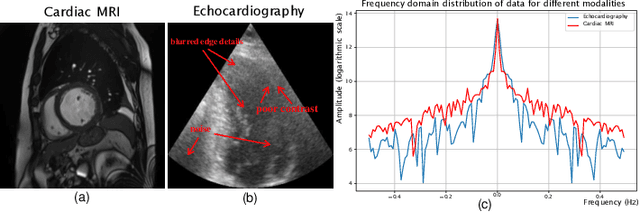


Segmenting internal structure from echocardiography is essential for the diagnosis and treatment of various heart diseases. Semi-supervised learning shows its ability in alleviating annotations scarcity. While existing semi-supervised methods have been successful in image segmentation across various medical imaging modalities, few have attempted to design methods specifically addressing the challenges posed by the poor contrast, blurred edge details and noise of echocardiography. These characteristics pose challenges to the generation of high-quality pseudo-labels in semi-supervised segmentation based on Mean Teacher. Inspired by human reflection on erroneous practices, we devise an error reflection strategy for echocardiography semi-supervised segmentation architecture. The process triggers the model to reflect on inaccuracies in unlabeled image segmentation, thereby enhancing the robustness of pseudo-label generation. Specifically, the strategy is divided into two steps. The first step is called reconstruction reflection. The network is tasked with reconstructing authentic proxy images from the semantic masks of unlabeled images and their auxiliary sketches, while maximizing the structural similarity between the original inputs and the proxies. The second step is called guidance correction. Reconstruction error maps decouple unreliable segmentation regions. Then, reliable data that are more likely to occur near high-density areas are leveraged to guide the optimization of unreliable data potentially located around decision boundaries. Additionally, we introduce an effective data augmentation strategy, termed as multi-scale mixing up strategy, to minimize the empirical distribution gap between labeled and unlabeled images and perceive diverse scales of cardiac anatomical structures. Extensive experiments demonstrate the competitiveness of the proposed method.
CDEMapper: Enhancing NIH Common Data Element Normalization using Large Language Models
Nov 30, 2024Common Data Elements (CDEs) standardize data collection and sharing across studies, enhancing data interoperability and improving research reproducibility. However, implementing CDEs presents challenges due to the broad range and variety of data elements. This study aims to develop an effective and efficient mapping tool to bridge the gap between local data elements and National Institutes of Health (NIH) CDEs. We propose CDEMapper, a large language model (LLM) powered mapping tool designed to assist in mapping local data elements to NIH CDEs. CDEMapper has three core modules: (1) CDE indexing and embeddings. NIH CDEs were indexed and embedded to support semantic search; (2) CDE recommendations. The tool combines Elasticsearch (BM25 similarity methods) with state of the art GPT services to recommend candidate CDEs and their permissible values; and (3) Human review. Users review and select the NIH CDEs and values that best match their data elements and value sets. We evaluate the tool recommendation accuracy against manually annotated mapping results. CDEMapper offers a publicly available, LLM-powered, and intuitive user interface that consolidates essential and advanced mapping services into a streamlined pipeline. It provides a step by step, quality assured mapping workflow designed with a user-centered approach. The evaluation results demonstrated that augmenting BM25 with GPT embeddings and a ranker consistently enhances CDEMapper mapping accuracy in three different mapping settings across four evaluation datasets. This work opens up the potential of using LLMs to assist with CDE recommendation and human curation when aligning local data elements with NIH CDEs. Additionally, this effort enhances clinical research data interoperability and helps researchers better understand the gaps between local data elements and NIH CDEs.
Semantic Data Augmentation for Long-tailed Facial Expression Recognition
Nov 26, 2024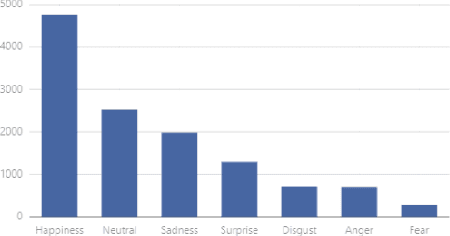
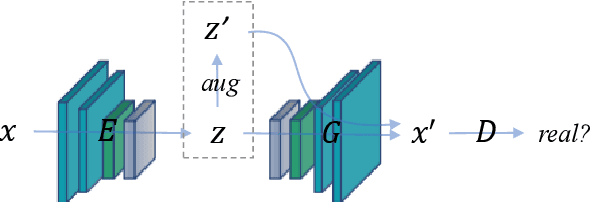
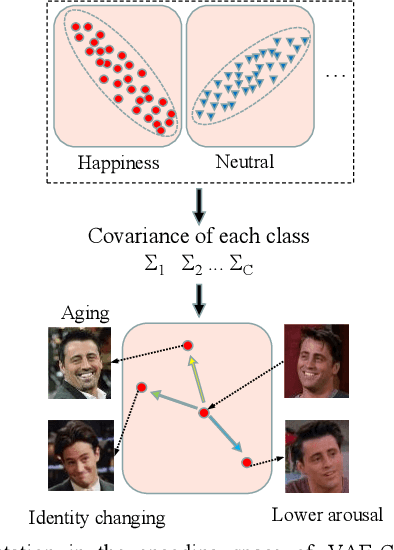
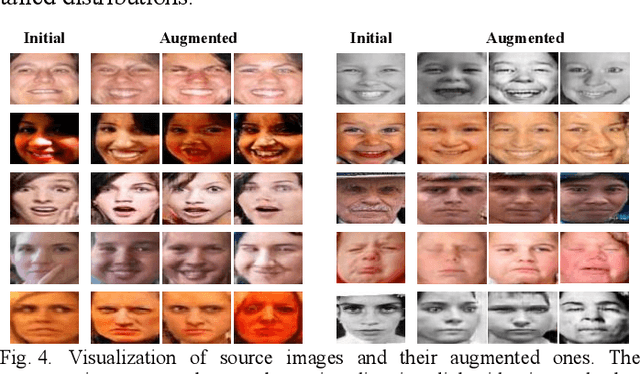
Facial Expression Recognition has a wide application prospect in social robotics, health care, driver fatigue monitoring, and many other practical scenarios. Automatic recognition of facial expressions has been extensively studied by the Computer Vision research society. But Facial Expression Recognition in real-world is still a challenging task, partially due to the long-tailed distribution of the dataset. Many recent studies use data augmentation for Long-Tailed Recognition tasks. In this paper, we propose a novel semantic augmentation method. By introducing randomness into the encoding of the source data in the latent space of VAE-GAN, new samples are generated. Then, for facial expression recognition in RAF-DB dataset, we use our augmentation method to balance the long-tailed distribution. Our method can be used in not only FER tasks, but also more diverse data-hungry scenarios.