 Add to Chrome
 Add to Firefox
 Add to Edge
Towards Reliable Stain Transfer: An Iterative Data-Model Co-Optimization Framework Based on Multimodal Expert-Guided Assessment
Jul 28, 2026
Histopathological examination primarily relies on hematoxylin and eosin (H&E) and immunohistochemistry (IHC) staining. Although IHC provides critical molecular information, it is costly and requires specialized expertise. Stain transfer provides an efficient alternative by computationally generating IHC from H&E images, but remains challenged by unified and interpretable modeling for heterogeneous biomarkers under pixel-unaligned supervision. We propose DMCoStain, a novel Data-Model Co-optimization framework for Stain transfer. It iteratively co-refines training data and model capability, improving staining accuracy and interpretability in both pathological and structural consistency. To refine training data in a clinically meaningful manner, it incorporates the Multimodal Expert-Guided Finer Selection (MEGFS) strategy, built upon a pioneering IHC-positive-expression (IPE) vision-language model (VLM) that emulates pathologist reasoning. To support MEGFS, we construct ImmunoInstruction, the first large-scale IPE instruction-following dataset with 150K VQA samples. Extensive experiments on multiple tissues and biomarkers demonstrate that DMCoStain achieves state-of-the-art (SOTA) accuracy. This paradigm offers strong practical value, and MEGFS also functions as a specialized evaluation tool for future model development. Dataset, code, and more details are in https://github.com/SikangSHU/DMCoStain.

Dual-Prior Guided Null-Space Learning with Mixture-of-Splines for Arbitrary Medical Slice Super-Resolution
Jun 25, 2026Arbitrary slice super-resolution reconstructs isotropic volumes from anisotropic clinical acquisitions by synthesizing intermediate slices at arbitrary scales. However, treating this ill-posed inverse problem as unconstrained residual-based regression risks hallucinating anatomically implausible structures or altering the originally observed data. To address both concerns, this paper presents the Dual-Prior Null-space Learning (DP-NSL) framework, which reformulates the task as a constrained recovery process guided by two complementary priors. A Measurement-Consistent Projection (MCP) enforces a Deterministic Observation Prior: the reconstruction undergoes an exact orthogonal projection that reproduces every acquired slice with zero error, confining all learned details to the unobservable null space. Within this null space, a Mixture-of-Splines (MoS) module imposes a Geometric Continuity Prior by dynamically mixing B-spline experts of different analytic orders, allowing each anatomical region to be modeled with a content-aware level of continuity. To promote spatial coherence, a Local Spatial Consistency Decoder (LSCD) further injects local inductive bias. Experiments on three CT and one MRI benchmark show that DP-NSL outperforms existing approaches while strictly preserving measurement consistency. Code is available at https://github.com/DeepMed-Lab-ECNU/Medical-Image-Reconstruction.
Discontinuous Galerkin Neural Operator for Pathology Defocus Deblurring
May 22, 2026Defocus deblurring in pathological microscopy remains challenging due to the spatially varying and locally discontinuous nature of optical blur induced by a position-dependent integral imaging process. Existing deep learning methods, constrained by shift-invariance assumptions and limited interpretability, are not well suited to such heterogeneous blur patterns. Neural operators provide a principled alternative by modeling defocus formation directly as an integral operator, offering a new perspective on defocus deblurring. However, most existing neural operator architectures for low-level vision rely on globally parameterized kernels that assume smoothness and stationarity, limiting their ability to model heterogeneous and locally discontinuous blur patterns. To address this limitation, we propose the Discontinuous Galerkin Neural Operator (DGNO), which parameterizes the integral kernel using a discontinuous Galerkin formulation with element-local volume operators and interface numerical fluxes. DGNO provides a principled combination of locality, heterogeneity modeling, and global coherence while preserving the underlying physics of optical image formation. Extensive and insightful experiments demonstrate that DGNO surpasses state-of-the-arts, delivering sharper reconstructions, robust handling of spatially varying blur, and scalable high-resolution performance. The code will be released at https://github.com/DeepMed-Lab-ECNU/Single-Image-Deblur.
Dictionary-based Pathology Mining with Hard-instance-assisted Classifier Debiasing for Genetic Biomarker Prediction from WSIs
Mar 26, 2026Prediction of genetic biomarkers, e.g., microsatellite instability in colorectal cancer is crucial for clinical decision making. But, two primary challenges hamper accurate prediction: (1) It is difficult to construct a pathology-aware representation involving the complex interconnections among pathological components. (2) WSIs contain a large proportion of areas unrelated to genetic biomarkers, which make the model easily overfit simple but irrelative instances. We hereby propose a Dictionary-based hierarchical pathology mining with hard-instance-assisted classifier Debiasing framework to address these challenges, dubbed as D2Bio. Our first module, dictionary-based hierarchical pathology mining, is able to mine diverse and very fine-grained pathological contextual interaction without the limit to the distances between patches. The second module, hard-instance-assisted classfier debiasing, learns a debiased classifier via focusing on hard but task-related features, without any additional annotations. Experimental results on five cohorts show the superiority of our method, with over 4% improvement in AUROC compared with the second best on the TCGA-CRC-MSI cohort. Our analysis further shows the clinical interpretability of D2Bio in genetic biomarker diagnosis and potential clinical utility in survival analysis. Code will be available at https://github.com/DeepMed-Lab-ECNU/D2Bio.
ReinPath: A Multimodal Reinforcement Learning Approach for Pathology
Jan 21, 2026Interpretability is significant in computational pathology, leading to the development of multimodal information integration from histopathological image and corresponding text data.However, existing multimodal methods have limited interpretability due to the lack of high-quality dataset that support explicit reasoning and inference and simple reasoning process.To address the above problems, we introduce a novel multimodal pathology large language model with strong reasoning capabilities.To improve the generation of accurate and contextually relevant textual descriptions, we design a semantic reward strategy integrated with group relative policy optimization.We construct a high-quality pathology visual question answering (VQA) dataset, specifically designed to support complex reasoning tasks.Comprehensive experiments conducted on this dataset demonstrate that our method outperforms state-of-the-art methods, even when trained with only 20% of the data.Our method also achieves comparable performance on downstream zero-shot image classification task compared with CLIP.
Training Report of TeleChat3-MoE
Dec 30, 2025TeleChat3-MoE is the latest series of TeleChat large language models, featuring a Mixture-of-Experts (MoE) architecture with parameter counts ranging from 105 billion to over one trillion,trained end-to-end on Ascend NPU cluster. This technical report mainly presents the underlying training infrastructure that enables reliable and efficient scaling to frontier model sizes. We detail systematic methodologies for operator-level and end-to-end numerical accuracy verification, ensuring consistency across hardware platforms and distributed parallelism strategies. Furthermore, we introduce a suite of performance optimizations, including interleaved pipeline scheduling, attention-aware data scheduling for long-sequence training,hierarchical and overlapped communication for expert parallelism, and DVM-based operator fusion. A systematic parallelization framework, leveraging analytical estimation and integer linear programming, is also proposed to optimize multi-dimensional parallelism configurations. Additionally, we present methodological approaches to cluster-level optimizations, addressing host- and device-bound bottlenecks during large-scale training tasks. These infrastructure advancements yield significant throughput improvements and near-linear scaling on clusters comprising thousands of devices, providing a robust foundation for large-scale language model development on hardware ecosystems.
DragLoRA: Online Optimization of LoRA Adapters for Drag-based Image Editing in Diffusion Model
May 18, 2025Drag-based editing within pretrained diffusion model provides a precise and flexible way to manipulate foreground objects. Traditional methods optimize the input feature obtained from DDIM inversion directly, adjusting them iteratively to guide handle points towards target locations. However, these approaches often suffer from limited accuracy due to the low representation ability of the feature in motion supervision, as well as inefficiencies caused by the large search space required for point tracking. To address these limitations, we present DragLoRA, a novel framework that integrates LoRA (Low-Rank Adaptation) adapters into the drag-based editing pipeline. To enhance the training of LoRA adapters, we introduce an additional denoising score distillation loss which regularizes the online model by aligning its output with that of the original model. Additionally, we improve the consistency of motion supervision by adapting the input features using the updated LoRA, giving a more stable and accurate input feature for subsequent operations. Building on this, we design an adaptive optimization scheme that dynamically toggles between two modes, prioritizing efficiency without compromising precision. Extensive experiments demonstrate that DragLoRA significantly enhances the control precision and computational efficiency for drag-based image editing. The Codes of DragLoRA are available at: https://github.com/Sylvie-X/DragLoRA.
MDN: Mamba-Driven Dualstream Network For Medical Hyperspectral Image Segmentation
Feb 24, 2025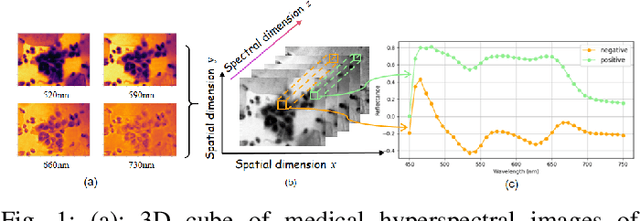
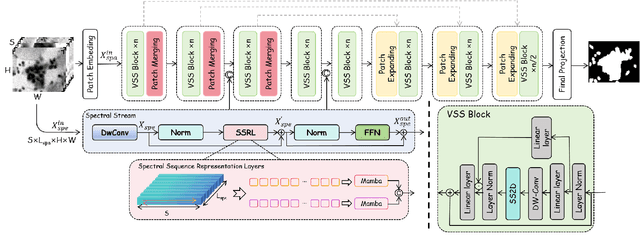
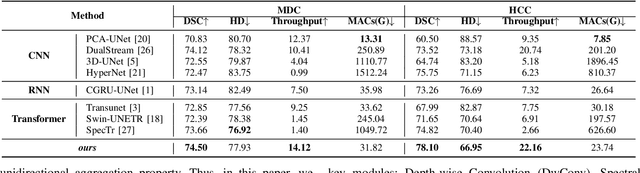
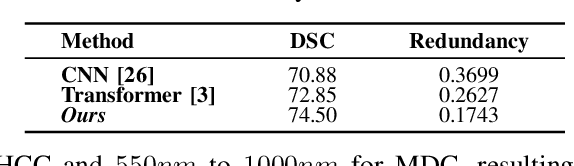
Medical Hyperspectral Imaging (MHSI) offers potential for computational pathology and precision medicine. However, existing CNN and Transformer struggle to balance segmentation accuracy and speed due to high spatial-spectral dimensionality. In this study, we leverage Mamba's global context modeling to propose a dual-stream architecture for joint spatial-spectral feature extraction. To address the limitation of Mamba's unidirectional aggregation, we introduce a recurrent spectral sequence representation to capture low-redundancy global spectral features. Experiments on a public Multi-Dimensional Choledoch dataset and a private Cervical Cancer dataset show that our method outperforms state-of-the-art approaches in segmentation accuracy while minimizing resource usage and achieving the fastest inference speed. Our code will be available at https://github.com/DeepMed-Lab-ECNU/MDN.
Progressive Vision-Language Prompt for Multi-Organ Multi-Class Cell Semantic Segmentation with Single Branch
Dec 04, 2024


Pathological cell semantic segmentation is a fundamental technology in computational pathology, essential for applications like cancer diagnosis and effective treatment. Given that multiple cell types exist across various organs, with subtle differences in cell size and shape, multi-organ, multi-class cell segmentation is particularly challenging. Most existing methods employ multi-branch frameworks to enhance feature extraction, but often result in complex architectures. Moreover, reliance on visual information limits performance in multi-class analysis due to intricate textural details. To address these challenges, we propose a Multi-OrgaN multi-Class cell semantic segmentation method with a single brancH (MONCH) that leverages vision-language input. Specifically, we design a hierarchical feature extraction mechanism to provide coarse-to-fine-grained features for segmenting cells of various shapes, including high-frequency, convolutional, and topological features. Inspired by the synergy of textual and multi-grained visual features, we introduce a progressive prompt decoder to harmonize multimodal information, integrating features from fine to coarse granularity for better context capture. Extensive experiments on the PanNuke dataset, which has significant class imbalance and subtle cell size and shape variations, demonstrate that MONCH outperforms state-of-the-art cell segmentation methods and vision-language models. Codes and implementations will be made publicly available.
A Semi-Supervised Approach with Error Reflection for Echocardiography Segmentation
Dec 01, 2024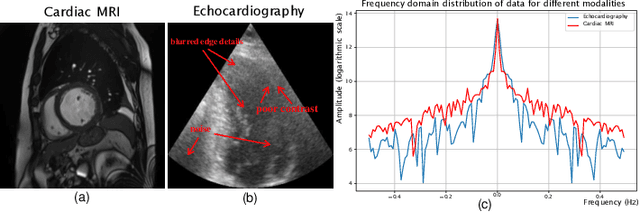


Segmenting internal structure from echocardiography is essential for the diagnosis and treatment of various heart diseases. Semi-supervised learning shows its ability in alleviating annotations scarcity. While existing semi-supervised methods have been successful in image segmentation across various medical imaging modalities, few have attempted to design methods specifically addressing the challenges posed by the poor contrast, blurred edge details and noise of echocardiography. These characteristics pose challenges to the generation of high-quality pseudo-labels in semi-supervised segmentation based on Mean Teacher. Inspired by human reflection on erroneous practices, we devise an error reflection strategy for echocardiography semi-supervised segmentation architecture. The process triggers the model to reflect on inaccuracies in unlabeled image segmentation, thereby enhancing the robustness of pseudo-label generation. Specifically, the strategy is divided into two steps. The first step is called reconstruction reflection. The network is tasked with reconstructing authentic proxy images from the semantic masks of unlabeled images and their auxiliary sketches, while maximizing the structural similarity between the original inputs and the proxies. The second step is called guidance correction. Reconstruction error maps decouple unreliable segmentation regions. Then, reliable data that are more likely to occur near high-density areas are leveraged to guide the optimization of unreliable data potentially located around decision boundaries. Additionally, we introduce an effective data augmentation strategy, termed as multi-scale mixing up strategy, to minimize the empirical distribution gap between labeled and unlabeled images and perceive diverse scales of cardiac anatomical structures. Extensive experiments demonstrate the competitiveness of the proposed method.