 Add to Chrome
 Add to Firefox
 Add to Edge
SGA-INTERACT: A 3D Skeleton-based Benchmark for Group Activity Understanding in Modern Basketball Tactic
Mar 09, 2025
Group Activity Understanding is predominantly studied as Group Activity Recognition (GAR) task. However, existing GAR benchmarks suffer from coarse-grained activity vocabularies and the only data form in single-view, which hinder the evaluation of state-of-the-art algorithms. To address these limitations, we introduce SGA-INTERACT, the first 3D skeleton-based benchmark for group activity understanding. It features complex activities inspired by basketball tactics, emphasizing rich spatial interactions and long-term dependencies. SGA-INTERACT introduces Temporal Group Activity Localization (TGAL) task, extending group activity understanding to untrimmed sequences, filling the gap left by GAR as a standalone task. In addition to the benchmark, we propose One2Many, a novel framework that employs a pretrained 3D skeleton backbone for unified individual feature extraction. This framework aligns with the feature extraction paradigm in RGB-based methods, enabling direct evaluation of RGB-based models on skeleton-based benchmarks. We conduct extensive evaluations on SGA-INTERACT using two skeleton-based methods, three RGB-based methods, and a proposed baseline within the One2Many framework. The general low performance of baselines highlights the benchmark's challenges, motivating advancements in group activity understanding.

Memory-augmented Query Reconstruction for LLM-based Knowledge Graph Reasoning
Mar 07, 2025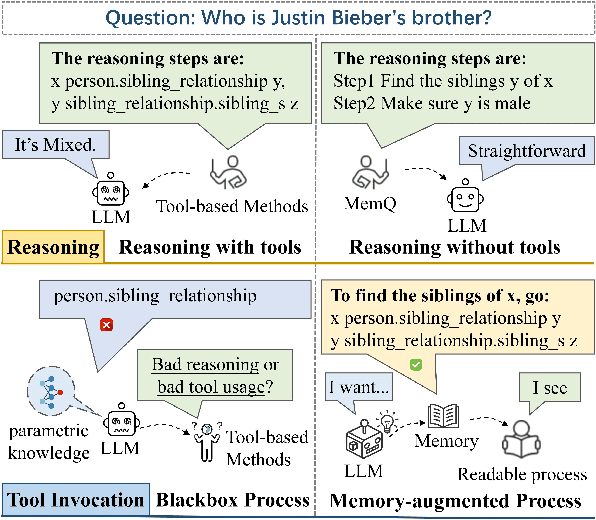
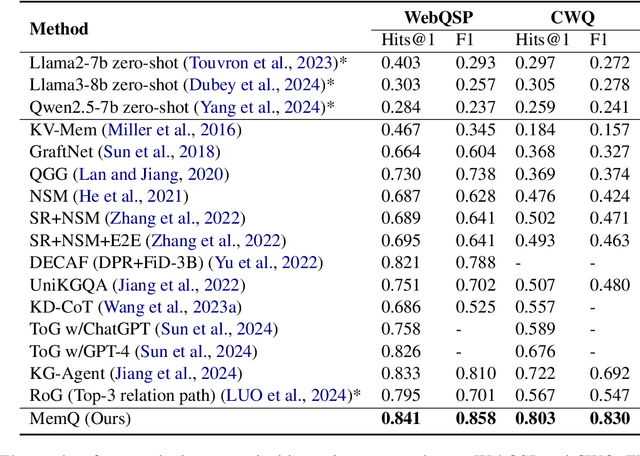
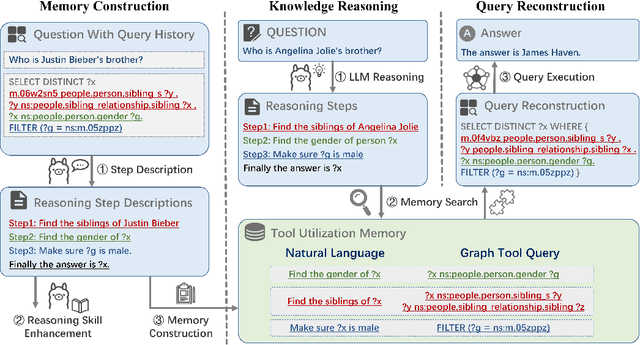
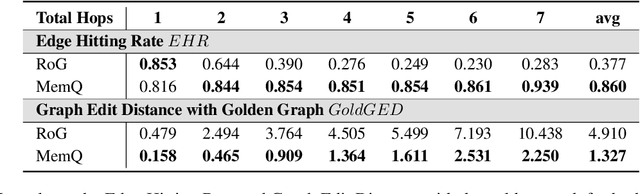
Large language models (LLMs) have achieved remarkable performance on knowledge graph question answering (KGQA) tasks by planning and interacting with knowledge graphs. However, existing methods often confuse tool utilization with knowledge reasoning, harming readability of model outputs and giving rise to hallucinatory tool invocations, which hinder the advancement of KGQA. To address this issue, we propose Memory-augmented Query Reconstruction for LLM-based Knowledge Graph Reasoning (MemQ) to decouple LLM from tool invocation tasks using LLM-built query memory. By establishing a memory module with explicit descriptions of query statements, the proposed MemQ facilitates the KGQA process with natural language reasoning and memory-augmented query reconstruction. Meanwhile, we design an effective and readable reasoning to enhance the LLM's reasoning capability in KGQA. Experimental results that MemQ achieves state-of-the-art performance on widely used benchmarks WebQSP and CWQ.
Learning 3D Medical Image Models From Brain Functional Connectivity Network Supervision For Mental Disorder Diagnosis
Mar 06, 2025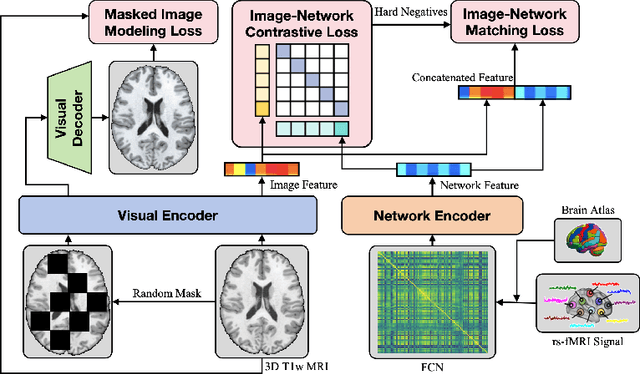
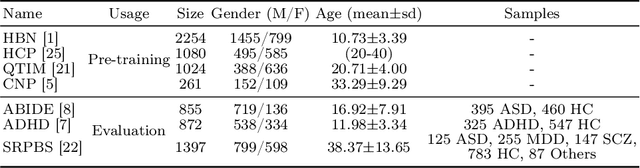
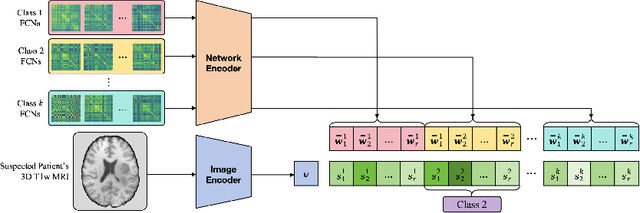
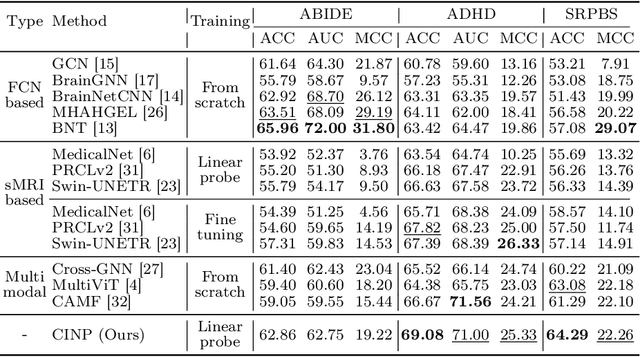
In MRI-based mental disorder diagnosis, most previous studies focus on functional connectivity network (FCN) derived from functional MRI (fMRI). However, the small size of annotated fMRI datasets restricts its wide application. Meanwhile, structural MRIs (sMRIs), such as 3D T1-weighted (T1w) MRI, which are commonly used and readily accessible in clinical settings, are often overlooked. To integrate the complementary information from both function and structure for improved diagnostic accuracy, we propose CINP (Contrastive Image-Network Pre-training), a framework that employs contrastive learning between sMRI and FCN. During pre-training, we incorporate masked image modeling and network-image matching to enhance visual representation learning and modality alignment. Since the CINP facilitates knowledge transfer from FCN to sMRI, we introduce network prompting. It utilizes only sMRI from suspected patients and a small amount of FCNs from different patient classes for diagnosing mental disorders, which is practical in real-world clinical scenario. The competitive performance on three mental disorder diagnosis tasks demonstrate the effectiveness of the CINP in integrating multimodal MRI information, as well as the potential of incorporating sMRI into clinical diagnosis using network prompting.
Q-Eval-100K: Evaluating Visual Quality and Alignment Level for Text-to-Vision Content
Mar 05, 2025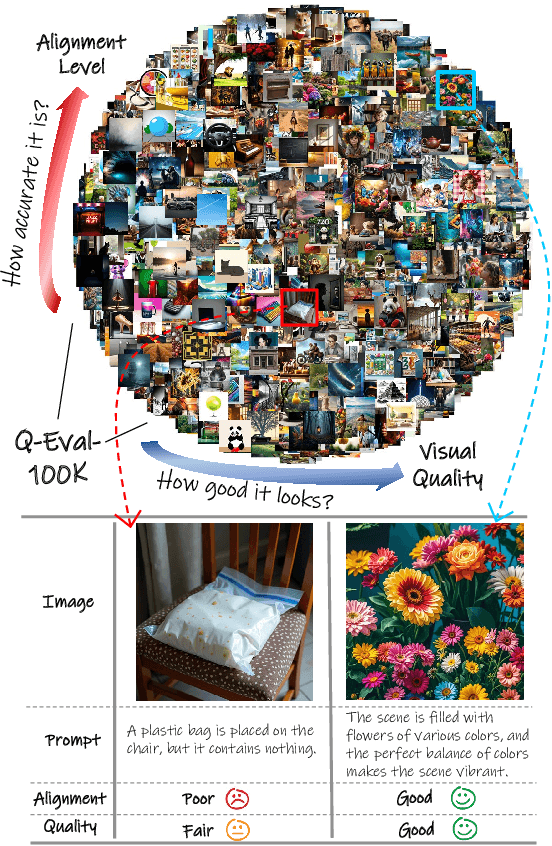

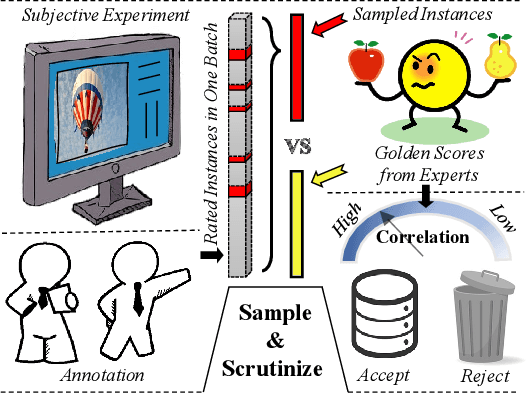
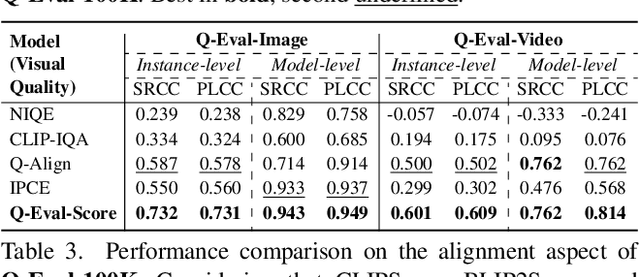
Evaluating text-to-vision content hinges on two crucial aspects: visual quality and alignment. While significant progress has been made in developing objective models to assess these dimensions, the performance of such models heavily relies on the scale and quality of human annotations. According to Scaling Law, increasing the number of human-labeled instances follows a predictable pattern that enhances the performance of evaluation models. Therefore, we introduce a comprehensive dataset designed to Evaluate Visual quality and Alignment Level for text-to-vision content (Q-EVAL-100K), featuring the largest collection of human-labeled Mean Opinion Scores (MOS) for the mentioned two aspects. The Q-EVAL-100K dataset encompasses both text-to-image and text-to-video models, with 960K human annotations specifically focused on visual quality and alignment for 100K instances (60K images and 40K videos). Leveraging this dataset with context prompt, we propose Q-Eval-Score, a unified model capable of evaluating both visual quality and alignment with special improvements for handling long-text prompt alignment. Experimental results indicate that the proposed Q-Eval-Score achieves superior performance on both visual quality and alignment, with strong generalization capabilities across other benchmarks. These findings highlight the significant value of the Q-EVAL-100K dataset. Data and codes will be available at https://github.com/zzc-1998/Q-Eval.
Ambiguity-Free Broadband DOA Estimation Relying on Parameterized Time-Frequency Transform
Mar 05, 2025An ambiguity-free direction-of-arrival (DOA) estimation scheme is proposed for sparse uniform linear arrays under low signal-to-noise ratios (SNRs) and non-stationary broadband signals. First, for achieving better DOA estimation performance at low SNRs while using non-stationary signals compared to the conventional frequency-difference (FD) paradigms, we propose parameterized time-frequency transform-based FD processing. Then, the unambiguous compressive FD beamforming is conceived to compensate the resolution loss induced by difference operation. Finally, we further derive a coarse-to-fine histogram statistics scheme to alleviate the perturbation in compressive FD beamforming with good DOA estimation accuracy. Simulation results demonstrate the superior performance of our proposed algorithm regarding robustness, resolution, and DOA estimation accuracy.
PowerAttention: Exponentially Scaling of Receptive Fields for Effective Sparse Attention
Mar 05, 2025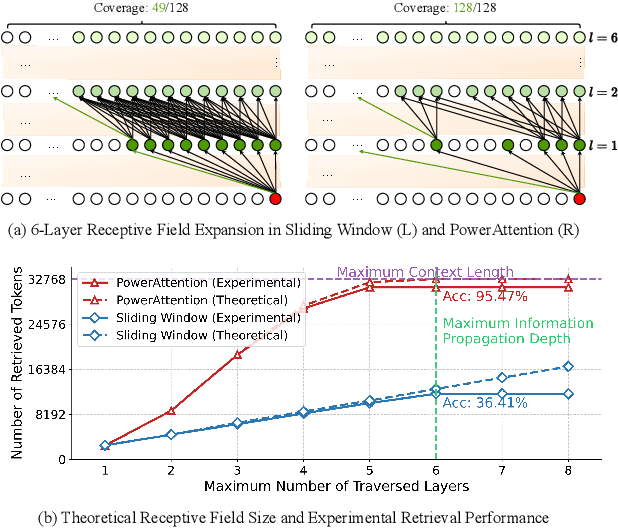

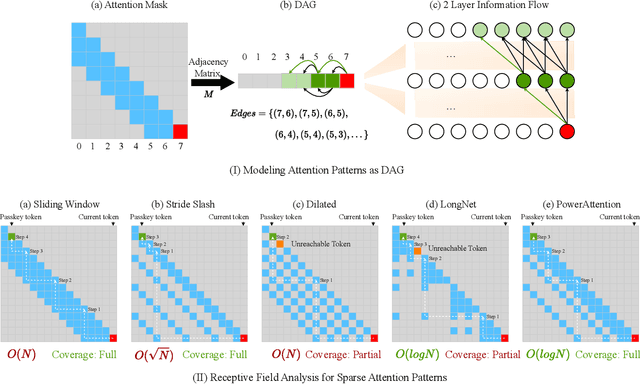
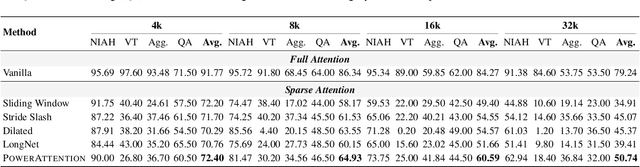
Large Language Models (LLMs) face efficiency bottlenecks due to the quadratic complexity of the attention mechanism when processing long contexts. Sparse attention methods offer a promising solution, but existing approaches often suffer from incomplete effective context and/or require complex implementation of pipeline. We present a comprehensive analysis of sparse attention for autoregressive LLMs from the respective of receptive field, recognize the suboptimal nature of existing methods for expanding the receptive field, and introduce PowerAttention, a novel sparse attention design that facilitates effective and complete context extension through the theoretical analysis. PowerAttention achieves exponential receptive field growth in $d$-layer LLMs, allowing each output token to attend to $2^d$ tokens, ensuring completeness and continuity of the receptive field. Experiments demonstrate that PowerAttention outperforms existing static sparse attention methods by $5\sim 40\%$, especially on tasks demanding long-range dependencies like Passkey Retrieval and RULER, while maintaining a comparable time complexity to sliding window attention. Efficiency evaluations further highlight PowerAttention's superior speedup in both prefilling and decoding phases compared with dynamic sparse attentions and full attention ($3.0\times$ faster on 128K context), making it a highly effective and user-friendly solution for processing long sequences in LLMs.
Deep Robust Reversible Watermarking
Mar 04, 2025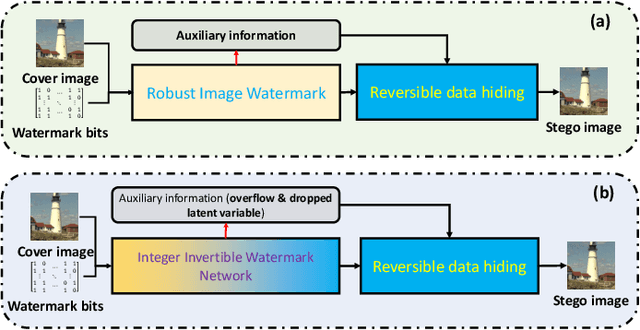
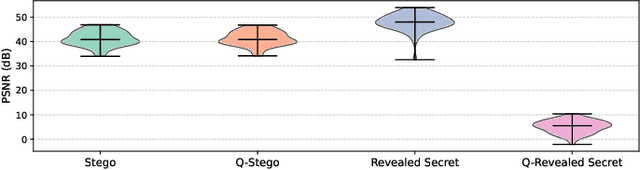
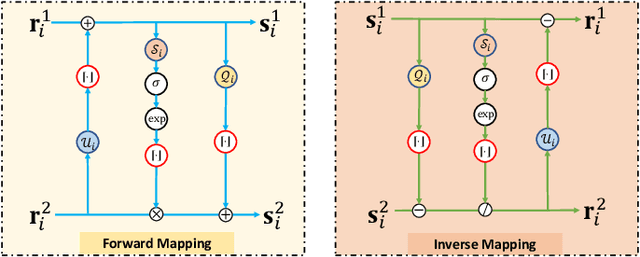
Robust Reversible Watermarking (RRW) enables perfect recovery of cover images and watermarks in lossless channels while ensuring robust watermark extraction in lossy channels. Existing RRW methods, mostly non-deep learning-based, face complex designs, high computational costs, and poor robustness, limiting their practical use. This paper proposes Deep Robust Reversible Watermarking (DRRW), a deep learning-based RRW scheme. DRRW uses an Integer Invertible Watermark Network (iIWN) to map integer data distributions invertibly, addressing conventional RRW limitations. Unlike traditional RRW, which needs distortion-specific designs, DRRW employs an encoder-noise layer-decoder framework for adaptive robustness via end-to-end training. In inference, cover image and watermark map to an overflowed stego image and latent variables, compressed by arithmetic coding into a bitstream embedded via reversible data hiding for lossless recovery. We introduce an overflow penalty loss to reduce pixel overflow, shortening the auxiliary bitstream while enhancing robustness and stego image quality. An adaptive weight adjustment strategy avoids manual watermark loss weighting, improving training stability and performance. Experiments show DRRW outperforms state-of-the-art RRW methods, boosting robustness and cutting embedding, extraction, and recovery complexities by 55.14\(\times\), 5.95\(\times\), and 3.57\(\times\), respectively. The auxiliary bitstream shrinks by 43.86\(\times\), with reversible embedding succeeding on 16,762 PASCAL VOC 2012 images, advancing practical RRW. DRRW exceeds irreversible robust watermarking in robustness and quality while maintaining reversibility.
SampleMix: A Sample-wise Pre-training Data Mixing Strategey by Coordinating Data Quality and Diversity
Mar 03, 2025Existing pretraining data mixing methods for large language models (LLMs) typically follow a domain-wise methodology, a top-down process that first determines domain weights and then performs uniform data sampling across each domain. However, these approaches neglect significant inter-domain overlaps and commonalities, failing to control the global diversity of the constructed training dataset. Further, uniform sampling within domains ignores fine-grained sample-specific features, potentially leading to suboptimal data distribution. To address these shortcomings, we propose a novel sample-wise data mixture approach based on a bottom-up paradigm. This method performs global cross-domain sampling by systematically evaluating the quality and diversity of each sample, thereby dynamically determining the optimal domain distribution. Comprehensive experiments across multiple downstream tasks and perplexity assessments demonstrate that SampleMix surpasses existing domain-based methods. Meanwhile, SampleMix requires 1.4x to 2.1x training steps to achieves the baselines' performance, highlighting the substantial potential of SampleMix to optimize pre-training data.
MoCFL: Mobile Cluster Federated Learning Framework for Highly Dynamic Network
Mar 03, 2025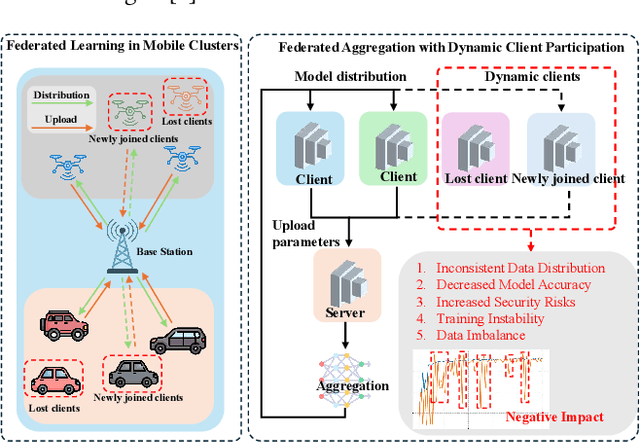

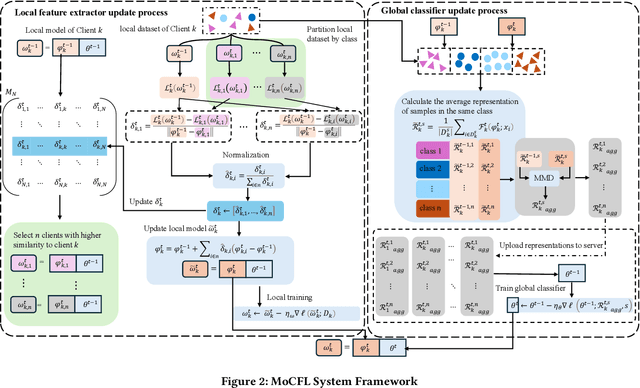
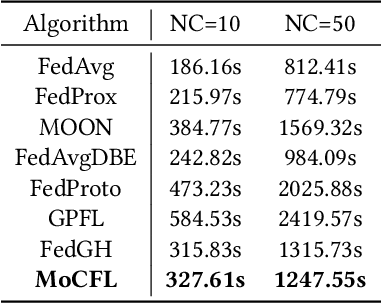
Frequent fluctuations of client nodes in highly dynamic mobile clusters can lead to significant changes in feature space distribution and data drift, posing substantial challenges to the robustness of existing federated learning (FL) strategies. To address these issues, we proposed a mobile cluster federated learning framework (MoCFL). MoCFL enhances feature aggregation by introducing an affinity matrix that quantifies the similarity between local feature extractors from different clients, addressing dynamic data distribution changes caused by frequent client churn and topology changes. Additionally, MoCFL integrates historical and current feature information when training the global classifier, effectively mitigating the catastrophic forgetting problem frequently encountered in mobile scenarios. This synergistic combination ensures that MoCFL maintains high performance and stability in dynamically changing mobile environments. Experimental results on the UNSW-NB15 dataset show that MoCFL excels in dynamic environments, demonstrating superior robustness and accuracy while maintaining reasonable training costs.
Large Language Models Are Innate Crystal Structure Generators
Feb 28, 2025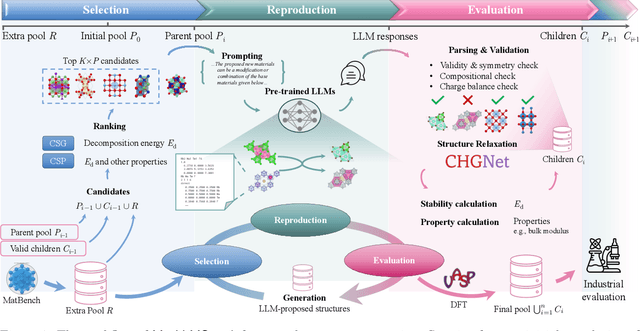
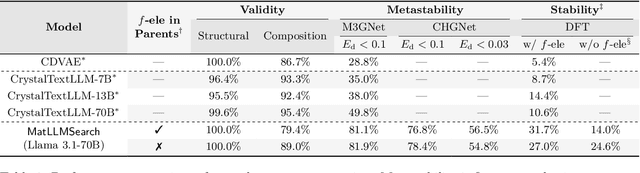
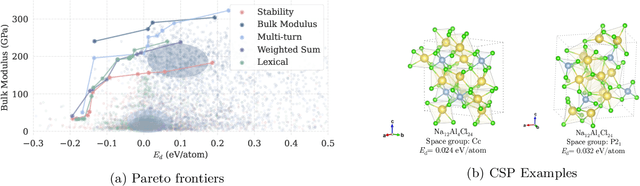
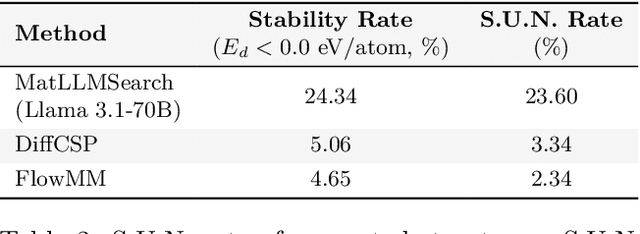
Crystal structure generation is fundamental to materials discovery, enabling the prediction of novel materials with desired properties. While existing approaches leverage Large Language Models (LLMs) through extensive fine-tuning on materials databases, we show that pre-trained LLMs can inherently generate stable crystal structures without additional training. Our novel framework MatLLMSearch integrates pre-trained LLMs with evolutionary search algorithms, achieving a 78.38% metastable rate validated by machine learning interatomic potentials and 31.7% DFT-verified stability via quantum mechanical calculations, outperforming specialized models such as CrystalTextLLM. Beyond crystal structure generation, we further demonstrate that our framework can be readily adapted to diverse materials design tasks, including crystal structure prediction and multi-objective optimization of properties such as deformation energy and bulk modulus, all without fine-tuning. These results establish pre-trained LLMs as versatile and effective tools for materials discovery, opening up new venues for crystal structure generation with reduced computational overhead and broader accessibility.