 Add to Chrome
 Add to Firefox
 Add to Edge
When Less Language is More: Language-Reasoning Disentanglement Makes LLMs Better Multilingual Reasoners
May 21, 2025
Multilingual reasoning remains a significant challenge for large language models (LLMs), with performance disproportionately favoring high-resource languages. Drawing inspiration from cognitive neuroscience, which suggests that human reasoning functions largely independently of language processing, we hypothesize that LLMs similarly encode reasoning and language as separable components that can be disentangled to enhance multilingual reasoning. To evaluate this, we perform a causal intervention by ablating language-specific representations at inference time. Experiments on 10 open-source LLMs spanning 11 typologically diverse languages show that this language-specific ablation consistently boosts multilingual reasoning performance. Layer-wise analyses further confirm that language and reasoning representations can be effectively decoupled throughout the model, yielding improved multilingual reasoning capabilities, while preserving top-layer language features remains essential for maintaining linguistic fidelity. Compared to post-training such as supervised fine-tuning or reinforcement learning, our training-free ablation achieves comparable or superior results with minimal computational overhead. These findings shed light on the internal mechanisms underlying multilingual reasoning in LLMs and suggest a lightweight and interpretable strategy for improving cross-lingual generalization.

Success is in the Details: Evaluate and Enhance Details Sensitivity of Code LLMs through Counterfactuals
May 20, 2025Code Sensitivity refers to the ability of Code LLMs to recognize and respond to details changes in problem descriptions. While current code benchmarks and instruction data focus on difficulty and diversity, sensitivity is overlooked. We first introduce the CTF-Code benchmark, constructed using counterfactual perturbations, minimizing input changes while maximizing output changes. The evaluation shows that many LLMs have a more than 10\% performance drop compared to the original problems. To fully utilize sensitivity, CTF-Instruct, an incremental instruction fine-tuning framework, extends on existing data and uses a selection mechanism to meet the three dimensions of difficulty, diversity, and sensitivity. Experiments show that LLMs fine-tuned with CTF-Instruct data achieve over a 2\% improvement on CTF-Code, and more than a 10\% performance boost on LiveCodeBench, validating the feasibility of enhancing LLMs' sensitivity to improve performance.
RBF++: Quantifying and Optimizing Reasoning Boundaries across Measurable and Unmeasurable Capabilities for Chain-of-Thought Reasoning
May 19, 2025Chain-of-Thought (CoT) reasoning has proven effective in enhancing large language models (LLMs) on complex tasks, spurring research into its underlying mechanisms. However, two primary challenges remain for real-world applications: (1) the lack of quantitative metrics and actionable guidelines for evaluating and optimizing measurable boundaries of CoT capability, and (2) the absence of methods to assess boundaries of unmeasurable CoT capability, such as multimodal perception. To address these gaps, we introduce the Reasoning Boundary Framework++ (RBF++). To tackle the first challenge, we define the reasoning boundary (RB) as the maximum limit of CoT performance. We also propose a combination law for RBs, enabling quantitative analysis and offering actionable guidance across various CoT tasks. For the second challenge, particularly in multimodal scenarios, we introduce a constant assumption, which replaces unmeasurable RBs with scenario-specific constants. Additionally, we propose the reasoning boundary division mechanism, which divides unmeasurable RBs into two sub-boundaries, facilitating the quantification and optimization of both unmeasurable domain knowledge and multimodal perception capabilities. Extensive experiments involving 38 models across 13 tasks validate the feasibility of our framework in cross-modal settings. Additionally, we evaluate 10 CoT strategies, offer insights into optimization and decay from two complementary perspectives, and expand evaluation benchmarks for measuring RBs in LLM reasoning. We hope this work advances the understanding of RBs and optimization strategies in LLMs. Code and data are available at https://github.com/LightChen233/reasoning-boundary.
Is Compression Really Linear with Code Intelligence?
May 16, 2025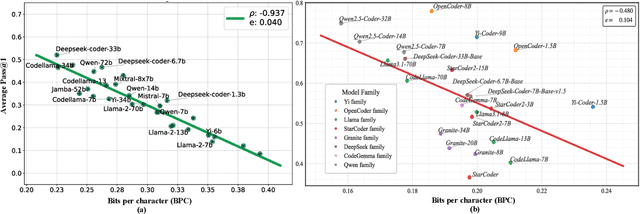
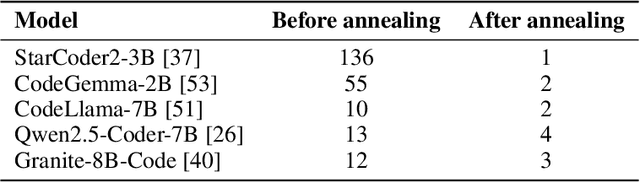
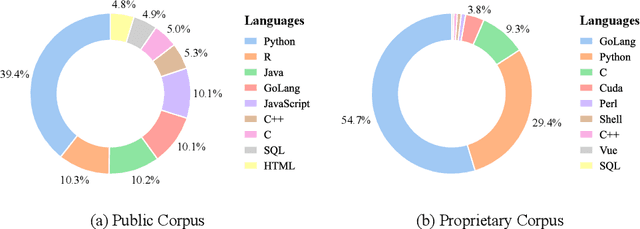
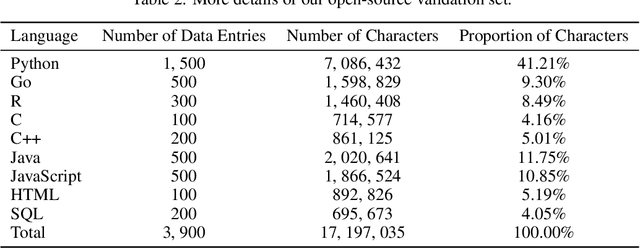
Understanding the relationship between data compression and the capabilities of Large Language Models (LLMs) is crucial, especially in specialized domains like code intelligence. Prior work posited a linear relationship between compression and general intelligence. However, it overlooked the multifaceted nature of code that encompasses diverse programming languages and tasks, and struggled with fair evaluation of modern Code LLMs. We address this by evaluating a diverse array of open-source Code LLMs on comprehensive multi-language, multi-task code benchmarks. To address the challenge of efficient and fair evaluation of pre-trained LLMs' code intelligence, we introduce \textit{Format Annealing}, a lightweight, transparent training methodology designed to assess the intrinsic capabilities of these pre-trained models equitably. Compression efficacy, measured as bits-per-character (BPC), is determined using a novel, large-scale, and previously unseen code validation set derived from GitHub. Our empirical results reveal a fundamental logarithmic relationship between measured code intelligence and BPC. This finding refines prior hypotheses of linearity, which we suggest are likely observations of the logarithmic curve's tail under specific, limited conditions. Our work provides a more nuanced understanding of compression's role in developing code intelligence and contributes a robust evaluation framework in the code domain.
Abacus-SQL: A Text-to-SQL System Empowering Cross-Domain and Open-Domain Database Retrieval
Apr 14, 2025The existing text-to-SQL systems have made significant progress in SQL query generation, but they still face numerous challenges. Existing systems often lack retrieval capabilities for open-domain databases, requiring users to manually filter relevant databases. Additionally, their cross-domain transferability is limited, making it challenging to accommodate diverse query requirements. To address these issues, we propose Abacus-SQL. Abacus-SQL utilizes database retrieval technology to accurately locate the required databases in an open-domain database environment. It also enhances the system cross-domain transfer ability through data augmentation methods. Moreover, Abacus-SQL employs Pre-SQL and Self-debug methods, thereby enhancing the accuracy of SQL queries. Experimental results demonstrate that Abacus-SQL performs excellently in multi-turn text-to-SQL tasks, effectively validating the approach's effectiveness. Abacus-SQL is publicly accessible at https://huozi.8wss.com/abacus-sql/.
AIR: A Systematic Analysis of Annotations, Instructions, and Response Pairs in Preference Dataset
Apr 04, 2025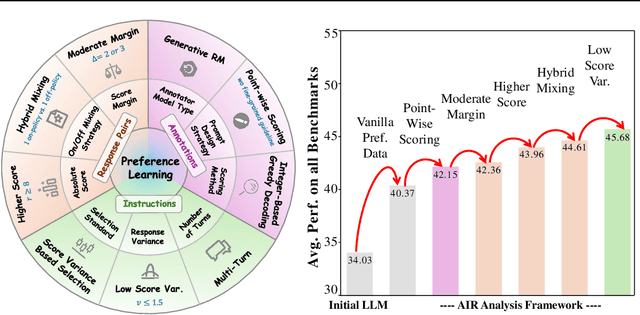
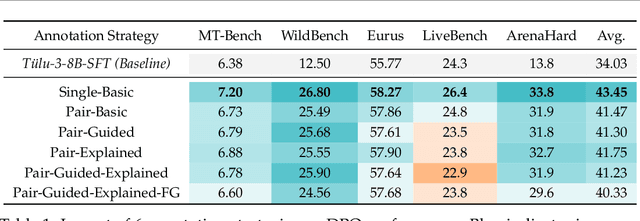
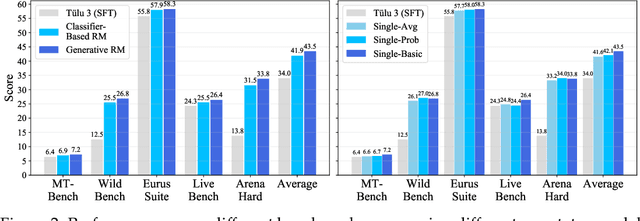

Preference learning is critical for aligning large language models (LLMs) with human values, yet its success hinges on high-quality datasets comprising three core components: Preference \textbf{A}nnotations, \textbf{I}nstructions, and \textbf{R}esponse Pairs. Current approaches conflate these components, obscuring their individual impacts and hindering systematic optimization. In this work, we propose \textbf{AIR}, a component-wise analysis framework that systematically isolates and optimizes each component while evaluating their synergistic effects. Through rigorous experimentation, AIR reveals actionable principles: annotation simplicity (point-wise generative scoring), instruction inference stability (variance-based filtering across LLMs), and response pair quality (moderate margins + high absolute scores). When combined, these principles yield +5.3 average gains over baseline method, even with only 14k high-quality pairs. Our work shifts preference dataset design from ad hoc scaling to component-aware optimization, offering a blueprint for efficient, reproducible alignment.
Towards Reasoning Era: A Survey of Long Chain-of-Thought for Reasoning Large Language Models
Mar 13, 2025Recent advancements in reasoning with large language models (RLLMs), such as OpenAI-O1 and DeepSeek-R1, have demonstrated their impressive capabilities in complex domains like mathematics and coding. A central factor in their success lies in the application of long chain-of-thought (Long CoT) characteristics, which enhance reasoning abilities and enable the solution of intricate problems. However, despite these developments, a comprehensive survey on Long CoT is still lacking, limiting our understanding of its distinctions from traditional short chain-of-thought (Short CoT) and complicating ongoing debates on issues like "overthinking" and "test-time scaling." This survey seeks to fill this gap by offering a unified perspective on Long CoT. (1) We first distinguish Long CoT from Short CoT and introduce a novel taxonomy to categorize current reasoning paradigms. (2) Next, we explore the key characteristics of Long CoT: deep reasoning, extensive exploration, and feasible reflection, which enable models to handle more complex tasks and produce more efficient, coherent outcomes compared to the shallower Short CoT. (3) We then investigate key phenomena such as the emergence of Long CoT with these characteristics, including overthinking, and test-time scaling, offering insights into how these processes manifest in practice. (4) Finally, we identify significant research gaps and highlight promising future directions, including the integration of multi-modal reasoning, efficiency improvements, and enhanced knowledge frameworks. By providing a structured overview, this survey aims to inspire future research and further the development of logical reasoning in artificial intelligence.
KwaiChat: A Large-Scale Video-Driven Multilingual Mixed-Type Dialogue Corpus
Mar 10, 2025Video-based dialogue systems, such as education assistants, have compelling application value, thereby garnering growing interest. However, the current video-based dialogue systems are limited by their reliance on a single dialogue type, which hinders their versatility in practical applications across a range of scenarios, including question-answering, emotional dialog, etc. In this paper, we identify this challenge as how to generate video-driven multilingual mixed-type dialogues. To mitigate this challenge, we propose a novel task and create a human-to-human video-driven multilingual mixed-type dialogue corpus, termed KwaiChat, containing a total of 93,209 videos and 246,080 dialogues, across 4 dialogue types, 30 domains, 4 languages, and 13 topics. Additionally, we establish baseline models on KwaiChat. An extensive analysis of 7 distinct LLMs on KwaiChat reveals that GPT-4o achieves the best performance but still cannot perform well in this situation even with the help of in-context learning and fine-tuning, which indicates that the task is not trivial and needs further research.
MULTITAT: Benchmarking Multilingual Table-and-Text Question Answering
Feb 24, 2025Question answering on the hybrid context of tables and text (TATQA) is a critical task, with broad applications in data-intensive domains. However, existing TATQA datasets are limited to English, leading to several drawbacks: (i) They overlook the challenges of multilingual TAT-QA and cannot assess model performance in the multilingual setting. (ii) They do not reflect real-world scenarios where tables and texts frequently appear in non-English languages. To address the limitations, we propose the first multilingual TATQA dataset (MULTITAT). Specifically, we sample data from 3 mainstream TATQA datasets and translate it into 10 diverse languages. To align the model TATQA capabilities in English with other languages, we develop a baseline, Ours. Experimental results reveal that the performance on non-English data in MULTITAT drops by an average of 19.4% compared to English, proving the necessity of MULTITAT. We further analyze the reasons for this performance gap. Furthermore, Ours outperforms other baselines by an average of 3.3, demonstrating its effectiveness.
ECM: A Unified Electronic Circuit Model for Explaining the Emergence of In-Context Learning and Chain-of-Thought in Large Language Model
Feb 05, 2025


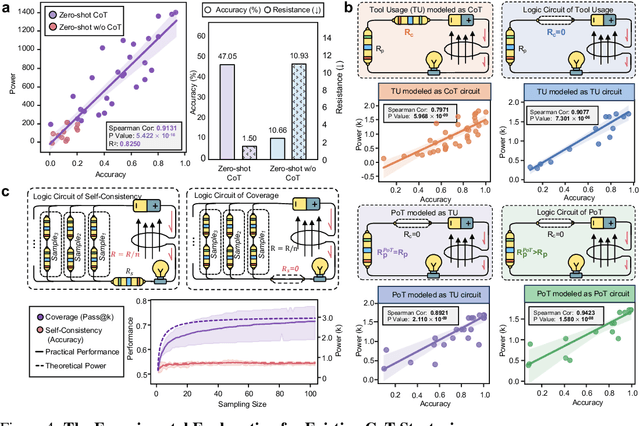
Recent advancements in large language models (LLMs) have led to significant successes across various applications, where the most noticeable is to a series of emerging capabilities, particularly in the areas of In-Context Learning (ICL) and Chain-of-Thought (CoT). To better understand and control model performance, many studies have begun investigating the underlying causes of these phenomena and their impact on task outcomes. However, existing explanatory frameworks predominantly focus on isolating and explaining ICL and CoT independently, leading to an incomplete understanding of their combined influence on model performance. To address this gap, we propose the Electronic Circuit Model (ECM), which provides a foundation for developing scalable, learnable policies and improving the management of AI-generated content. Specifically, ECM conceptualizes model behavior as an electronic circuit: ICL is represented as semantic magnetic field to providing an additional voltage following Faraday's Law, while CoT is modeled as series resistors to constrain the model output performance following Ohm's Law. Experimental results demonstrate that the ECM effectively predicts and explains LLM performance across a variety of prompting strategies. Furthermore, we apply ECM to advanced reasoning strategy optimization on a series of tasks, such as the International Olympiad in Informatics (IOI) and the International Mathematical Olympiad (IMO), achieving competitive performance that surpasses nearly 80% of top human competitors.