 Add to Chrome
 Add to Firefox
 Add to Edge
Linearity Grafting: Relaxed Neuron Pruning Helps Certifiable Robustness
Jun 15, 2022
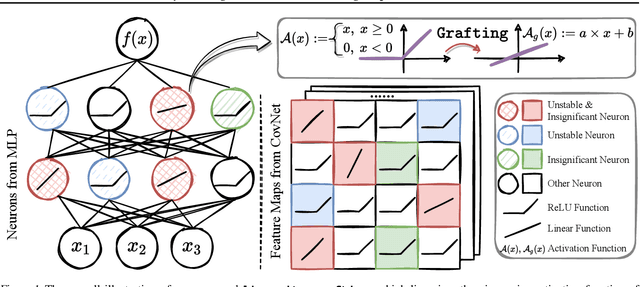
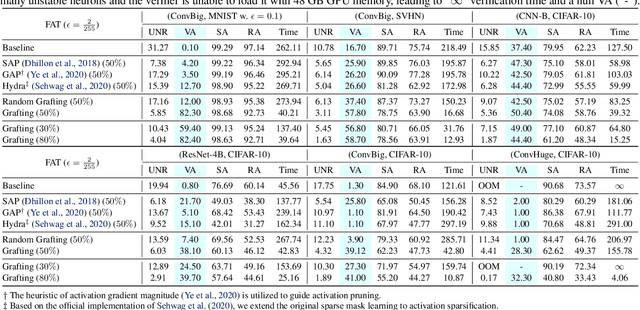
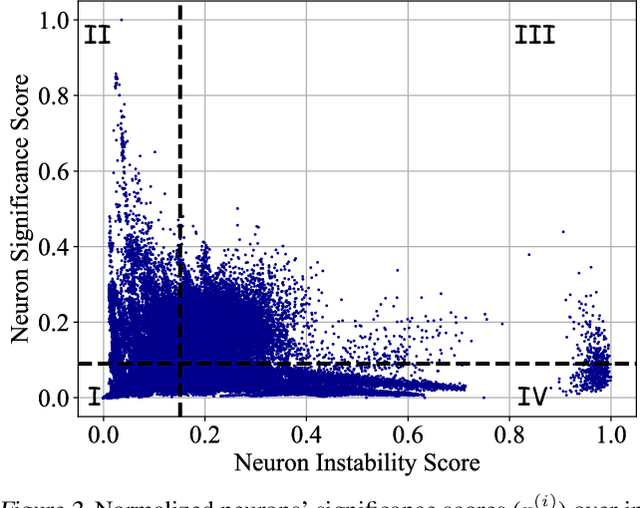
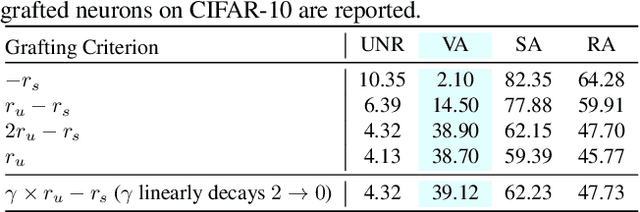
Certifiable robustness is a highly desirable property for adopting deep neural networks (DNNs) in safety-critical scenarios, but often demands tedious computations to establish. The main hurdle lies in the massive amount of non-linearity in large DNNs. To trade off the DNN expressiveness (which calls for more non-linearity) and robustness certification scalability (which prefers more linearity), we propose a novel solution to strategically manipulate neurons, by "grafting" appropriate levels of linearity. The core of our proposal is to first linearize insignificant ReLU neurons, to eliminate the non-linear components that are both redundant for DNN performance and harmful to its certification. We then optimize the associated slopes and intercepts of the replaced linear activations for restoring model performance while maintaining certifiability. Hence, typical neuron pruning could be viewed as a special case of grafting a linear function of the fixed zero slopes and intercept, that might overly restrict the network flexibility and sacrifice its performance. Extensive experiments on multiple datasets and network backbones show that our linearity grafting can (1) effectively tighten certified bounds; (2) achieve competitive certifiable robustness without certified robust training (i.e., over 30% improvements on CIFAR-10 models); and (3) scale up complete verification to large adversarially trained models with 17M parameters. Codes are available at https://github.com/VITA-Group/Linearity-Grafting.

Distributed Adversarial Training to Robustify Deep Neural Networks at Scale
Jun 13, 2022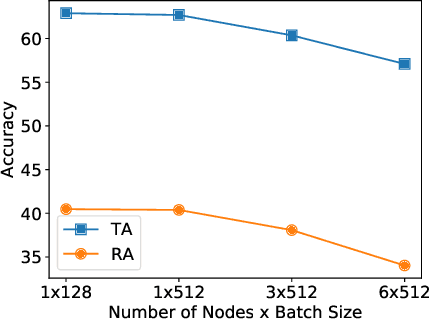
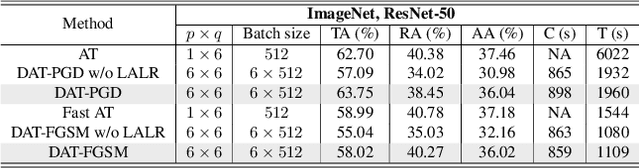
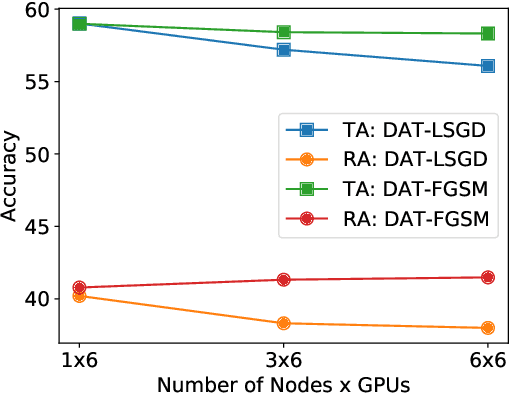
Current deep neural networks (DNNs) are vulnerable to adversarial attacks, where adversarial perturbations to the inputs can change or manipulate classification. To defend against such attacks, an effective and popular approach, known as adversarial training (AT), has been shown to mitigate the negative impact of adversarial attacks by virtue of a min-max robust training method. While effective, it remains unclear whether it can successfully be adapted to the distributed learning context. The power of distributed optimization over multiple machines enables us to scale up robust training over large models and datasets. Spurred by that, we propose distributed adversarial training (DAT), a large-batch adversarial training framework implemented over multiple machines. We show that DAT is general, which supports training over labeled and unlabeled data, multiple types of attack generation methods, and gradient compression operations favored for distributed optimization. Theoretically, we provide, under standard conditions in the optimization theory, the convergence rate of DAT to the first-order stationary points in general non-convex settings. Empirically, we demonstrate that DAT either matches or outperforms state-of-the-art robust accuracies and achieves a graceful training speedup (e.g., on ResNet-50 under ImageNet). Codes are available at https://github.com/dat-2022/dat.
Data-Efficient Double-Win Lottery Tickets from Robust Pre-training
Jun 09, 2022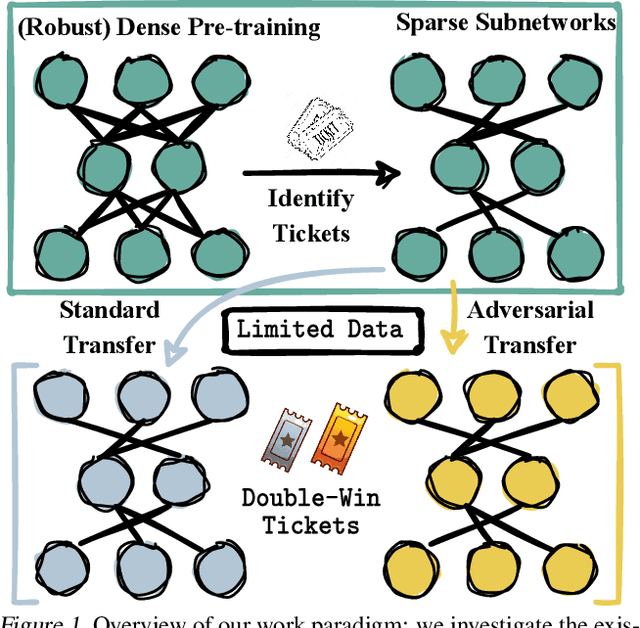
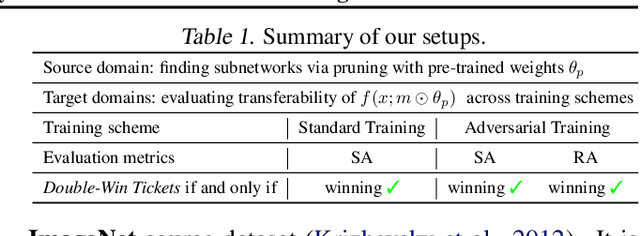

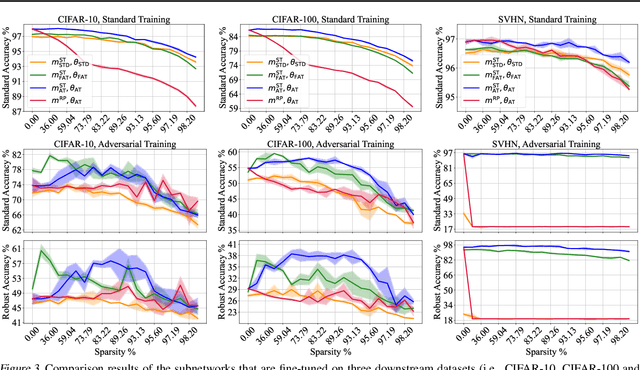
Pre-training serves as a broadly adopted starting point for transfer learning on various downstream tasks. Recent investigations of lottery tickets hypothesis (LTH) demonstrate such enormous pre-trained models can be replaced by extremely sparse subnetworks (a.k.a. matching subnetworks) without sacrificing transferability. However, practical security-crucial applications usually pose more challenging requirements beyond standard transfer, which also demand these subnetworks to overcome adversarial vulnerability. In this paper, we formulate a more rigorous concept, Double-Win Lottery Tickets, in which a located subnetwork from a pre-trained model can be independently transferred on diverse downstream tasks, to reach BOTH the same standard and robust generalization, under BOTH standard and adversarial training regimes, as the full pre-trained model can do. We comprehensively examine various pre-training mechanisms and find that robust pre-training tends to craft sparser double-win lottery tickets with superior performance over the standard counterparts. For example, on downstream CIFAR-10/100 datasets, we identify double-win matching subnetworks with the standard, fast adversarial, and adversarial pre-training from ImageNet, at 89.26%/73.79%, 89.26%/79.03%, and 91.41%/83.22% sparsity, respectively. Furthermore, we observe the obtained double-win lottery tickets can be more data-efficient to transfer, under practical data-limited (e.g., 1% and 10%) downstream schemes. Our results show that the benefits from robust pre-training are amplified by the lottery ticket scheme, as well as the data-limited transfer setting. Codes are available at https://github.com/VITA-Group/Double-Win-LTH.
Zeroth-Order SciML: Non-intrusive Integration of Scientific Software with Deep Learning
Jun 04, 2022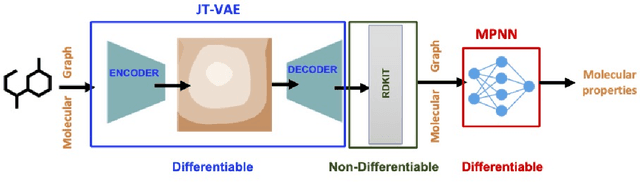
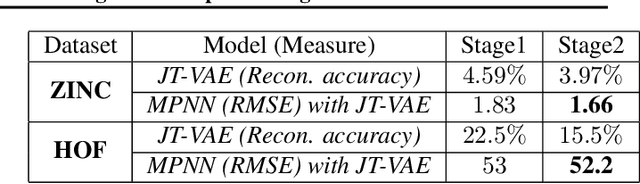
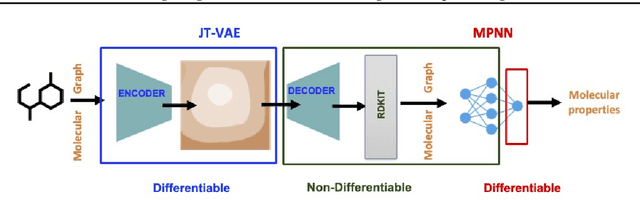
Using deep learning (DL) to accelerate and/or improve scientific workflows can yield discoveries that are otherwise impossible. Unfortunately, DL models have yielded limited success in complex scientific domains due to large data requirements. In this work, we propose to overcome this issue by integrating the abundance of scientific knowledge sources (SKS) with the DL training process. Existing knowledge integration approaches are limited to using differentiable knowledge source to be compatible with first-order DL training paradigm. In contrast, our proposed approach treats knowledge source as a black-box in turn allowing to integrate virtually any knowledge source. To enable an end-to-end training of SKS-coupled-DL, we propose to use zeroth-order optimization (ZOO) based gradient-free training schemes, which is non-intrusive, i.e., does not require making any changes to the SKS. We evaluate the performance of our ZOO training scheme on two real-world material science applications. We show that proposed scheme is able to effectively integrate scientific knowledge with DL training and is able to outperform purely data-driven model for data-limited scientific applications. We also discuss some limitations of the proposed method and mention potentially worthwhile future directions.
Quarantine: Sparsity Can Uncover the Trojan Attack Trigger for Free
May 24, 2022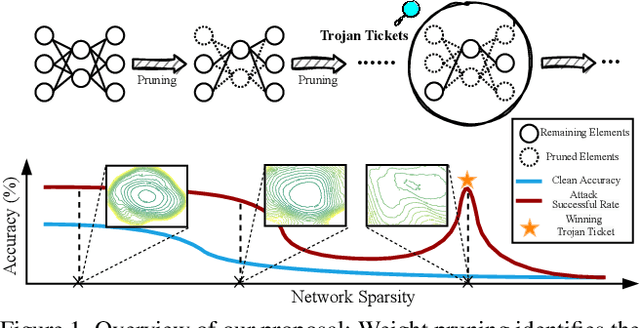
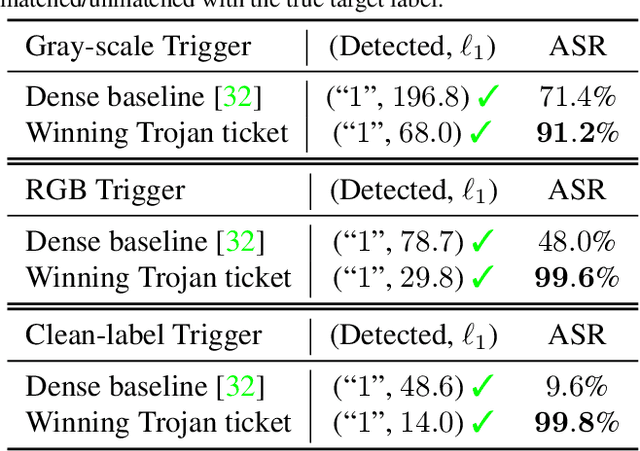
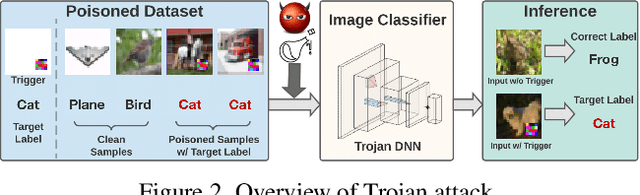
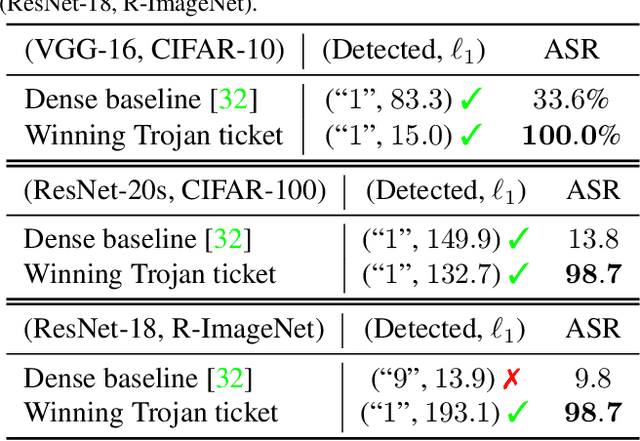
Trojan attacks threaten deep neural networks (DNNs) by poisoning them to behave normally on most samples, yet to produce manipulated results for inputs attached with a particular trigger. Several works attempt to detect whether a given DNN has been injected with a specific trigger during the training. In a parallel line of research, the lottery ticket hypothesis reveals the existence of sparse subnetworks which are capable of reaching competitive performance as the dense network after independent training. Connecting these two dots, we investigate the problem of Trojan DNN detection from the brand new lens of sparsity, even when no clean training data is available. Our crucial observation is that the Trojan features are significantly more stable to network pruning than benign features. Leveraging that, we propose a novel Trojan network detection regime: first locating a "winning Trojan lottery ticket" which preserves nearly full Trojan information yet only chance-level performance on clean inputs; then recovering the trigger embedded in this already isolated subnetwork. Extensive experiments on various datasets, i.e., CIFAR-10, CIFAR-100, and ImageNet, with different network architectures, i.e., VGG-16, ResNet-18, ResNet-20s, and DenseNet-100 demonstrate the effectiveness of our proposal. Codes are available at https://github.com/VITA-Group/Backdoor-LTH.
A Word is Worth A Thousand Dollars: Adversarial Attack on Tweets Fools Stock Prediction
May 11, 2022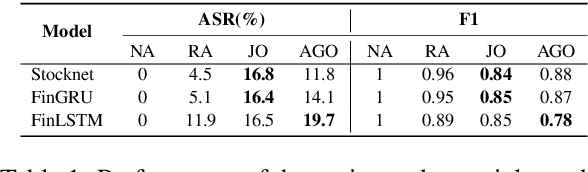
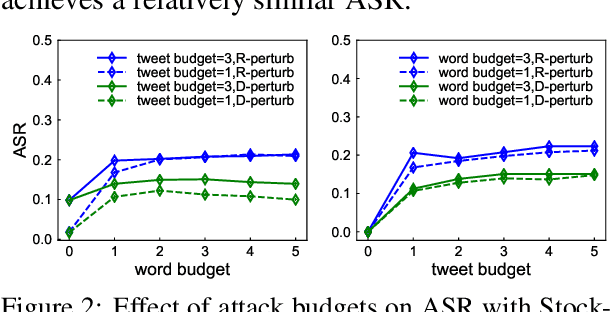
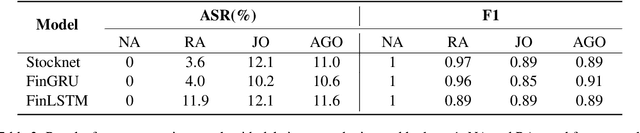
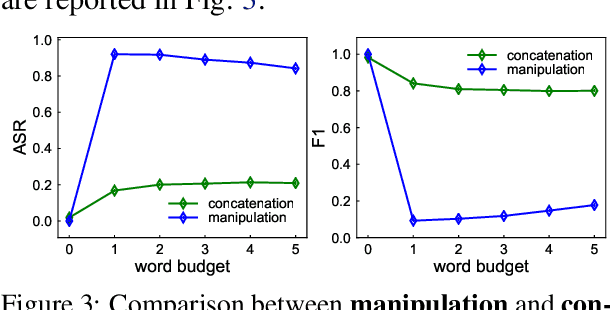
More and more investors and machine learning models rely on social media (e.g., Twitter and Reddit) to gather real-time information and sentiment to predict stock price movements. Although text-based models are known to be vulnerable to adversarial attacks, whether stock prediction models have similar vulnerability is underexplored. In this paper, we experiment with a variety of adversarial attack configurations to fool three stock prediction victim models. We address the task of adversarial generation by solving combinatorial optimization problems with semantics and budget constraints. Our results show that the proposed attack method can achieve consistent success rates and cause significant monetary loss in trading simulation by simply concatenating a perturbed but semantically similar tweet.
CryoRL: Reinforcement Learning Enables Efficient Cryo-EM Data Collection
Apr 15, 2022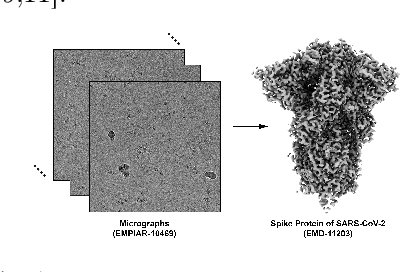
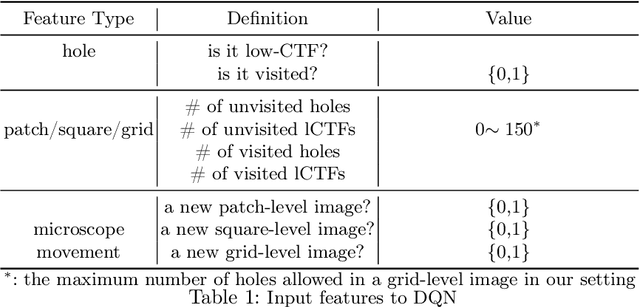
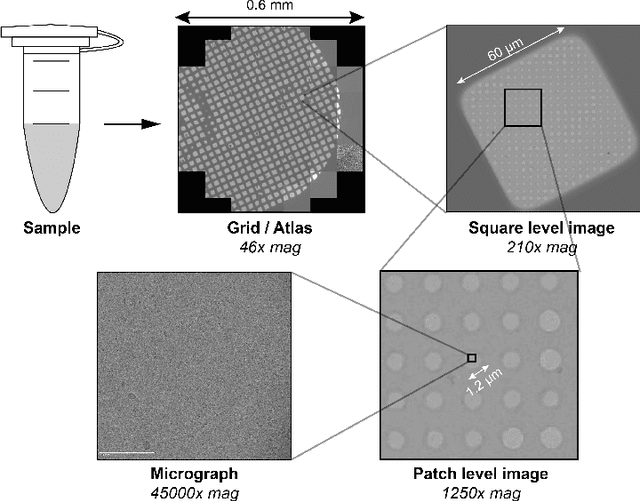
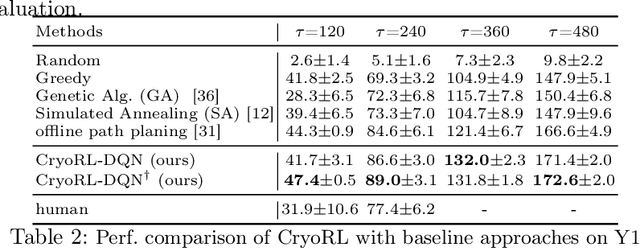
Single-particle cryo-electron microscopy (cryo-EM) has become one of the mainstream structural biology techniques because of its ability to determine high-resolution structures of dynamic bio-molecules. However, cryo-EM data acquisition remains expensive and labor-intensive, requiring substantial expertise. Structural biologists need a more efficient and objective method to collect the best data in a limited time frame. We formulate the cryo-EM data collection task as an optimization problem in this work. The goal is to maximize the total number of good images taken within a specified period. We show that reinforcement learning offers an effective way to plan cryo-EM data collection, successfully navigating heterogenous cryo-EM grids. The approach we developed, cryoRL, demonstrates better performance than average users for data collection under similar settings.
Reverse Engineering of Imperceptible Adversarial Image Perturbations
Apr 01, 2022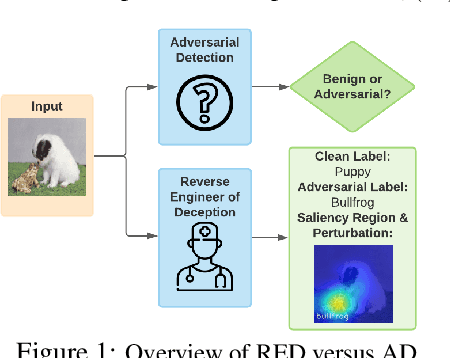
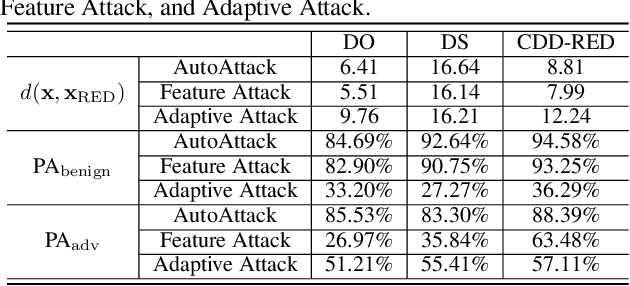
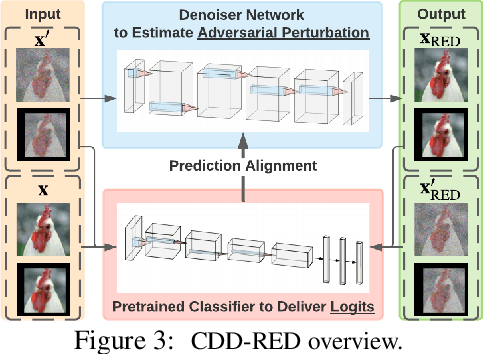
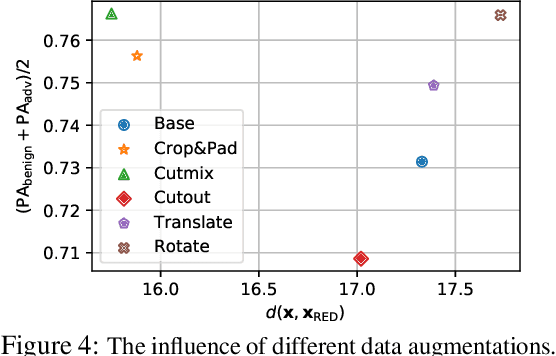
It has been well recognized that neural network based image classifiers are easily fooled by images with tiny perturbations crafted by an adversary. There has been a vast volume of research to generate and defend such adversarial attacks. However, the following problem is left unexplored: How to reverse-engineer adversarial perturbations from an adversarial image? This leads to a new adversarial learning paradigm--Reverse Engineering of Deceptions (RED). If successful, RED allows us to estimate adversarial perturbations and recover the original images. However, carefully crafted, tiny adversarial perturbations are difficult to recover by optimizing a unilateral RED objective. For example, the pure image denoising method may overfit to minimizing the reconstruction error but hardly preserve the classification properties of the true adversarial perturbations. To tackle this challenge, we formalize the RED problem and identify a set of principles crucial to the RED approach design. Particularly, we find that prediction alignment and proper data augmentation (in terms of spatial transformations) are two criteria to achieve a generalizable RED approach. By integrating these RED principles with image denoising, we propose a new Class-Discriminative Denoising based RED framework, termed CDD-RED. Extensive experiments demonstrate the effectiveness of CDD-RED under different evaluation metrics (ranging from the pixel-level, prediction-level to the attribution-level alignment) and a variety of attack generation methods (e.g., FGSM, PGD, CW, AutoAttack, and adaptive attacks).
Proactive Image Manipulation Detection
Mar 31, 2022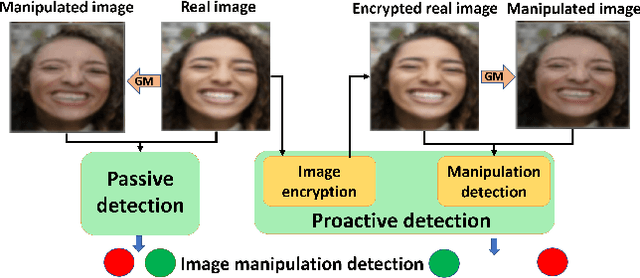
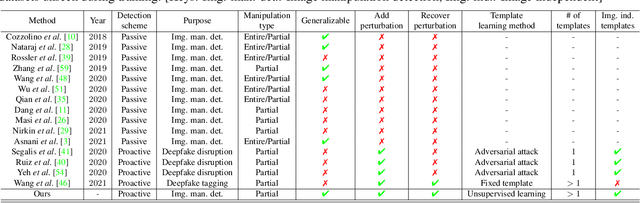
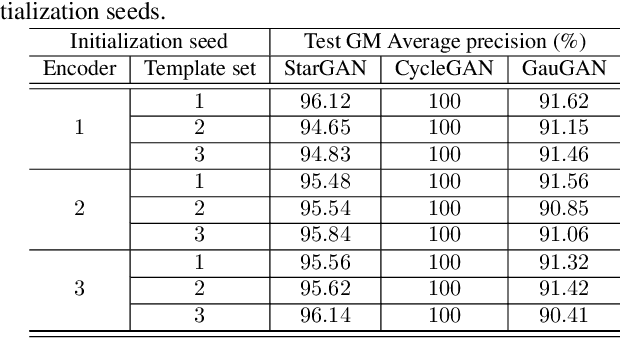
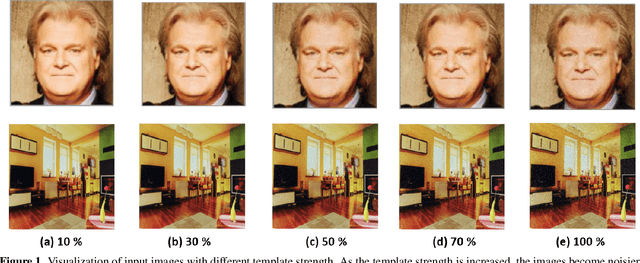
Image manipulation detection algorithms are often trained to discriminate between images manipulated with particular Generative Models (GMs) and genuine/real images, yet generalize poorly to images manipulated with GMs unseen in the training. Conventional detection algorithms receive an input image passively. By contrast, we propose a proactive scheme to image manipulation detection. Our key enabling technique is to estimate a set of templates which when added onto the real image would lead to more accurate manipulation detection. That is, a template protected real image, and its manipulated version, is better discriminated compared to the original real image vs. its manipulated one. These templates are estimated using certain constraints based on the desired properties of templates. For image manipulation detection, our proposed approach outperforms the prior work by an average precision of 16% for CycleGAN and 32% for GauGAN. Our approach is generalizable to a variety of GMs showing an improvement over prior work by an average precision of 10% averaged across 12 GMs. Our code is available at https://www.github.com/vishal3477/proactive_IMD.
How to Robustify Black-Box ML Models? A Zeroth-Order Optimization Perspective
Mar 27, 2022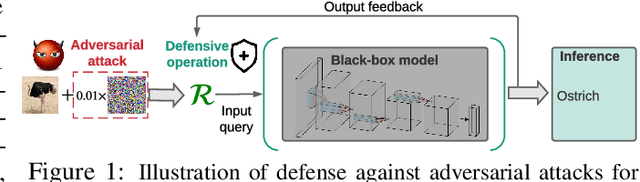
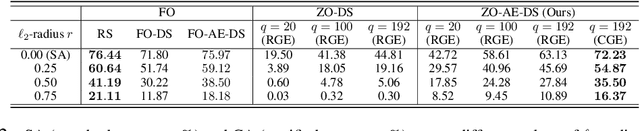
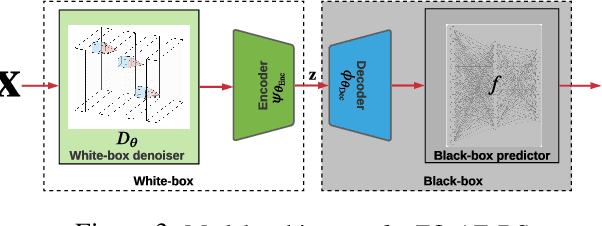
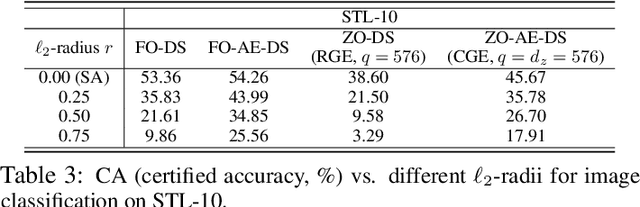
The lack of adversarial robustness has been recognized as an important issue for state-of-the-art machine learning (ML) models, e.g., deep neural networks (DNNs). Thereby, robustifying ML models against adversarial attacks is now a major focus of research. However, nearly all existing defense methods, particularly for robust training, made the white-box assumption that the defender has the access to the details of an ML model (or its surrogate alternatives if available), e.g., its architectures and parameters. Beyond existing works, in this paper we aim to address the problem of black-box defense: How to robustify a black-box model using just input queries and output feedback? Such a problem arises in practical scenarios, where the owner of the predictive model is reluctant to share model information in order to preserve privacy. To this end, we propose a general notion of defensive operation that can be applied to black-box models, and design it through the lens of denoised smoothing (DS), a first-order (FO) certified defense technique. To allow the design of merely using model queries, we further integrate DS with the zeroth-order (gradient-free) optimization. However, a direct implementation of zeroth-order (ZO) optimization suffers a high variance of gradient estimates, and thus leads to ineffective defense. To tackle this problem, we next propose to prepend an autoencoder (AE) to a given (black-box) model so that DS can be trained using variance-reduced ZO optimization. We term the eventual defense as ZO-AE-DS. In practice, we empirically show that ZO-AE- DS can achieve improved accuracy, certified robustness, and query complexity over existing baselines. And the effectiveness of our approach is justified under both image classification and image reconstruction tasks. Codes are available at https://github.com/damon-demon/Black-Box-Defense.