 Add to Chrome
 Add to Firefox
 Add to Edge
Consistent Evidence, Robust Recognition: Faithful Attribution Regularization under Geometric Transformations
Jul 26, 2026
Attribution methods are widely used to characterize the evidence underlying model predictions, yet their potential to improve model behavior remains underexplored. Attribution inconsistency under label-preserving geometric transformations may indicate transformation-sensitive evidence reliance, motivating attribution regularization. However, such supervision is valid only when attribution faithfully reflects the evidence driving predictions. Existing self-supervised methods typically align gradient-based maps such as Grad-CAM, whose limited faithfulness means that attribution consistency need not imply consistency of the underlying decision process, leaving transformation robustness unresolved. We propose an annotation-free attribution regularization framework based on submodular search over image regions. By measuring how candidate subsets affect model outputs, the search extracts compact, class-discriminative evidence as search-derived supervision. We further introduce a submodular ranking loss with path-consistency and termination-alignment terms that respectively align spatially corresponding candidate rankings along paired search trajectories and encourage the transformed trajectory to satisfy the stopping criterion at the target terminal step. The loss provides a differentiable surrogate for regularizing both final attributions and the otherwise discrete evidence-selection process. Experiments on ImageNet-100 show that our method substantially improves attribution stability, Insertion, and Deletion on ViT-B/16 with only a 0.28-point accuracy drop, with similar gains on ViT-L/16. On ImageNet-1K, it improves transformed-input accuracy on ResNet-50 and ConvNeXt-B while limiting the clean-accuracy drop to 0.30 points, demonstrating more consistent evidence reliance with minimal performance loss. Code will be released soon.

The Second LoViF 2026 Challenge on Real-World All-in-One Image Restoration: Methods and Results
Jul 23, 2026This paper presents a review of the second LoViF Challenge on Real-World All-in-One Image Restoration. The challenge aims to advance unified image restoration under diverse real-world degradation conditions, including blur, low-light, haze, rain, and snow. It provides a common benchmark for evaluating the restoration accuracy, robustness, and generalization capability of models across multiple degradation categories within a unified framework. The competition attracted 158 registered participants, and 20 teams were included in the final ranking after their submitted results were successfully reproduced and verified. This report provides a comprehensive analysis of the submitted solutions and corresponding results, highlighting recent advances in real-world all-in-one image restoration. The summarized methods and empirical findings reveal effective design strategies and establish an updated benchmark for future research in real-world low-level vision.
Token-Sparse Medical Multimodal Reasoning via Dual-Stream Reinforcement Learning
Jun 30, 2026Vision-language models (VLMs) combining reinforcement learning (RL) ignite remarkable progress in multimodal reasoning, yet still struggle with medical images, which typically exhibit extremely sparse visual evidence to inform clinical decision-making. We recognize that pruning visual tokens outside the grounding region greatly enhances medical reasoning. However, a united RL framework for active visual token pruning (VTP) and medical multimodal reasoning remains unestablished. Here, we propose a dual-stream RL framework, ViToS, to fulfill token pruning and question answering. ViToS trains one policy model with two task branches, where one focuses on grounding while the other conducts token-sparse reasoning after VTP. Furthermore, we solve the coupled policy learning problem by introducing the cross-feedback sequential optimization, avoiding gradient conflict and facilitating convergence of the shared policy model. Evaluated on seven medical benchmarks, our method reduces visual tokens to 77% of the original sequence length while achieving a 108.27% relative performance on Lingshu-7B and 104.16% relative performance on HuatuoGPT-Vision-7B. Overall, ViToS delivers superior performance and inference speedup, establishing an efficient paradigm for medical multimodal reasoning.
BrainJanus: A Unified Model for Understanding and Generation across Brain, Vision, and Language
Jun 29, 2026Modeling the bidirectional correspondence between external sensory stimuli and internal neural activity has emerged as a critical frontier in neuroscience. However, existing approaches predominantly treat brain encoding and decoding as isolated tasks, relying heavily on unimodal alignment and external priors while overlooking the brain's intrinsic nature as a multimodal integration system. To address these limitations, we propose BrainJanus, the first unified brain model that integrates brain, vision, and language within a single framework. Specifically, we introduce a Unified Brain Tokenizer to quantize continuous neural dynamics into discrete tokens aligned with visual and linguistic representations in a shared Omni space. Building on this, we utilize an All-in-One autoregressive architecture that leverages next-token prediction to enable seamless any-to-any generation, which encompasses image-to-brain and text-to-brain encoding, and brain-to-image and brain-to-text decoding. Extensive experiments demonstrate that BrainJanus achieves superior performance across diverse benchmarks. Furthermore, our framework exhibits zero-shot generalization and preserves interpretable biological topography, highlighting its potential as a general-purpose brain modeling paradigm. The code is available at \href{https://github.com/HaitaoWuTJU/BrainJanus}{GitHub}.
Timestep Rescheduling in Diffusion Inversion
Jun 13, 2026Diffusion inversion, which maps images back to the Gaussian latent space of a diffusion model, is a critical task for image reconstruction and editing. While DDIM enables fast deterministic inversion, it inherently introduces deviations that accumulate into noticeable inversion errors. Existing methods often address this by solving a fixed-point problem but largely overlook how the selection of the diffusion timestep in the noise scheduler influences inversion fidelity. In this work, we reveal that the deviation scale in diffusion inversion is strongly dependent on the timestep size, and exhibits a parabolic trend, with larger errors concentrated at both small and large timesteps. Based on this finding, we propose a simple yet effective nonuniform timestep scheduler that integrates a global rescaling with a local dynamic programming based rescheduling, enabling a strategic allocation of computational effort that minimizes the overall inversion error and preserves higher inversion accuracy. Our method serves as an off-the-shelf enhancement for existing inversion techniques and requires no extra parameters or computational overhead. Through extensive experiments, we verify that integrating our scheduler consistently boosts the performance of existing inversion methods, achieving superior results in image reconstruction and editing.
Slogans or Stance? A Label-Light Diagnostic for Entrepreneurial-Discourse Measurement on Chinese SOE Speeches
May 27, 2026Dictionary methods, topic models, and embedding-similarity scorers are widely used in CSS and management research to measure constructs such as "entrepreneurial spirit" in corporate speeches. We contribute a label-light measurement diagnostic for such instruments rather than a new extraction model. On a corpus of 80 speeches by leaders of centrally administered Chinese state-owned enterprises, we exploit a natural experiment of 24 same-company different-speaker pairs and 5 same-company same-speaker pairs to test whether a method's per-document indices vary with leader identity holding firm constant. LDA fails (Cohen d=0.20, 95% CI [-0.72, 1.20]); a dictionary scorer reaches d=0.81 and a Chinese sentence encoder d=0.65 on doc-vector distances of order 10^-3. A zero-shot 9B open-weight LLM (Qwen3.5:9b) raises paired-contrast d to 1.09 (exact permutation p1=0.034). We downgrade three claims accordingly: gold F1 measures consistency with the LLM's own prompt rule rather than external construct recovery; doc-level style residualisation cuts the LLM's d to 0.43 (p1=0.22), so roughly half of the effect is consistent with leader idiolect; and a confidence-weighted calibration trades Delta for variance with an auto-mined slogan lexicon near-inert in ablation. We release the 2,190-segment scored corpus, the 170-paragraph pilot, the slogan lexicon, two-family LLM scores, and the evaluation harness.
The Last Human-Written Paper: Agent-Native Research Artifacts
Apr 27, 2026Scientific publication compresses a branching, iterative research process into a linear narrative, discarding the majority of what was discovered along the way. This compilation imposes two structural costs: a Storytelling Tax, where failed experiments, rejected hypotheses, and the branching exploration process are discarded to fit a linear narrative; and an Engineering Tax, where the gap between reviewer-sufficient prose and agent-sufficient specification leaves critical implementation details unwritten. Tolerable for human readers, these costs become critical when AI agents must understand, reproduce, and extend published work. We introduce the Agent-Native Research Artifact (Ara), a protocol that replaces the narrative paper with a machine-executable research package structured around four layers: scientific logic, executable code with full specifications, an exploration graph that preserves the failures compilation discards, and evidence grounding every claim in raw outputs. Three mechanisms support the ecosystem: a Live Research Manager that captures decisions and dead ends during ordinary development; an Ara Compiler that translates legacy PDFs and repos into Aras; and an Ara-native review system that automates objective checks so human reviewers can focus on significance, novelty, and taste. On PaperBench and RE-Bench, Ara raises question-answering accuracy from 72.4% to 93.7% and reproduction success from 57.4% to 64.4%. On RE-Bench's five open-ended extension tasks, preserved failure traces in Ara accelerate progress, but can also constrain a capable agent from stepping outside the prior-run box depending on the agent's capabilities.
VirPro: Visual-referred Probabilistic Prompt Learning for Weakly-Supervised Monocular 3D Detection
Mar 18, 2026Monocular 3D object detection typically relies on pseudo-labeling techniques to reduce dependency on real-world annotations. Recent advances demonstrate that deterministic linguistic cues can serve as effective auxiliary weak supervision signals, providing complementary semantic context. However, hand-crafted textual descriptions struggle to capture the inherent visual diversity of individuals across scenes, limiting the model's ability to learn scene-aware representations. To address this challenge, we propose Visual-referred Probabilistic Prompt Learning (VirPro), an adaptive multi-modal pretraining paradigm that can be seamlessly integrated into diverse weakly supervised monocular 3D detection frameworks. Specifically, we generate a diverse set of learnable, instance-conditioned prompts across scenes and store them in an Adaptive Prompt Bank (APB). Subsequently, we introduce Multi-Gaussian Prompt Modeling (MGPM), which incorporates scene-based visual features into the corresponding textual embeddings, allowing the text prompts to express visual uncertainties. Then, from the fused vision-language embeddings, we decode a prompt-targeted Gaussian, from which we derive a unified object-level prompt embedding for each instance. RoI-level contrastive matching is employed to enforce modality alignment, bringing embeddings of co-occurring objects within the same scene closer in the latent space, thus enhancing semantic coherence. Extensive experiments on the KITTI benchmark demonstrate that integrating our pretraining paradigm consistently yields substantial performance gains, achieving up to a 4.8% average precision improvement than the baseline.
Where Not to Learn: Prior-Aligned Training with Subset-based Attribution Constraints for Reliable Decision-Making
Jan 30, 2026Reliable models should not only predict correctly, but also justify decisions with acceptable evidence. Yet conventional supervised learning typically provides only class-level labels, allowing models to achieve high accuracy through shortcut correlations rather than the intended evidence. Human priors can help constrain such behavior, but aligning models to these priors remains challenging because learned representations often diverge from human perception. To address this challenge, we propose an attribution-based human prior alignment method. We encode human priors as input regions that the model is expected to rely on (e.g., bounding boxes), and leverage a highly faithful subset-selection-based attribution approach to expose the model's decision evidence during training. When the attribution region deviates substantially from the prior regions, we penalize reliance on off-prior evidence, encouraging the model to shift its attribution toward the intended regions. This is achieved through a training objective that imposes attribution constraints induced by the human prior. We validate our method on both image classification and click decision tasks in MLLM-based GUI agent models. Across conventional classification and autoregressive generation settings, human prior alignment consistently improves task accuracy while also enhancing the model's decision reasonability.
A Survey of Scientific Large Language Models: From Data Foundations to Agent Frontiers
Aug 28, 2025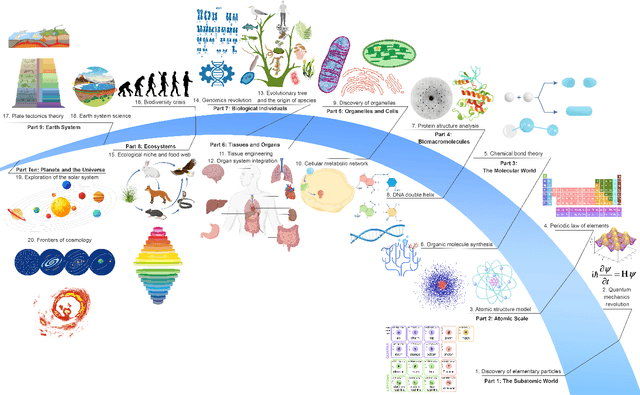
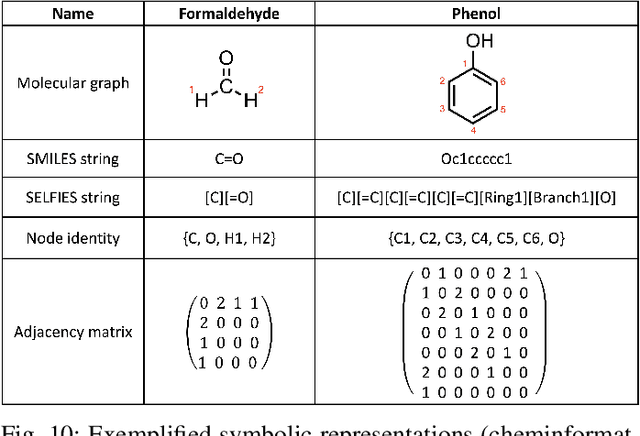
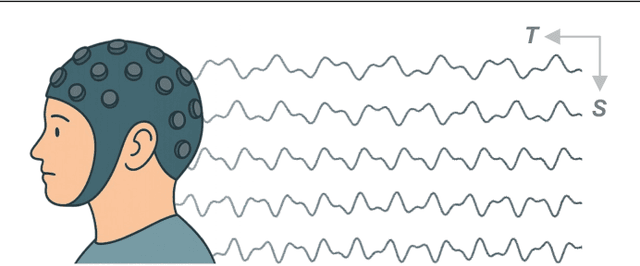
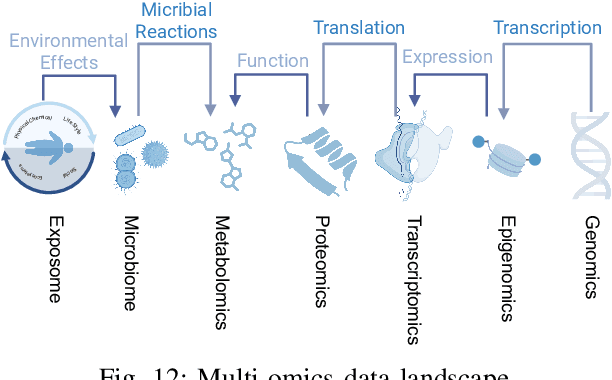
Scientific Large Language Models (Sci-LLMs) are transforming how knowledge is represented, integrated, and applied in scientific research, yet their progress is shaped by the complex nature of scientific data. This survey presents a comprehensive, data-centric synthesis that reframes the development of Sci-LLMs as a co-evolution between models and their underlying data substrate. We formulate a unified taxonomy of scientific data and a hierarchical model of scientific knowledge, emphasizing the multimodal, cross-scale, and domain-specific challenges that differentiate scientific corpora from general natural language processing datasets. We systematically review recent Sci-LLMs, from general-purpose foundations to specialized models across diverse scientific disciplines, alongside an extensive analysis of over 270 pre-/post-training datasets, showing why Sci-LLMs pose distinct demands -- heterogeneous, multi-scale, uncertainty-laden corpora that require representations preserving domain invariance and enabling cross-modal reasoning. On evaluation, we examine over 190 benchmark datasets and trace a shift from static exams toward process- and discovery-oriented assessments with advanced evaluation protocols. These data-centric analyses highlight persistent issues in scientific data development and discuss emerging solutions involving semi-automated annotation pipelines and expert validation. Finally, we outline a paradigm shift toward closed-loop systems where autonomous agents based on Sci-LLMs actively experiment, validate, and contribute to a living, evolving knowledge base. Collectively, this work provides a roadmap for building trustworthy, continually evolving artificial intelligence (AI) systems that function as a true partner in accelerating scientific discovery.