 Add to Chrome
 Add to Firefox
 Add to Edge
Movable Antenna-Aided Near-Field Integrated Sensing and Communication
Dec 27, 2024
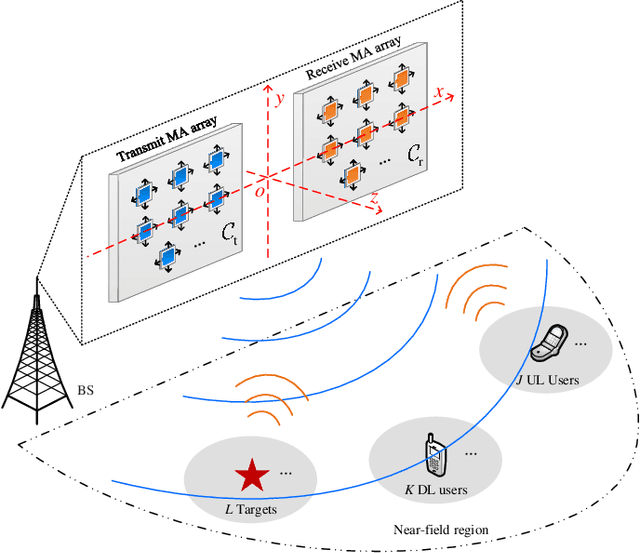
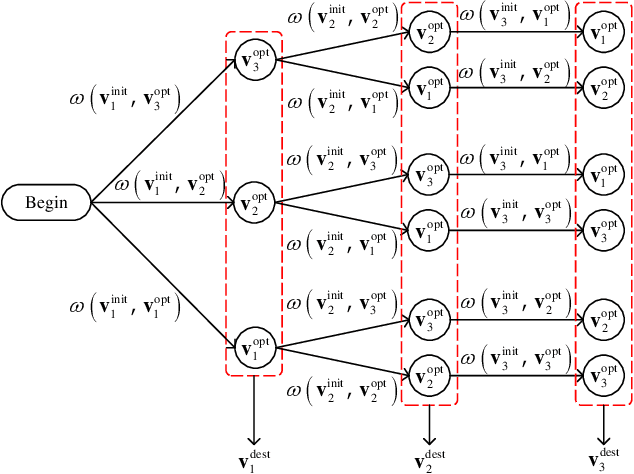
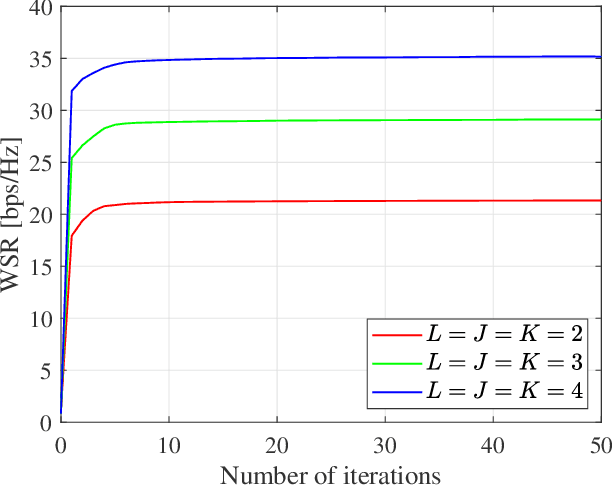
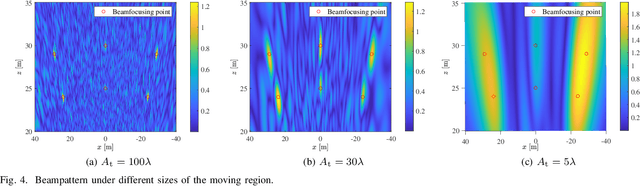
Integrated sensing and communication (ISAC) is emerging as a pivotal technology for next-generation wireless networks. However, existing ISAC systems are based on fixed-position antennas (FPAs), which inevitably incur a loss in performance when balancing the trade-off between sensing and communication. Movable antenna (MA) technology offers promising potential to enhance ISAC performance by enabling flexible antenna movement. Nevertheless, exploiting more spatial channel variations requires larger antenna moving regions, which may invalidate the conventional far-field assumption for channels between transceivers. Therefore, this paper utilizes the MA to enhance sensing and communication capabilities in near-field ISAC systems, where a full-duplex base station (BS) is equipped with multiple transmit and receive MAs movable in large-size regions to simultaneously sense multiple targets and serve multiple uplink (UL) and downlink (DL) users for communication. We aim to maximize the weighted sum of sensing and communication rates (WSR) by jointly designing the transmit beamformers, sensing signal covariance matrices, receive beamformers, and MA positions at the BS, as well as the UL power allocation. The resulting optimization problem is challenging to solve, while we propose an efficient two-layer random position (RP) algorithm to tackle it. In addition, to reduce movement delay and cost, we design an antenna position matching (APM) algorithm based on the greedy strategy to minimize the total MA movement distance. Extensive simulation results demonstrate the substantial performance improvement achieved by deploying MAs in near-field ISAC systems. Moreover, the results show the effectiveness of the proposed APM algorithm in reducing the antenna movement distance, which is helpful for energy saving and time overhead reduction for MA-aided near-field ISAC systems with large moving regions.

Wireless Communication with Flexible Reflector: Joint Placement and Rotation Optimization for Coverage Enhancement
Dec 25, 2024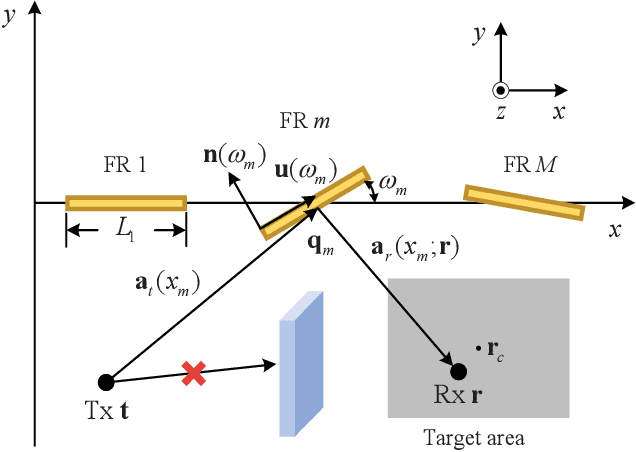
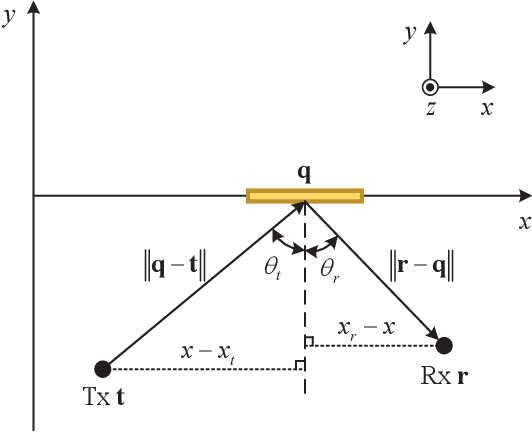
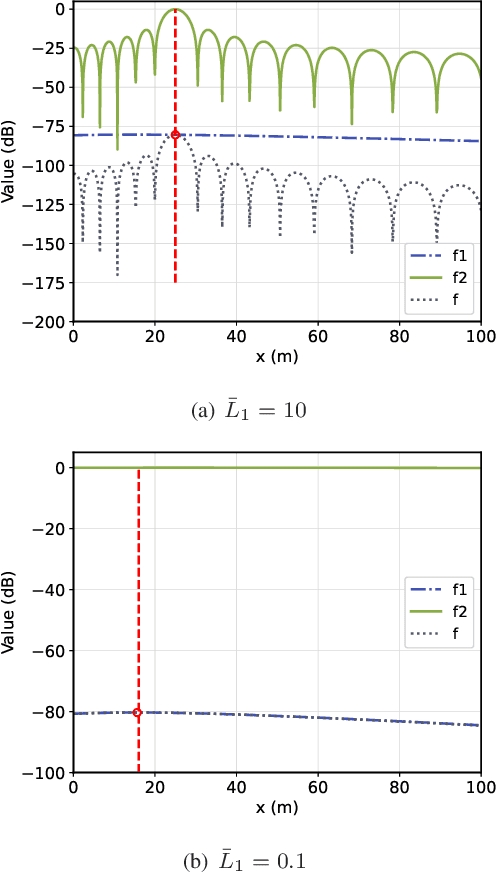
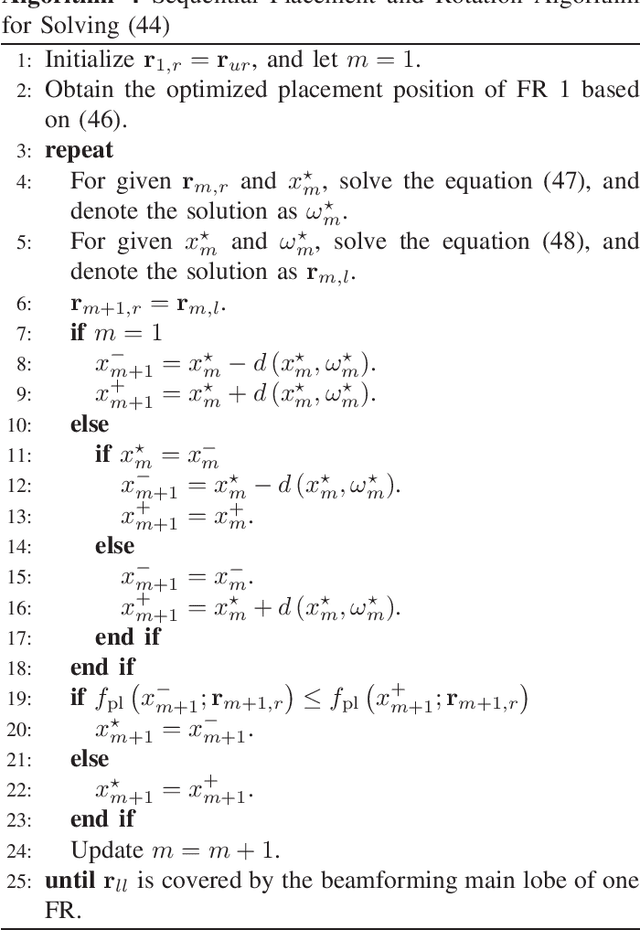
Passive metal reflectors for communication enhancement have appealing advantages such as ultra low cost, zero energy expenditure, maintenance-free operation, long life span, and full compatibility with legacy wireless systems. To unleash the full potential of passive reflectors for wireless communications, this paper proposes a new passive reflector architecture, termed flexible reflector (FR), for enabling the flexible adjustment of beamforming direction via the FR placement and rotation optimization. We consider the multi-FR aided area coverage enhancement and aim to maximize the minimum expected receive power over all locations within the target coverage area, by jointly optimizing the placement positions and rotation angles of multiple FRs. To gain useful insights, the special case of movable reflector (MR) with fixed rotation is first studied to maximize the expected receive power at a target location, where the optimal single-MR placement positions for electrically large and small reflectors are derived in closed-form, respectively. It is shown that the reflector should be placed at the specular reflection point for electrically large reflector. While for area coverage enhancement, the optimal placement is obtained for the single-MR case and a sequential placement algorithm is proposed for the multi-MR case. Moreover, for the general case of FR, joint placement and rotation design is considered for the single-/multi-FR aided coverage enhancement, respectively. Numerical results are presented which demonstrate significant performance gains of FRs over various benchmark schemes under different practical setups in terms of receive power enhancement.
LLM4AD: A Platform for Algorithm Design with Large Language Model
Dec 23, 2024

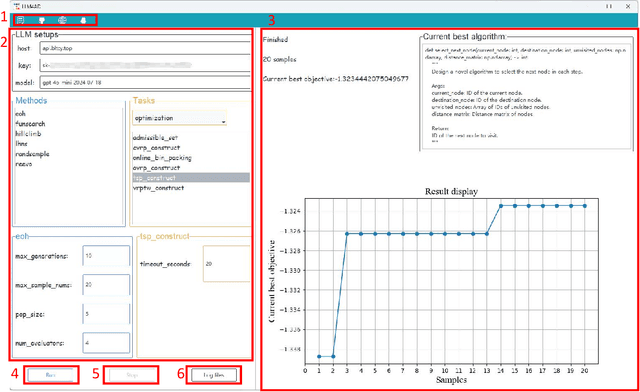
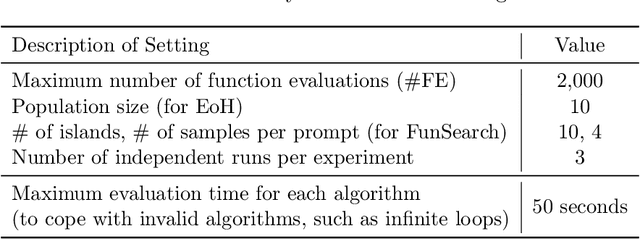
We introduce LLM4AD, a unified Python platform for algorithm design (AD) with large language models (LLMs). LLM4AD is a generic framework with modularized blocks for search methods, algorithm design tasks, and LLM interface. The platform integrates numerous key methods and supports a wide range of algorithm design tasks across various domains including optimization, machine learning, and scientific discovery. We have also designed a unified evaluation sandbox to ensure a secure and robust assessment of algorithms. Additionally, we have compiled a comprehensive suite of support resources, including tutorials, examples, a user manual, online resources, and a dedicated graphical user interface (GUI) to enhance the usage of LLM4AD. We believe this platform will serve as a valuable tool for fostering future development in the merging research direction of LLM-assisted algorithm design.
6DMA-Aided Hybrid Beamforming with Joint Antenna Position and Orientation Optimization
Dec 22, 2024This paper studies a sub-connected six-dimensional movable antenna (6DMA)-aided multi-user communication system. In this system, each sub-array is connected to a dedicated radio frequency chain and collectively moves and rotates as a unit within specific local regions. The movement and rotation capabilities of 6DMAs enhance design flexibility, facilitating the capture of spatial variations for improved communication performance. To fully characterize the effect of antenna position and orientation on wireless channels between the base station (BS) and users, we develop a field-response-based 6DMA channel model to account for the antenna radiation pattern and polarization. We then maximize the sum rate of multiple users, by jointly optimizing the digital and unit-modulus analog beamformers given the transmit power budget as well as the positions and orientations of sub-arrays within given movable and rotatable ranges at the BS. Due to the highly coupled variables, the formulated optimization problem is non-convex and thus challenging to solve. We develop a fractional programming-aided alternating optimization framework that integrates the Lagrange multiplier method, manifold optimization, and gradient descent to solve the problem. Numerical results demonstrate that the proposed 6DMA-aided sub-connected structure achieves a substantial sum-rate improvement over various benchmark schemes with less flexibility in antenna movement and can even outperform fully-digital beamforming systems that employ antenna position or orientation adjustments only. The results also highlight the necessity of considering antenna polarization for optimally adjusting antenna orientation.
Unleashing the Power of Continual Learning on Non-Centralized Devices: A Survey
Dec 18, 2024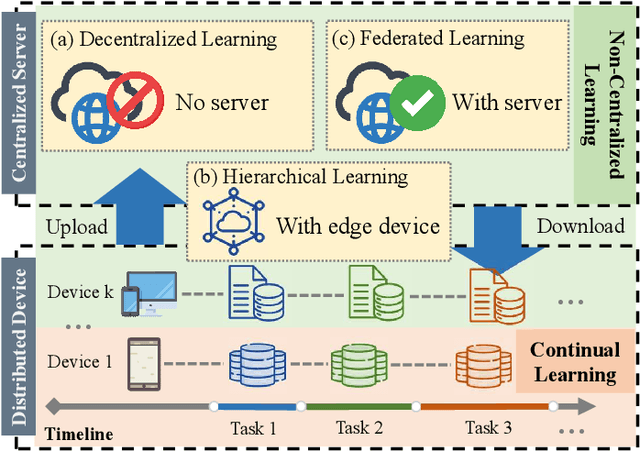
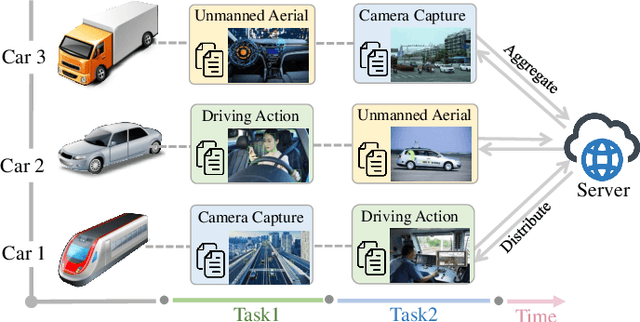
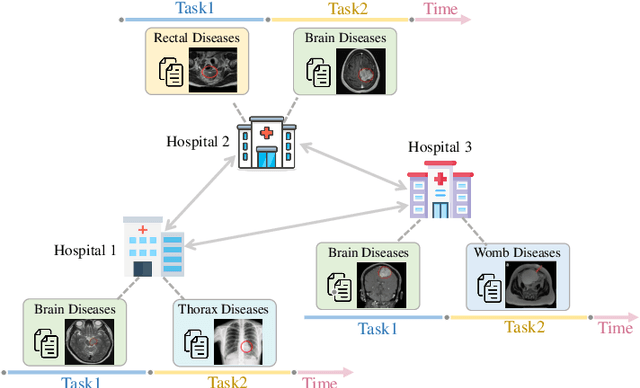
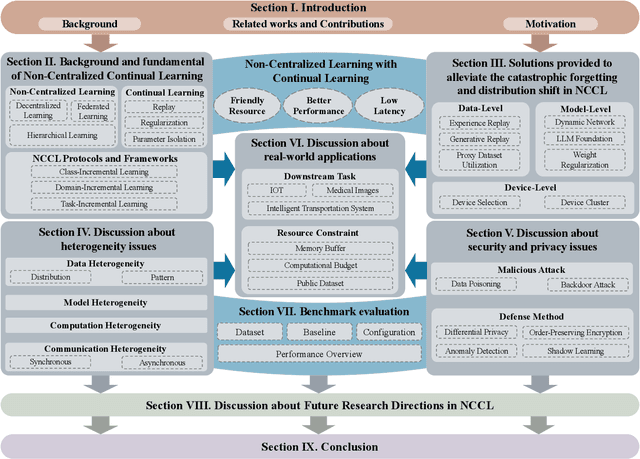
Non-Centralized Continual Learning (NCCL) has become an emerging paradigm for enabling distributed devices such as vehicles and servers to handle streaming data from a joint non-stationary environment. To achieve high reliability and scalability in deploying this paradigm in distributed systems, it is essential to conquer challenges stemming from both spatial and temporal dimensions, manifesting as distribution shifts, catastrophic forgetting, heterogeneity, and privacy issues. This survey focuses on a comprehensive examination of the development of the non-centralized continual learning algorithms and the real-world deployment across distributed devices. We begin with an introduction to the background and fundamentals of non-centralized learning and continual learning. Then, we review existing solutions from three levels to represent how existing techniques alleviate the catastrophic forgetting and distribution shift. Additionally, we delve into the various types of heterogeneity issues, security, and privacy attributes, as well as real-world applications across three prevalent scenarios. Furthermore, we establish a large-scale benchmark to revisit this problem and analyze the performance of the state-of-the-art NCCL approaches. Finally, we discuss the important challenges and future research directions in NCCL.
Movable Antenna Aided NOMA: Joint Antenna Positioning, Precoding, and Decoding Design
Dec 17, 2024This paper investigates movable antenna (MA) aided non-orthogonal multiple access (NOMA) for multi-user downlink communication, where the base station (BS) is equipped with a fixed-position antenna (FPA) array to serve multiple MA-enabled users. An optimization problem is formulated to maximize the minimum achievable rate among all the users by jointly optimizing the MA positioning of each user, the precoding matrix at the BS, and the successive interference cancellation (SIC) decoding indicator matrix at the users, subject to a set of constraints including the limited movement area of the MAs, the maximum transmit power of the BS, and the SIC decoding condition. To solve this non-convex problem, we propose a two-loop iterative optimization algorithm that combines the hippopotamus optimization (HO) method with the alternating optimization (AO) method to obtain a suboptimal solution efficiently. Specifically, in the inner loop, the complex-valued precoding matrix and the binary decoding indicator matrix are optimized alternatively by the successive convex approximation (SCA) technique with customized greedy search to maximize the minimum achievable rate for the given positions of the MAs. In the outer loop, each user's antenna position is updated using the HO algorithm, following a novel nature-inspired intelligent optimization framework. Simulation results show that the proposed algorithms can effectively avoid local optimum for highly coupled variables and significantly improve the rate performance of the NOMA system compared to the conventional FPA system as well as other benchmark schemes.
Building Gradient Bridges: Label Leakage from Restricted Gradient Sharing in Federated Learning
Dec 17, 2024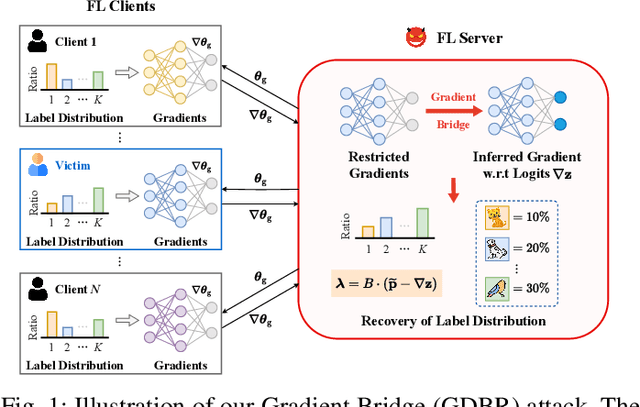
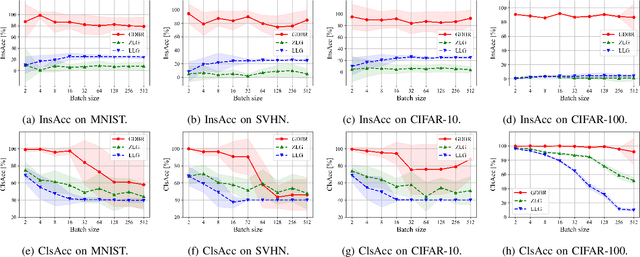
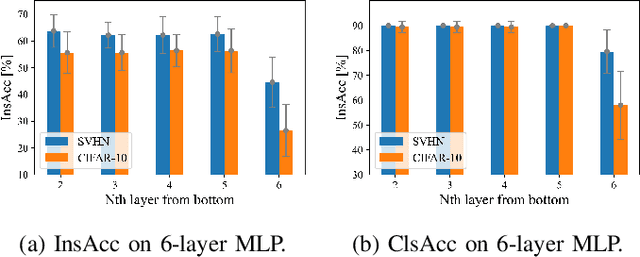
The growing concern over data privacy, the benefits of utilizing data from diverse sources for model training, and the proliferation of networked devices with enhanced computational capabilities have all contributed to the rise of federated learning (FL). The clients in FL collaborate to train a global model by uploading gradients computed on their private datasets without collecting raw data. However, a new attack surface has emerged from gradient sharing, where adversaries can restore the label distribution of a victim's private data by analyzing the obtained gradients. To mitigate this privacy leakage, existing lightweight defenses restrict the sharing of gradients, such as encrypting the final-layer gradients or locally updating the parameters within. In this paper, we introduce a novel attack called Gradient Bridge (GDBR) that recovers the label distribution of training data from the limited gradient information shared in FL. GDBR explores the relationship between the layer-wise gradients, tracks the flow of gradients, and analytically derives the batch training labels. Extensive experiments show that GDBR can accurately recover more than 80% of labels in various FL settings. GDBR highlights the inadequacy of restricted gradient sharing-based defenses and calls for the design of effective defense schemes in FL.
Towards Better Multi-task Learning: A Framework for Optimizing Dataset Combinations in Large Language Models
Dec 16, 2024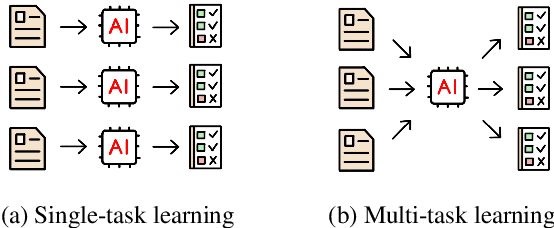
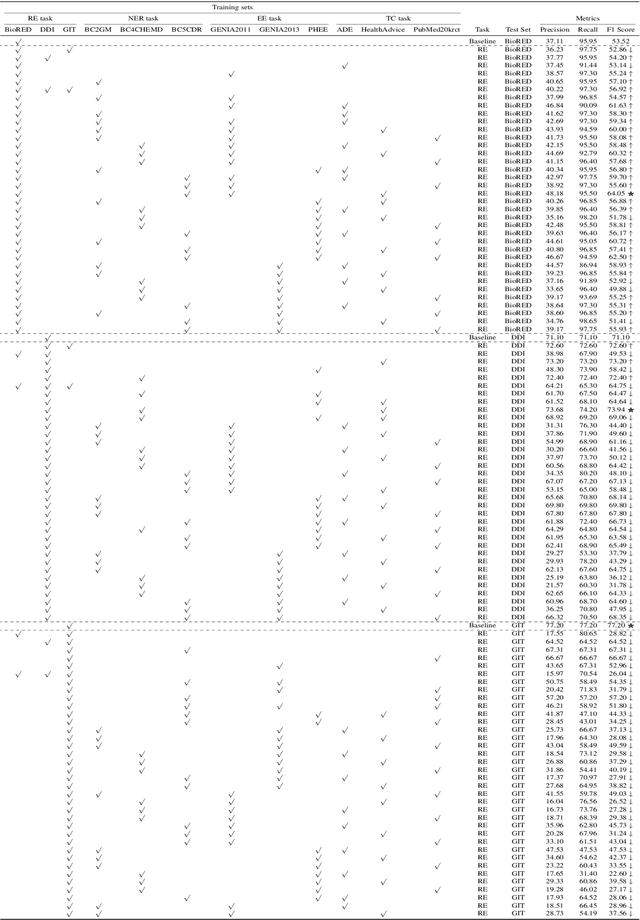
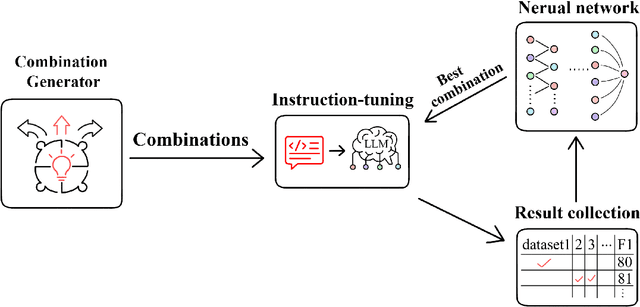
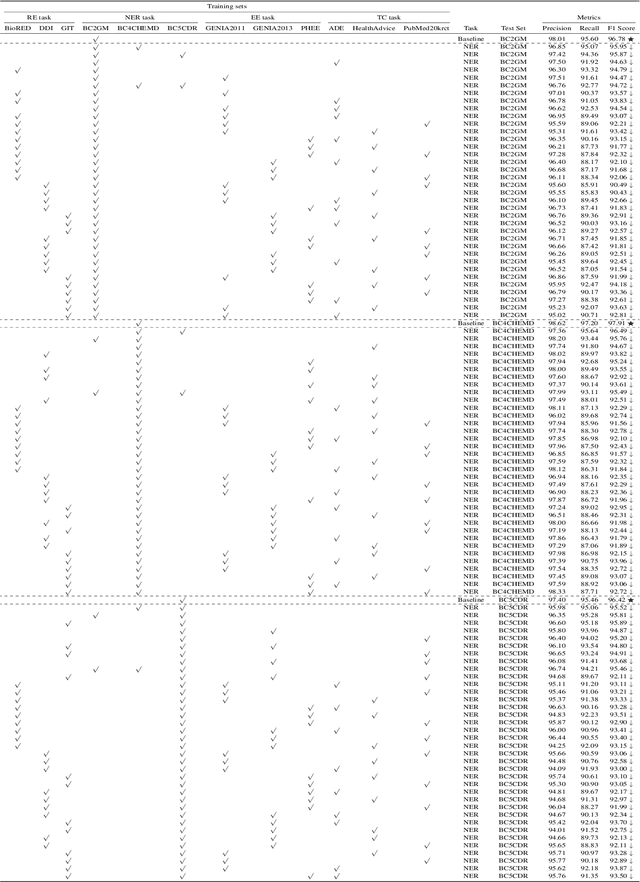
To efficiently select optimal dataset combinations for enhancing multi-task learning (MTL) performance in large language models, we proposed a novel framework that leverages a neural network to predict the best dataset combinations. The framework iteratively refines the selection, greatly improving efficiency, while being model-, dataset-, and domain-independent. Through experiments on 12 biomedical datasets across four tasks - named entity recognition, relation extraction, event extraction, and text classification-we demonstrate that our approach effectively identifies better combinations, even for tasks that may seem unpromising from a human perspective. This verifies that our framework provides a promising solution for maximizing MTL potential.
6D Movable Antenna Enhanced Multi-Access Point Coordination via Position and Orientation Optimization
Dec 14, 2024


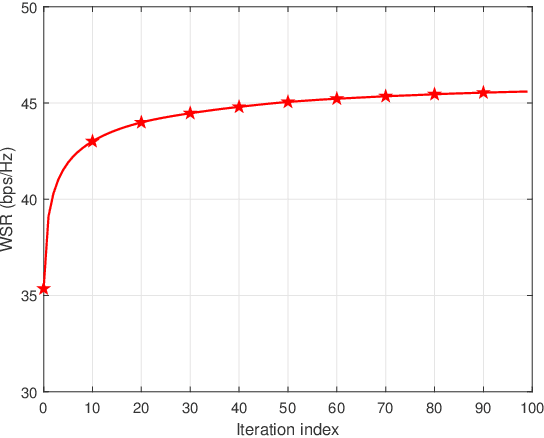
The effective utilization of unlicensed spectrum is regarded as an important direction to enable the massive access and broad coverage for next-generation wireless local area network (WLAN). Due to the crowded spectrum occupancy and dense user terminals (UTs), the conventional fixed antenna (FA)-based access points (APs) face huge challenges in realizing massive access and interference cancellation. To address this issue, in this paper we develop a six-dimensional movable antenna (6DMA) enhanced multi-AP coordination system for coverage enhancement and interference mitigation. First, we model the wireless channels between the APs and UTs to characterize their variation with respect to 6DMA movement, in terms of both the three-dimensional (3D) position and 3D orientation of each distributed AP's antenna. Then, an optimization problem is formulated to maximize the weighted sum rate of multiple UTs for their uplink transmissions by jointly optimizing the antenna position vector (APV), the antenna orientation matrix (AOM), and the receive combining matrix over all coordinated APs, subject to the constraints on local antenna movement regions. To solve this challenging non-convex optimization problem, we first transform it into a more tractable Lagrangian dual problem. Then, an alternating optimization (AO)-based algorithm is developed by iteratively optimizing the APV and AOM, which are designed by applying the successive convex approximation (SCA) technique and Riemannian manifold optimization-based algorithm, respectively. Simulation results show that the proposed 6DMA-enhanced multi-AP coordination system can significantly enhance network capacity, and both of the online and offline 6DMA schemes can attain considerable performance improvement compared to the conventional FA-based schemes.
GReaTer: Gradients over Reasoning Makes Smaller Language Models Strong Prompt Optimizers
Dec 12, 2024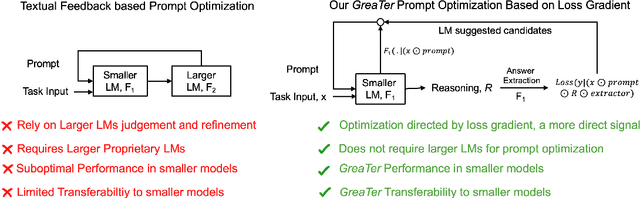
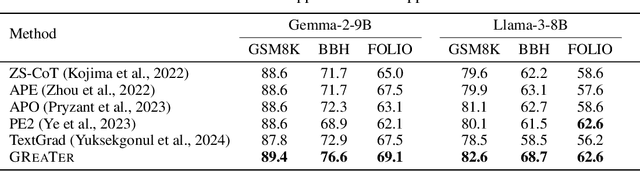
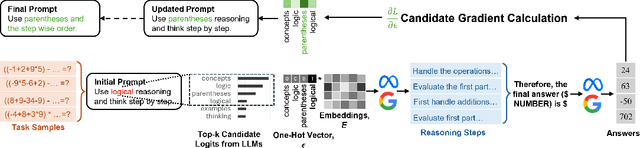
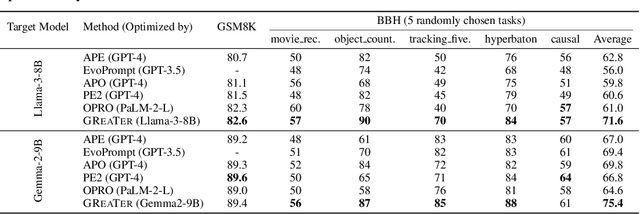
The effectiveness of large language models (LLMs) is closely tied to the design of prompts, making prompt optimization essential for enhancing their performance across a wide range of tasks. Many existing approaches to automating prompt engineering rely exclusively on textual feedback, refining prompts based solely on inference errors identified by large, computationally expensive LLMs. Unfortunately, smaller models struggle to generate high-quality feedback, resulting in complete dependence on large LLM judgment. Moreover, these methods fail to leverage more direct and finer-grained information, such as gradients, due to operating purely in text space. To this end, we introduce GReaTer, a novel prompt optimization technique that directly incorporates gradient information over task-specific reasoning. By utilizing task loss gradients, GReaTer enables self-optimization of prompts for open-source, lightweight language models without the need for costly closed-source LLMs. This allows high-performance prompt optimization without dependence on massive LLMs, closing the gap between smaller models and the sophisticated reasoning often needed for prompt refinement. Extensive evaluations across diverse reasoning tasks including BBH, GSM8k, and FOLIO demonstrate that GReaTer consistently outperforms previous state-of-the-art prompt optimization methods, even those reliant on powerful LLMs. Additionally, GReaTer-optimized prompts frequently exhibit better transferability and, in some cases, boost task performance to levels comparable to or surpassing those achieved by larger language models, highlighting the effectiveness of prompt optimization guided by gradients over reasoning. Code of GReaTer is available at https://github.com/psunlpgroup/GreaTer.