 Add to Chrome
 Add to Firefox
 Add to Edge
AI4AI-Bench: Benchmarking LLM Agents in Algorithmic Design for Recursive Self-Improvement
Aug 20, 2026
Recursive self-improvement (RSI) asks whether an AI system can improve the process that produces AI systems, so that the next system inherits the improvement. That process is the training algorithm: a better objective or update rule improves the compute\mbox{-}capability exchange rate for every subsequent run, including the one that produces the next agent. Whether RSI is feasible therefore turns on whether an agent can design training algorithms. No benchmark isolates that ability: existing suites are won by collecting data or by tuning hyperparameters, and none tells a change to how a run is executed apart from a change to how the model learns. We present AI4AI\mbox{-}Bench, 10 frozen research repositories spanning 10 training algorithm families. In each task, an agent has 4 hours on one B300 to rewrite the training algorithm; its code is then rerun from scratch for up to 12 hours and scored by a fixed evaluator hidden from the agent, against the repository's original algorithm under the same procedure. Because the 10 metrics are incommensurable, every task is mapped onto one scale on which $0$ is an uninformative model, $0.1$ is the algorithm the repository ships, and $1.0$ is the task optimum. Across 29 configurations of 6 systems on all 10 tasks the mean score is $0.166$, and the best system reaches $0.250$: even the strongest closes under a fifth of the distance between the algorithm that was already there and the optimum. The submissions show where that distance went: most never change how the model learns at all, and the minority that do average $0.226$ against $0.126$ for the rest. More reasoning effort mostly buys the willingness to go there, taking that minority from $8\%$ of submissions to $64\%$ and the mean score from $0.094$ to $0.196$. We release the task suite, the evaluators and every scored submission, so that the measurement can be repeated as these systems change.

AdvFD: Boosting Visual Generation via Adversarial Fr'echet Distance Loss
Aug 11, 2026Fréchet distance has recently emerged as an effective distribution-level objective for generator post-training, complementing the conventional sample-level diffusion and flow-matching losses. However, directly optimizing Fréchet objectives can cause Fréchet hacking. The target metrics keep improving, but visual quality and Fréchet alignment in other feature spaces may stagnate or deteriorate. We attribute this failure to the static pretrained feature spaces used by existing Fréchet losses. These feature spaces provide incomplete and fixed views of the differences between real and generated distributions. To address this limitation, we propose Adversarial Fréchet Distance (AdvFD), which complements the static representation targets in FD-Loss with a calibrated adversarially learned representation. AdvFD augments the original static Fréchet objective with a learnable representation that adversarially maximizes the Fréchet discrepancy between real and generated samples, while the generator minimizes the same discrepancy in the resulting adaptive feature space. To prevent the adversarial representation from trivially increasing the objective through feature amplification, we further introduce real-feature whitening, which normalizes its scale and covariance geometry and stabilizes the min--max optimization. Extensive experiments show that AdvFD consistently improves one-step generator post-training across both JiT and pMF backbones and across different model scales.
Agogic: Performance-Timed Music Tokens for LLM-Native Text-to-Symbolic-Music Generation
Aug 04, 2026Text-to-music language models begin with a choice usually made by default: how to tokenize music. Normally entangled with backbone, data, and recipe, its effect has never been measured in isolation. We fix pretrained Qwen3.5 (0.8B-27B), data, budget, and decoding, and swap only the representation across seven tokenizations, anchoring texture metrics to each representation's model-free ceiling. The ordering is clean and surprising: representation, not model size, is the binding variable for distributional fidelity. Scaling the backbone 34x barely moves Frechet Music Distance (FMD), whereas switching representation halves it. PMT, a performance-resolution stream we release (10 ms timing, per-note velocity, multi-track texture; 609 symbols), reaches FMD 159 at 0.8B against 272-286 for beat grids (1.7-1.8x lower, up to 2.8x elsewhere; non-overlapping bootstrap CIs), so a 0.8B performance-resolution model beats a 27B beat grid. It reappears on a 26M from-scratch backbone and a second performance-resolution tokenizer: a property of the class, not one lucky vocabulary. Nor is it a finer-lattice artifact: snapping PMT's onsets to the beat grids' resolution still leaves it 67-129 FMD ahead of both (n=500). The effect is distributional; whether it is audible is a separate question, left open by our probe, with a human study pre-registered. Native caption adherence is weak but separable: a lightweight decode-time constraint doubles instrument-F1 (.28 to .60) and Correct-Key (.16 to .35) at no distributional cost. We release the harness, 25+ checkpoints, two corpora (86.6k aligned across caption/MIDI/ABC/audio; 6.25M captioned, the largest for music), and an imprinting diagnostic: published text-to-MIDI systems reproduce their training distribution near-invariant to the caption (72% vs. 71% chord-time on disjoint domains). The field's next representation claim can now be measured, not asserted.
PhysRAG: Enhancing Physics-Awareness in Video Generation via Retrieval-Augmented Generation
Jun 25, 2026Developing physically aware video generation models remains a significant challenge due to the difficulty in capturing diverse physical phenomena, such as thermal dynamics, mechanics, and optics. In this work, we introduce PhysRAG, a novel pipeline that enhances physical awareness in video generation through Retrieval-Augmented Generation (RAG). To address the issue of limited high-quality data, we design a two-stage data filtering pipeline based on the WISA-80K dataset, resulting in a curated set of 7K high-quality videos for training. Furthermore, we construct a physical video database and develop a mechanism to inject physical knowledge into a video diffusion model using learnable queries. Our method achieves state-of-the-art performance in both visual quality and physical rule compliance, surpassing existing models in benchmarks such as PhyGenBench and VBench. We conduct extensive ablation studies to validate the effectiveness of our key components, including the data filtering pipeline, RAG mechanism, and method for physical information extraction. To facilitate future research, our code, data, and models are prepared for release at https://github.com/sediment1024/PhysRAG.
SAID: Accelerating Diffusion-Based Language Models via Scaffold-Aware Iterative Decoding
Jun 03, 2026Diffusion large language models (DLLMs) enable non-autoregressive generation by iteratively denoising corrupted token sequences with bidirectional context. Despite their ability to update multiple positions in parallel, inference remains costly due to the many denoising steps required for high-quality generation. We propose SAID, a Scaffold-Aware Iterative Decoding framework that accelerates DLLMs by reallocating computation across tokens. SAID first spends denoising computation on scaffold tokens to establish the coarse semantic structure, and then completes predictable detail tokens with fewer steps. We further adapt SAID to block-wise diffusion decoding and introduce Confidence-Hierarchical Layered Generation (CHLG), which assigns additional steps only to low-confidence tokens. Experiments on LLaDA-8B and LLaDA 1.5 across math, coding, and knowledge benchmarks show that SAID significantly accelerates DLLM inference with a maximum speedup of 9.1x while maintaining competitive performance. Our code is publicly available: https://github.com/TH-AI-Lab-PKU/SAID.
SemBlock: Semantic Boundary Dynamic Blocks for Diffusion LLMs
Jun 03, 2026Diffusion language models (DLMs) generate text through iterative denoising, and blockwise decoding improves their practicality by committing tokens in local blocks. However, existing blockwise methods typically rely on fixed block sizes or delimiter-based runtime signals, which do not necessarily align with semantic boundaries. In this paper, we propose SemBlock, a semantic-boundary-driven dynamic block decoding framework for diffusion LLMs. SemBlock formulates dynamic block construction as semantic boundary prediction and trains lightweight predictors on frozen LLaDA hidden states. To provide supervision, we construct SemBound, a semantic-boundary dataset that derives boundary labels from discourse units, reasoning steps, and implementation spans across natural language, math, and code tasks. During inference, SemBlock uses predicted boundary probabilities to select the ending position of each dynamic block. Experiments on GSM8K, IFEval, MATH, and HumanEval show that SemBlock consistently improves over fixed-block decoding and AdaBlock. Our code is publicly available: https://github.com/TH-AI-Lab-PKU/SemBlock.
Benchmarking PhD-Level Coding in 3D Geometric Computer Vision
Mar 31, 2026AI-assisted coding has rapidly reshaped software practice and research workflows, yet today's models still struggle to produce correct code for complex 3D geometric vision. If models could reliably write such code, the research of our community would change substantially. To measure progress toward that goal, we introduce GeoCodeBench, a PhD-level benchmark that evaluates coding for 3D vision. Each problem is a fill-in-the-function implementation task curated from representative papers at recent venues: we first let a tool propose candidate functions from official repositories, then perform careful human screening to select core 3D geometric components. For every target, we generate diverse, edge-case unit tests, enabling fully automatic, reproducible scoring. We evaluate eight representative open- and closed-source models to reflect the current ecosystem. The best model, GPT-5, attains only 36.6% pass rate, revealing a large gap between current capabilities and dependable 3D scientific coding. GeoCodeBench organizes tasks into a two-level hierarchy: General 3D capability (geometric transformations and mechanics/optics formulation) and Research capability (novel algorithm implementation and geometric logic routing). Scores are positively correlated across these axes, but research-oriented tasks are markedly harder. Context ablations further show that "more paper text" is not always better: cutting off at the Method section statistically outperforms full-paper inputs, highlighting unresolved challenges in long-context scientific comprehension. Together, these findings position GeoCodeBench as a rigorous testbed for advancing from generic coding to trustworthy 3D geometric vision coding.
PAM: A Pose-Appearance-Motion Engine for Sim-to-Real HOI Video Generation
Mar 23, 2026Hand-object interaction (HOI) reconstruction and synthesis are becoming central to embodied AI and AR/VR. Yet, despite rapid progress, existing HOI generation research remains fragmented across three disjoint tracks: (1) pose-only synthesis that predicts MANO trajectories without producing pixels; (2) single-image HOI generation that hallucinates appearance from masks or 2D cues but lacks dynamics; and (3) video generation methods that require both the entire pose sequence and the ground-truth first frame as inputs, preventing true sim-to-real deployment. Inspired by the philosophy of Joo et al. (2018), we think that HOI generation requires a unified engine that brings together pose, appearance, and motion within one coherent framework. Thus we introduce PAM: a Pose-Appearance-Motion Engine for controllable HOI video generation. The performance of our engine is validated by: (1) On DexYCB, we obtain an FVD of 29.13 (vs. 38.83 for InterDyn), and MPJPE of 19.37 mm (vs. 30.05 mm for CosHand), while generating higher-resolution 480x720 videos compared to 256x256 and 256x384 baselines. (2) On OAKINK2, our full multi-condition model improves FVD from 68.76 to 46.31. (3) An ablation over input conditions on DexYCB shows that combining depth, segmentation, and keypoints consistently yields the best results. (4) For a downstream hand pose estimation task using SimpleHand, augmenting training with 3,400 synthetic videos (207k frames) allows a model trained on only 50% of the real data plus our synthetic data to match the 100% real baseline.
TwinAligner: Visual-Dynamic Alignment Empowers Physics-aware Real2Sim2Real for Robotic Manipulation
Dec 22, 2025The robotics field is evolving towards data-driven, end-to-end learning, inspired by multimodal large models. However, reliance on expensive real-world data limits progress. Simulators offer cost-effective alternatives, but the gap between simulation and reality challenges effective policy transfer. This paper introduces TwinAligner, a novel Real2Sim2Real system that addresses both visual and dynamic gaps. The visual alignment module achieves pixel-level alignment through SDF reconstruction and editable 3DGS rendering, while the dynamic alignment module ensures dynamic consistency by identifying rigid physics from robot-object interaction. TwinAligner improves robot learning by providing scalable data collection and establishing a trustworthy iterative cycle, accelerating algorithm development. Quantitative evaluations highlight TwinAligner's strong capabilities in visual and dynamic real-to-sim alignment. This system enables policies trained in simulation to achieve strong zero-shot generalization to the real world. The high consistency between real-world and simulated policy performance underscores TwinAligner's potential to advance scalable robot learning. Code and data will be released on https://twin-aligner.github.io
Challenger: Affordable Adversarial Driving Video Generation
May 21, 2025
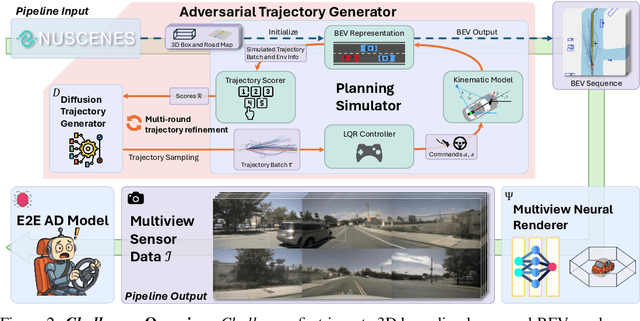

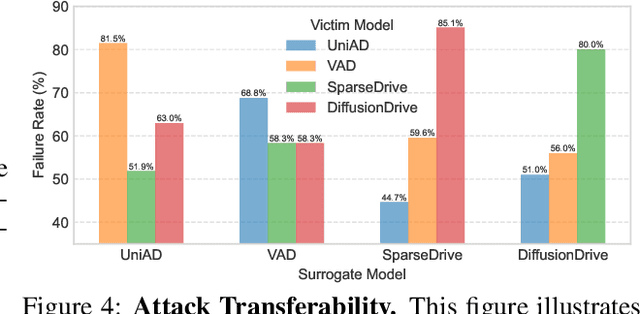
Generating photorealistic driving videos has seen significant progress recently, but current methods largely focus on ordinary, non-adversarial scenarios. Meanwhile, efforts to generate adversarial driving scenarios often operate on abstract trajectory or BEV representations, falling short of delivering realistic sensor data that can truly stress-test autonomous driving (AD) systems. In this work, we introduce Challenger, a framework that produces physically plausible yet photorealistic adversarial driving videos. Generating such videos poses a fundamental challenge: it requires jointly optimizing over the space of traffic interactions and high-fidelity sensor observations. Challenger makes this affordable through two techniques: (1) a physics-aware multi-round trajectory refinement process that narrows down candidate adversarial maneuvers, and (2) a tailored trajectory scoring function that encourages realistic yet adversarial behavior while maintaining compatibility with downstream video synthesis. As tested on the nuScenes dataset, Challenger generates a diverse range of aggressive driving scenarios-including cut-ins, sudden lane changes, tailgating, and blind spot intrusions-and renders them into multiview photorealistic videos. Extensive evaluations show that these scenarios significantly increase the collision rate of state-of-the-art end-to-end AD models (UniAD, VAD, SparseDrive, and DiffusionDrive), and importantly, adversarial behaviors discovered for one model often transfer to others.