 Add to Chrome
 Add to Firefox
 Add to Edge
EduAgentQG: A Multi-Agent Workflow Framework for Personalized Question Generation
Nov 08, 2025
High-quality personalized question banks are crucial for supporting adaptive learning and individualized assessment. Manually designing questions is time-consuming and often fails to meet diverse learning needs, making automated question generation a crucial approach to reduce teachers' workload and improve the scalability of educational resources. However, most existing question generation methods rely on single-agent or rule-based pipelines, which still produce questions with unstable quality, limited diversity, and insufficient alignment with educational goals. To address these challenges, we propose EduAgentQG, a multi-agent collaborative framework for generating high-quality and diverse personalized questions. The framework consists of five specialized agents and operates through an iterative feedback loop: the Planner generates structured design plans and multiple question directions to enhance diversity; the Writer produces candidate questions based on the plan and optimizes their quality and diversity using feedback from the Solver and Educator; the Solver and Educator perform binary scoring across multiple evaluation dimensions and feed the evaluation results back to the Writer; the Checker conducts final verification, including answer correctness and clarity, ensuring alignment with educational goals. Through this multi-agent collaboration and iterative feedback loop, EduAgentQG generates questions that are both high-quality and diverse, while maintaining consistency with educational objectives. Experiments on two mathematics question datasets demonstrate that EduAgentQG outperforms existing single-agent and multi-agent methods in terms of question diversity, goal consistency, and overall quality.

GSE: Evaluating Sticker Visual Semantic Similarity via a General Sticker Encoder
Nov 07, 2025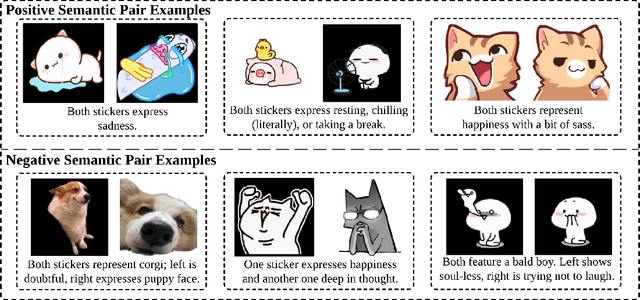
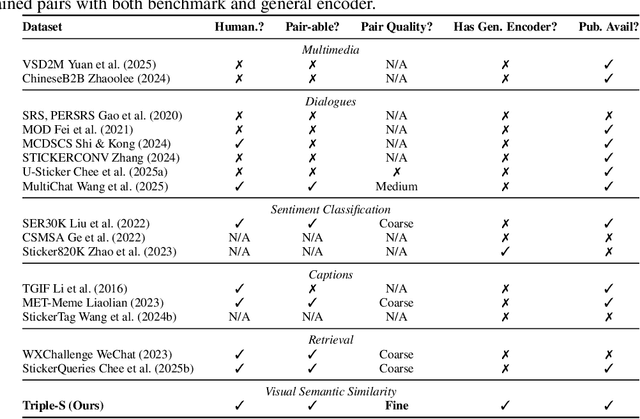
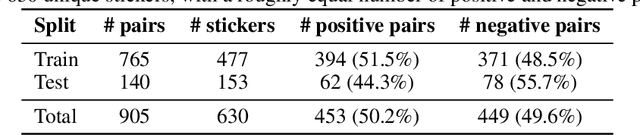
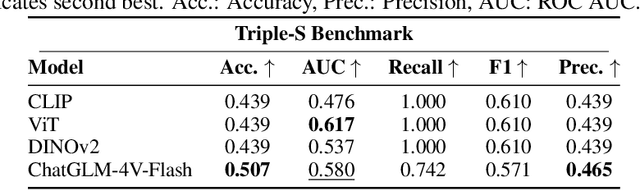
Stickers have become a popular form of visual communication, yet understanding their semantic relationships remains challenging due to their highly diverse and symbolic content. In this work, we formally {define the Sticker Semantic Similarity task} and introduce {Triple-S}, the first benchmark for this task, consisting of 905 human-annotated positive and negative sticker pairs. Through extensive evaluation, we show that existing pretrained vision and multimodal models struggle to capture nuanced sticker semantics. To address this, we propose the {General Sticker Encoder (GSE)}, a lightweight and versatile model that learns robust sticker embeddings using both Triple-S and additional datasets. GSE achieves superior performance on unseen stickers, and demonstrates strong results on downstream tasks such as emotion classification and sticker-to-sticker retrieval. By releasing both Triple-S and GSE, we provide standardized evaluation tools and robust embeddings, enabling future research in sticker understanding, retrieval, and multimodal content generation. The Triple-S benchmark and GSE have been publicly released and are available here.
OmniEduBench: A Comprehensive Chinese Benchmark for Evaluating Large Language Models in Education
Oct 30, 2025With the rapid development of large language models (LLMs), various LLM-based works have been widely applied in educational fields. However, most existing LLMs and their benchmarks focus primarily on the knowledge dimension, largely neglecting the evaluation of cultivation capabilities that are essential for real-world educational scenarios. Additionally, current benchmarks are often limited to a single subject or question type, lacking sufficient diversity. This issue is particularly prominent within the Chinese context. To address this gap, we introduce OmniEduBench, a comprehensive Chinese educational benchmark. OmniEduBench consists of 24.602K high-quality question-answer pairs. The data is meticulously divided into two core dimensions: the knowledge dimension and the cultivation dimension, which contain 18.121K and 6.481K entries, respectively. Each dimension is further subdivided into 6 fine-grained categories, covering a total of 61 different subjects (41 in the knowledge and 20 in the cultivation). Furthermore, the dataset features a rich variety of question formats, including 11 common exam question types, providing a solid foundation for comprehensively evaluating LLMs' capabilities in education. Extensive experiments on 11 mainstream open-source and closed-source LLMs reveal a clear performance gap. In the knowledge dimension, only Gemini-2.5 Pro surpassed 60\% accuracy, while in the cultivation dimension, the best-performing model, QWQ, still trailed human intelligence by nearly 30\%. These results highlight the substantial room for improvement and underscore the challenges of applying LLMs in education.
LoCoT2V-Bench: A Benchmark for Long-Form and Complex Text-to-Video Generation
Oct 30, 2025Recently text-to-video generation has made impressive progress in producing short, high-quality clips, but evaluating long-form outputs remains a major challenge especially when processing complex prompts. Existing benchmarks mostly rely on simplified prompts and focus on low-level metrics, overlooking fine-grained alignment with prompts and abstract dimensions such as narrative coherence and thematic expression. To address these gaps, we propose LoCoT2V-Bench, a benchmark specifically designed for long video generation (LVG) under complex input conditions. Based on various real-world videos, LoCoT2V-Bench introduces a suite of realistic and complex prompts incorporating elements like scene transitions and event dynamics. Moreover, it constructs a multi-dimensional evaluation framework that includes our newly proposed metrics such as event-level alignment, fine-grained temporal consistency, content clarity, and the Human Expectation Realization Degree (HERD) that focuses on more abstract attributes like narrative flow, emotional response, and character development. Using this framework, we conduct a comprehensive evaluation of nine representative LVG models, finding that while current methods perform well on basic visual and temporal aspects, they struggle with inter-event consistency, fine-grained alignment, and high-level thematic adherence, etc. Overall, LoCoT2V-Bench provides a comprehensive and reliable platform for evaluating long-form complex text-to-video generation and highlights critical directions for future method improvement.
FAPO: Flawed-Aware Policy Optimization for Efficient and Reliable Reasoning
Oct 26, 2025Reinforcement learning with verifiable rewards (RLVR) has emerged as a promising paradigm for enhancing the reasoning capabilities of large language models (LLMs). In this context, models explore reasoning trajectories and exploit rollouts with correct answers as positive signals for policy optimization. However, these rollouts might involve flawed patterns such as answer-guessing and jump-in-reasoning. Such flawed-positive rollouts are rewarded identically to fully correct ones, causing policy models to internalize these unreliable reasoning patterns. In this work, we first conduct a systematic study of flawed-positive rollouts in RL and find that they enable rapid capability gains during the early optimization stage, while constraining reasoning capability later by reinforcing unreliable patterns. Building on these insights, we propose Flawed-Aware Policy Optimization (FAPO), which presents a parameter-free reward penalty for flawed-positive rollouts, enabling the policy to leverage them as useful shortcuts in the warm-up stage, securing stable early gains, while gradually shifting optimization toward reliable reasoning in the later refinement stage. To accurately and comprehensively detect flawed-positive rollouts, we introduce a generative reward model (GenRM) with a process-level reward that precisely localizes reasoning errors. Experiments show that FAPO is effective in broad domains, improving outcome correctness, process reliability, and training stability without increasing the token budget.
LongRM: Revealing and Unlocking the Context Boundary of Reward Modeling
Oct 08, 2025Reward model (RM) plays a pivotal role in aligning large language model (LLM) with human preferences. As real-world applications increasingly involve long history trajectories, e.g., LLM agent, it becomes indispensable to evaluate whether a model's responses are not only high-quality but also grounded in and consistent with the provided context. Yet, current RMs remain confined to short-context settings and primarily focus on response-level attributes (e.g., safety or helpfulness), while largely neglecting the critical dimension of long context-response consistency. In this work, we introduce Long-RewardBench, a benchmark specifically designed for long-context RM evaluation, featuring both Pairwise Comparison and Best-of-N tasks. Our preliminary study reveals that even state-of-the-art generative RMs exhibit significant fragility in long-context scenarios, failing to maintain context-aware preference judgments. Motivated by the analysis of failure patterns observed in model outputs, we propose a general multi-stage training strategy that effectively scales arbitrary models into robust Long-context RMs (LongRMs). Experiments show that our approach not only substantially improves performance on long-context evaluation but also preserves strong short-context capability. Notably, our 8B LongRM outperforms much larger 70B-scale baselines and matches the performance of the proprietary Gemini 2.5 Pro model.
BatonVoice: An Operationalist Framework for Enhancing Controllable Speech Synthesis with Linguistic Intelligence from LLMs
Sep 30, 2025The rise of Large Language Models (LLMs) is reshaping multimodel models, with speech synthesis being a prominent application. However, existing approaches often underutilize the linguistic intelligence of these models, typically failing to leverage their powerful instruction-following capabilities. This limitation hinders the model's ability to follow text instructions for controllable Text-to-Speech~(TTS). To address this, we propose a new paradigm inspired by ``operationalism'' that decouples instruction understanding from speech generation. We introduce BatonVoice, a framework where an LLM acts as a ``conductor'', understanding user instructions and generating a textual ``plan'' -- explicit vocal features (e.g., pitch, energy). A separate TTS model, the ``orchestra'', then generates the speech from these features. To realize this component, we develop BatonTTS, a TTS model trained specifically for this task. Our experiments demonstrate that BatonVoice achieves strong performance in controllable and emotional speech synthesis, outperforming strong open- and closed-source baselines. Notably, our approach enables remarkable zero-shot cross-lingual generalization, accurately applying feature control abilities to languages unseen during post-training. This demonstrates that objectifying speech into textual vocal features can more effectively unlock the linguistic intelligence of LLMs.
From Bias to Balance: Exploring and Mitigating Spatial Bias in LVLMs
Sep 26, 2025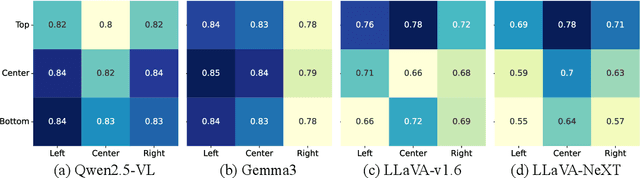
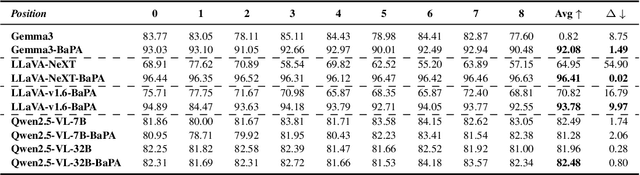
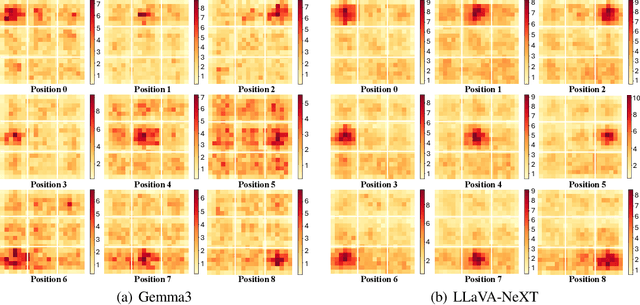
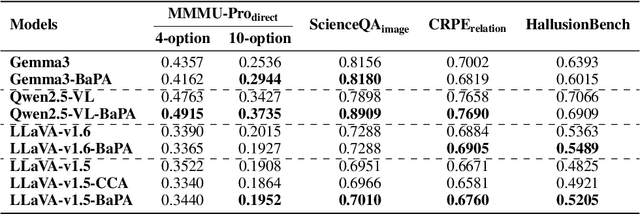
Large Vision-Language Models (LVLMs) have achieved remarkable success across a wide range of multimodal tasks, yet their robustness to spatial variations remains insufficiently understood. In this work, we present a systematic study of the spatial bias of LVLMs, focusing on how models respond when identical key visual information is placed at different locations within an image. Through a carefully designed probing dataset, we demonstrate that current LVLMs often produce inconsistent outputs under such spatial shifts, revealing a fundamental limitation in their spatial-semantic understanding. Further analysis shows that this phenomenon originates not from the vision encoder, which reliably perceives and interprets visual content across positions, but from the unbalanced design of position embeddings in the language model component. In particular, the widely adopted position embedding strategies, such as RoPE, introduce imbalance during cross-modal interaction, leading image tokens at different positions to exert unequal influence on semantic understanding. To mitigate this issue, we introduce Balanced Position Assignment (BaPA), a simple yet effective mechanism that assigns identical position embeddings to all image tokens, promoting a more balanced integration of visual information. Extensive experiments show that BaPA enhances the spatial robustness of LVLMs without retraining and further boosts their performance across diverse multimodal benchmarks when combined with lightweight fine-tuning. Further analysis of information flow reveals that BaPA yields balanced attention, enabling more holistic visual understanding.
Embodied Arena: A Comprehensive, Unified, and Evolving Evaluation Platform for Embodied AI
Sep 18, 2025Embodied AI development significantly lags behind large foundation models due to three critical challenges: (1) lack of systematic understanding of core capabilities needed for Embodied AI, making research lack clear objectives; (2) absence of unified and standardized evaluation systems, rendering cross-benchmark evaluation infeasible; and (3) underdeveloped automated and scalable acquisition methods for embodied data, creating critical bottlenecks for model scaling. To address these obstacles, we present Embodied Arena, a comprehensive, unified, and evolving evaluation platform for Embodied AI. Our platform establishes a systematic embodied capability taxonomy spanning three levels (perception, reasoning, task execution), seven core capabilities, and 25 fine-grained dimensions, enabling unified evaluation with systematic research objectives. We introduce a standardized evaluation system built upon unified infrastructure supporting flexible integration of 22 diverse benchmarks across three domains (2D/3D Embodied Q&A, Navigation, Task Planning) and 30+ advanced models from 20+ worldwide institutes. Additionally, we develop a novel LLM-driven automated generation pipeline ensuring scalable embodied evaluation data with continuous evolution for diversity and comprehensiveness. Embodied Arena publishes three real-time leaderboards (Embodied Q&A, Navigation, Task Planning) with dual perspectives (benchmark view and capability view), providing comprehensive overviews of advanced model capabilities. Especially, we present nine findings summarized from the evaluation results on the leaderboards of Embodied Arena. This helps to establish clear research veins and pinpoint critical research problems, thereby driving forward progress in the field of Embodied AI.
CoDoL: Conditional Domain Prompt Learning for Out-of-Distribution Generalization
Sep 18, 2025Recent advances in pre-training vision-language models (VLMs), e.g., contrastive language-image pre-training (CLIP) methods, have shown great potential in learning out-of-distribution (OOD) representations. Despite showing competitive performance, the prompt-based CLIP methods still suffer from: i) inaccurate text descriptions, which leads to degraded accuracy and robustness, and poses a challenge for zero-shot CLIP methods. ii) limited vision-language embedding alignment, which significantly affects the generalization performance. To tackle the above issues, this paper proposes a novel Conditional Domain prompt Learning (CoDoL) method, which utilizes readily-available domain information to form prompts and improves the vision-language embedding alignment for improving OOD generalization. To capture both instance-specific and domain-specific information, we further propose a lightweight Domain Meta Network (DMN) to generate input-conditional tokens for images in each domain. Extensive experiments on four OOD benchmarks (PACS, VLCS, OfficeHome and DigitDG) validate the effectiveness of our proposed CoDoL in terms of improving the vision-language embedding alignment as well as the out-of-distribution generalization performance.