 Add to Chrome
 Add to Firefox
 Add to Edge
TactileReflex: Noise-Statistics-Driven Vision-Tactile Reflex Control for Force-Sensitive Manipulation
May 22, 2026
Manipulating fragile deformable containers, such as disposable plastic cups filled with liquid, demands real-time grip-force adaptation within an extremely narrow force margin: insufficient force causes slip, while excessive force irreversibly deforms the thin wall. Existing approaches struggle to achieve such force-sensitive manipulation tasks. We propose a noise-statistics-based calibration-driven reflex control paradigm with vision-based tactile sensing: by analyzing the sensor's intrinsic noise characteristics (via a brief static-hold-and-unload protocol), we directly derive all controller thresholds, eliminating external force calibration, trial-and-error manual tuning, or material-specific physical models. Instantiating this paradigm, we present TactileReflex, a three-channel closed-loop controller that extracts three image-level proxies, shear intensity ($S_y$), contact intensity ($F_n$), and center of pressure ($C$), from dual visuo-tactile sensors and drives prioritized reflex channels at ~12 Hz for slip suppression, weight-adaptive release, and force protection. Each channel closes the loop directly on its proxy via noise-derived thresholds. Ablation demonstrates that only the full three-channel system is able to prevent irreversible container deformation (5/5 success vs. at most 1/5 for partial configurations). In a dynamic pouring task, fixed-effort baselines fail in all 10 attempts due to pose drift, while TactileReflex achieves 9/10 success across two water volumes. As a self-contained and interpretable controller, TactileReflex can serve as a plug-and-play safety layer beneath high-level manipulation pipelines, including haptic-free VR teleoperation and vision-language-action (VLA) policies.

HCSG: Human-Centric Semantic-Geometric Reasoning for Vision-Language Navigation
May 13, 2026VLN has achieved remarkable progress by scaling data and model capacity. However, the assumption of a static environment breaks down in real-world indoor scenarios, where robots inevitably encounter dynamic pedestrians. Existing human-aware approaches typically treat humans merely as moving obstacles based on implicit visual cues, lacking the explicit reasoning required to interpret human intentions or maintain social norms. To address this, we propose HCSG, the first human-centric framework for VLN. This framework provides a robust foundation for safe, socially intelligent navigation in dynamic human-robot environments that shifts the paradigm from passive collision avoidance to active human behavior understanding. Specifically, HCSG introduces a unified Human Understanding Module that synergizes two key capabilities: (i) geometric forecasting, which predicts human pose and trajectory to anticipate future motion dynamics; and (ii) semantic interpretation, which leverages a Vision-Language Model (VLM) to generate natural language descriptions of human actions and intentions. These semantic-geometric representations are fused into the agent's topological map for instruction-conditioned planning. Furthermore, a social distance loss is introduced to enforce socially compliant interaction distances. Extensive experiments on the HA-VLNCE benchmark demonstrate that HCSG significantly outperforms state-of-the-art methods, achieving a 14% improvement in Success Rate and a 34% reduction in Collision Rate. Our project can be seen at https://haoxuanxu1024.github.io/HCSG/.
LucidFlux: Caption-Free Universal Image Restoration via a Large-Scale Diffusion Transformer
Sep 26, 2025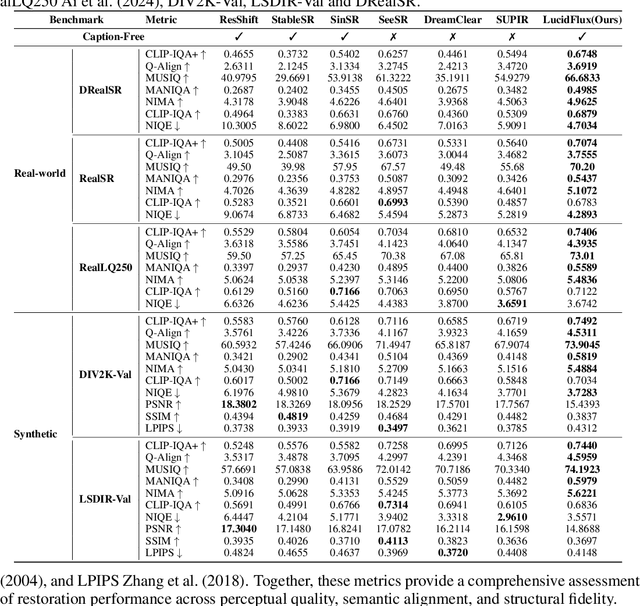

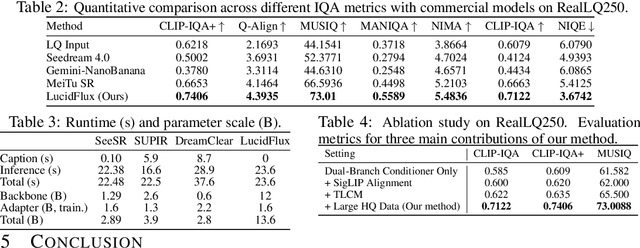

Universal image restoration (UIR) aims to recover images degraded by unknown mixtures while preserving semantics -- conditions under which discriminative restorers and UNet-based diffusion priors often oversmooth, hallucinate, or drift. We present LucidFlux, a caption-free UIR framework that adapts a large diffusion transformer (Flux.1) without image captions. LucidFlux introduces a lightweight dual-branch conditioner that injects signals from the degraded input and a lightly restored proxy to respectively anchor geometry and suppress artifacts. Then, a timestep- and layer-adaptive modulation schedule is designed to route these cues across the backbone's hierarchy, in order to yield coarse-to-fine and context-aware updates that protect the global structure while recovering texture. After that, to avoid the latency and instability of text prompts or MLLM captions, we enforce caption-free semantic alignment via SigLIP features extracted from the proxy. A scalable curation pipeline further filters large-scale data for structure-rich supervision. Across synthetic and in-the-wild benchmarks, LucidFlux consistently outperforms strong open-source and commercial baselines, and ablation studies verify the necessity of each component. LucidFlux shows that, for large DiTs, when, where, and what to condition on -- rather than adding parameters or relying on text prompts -- is the governing lever for robust and caption-free universal image restoration in the wild.
Real-Time Metric-Semantic Mapping for Autonomous Navigation in Outdoor Environments
Nov 30, 2024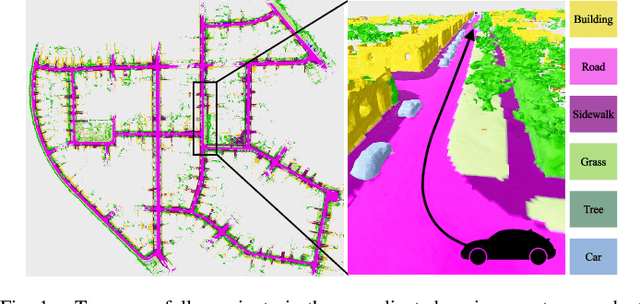
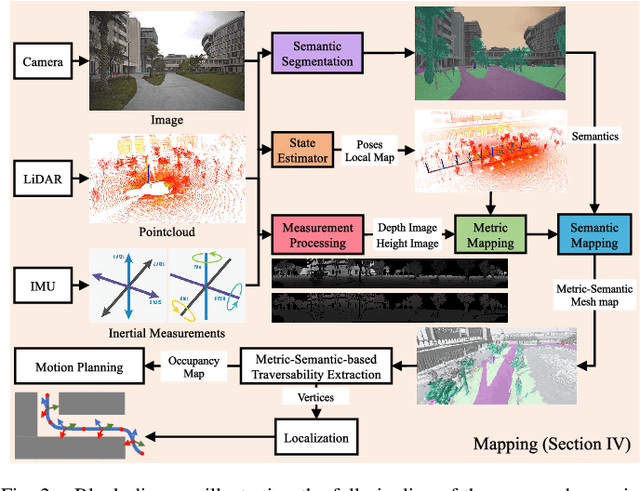
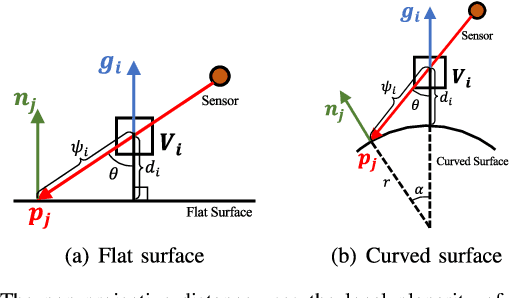
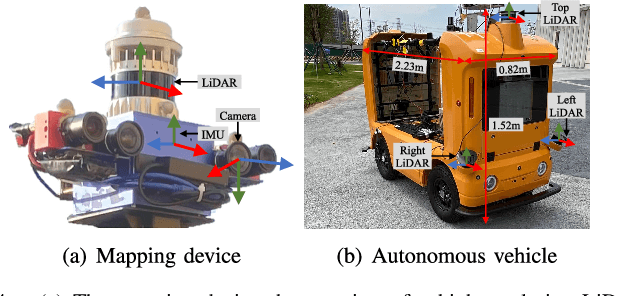
The creation of a metric-semantic map, which encodes human-prior knowledge, represents a high-level abstraction of environments. However, constructing such a map poses challenges related to the fusion of multi-modal sensor data, the attainment of real-time mapping performance, and the preservation of structural and semantic information consistency. In this paper, we introduce an online metric-semantic mapping system that utilizes LiDAR-Visual-Inertial sensing to generate a global metric-semantic mesh map of large-scale outdoor environments. Leveraging GPU acceleration, our mapping process achieves exceptional speed, with frame processing taking less than 7ms, regardless of scenario scale. Furthermore, we seamlessly integrate the resultant map into a real-world navigation system, enabling metric-semantic-based terrain assessment and autonomous point-to-point navigation within a campus environment. Through extensive experiments conducted on both publicly available and self-collected datasets comprising 24 sequences, we demonstrate the effectiveness of our mapping and navigation methodologies. Code has been publicly released: https://github.com/gogojjh/cobra
MGCBS: An Optimal and Efficient Algorithm for Solving Multi-Goal Multi-Agent Path Finding Problem
Apr 30, 2024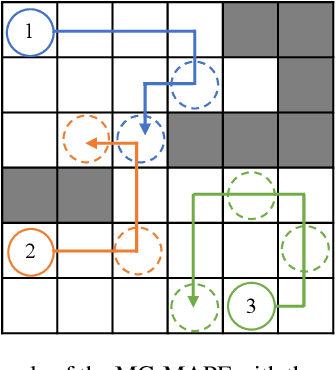
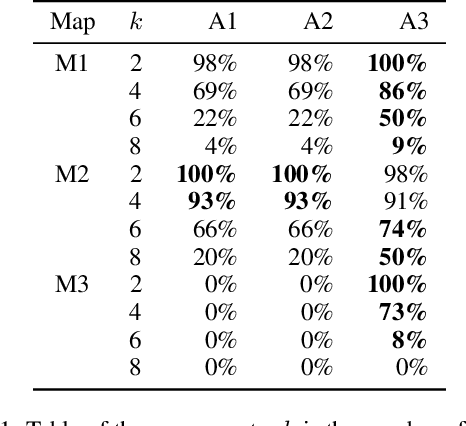
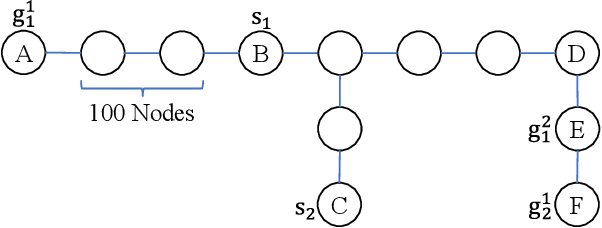
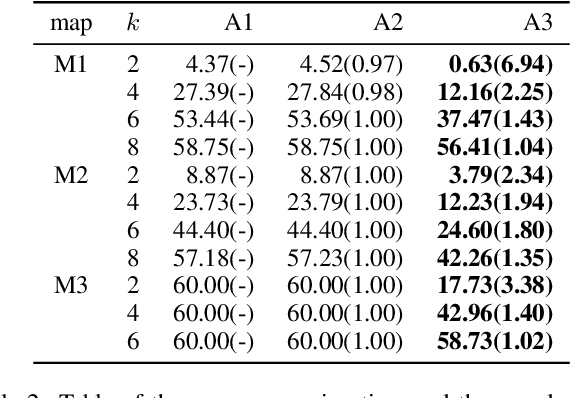
With the expansion of the scale of robotics applications, the multi-goal multi-agent pathfinding (MG-MAPF) problem began to gain widespread attention. This problem requires each agent to visit pre-assigned multiple goal points at least once without conflict. Some previous methods have been proposed to solve the MG-MAPF problem based on Decoupling the goal Vertex visiting order search and the Single-agent pathfinding (DVS). However, this paper demonstrates that the methods based on DVS cannot always obtain the optimal solution. To obtain the optimal result, we propose the Multi-Goal Conflict-Based Search (MGCBS), which is based on Decoupling the goal Safe interval visiting order search and the Single-agent pathfinding (DSS). Additionally, we present the Time-Interval-Space Forest (TIS Forest) to enhance the efficiency of MGCBS by maintaining the shortest paths from any start point at any start time step to each safe interval at the goal points. The experiment demonstrates that our method can consistently obtain optimal results and execute up to 7 times faster than the state-of-the-art method in our evaluation.
FusionPortableV2: A Unified Multi-Sensor Dataset for Generalized SLAM Across Diverse Platforms and Scalable Environments
Apr 12, 2024Simultaneous Localization and Mapping (SLAM) technology has been widely applied in various robotic scenarios, from rescue operations to autonomous driving. However, the generalization of SLAM algorithms remains a significant challenge, as current datasets often lack scalability in terms of platforms and environments. To address this limitation, we present FusionPortableV2, a multi-sensor SLAM dataset featuring notable sensor diversity, varied motion patterns, and a wide range of environmental scenarios. Our dataset comprises $27$ sequences, spanning over $2.5$ hours and collected from four distinct platforms: a handheld suite, wheeled and legged robots, and vehicles. These sequences cover diverse settings, including buildings, campuses, and urban areas, with a total length of $38.7km$. Additionally, the dataset includes ground-truth (GT) trajectories and RGB point cloud maps covering approximately $0.3km^2$. To validate the utility of our dataset in advancing SLAM research, we assess several state-of-the-art (SOTA) SLAM algorithms. Furthermore, we demonstrate the dataset's broad applicability beyond traditional SLAM tasks by investigating its potential for monocular depth estimation. The complete dataset, including sensor data, GT, and calibration details, is accessible at https://fusionportable.github.io/dataset/fusionportable_v2.
PALoc: Advancing SLAM Benchmarking with Prior-Assisted 6-DoF Trajectory Generation and Uncertainty Estimation
Feb 06, 2024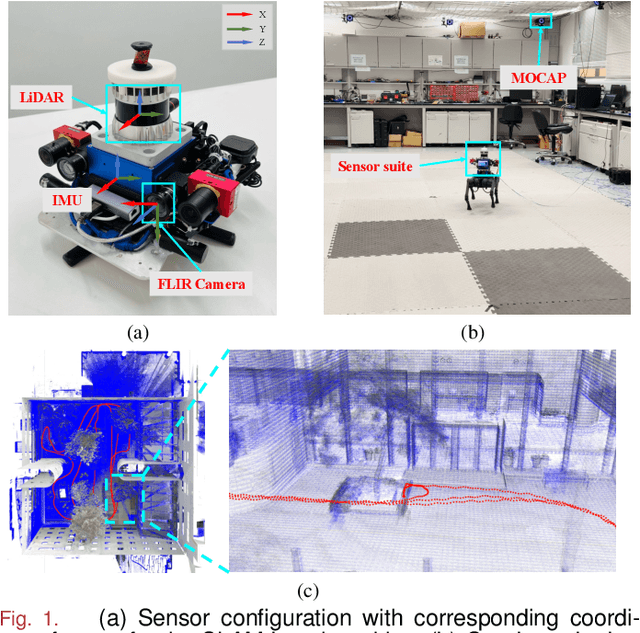
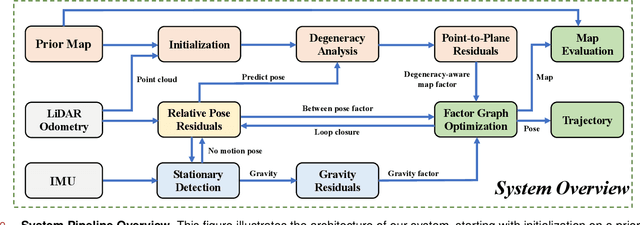
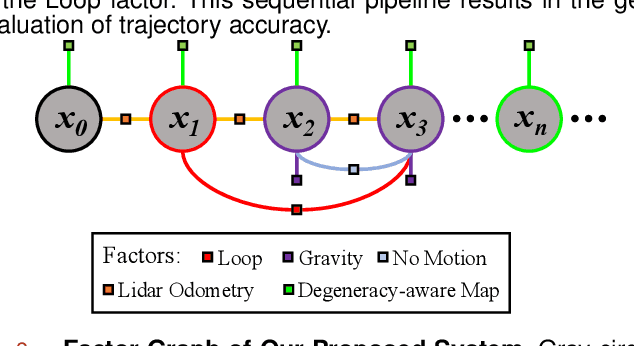
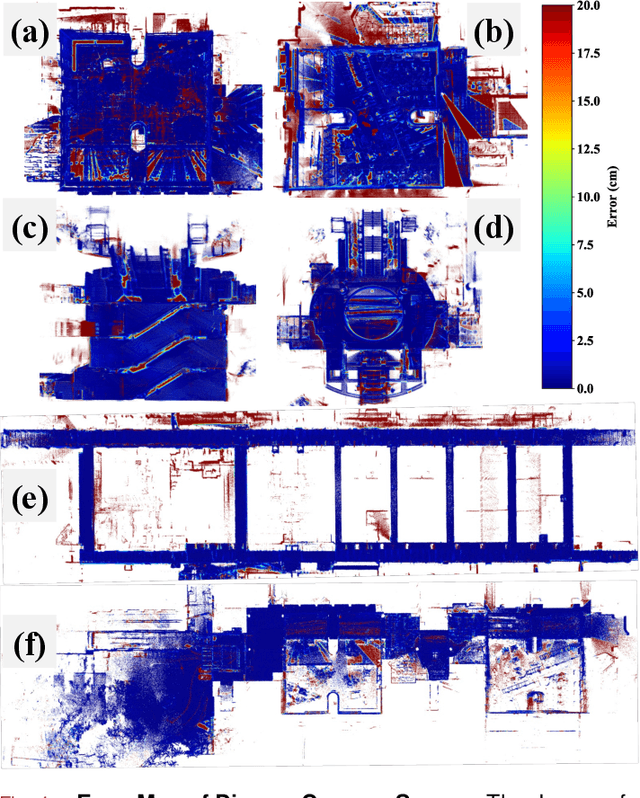
Accurately generating ground truth (GT) trajectories is essential for Simultaneous Localization and Mapping (SLAM) evaluation, particularly under varying environmental conditions. This study introduces a systematic approach employing a prior map-assisted framework for generating dense six-degree-of-freedom (6-DoF) GT poses for the first time, enhancing the fidelity of both indoor and outdoor SLAM datasets. Our method excels in handling degenerate and stationary conditions frequently encountered in SLAM datasets, thereby increasing robustness and precision. A significant aspect of our approach is the detailed derivation of covariances within the factor graph, enabling an in-depth analysis of pose uncertainty propagation. This analysis crucially contributes to demonstrating specific pose uncertainties and enhancing trajectory reliability from both theoretical and empirical perspectives. Additionally, we provide an open-source toolbox (https://github.com/JokerJohn/Cloud_Map_Evaluation) for map evaluation criteria, facilitating the indirect assessment of overall trajectory precision. Experimental results show at least a 30\% improvement in map accuracy and a 20\% increase in direct trajectory accuracy compared to the Iterative Closest Point (ICP) \cite{sharp2002icp} algorithm across diverse campus environments, with substantially enhanced robustness. Our open-source solution (https://github.com/JokerJohn/PALoc), extensively applied in the FusionPortable\cite{Jiao2022Mar} dataset, is geared towards SLAM benchmark dataset augmentation and represents a significant advancement in SLAM evaluations.
Enhancing Campus Mobility: Achievements and Challenges of Autonomous Shuttle "Snow Lion''
Jan 17, 2024The rapid evolution of autonomous vehicles (AVs) has significantly influenced global transportation systems. In this context, we present ``Snow Lion'', an autonomous shuttle meticulously designed to revolutionize on-campus transportation, offering a safer and more efficient mobility solution for students, faculty, and visitors. The primary objective of this research is to enhance campus mobility by providing a reliable, efficient, and eco-friendly transportation solution that seamlessly integrates with existing infrastructure and meets the diverse needs of a university setting. To achieve this goal, we delve into the intricacies of the system design, encompassing sensing, perception, localization, planning, and control aspects. We evaluate the autonomous shuttle's performance in real-world scenarios, involving a 1146-kilometer road haul and the transportation of 442 passengers over a two-month period. These experiments demonstrate the effectiveness of our system and offer valuable insights into the intricate process of integrating an autonomous vehicle within campus shuttle operations. Furthermore, a thorough analysis of the lessons derived from this experience furnishes a valuable real-world case study, accompanied by recommendations for future research and development in the field of autonomous driving.
Quantifying intra-tumoral genetic heterogeneity of glioblastoma toward precision medicine using MRI and a data-inclusive machine learning algorithm
Dec 30, 2023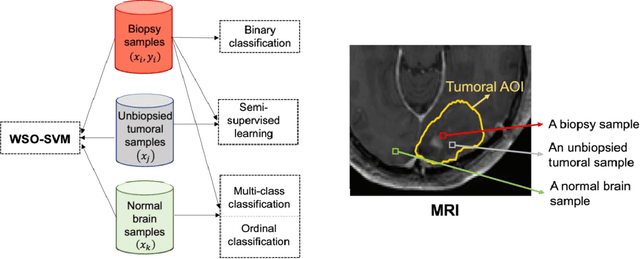
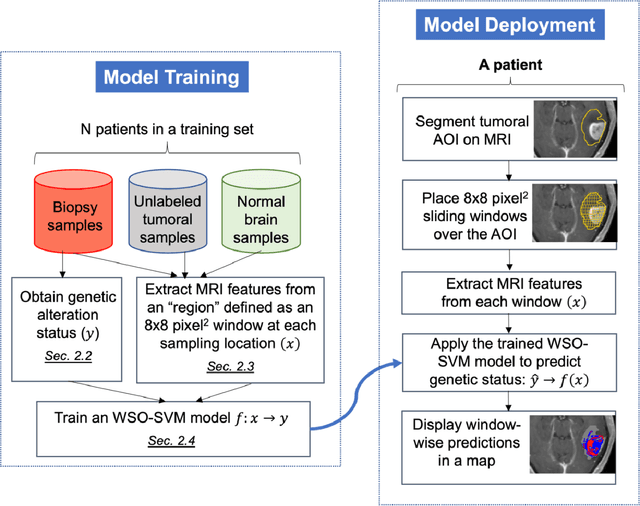

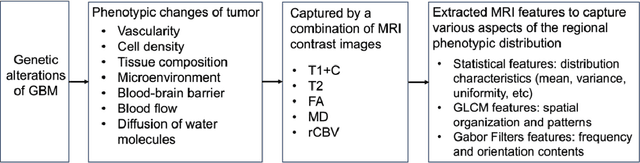
Glioblastoma (GBM) is one of the most aggressive and lethal human cancers. Intra-tumoral genetic heterogeneity poses a significant challenge for treatment. Biopsy is invasive, which motivates the development of non-invasive, MRI-based machine learning (ML) models to quantify intra-tumoral genetic heterogeneity for each patient. This capability holds great promise for enabling better therapeutic selection to improve patient outcomes. We proposed a novel Weakly Supervised Ordinal Support Vector Machine (WSO-SVM) to predict regional genetic alteration status within each GBM tumor using MRI. WSO-SVM was applied to a unique dataset of 318 image-localized biopsies with spatially matched multiparametric MRI from 74 GBM patients. The model was trained to predict the regional genetic alteration of three GBM driver genes (EGFR, PDGFRA, and PTEN) based on features extracted from the corresponding region of five MRI contrast images. For comparison, a variety of existing ML algorithms were also applied. The classification accuracy of each gene was compared between the different algorithms. The SHapley Additive exPlanations (SHAP) method was further applied to compute contribution scores of different contrast images. Finally, the trained WSO-SVM was used to generate prediction maps within the tumoral area of each patient to help visualize the intra-tumoral genetic heterogeneity. This study demonstrated the feasibility of using MRI and WSO-SVM to enable non-invasive prediction of intra-tumoral regional genetic alteration for each GBM patient, which can inform future adaptive therapies for individualized oncology.
A Novel Hybrid Ordinal Learning Model with Health Care Application
Dec 15, 2023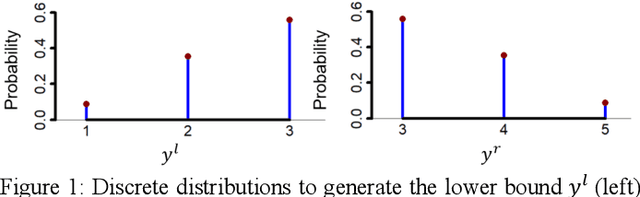
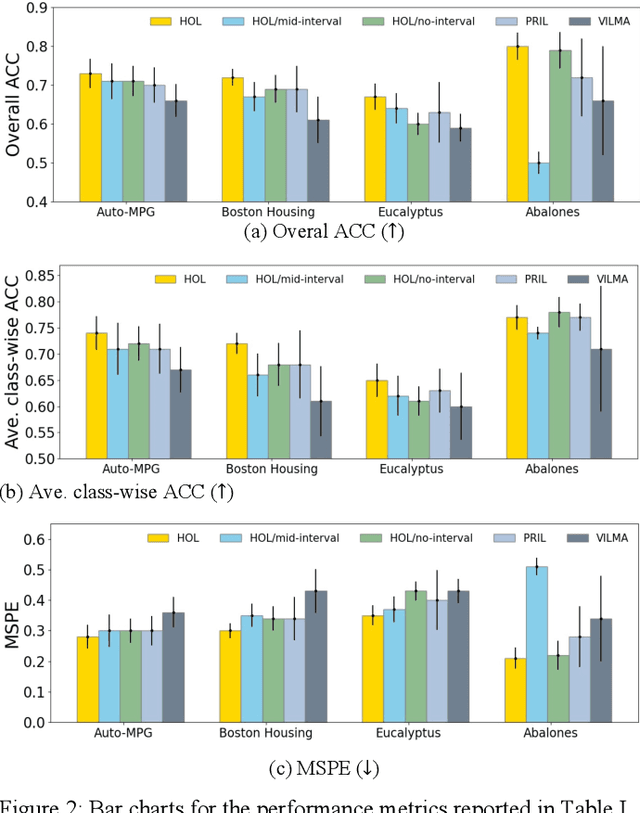
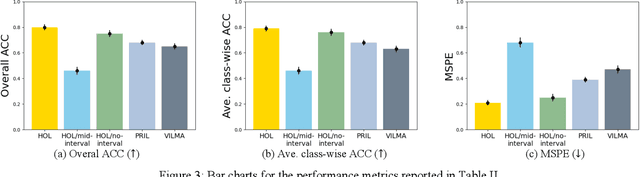
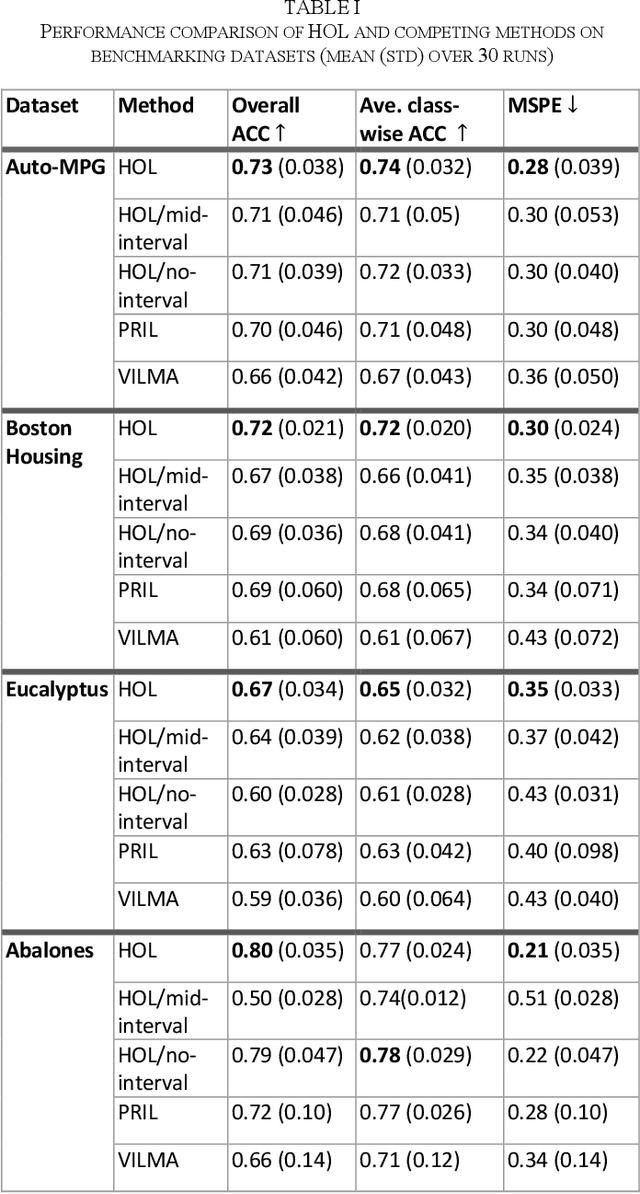
Ordinal learning (OL) is a type of machine learning models with broad utility in health care applications such as diagnosis of different grades of a disease (e.g., mild, modest, severe) and prediction of the speed of disease progression (e.g., very fast, fast, moderate, slow). This paper aims to tackle a situation when precisely labeled samples are limited in the training set due to cost or availability constraints, whereas there could be an abundance of samples with imprecise labels. We focus on imprecise labels that are intervals, i.e., one can know that a sample belongs to an interval of labels but cannot know which unique label it has. This situation is quite common in health care datasets due to limitations of the diagnostic instrument, sparse clinical visits, or/and patient dropout. Limited research has been done to develop OL models with imprecise/interval labels. We propose a new Hybrid Ordinal Learner (HOL) to integrate samples with both precise and interval labels to train a robust OL model. We also develop a tractable and efficient optimization algorithm to solve the HOL formulation. We compare HOL with several recently developed OL methods on four benchmarking datasets, which demonstrate the superior performance of HOL. Finally, we apply HOL to a real-world dataset for predicting the speed of progressing to Alzheimer's Disease (AD) for individuals with Mild Cognitive Impairment (MCI) based on a combination of multi-modality neuroimaging and demographic/clinical datasets. HOL achieves high accuracy in the prediction and outperforms existing methods. The capability of accurately predicting the speed of progression to AD for each individual with MCI has the potential for helping facilitate more individually-optimized interventional strategies.