 Add to Chrome
 Add to Firefox
 Add to Edge
IntElicit: Eliciting and Assessing Contextualized Creativity via Dialogue Policy Optimization
Jun 10, 2026
Contextualized assessment offers high ecological validity for evaluating creativity but introduces a critical challenge: observed performance may be confounded with cognitive proficiency (domain knowledge) and agency (willingness to engage). Meanwhile, in the age of generative AI, creative problem solving increasingly occurs in tool-mediated and human--AI interactive environments, making fully static assessment less aligned with contemporary creative practice. To address these issues, this paper proposes IntElicit, a framework for eliciting and assessing contextualized creativity via dialogue policy optimization. IntElicit functions as a constrained adaptive AI Interviewer: it provides non-directive knowledge and agency scaffolds in multi-turn interaction to reduce non-creative confounders, while preserving participants' responsibility for generating the creative content being evaluated. Specifically, to tackle sparse rewards and potential reward hacking (e.g., answer dictation) in open-ended educational dialogue, IntElicit introduces a decomposed process reward mechanism. This mechanism aligns the policy with pedagogical elicitation, rewarding prompts that draw out participant reasoning rather than producing optimal answers on their behalf. Extensive experiments, including participant simulation and a human subject study (N=64), show that IntElicit improves elicited creative outcomes over expert-designed baselines. Together, the results suggest that interactive elicitation can reveal creative potential that static FPSP-style assessment may miss, providing a formative and diagnostic lens for contextualized creativity assessment in AI-mediated learning contexts.

HCSG: Human-Centric Semantic-Geometric Reasoning for Vision-Language Navigation
May 13, 2026VLN has achieved remarkable progress by scaling data and model capacity. However, the assumption of a static environment breaks down in real-world indoor scenarios, where robots inevitably encounter dynamic pedestrians. Existing human-aware approaches typically treat humans merely as moving obstacles based on implicit visual cues, lacking the explicit reasoning required to interpret human intentions or maintain social norms. To address this, we propose HCSG, the first human-centric framework for VLN. This framework provides a robust foundation for safe, socially intelligent navigation in dynamic human-robot environments that shifts the paradigm from passive collision avoidance to active human behavior understanding. Specifically, HCSG introduces a unified Human Understanding Module that synergizes two key capabilities: (i) geometric forecasting, which predicts human pose and trajectory to anticipate future motion dynamics; and (ii) semantic interpretation, which leverages a Vision-Language Model (VLM) to generate natural language descriptions of human actions and intentions. These semantic-geometric representations are fused into the agent's topological map for instruction-conditioned planning. Furthermore, a social distance loss is introduced to enforce socially compliant interaction distances. Extensive experiments on the HA-VLNCE benchmark demonstrate that HCSG significantly outperforms state-of-the-art methods, achieving a 14% improvement in Success Rate and a 34% reduction in Collision Rate. Our project can be seen at https://haoxuanxu1024.github.io/HCSG/.
TeamLLM: A Human-Like Team-Oriented Collaboration Framework for Multi-Step Contextualized Tasks
Apr 08, 2026Recently, multi-Large Language Model (LLM) frameworks have been proposed to solve contextualized tasks. However, these frameworks do not explicitly emulate human team role division, which may lead to a single perspective, thereby weakening performance on multi-step contextualized tasks. To address this issue, we propose TeamLLM, a human-like Team-Oriented Multi-LLM Collaboration Framework. TeamLLM adopts four team roles with distinct division and employs a three-phase multi-LLM collaboration for multi-step contextualized tasks. To evaluate the effectiveness of TeamLLM on multi-step contextualized tasks, we propose Contextually-Grounded and Procedurally-Structured tasks (CGPST) and construct the CGPST benchmark. This benchmark has four core features: contextual grounding, procedural structure, process-oriented evaluation and multi-dimensional assessment. We evaluate ten popular LLMs on CGPST at overall-level, step-level, and dimension-level. Results show that TeamLLM substantially improves performance on CGPST. We release the benchmark with scenarios, full-process responses and human scores from ten LLMs. The code and data are available at https://anonymous.4open.science/r/TeamLLM-anonymous-C50E/.
VLA-IAP: Training-Free Visual Token Pruning via Interaction Alignment for Vision-Language-Action Models
Mar 24, 2026Vision-Language-Action (VLA) models have rapidly advanced embodied intelligence, enabling robots to execute complex, instruction-driven tasks. However, as model capacity and visual context length grow, the inference cost of VLA systems becomes a major bottleneck for real-world deployment on resource-constrained platforms. Existing visual token pruning methods mainly rely on semantic saliency or simple temporal cues, overlooking the continuous physical interaction, a fundamental property of VLA tasks. Consequently, current approaches often prune visually sparse yet structurally critical regions that support manipulation, leading to unstable behavior during early task phases. To overcome this, we propose a shift toward an explicit Interaction-First paradigm. Our proposed \textbf{training-free} method, VLA-IAP (Interaction-Aligned Pruning), introduces a geometric prior mechanism to preserve structural anchors and a dynamic scheduling strategy that adapts pruning intensity based on semantic-motion alignment. This enables a conservative-to-aggressive transition, ensuring robustness during early uncertainty and efficiency once interaction is locked. Extensive experiments show that VLA-IAP achieves a \textbf{97.8\% success rate} with a \textbf{$1.25\times$ speedup} on the LIBERO benchmark, and up to \textbf{$1.54\times$ speedup} while maintaining performance \textbf{comparable to the unpruned backbone}. Moreover, the method demonstrates superior and consistent performance across multiple model architectures and three different simulation environments, as well as a real robot platform, validating its strong generalization capability and practical applicability. Our project website is: \href{https://chengjt1999.github.io/VLA-IAP.github.io/}{VLA-IAP.com}.
Invariance on Manifolds: Understanding Robust Visual Representations for Place Recognition
Jan 31, 2026Visual Place Recognition (VPR) demands representations robust to drastic environmental and viewpoint shifts. Current aggregation paradigms, however, either rely on data-hungry supervision or simplistic first-order statistics, often neglecting intrinsic structural correlations. In this work, we propose a Second-Order Geometric Statistics framework that inherently captures geometric stability without training. We conceptualize scenes as covariance descriptors on the Symmetric Positive Definite (SPD) manifold, where perturbations manifest as tractable congruence transformations. By leveraging geometry-aware Riemannian mappings, we project these descriptors into a linearized Euclidean embedding, effectively decoupling signal structure from noise. Our approach introduces a training-free framework built upon fixed, pre-trained backbones, achieving strong zero-shot generalization without parameter updates. Extensive experiments confirm that our method achieves highly competitive performance against state-of-the-art baselines, particularly excelling in challenging zero-shot scenarios.
MetaCD: A Meta Learning Framework for Cognitive Diagnosis based on Continual Learning
Dec 28, 2025Cognitive diagnosis is an essential research topic in intelligent education, aimed at assessing the level of mastery of different skills by students. So far, many research works have used deep learning models to explore the complex interactions between students, questions, and skills. However, the performance of existing method is frequently limited by the long-tailed distribution and dynamic changes in the data. To address these challenges, we propose a meta-learning framework for cognitive diagnosis based on continual learning (MetaCD). This framework can alleviate the long-tailed problem by utilizing meta-learning to learn the optimal initialization state, enabling the model to achieve good accuracy on new tasks with only a small amount of data. In addition, we utilize a continual learning method named parameter protection mechanism to give MetaCD the ability to adapt to new skills or new tasks, in order to adapt to dynamic changes in data. MetaCD can not only improve the plasticity of our model on a single task, but also ensure the stability and generalization of the model on sequential tasks. Comprehensive experiments on five real-world datasets show that MetaCD outperforms other baselines in both accuracy and generalization.
MA-SLAM: Active SLAM in Large-Scale Unknown Environment using Map Aware Deep Reinforcement Learning
Nov 18, 2025Active Simultaneous Localization and Mapping (Active SLAM) involves the strategic planning and precise control of a robotic system's movement in order to construct a highly accurate and comprehensive representation of its surrounding environment, which has garnered significant attention within the research community. While the current methods demonstrate efficacy in small and controlled settings, they face challenges when applied to large-scale and diverse environments, marked by extended periods of exploration and suboptimal paths of discovery. In this paper, we propose MA-SLAM, a Map-Aware Active SLAM system based on Deep Reinforcement Learning (DRL), designed to address the challenge of efficient exploration in large-scale environments. In pursuit of this objective, we put forward a novel structured map representation. By discretizing the spatial data and integrating the boundary points and the historical trajectory, the structured map succinctly and effectively encapsulates the visited regions, thereby serving as input for the deep reinforcement learning based decision module. Instead of sequentially predicting the next action step within the decision module, we have implemented an advanced global planner to optimize the exploration path by leveraging long-range target points. We conducted experiments in three simulation environments and deployed in a real unmanned ground vehicle (UGV), the results demonstrate that our approach significantly reduces both the duration and distance of exploration compared with state-of-the-art methods.
Compose Yourself: Average-Velocity Flow Matching for One-Step Speech Enhancement
Sep 19, 2025Diffusion and flow matching (FM) models have achieved remarkable progress in speech enhancement (SE), yet their dependence on multi-step generation is computationally expensive and vulnerable to discretization errors. Recent advances in one-step generative modeling, particularly MeanFlow, provide a promising alternative by reformulating dynamics through average velocity fields. In this work, we present COSE, a one-step FM framework tailored for SE. To address the high training overhead of Jacobian-vector product (JVP) computations in MeanFlow, we introduce a velocity composition identity to compute average velocity efficiently, eliminating expensive computation while preserving theoretical consistency and achieving competitive enhancement quality. Extensive experiments on standard benchmarks show that COSE delivers up to 5x faster sampling and reduces training cost by 40%, all without compromising speech quality. Code is available at https://github.com/ICDM-UESTC/COSE.
A Pseudo Global Fusion Paradigm-Based Cross-View Network for LiDAR-Based Place Recognition
Aug 12, 2025LiDAR-based Place Recognition (LPR) remains a critical task in Embodied Artificial Intelligence (AI) and Autonomous Driving, primarily addressing localization challenges in GPS-denied environments and supporting loop closure detection. Existing approaches reduce place recognition to a Euclidean distance-based metric learning task, neglecting the feature space's intrinsic structures and intra-class variances. Such Euclidean-centric formulation inherently limits the model's capacity to capture nonlinear data distributions, leading to suboptimal performance in complex environments and temporal-varying scenarios. To address these challenges, we propose a novel cross-view network based on an innovative fusion paradigm. Our framework introduces a pseudo-global information guidance mechanism that coordinates multi-modal branches to perform feature learning within a unified semantic space. Concurrently, we propose a Manifold Adaptation and Pairwise Variance-Locality Learning Metric that constructs a Symmetric Positive Definite (SPD) matrix to compute Mahalanobis distance, superseding traditional Euclidean distance metrics. This geometric formulation enables the model to accurately characterize intrinsic data distributions and capture complex inter-class dependencies within the feature space. Experimental results demonstrate that the proposed algorithm achieves competitive performance, particularly excelling in complex environmental conditions.
Real-Time AIoT for UAV Antenna Interference Detection via Edge-Cloud Collaboration
Dec 04, 2024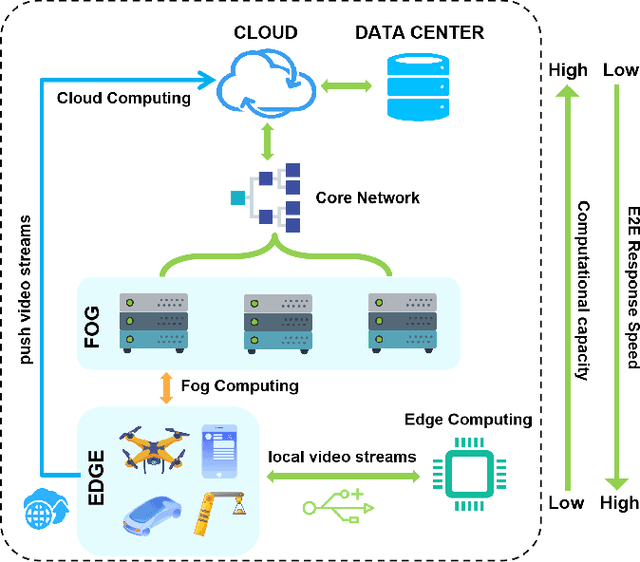
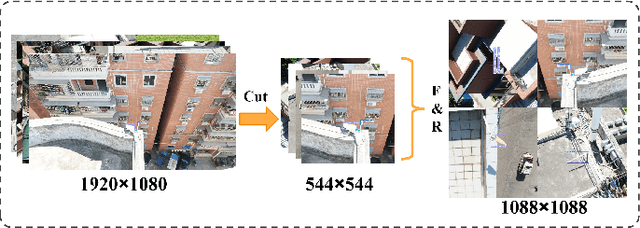
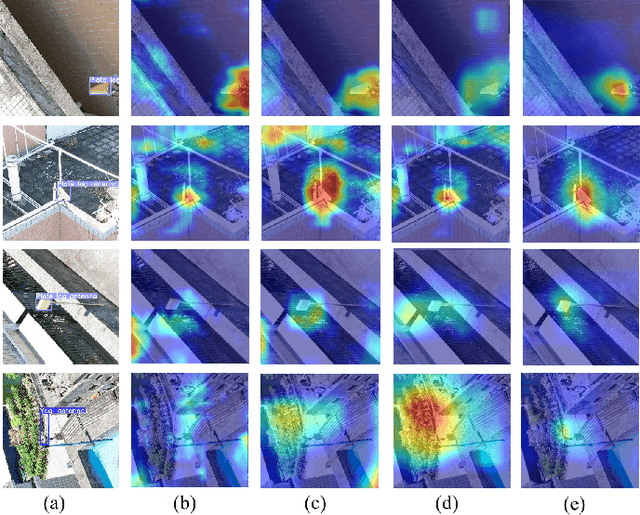
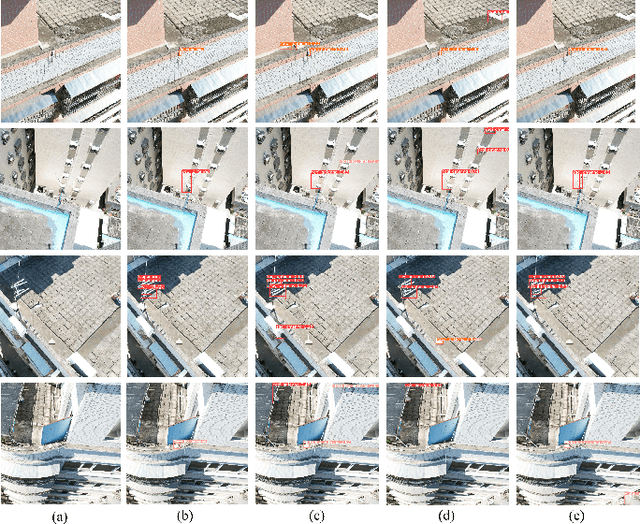
In the fifth-generation (5G) era, eliminating communication interference sources is crucial for maintaining network performance. Interference often originates from unauthorized or malfunctioning antennas, and radio monitoring agencies must address numerous sources of such antennas annually. Unmanned aerial vehicles (UAVs) can improve inspection efficiency. However, the data transmission delay in the existing cloud-only (CO) artificial intelligence (AI) mode fails to meet the low latency requirements for real-time performance. Therefore, we propose a computer vision-based AI of Things (AIoT) system to detect antenna interference sources for UAVs. The system adopts an optimized edge-cloud collaboration (ECC+) mode, combining a keyframe selection algorithm (KSA), focusing on reducing end-to-end latency (E2EL) and ensuring reliable data transmission, which aligns with the core principles of ultra-reliable low-latency communication (URLLC). At the core of our approach is an end-to-end antenna localization scheme based on the tracking-by-detection (TBD) paradigm, including a detector (EdgeAnt) and a tracker (AntSort). EdgeAnt achieves state-of-the-art (SOTA) performance with a mean average precision (mAP) of 42.1% on our custom antenna interference source dataset, requiring only 3 million parameters and 14.7 GFLOPs. On the COCO dataset, EdgeAnt achieves 38.9% mAP with 5.4 GFLOPs. We deployed EdgeAnt on Jetson Xavier NX (TRT) and Raspberry Pi 4B (NCNN), achieving real-time inference speeds of 21.1 (1088) and 4.8 (640) frames per second (FPS), respectively. Compared with CO mode, the ECC+ mode reduces E2EL by 88.9%, increases accuracy by 28.2%. Additionally, the system offers excellent scalability for coordinated multiple UAVs inspections. The detector code is publicly available at https://github.com/SCNU-RISLAB/EdgeAnt.