 Add to Chrome
 Add to Firefox
 Add to Edge
TSI-Bench: Benchmarking Time Series Imputation
Jun 18, 2024
Effective imputation is a crucial preprocessing step for time series analysis. Despite the development of numerous deep learning algorithms for time series imputation, the community lacks standardized and comprehensive benchmark platforms to effectively evaluate imputation performance across different settings. Moreover, although many deep learning forecasting algorithms have demonstrated excellent performance, whether their modeling achievements can be transferred to time series imputation tasks remains unexplored. To bridge these gaps, we develop TSI-Bench, the first (to our knowledge) comprehensive benchmark suite for time series imputation utilizing deep learning techniques. The TSI-Bench pipeline standardizes experimental settings to enable fair evaluation of imputation algorithms and identification of meaningful insights into the influence of domain-appropriate missingness ratios and patterns on model performance. Furthermore, TSI-Bench innovatively provides a systematic paradigm to tailor time series forecasting algorithms for imputation purposes. Our extensive study across 34,804 experiments, 28 algorithms, and 8 datasets with diverse missingness scenarios demonstrates TSI-Bench's effectiveness in diverse downstream tasks and potential to unlock future directions in time series imputation research and analysis. The source code and experiment logs are available at https://github.com/WenjieDu/AwesomeImputation.

Estimating Difficulty Levels of Programming Problems with Pre-trained Model
Jun 13, 2024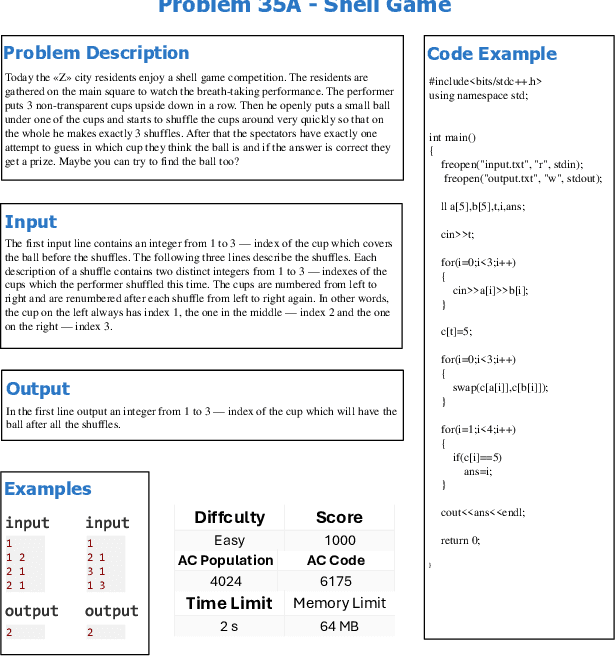

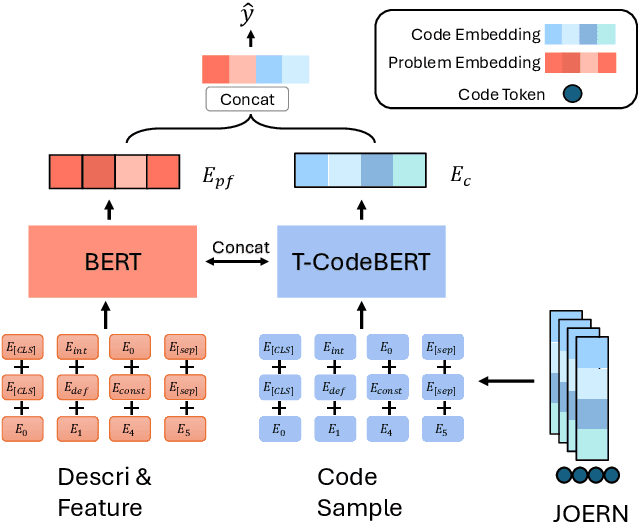

As the demand for programming skills grows across industries and academia, students often turn to Programming Online Judge (POJ) platforms for coding practice and competition. The difficulty level of each programming problem serves as an essential reference for guiding students' adaptive learning. However, current methods of determining difficulty levels either require extensive expert annotations or take a long time to accumulate enough student solutions for each problem. To address this issue, we formulate the problem of automatic difficulty level estimation of each programming problem, given its textual description and a solution example of code. For tackling this problem, we propose to couple two pre-trained models, one for text modality and the other for code modality, into a unified model. We built two POJ datasets for the task and the results demonstrate the effectiveness of the proposed approach and the contributions of both modalities.
AICoderEval: Improving AI Domain Code Generation of Large Language Models
Jun 07, 2024Automated code generation is a pivotal capability of large language models (LLMs). However, assessing this capability in real-world scenarios remains challenging. Previous methods focus more on low-level code generation, such as model loading, instead of generating high-level codes catering for real-world tasks, such as image-to-text, text classification, in various domains. Therefore, we construct AICoderEval, a dataset focused on real-world tasks in various domains based on HuggingFace, PyTorch, and TensorFlow, along with comprehensive metrics for evaluation and enhancing LLMs' task-specific code generation capability. AICoderEval contains test cases and complete programs for automated evaluation of these tasks, covering domains such as natural language processing, computer vision, and multimodal learning. To facilitate research in this area, we open-source the AICoderEval dataset at \url{https://huggingface.co/datasets/vixuowis/AICoderEval}. After that, we propose CoderGen, an agent-based framework, to help LLMs generate codes related to real-world tasks on the constructed AICoderEval. Moreover, we train a more powerful task-specific code generation model, named AICoder, which is refined on llama-3 based on AICoderEval. Our experiments demonstrate the effectiveness of CoderGen in improving LLMs' task-specific code generation capability (by 12.00\% on pass@1 for original model and 9.50\% on pass@1 for ReAct Agent). AICoder also outperforms current code generation LLMs, indicating the great quality of the AICoderEval benchmark.
Logic Synthesis with Generative Deep Neural Networks
Jun 07, 2024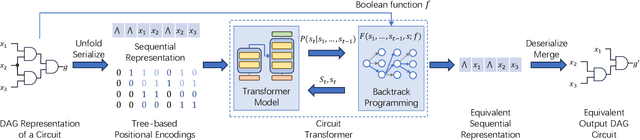
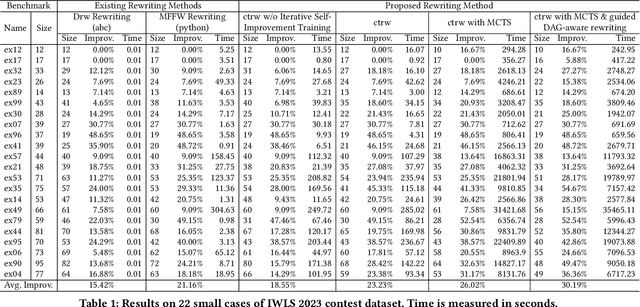
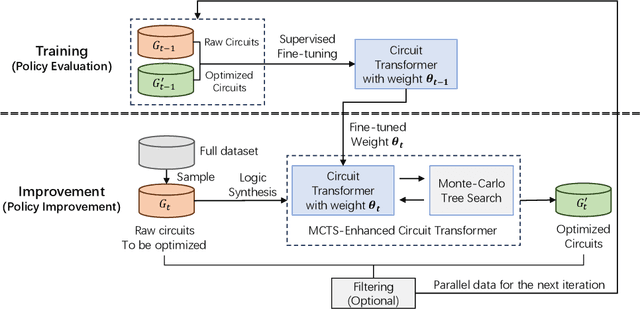
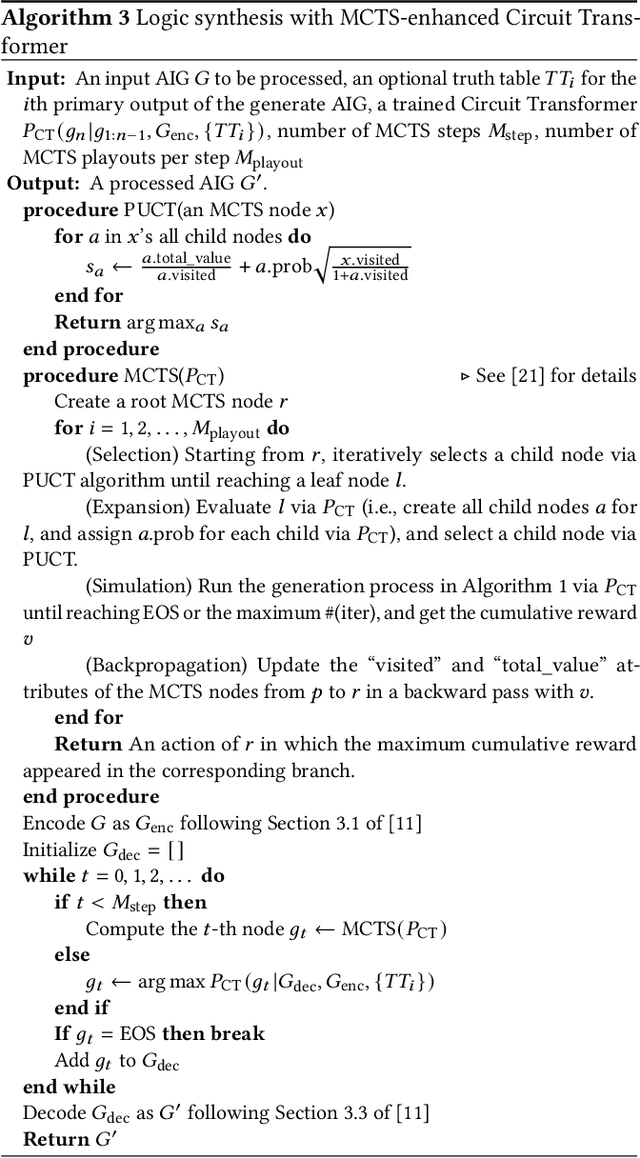
While deep learning has achieved significant success in various domains, its application to logic circuit design has been limited due to complex constraints and strict feasibility requirement. However, a recent generative deep neural model, "Circuit Transformer", has shown promise in this area by enabling equivalence-preserving circuit transformation on a small scale. In this paper, we introduce a logic synthesis rewriting operator based on the Circuit Transformer model, named "ctrw" (Circuit Transformer Rewriting), which incorporates the following techniques: (1) a two-stage training scheme for the Circuit Transformer tailored for logic synthesis, with iterative improvement of optimality through self-improvement training; (2) integration of the Circuit Transformer with state-of-the-art rewriting techniques to address scalability issues, allowing for guided DAG-aware rewriting. Experimental results on the IWLS 2023 contest benchmark demonstrate the effectiveness of our proposed rewriting methods.
UDQL: Bridging The Gap between MSE Loss and The Optimal Value Function in Offline Reinforcement Learning
Jun 05, 2024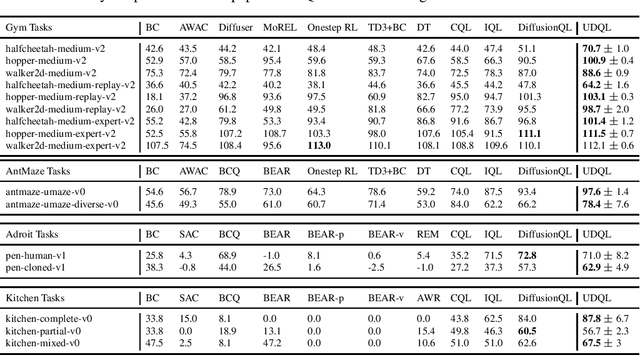
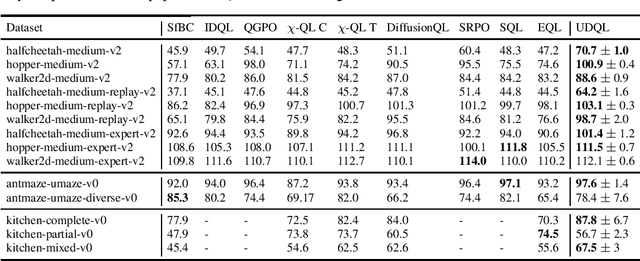
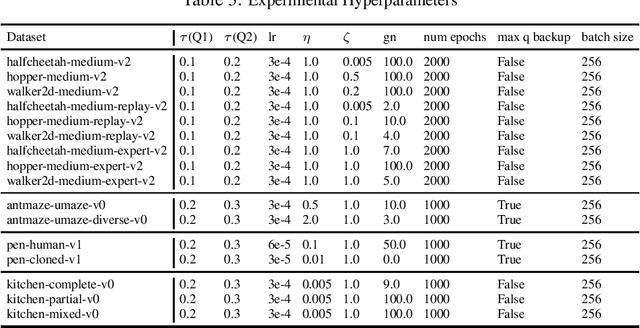
The Mean Square Error (MSE) is commonly utilized to estimate the solution of the optimal value function in the vast majority of offline reinforcement learning (RL) models and has achieved outstanding performance. However, we find that its principle can lead to overestimation phenomenon for the value function. In this paper, we first theoretically analyze overestimation phenomenon led by MSE and provide the theoretical upper bound of the overestimated error. Furthermore, to address it, we propose a novel Bellman underestimated operator to counteract overestimation phenomenon and then prove its contraction characteristics. At last, we propose the offline RL algorithm based on underestimated operator and diffusion policy model. Extensive experimental results on D4RL tasks show that our method can outperform state-of-the-art offline RL algorithms, which demonstrates that our theoretical analysis and underestimation way are effective for offline RL tasks.
Learning to Discuss Strategically: A Case Study on One Night Ultimate Werewolf
May 30, 2024Communication is a fundamental aspect of human society, facilitating the exchange of information and beliefs among people. Despite the advancements in large language models (LLMs), recent agents built with these often neglect the control over discussion tactics, which are essential in communication scenarios and games. As a variant of the famous communication game Werewolf, One Night Ultimate Werewolf (ONUW) requires players to develop strategic discussion policies due to the potential role changes that increase the uncertainty and complexity of the game. In this work, we first present the existence of the Perfect Bayesian Equilibria (PBEs) in two scenarios of the ONUW game: one with discussion and one without. The results showcase that the discussion greatly changes players' utilities by affecting their beliefs, emphasizing the significance of discussion tactics. Based on the insights obtained from the analyses, we propose an RL-instructed language agent framework, where a discussion policy trained by reinforcement learning (RL) is employed to determine appropriate discussion tactics to adopt. Our experimental results on several ONUW game settings demonstrate the effectiveness and generalizability of our proposed framework.
Reliable Object Tracking by Multimodal Hybrid Feature Extraction and Transformer-Based Fusion
May 28, 2024

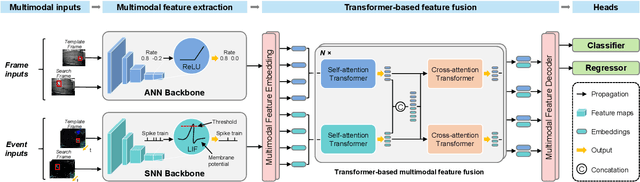

Visual object tracking, which is primarily based on visible light image sequences, encounters numerous challenges in complicated scenarios, such as low light conditions, high dynamic ranges, and background clutter. To address these challenges, incorporating the advantages of multiple visual modalities is a promising solution for achieving reliable object tracking. However, the existing approaches usually integrate multimodal inputs through adaptive local feature interactions, which cannot leverage the full potential of visual cues, thus resulting in insufficient feature modeling. In this study, we propose a novel multimodal hybrid tracker (MMHT) that utilizes frame-event-based data for reliable single object tracking. The MMHT model employs a hybrid backbone consisting of an artificial neural network (ANN) and a spiking neural network (SNN) to extract dominant features from different visual modalities and then uses a unified encoder to align the features across different domains. Moreover, we propose an enhanced transformer-based module to fuse multimodal features using attention mechanisms. With these methods, the MMHT model can effectively construct a multiscale and multidimensional visual feature space and achieve discriminative feature modeling. Extensive experiments demonstrate that the MMHT model exhibits competitive performance in comparison with that of other state-of-the-art methods. Overall, our results highlight the effectiveness of the MMHT model in terms of addressing the challenges faced in visual object tracking tasks.
Attaining Human`s Desirable Outcomes in Human-AI Interaction via Structural Causal Games
May 26, 2024


In human-AI interaction, a prominent goal is to attain human`s desirable outcome with the assistance of AI agents, which can be ideally delineated as a problem of seeking the optimal Nash Equilibrium that matches the human`s desirable outcome. However, reaching the outcome is usually challenging due to the existence of multiple Nash Equilibria that are related to the assisting task but do not correspond to the human`s desirable outcome. To tackle this issue, we employ a theoretical framework called structural causal game (SCG) to formalize the human-AI interactive process. Furthermore, we introduce a strategy referred to as pre-policy intervention on the SCG to steer AI agents towards attaining the human`s desirable outcome. In more detail, a pre-policy is learned as a generalized intervention to guide the agents` policy selection, under a transparent and interpretable procedure determined by the SCG. To make the framework practical, we propose a reinforcement learning-like algorithm to search out this pre-policy. The proposed algorithm is tested in both gridworld environments and realistic dialogue scenarios with large language models, demonstrating its adaptability in a broader class of problems and potential effectiveness in real-world situations.
Reinforcing Language Agents via Policy Optimization with Action Decomposition
May 23, 2024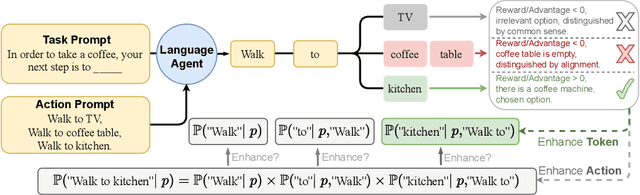
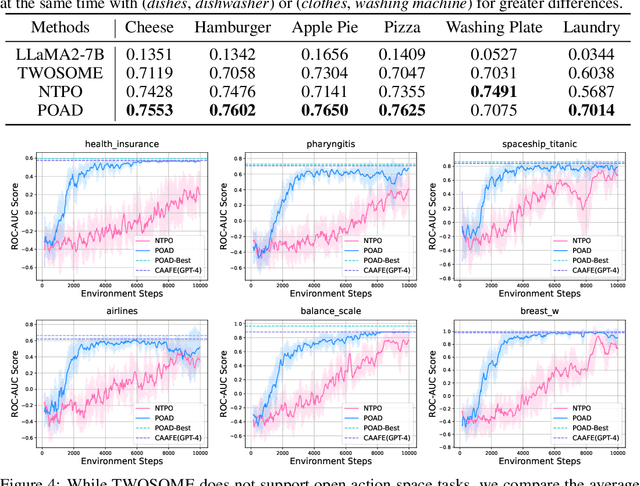
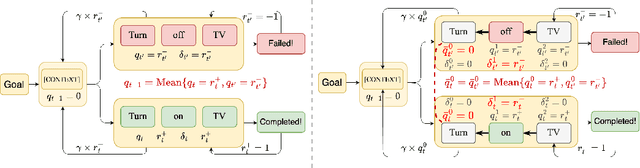
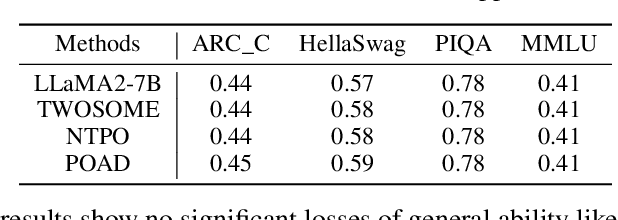
Language models as intelligent agents push the boundaries of sequential decision-making agents but struggle with limited knowledge of environmental dynamics and exponentially huge action space. Recent efforts like GLAM and TWOSOME manually constrain the action space to a restricted subset and employ reinforcement learning to align agents' knowledge with specific environments. However, they overlook fine-grained credit assignments for intra-action tokens, which is essential for efficient language agent optimization, and rely on human's prior knowledge to restrict action space. This paper proposes decomposing language agent optimization from the action level to the token level, offering finer supervision for each intra-action token and manageable optimization complexity in environments with unrestricted action spaces. Beginning with the simplification of flattening all actions, we theoretically explore the discrepancies between action-level optimization and this naive token-level optimization. We then derive the Bellman backup with Action Decomposition (BAD) to integrate credit assignments for both intra-action and inter-action tokens, effectively eliminating the discrepancies. Implementing BAD within the PPO algorithm, we introduce Policy Optimization with Action Decomposition (POAD). POAD benefits from a finer-grained credit assignment process and lower optimization complexity, leading to enhanced learning efficiency and generalization abilities in aligning language agents with interactive environments. We validate POAD across diverse testbeds, with results affirming the advantages of our approach and the correctness of our theoretical analysis.
BOSC: A Backdoor-based Framework for Open Set Synthetic Image Attribution
May 19, 2024
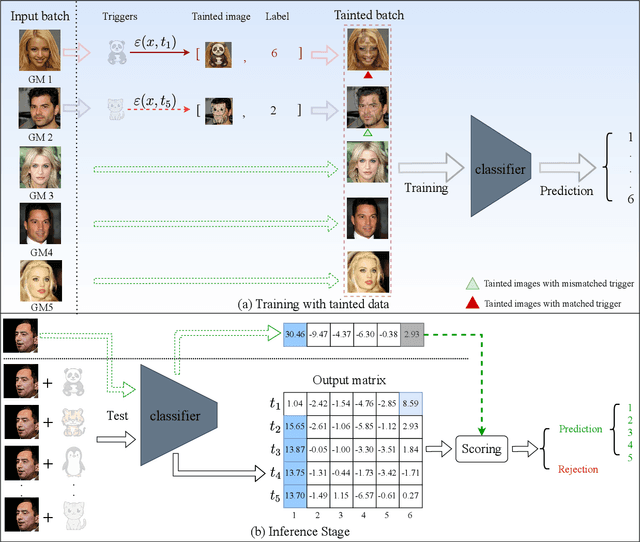

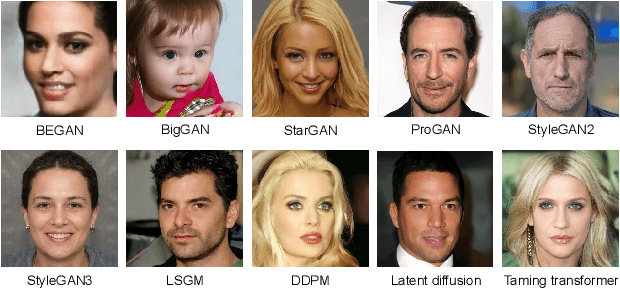
Synthetic image attribution addresses the problem of tracing back the origin of images produced by generative models. Extensive efforts have been made to explore unique representations of generative models and use them to attribute a synthetic image to the model that produced it. Most of the methods classify the models or the architectures among those in a closed set without considering the possibility that the system is fed with samples produced by unknown architectures. With the continuous progress of AI technology, new generative architectures continuously appear, thus driving the attention of researchers towards the development of tools capable of working in open-set scenarios. In this paper, we propose a framework for open set attribution of synthetic images, named BOSC (Backdoor-based Open Set Classification), that relies on the concept of backdoor attacks to design a classifier with rejection option. BOSC works by purposely injecting class-specific triggers inside a portion of the images in the training set to induce the network to establish a matching between class features and trigger features. The behavior of the trained model with respect to triggered samples is then exploited at test time to perform sample rejection using an ad-hoc score. Experiments show that the proposed method has good performance, always surpassing the state-of-the-art. Robustness against image processing is also very good. Although we designed our method for the task of synthetic image attribution, the proposed framework is a general one and can be used for other image forensic applications.