 Add to Chrome
 Add to Firefox
 Add to Edge
Rethinking Multimodal Time-Series Forecasting Evaluation
Jul 08, 2026
We introduce a new context-enriched, multimodal time series forecasting benchmark, TimesX. TimesX contains a wide selection of high-quality real-world time series with diverse domains and textual contexts obtained from an automated data generation pipeline, which helps address three main issues of existing multimodal forecasting benchmarks: (1) poor generalization due to the small scale and synthetic nature of benchmark data, (2) very limited types of textual contexts in the benchmarks, and (3) an inability to mitigate data leakage in evaluation. We conduct a thorough empirical study of zero-shot multimodal forecasting approaches on TimesX. Our results suggest that many approaches that perform well on existing benchmarks may fail on TimesX. In contrast, simple ensemble methods that leverage rich textual context accompanying time-series can outperform strong baselines on TimesX.

Rethinking Post-Training Recipes for Multimodal Time-Series Forecasting
May 28, 2026Time-Series Foundation Models (TSFMs) excel at zero-shot unimodal forecasting using numerical data, but unlike LLMs they cannot consume multimodal, non-numerical context that often shape real-world trajectories. In this work, we bridge this gap and argue for a multimodal time-series forecasting approach that post-trains LLMs to act as context-guided revisors over strong numerical TSFM priors. We introduce PostTime, a post-training recipe combining Supervised Fine-Tuning (SFT) and Reinforcement Learning with Verifiable Rewards (RLVR), along with a methodology to generate automated reasoning traces for forecast revisions. PostTime teaches an LLM to generate context-conditioned forecast interventions -- decisions to revise, preserve, or ignore the TSFM prior based on the multimodal context. We evaluate this approach on the TimesX multimodal forecasting benchmark using a Gemma-3-4B LLM and TimesFM-2.5 TSFM, and show that it significantly outperforms standalone TSFMs, LLM-only baselines, and existing multimodal forecasting approaches.
UniSD: Towards a Unified Self-Distillation Framework for Large Language Models
May 07, 2026Self-distillation (SD) offers a promising path for adapting large language models (LLMs) without relying on stronger external teachers. However, SD in autoregressive LLMs remains challenging because self-generated trajectories are free-form, correctness is task-dependent, and plausible rationales can still provide unstable or unreliable supervision. Existing methods mainly examine isolated design choices, leaving their effectiveness, roles, and interactions unclear. In this paper, we propose UniSD, a unified framework to systematically study self-distillation. UniSD integrates complementary mechanisms that address supervision reliability, representation alignment, and training stability, including multi-teacher agreement, EMA teacher stabilization, token-level contrastive learning, feature matching, and divergence clipping. Across six benchmarks and six models from three model families, UniSD reveals when self-distillation improves over static imitation, which components drive the gains, and how these components interact across tasks. Guided by these insights, we construct UniSDfull, an integrated pipeline that combines complementary components and achieves the strongest overall performance, improving over the base model by +5.4 points and the strongest baseline by +2.8 points. Extensive evaluation highlights self-distillation as a practical and steerable approach for efficient LLM adaptation without stronger external teachers.
Seeking Universal Shot Language Understanding Solutions
Mar 19, 2026Shot language understanding (SLU) is crucial for cinematic analysis but remains challenging due to its diverse cinematographic dimensions and subjective expert judgment. While vision-language models (VLMs) have shown strong ability in general visual understanding, recent studies reveal judgment discrepancies between VLMs and film experts on SLU tasks. To address this gap, we introduce SLU-SUITE, a comprehensive training and evaluation suite containing 490K human-annotated QA pairs across 33 tasks spanning six film-grounded dimensions. Using SLU-SUITE, we originally observe two insights into VLM-based SLU from: the model side, which diagnoses key bottlenecks of modules; the data side, which quantifies cross-dimensional influences among tasks. These findings motivate our universal SLU solutions from two complementary paradigms: UniShot, a balanced one-for-all generalist trained via dynamic-balanced data mixing, and AgentShots, a prompt-routed expert cluster that maximizes peak dimension performance. Extensive experiments show that our models outperform task-specific ensembles on in-domain tasks and surpass leading commercial VLMs by 22% on out-of-domain tasks.
In-context Pre-trained Time-Series Foundation Models adapt to Unseen Tasks
Feb 23, 2026Time-series foundation models (TSFMs) have demonstrated strong generalization capabilities across diverse datasets and tasks. However, existing foundation models are typically pre-trained to enhance performance on specific tasks and often struggle to generalize to unseen tasks without fine-tuning. To address this limitation, we propose augmenting TSFMs with In-Context Learning (ICL) capabilities, enabling them to perform test-time inference by dynamically adapting to input-output relationships provided within the context. Our framework, In-Context Time-series Pre-training (ICTP), restructures the original pre-training data to equip the backbone TSFM with ICL capabilities, enabling adaptation to unseen tasks. Experiments demonstrate that ICT improves the performance of state-of-the-art TSFMs by approximately 11.4% on unseen tasks without requiring fine-tuning.
FutureX-Pro: Extending Future Prediction to High-Value Vertical Domains
Jan 18, 2026Building upon FutureX, which established a live benchmark for general-purpose future prediction, this report introduces FutureX-Pro, including FutureX-Finance, FutureX-Retail, FutureX-PublicHealth, FutureX-NaturalDisaster, and FutureX-Search. These together form a specialized framework extending agentic future prediction to high-value vertical domains. While generalist agents demonstrate proficiency in open-domain search, their reliability in capital-intensive and safety-critical sectors remains under-explored. FutureX-Pro targets four economically and socially pivotal verticals: Finance, Retail, Public Health, and Natural Disaster. We benchmark agentic Large Language Models (LLMs) on entry-level yet foundational prediction tasks -- ranging from forecasting market indicators and supply chain demands to tracking epidemic trends and natural disasters. By adapting the contamination-free, live-evaluation pipeline of FutureX, we assess whether current State-of-the-Art (SOTA) agentic LLMs possess the domain grounding necessary for industrial deployment. Our findings reveal the performance gap between generalist reasoning and the precision required for high-value vertical applications.
TimeRecipe: A Time-Series Forecasting Recipe via Benchmarking Module Level Effectiveness
Jun 06, 2025Time-series forecasting is an essential task with wide real-world applications across domains. While recent advances in deep learning have enabled time-series forecasting models with accurate predictions, there remains considerable debate over which architectures and design components, such as series decomposition or normalization, are most effective under varying conditions. Existing benchmarks primarily evaluate models at a high level, offering limited insight into why certain designs work better. To mitigate this gap, we propose TimeRecipe, a unified benchmarking framework that systematically evaluates time-series forecasting methods at the module level. TimeRecipe conducts over 10,000 experiments to assess the effectiveness of individual components across a diverse range of datasets, forecasting horizons, and task settings. Our results reveal that exhaustive exploration of the design space can yield models that outperform existing state-of-the-art methods and uncover meaningful intuitions linking specific design choices to forecasting scenarios. Furthermore, we release a practical toolkit within TimeRecipe that recommends suitable model architectures based on these empirical insights. The benchmark is available at: https://github.com/AdityaLab/TimeRecipe.
How Can Time Series Analysis Benefit From Multiple Modalities? A Survey and Outlook
Mar 14, 2025Time series analysis (TSA) is a longstanding research topic in the data mining community and has wide real-world significance. Compared to "richer" modalities such as language and vision, which have recently experienced explosive development and are densely connected, the time-series modality remains relatively underexplored and isolated. We notice that many recent TSA works have formed a new research field, i.e., Multiple Modalities for TSA (MM4TSA). In general, these MM4TSA works follow a common motivation: how TSA can benefit from multiple modalities. This survey is the first to offer a comprehensive review and a detailed outlook for this emerging field. Specifically, we systematically discuss three benefits: (1) reusing foundation models of other modalities for efficient TSA, (2) multimodal extension for enhanced TSA, and (3) cross-modality interaction for advanced TSA. We further group the works by the introduced modality type, including text, images, audio, tables, and others, within each perspective. Finally, we identify the gaps with future opportunities, including the reused modalities selections, heterogeneous modality combinations, and unseen tasks generalizations, corresponding to the three benefits. We release an up-to-date GitHub repository that includes key papers and resources.
A Picture is Worth A Thousand Numbers: Enabling LLMs Reason about Time Series via Visualization
Nov 09, 2024


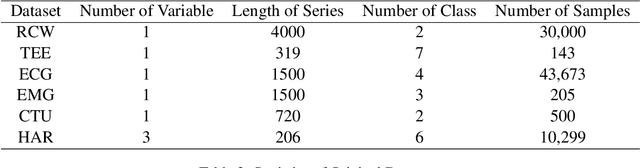
Large language models (LLMs), with demonstrated reasoning abilities across multiple domains, are largely underexplored for time-series reasoning (TsR), which is ubiquitous in the real world. In this work, we propose TimerBed, the first comprehensive testbed for evaluating LLMs' TsR performance. Specifically, TimerBed includes stratified reasoning patterns with real-world tasks, comprehensive combinations of LLMs and reasoning strategies, and various supervised models as comparison anchors. We perform extensive experiments with TimerBed, test multiple current beliefs, and verify the initial failures of LLMs in TsR, evidenced by the ineffectiveness of zero shot (ZST) and performance degradation of few shot in-context learning (ICL). Further, we identify one possible root cause: the numerical modeling of data. To address this, we propose a prompt-based solution VL-Time, using visualization-modeled data and language-guided reasoning. Experimental results demonstrate that Vl-Time enables multimodal LLMs to be non-trivial ZST and powerful ICL reasoners for time series, achieving about 140% average performance improvement and 99% average token costs reduction.
Just Propagate: Unifying Matrix Factorization, Network Embedding, and LightGCN for Link Prediction
Oct 26, 2024Link prediction is a fundamental task in graph analysis. Despite the success of various graph-based machine learning models for link prediction, there lacks a general understanding of different models. In this paper, we propose a unified framework for link prediction that covers matrix factorization and representative network embedding and graph neural network methods. Our preliminary methodological and empirical analyses further reveal several key design factors based on our unified framework. We believe our results could deepen our understanding and inspire novel designs for link prediction methods.