 Add to Chrome
 Add to Firefox
 Add to Edge
MedDiT: A Knowledge-Controlled Diffusion Transformer Framework for Dynamic Medical Image Generation in Virtual Simulated Patient
Aug 22, 2024
Medical education relies heavily on Simulated Patients (SPs) to provide a safe environment for students to practice clinical skills, including medical image analysis. However, the high cost of recruiting qualified SPs and the lack of diverse medical imaging datasets have presented significant challenges. To address these issues, this paper introduces MedDiT, a novel knowledge-controlled conversational framework that can dynamically generate plausible medical images aligned with simulated patient symptoms, enabling diverse diagnostic skill training. Specifically, MedDiT integrates various patient Knowledge Graphs (KGs), which describe the attributes and symptoms of patients, to dynamically prompt Large Language Models' (LLMs) behavior and control the patient characteristics, mitigating hallucination during medical conversation. Additionally, a well-tuned Diffusion Transformer (DiT) model is incorporated to generate medical images according to the specified patient attributes in the KG. In this paper, we present the capabilities of MedDiT through a practical demonstration, showcasing its ability to act in diverse simulated patient cases and generate the corresponding medical images. This can provide an abundant and interactive learning experience for students, advancing medical education by offering an immersive simulation platform for future healthcare professionals. The work sheds light on the feasibility of incorporating advanced technologies like LLM, KG, and DiT in education applications, highlighting their potential to address the challenges faced in simulated patient-based medical education.

EmbodiedSAM: Online Segment Any 3D Thing in Real Time
Aug 21, 2024

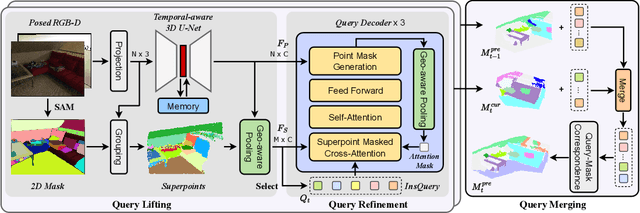

Embodied tasks require the agent to fully understand 3D scenes simultaneously with its exploration, so an online, real-time, fine-grained and highly-generalized 3D perception model is desperately needed. Since high-quality 3D data is limited, directly training such a model in 3D is almost infeasible. Meanwhile, vision foundation models (VFM) has revolutionized the field of 2D computer vision with superior performance, which makes the use of VFM to assist embodied 3D perception a promising direction. However, most existing VFM-assisted 3D perception methods are either offline or too slow that cannot be applied in practical embodied tasks. In this paper, we aim to leverage Segment Anything Model (SAM) for real-time 3D instance segmentation in an online setting. This is a challenging problem since future frames are not available in the input streaming RGB-D video, and an instance may be observed in several frames so object matching between frames is required. To address these challenges, we first propose a geometric-aware query lifting module to represent the 2D masks generated by SAM by 3D-aware queries, which is then iteratively refined by a dual-level query decoder. In this way, the 2D masks are transferred to fine-grained shapes on 3D point clouds. Benefit from the query representation for 3D masks, we can compute the similarity matrix between the 3D masks from different views by efficient matrix operation, which enables real-time inference. Experiments on ScanNet, ScanNet200, SceneNN and 3RScan show our method achieves leading performance even compared with offline methods. Our method also demonstrates great generalization ability in several zero-shot dataset transferring experiments and show great potential in open-vocabulary and data-efficient setting. Code and demo are available at https://xuxw98.github.io/ESAM/, with only one RTX 3090 GPU required for training and evaluation.
Scene-wise Adaptive Network for Dynamic Cold-start Scenes Optimization in CTR Prediction
Aug 15, 2024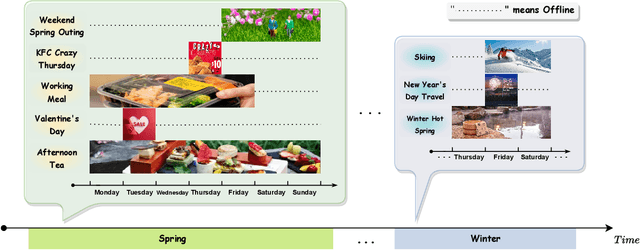

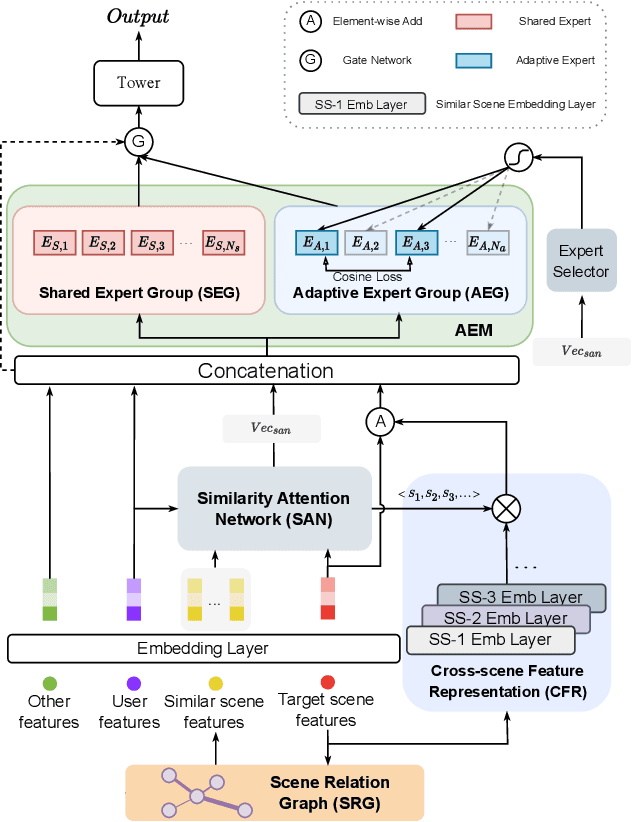
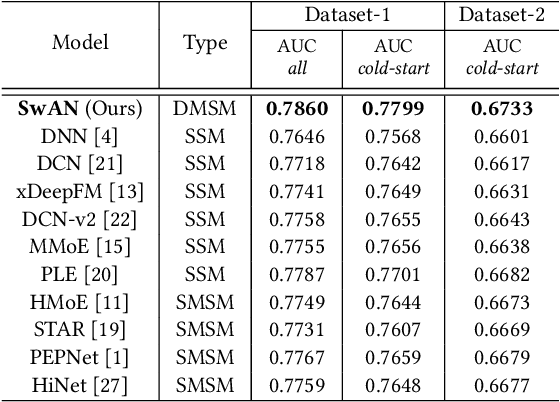
In the realm of modern mobile E-commerce, providing users with nearby commercial service recommendations through location-based online services has become increasingly vital. While machine learning approaches have shown promise in multi-scene recommendation, existing methodologies often struggle to address cold-start problems in unprecedented scenes: the increasing diversity of commercial choices, along with the short online lifespan of scenes, give rise to the complexity of effective recommendations in online and dynamic scenes. In this work, we propose Scene-wise Adaptive Network (SwAN), a novel approach that emphasizes high-performance cold-start online recommendations for new scenes. Our approach introduces several crucial capabilities, including scene similarity learning, user-specific scene transition cognition, scene-specific information construction for the new scene, and enhancing the diverged logical information between scenes. We demonstrate SwAN's potential to optimize dynamic multi-scene recommendation problems by effectively online handling cold-start recommendations for any newly arrived scenes. More encouragingly, SwAN has been successfully deployed in Meituan's online catering recommendation service, which serves millions of customers per day, and SwAN has achieved a 5.64% CTR index improvement relative to the baselines and a 5.19% increase in daily order volume proportion.
Large Language Models for Base Station Siting: Intelligent Deployment based on Prompt or Agent
Aug 07, 2024


Traditional base station siting (BSS) methods rely heavily on drive testing and user feedback, which are laborious and require extensive expertise in communication, networking, and optimization. As large language models (LLMs) and their associated technologies advance, particularly in the realms of prompt engineering and agent engineering, network optimization will witness a revolutionary approach. This approach entails the strategic use of well-crafted prompts to infuse human experience and knowledge into these sophisticated LLMs, and the deployment of autonomous agents as a communication bridge to seamlessly connect the machine language based LLMs with human users using natural language. This integration represents the future paradigm of artificial intelligence (AI) as a service and AI for more ease. As a preliminary exploration, this research first develops a novel LLM-empowered BSS optimization framework, and heuristically proposes four different potential implementations: the strategies based on Prompt-optimized LLM (PoL), human-in-the-Loop LLM (HiLL), LLM-empowered autonomous BSS agent (LaBa), and Cooperative multiple LLM-based autonomous BSS agents (CLaBa). Through evaluation on real-world data, the experiments demonstrate that prompt-assisted LLMs and LLM-based agents can generate more efficient, cost-effective, and reliable network deployments, noticeably enhancing the efficiency of BSS optimization and reducing trivial manual participation.
MiniCPM-V: A GPT-4V Level MLLM on Your Phone
Aug 03, 2024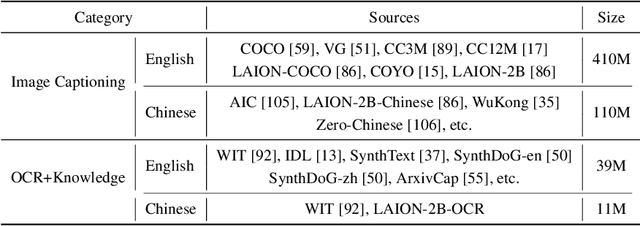
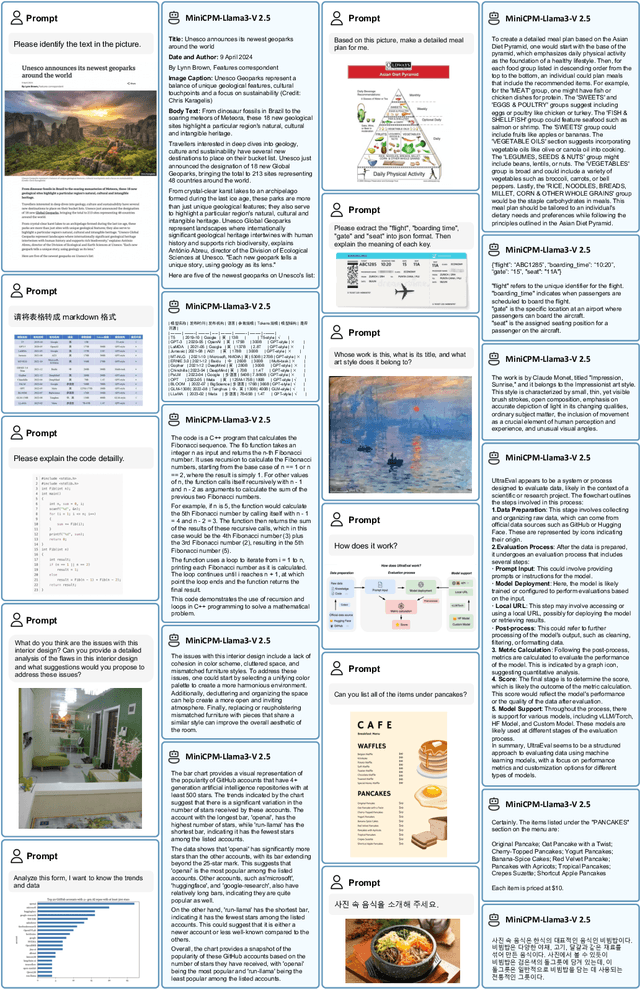
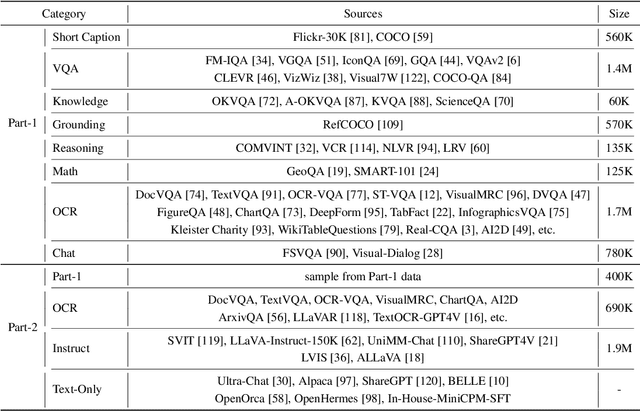
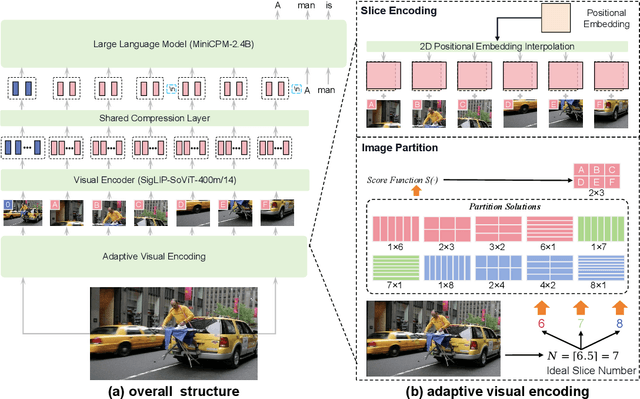
The recent surge of Multimodal Large Language Models (MLLMs) has fundamentally reshaped the landscape of AI research and industry, shedding light on a promising path toward the next AI milestone. However, significant challenges remain preventing MLLMs from being practical in real-world applications. The most notable challenge comes from the huge cost of running an MLLM with a massive number of parameters and extensive computation. As a result, most MLLMs need to be deployed on high-performing cloud servers, which greatly limits their application scopes such as mobile, offline, energy-sensitive, and privacy-protective scenarios. In this work, we present MiniCPM-V, a series of efficient MLLMs deployable on end-side devices. By integrating the latest MLLM techniques in architecture, pretraining and alignment, the latest MiniCPM-Llama3-V 2.5 has several notable features: (1) Strong performance, outperforming GPT-4V-1106, Gemini Pro and Claude 3 on OpenCompass, a comprehensive evaluation over 11 popular benchmarks, (2) strong OCR capability and 1.8M pixel high-resolution image perception at any aspect ratio, (3) trustworthy behavior with low hallucination rates, (4) multilingual support for 30+ languages, and (5) efficient deployment on mobile phones. More importantly, MiniCPM-V can be viewed as a representative example of a promising trend: The model sizes for achieving usable (e.g., GPT-4V) level performance are rapidly decreasing, along with the fast growth of end-side computation capacity. This jointly shows that GPT-4V level MLLMs deployed on end devices are becoming increasingly possible, unlocking a wider spectrum of real-world AI applications in the near future.
UniTTA: Unified Benchmark and Versatile Framework Towards Realistic Test-Time Adaptation
Jul 29, 2024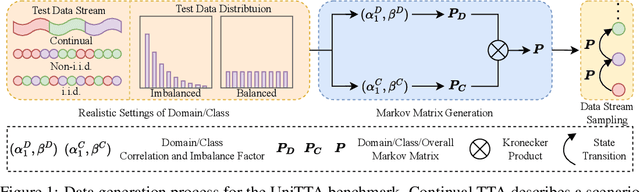
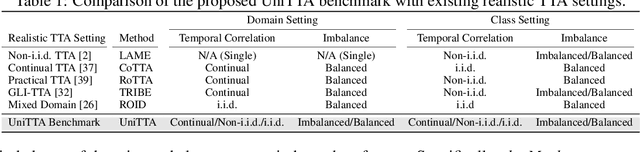
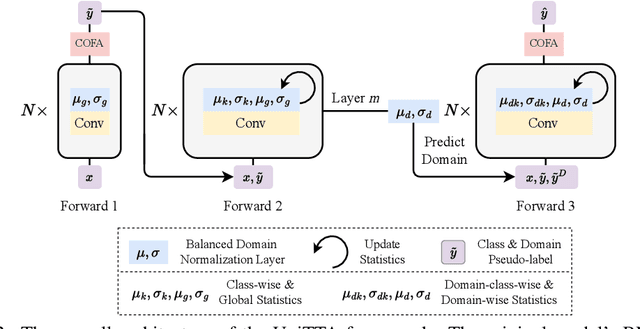
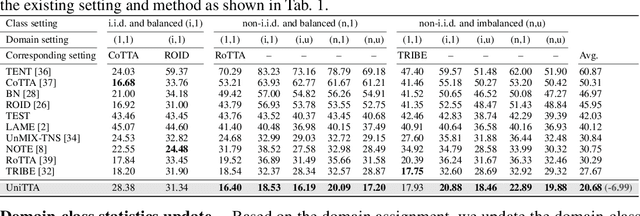
Test-Time Adaptation (TTA) aims to adapt pre-trained models to the target domain during testing. In reality, this adaptability can be influenced by multiple factors. Researchers have identified various challenging scenarios and developed diverse methods to address these challenges, such as dealing with continual domain shifts, mixed domains, and temporally correlated or imbalanced class distributions. Despite these efforts, a unified and comprehensive benchmark has yet to be established. To this end, we propose a Unified Test-Time Adaptation (UniTTA) benchmark, which is comprehensive and widely applicable. Each scenario within the benchmark is fully described by a Markov state transition matrix for sampling from the original dataset. The UniTTA benchmark considers both domain and class as two independent dimensions of data and addresses various combinations of imbalance/balance and i.i.d./non-i.i.d./continual conditions, covering a total of \( (2 \times 3)^2 = 36 \) scenarios. It establishes a comprehensive evaluation benchmark for realistic TTA and provides a guideline for practitioners to select the most suitable TTA method. Alongside this benchmark, we propose a versatile UniTTA framework, which includes a Balanced Domain Normalization (BDN) layer and a COrrelated Feature Adaptation (COFA) method--designed to mitigate distribution gaps in domain and class, respectively. Extensive experiments demonstrate that our UniTTA framework excels within the UniTTA benchmark and achieves state-of-the-art performance on average. Our code is available at \url{https://github.com/LeapLabTHU/UniTTA}.
Boosting Large Language Models with Socratic Method for Conversational Mathematics Teaching
Jul 24, 2024


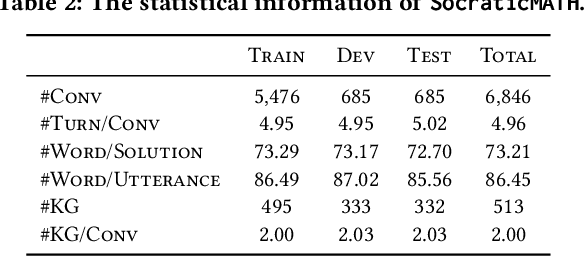
With the introduction of large language models (LLMs), automatic math reasoning has seen tremendous success. However, current methods primarily focus on providing solutions or using techniques like Chain-of-Thought to enhance problem-solving accuracy. In this paper, we focus on improving the capability of mathematics teaching via a Socratic teaching-based LLM (\texttt{SocraticLLM}), which guides learners toward profound thinking with clarity and self-discovery via conversation. We collect and release a high-quality mathematical teaching dataset, named \texttt{SocraticMATH}, which provides Socratic-style conversations of problems with extra knowledge. Also, we propose a knowledge-enhanced LLM as a strong baseline to generate reliable responses with review, guidance/heuristic, rectification, and summarization. Experimental results show the great advantages of \texttt{SocraticLLM} by comparing it with several strong generative models. The codes and datasets are available on \url{https://github.com/ECNU-ICALK/SocraticMath}.
Beyond Binary Gender: Evaluating Gender-Inclusive Machine Translation with Ambiguous Attitude Words
Jul 23, 2024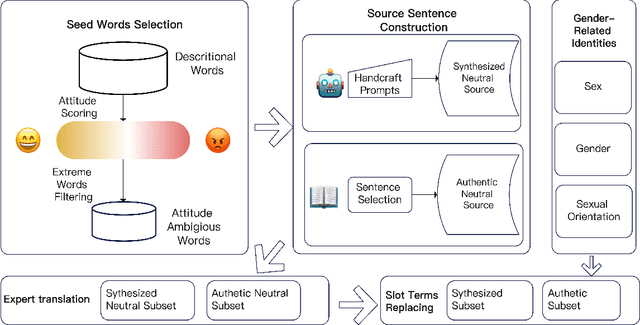

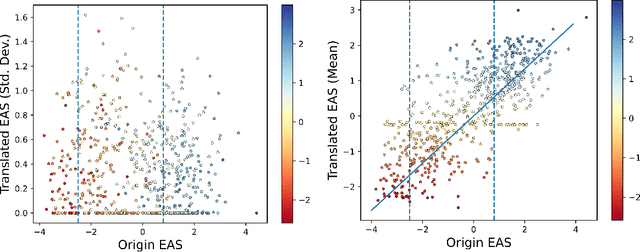

Gender bias has been a focal point in the study of bias in machine translation and language models. Existing machine translation gender bias evaluations are primarily focused on male and female genders, limiting the scope of the evaluation. To assess gender bias accurately, these studies often rely on calculating the accuracy of gender pronouns or the masculine and feminine attributes of grammatical gender via the stereotypes triggered by occupations or sentiment words ({\em i.e.}, clear positive or negative attitude), which cannot extend to non-binary groups. This study presents a benchmark AmbGIMT (Gender-Inclusive Machine Translation with Ambiguous attitude words), which assesses gender bias beyond binary gender. Meanwhile, we propose a novel process to evaluate gender bias based on the Emotional Attitude Score (EAS), which is used to quantify ambiguous attitude words. In evaluating three recent and effective open-source LLMs and one powerful multilingual translation-specific model, our main observations are: (1) The translation performance within non-binary gender contexts is markedly inferior in terms of translation quality and exhibits more negative attitudes than binary-gender contexts. (2) The analysis experiments indicate that incorporating constraint context in prompts for gender identity terms can substantially reduce translation bias, while the bias remains evident despite the presence of the constraints. The code is publicly available at \url{https://github.com/pppa2019/ambGIMT}.
Large Language Model for Verilog Generation with Golden Code Feedback
Jul 21, 2024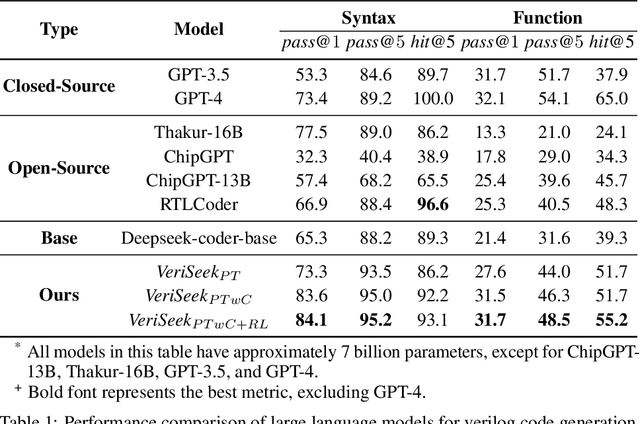
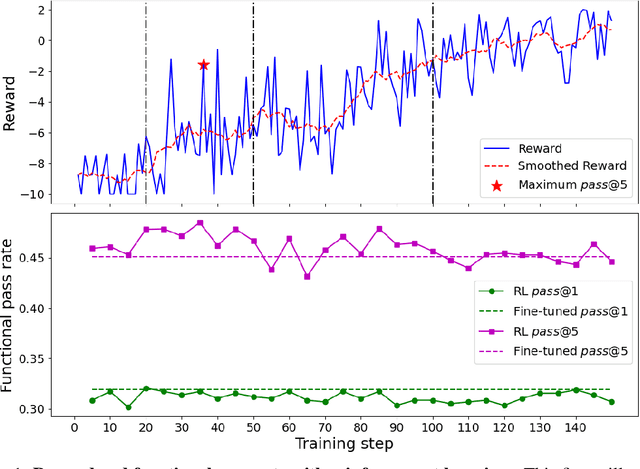

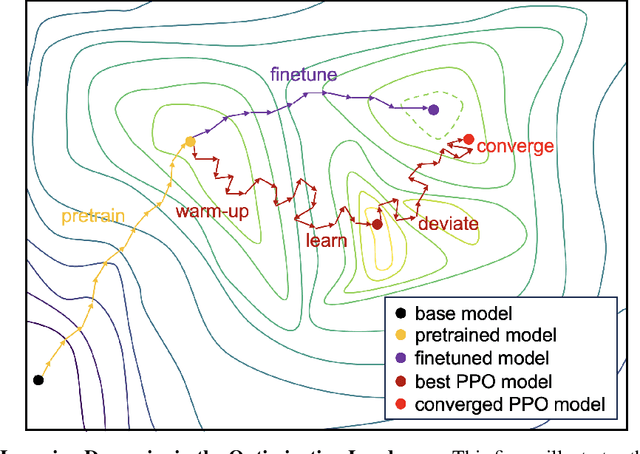
Recent advancements in large language models (LLMs) have catalyzed significant interest in the automatic generation of Register-Transfer Level (RTL) code, particularly Verilog, from natural language instructions. While commercial LLMs like ChatGPT have dominated this domain, open-source alternatives have lagged considerably in performance, limiting the flexibility and data privacy of this emerging technology. This study introduces a novel approach utilizing reinforcement learning with golden code feedback to enhance the performance of pre-trained models. Leveraging open-source data and base models, we have achieved state-of-the-art (SOTA) results with a substantial margin. Notably, our 6.7B parameter model \ours{} demonstrates superior performance compared to current best-in-class 13B and 16B models. Furthermore, through a comprehensive analysis of the limitations in direct fine-tuning and the training dynamics of reinforcement learning, we posit that the development of comprehensive supervisory signals, which are align with the inherent parallel semantics of Verilog code, is critical to effective generation. The code and data associated with this research are publicly available at \url{https://github.com/CatIIIIIIII/veriseek}. The model weights can be accessed at \url{https://huggingface.co/WANGNingroci/VeriSeek}.
Patch-Level Training for Large Language Models
Jul 17, 2024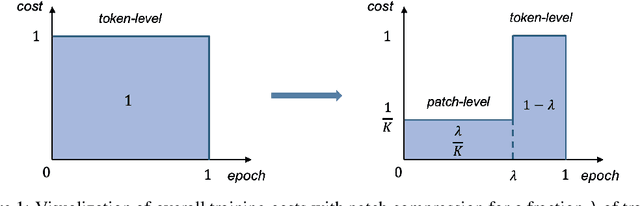
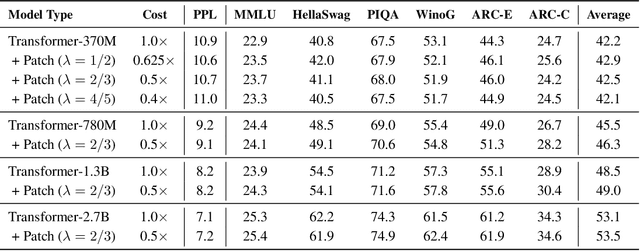
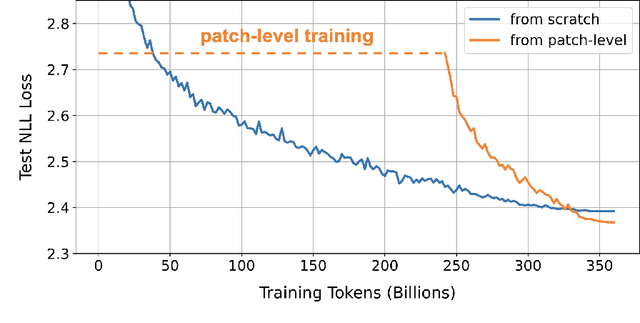

As Large Language Models (LLMs) achieve remarkable progress in language understanding and generation, their training efficiency has become a critical concern. Traditionally, LLMs are trained to predict the next token in a sequence. Despite the success of token-level training, it suffers from considerable computational costs due to the need to process an extensive number of tokens. To mitigate this issue, this paper introduces patch-level training for LLMs, which reduces the sequence length by compressing multiple tokens into a single patch. During patch-level training, we feed the language model shorter sequences of patches and train it to predict the next patch, thereby processing the majority of the training data at a significantly reduced computational cost. Following this, the model continues token-level training on the remaining training data to align with the inference mode. Experiments on a diverse range of models (370M-2.7B parameters) demonstrate that patch-level training can reduce overall computational costs to 0.5$\times$, without compromising the model performance compared to token-level training. Source code: \url{https://github.com/shaochenze/PatchTrain}.