 Add to Chrome
 Add to Firefox
 Add to Edge
Virtual Width Networks
Nov 17, 2025
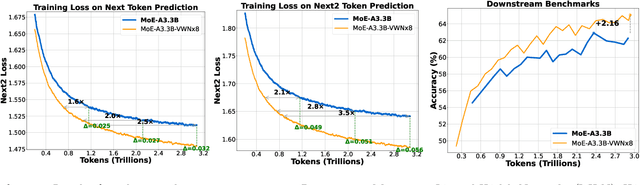
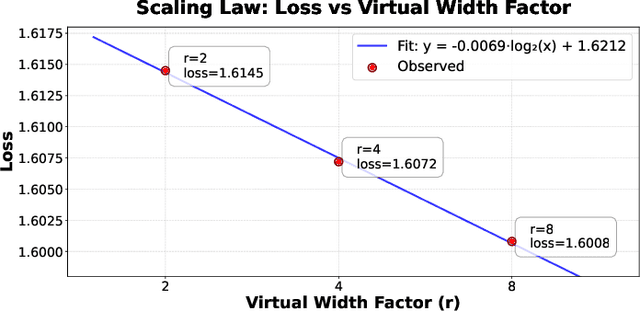
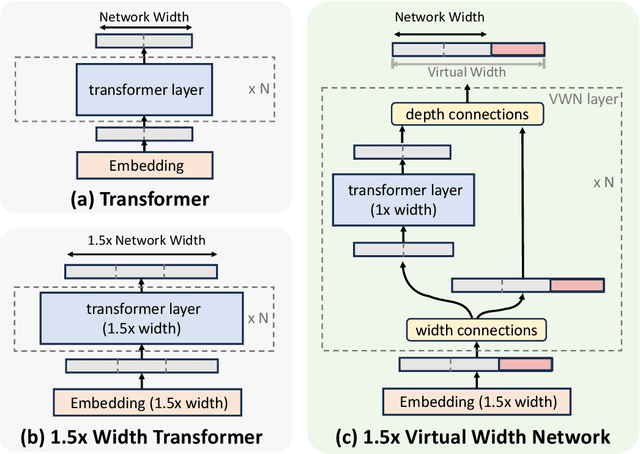
We introduce Virtual Width Networks (VWN), a framework that delivers the benefits of wider representations without incurring the quadratic cost of increasing the hidden size. VWN decouples representational width from backbone width, expanding the embedding space while keeping backbone compute nearly constant. In our large-scale experiment, an 8-times expansion accelerates optimization by over 2 times for next-token and 3 times for next-2-token prediction. The advantage amplifies over training as both the loss gap grows and the convergence-speedup ratio increases, showing that VWN is not only token-efficient but also increasingly effective with scale. Moreover, we identify an approximately log-linear scaling relation between virtual width and loss reduction, offering an initial empirical basis and motivation for exploring virtual-width scaling as a new dimension of large-model efficiency.

Diagnosing and Mitigating Semantic Inconsistencies in Wikidata's Classification Hierarchy
Nov 07, 2025Wikidata is currently the largest open knowledge graph on the web, encompassing over 120 million entities. It integrates data from various domain-specific databases and imports a substantial amount of content from Wikipedia, while also allowing users to freely edit its content. This openness has positioned Wikidata as a central resource in knowledge graph research and has enabled convenient knowledge access for users worldwide. However, its relatively loose editorial policy has also led to a degree of taxonomic inconsistency. Building on prior work, this study proposes and applies a novel validation method to confirm the presence of classification errors, over-generalized subclass links, and redundant connections in specific domains of Wikidata. We further introduce a new evaluation criterion for determining whether such issues warrant correction and develop a system that allows users to inspect the taxonomic relationships of arbitrary Wikidata entities-leveraging the platform's crowdsourced nature to its full potential.
StructVRM: Aligning Multimodal Reasoning with Structured and Verifiable Reward Models
Aug 07, 2025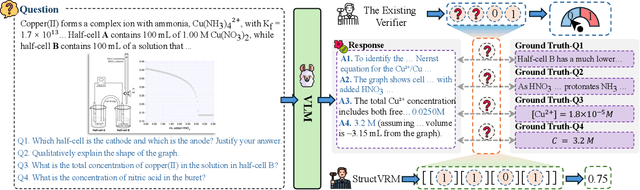
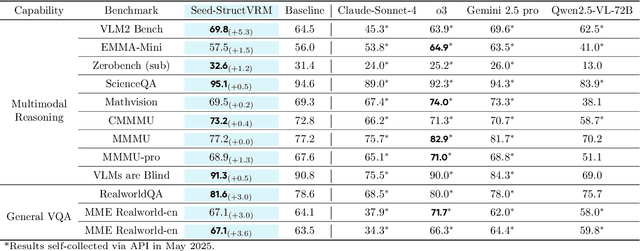
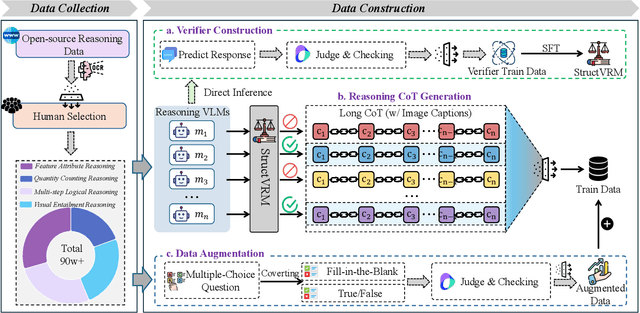
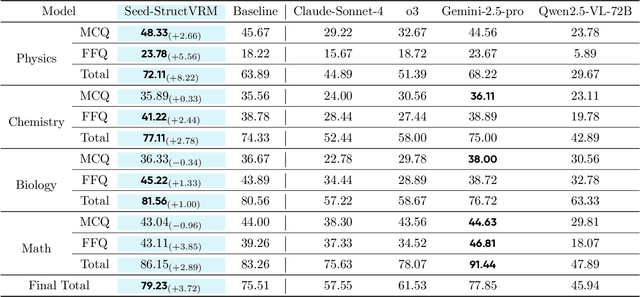
Existing Vision-Language Models often struggle with complex, multi-question reasoning tasks where partial correctness is crucial for effective learning. Traditional reward mechanisms, which provide a single binary score for an entire response, are too coarse to guide models through intricate problems with multiple sub-parts. To address this, we introduce StructVRM, a method that aligns multimodal reasoning with Structured and Verifiable Reward Models. At its core is a model-based verifier trained to provide fine-grained, sub-question-level feedback, assessing semantic and mathematical equivalence rather than relying on rigid string matching. This allows for nuanced, partial credit scoring in previously intractable problem formats. Extensive experiments demonstrate the effectiveness of StructVRM. Our trained model, Seed-StructVRM, achieves state-of-the-art performance on six out of twelve public multimodal benchmarks and our newly curated, high-difficulty STEM-Bench. The success of StructVRM validates that training with structured, verifiable rewards is a highly effective approach for advancing the capabilities of multimodal models in complex, real-world reasoning domains.
Seed1.5-VL Technical Report
May 11, 2025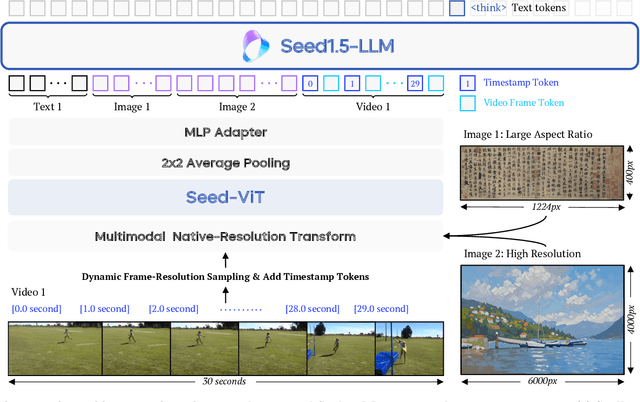

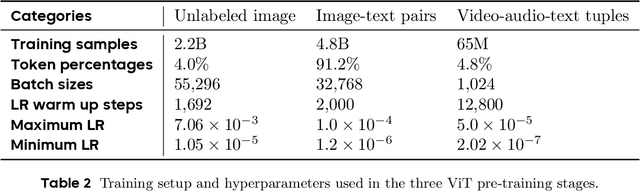
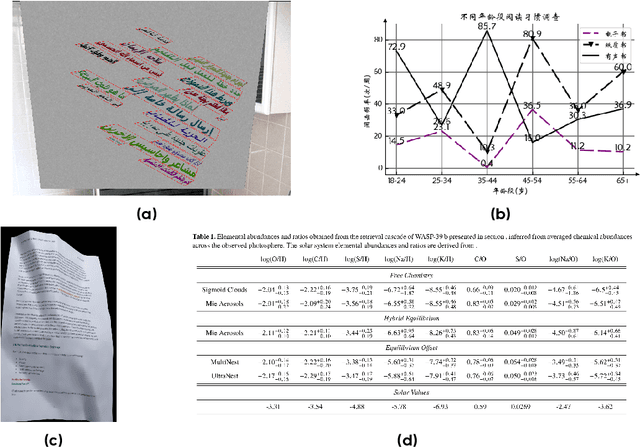
We present Seed1.5-VL, a vision-language foundation model designed to advance general-purpose multimodal understanding and reasoning. Seed1.5-VL is composed with a 532M-parameter vision encoder and a Mixture-of-Experts (MoE) LLM of 20B active parameters. Despite its relatively compact architecture, it delivers strong performance across a wide spectrum of public VLM benchmarks and internal evaluation suites, achieving the state-of-the-art performance on 38 out of 60 public benchmarks. Moreover, in agent-centric tasks such as GUI control and gameplay, Seed1.5-VL outperforms leading multimodal systems, including OpenAI CUA and Claude 3.7. Beyond visual and video understanding, it also demonstrates strong reasoning abilities, making it particularly effective for multimodal reasoning challenges such as visual puzzles. We believe these capabilities will empower broader applications across diverse tasks. In this report, we mainly provide a comprehensive review of our experiences in building Seed1.5-VL across model design, data construction, and training at various stages, hoping that this report can inspire further research. Seed1.5-VL is now accessible at https://www.volcengine.com/ (Volcano Engine Model ID: doubao-1-5-thinking-vision-pro-250428)
Scene-wise Adaptive Network for Dynamic Cold-start Scenes Optimization in CTR Prediction
Aug 15, 2024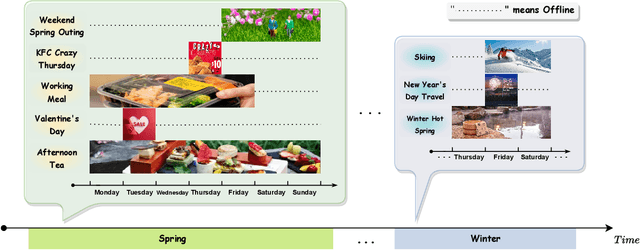

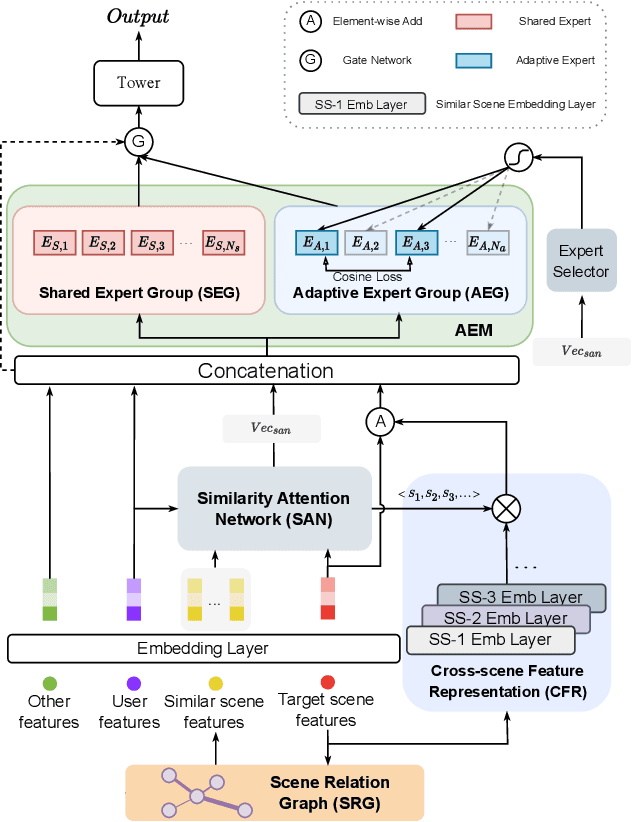
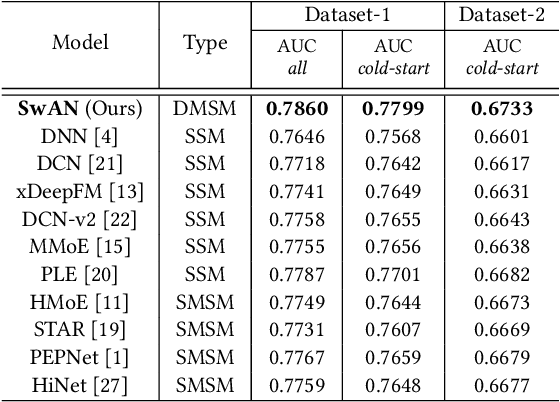
In the realm of modern mobile E-commerce, providing users with nearby commercial service recommendations through location-based online services has become increasingly vital. While machine learning approaches have shown promise in multi-scene recommendation, existing methodologies often struggle to address cold-start problems in unprecedented scenes: the increasing diversity of commercial choices, along with the short online lifespan of scenes, give rise to the complexity of effective recommendations in online and dynamic scenes. In this work, we propose Scene-wise Adaptive Network (SwAN), a novel approach that emphasizes high-performance cold-start online recommendations for new scenes. Our approach introduces several crucial capabilities, including scene similarity learning, user-specific scene transition cognition, scene-specific information construction for the new scene, and enhancing the diverged logical information between scenes. We demonstrate SwAN's potential to optimize dynamic multi-scene recommendation problems by effectively online handling cold-start recommendations for any newly arrived scenes. More encouragingly, SwAN has been successfully deployed in Meituan's online catering recommendation service, which serves millions of customers per day, and SwAN has achieved a 5.64% CTR index improvement relative to the baselines and a 5.19% increase in daily order volume proportion.
XL3M: A Training-free Framework for LLM Length Extension Based on Segment-wise Inference
May 28, 2024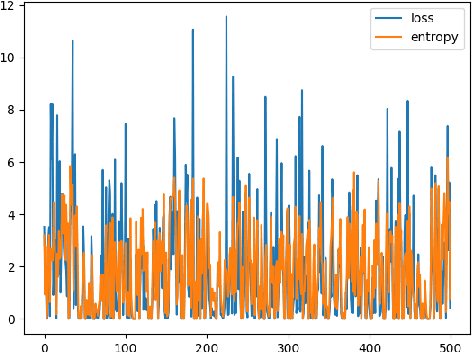
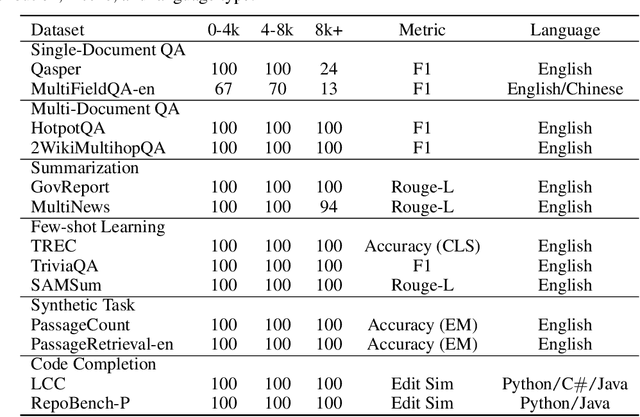
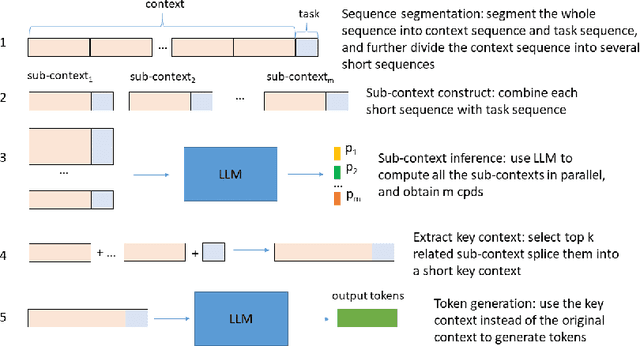
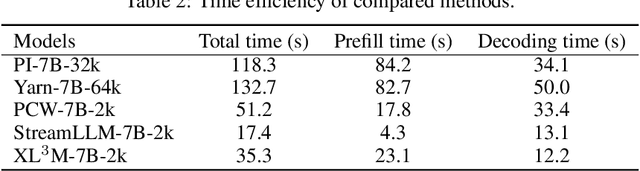
Length generalization failure problem, namely the large language model (LLM) fails to generalize to texts longer than its maximum training length, greatly restricts the application of LLM in the scenarios with streaming long inputs. To address this problem, the existing methods either require substantial costs or introduce precision loss. In this paper, we empirically find that the accuracy of the LLM's prediction is highly correlated to its certainty. Based on this, we propose an efficient training free framework, named XL3M (it means extra-long large language model), which enables the LLMs trained on short sequences to reason extremely long sequence without any further training or fine-tuning. Under the XL3M framework, the input context will be firstly decomposed into multiple short sub-contexts, where each sub-context contains an independent segment and a common ``question'' which is a few tokens from the end of the original context. Then XL3M gives a method to measure the relevance between each segment and the ``question'', and constructs a concise key context by splicing all the relevant segments in chronological order. The key context is further used instead of the original context to complete the inference task. Evaluations on comprehensive benchmarks show the superiority of XL3M. Using our framework, a Llama2-7B model is able to reason 20M long sequences on an 8-card Huawei Ascend 910B NPU machine with 64GB memory per card.
AGRNav: Efficient and Energy-Saving Autonomous Navigation for Air-Ground Robots in Occlusion-Prone Environments
Mar 18, 2024


The exceptional mobility and long endurance of air-ground robots are raising interest in their usage to navigate complex environments (e.g., forests and large buildings). However, such environments often contain occluded and unknown regions, and without accurate prediction of unobserved obstacles, the movement of the air-ground robot often suffers a suboptimal trajectory under existing mapping-based and learning-based navigation methods. In this work, we present AGRNav, a novel framework designed to search for safe and energy-saving air-ground hybrid paths. AGRNav contains a lightweight semantic scene completion network (SCONet) with self-attention to enable accurate obstacle predictions by capturing contextual information and occlusion area features. The framework subsequently employs a query-based method for low-latency updates of prediction results to the grid map. Finally, based on the updated map, the hierarchical path planner efficiently searches for energy-saving paths for navigation. We validate AGRNav's performance through benchmarks in both simulated and real-world environments, demonstrating its superiority over classical and state-of-the-art methods. The open-source code is available at https://github.com/jmwang0117/AGRNav.