 Add to Chrome
 Add to Firefox
 Add to Edge
ArchCAD-400K: An Open Large-Scale Architectural CAD Dataset and New Baseline for Panoptic Symbol Spotting
Apr 02, 2025
Recognizing symbols in architectural CAD drawings is critical for various advanced engineering applications. In this paper, we propose a novel CAD data annotation engine that leverages intrinsic attributes from systematically archived CAD drawings to automatically generate high-quality annotations, thus significantly reducing manual labeling efforts. Utilizing this engine, we construct ArchCAD-400K, a large-scale CAD dataset consisting of 413,062 chunks from 5538 highly standardized drawings, making it over 26 times larger than the largest existing CAD dataset. ArchCAD-400K boasts an extended drawing diversity and broader categories, offering line-grained annotations. Furthermore, we present a new baseline model for panoptic symbol spotting, termed Dual-Pathway Symbol Spotter (DPSS). It incorporates an adaptive fusion module to enhance primitive features with complementary image features, achieving state-of-the-art performance and enhanced robustness. Extensive experiments validate the effectiveness of DPSS, demonstrating the value of ArchCAD-400K and its potential to drive innovation in architectural design and construction.

Buyer-Initiated Auction Mechanism for Data Redemption in Machine Unlearning
Apr 01, 2025
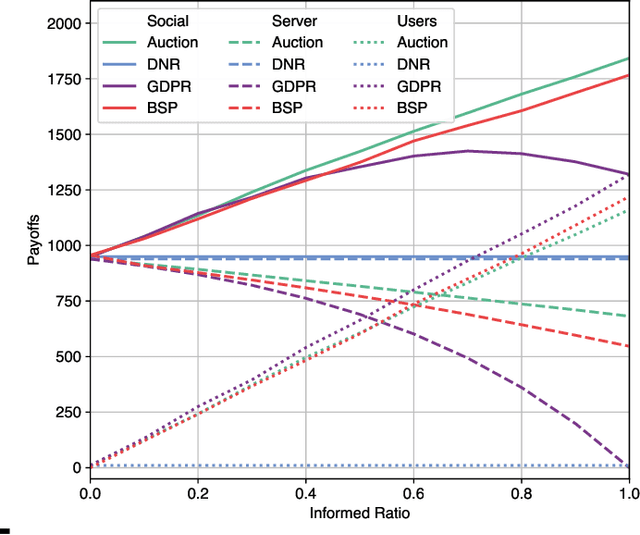
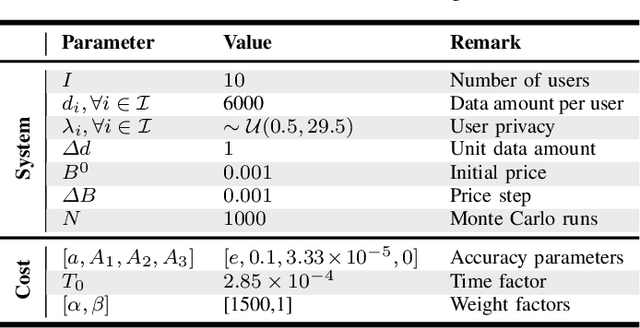
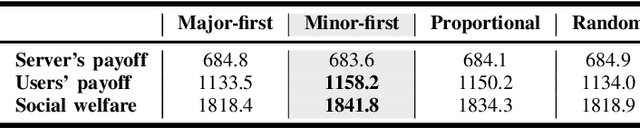
The rapid growth of artificial intelligence (AI) has raised privacy concerns over user data, leading to regulations like the General Data Protection Regulation (GDPR) and the California Consumer Privacy Act (CCPA). With the essential toolbox provided by machine unlearning, AI service providers are now able to remove user data from their trained models as well as the training datasets, so as to comply with such regulations. However, extensive data redemption can be costly and degrade model accuracy. To balance the cost of unlearning and the privacy protection, we propose a buyer-initiated auction mechanism for data redemption, enabling the service provider to purchase data from willing users with appropriate compensation. This approach does not require the server to have any a priori knowledge about the users' privacy preference, and provides an efficient solution for maximizing the social welfare in the investigated problem.
ZeroMimic: Distilling Robotic Manipulation Skills from Web Videos
Mar 31, 2025


Many recent advances in robotic manipulation have come through imitation learning, yet these rely largely on mimicking a particularly hard-to-acquire form of demonstrations: those collected on the same robot in the same room with the same objects as the trained policy must handle at test time. In contrast, large pre-recorded human video datasets demonstrating manipulation skills in-the-wild already exist, which contain valuable information for robots. Is it possible to distill a repository of useful robotic skill policies out of such data without any additional requirements on robot-specific demonstrations or exploration? We present the first such system ZeroMimic, that generates immediately deployable image goal-conditioned skill policies for several common categories of manipulation tasks (opening, closing, pouring, pick&place, cutting, and stirring) each capable of acting upon diverse objects and across diverse unseen task setups. ZeroMimic is carefully designed to exploit recent advances in semantic and geometric visual understanding of human videos, together with modern grasp affordance detectors and imitation policy classes. After training ZeroMimic on the popular EpicKitchens dataset of ego-centric human videos, we evaluate its out-of-the-box performance in varied real-world and simulated kitchen settings with two different robot embodiments, demonstrating its impressive abilities to handle these varied tasks. To enable plug-and-play reuse of ZeroMimic policies on other task setups and robots, we release software and policy checkpoints of our skill policies.
R$^2$: A LLM Based Novel-to-Screenplay Generation Framework with Causal Plot Graphs
Mar 19, 2025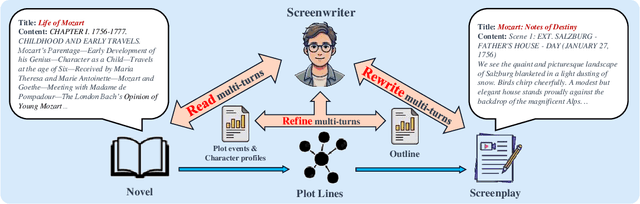

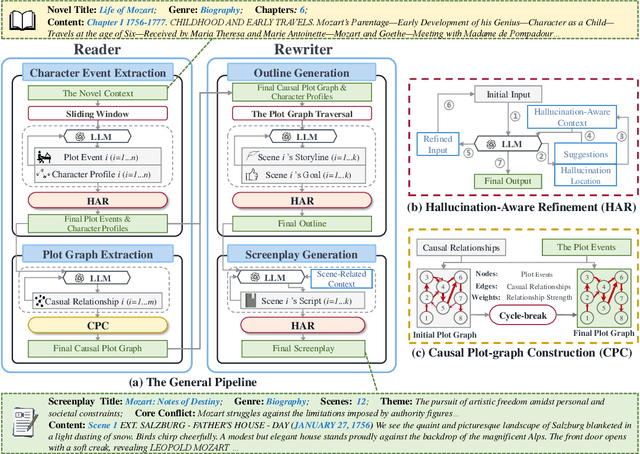
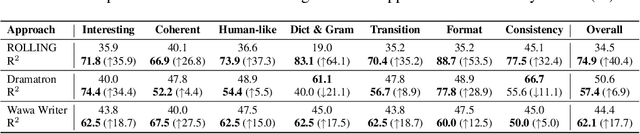
Automatically adapting novels into screenplays is important for the TV, film, or opera industries to promote products with low costs. The strong performances of large language models (LLMs) in long-text generation call us to propose a LLM based framework Reader-Rewriter (R$^2$) for this task. However, there are two fundamental challenges here. First, the LLM hallucinations may cause inconsistent plot extraction and screenplay generation. Second, the causality-embedded plot lines should be effectively extracted for coherent rewriting. Therefore, two corresponding tactics are proposed: 1) A hallucination-aware refinement method (HAR) to iteratively discover and eliminate the affections of hallucinations; and 2) a causal plot-graph construction method (CPC) based on a greedy cycle-breaking algorithm to efficiently construct plot lines with event causalities. Recruiting those efficient techniques, R$^2$ utilizes two modules to mimic the human screenplay rewriting process: The Reader module adopts a sliding window and CPC to build the causal plot graphs, while the Rewriter module generates first the scene outlines based on the graphs and then the screenplays. HAR is integrated into both modules for accurate inferences of LLMs. Experimental results demonstrate the superiority of R$^2$, which substantially outperforms three existing approaches (51.3%, 22.6%, and 57.1% absolute increases) in pairwise comparison at the overall win rate for GPT-4o.
Apollo-MILP: An Alternating Prediction-Correction Neural Solving Framework for Mixed-Integer Linear Programming
Mar 03, 2025Leveraging machine learning (ML) to predict an initial solution for mixed-integer linear programming (MILP) has gained considerable popularity in recent years. These methods predict a solution and fix a subset of variables to reduce the problem dimension. Then, they solve the reduced problem to obtain the final solutions. However, directly fixing variable values can lead to low-quality solutions or even infeasible reduced problems if the predicted solution is not accurate enough. To address this challenge, we propose an Alternating prediction-correction neural solving framework (Apollo-MILP) that can identify and select accurate and reliable predicted values to fix. In each iteration, Apollo-MILP conducts a prediction step for the unfixed variables, followed by a correction step to obtain an improved solution (called reference solution) through a trust-region search. By incorporating the predicted and reference solutions, we introduce a novel Uncertainty-based Error upper BOund (UEBO) to evaluate the uncertainty of the predicted values and fix those with high confidence. A notable feature of Apollo-MILP is the superior ability for problem reduction while preserving optimality, leading to high-quality final solutions. Experiments on commonly used benchmarks demonstrate that our proposed Apollo-MILP significantly outperforms other ML-based approaches in terms of solution quality, achieving over a 50% reduction in the solution gap.
Accurate and Scalable Graph Neural Networks via Message Invariance
Feb 27, 2025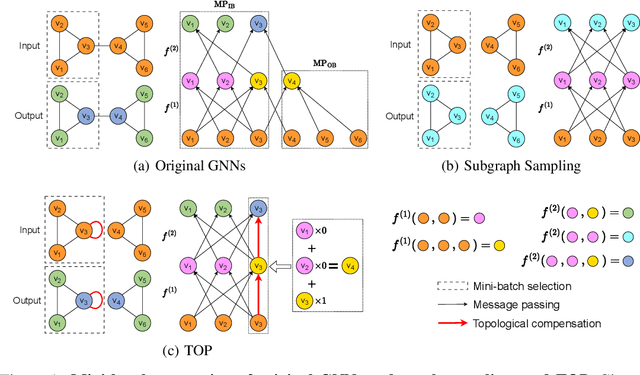

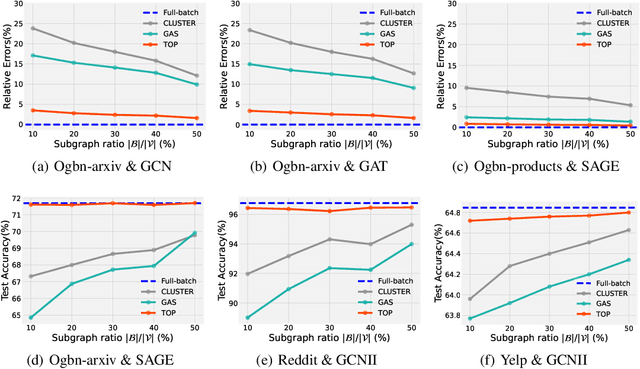

Message passing-based graph neural networks (GNNs) have achieved great success in many real-world applications. For a sampled mini-batch of target nodes, the message passing process is divided into two parts: message passing between nodes within the batch (MP-IB) and message passing from nodes outside the batch to those within it (MP-OB). However, MP-OB recursively relies on higher-order out-of-batch neighbors, leading to an exponentially growing computational cost with respect to the number of layers. Due to the neighbor explosion, the whole message passing stores most nodes and edges on the GPU such that many GNNs are infeasible to large-scale graphs. To address this challenge, we propose an accurate and fast mini-batch approach for large graph transductive learning, namely topological compensation (TOP), which obtains the outputs of the whole message passing solely through MP-IB, without the costly MP-OB. The major pillar of TOP is a novel concept of message invariance, which defines message-invariant transformations to convert costly MP-OB into fast MP-IB. This ensures that the modified MP-IB has the same output as the whole message passing. Experiments demonstrate that TOP is significantly faster than existing mini-batch methods by order of magnitude on vast graphs (millions of nodes and billions of edges) with limited accuracy degradation.
AttentionPredictor: Temporal Pattern Matters for Efficient LLM Inference
Feb 06, 2025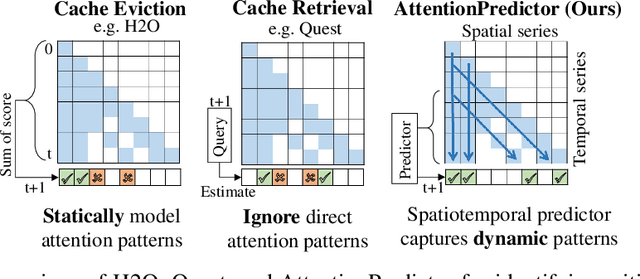
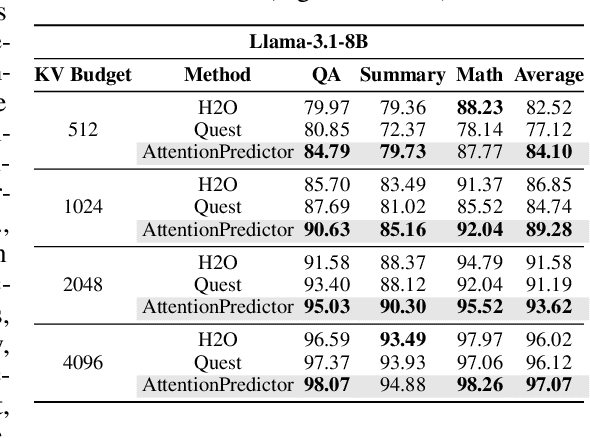
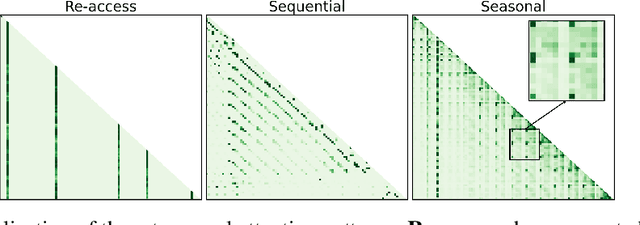
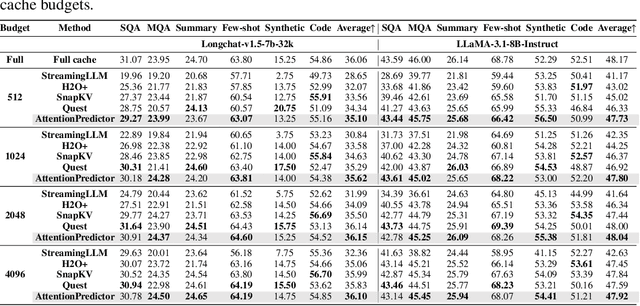
With the development of large language models (LLMs), efficient inference through Key-Value (KV) cache compression has attracted considerable attention, especially for long-context generation. To compress the KV cache, recent methods identify critical KV tokens through heuristic ranking with attention scores. However, these methods often struggle to accurately determine critical tokens as they neglect the \textit{temporal patterns} in attention scores, resulting in a noticeable degradation in LLM performance. To address this challenge, we propose AttentionPredictor, which is the first learning-based critical token identification approach. Specifically, AttentionPredictor learns a lightweight convolution model to capture spatiotemporal patterns and predict the next-token attention score. An appealing feature of AttentionPredictor is that it accurately predicts the attention score while consuming negligible memory. Moreover, we propose a cross-token critical cache prefetching framework that hides the token estimation time overhead to accelerate the decoding stage. By retaining most of the attention information, AttentionPredictor achieves 16$\times$ KV cache compression with comparable LLM performance, significantly outperforming the state-of-the-art.
Large Language Model driven Policy Exploration for Recommender Systems
Jan 23, 2025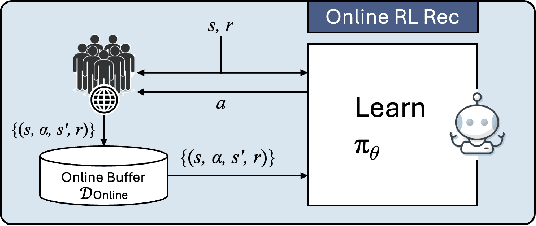
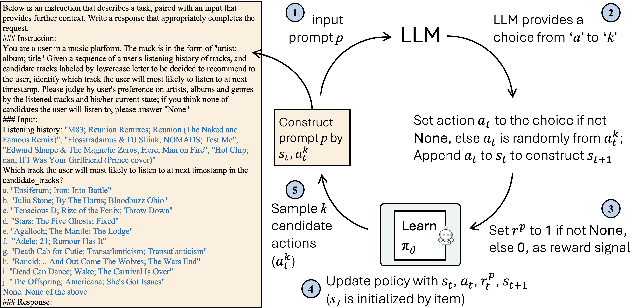

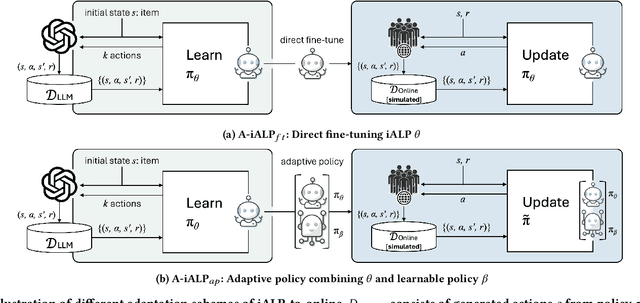
Recent advancements in Recommender Systems (RS) have incorporated Reinforcement Learning (RL), framing the recommendation as a Markov Decision Process (MDP). However, offline RL policies trained on static user data are vulnerable to distribution shift when deployed in dynamic online environments. Additionally, excessive focus on exploiting short-term relevant items can hinder exploration, leading to suboptimal recommendations and negatively impacting long-term user gains. Online RL-based RS also face challenges in production deployment, due to the risks of exposing users to untrained or unstable policies. Large Language Models (LLMs) offer a promising solution to mimic user objectives and preferences for pre-training policies offline to enhance the initial recommendations in online settings. Effectively managing distribution shift and balancing exploration are crucial for improving RL-based RS, especially when leveraging LLM-based pre-training. To address these challenges, we propose an Interaction-Augmented Learned Policy (iALP) that utilizes user preferences distilled from an LLM. Our approach involves prompting the LLM with user states to extract item preferences, learning rewards based on feedback, and updating the RL policy using an actor-critic framework. Furthermore, to deploy iALP in an online scenario, we introduce an adaptive variant, A-iALP, that implements a simple fine-tuning strategy (A-iALP$_{ft}$), and an adaptive approach (A-iALP$_{ap}$) designed to mitigate issues with compromised policies and limited exploration. Experiments across three simulated environments demonstrate that A-iALP introduces substantial performance improvements
Exploring Temporal Event Cues for Dense Video Captioning in Cyclic Co-learning
Dec 16, 2024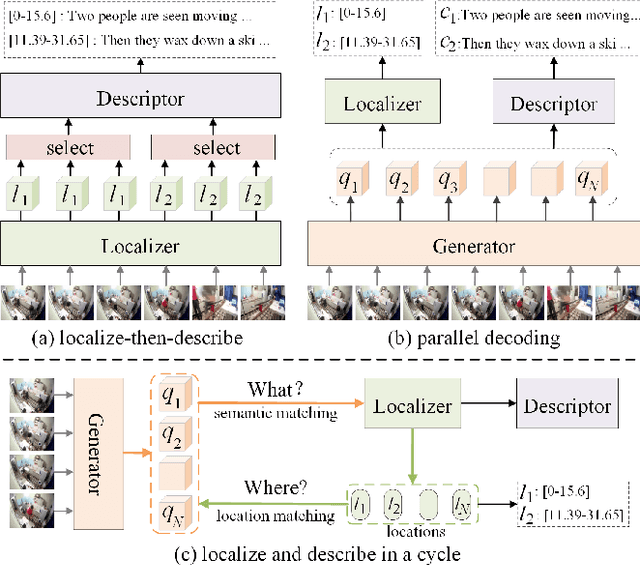
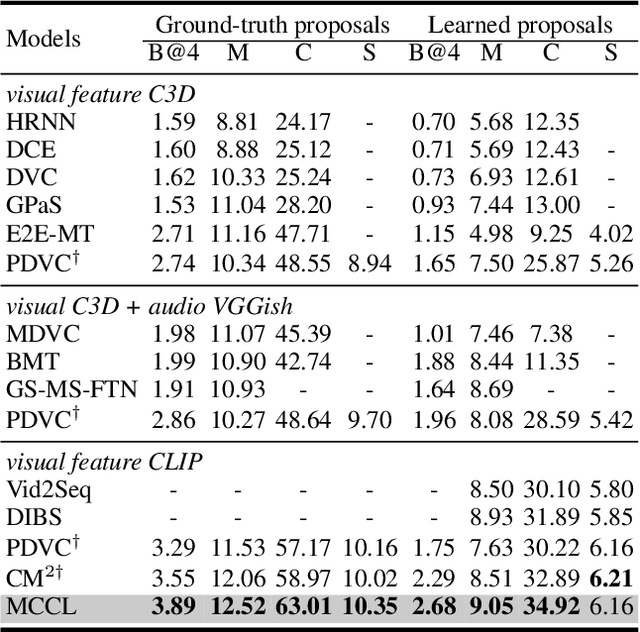
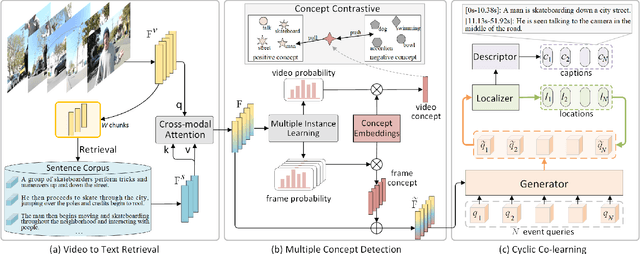
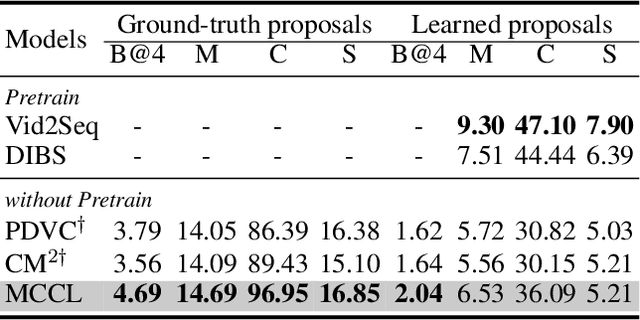
Dense video captioning aims to detect and describe all events in untrimmed videos. This paper presents a dense video captioning network called Multi-Concept Cyclic Learning (MCCL), which aims to: (1) detect multiple concepts at the frame level, using these concepts to enhance video features and provide temporal event cues; and (2) design cyclic co-learning between the generator and the localizer within the captioning network to promote semantic perception and event localization. Specifically, we perform weakly supervised concept detection for each frame, and the detected concept embeddings are integrated into the video features to provide event cues. Additionally, video-level concept contrastive learning is introduced to obtain more discriminative concept embeddings. In the captioning network, we establish a cyclic co-learning strategy where the generator guides the localizer for event localization through semantic matching, while the localizer enhances the generator's event semantic perception through location matching, making semantic perception and event localization mutually beneficial. MCCL achieves state-of-the-art performance on the ActivityNet Captions and YouCook2 datasets. Extensive experiments demonstrate its effectiveness and interpretability.
VTD: Visual and Tactile Database for Driver State and Behavior Perception
Dec 06, 2024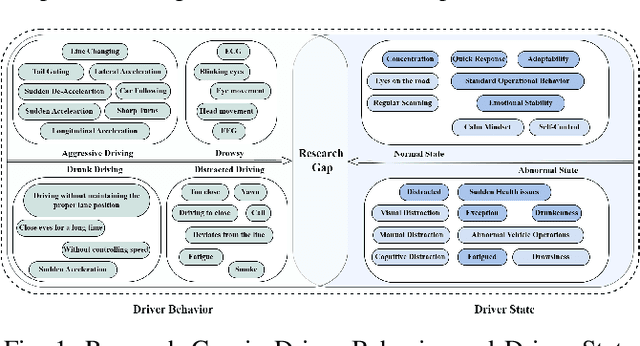
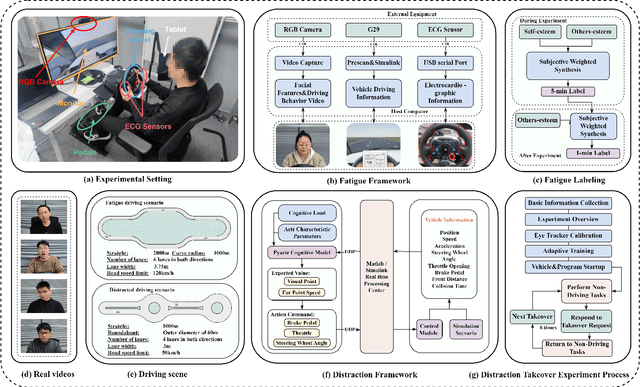
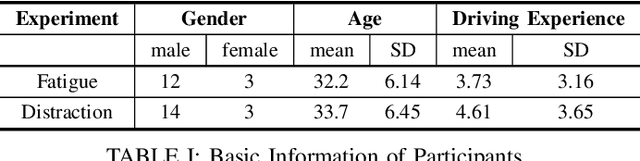
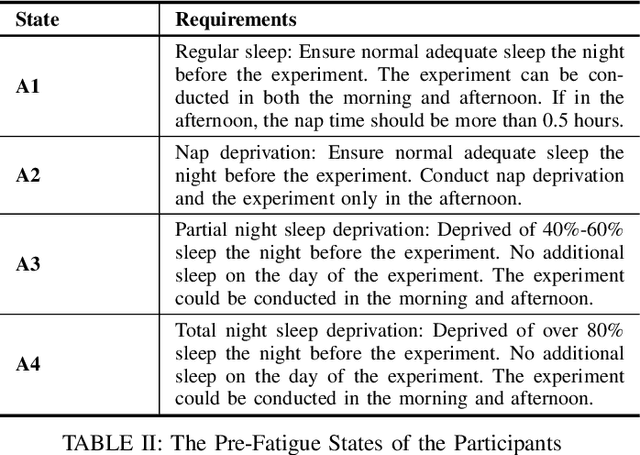
In the domain of autonomous vehicles, the human-vehicle co-pilot system has garnered significant research attention. To address the subjective uncertainties in driver state and interaction behaviors, which are pivotal to the safety of Human-in-the-loop co-driving systems, we introduce a novel visual-tactile perception method. Utilizing a driving simulation platform, a comprehensive dataset has been developed that encompasses multi-modal data under fatigue and distraction conditions. The experimental setup integrates driving simulation with signal acquisition, yielding 600 minutes of fatigue detection data from 15 subjects and 102 takeover experiments with 17 drivers. The dataset, synchronized across modalities, serves as a robust resource for advancing cross-modal driver behavior perception algorithms.