 Add to Chrome
 Add to Firefox
 Add to Edge
Improving Autonomous AI Agents with Reflective Tree Search and Self-Learning
Oct 02, 2024

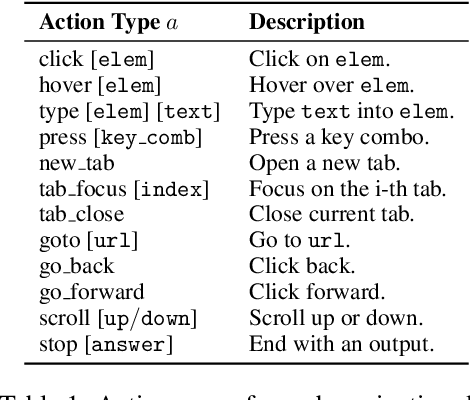


Autonomous agents have demonstrated significant potential in automating complex multistep decision-making tasks. However, even state-of-the-art vision-language models (VLMs), such as GPT-4o, still fall short of human-level performance, particularly in intricate web environments and long-horizon planning tasks. To address these limitations, we introduce Reflective Monte Carlo Tree Search (R-MCTS), a novel test-time algorithm designed to enhance the ability of AI agents, e.g., powered by GPT-4o, to explore decision space on the fly. R-MCTS extends traditional MCTS by 1) incorporating contrastive reflection, allowing agents to learn from past interactions and dynamically improve their search efficiency; and 2) using multi-agent debate to provide reliable state evaluation. Moreover, we improve the agent's performance by fine-tuning GPT-4o through self-learning, using R-MCTS generated tree traversals without any human-provided labels. On the challenging VisualWebArena benchmark, our GPT-4o-based R-MCTS agent achieves a 6% to 30% relative improvement across various tasks compared to the previous state-of-the-art. Additionally, we show that the knowledge gained from test-time search can be effectively transferred back to GPT-4o via fine-tuning. The fine-tuned GPT-4o matches 97% of R-MCTS's performance while reducing compute usage by a factor of four at test time. Furthermore, qualitative results reveal that the fine-tuned GPT-4o model demonstrates the ability to explore the environment, evaluate a state, and backtrack to viable ones when it detects that the current state cannot lead to success. Moreover, our work demonstrates the compute scaling properties in both training - data collection with R-MCTS - and testing time. These results suggest a promising research direction to enhance VLMs' reasoning and planning capabilities for agentic applications via test-time search and self-learning.

A generative framework to bridge data-driven models and scientific theories in language neuroscience
Oct 01, 2024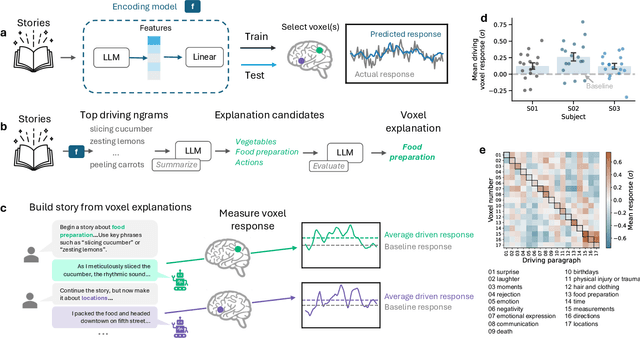
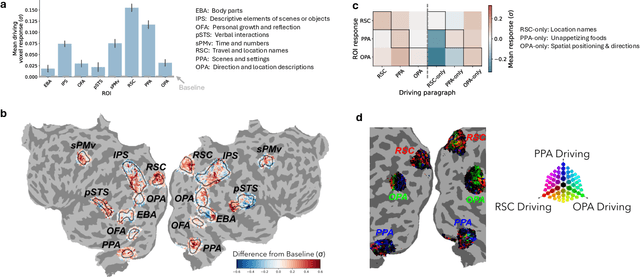
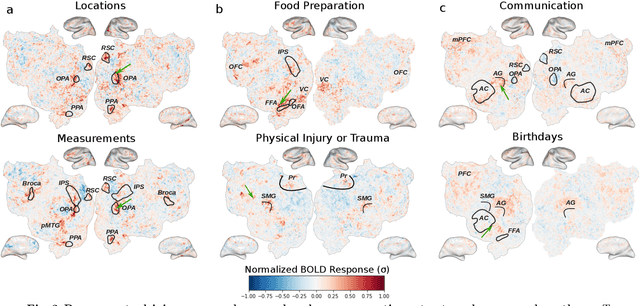

Representations from large language models are highly effective at predicting BOLD fMRI responses to language stimuli. However, these representations are largely opaque: it is unclear what features of the language stimulus drive the response in each brain area. We present generative explanation-mediated validation, a framework for generating concise explanations of language selectivity in the brain and then validating those explanations in follow-up experiments that use synthetic stimuli. This approach is successful at explaining selectivity both in individual voxels and cortical regions of interest (ROIs).We show that explanatory accuracy is closely related to the predictive power and stability of the underlying statistical models. These results demonstrate that LLMs can be used to bridge the widening gap between data-driven models and formal scientific theories.
Data Analysis in the Era of Generative AI
Sep 27, 2024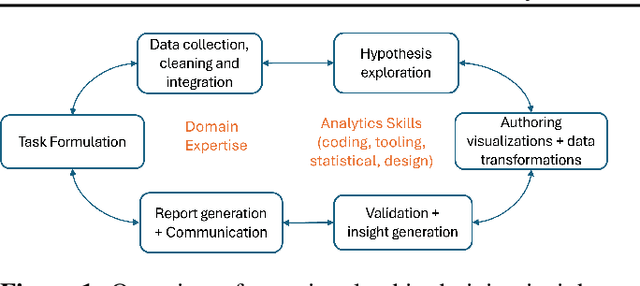
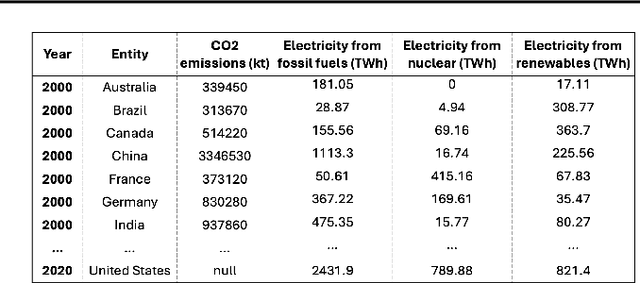
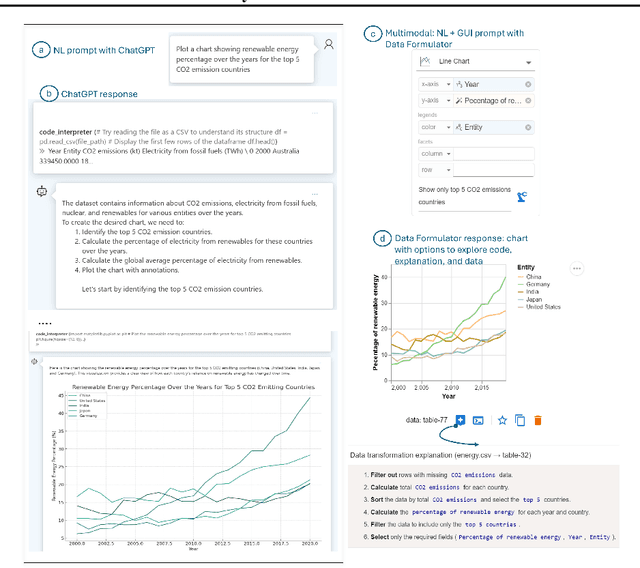
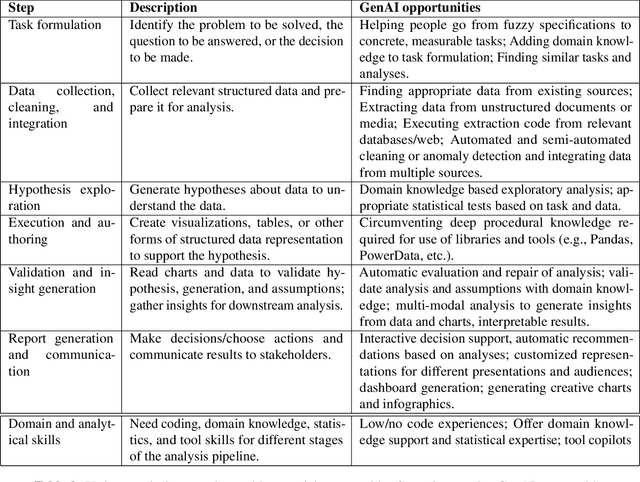
This paper explores the potential of AI-powered tools to reshape data analysis, focusing on design considerations and challenges. We explore how the emergence of large language and multimodal models offers new opportunities to enhance various stages of data analysis workflow by translating high-level user intentions into executable code, charts, and insights. We then examine human-centered design principles that facilitate intuitive interactions, build user trust, and streamline the AI-assisted analysis workflow across multiple apps. Finally, we discuss the research challenges that impede the development of these AI-based systems such as enhancing model capabilities, evaluating and benchmarking, and understanding end-user needs.
GRIN: GRadient-INformed MoE
Sep 18, 2024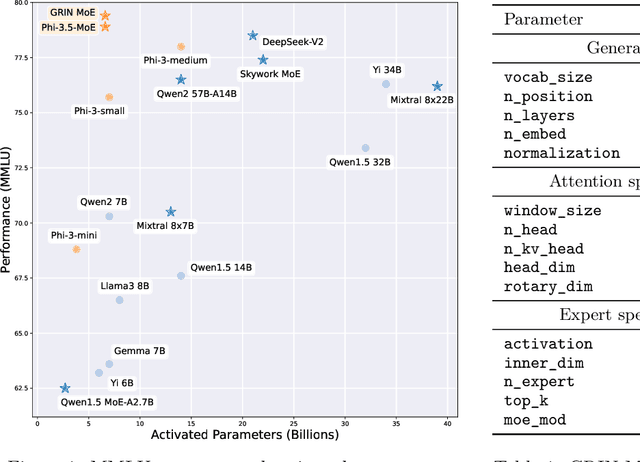
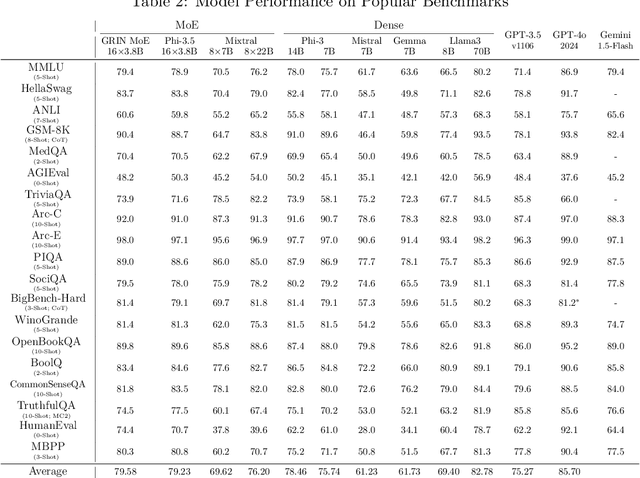
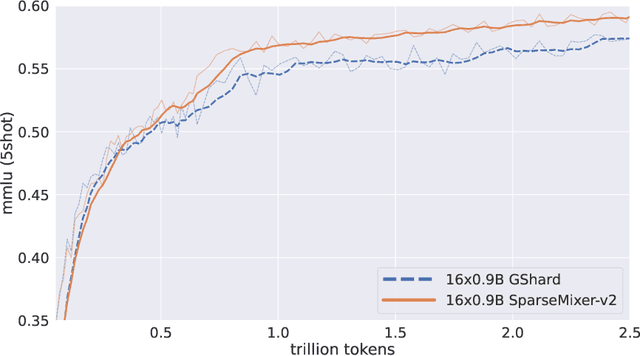

Mixture-of-Experts (MoE) models scale more effectively than dense models due to sparse computation through expert routing, selectively activating only a small subset of expert modules. However, sparse computation challenges traditional training practices, as discrete expert routing hinders standard backpropagation and thus gradient-based optimization, which are the cornerstone of deep learning. To better pursue the scaling power of MoE, we introduce GRIN (GRadient-INformed MoE training), which incorporates sparse gradient estimation for expert routing and configures model parallelism to avoid token dropping. Applying GRIN to autoregressive language modeling, we develop a top-2 16$\times$3.8B MoE model. Our model, with only 6.6B activated parameters, outperforms a 7B dense model and matches the performance of a 14B dense model trained on the same data. Extensive evaluations across diverse tasks demonstrate the potential of GRIN to significantly enhance MoE efficacy, achieving 79.4 on MMLU, 83.7 on HellaSwag, 74.4 on HumanEval, and 58.9 on MATH.
Model Tells Itself Where to Attend: Faithfulness Meets Automatic Attention Steering
Sep 16, 2024


Large language models (LLMs) have demonstrated remarkable performance across various real-world tasks. However, they often struggle to fully comprehend and effectively utilize their input contexts, resulting in responses that are unfaithful or hallucinated. This difficulty increases for contexts that are long or contain distracting information, which can divert LLMs from fully capturing essential evidence. To address this issue, many works use prompting to help LLMs utilize contextual information more faithfully. For instance, iterative prompting highlights key information in two steps that first ask the LLM to identify important pieces of context and then derive answers accordingly. However, prompting methods are constrained to highlighting key information implicitly in token space, which is often insufficient to fully steer the model's attention. To improve model faithfulness more reliably, we propose AutoPASTA, a method that automatically identifies key contextual information and explicitly highlights it by steering an LLM's attention scores. Like prompting, AutoPASTA is applied at inference time and does not require changing any model parameters. Our experiments on open-book QA demonstrate that AutoPASTA effectively enables models to grasp essential contextual information, leading to substantially improved model faithfulness and performance, e.g., an average improvement of 7.95% for LLAMA3-70B-Instruct. Code will be publicly available at https://github.com/QingruZhang/AutoPASTA .
Data Formulator 2: Iteratively Creating Rich Visualizations with AI
Aug 28, 2024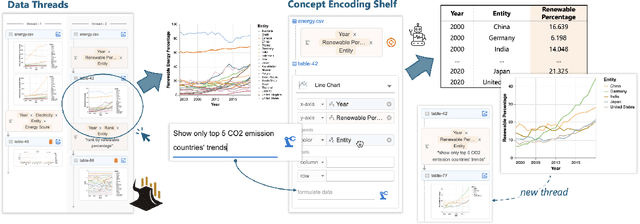
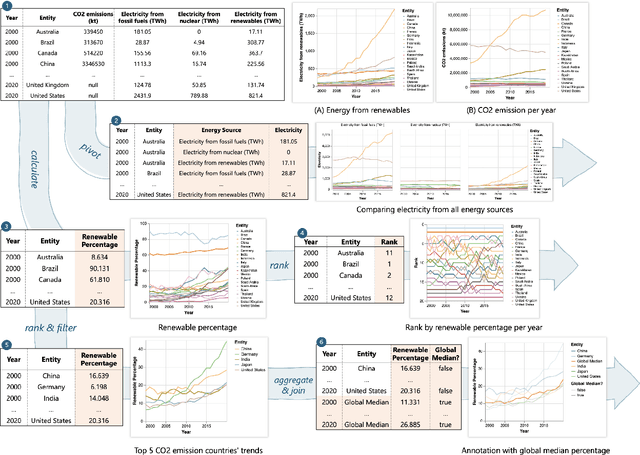
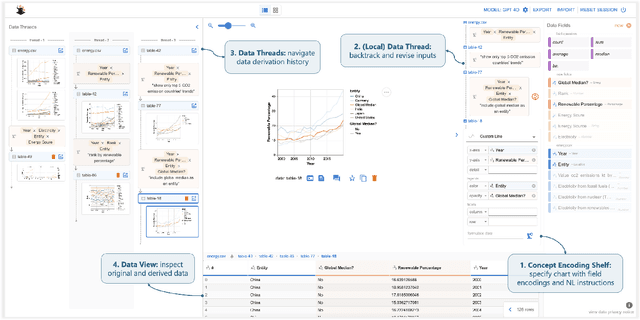
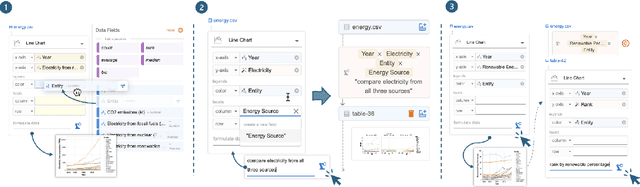
To create rich visualizations, data analysts often need to iterate back and forth among data processing and chart specification to achieve their goals. To achieve this, analysts need not only proficiency in data transformation and visualization tools but also efforts to manage the branching history consisting of many different versions of data and charts. Recent LLM-powered AI systems have greatly improved visualization authoring experiences, for example by mitigating manual data transformation barriers via LLMs' code generation ability. However, these systems do not work well for iterative visualization authoring, because they often require analysts to provide, in a single turn, a text-only prompt that fully describes the complex visualization task to be performed, which is unrealistic to both users and models in many cases. In this paper, we present Data Formulator 2, an LLM-powered visualization system to address these challenges. With Data Formulator 2, users describe their visualization intent with blended UI and natural language inputs, and data transformation are delegated to AI. To support iteration, Data Formulator 2 lets users navigate their iteration history and reuse previous designs towards new ones so that they don't need to start from scratch every time. In a user study with eight participants, we observed that Data Formulator 2 allows participants to develop their own iteration strategies to complete challenging data exploration sessions.
Diversifying the Expert Knowledge for Task-Agnostic Pruning in Sparse Mixture-of-Experts
Jul 12, 2024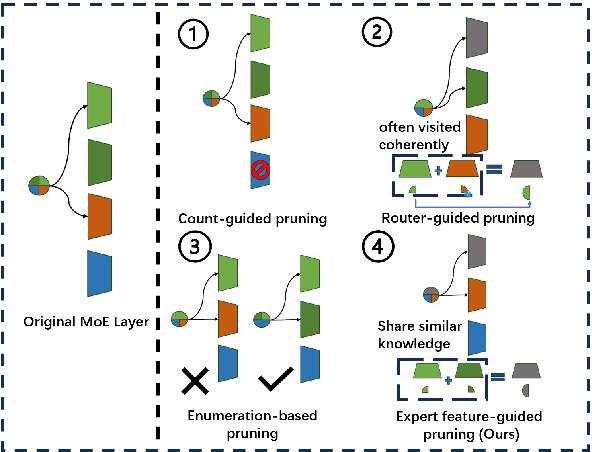
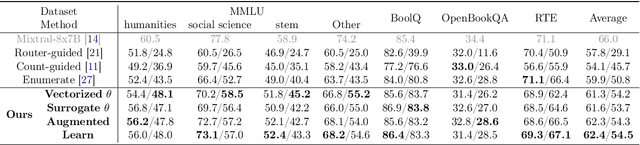
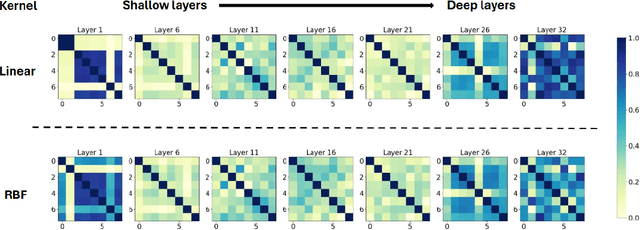
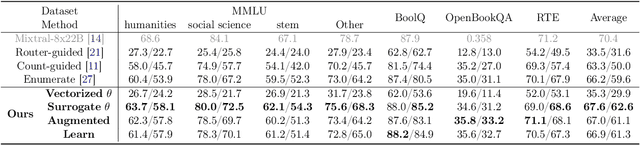
By increasing model parameters but activating them sparsely when performing a task, the use of Mixture-of-Experts (MoE) architecture significantly improves the performance of Large Language Models (LLMs) without increasing the inference cost. However, the memory consumption due to the growing number of experts presents a challenge to the deployment of these models in many real world settings. Our empirical study reveals that some experts encode redundant knowledge during pre-training. We thus propose a method of grouping and pruning similar experts to improve model's parameter efficiency. We validate the effectiveness of our method by pruning two state-of-the-art MoE models, Mixtral-8x7B and Mixtral-8x22B. Evaluation shows that our method outperforms other model pruning methods on a range of natural language tasks. To facilitate future research, we will release our code and the pruned MoE models.
UniGen: A Unified Framework for Textual Dataset Generation Using Large Language Models
Jun 27, 2024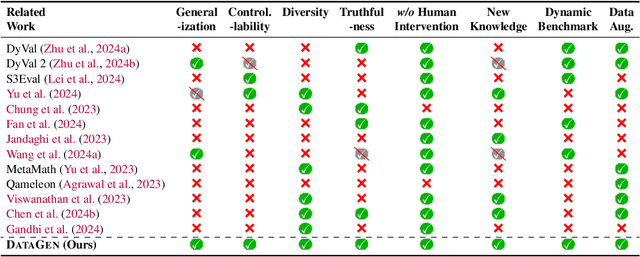
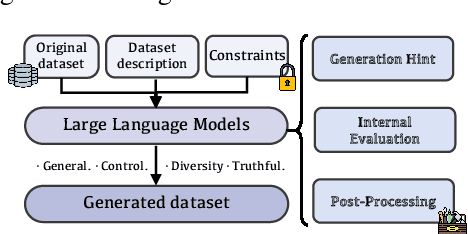
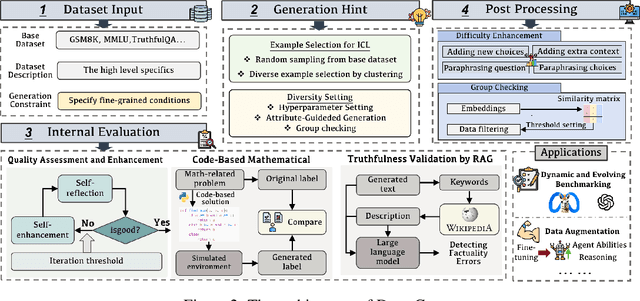
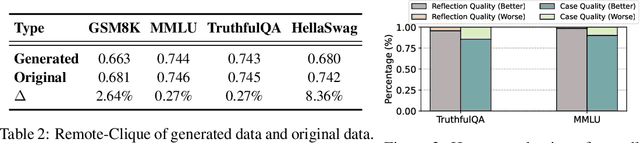
Large Language Models (LLMs) such as GPT-4 and Llama3 have significantly impacted various fields by enabling high-quality synthetic data generation and reducing dependence on expensive human-generated datasets. Despite this, challenges remain in the areas of generalization, controllability, diversity, and truthfulness within the existing generative frameworks. To address these challenges, this paper presents UniGen, a comprehensive LLM-powered framework designed to produce diverse, accurate, and highly controllable datasets. UniGen is adaptable, supporting all types of text datasets and enhancing the generative process through innovative mechanisms. To augment data diversity, UniGen incorporates an attribute-guided generation module and a group checking feature. For accuracy, it employs a code-based mathematical assessment for label verification alongside a retrieval-augmented generation technique for factual validation. The framework also allows for user-specified constraints, enabling customization of the data generation process to suit particular requirements. Extensive experiments demonstrate the superior quality of data generated by UniGen, and each module within UniGen plays a critical role in this enhancement. Additionally, UniGen is applied in two practical scenarios: benchmarking LLMs and data augmentation. The results indicate that UniGen effectively supports dynamic and evolving benchmarking, and that data augmentation improves LLM capabilities in various domains, including agent-oriented abilities and reasoning skills.
GUI-WORLD: A Dataset for GUI-oriented Multimodal LLM-based Agents
Jun 16, 2024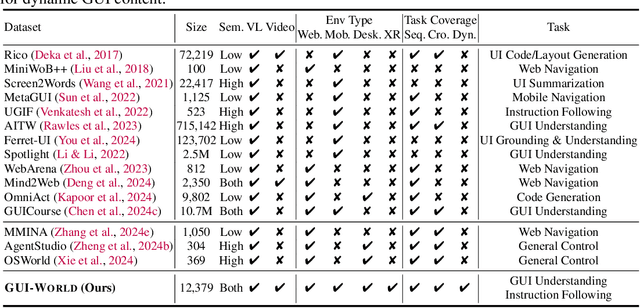
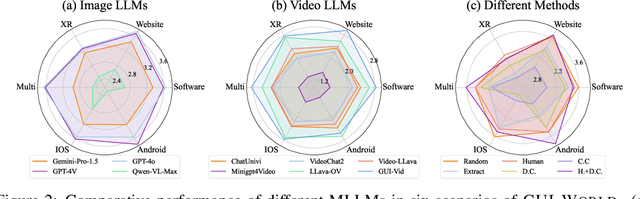
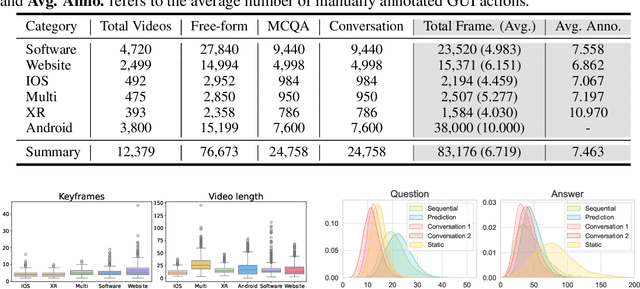
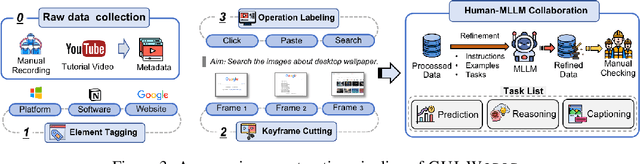
Recently, Multimodal Large Language Models (MLLMs) have been used as agents to control keyboard and mouse inputs by directly perceiving the Graphical User Interface (GUI) and generating corresponding code. However, current agents primarily exhibit excellent understanding capabilities in static environments and are predominantly applied in relatively simple domains, such as Web or mobile interfaces. We argue that a robust GUI agent should be capable of perceiving temporal information on the GUI, including dynamic Web content and multi-step tasks. Additionally, it should possess a comprehensive understanding of various GUI scenarios, including desktop software and multi-window interactions. To this end, this paper introduces a new dataset, termed GUI-World, which features meticulously crafted Human-MLLM annotations, extensively covering six GUI scenarios and eight types of GUI-oriented questions in three formats. We evaluate the capabilities of current state-of-the-art MLLMs, including ImageLLMs and VideoLLMs, in understanding various types of GUI content, especially dynamic and sequential content. Our findings reveal that ImageLLMs struggle with dynamic GUI content without manually annotated keyframes or operation history. On the other hand, VideoLLMs fall short in all GUI-oriented tasks given the sparse GUI video dataset. Based on GUI-World, we take the initial step of leveraging a fine-tuned VideoLLM as a GUI agent, demonstrating an improved understanding of various GUI tasks. However, due to the limitations in the performance of base LLMs, we conclude that using VideoLLMs as GUI agents remains a significant challenge. We believe our work provides valuable insights for future research in dynamic GUI content understanding. The code and dataset are publicly available at our project homepage: https://gui-world.github.io/.
SciEx: Benchmarking Large Language Models on Scientific Exams with Human Expert Grading and Automatic Grading
Jun 14, 2024
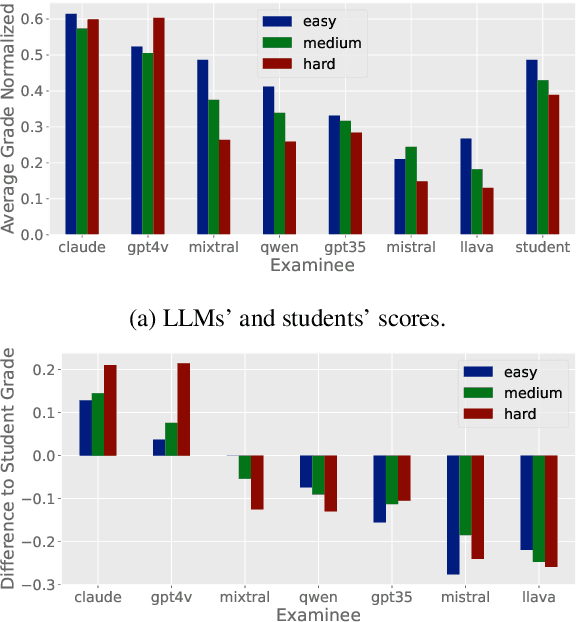

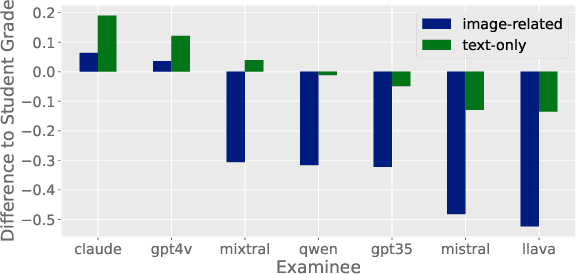
With the rapid development of Large Language Models (LLMs), it is crucial to have benchmarks which can evaluate the ability of LLMs on different domains. One common use of LLMs is performing tasks on scientific topics, such as writing algorithms, querying databases or giving mathematical proofs. Inspired by the way university students are evaluated on such tasks, in this paper, we propose SciEx - a benchmark consisting of university computer science exam questions, to evaluate LLMs ability on solving scientific tasks. SciEx is (1) multilingual, containing both English and German exams, and (2) multi-modal, containing questions that involve images, and (3) contains various types of freeform questions with different difficulty levels, due to the nature of university exams. We evaluate the performance of various state-of-the-art LLMs on our new benchmark. Since SciEx questions are freeform, it is not straightforward to evaluate LLM performance. Therefore, we provide human expert grading of the LLM outputs on SciEx. We show that the free-form exams in SciEx remain challenging for the current LLMs, where the best LLM only achieves 59.4\% exam grade on average. We also provide detailed comparisons between LLM performance and student performance on SciEx. To enable future evaluation of new LLMs, we propose using LLM-as-a-judge to grade the LLM answers on SciEx. Our experiments show that, although they do not perform perfectly on solving the exams, LLMs are decent as graders, achieving 0.948 Pearson correlation with expert grading.