 Add to Chrome
 Add to Firefox
 Add to Edge
DeepMultiConnectome: Deep Multi-Task Prediction of Structural Connectomes Directly from Diffusion MRI Tractography
May 27, 2025
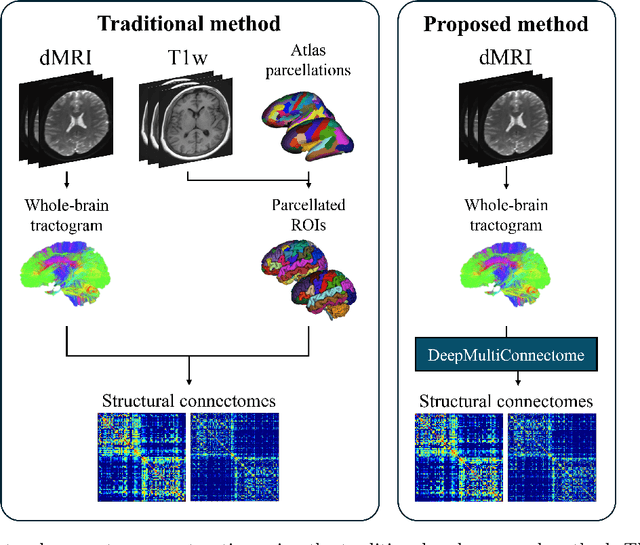
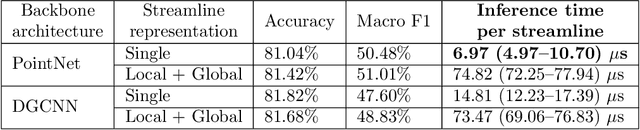
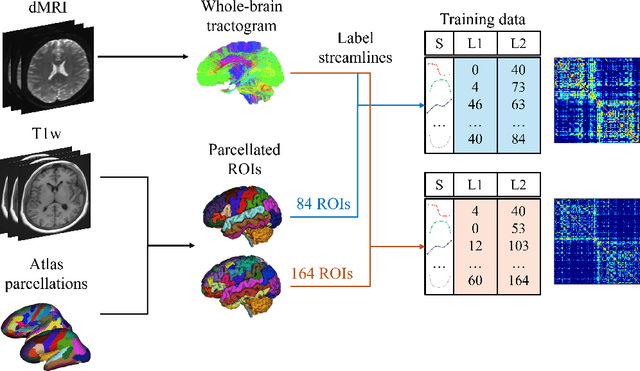

Diffusion MRI (dMRI) tractography enables in vivo mapping of brain structural connections, but traditional connectome generation is time-consuming and requires gray matter parcellation, posing challenges for large-scale studies. We introduce DeepMultiConnectome, a deep-learning model that predicts structural connectomes directly from tractography, bypassing the need for gray matter parcellation while supporting multiple parcellation schemes. Using a point-cloud-based neural network with multi-task learning, the model classifies streamlines according to their connected regions across two parcellation schemes, sharing a learned representation. We train and validate DeepMultiConnectome on tractography from the Human Connectome Project Young Adult dataset ($n = 1000$), labeled with an 84 and 164 region gray matter parcellation scheme. DeepMultiConnectome predicts multiple structural connectomes from a whole-brain tractogram containing 3 million streamlines in approximately 40 seconds. DeepMultiConnectome is evaluated by comparing predicted connectomes with traditional connectomes generated using the conventional method of labeling streamlines using a gray matter parcellation. The predicted connectomes are highly correlated with traditionally generated connectomes ($r = 0.992$ for an 84-region scheme; $r = 0.986$ for a 164-region scheme) and largely preserve network properties. A test-retest analysis of DeepMultiConnectome demonstrates reproducibility comparable to traditionally generated connectomes. The predicted connectomes perform similarly to traditionally generated connectomes in predicting age and cognitive function. Overall, DeepMultiConnectome provides a scalable, fast model for generating subject-specific connectomes across multiple parcellation schemes.

Advanced long-term earth system forecasting by learning the small-scale nature
May 26, 2025Reliable long-term forecast of Earth system dynamics is heavily hampered by instabilities in current AI models during extended autoregressive simulations. These failures often originate from inherent spectral bias, leading to inadequate representation of critical high-frequency, small-scale processes and subsequent uncontrolled error amplification. We present Triton, an AI framework designed to address this fundamental challenge. Inspired by increasing grids to explicitly resolve small scales in numerical models, Triton employs a hierarchical architecture processing information across multiple resolutions to mitigate spectral bias and explicitly model cross-scale dynamics. We demonstrate Triton's superior performance on challenging forecast tasks, achieving stable year-long global temperature forecasts, skillful Kuroshio eddy predictions till 120 days, and high-fidelity turbulence simulations preserving fine-scale structures all without external forcing, with significantly surpassing baseline AI models in long-term stability and accuracy. By effectively suppressing high-frequency error accumulation, Triton offers a promising pathway towards trustworthy AI-driven simulation for climate and earth system science.
One Model to Rank Them All: Unifying Online Advertising with End-to-End Learning
May 26, 2025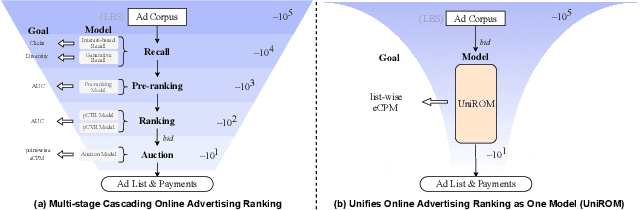
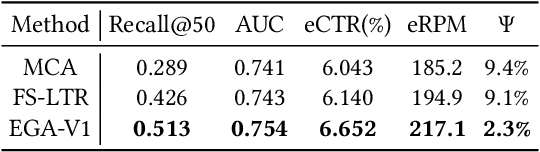
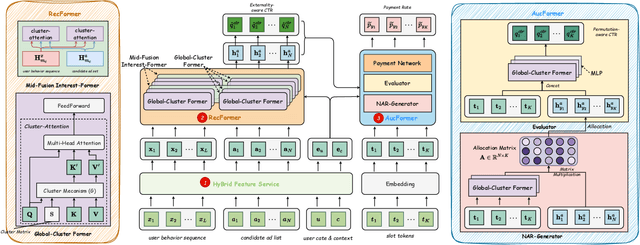
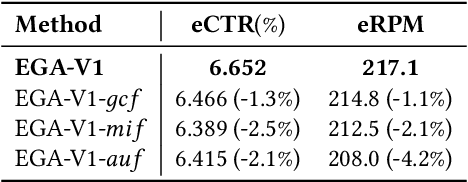
Modern industrial advertising systems commonly employ Multi-stage Cascading Architectures (MCA) to balance computational efficiency with ranking accuracy. However, this approach presents two fundamental challenges: (1) performance inconsistencies arising from divergent optimization targets and capability differences between stages, and (2) failure to account for advertisement externalities - the complex interactions between candidate ads during ranking. These limitations ultimately compromise system effectiveness and reduce platform profitability. In this paper, we present UniROM, an end-to-end generative architecture that Unifies online advertising Ranking as One Model. UniROM replaces cascaded stages with a single model to directly generate optimal ad sequences from the full candidate ad corpus in location-based services (LBS). The primary challenges associated with this approach stem from high costs of feature processing and computational bottlenecks in modeling externalities of large-scale candidate pools. To address these challenges, UniROM introduces an algorithm and engine co-designed hybrid feature service to decouple user and ad feature processing, reducing latency while preserving expressiveness. To efficiently extract intra- and cross-sequence mutual information, we propose RecFormer with an innovative cluster-attention mechanism as its core architectural component. Furthermore, we propose a bi-stage training strategy that integrates pre-training with reinforcement learning-based post-training to meet sophisticated platform and advertising objectives. Extensive offline evaluations on public benchmarks and large-scale online A/B testing on industrial advertising platform have demonstrated the superior performance of UniROM over state-of-the-art MCAs.
Image-based Visibility Analysis Replacing Line-of-Sight Simulation: An Urban Landmark Perspective
May 17, 2025Visibility analysis is one of the fundamental analytics methods in urban planning and landscape research, traditionally conducted through computational simulations based on the Line-of-Sight (LoS) principle. However, when assessing the visibility of named urban objects such as landmarks, geometric intersection alone fails to capture the contextual and perceptual dimensions of visibility as experienced in the real world. The study challenges the traditional LoS-based approaches by introducing a new, image-based visibility analysis method. Specifically, a Vision Language Model (VLM) is applied to detect the target object within a direction-zoomed Street View Image (SVI). Successful detection represents the object's visibility at the corresponding SVI location. Further, a heterogeneous visibility graph is constructed to address the complex interaction between observers and target objects. In the first case study, the method proves its reliability in detecting the visibility of six tall landmark constructions in global cities, with an overall accuracy of 87%. Furthermore, it reveals broader contextual differences when the landmarks are perceived and experienced. In the second case, the proposed visibility graph uncovers the form and strength of connections for multiple landmarks along the River Thames in London, as well as the places where these connections occur. Notably, bridges on the River Thames account for approximately 30% of total connections. Our method complements and enhances traditional LoS-based visibility analysis, and showcases the possibility of revealing the prevalent connection of any visual objects in the urban environment. It opens up new research perspectives for urban planning, heritage conservation, and computational social science.
End-to-End Vision Tokenizer Tuning
May 15, 2025Existing vision tokenization isolates the optimization of vision tokenizers from downstream training, implicitly assuming the visual tokens can generalize well across various tasks, e.g., image generation and visual question answering. The vision tokenizer optimized for low-level reconstruction is agnostic to downstream tasks requiring varied representations and semantics. This decoupled paradigm introduces a critical misalignment: The loss of the vision tokenization can be the representation bottleneck for target tasks. For example, errors in tokenizing text in a given image lead to poor results when recognizing or generating them. To address this, we propose ETT, an end-to-end vision tokenizer tuning approach that enables joint optimization between vision tokenization and target autoregressive tasks. Unlike prior autoregressive models that use only discrete indices from a frozen vision tokenizer, ETT leverages the visual embeddings of the tokenizer codebook, and optimizes the vision tokenizers end-to-end with both reconstruction and caption objectives. ETT can be seamlessly integrated into existing training pipelines with minimal architecture modifications. Our ETT is simple to implement and integrate, without the need to adjust the original codebooks or architectures of the employed large language models. Extensive experiments demonstrate that our proposed end-to-end vision tokenizer tuning unlocks significant performance gains, i.e., 2-6% for multimodal understanding and visual generation tasks compared to frozen tokenizer baselines, while preserving the original reconstruction capability. We hope this very simple and strong method can empower multimodal foundation models besides image generation and understanding.
CellVerse: Do Large Language Models Really Understand Cell Biology?
May 09, 2025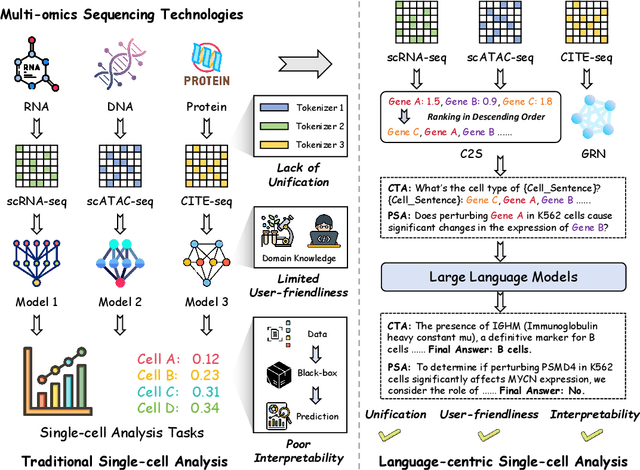
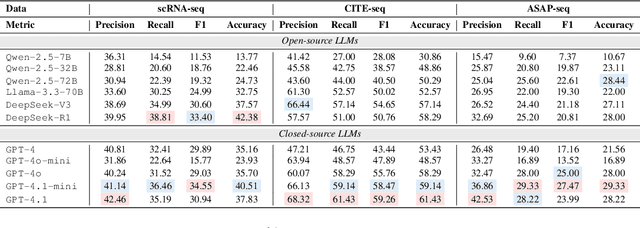
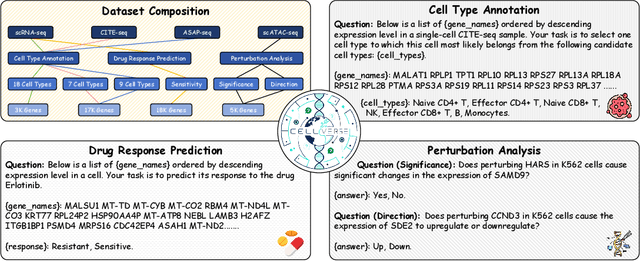
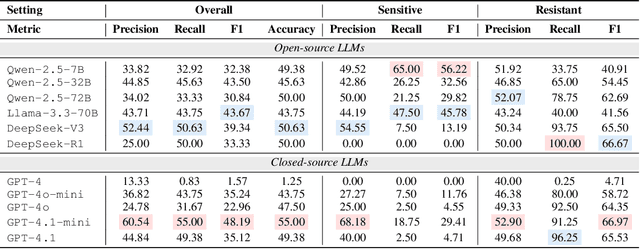
Recent studies have demonstrated the feasibility of modeling single-cell data as natural languages and the potential of leveraging powerful large language models (LLMs) for understanding cell biology. However, a comprehensive evaluation of LLMs' performance on language-driven single-cell analysis tasks still remains unexplored. Motivated by this challenge, we introduce CellVerse, a unified language-centric question-answering benchmark that integrates four types of single-cell multi-omics data and encompasses three hierarchical levels of single-cell analysis tasks: cell type annotation (cell-level), drug response prediction (drug-level), and perturbation analysis (gene-level). Going beyond this, we systematically evaluate the performance across 14 open-source and closed-source LLMs ranging from 160M to 671B on CellVerse. Remarkably, the experimental results reveal: (1) Existing specialist models (C2S-Pythia) fail to make reasonable decisions across all sub-tasks within CellVerse, while generalist models such as Qwen, Llama, GPT, and DeepSeek family models exhibit preliminary understanding capabilities within the realm of cell biology. (2) The performance of current LLMs falls short of expectations and has substantial room for improvement. Notably, in the widely studied drug response prediction task, none of the evaluated LLMs demonstrate significant performance improvement over random guessing. CellVerse offers the first large-scale empirical demonstration that significant challenges still remain in applying LLMs to cell biology. By introducing CellVerse, we lay the foundation for advancing cell biology through natural languages and hope this paradigm could facilitate next-generation single-cell analysis.
A Multimodal Deep Learning Approach for White Matter Shape Prediction in Diffusion MRI Tractography
Apr 25, 2025Shape measures have emerged as promising descriptors of white matter tractography, offering complementary insights into anatomical variability and associations with cognitive and clinical phenotypes. However, conventional methods for computing shape measures are computationally expensive and time-consuming for large-scale datasets due to reliance on voxel-based representations. We propose Tract2Shape, a novel multimodal deep learning framework that leverages geometric (point cloud) and scalar (tabular) features to predict ten white matter tractography shape measures. To enhance model efficiency, we utilize a dimensionality reduction algorithm for the model to predict five primary shape components. The model is trained and evaluated on two independently acquired datasets, the HCP-YA dataset, and the PPMI dataset. We evaluate the performance of Tract2Shape by training and testing it on the HCP-YA dataset and comparing the results with state-of-the-art models. To further assess its robustness and generalization ability, we also test Tract2Shape on the unseen PPMI dataset. Tract2Shape outperforms SOTA deep learning models across all ten shape measures, achieving the highest average Pearson's r and the lowest nMSE on the HCP-YA dataset. The ablation study shows that both multimodal input and PCA contribute to performance gains. On the unseen testing PPMI dataset, Tract2Shape maintains a high Pearson's r and low nMSE, demonstrating strong generalizability in cross-dataset evaluation. Tract2Shape enables fast, accurate, and generalizable prediction of white matter shape measures from tractography data, supporting scalable analysis across datasets. This framework lays a promising foundation for future large-scale white matter shape analysis.
A Comprehensive Survey in LLM(-Agent) Full Stack Safety: Data, Training and Deployment
Apr 22, 2025The remarkable success of Large Language Models (LLMs) has illuminated a promising pathway toward achieving Artificial General Intelligence for both academic and industrial communities, owing to their unprecedented performance across various applications. As LLMs continue to gain prominence in both research and commercial domains, their security and safety implications have become a growing concern, not only for researchers and corporations but also for every nation. Currently, existing surveys on LLM safety primarily focus on specific stages of the LLM lifecycle, e.g., deployment phase or fine-tuning phase, lacking a comprehensive understanding of the entire "lifechain" of LLMs. To address this gap, this paper introduces, for the first time, the concept of "full-stack" safety to systematically consider safety issues throughout the entire process of LLM training, deployment, and eventual commercialization. Compared to the off-the-shelf LLM safety surveys, our work demonstrates several distinctive advantages: (I) Comprehensive Perspective. We define the complete LLM lifecycle as encompassing data preparation, pre-training, post-training, deployment and final commercialization. To our knowledge, this represents the first safety survey to encompass the entire lifecycle of LLMs. (II) Extensive Literature Support. Our research is grounded in an exhaustive review of over 800+ papers, ensuring comprehensive coverage and systematic organization of security issues within a more holistic understanding. (III) Unique Insights. Through systematic literature analysis, we have developed reliable roadmaps and perspectives for each chapter. Our work identifies promising research directions, including safety in data generation, alignment techniques, model editing, and LLM-based agent systems. These insights provide valuable guidance for researchers pursuing future work in this field.
NTIRE 2025 Challenge on Image Super-Resolution ($\times$4): Methods and Results
Apr 20, 2025This paper presents the NTIRE 2025 image super-resolution ($\times$4) challenge, one of the associated competitions of the 10th NTIRE Workshop at CVPR 2025. The challenge aims to recover high-resolution (HR) images from low-resolution (LR) counterparts generated through bicubic downsampling with a $\times$4 scaling factor. The objective is to develop effective network designs or solutions that achieve state-of-the-art SR performance. To reflect the dual objectives of image SR research, the challenge includes two sub-tracks: (1) a restoration track, emphasizes pixel-wise accuracy and ranks submissions based on PSNR; (2) a perceptual track, focuses on visual realism and ranks results by a perceptual score. A total of 286 participants registered for the competition, with 25 teams submitting valid entries. This report summarizes the challenge design, datasets, evaluation protocol, the main results, and methods of each team. The challenge serves as a benchmark to advance the state of the art and foster progress in image SR.
Towards a General-Purpose Zero-Shot Synthetic Low-Light Image and Video Pipeline
Apr 16, 2025Low-light conditions pose significant challenges for both human and machine annotation. This in turn has led to a lack of research into machine understanding for low-light images and (in particular) videos. A common approach is to apply annotations obtained from high quality datasets to synthetically created low light versions. In addition, these approaches are often limited through the use of unrealistic noise models. In this paper, we propose a new Degradation Estimation Network (DEN), which synthetically generates realistic standard RGB (sRGB) noise without the requirement for camera metadata. This is achieved by estimating the parameters of physics-informed noise distributions, trained in a self-supervised manner. This zero-shot approach allows our method to generate synthetic noisy content with a diverse range of realistic noise characteristics, unlike other methods which focus on recreating the noise characteristics of the training data. We evaluate our proposed synthetic pipeline using various methods trained on its synthetic data for typical low-light tasks including synthetic noise replication, video enhancement, and object detection, showing improvements of up to 24\% KLD, 21\% LPIPS, and 62\% AP$_{50-95}$, respectively.