 Add to Chrome
 Add to Firefox
 Add to Edge
DiffBIR: Towards Blind Image Restoration with Generative Diffusion Prior
Aug 29, 2023
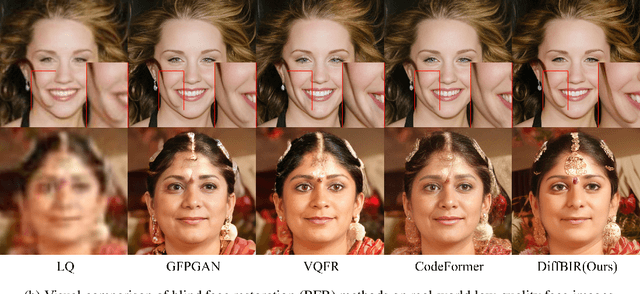

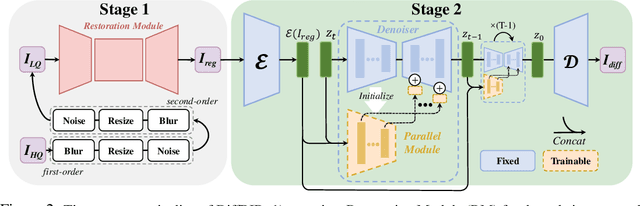
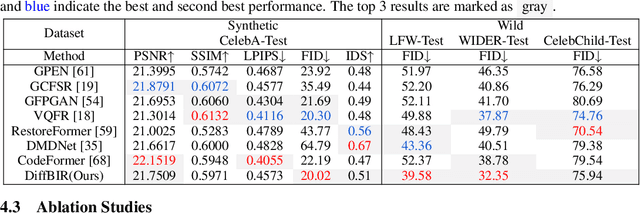
We present DiffBIR, which leverages pretrained text-to-image diffusion models for blind image restoration problem. Our framework adopts a two-stage pipeline. In the first stage, we pretrain a restoration module across diversified degradations to improve generalization capability in real-world scenarios. The second stage leverages the generative ability of latent diffusion models, to achieve realistic image restoration. Specifically, we introduce an injective modulation sub-network -- LAControlNet for finetuning, while the pre-trained Stable Diffusion is to maintain its generative ability. Finally, we introduce a controllable module that allows users to balance quality and fidelity by introducing the latent image guidance in the denoising process during inference. Extensive experiments have demonstrated its superiority over state-of-the-art approaches for both blind image super-resolution and blind face restoration tasks on synthetic and real-world datasets. The code is available at https://github.com/XPixelGroup/DiffBIR.

Routing Recovery for UAV Networks with Deliberate Attacks: A Reinforcement Learning based Approach
Aug 14, 2023The unmanned aerial vehicle (UAV) network is popular these years due to its various applications. In the UAV network, routing is significantly affected by the distributed network topology, leading to the issue that UAVs are vulnerable to deliberate damage. Hence, this paper focuses on the routing plan and recovery for UAV networks with attacks. In detail, a deliberate attack model based on the importance of nodes is designed to represent enemy attacks. Then, a node importance ranking mechanism is presented, considering the degree of nodes and link importance. However, it is intractable to handle the routing problem by traditional methods for UAV networks, since link connections change with the UAV availability. Hence, an intelligent algorithm based on reinforcement learning is proposed to recover the routing path when UAVs are attacked. Simulations are conducted and numerical results verify the proposed mechanism performs better than other referred methods.
Novel Online-Offline MA2C-DDPG for Efficient Spectrum Allocation and Trajectory Optimization in Dynamic Spectrum Sharing UAV Networks
Aug 04, 2023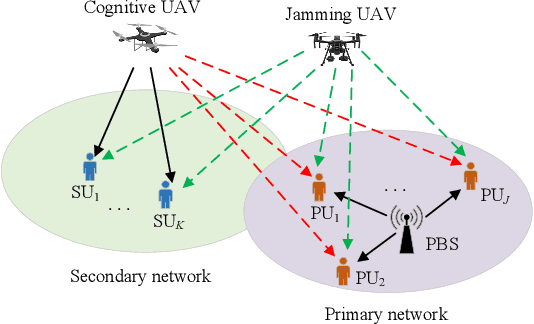
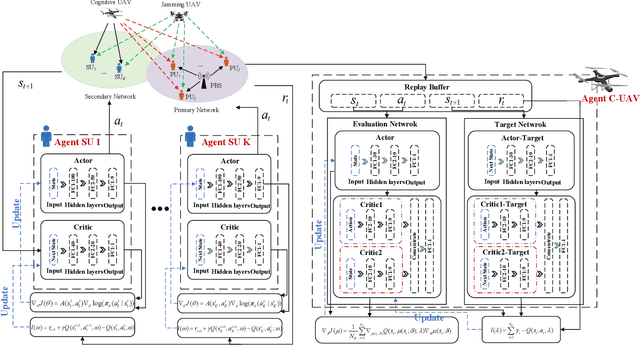
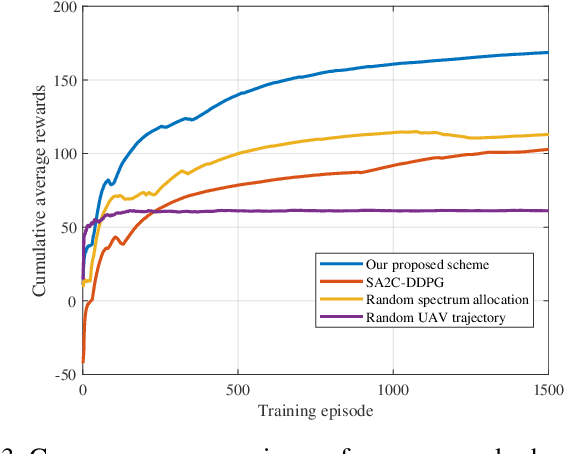
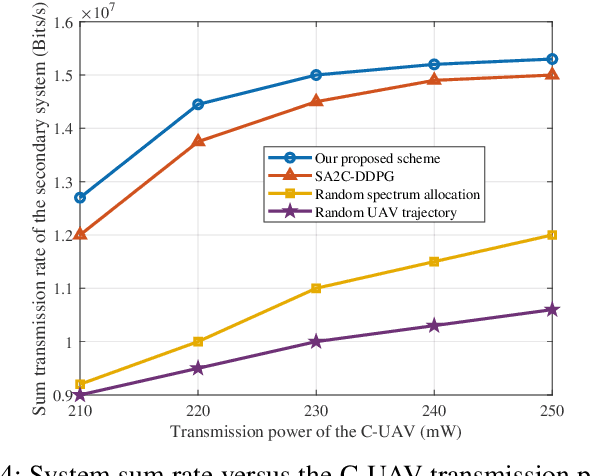
Unmanned aerial vehicle (UAV) communication is of crucial importance for diverse practical applications. However, it is susceptible to the severe spectrum scarcity problem and interference since it operates in the unlicensed spectrum band. In order to tackle those issues, a dynamic spectrum sharing network is considered with the anti-jamming technique. Moreover, an intelligent spectrum allocation and trajectory optimization scheme is proposed to adapt to diverse jamming models by exploiting our designed novel online-offline multi-agent actor-critic and deep deterministic policy-gradient framework. Simulation results demonstrate the high efficiency of our proposed framework. It is also shown that our proposed scheme achieves the largest transmission rate among all benchmark schemes.
GET3D--: Learning GET3D from Unconstrained Image Collections
Jul 27, 2023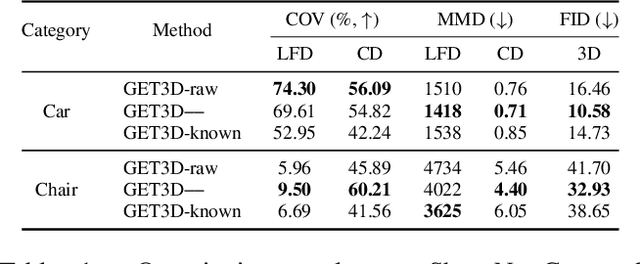
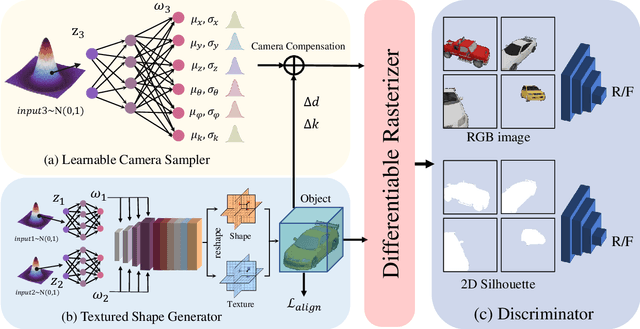
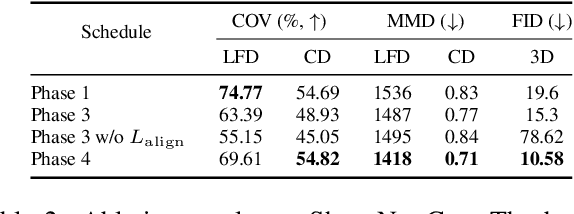
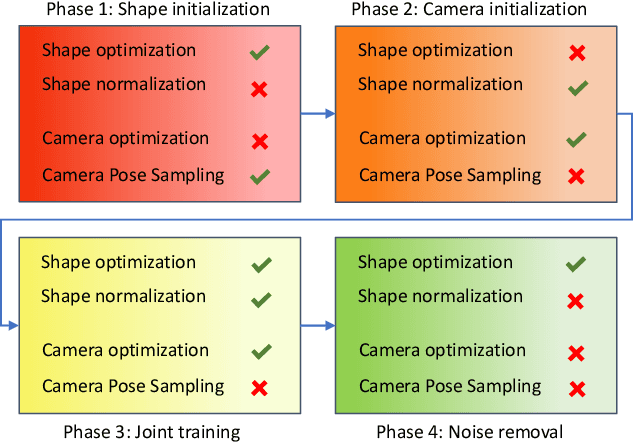
The demand for efficient 3D model generation techniques has grown exponentially, as manual creation of 3D models is time-consuming and requires specialized expertise. While generative models have shown potential in creating 3D textured shapes from 2D images, their applicability in 3D industries is limited due to the lack of a well-defined camera distribution in real-world scenarios, resulting in low-quality shapes. To overcome this limitation, we propose GET3D--, the first method that directly generates textured 3D shapes from 2D images with unknown pose and scale. GET3D-- comprises a 3D shape generator and a learnable camera sampler that captures the 6D external changes on the camera. In addition, We propose a novel training schedule to stably optimize both the shape generator and camera sampler in a unified framework. By controlling external variations using the learnable camera sampler, our method can generate aligned shapes with clear textures. Extensive experiments demonstrate the efficacy of GET3D--, which precisely fits the 6D camera pose distribution and generates high-quality shapes on both synthetic and realistic unconstrained datasets.
DeSRA: Detect and Delete the Artifacts of GAN-based Real-World Super-Resolution Models
Jul 05, 2023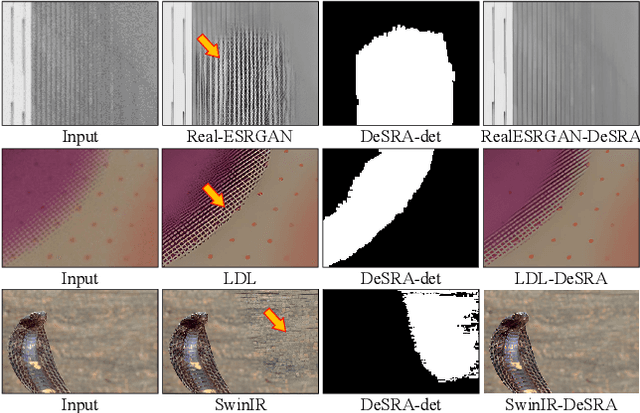
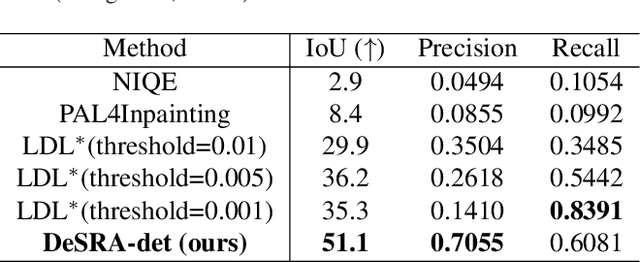
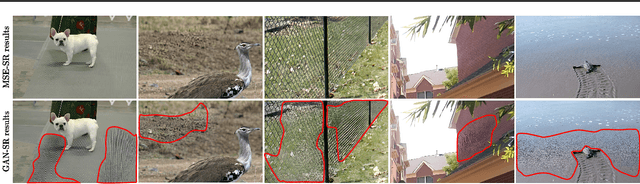
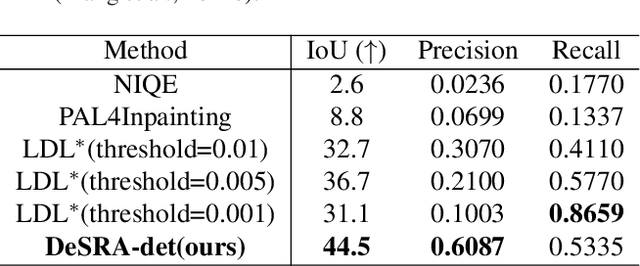
Image super-resolution (SR) with generative adversarial networks (GAN) has achieved great success in restoring realistic details. However, it is notorious that GAN-based SR models will inevitably produce unpleasant and undesirable artifacts, especially in practical scenarios. Previous works typically suppress artifacts with an extra loss penalty in the training phase. They only work for in-distribution artifact types generated during training. When applied in real-world scenarios, we observe that those improved methods still generate obviously annoying artifacts during inference. In this paper, we analyze the cause and characteristics of the GAN artifacts produced in unseen test data without ground-truths. We then develop a novel method, namely, DeSRA, to Detect and then Delete those SR Artifacts in practice. Specifically, we propose to measure a relative local variance distance from MSE-SR results and GAN-SR results, and locate the problematic areas based on the above distance and semantic-aware thresholds. After detecting the artifact regions, we develop a finetune procedure to improve GAN-based SR models with a few samples, so that they can deal with similar types of artifacts in more unseen real data. Equipped with our DeSRA, we can successfully eliminate artifacts from inference and improve the ability of SR models to be applied in real-world scenarios. The code will be available at https://github.com/TencentARC/DeSRA.
Impact of UAVs Equipped with ADS-B on the Civil Aviation Monitoring System
Jul 04, 2023In recent years, there is an increasing demand for unmanned aerial vehicles (UAVs) to complete multiple applications. However, as unmanned equipments, UAVs lead to some security risks to general civil aviations. In order to strengthen the flight management of UAVs and guarantee the safety, UAVs can be equipped with automatic dependent surveillance-broadcast (ADS-B) devices. In addition, as an automatic system, ADS-B can periodically broadcast flight information to the nearby aircrafts or the ground stations, and the technology is already used in civil aviation systems. However, due to the limited frequency of ADS-B technique, UAVs equipped with ADS-B devices result in the loss of packets to both UAVs and civil aviation. Further, the operation of civil aviation are seriously interfered. Hence, this paper firstly examines the packets loss of civil planes at different distance, then analyzes the impact of UAVs equipped with ADS-B on the packets updating of civil planes. The result indicates that the 1090MHz band blocking is affected by the density of UAVs. Besides, the frequency capacity is affected by the requirement of updating interval of civil planes. The position updating probability within 3s is 92.3% if there are 200 planes within 50km and 20 UAVs within 5km. The position updating probability within 3s is 86.9% if there are 200 planes within 50km and 40 UAVs within 5km.
The Potential of LEO Satellites in 6G Space-Air-Ground Enabled Access Networks
Jul 01, 2023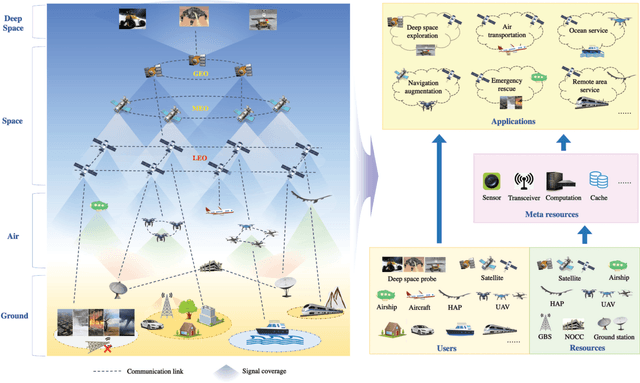
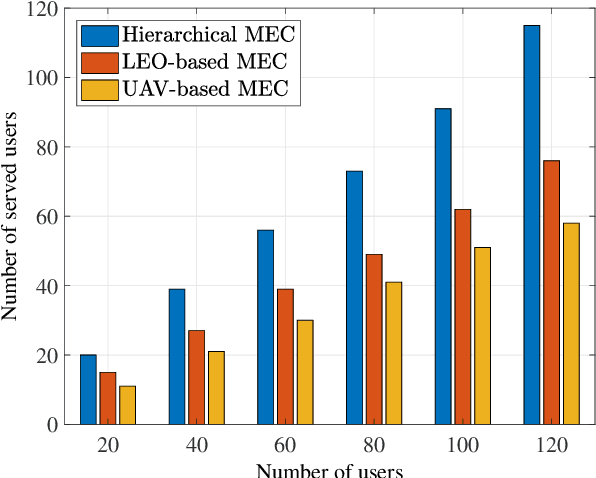
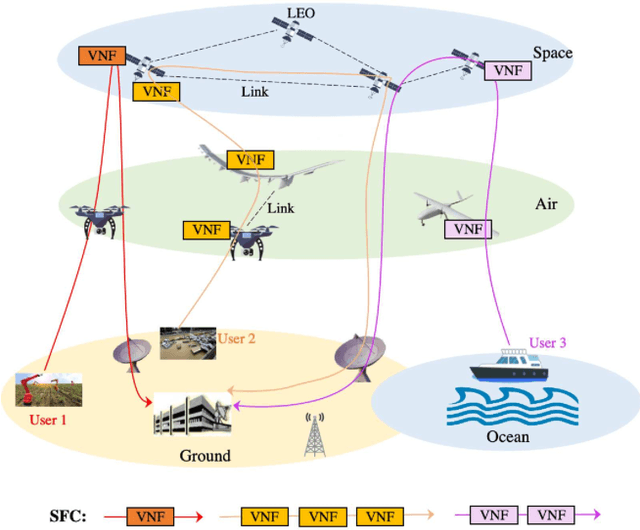

Space-air-ground integrated networks (SAGINs) help enhance the service performance in the sixth generation communication system. SAGIN is basically composed of satellites, aerial vehicles, ground facilities, as well as multiple terrestrial users. Therein, the low earth orbit (LEO) satellites are popular in recent years due to the low cost of development and launch, global coverage and delay-enabled services. Moreover, LEO satellites can support various applications, e.g., direct access, relay, caching and computation. In this work, we firstly provide the preliminaries and framework of SAGIN, in which the characteristics of LEO satellites, high altitude platforms, as well as unmanned aerial vehicles are analyzed. Then, the roles and potentials of LEO satellite in SAGIN are analyzed for access services. A couple of advanced techniques such as multi-access edge computing (MEC) and network function virtualization are introduced to enhance the LEO-based access service abilities as hierarchical MEC and network slicing in SAGIN. In addition, corresponding use cases are provided to verify the propositions. Besides, we also discuss the open issues and promising directions in LEO-enabled SAGIN access services for the future research.
Crafting Training Degradation Distribution for the Accuracy-Generalization Trade-off in Real-World Super-Resolution
Jun 01, 2023


Super-resolution (SR) techniques designed for real-world applications commonly encounter two primary challenges: generalization performance and restoration accuracy. We demonstrate that when methods are trained using complex, large-range degradations to enhance generalization, a decline in accuracy is inevitable. However, since the degradation in a certain real-world applications typically exhibits a limited variation range, it becomes feasible to strike a trade-off between generalization performance and testing accuracy within this scope. In this work, we introduce a novel approach to craft training degradation distributions using a small set of reference images. Our strategy is founded upon the binned representation of the degradation space and the Fr\'echet distance between degradation distributions. Our results indicate that the proposed technique significantly improves the performance of test images while preserving generalization capabilities in real-world applications.
Networks are Slacking Off: Understanding Generalization Problem in Image Deraining
May 24, 2023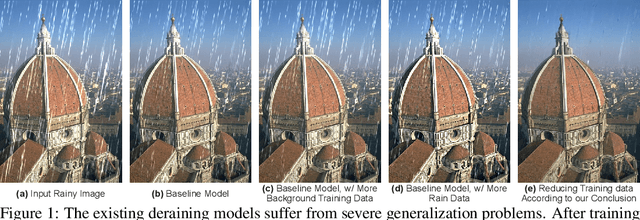
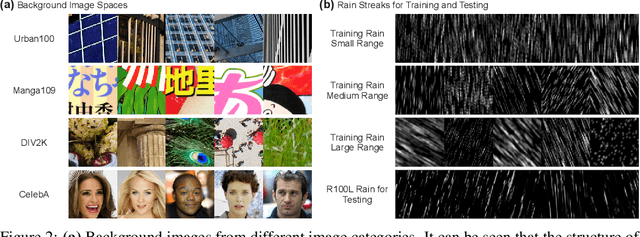

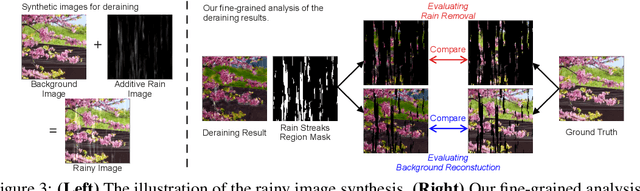
Deep deraining networks, while successful in laboratory benchmarks, consistently encounter substantial generalization issues when deployed in real-world applications. A prevailing perspective in deep learning encourages the use of highly complex training data, with the expectation that a richer image content knowledge will facilitate overcoming the generalization problem. However, through comprehensive and systematic experimentation, we discovered that this strategy does not enhance the generalization capability of these networks. On the contrary, it exacerbates the tendency of networks to overfit to specific degradations. Our experiments reveal that better generalization in a deraining network can be achieved by simplifying the complexity of the training data. This is due to the networks are slacking off during training, that is, learning the least complex elements in the image content and degradation to minimize training loss. When the complexity of the background image is less than that of the rain streaks, the network will prioritize the reconstruction of the background, thereby avoiding overfitting to the rain patterns and resulting in improved generalization performance. Our research not only offers a valuable perspective and methodology for better understanding the generalization problem in low-level vision tasks, but also displays promising practical potential.
Masked Image Training for Generalizable Deep Image Denoising
Mar 23, 2023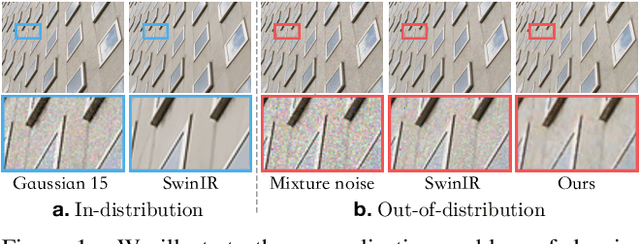
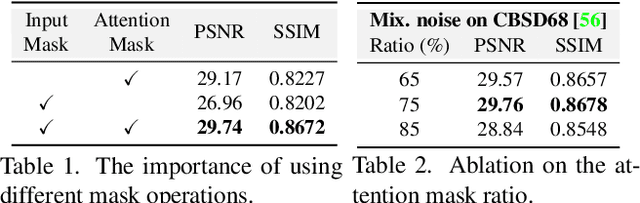
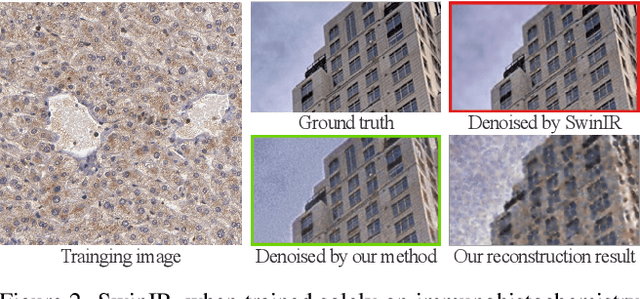
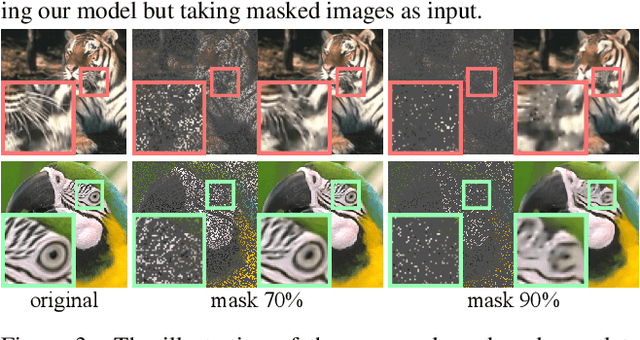
When capturing and storing images, devices inevitably introduce noise. Reducing this noise is a critical task called image denoising. Deep learning has become the de facto method for image denoising, especially with the emergence of Transformer-based models that have achieved notable state-of-the-art results on various image tasks. However, deep learning-based methods often suffer from a lack of generalization ability. For example, deep models trained on Gaussian noise may perform poorly when tested on other noise distributions. To address this issue, we present a novel approach to enhance the generalization performance of denoising networks, known as masked training. Our method involves masking random pixels of the input image and reconstructing the missing information during training. We also mask out the features in the self-attention layers to avoid the impact of training-testing inconsistency. Our approach exhibits better generalization ability than other deep learning models and is directly applicable to real-world scenarios. Additionally, our interpretability analysis demonstrates the superiority of our method.