 Add to Chrome
 Add to Firefox
 Add to Edge
S1-Omni: A Unified Multimodal Reasoning Model for Scientific Understanding, Prediction, and Generation
Jul 17, 2026
We present S1-Omni, a unified multimodal reasoning model for scientific understanding, prediction, and generation. AI for Science (AI4S) has advanced significantly through domain-specific models, tool-augmented LLMs, and scientific language models. However, model capabilities remain highly fragmented, limiting the joint modeling of heterogeneous data, scientific laws, and expert knowledge. S1-Omni addresses this gap by consolidating these capabilities into a single, coherent scientific reasoning model. The architecture of S1-Omni is built upon three core components: unified representation of scientific data, natural-world knowledge alignment, and decoding for domain-specific tasks. First, S1-Omni maps natural-language instructions and scientific objects, including CIF, SMILES, protein sequences, spectra, and scientific images, into a shared representation space. Second, it incorporates scientific laws and expert knowledge into data construction and training, enabling the model to reason from scientific evidence. Third, it performs task-specific decoding to support a broad range of applications, including property prediction, spectrum-to-molecular generation, protein site and structure prediction, and scientific image generation and editing. S1-Omni is trained on S1-Omni-Corpus, which covers 200 scientific tasks and contains millions of reasoning samples, and is evaluated on over 60 scientific benchmarks. It outperforms GPT-5.5 and Gemini-3.1-Pro on most benchmarks and matches or surpasses domain-specific models on several benchmarks. Overall, S1-Omni provides a practical path toward unified scientific modeling.

S1-Omni-Image: A Unified Model for Scientific Image Understanding, Generation, and Editing
Jun 23, 2026We present S1-Omni-Image, an open-weight unified multimodal model for scientific image understanding, generation, and editing. Unlike general-purpose image generation models, scientific image tasks require not only high-fidelity synthesis, but also robust understanding of scientific semantics, structural relations, domain knowledge, and task intent. To this end, S1-Omni-Image builds on the scientific multimodal reasoning backbone S1-VL-32B and couples its understanding capability with an image generation module under a unified think-before-generate paradigm. Given a user instruction, the model first produces a task-oriented reasoning trace, a textual answer, and a task special token; their hidden states are then injected into the generation module to condition image generation or editing. S1-Omni-Image supports scientific image understanding, generation, and editing in a unified framework. For generation, it focuses on scientific illustrations and text rendering, including logical diagrams, relational comparisons, data charts, and realistic scientific visualizations. For editing, it casts segmentation and other domain-specific vision tasks as native image editing problems, enabling multi-turn illustration editing, medical and geographic image segmentation, medical image translation, and scientific image super-resolution. We construct SciGenEdit, a 314K-sample training dataset, and release the model weights, inference code, and SciGenEdit-10K. Experiments show that S1-Omni-Image substantially improves scientific image generation and editing while preserving the scientific image understanding capability inherited from S1-VL-32B. It outperforms open-source models on GenExam and TechImage-Bench, achieves state-of-the-art results on four editing benchmarks including MSD, cigRockSEM, SynthRAD2025, and IXI, and maintains stable performance on scientific image understanding evaluations.
Rec-Distill: An Industrial Distillation Pipeline for Large-Scale Recommendation Models
May 28, 2026Large recommendation models have demonstrated substantial potential gains under scaling laws, yet these gains are difficult to realize in industrial recommendation systems because real-world deployment requires lightweight models with strict serving efficiency and latency guarantees. This creates a fundamental gap between offline model scaling and online deployment. In this work, we present Rec-Distill, an industrial distillation pipeline that transfers the performance gains of large-scale recommendation modeling to efficient serving models. Rec-Distill combines large-teacher scaling with student-side transfer optimization through decoupled training, black-box distillation, debiasing mechanism, and a hybrid batch-streaming pipeline for dynamic recommendation environments. Across multiple recommendation and advertising scenarios on real-world platforms, our framework scales teacher models up to 24B dense parameters and 20K behavior sequence length, while enabling lightweight students to recover a substantial portion of teacher gains, with distillation transferability exceeding 60% in the best setting. Extensive offline and online experiments further show that these transferred gains consistently translate into measurable business improvements under industrial constraints. These results demonstrate that Rec-Distill provides a practical framework for distilling large-scale recommendation models into deployable, cost-efficient serving systems, while also establishing a reliable path toward scaling recommendation models to even larger regimes in the future.
PEARL: Unbiased Percentile Estimation via Contrastive Learning for Industrial-Scale Livestream Recommendation
May 20, 2026Recommender systems trained on user interaction data are susceptible to behavioral intensity imbalance--a systematic distortion arising from heterogeneous engagement patterns across users. This imbalance skews feedback signals such that observed interactions no longer faithfully reflect true preferences, causing models to disproportionately amplify signals from highly active users while underrepresenting others, which ultimately degrades recommendation quality and robustness at scale. To address this issue, we propose a nonparametric contrastive percentile approximation framework, PEARL, that models relative preference signals instead of absolute engagement magnitudes. Building upon relative advantage debiasing, PEARL leverages real contrastive interaction samples to approximate percentile relationships directly, without relying on auxiliary distribution estimation models. We provide theoretical justification demonstrating that such pairwise comparisons yield unbiased estimates of percentile-based preference signals. For broader applicability, we introduce a prediction-based bootstrapping mechanism for percentile smoothing to handle sparse and discrete feedback, alongside a generalized value-weighted formulation and a co-training strategy to enhance both modeling flexibility and representation learning. Extensive offline experiments demonstrate that PEARL effectively mitigates behavioral bias and consistently improves recommendation performance across multiple ranking targets. Deployed in a production livestream platform with a combined user base of billions, online A/B testing confirms substantial real-world gains: +2.10% Watch Duration, +0.80% Consumption Amount, +1.49% Interaction Rate, and -6.91% Report Rate.
FLUID: From Ephemeral IDs to Multimodal Semantic Codes for Industrial-Scale Livestreaming Recommendation
May 20, 2026Modern recommender systems rely heavily on ID-based collaborative filtering: each item is represented by a unique ID embedding that accumulates collaborative signals from user interactions. Livestreaming recommendation, however, faces a unique challenge in this paradigm: a live room typically broadcasts for only tens of minutes, so its item ID remains poorly learned in a persistent cold-start state and ID-centric ranking models fail to generalize. We present FLUID, the first framework to fully retire the candidate-side item ID from a production-scale livestreaming ranker. FLUID couples a cross-domain multimodal encoder, jointly trained on short videos and livestreams to produce discrete hierarchical codes (LUCID), with a late-fusion, ID-free design that injects slice-level and room-level LUCID as independent tokens, stabilized by a staged warmup under online incremental training. Deployed on our industrial livestreaming recommenders with a cross-platform combined user base of over one billion globally, FLUID delivers significant online gains of +0.55% Quality Watch Duration, +2.05% Cold-Start Room Views, and +0.05% Active Hours.
ArtHOI: Taming Foundation Models for Monocular 4D Reconstruction of Hand-Articulated-Object Interactions
Mar 26, 2026Existing hand-object interactions (HOI) methods are largely limited to rigid objects, while 4D reconstruction methods of articulated objects generally require pre-scanning the object or even multi-view videos. It remains an unexplored but significant challenge to reconstruct 4D human-articulated-object interactions from a single monocular RGB video. Fortunately, recent advancements in foundation models present a new opportunity to address this highly ill-posed problem. To this end, we introduce ArtHOI, an optimization-based framework that integrates and refines priors from multiple foundation models. Our key contribution is a suite of novel methodologies designed to resolve the inherent inaccuracies and physical unreality of these priors. In particular, we introduce an Adaptive Sampling Refinement (ASR) method to optimize object's metric scale and pose for grounding its normalized mesh in world space. Furthermore, we propose a Multimodal Large Language Model (MLLM) guided hand-object alignment method, utilizing contact reasoning information as constraints of hand-object mesh composition optimization. To facilitate a comprehensive evaluation, we also contribute two new datasets, ArtHOI-RGBD and ArtHOI-Wild. Extensive experiments validate the robustness and effectiveness of our ArtHOI across diverse objects and interactions. Project: https://arthoi-reconstruction.github.io.
Leveraging Causal Reasoning Method for Explaining Medical Image Segmentation Models
Feb 24, 2026Medical image segmentation plays a vital role in clinical decision-making, enabling precise localization of lesions and guiding interventions. Despite significant advances in segmentation accuracy, the black-box nature of most deep models has raised growing concerns about their trustworthiness in high-stakes medical scenarios. Current explanation techniques have primarily focused on classification tasks, leaving the segmentation domain relatively underexplored. We introduced an explanation model for segmentation task which employs the causal inference framework and backpropagates the average treatment effect (ATE) into a quantification metric to determine the influence of input regions, as well as network components, on target segmentation areas. Through comparison with recent segmentation explainability techniques on two representative medical imaging datasets, we demonstrated that our approach provides more faithful explanations than existing approaches. Furthermore, we carried out a systematic causal analysis of multiple foundational segmentation models using our method, which reveals significant heterogeneity in perceptual strategies across different models, and even between different inputs for the same model. Suggesting the potential of our method to provide notable insights for optimizing segmentation models. Our code can be found at https://github.com/lcmmai/PdCR.
Zenith: Scaling up Ranking Models for Billion-scale Livestreaming Recommendation
Jan 29, 2026Accurately capturing feature interactions is essential in recommender systems, and recent trends show that scaling up model capacity could be a key driver for next-level predictive performance. While prior work has explored various model architectures to capture multi-granularity feature interactions, relatively little attention has been paid to efficient feature handling and scaling model capacity without incurring excessive inference latency. In this paper, we address this by presenting Zenith, a scalable and efficient ranking architecture that learns complex feature interactions with minimal runtime overhead. Zenith is designed to handle a few high-dimensional Prime Tokens with Token Fusion and Token Boost modules, which exhibits superior scaling laws compared to other state-of-the-art ranking methods, thanks to its improved token heterogeneity. Its real-world effectiveness is demonstrated by deploying the architecture to TikTok Live, a leading online livestreaming platform that attracts billions of users globally. Our A/B test shows that Zenith achieves +1.05%/-1.10% in online CTR AUC and Logloss, and realizes +9.93% gains in Quality Watch Session / User and +8.11% in Quality Watch Duration / User.
Label-free Super-Resolution Microvessel Color Flow Imaging with Ultrasound
May 27, 2025
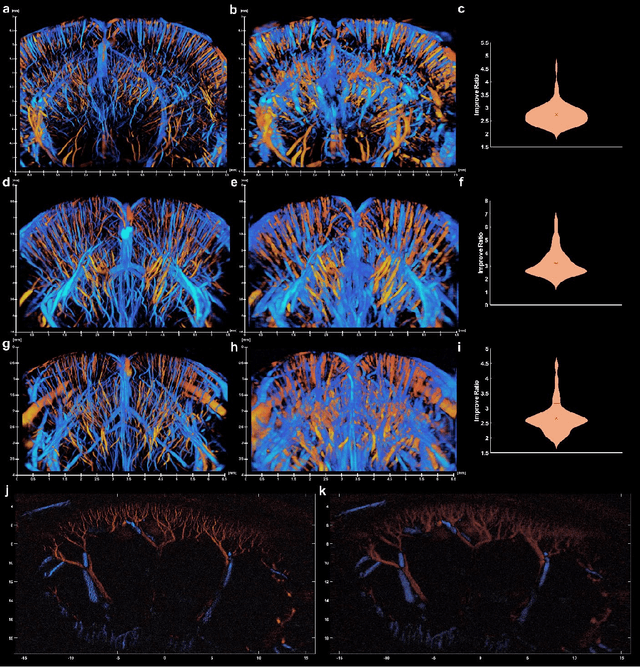
We present phase subtraction imaging (PSI), a new spatial-temporal beamforming method that enables micrometer level resolution imaging of microvessels in live animals without labels, which are microbubbles in ultrasound super-resolution imaging. Subtraction of relative phase differences between consecutive frames beamformed with mismatched apodizations is used in PSI to overcome the diffraction limit. We validated this method by imaging both the mouse brain and rabbit kidney using different ultrasound probes and scanning machines.
QUADFormer: Learning-based Detection of Cyber Attacks in Quadrotor UAVs
Jun 02, 2024

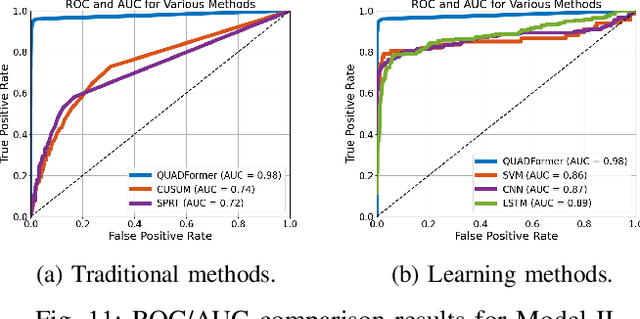
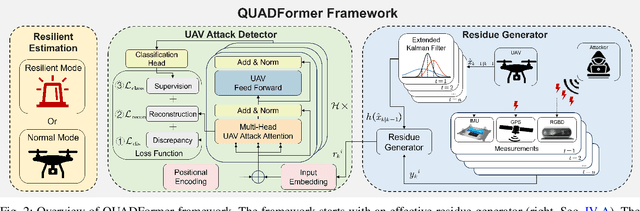
Safety-critical intelligent cyber-physical systems, such as quadrotor unmanned aerial vehicles (UAVs), are vulnerable to different types of cyber attacks, and the absence of timely and accurate attack detection can lead to severe consequences. When UAVs are engaged in large outdoor maneuvering flights, their system constitutes highly nonlinear dynamics that include non-Gaussian noises. Therefore, the commonly employed traditional statistics-based and emerging learning-based attack detection methods do not yield satisfactory results. In response to the above challenges, we propose QUADFormer, a novel Quadrotor UAV Attack Detection framework with transFormer-based architecture. This framework includes a residue generator designed to generate a residue sequence sensitive to anomalies. Subsequently, this sequence is fed into a transformer structure with disparity in correlation to specifically learn its statistical characteristics for the purpose of classification and attack detection. Finally, we design an alert module to ensure the safe execution of tasks by UAVs under attack conditions. We conduct extensive simulations and real-world experiments, and the results show that our method has achieved superior detection performance compared with many state-of-the-art methods.