 Add to Chrome
 Add to Firefox
 Add to Edge
Claim-Level Reliability Assessment for Efficient Test-Time Reasoning
Aug 12, 2026
We propose claim-level falsification as a principle for test-time scaling and instantiate it through Claim-Level Reliability Assessment (CLR), a training-free framework that reallocates test-time compute from additional solution sampling to targeted verification. Since whole-trace evaluation often obscures decisive errors due to signal dilution from routine tokens, CLR condenses each reasoning trace into a compact set of decision-critical claims, thereby isolating its logical anchors. Furthermore, recognizing the inherent difficulty of generating entirely correct solutions under fixed model capabilities, CLR shifts the focus to semantic falsification. This approach exploits a fundamental asymmetry between solution construction and claim refutation. Constructing a valid solution requires a flawless reasoning path, whereas refuting an incorrect claim requires identifying only a single decisive flaw. This targeted search for negative evidence systematically compresses the survival space of high-confidence incorrect traces, effectively suppressing erroneous consensus via nonlinear reliability scoring. Across four LLMs and four reasoning benchmarks under matched budgets, CLR generally improves upon pass@1 and self-consistency. On GPT-OSS-20B/CMIMC25, for instance, CLR exceeds pass@1 by 27.15 percentage-points and raises self-consistency accuracy from 77.50\% to 82.19\% with 37.0\% fewer tokens.

VibeThinker-3B: Exploring the Frontier of Verifiable Reasoning in Small Language Models
Jun 15, 2026This technical report introduces VibeThinker-3B, a compact dense model with 3B parameters developed to investigate how far verifiable reasoning can be pushed within a strictly small-model regime. Building upon the Spectrum-to-Signal post-training paradigm, we systematically enhance the model through an optimized pipeline that includes curriculum-based supervised fine-tuning, multi-domain reinforcement learning, and offline self-distillation. Experimental evaluations demonstrate that VibeThinker-3B achieves frontier-level performance on highly demanding verifiable tasks. Specifically, it attains a score of 94.3 on AIME26 (improving to 97.1 with claim-level test-time scaling), an 80.2 Pass@1 on LiveCodeBench v6, and exhibits strong out-of-distribution generalization with a 96.1\% acceptance rate on recent unseen LeetCode contests. This effectively places it in the performance band of first-tier reasoning systems, matching or exceeding flagship models that are orders of magnitude larger, such as DeepSeek V3.2, GLM-5, and Gemini 3 Pro. Furthermore, a score of 93.4 on IFEval confirms that this extreme reasoning enhancement does not compromise strict instruction controllability. Extending our previous 1.5B work, these findings motivate the Parametric Compression-Coverage Hypothesis, which views verifiable reasoning as compressible into compact reasoning cores, while open-domain knowledge and general-purpose competence require broad parameter coverage over facts, concepts, and long-tail scenarios. This perspective suggests that compact models are not merely deployment-efficient substitutes, but a complementary path toward frontier-level performance in parameter-dense capability regimes.
PEARL: Unbiased Percentile Estimation via Contrastive Learning for Industrial-Scale Livestream Recommendation
May 20, 2026Recommender systems trained on user interaction data are susceptible to behavioral intensity imbalance--a systematic distortion arising from heterogeneous engagement patterns across users. This imbalance skews feedback signals such that observed interactions no longer faithfully reflect true preferences, causing models to disproportionately amplify signals from highly active users while underrepresenting others, which ultimately degrades recommendation quality and robustness at scale. To address this issue, we propose a nonparametric contrastive percentile approximation framework, PEARL, that models relative preference signals instead of absolute engagement magnitudes. Building upon relative advantage debiasing, PEARL leverages real contrastive interaction samples to approximate percentile relationships directly, without relying on auxiliary distribution estimation models. We provide theoretical justification demonstrating that such pairwise comparisons yield unbiased estimates of percentile-based preference signals. For broader applicability, we introduce a prediction-based bootstrapping mechanism for percentile smoothing to handle sparse and discrete feedback, alongside a generalized value-weighted formulation and a co-training strategy to enhance both modeling flexibility and representation learning. Extensive offline experiments demonstrate that PEARL effectively mitigates behavioral bias and consistently improves recommendation performance across multiple ranking targets. Deployed in a production livestream platform with a combined user base of billions, online A/B testing confirms substantial real-world gains: +2.10% Watch Duration, +0.80% Consumption Amount, +1.49% Interaction Rate, and -6.91% Report Rate.
Zenith: Scaling up Ranking Models for Billion-scale Livestreaming Recommendation
Jan 29, 2026Accurately capturing feature interactions is essential in recommender systems, and recent trends show that scaling up model capacity could be a key driver for next-level predictive performance. While prior work has explored various model architectures to capture multi-granularity feature interactions, relatively little attention has been paid to efficient feature handling and scaling model capacity without incurring excessive inference latency. In this paper, we address this by presenting Zenith, a scalable and efficient ranking architecture that learns complex feature interactions with minimal runtime overhead. Zenith is designed to handle a few high-dimensional Prime Tokens with Token Fusion and Token Boost modules, which exhibits superior scaling laws compared to other state-of-the-art ranking methods, thanks to its improved token heterogeneity. Its real-world effectiveness is demonstrated by deploying the architecture to TikTok Live, a leading online livestreaming platform that attracts billions of users globally. Our A/B test shows that Zenith achieves +1.05%/-1.10% in online CTR AUC and Logloss, and realizes +9.93% gains in Quality Watch Session / User and +8.11% in Quality Watch Duration / User.
Efficiently Reconstructing Dynamic Scenes One D4RT at a Time
Dec 10, 2025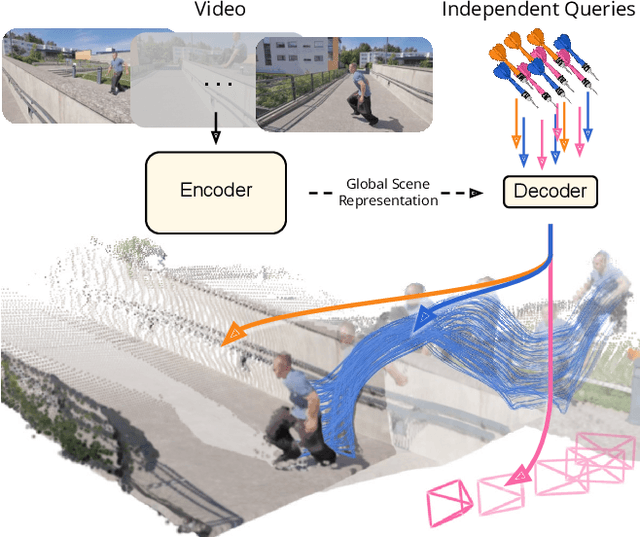
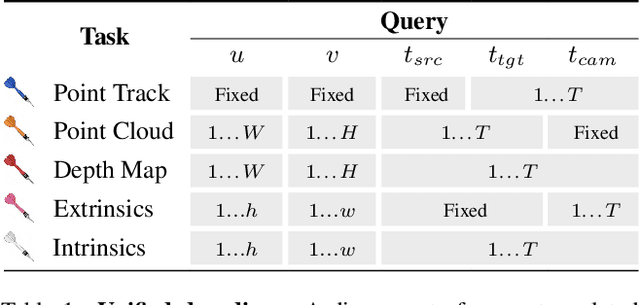
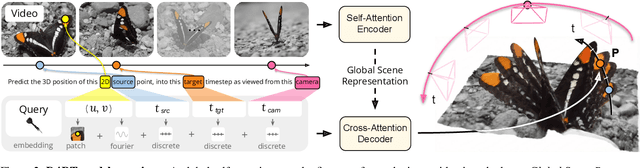
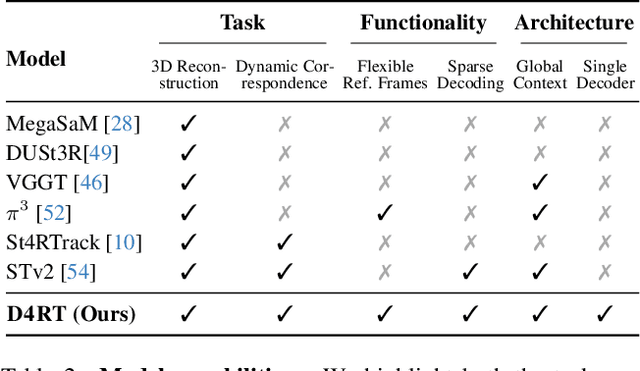
Understanding and reconstructing the complex geometry and motion of dynamic scenes from video remains a formidable challenge in computer vision. This paper introduces D4RT, a simple yet powerful feedforward model designed to efficiently solve this task. D4RT utilizes a unified transformer architecture to jointly infer depth, spatio-temporal correspondence, and full camera parameters from a single video. Its core innovation is a novel querying mechanism that sidesteps the heavy computation of dense, per-frame decoding and the complexity of managing multiple, task-specific decoders. Our decoding interface allows the model to independently and flexibly probe the 3D position of any point in space and time. The result is a lightweight and highly scalable method that enables remarkably efficient training and inference. We demonstrate that our approach sets a new state of the art, outperforming previous methods across a wide spectrum of 4D reconstruction tasks. We refer to the project webpage for animated results: https://d4rt-paper.github.io/.
Tiny Model, Big Logic: Diversity-Driven Optimization Elicits Large-Model Reasoning Ability in VibeThinker-1.5B
Nov 09, 2025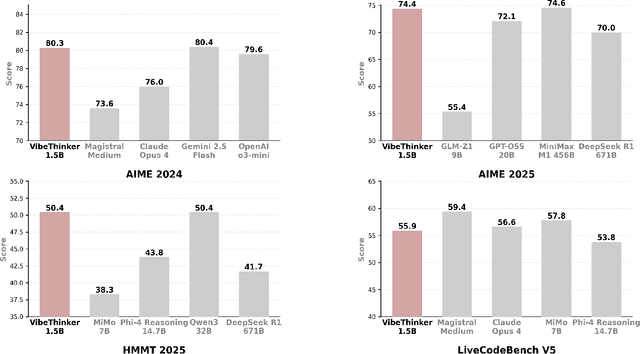

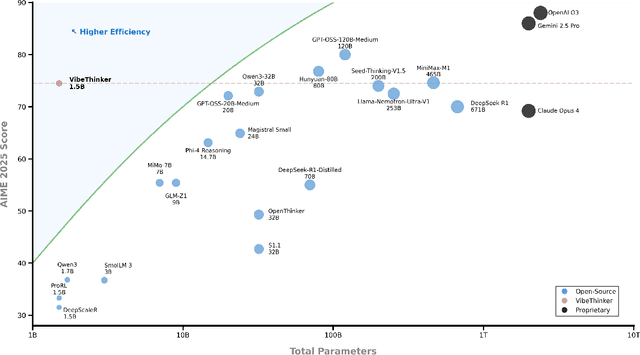
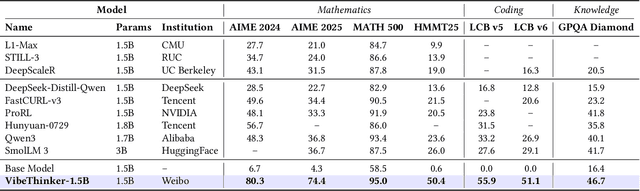
Challenging the prevailing consensus that small models inherently lack robust reasoning, this report introduces VibeThinker-1.5B, a 1.5B-parameter dense model developed via our Spectrum-to-Signal Principle (SSP). This challenges the prevailing approach of scaling model parameters to enhance capabilities, as seen in models like DeepSeek R1 (671B) and Kimi k2 (>1T). The SSP framework first employs a Two-Stage Diversity-Exploring Distillation (SFT) to generate a broad spectrum of solutions, followed by MaxEnt-Guided Policy Optimization (RL) to amplify the correct signal. With a total training cost of only $7,800, VibeThinker-1.5B demonstrates superior reasoning capabilities compared to closed-source models like Magistral Medium and Claude Opus 4, and performs on par with open-source models like GPT OSS-20B Medium. Remarkably, it surpasses the 400x larger DeepSeek R1 on three math benchmarks: AIME24 (80.3 vs. 79.8), AIME25 (74.4 vs. 70.0), and HMMT25 (50.4 vs. 41.7). This is a substantial improvement over its base model (6.7, 4.3, and 0.6, respectively). On LiveCodeBench V6, it scores 51.1, outperforming Magistral Medium's 50.3 and its base model's 0.0. These findings demonstrate that small models can achieve reasoning capabilities comparable to large models, drastically reducing training and inference costs and thereby democratizing advanced AI research.
Event Vision Sensor: A Review
Feb 10, 2025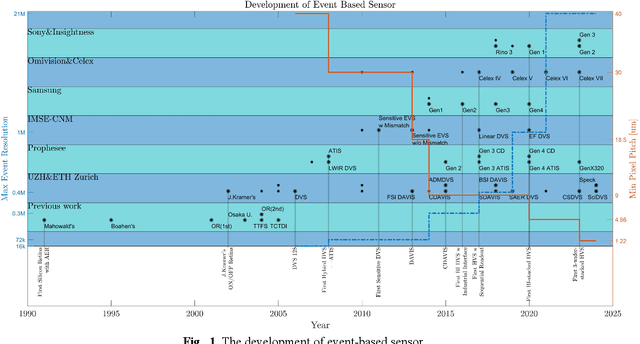
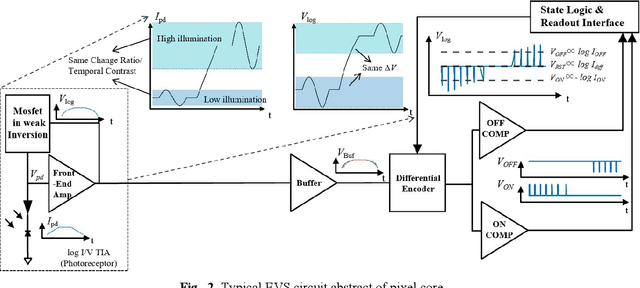
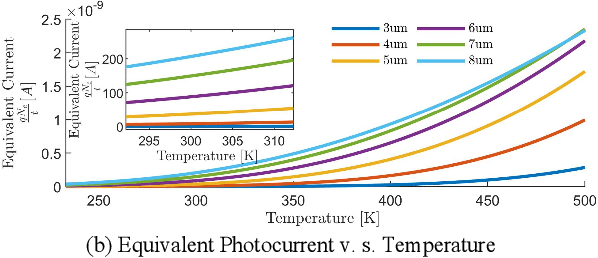
By monitoring temporal contrast, event-based vision sensors can provide high temporal resolution and low latency while maintaining low power consumption and simplicity in circuit structure. These characteristics have garnered significant attention in both academia and industry. In recent years, the application of back-illuminated (BSI) technology, wafer stacking techniques, and industrial interfaces has brought new opportunities for enhancing the performance of event-based vision sensors. This is evident in the substantial advancements made in reducing noise, improving resolution, and increasing readout rates. Additionally, the integration of these technologies has enhanced the compatibility of event-based vision sensors with current and edge vision systems, providing greater possibilities for their practical applications. This paper will review the progression from neuromorphic engineering to state-of-the-art event-based vision sensor technologies, including their development trends, operating principles, and key features. Moreover, we will delve into the sensitivity of event-based vision sensors and the opportunities and challenges they face in the realm of infrared imaging, providing references for future research and applications.
Imagen 3
Aug 13, 2024We introduce Imagen 3, a latent diffusion model that generates high quality images from text prompts. We describe our quality and responsibility evaluations. Imagen 3 is preferred over other state-of-the-art (SOTA) models at the time of evaluation. In addition, we discuss issues around safety and representation, as well as methods we used to minimize the potential harm of our models.
Relation Modeling and Distillation for Learning with Noisy Labels
Jun 02, 2024Learning with noisy labels has become an effective strategy for enhancing the robustness of models, which enables models to better tolerate inaccurate data. Existing methods either focus on optimizing the loss function to mitigate the interference from noise, or design procedures to detect potential noise and correct errors. However, their effectiveness is often compromised in representation learning due to the dilemma where models overfit to noisy labels. To address this issue, this paper proposes a relation modeling and distillation framework that models inter-sample relationships via self-supervised learning and employs knowledge distillation to enhance understanding of latent associations, which mitigate the impact of noisy labels. Specifically, the proposed method, termed RMDNet, includes two main modules, where the relation modeling (RM) module implements the contrastive learning technique to learn representations of all data, an unsupervised approach that effectively eliminates the interference of noisy tags on feature extraction. The relation-guided representation learning (RGRL) module utilizes inter-sample relation learned from the RM module to calibrate the representation distribution for noisy samples, which is capable of improving the generalization of the model in the inference phase. Notably, the proposed RMDNet is a plug-and-play framework that can integrate multiple methods to its advantage. Extensive experiments were conducted on two datasets, including performance comparison, ablation study, in-depth analysis and case study. The results show that RMDNet can learn discriminative representations for noisy data, which results in superior performance than the existing methods.
Robust Visual Tracking via Iterative Gradient Descent and Threshold Selection
Jun 02, 2024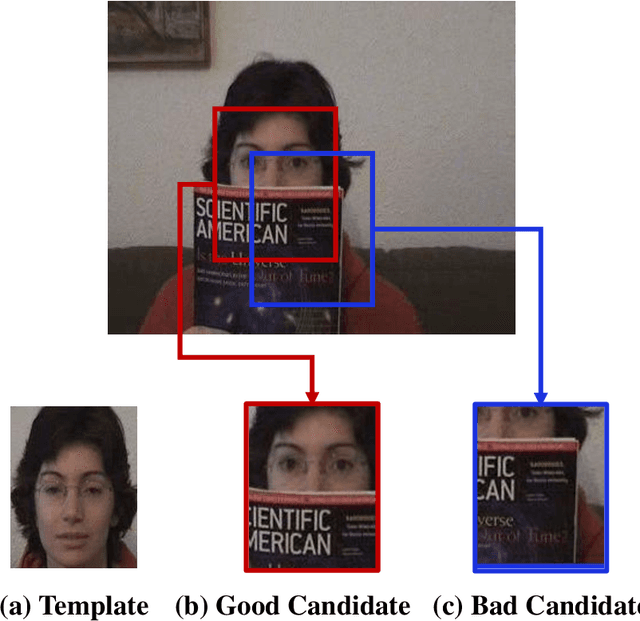


Visual tracking fundamentally involves regressing the state of the target in each frame of a video. Despite significant progress, existing regression-based trackers still tend to experience failures and inaccuracies. To enhance the precision of target estimation, this paper proposes a tracking technique based on robust regression. Firstly, we introduce a novel robust linear regression estimator, which achieves favorable performance when the error vector follows i.i.d Gaussian-Laplacian distribution. Secondly, we design an iterative process to quickly solve the problem of outliers. In fact, the coefficients are obtained by Iterative Gradient Descent and Threshold Selection algorithm (IGDTS). In addition, we expend IGDTS to a generative tracker, and apply IGDTS-distance to measure the deviation between the sample and the model. Finally, we propose an update scheme to capture the appearance changes of the tracked object and ensure that the model is updated correctly. Experimental results on several challenging image sequences show that the proposed tracker outperformance existing trackers.