 Add to Chrome
 Add to Firefox
 Add to Edge
Fewer Tokens, Smaller Cache: Reward-Coordinated Efficient Reasoning
Aug 05, 2026
Large Reasoning Models (LRMs) excel on complex tasks through long chain-of-thought (CoT) reasoning, but their lengthy intermediate steps cause severe overthinking that inflates inference cost. KV-cache compression is a common solution, yet existing reasoning-oriented methods apply a uniform policy across the trajectory and judge compression only by what it removes from the cache. Two observations point the other way. First, a reasoning state's tolerance to context loss varies along the trajectory, and process reward tracks it: deleting tokens at high-reward steps preserves accuracy far better than deleting the same budget at random. Second, compression is not free on the generation side, since a smaller cache leads the model to generate more tokens, partly canceling the saving. Together these motivate coordinating both sides under a single process reward. We propose ReCo (Reward-Coordinated Compression), a step-wise framework in which a lightweight process-reward estimator scores each completed step and drives three components: (1) reward-adaptive KV-cache compression that shrinks the retained cache harder at high-reward steps and less at low-reward ones, (2) a reward-banded penalty on reflection tokens that curbs redundant generation, and (3) confidence-based early stopping that triggers when the reasoning is reliable. Across three reasoning models and six benchmarks, ReCo reduces generated tokens by 37%-65% and end-to-end latency by 2.08x-2.35x over Full CoT, all while largely preserving accuracy.

S1-Omni: A Unified Multimodal Reasoning Model for Scientific Understanding, Prediction, and Generation
Jul 17, 2026We present S1-Omni, a unified multimodal reasoning model for scientific understanding, prediction, and generation. AI for Science (AI4S) has advanced significantly through domain-specific models, tool-augmented LLMs, and scientific language models. However, model capabilities remain highly fragmented, limiting the joint modeling of heterogeneous data, scientific laws, and expert knowledge. S1-Omni addresses this gap by consolidating these capabilities into a single, coherent scientific reasoning model. The architecture of S1-Omni is built upon three core components: unified representation of scientific data, natural-world knowledge alignment, and decoding for domain-specific tasks. First, S1-Omni maps natural-language instructions and scientific objects, including CIF, SMILES, protein sequences, spectra, and scientific images, into a shared representation space. Second, it incorporates scientific laws and expert knowledge into data construction and training, enabling the model to reason from scientific evidence. Third, it performs task-specific decoding to support a broad range of applications, including property prediction, spectrum-to-molecular generation, protein site and structure prediction, and scientific image generation and editing. S1-Omni is trained on S1-Omni-Corpus, which covers 200 scientific tasks and contains millions of reasoning samples, and is evaluated on over 60 scientific benchmarks. It outperforms GPT-5.5 and Gemini-3.1-Pro on most benchmarks and matches or surpasses domain-specific models on several benchmarks. Overall, S1-Omni provides a practical path toward unified scientific modeling.
A Systematic Study of Cross-Modal Typographic Attacks on Audio-Visual Reasoning
Apr 05, 2026As audio-visual multi-modal large language models (MLLMs) are increasingly deployed in safety-critical applications, understanding their vulnerabilities is crucial. To this end, we introduce Multi-Modal Typography, a systematic study examining how typographic attacks across multiple modalities adversely influence MLLMs. While prior work focuses narrowly on unimodal attacks, we expose the cross-modal fragility of MLLMs. We analyze the interactions between audio, visual, and text perturbations and reveal that coordinated multi-modal attack creates a significantly more potent threat than single-modality attacks (attack success rate = $83.43\%$ vs $34.93\%$).Our findings across multiple frontier MLLMs, tasks, and common-sense reasoning and content moderation benchmarks establishes multi-modal typography as a critical and underexplored attack strategy in multi-modal reasoning. Code and data will be publicly available.
VLM-UQBench: A Benchmark for Modality-Specific and Cross-Modality Uncertainties in Vision Language Models
Feb 09, 2026Uncertainty quantification (UQ) is vital for ensuring that vision-language models (VLMs) behave safely and reliably. A central challenge is to localize uncertainty to its source, determining whether it arises from the image, the text, or misalignment between the two. We introduce VLM-UQBench, a benchmark for modality-specific and cross-modal data uncertainty in VLMs, It consists of 600 real-world samples drawn from the VizWiz dataset, curated into clean, image-, text-, and cross-modal uncertainty subsets, and a scalable perturbation pipeline with 8 visual, 5 textual, and 3 cross-modal perturbations. We further propose two simple metrics that quantify the sensitivity of UQ scores to these perturbations and their correlation with hallucinations, and use them to evaluate a range of UQ methods across four VLMs and three datasets. Empirically, we find that: (i) existing UQ methods exhibit strong modality-specific specialization and substantial dependence on the underlying VLM, (ii) modality-specific uncertainty frequently co-occurs with hallucinations while current UQ scores provide only weak and inconsistent risk signals, and (iii) although UQ methods can rival reasoning-based chain-of-thought baselines on overt, group-level ambiguity, they largely fail to detect the subtle, instance-level ambiguity introduced by our perturbation pipeline. These results highlight a significant gap between current UQ practices and the fine-grained, modality-aware uncertainty required for reliable VLM deployment.
Learning Decentralized LLM Collaboration with Multi-Agent Actor Critic
Jan 29, 2026Recent work has explored optimizing LLM collaboration through Multi-Agent Reinforcement Learning (MARL). However, most MARL fine-tuning approaches rely on predefined execution protocols, which often require centralized execution. Decentralized LLM collaboration is more appealing in practice, as agents can run inference in parallel with flexible deployments. Also, current approaches use Monte Carlo methods for fine-tuning, which suffer from high variance and thus require more samples to train effectively. Actor-critic methods are prevalent in MARL for dealing with these issues, so we developed Multi-Agent Actor-Critic (MAAC) methods to optimize decentralized LLM collaboration. In this paper, we analyze when and why these MAAC methods are beneficial. We propose 2 MAAC approaches, \textbf{CoLLM-CC} with a \textbf{C}entralized \textbf{C}ritic and \textbf{CoLLM-DC} with \textbf{D}ecentralized \textbf{C}ritics. Our experiments across writing, coding, and game-playing domains show that Monte Carlo methods and CoLLM-DC can achieve performance comparable to CoLLM-CC in short-horizon and dense-reward settings. However, they both underperform CoLLM-CC on long-horizon or sparse-reward tasks, where Monte Carlo methods require substantially more samples and CoLLM-DC struggles to converge. Our code is available at https://github.com/OpenMLRL/CoMLRL/releases/tag/v1.3.2.
Centralized Copy-Paste: Enhanced Data Augmentation Strategy for Wildland Fire Semantic Segmentation
Jul 08, 2025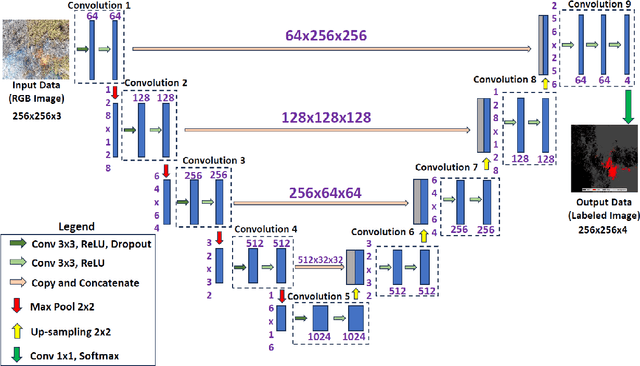


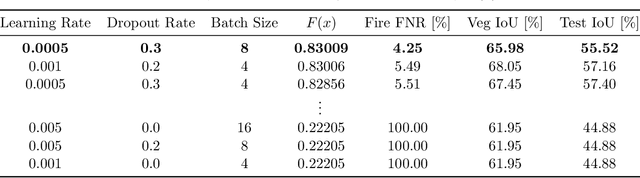
Collecting and annotating images for the purpose of training segmentation models is often cost prohibitive. In the domain of wildland fire science, this challenge is further compounded by the scarcity of reliable public datasets with labeled ground truth. This paper presents the Centralized Copy-Paste Data Augmentation (CCPDA) method, for the purpose of assisting with the training of deep-learning multiclass segmentation models, with special focus on improving segmentation outcomes for the fire-class. CCPDA has three main steps: (i) identify fire clusters in the source image, (ii) apply a centralization technique to focus on the core of the fire area, and (iii) paste the refined fire clusters onto a target image. This method increases dataset diversity while preserving the essential characteristics of the fire class. The effectiveness of this augmentation technique is demonstrated via numerical analysis and comparison against various other augmentation methods using a weighted sum-based multi-objective optimization approach. This approach helps elevate segmentation performance metrics specific to the fire class, which carries significantly more operational significance than other classes (fuel, ash, or background). Numerical performance assessment validates the efficacy of the presented CCPDA method in alleviating the difficulties associated with small, manually labeled training datasets. It also illustrates that CCPDA outperforms other augmentation strategies in the application scenario considered, particularly in improving fire-class segmentation performance.
Improving Physical Object State Representation in Text-to-Image Generative Systems
May 04, 2025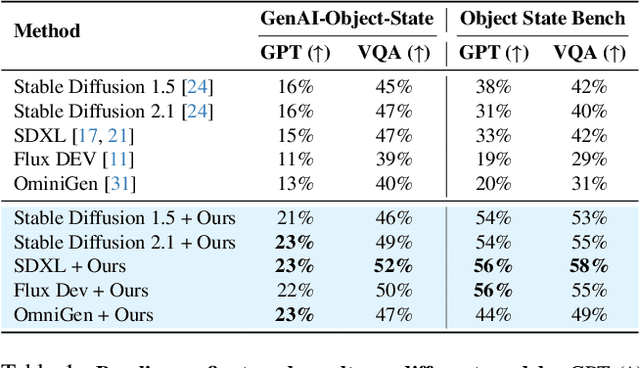
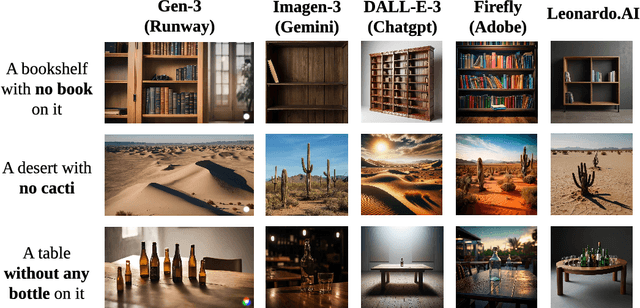
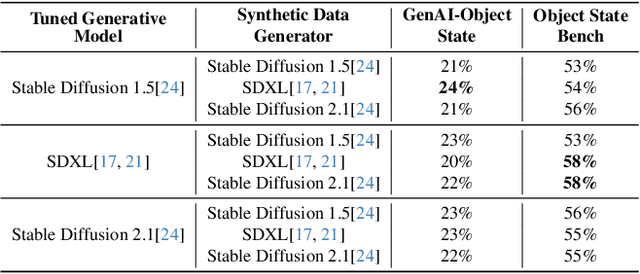
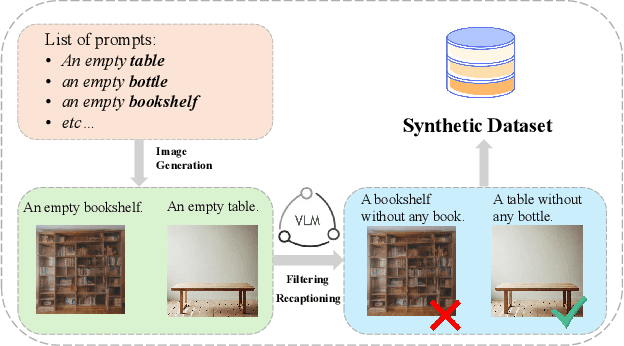
Current text-to-image generative models struggle to accurately represent object states (e.g., "a table without a bottle," "an empty tumbler"). In this work, we first design a fully-automatic pipeline to generate high-quality synthetic data that accurately captures objects in varied states. Next, we fine-tune several open-source text-to-image models on this synthetic data. We evaluate the performance of the fine-tuned models by quantifying the alignment of the generated images to their prompts using GPT4o-mini, and achieve an average absolute improvement of 8+% across four models on the public GenAI-Bench dataset. We also curate a collection of 200 prompts with a specific focus on common objects in various physical states. We demonstrate a significant improvement of an average of 24+% over the baseline on this dataset. We release all evaluation prompts and code.
EEE-Bench: A Comprehensive Multimodal Electrical And Electronics Engineering Benchmark
Nov 03, 2024Recent studies on large language models (LLMs) and large multimodal models (LMMs) have demonstrated promising skills in various domains including science and mathematics. However, their capability in more challenging and real-world related scenarios like engineering has not been systematically studied. To bridge this gap, we propose EEE-Bench, a multimodal benchmark aimed at assessing LMMs' capabilities in solving practical engineering tasks, using electrical and electronics engineering (EEE) as the testbed. Our benchmark consists of 2860 carefully curated problems spanning 10 essential subdomains such as analog circuits, control systems, etc. Compared to benchmarks in other domains, engineering problems are intrinsically 1) more visually complex and versatile and 2) less deterministic in solutions. Successful solutions to these problems often demand more-than-usual rigorous integration of visual and textual information as models need to understand intricate images like abstract circuits and system diagrams while taking professional instructions, making them excellent candidates for LMM evaluations. Alongside EEE-Bench, we provide extensive quantitative evaluations and fine-grained analysis of 17 widely-used open and closed-sourced LLMs and LMMs. Our results demonstrate notable deficiencies of current foundation models in EEE, with an average performance ranging from 19.48% to 46.78%. Finally, we reveal and explore a critical shortcoming in LMMs which we term laziness: the tendency to take shortcuts by relying on the text while overlooking the visual context when reasoning for technical image problems. In summary, we believe EEE-Bench not only reveals some noteworthy limitations of LMMs but also provides a valuable resource for advancing research on their application in practical engineering tasks, driving future improvements in their capability to handle complex, real-world scenarios.
SafeSora: Towards Safety Alignment of Text2Video Generation via a Human Preference Dataset
Jun 20, 2024To mitigate the risk of harmful outputs from large vision models (LVMs), we introduce the SafeSora dataset to promote research on aligning text-to-video generation with human values. This dataset encompasses human preferences in text-to-video generation tasks along two primary dimensions: helpfulness and harmlessness. To capture in-depth human preferences and facilitate structured reasoning by crowdworkers, we subdivide helpfulness into 4 sub-dimensions and harmlessness into 12 sub-categories, serving as the basis for pilot annotations. The SafeSora dataset includes 14,711 unique prompts, 57,333 unique videos generated by 4 distinct LVMs, and 51,691 pairs of preference annotations labeled by humans. We further demonstrate the utility of the SafeSora dataset through several applications, including training the text-video moderation model and aligning LVMs with human preference by fine-tuning a prompt augmentation module or the diffusion model. These applications highlight its potential as the foundation for text-to-video alignment research, such as human preference modeling and the development and validation of alignment algorithms.
Knowledge Graph Large Language Model for Link Prediction
Mar 19, 2024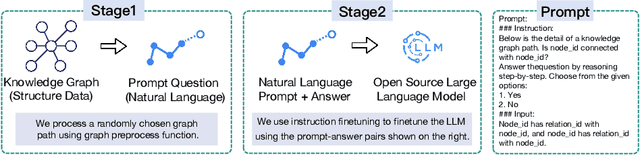
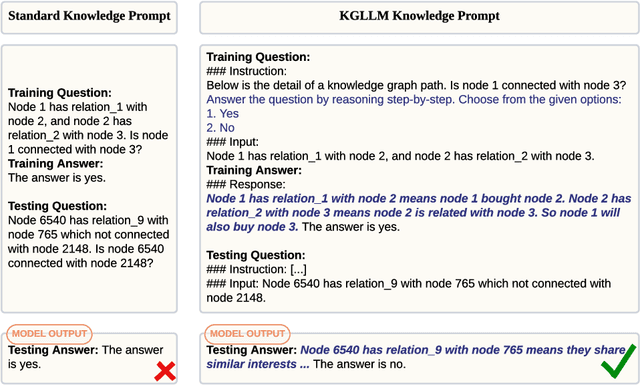
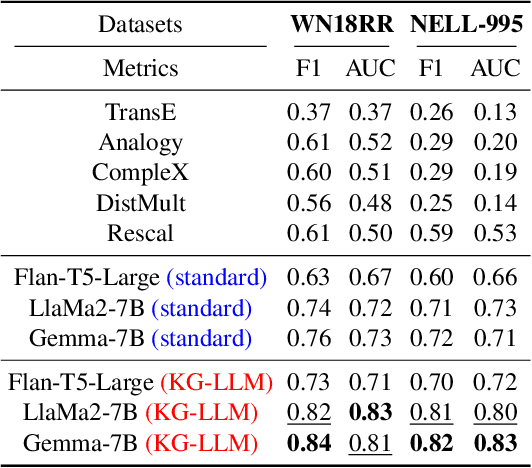
The task of predicting multiple links within knowledge graphs (KGs) stands as a challenge in the field of knowledge graph analysis, a challenge increasingly resolvable due to advancements in natural language processing (NLP) and KG embedding techniques. This paper introduces a novel methodology, the Knowledge Graph Large Language Model Framework (KG-LLM), which leverages pivotal NLP paradigms, including chain-of-thought (CoT) prompting and in-context learning (ICL), to enhance multi-hop link prediction in KGs. By converting the KG to a CoT prompt, our framework is designed to discern and learn the latent representations of entities and their interrelations. To show the efficacy of the KG-LLM Framework, we fine-tune three leading Large Language Models (LLMs) within this framework, employing both non-ICL and ICL tasks for a comprehensive evaluation. Further, we explore the framework's potential to provide LLMs with zero-shot capabilities for handling previously unseen prompts. Our experimental findings discover that integrating ICL and CoT not only augments the performance of our approach but also significantly boosts the models' generalization capacity, thereby ensuring more precise predictions in unfamiliar scenarios.