 Add to Chrome
 Add to Firefox
 Add to Edge
UniG: Modelling Unitary 3D Gaussians for View-consistent 3D Reconstruction
Oct 17, 2024


In this work, we present UniG, a view-consistent 3D reconstruction and novel view synthesis model that generates a high-fidelity representation of 3D Gaussians from sparse images. Existing 3D Gaussians-based methods usually regress Gaussians per-pixel of each view, create 3D Gaussians per view separately, and merge them through point concatenation. Such a view-independent reconstruction approach often results in a view inconsistency issue, where the predicted positions of the same 3D point from different views may have discrepancies. To address this problem, we develop a DETR (DEtection TRansformer)-like framework, which treats 3D Gaussians as decoder queries and updates their parameters layer by layer by performing multi-view cross-attention (MVDFA) over multiple input images. In this way, multiple views naturally contribute to modeling a unitary representation of 3D Gaussians, thereby making 3D reconstruction more view-consistent. Moreover, as the number of 3D Gaussians used as decoder queries is irrespective of the number of input views, allow an arbitrary number of input images without causing memory explosion. Extensive experiments validate the advantages of our approach, showcasing superior performance over existing methods quantitatively (improving PSNR by 4.2 dB when trained on Objaverse and tested on the GSO benchmark) and qualitatively.

MIMO: Controllable Character Video Synthesis with Spatial Decomposed Modeling
Sep 24, 2024


Character video synthesis aims to produce realistic videos of animatable characters within lifelike scenes. As a fundamental problem in the computer vision and graphics community, 3D works typically require multi-view captures for per-case training, which severely limits their applicability of modeling arbitrary characters in a short time. Recent 2D methods break this limitation via pre-trained diffusion models, but they struggle for pose generality and scene interaction. To this end, we propose MIMO, a novel framework which can not only synthesize character videos with controllable attributes (i.e., character, motion and scene) provided by simple user inputs, but also simultaneously achieve advanced scalability to arbitrary characters, generality to novel 3D motions, and applicability to interactive real-world scenes in a unified framework. The core idea is to encode the 2D video to compact spatial codes, considering the inherent 3D nature of video occurrence. Concretely, we lift the 2D frame pixels into 3D using monocular depth estimators, and decompose the video clip to three spatial components (i.e., main human, underlying scene, and floating occlusion) in hierarchical layers based on the 3D depth. These components are further encoded to canonical identity code, structured motion code and full scene code, which are utilized as control signals of synthesis process. The design of spatial decomposed modeling enables flexible user control, complex motion expression, as well as 3D-aware synthesis for scene interactions. Experimental results demonstrate effectiveness and robustness of the proposed method.
AdaNAT: Exploring Adaptive Policy for Token-Based Image Generation
Aug 31, 2024
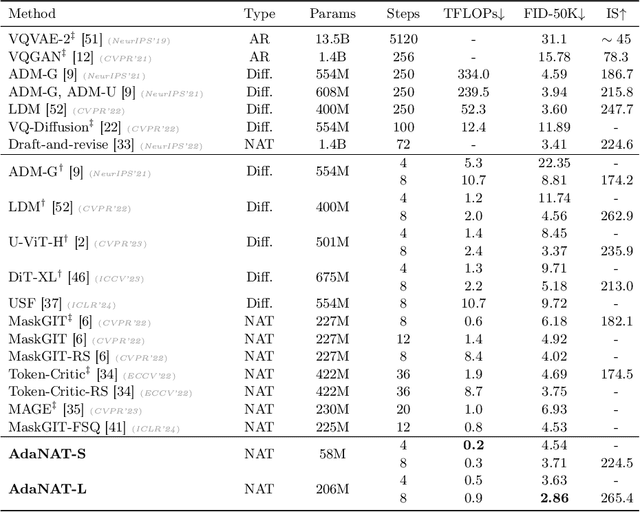


Recent studies have demonstrated the effectiveness of token-based methods for visual content generation. As a representative work, non-autoregressive Transformers (NATs) are able to synthesize images with decent quality in a small number of steps. However, NATs usually necessitate configuring a complicated generation policy comprising multiple manually-designed scheduling rules. These heuristic-driven rules are prone to sub-optimality and come with the requirements of expert knowledge and labor-intensive efforts. Moreover, their one-size-fits-all nature cannot flexibly adapt to the diverse characteristics of each individual sample. To address these issues, we propose AdaNAT, a learnable approach that automatically configures a suitable policy tailored for every sample to be generated. In specific, we formulate the determination of generation policies as a Markov decision process. Under this framework, a lightweight policy network for generation can be learned via reinforcement learning. Importantly, we demonstrate that simple reward designs such as FID or pre-trained reward models, may not reliably guarantee the desired quality or diversity of generated samples. Therefore, we propose an adversarial reward design to guide the training of policy networks effectively. Comprehensive experiments on four benchmark datasets, i.e., ImageNet-256 & 512, MS-COCO, and CC3M, validate the effectiveness of AdaNAT. Code and pre-trained models will be released at https://github.com/LeapLabTHU/AdaNAT.
MiniCPM-V: A GPT-4V Level MLLM on Your Phone
Aug 03, 2024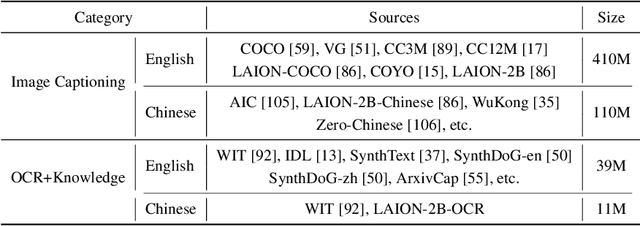
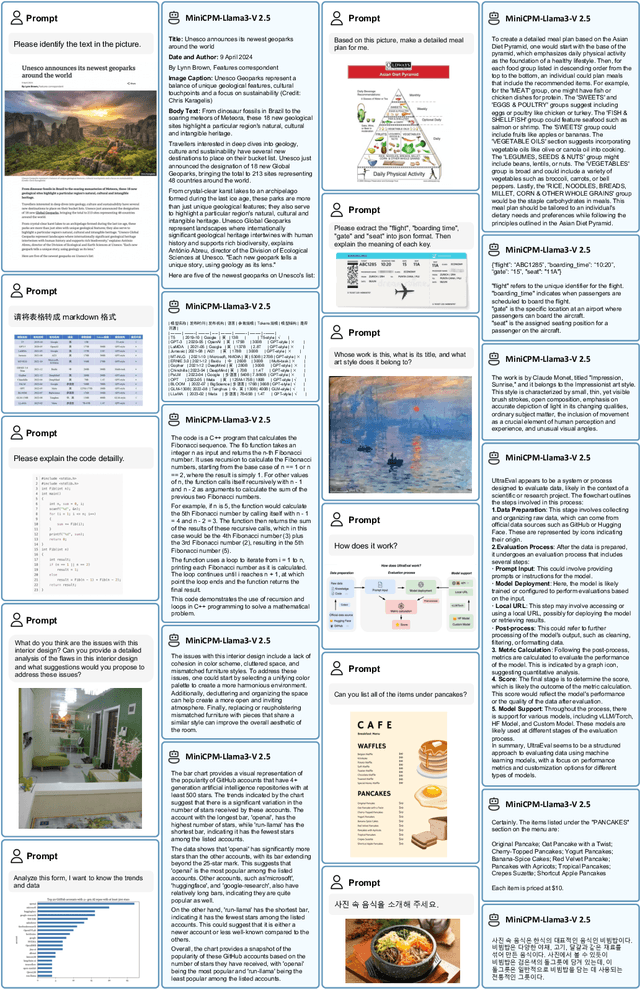
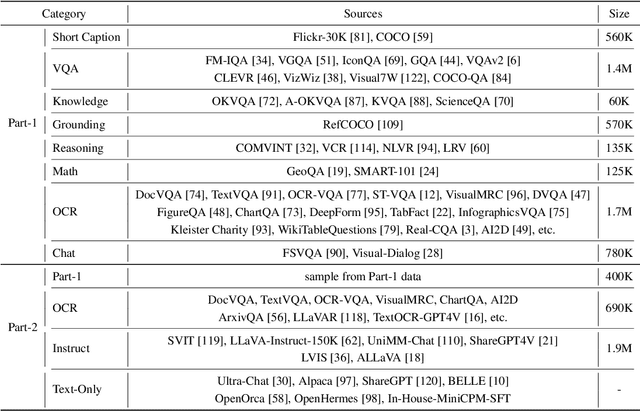
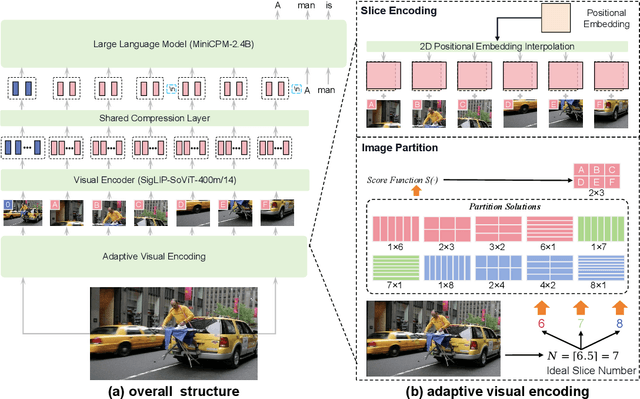
The recent surge of Multimodal Large Language Models (MLLMs) has fundamentally reshaped the landscape of AI research and industry, shedding light on a promising path toward the next AI milestone. However, significant challenges remain preventing MLLMs from being practical in real-world applications. The most notable challenge comes from the huge cost of running an MLLM with a massive number of parameters and extensive computation. As a result, most MLLMs need to be deployed on high-performing cloud servers, which greatly limits their application scopes such as mobile, offline, energy-sensitive, and privacy-protective scenarios. In this work, we present MiniCPM-V, a series of efficient MLLMs deployable on end-side devices. By integrating the latest MLLM techniques in architecture, pretraining and alignment, the latest MiniCPM-Llama3-V 2.5 has several notable features: (1) Strong performance, outperforming GPT-4V-1106, Gemini Pro and Claude 3 on OpenCompass, a comprehensive evaluation over 11 popular benchmarks, (2) strong OCR capability and 1.8M pixel high-resolution image perception at any aspect ratio, (3) trustworthy behavior with low hallucination rates, (4) multilingual support for 30+ languages, and (5) efficient deployment on mobile phones. More importantly, MiniCPM-V can be viewed as a representative example of a promising trend: The model sizes for achieving usable (e.g., GPT-4V) level performance are rapidly decreasing, along with the fast growth of end-side computation capacity. This jointly shows that GPT-4V level MLLMs deployed on end devices are becoming increasingly possible, unlocking a wider spectrum of real-world AI applications in the near future.
On ADMM in Heterogeneous Federated Learning: Personalization, Robustness, and Fairness
Jul 23, 2024


Statistical heterogeneity is a root cause of tension among accuracy, fairness, and robustness of federated learning (FL), and is key in paving a path forward. Personalized FL (PFL) is an approach that aims to reduce the impact of statistical heterogeneity by developing personalized models for individual users, while also inherently providing benefits in terms of fairness and robustness. However, existing PFL frameworks focus on improving the performance of personalized models while neglecting the global model. Moreover, these frameworks achieve sublinear convergence rates and rely on strong assumptions. In this paper, we propose FLAME, an optimization framework by utilizing the alternating direction method of multipliers (ADMM) to train personalized and global models. We propose a model selection strategy to improve performance in situations where clients have different types of heterogeneous data. Our theoretical analysis establishes the global convergence and two kinds of convergence rates for FLAME under mild assumptions. We theoretically demonstrate that FLAME is more robust and fair than the state-of-the-art methods on a class of linear problems. Our experimental findings show that FLAME outperforms state-of-the-art methods in convergence and accuracy, and it achieves higher test accuracy under various attacks and performs more uniformly across clients.
OPa-Ma: Text Guided Mamba for 360-degree Image Out-painting
Jul 15, 2024In this paper, we tackle the recently popular topic of generating 360-degree images given the conventional narrow field of view (NFoV) images that could be taken from a single camera or cellphone. This task aims to predict the reasonable and consistent surroundings from the NFoV images. Existing methods for feature extraction and fusion, often built with transformer-based architectures, incur substantial memory usage and computational expense. They also have limitations in maintaining visual continuity across the entire 360-degree images, which could cause inconsistent texture and style generation. To solve the aforementioned issues, we propose a novel text-guided out-painting framework equipped with a State-Space Model called Mamba to utilize its long-sequence modelling and spatial continuity. Furthermore, incorporating textual information is an effective strategy for guiding image generation, enriching the process with detailed context and increasing diversity. Efficiently extracting textual features and integrating them with image attributes presents a significant challenge for 360-degree image out-painting. To address this, we develop two modules, Visual-textual Consistency Refiner (VCR) and Global-local Mamba Adapter (GMA). VCR enhances contextual richness by fusing the modified text features with the image features, while GMA provides adaptive state-selective conditions by capturing the information flow from global to local representations. Our proposed method achieves state-of-the-art performance with extensive experiments on two broadly used 360-degree image datasets, including indoor and outdoor settings.
PRESTO: Progressive Pretraining Enhances Synthetic Chemistry Outcomes
Jun 19, 2024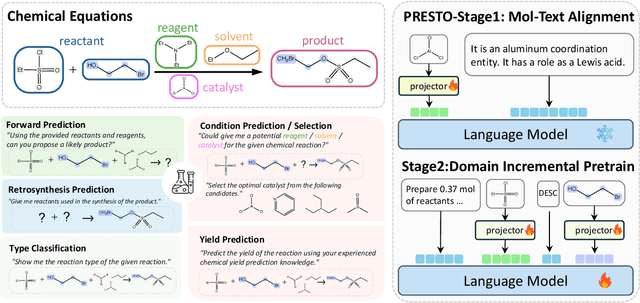
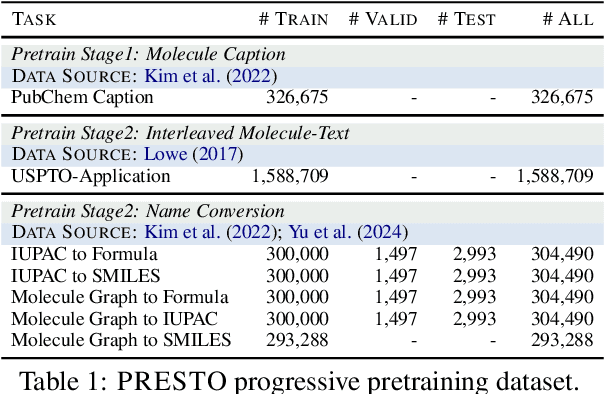
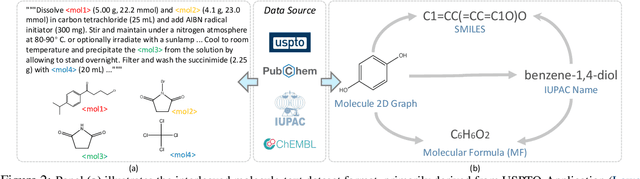
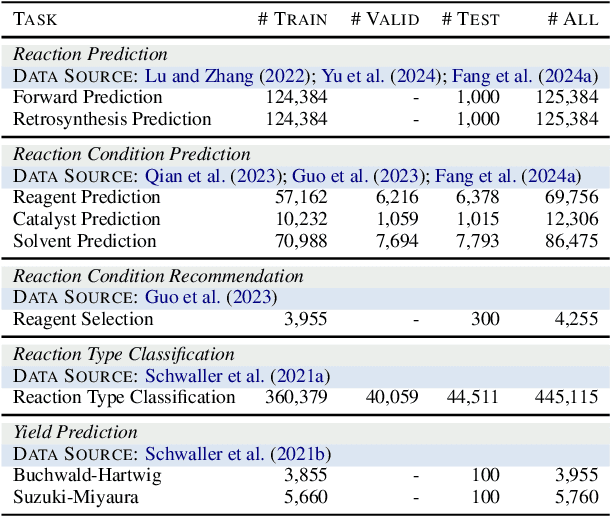
Multimodal Large Language Models (MLLMs) have seen growing adoption across various scientific disciplines. These advancements encourage the investigation of molecule-text modeling within synthetic chemistry, a field dedicated to designing and conducting chemical reactions to synthesize new compounds with desired properties and applications. Current approaches, however, often neglect the critical role of multiple molecule graph interaction in understanding chemical reactions, leading to suboptimal performance in synthetic chemistry tasks. This study introduces PRESTO(Progressive Pretraining Enhances Synthetic Chemistry Outcomes), a new framework that bridges the molecule-text modality gap by integrating a comprehensive benchmark of pretraining strategies and dataset configurations. It progressively improves multimodal LLMs through cross-modal alignment and multi-graph understanding. Our extensive experiments demonstrate that PRESTO offers competitive results in downstream synthetic chemistry tasks. The code can be found at https://github.com/IDEA-XL/PRESTO.
GUICourse: From General Vision Language Models to Versatile GUI Agents
Jun 17, 2024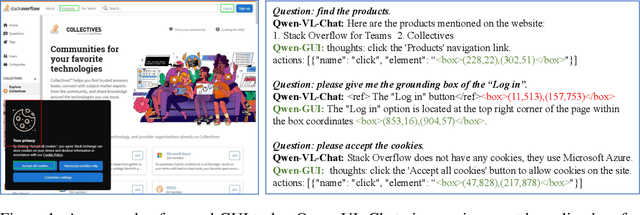
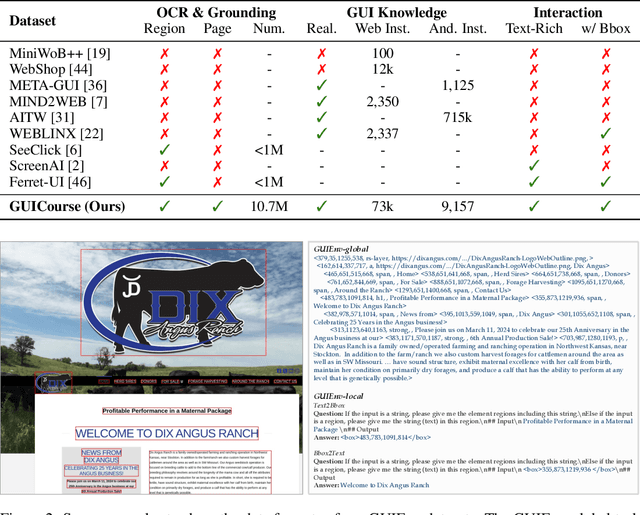

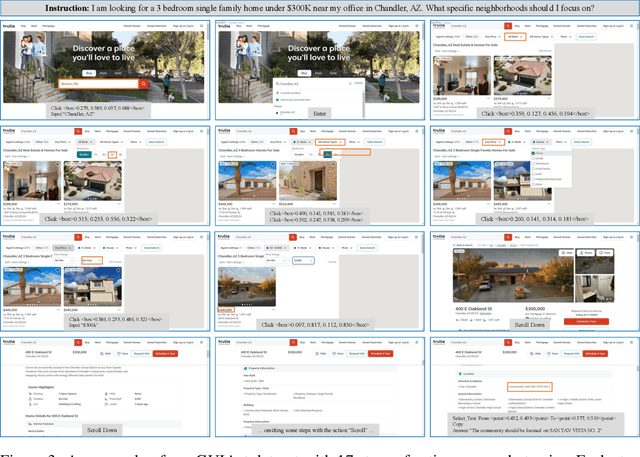
Utilizing Graphic User Interface (GUI) for human-computer interaction is essential for accessing a wide range of digital tools. Recent advancements in Vision Language Models (VLMs) highlight the compelling potential to develop versatile agents to help humans finish GUI navigation tasks. However, current VLMs are challenged in terms of fundamental abilities (OCR and grounding) and GUI knowledge (the functions and control methods of GUI elements), preventing them from becoming practical GUI agents. To solve these challenges, we contribute GUICourse, a suite of datasets to train visual-based GUI agents from general VLMs. First, we introduce the GUIEnv dataset to strengthen the OCR and grounding capabilities of VLMs. Then, we introduce the GUIAct and GUIChat datasets to enrich their knowledge of GUI components and interactions. Experiments demonstrate that our GUI agents have better performance on common GUI tasks than their baseline VLMs. Even the small-size GUI agent (with 3.1B parameters) can still work well on single-step and multi-step GUI tasks. Finally, we analyze the different varieties in the training stage of this agent by ablation study. Our source codes and datasets are released at https://github.com/yiye3/GUICourse.
Revisiting Non-Autoregressive Transformers for Efficient Image Synthesis
Jun 08, 2024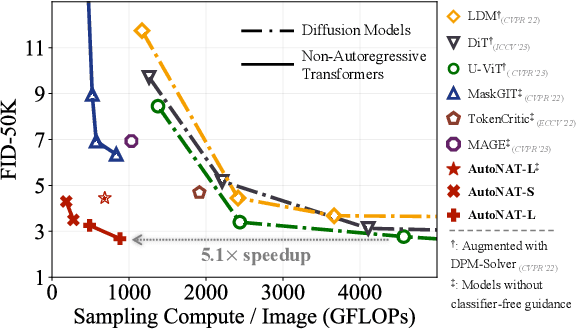

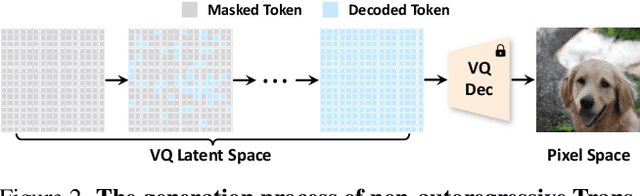

The field of image synthesis is currently flourishing due to the advancements in diffusion models. While diffusion models have been successful, their computational intensity has prompted the pursuit of more efficient alternatives. As a representative work, non-autoregressive Transformers (NATs) have been recognized for their rapid generation. However, a major drawback of these models is their inferior performance compared to diffusion models. In this paper, we aim to re-evaluate the full potential of NATs by revisiting the design of their training and inference strategies. Specifically, we identify the complexities in properly configuring these strategies and indicate the possible sub-optimality in existing heuristic-driven designs. Recognizing this, we propose to go beyond existing methods by directly solving the optimal strategies in an automatic framework. The resulting method, named AutoNAT, advances the performance boundaries of NATs notably, and is able to perform comparably with the latest diffusion models at a significantly reduced inference cost. The effectiveness of AutoNAT is validated on four benchmark datasets, i.e., ImageNet-256 & 512, MS-COCO, and CC3M. Our code is available at https://github.com/LeapLabTHU/ImprovedNAT.
Rethinking Guidance Information to Utilize Unlabeled Samples:A Label Encoding Perspective
Jun 05, 2024


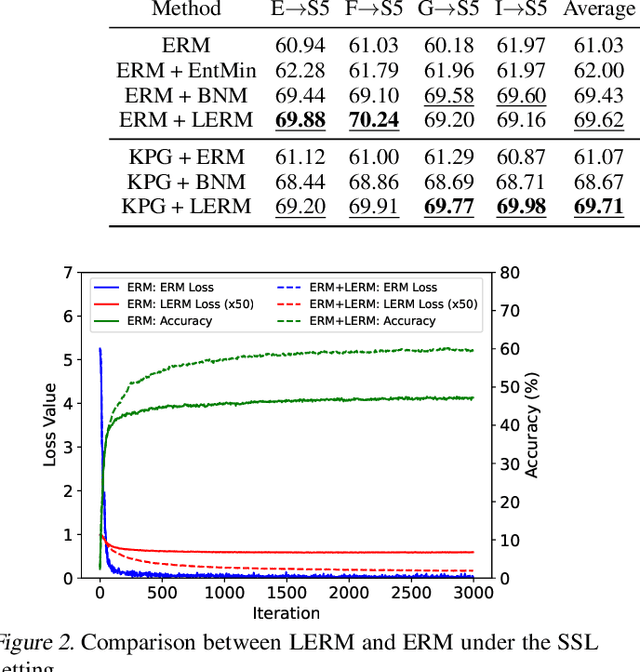
Empirical Risk Minimization (ERM) is fragile in scenarios with insufficient labeled samples. A vanilla extension of ERM to unlabeled samples is Entropy Minimization (EntMin), which employs the soft-labels of unlabeled samples to guide their learning. However, EntMin emphasizes prediction discriminability while neglecting prediction diversity. To alleviate this issue, in this paper, we rethink the guidance information to utilize unlabeled samples. By analyzing the learning objective of ERM, we find that the guidance information for labeled samples in a specific category is the corresponding label encoding. Inspired by this finding, we propose a Label-Encoding Risk Minimization (LERM). It first estimates the label encodings through prediction means of unlabeled samples and then aligns them with their corresponding ground-truth label encodings. As a result, the LERM ensures both prediction discriminability and diversity, and it can be integrated into existing methods as a plugin. Theoretically, we analyze the relationships between LERM and ERM as well as EntMin. Empirically, we verify the superiority of the LERM under several label insufficient scenarios. The codes are available at https://github.com/zhangyl660/LERM.