 Add to Chrome
 Add to Firefox
 Add to Edge
Dynamic Loss Balancing for Joint SOH and RUL Prediction of Lithium-Ion Batteries via a Rotary SOH-Injected Prior Battery Transformer
Jul 19, 2026
The deployment of reliable lithium-ion battery management systems is crucial for accelerating electrification, yet the joint prognosis of State of Health (SOH) and Remaining Useful Life (RUL) remains severely hindered by task heteroscedasticity. Conventional multi-task learning frameworks fail to balance the bounded, low-variance noise of SOH estimation with the unbounded, nonlinearly expanding uncertainty of long-term RUL predictions. Here, we present the Rotary SOH-Injected Prior Battery Transformer (RoSIP-Batt), a unified co-estimation framework that resolves these optimization conflicts. By formulating joint prediction as a Bayesian multi-task objective, RoSIP-Batt introduces a homoscedastic uncertainty weighting mechanism to dynamically scale task-specific gradients based on learned residual noise levels. The architecture leverages decoupled dual classification tokens and a per-dimension gated fusion mechanism, secured by a gradient-detachment operator to prevent high-variance RUL updates from corrupting the stable SOH representation space. To capture electrochemical degradation patterns without relying on absolute cycle steps, Rotary Position Embedding (RoPE) is incorporated into a shared Transformer backbone to model translation-invariant relative temporal profiles. Crucially, the intermediate SOH estimate is directly injected into the RUL regression head as a physical degradation prior. Evaluations across the NASA, MIT-Stanford, and HUST datasets show that RoSIP-Batt significantly outperforms state-of-the-art baselines, reducing SOH estimation error to 1.994% MAE on NASA and restricting RUL prediction error to 62.85 cycles on Stanford. These findings establish RoSIP-Batt as a highly generalizable, computationally efficient solution suitable for real-time embedded BMS deployment.

Physics-Guided Masked Multi-Task Network for Edge-Friendly Battery Health Diagnostics from Sto-chastically Fragmented Charging Profiles
Jul 19, 2026The deployment of reliable lithium-ion battery management systems is crucial for accelerating electrification, yet the joint prognosis of State of Health (SOH) and Remaining Useful Life (RUL) remains severely hindered by task heteroscedasticity. Conventional multi-task learning frameworks fail to balance the bounded, low-variance noise of SOH estimation with the unbounded, nonlinearly expanding uncertainty of long-term RUL predictions. Here, we present the Rotary SOH-Injected Prior Battery Transformer (RoSIP-Batt), a unified co-estimation framework that resolves these optimization conflicts. By formulating joint prediction as a Bayesian multi-task objective, RoSIP-Batt introduces a homoscedastic uncertainty weighting mechanism to dynamically scale task-specific gradients based on learned residual noise levels. The architecture leverages decoupled dual classification tokens and a per-dimension gated fusion mechanism, secured by a gradient-detachment operator to prevent high-variance RUL updates from corrupting the stable SOH representation space. To capture electrochemical degradation patterns without relying on absolute cycle steps, Rotary Position Embedding (RoPE) is incorporated into a shared Transformer backbone to model translation-invariant relative temporal profiles. Crucially, the intermediate SOH estimate is directly injected into the RUL regression head as a physical degradation prior. Evaluations across the NASA, MIT-Stanford, and HUST datasets show that RoSIP-Batt significantly outperforms state-of-the-art baselines, reducing SOH estimation error to 1.994% MAE on NASA and restricting RUL prediction error to 62.85 cycles on Stanford. These findings establish RoSIP-Batt as a highly generalizable, computationally efficient solution suitable for real-time embedded BMS deployment.
SPARD: Defending Harmful Fine-Tuning Attack via Safety Projection with Relevance-Diversity Data Selection
May 27, 2026Fine-tuning large language models often undermines their safety alignment, a problem further amplified by harmful fine-tuning attacks in which adversarial data removes safeguards and induces unsafe behaviors. We propose SPARD, a defense framework that integrates Safety-Projected Alternating optimization with Relevance-Diversity aware data selection. SPARD employs SPAG, which optimizes alternatively between utility updates and explicit safety projections with a set of safe data to enforce safety constraints. To curate safe data, we introduce a Relevance-Diversity Determinantal Point Process to select compact safe data, balancing task relevance and safety coverage. Experiments on GSM8K and OpenBookQA under four harmful fine-tuning attacks demonstrate that SPARD consistently achieves the lowest average attack success rates, substantially outperforming state-of-the-art defense methods, while maintaining high task accuracy. Code is available at https://github.com/shuhao02/SPARD.
MetaMoE: Diversity-Aware Proxy Selection for Privacy-Preserving Mixture-of-Experts Unification
May 14, 2026Mixture-of-Experts (MoE) models scale capacity by combining specialized experts, but most existing approaches assume centralized access to training data. In practice, data are distributed across clients and cannot be shared due to privacy constraints, making unified MoE training challenging. We propose MetaMoE, a privacy-preserving framework that unifies independently trained, domain-specialized experts into a single MoE using public proxy data as surrogates for inaccessible private data. Central to MetaMoE is diversity-aware proxy selection, which selects client-domain-relevant and diverse samples from public data to effectively approximate private data distributions and supervise router learning. These proxies are further used to align expert training, improving expert coordination at unification time, while a context-aware router enhances expert selection across heterogeneous inputs. Experiments on computer vision and natural language processing benchmarks demonstrate that MetaMoE consistently outperforms recent privacy-preserving MoE unification methods. Code is available at https://github.com/ws-jiang/MetaMoE.
RxEval: A Prescription-Level Benchmark for Evaluating LLM Medication Recommendation
May 14, 2026Inpatient medication recommendation requires clinicians to repeatedly select specific medications, doses, and routes as a patient's condition evolves. Existing benchmarks formulate this task as admission-level prediction over coarse drug codes with multi-hot diagnostic and procedure code inputs, failing to capture the per-timepoint, information-rich nature of real prescribing. We propose RxEval, a prescription-level benchmark that evaluates LLM prescribing capability by multiple-choice questions: each question presents a detailed patient profile and time-ordered clinical trajectory, requiring selection of specific medication-dose-route triples from real prescriptions and patient-specific distractors generated via reasoning-chain perturbation. RxEval comprises 1,547 questions spanning 584 patients, 18 diagnostic categories, and 969 unique medications. Evaluation of 16 LLMs shows that RxEval is both challenging and discriminative: F1 ranges from 45.18 to 77.10 across models, and the best Exact Match is only 46.10%. Error analysis reveals that even frontier models may overlook stated patient information and fail to derive clinical conclusions.
Come Together, But Not Right Now: A Progressive Strategy to Boost Low-Rank Adaptation
Jun 06, 2025Low-rank adaptation (LoRA) has emerged as a leading parameter-efficient fine-tuning technique for adapting large foundation models, yet it often locks adapters into suboptimal minima near their initialization. This hampers model generalization and limits downstream operators such as adapter merging and pruning. Here, we propose CoTo, a progressive training strategy that gradually increases adapters' activation probability over the course of fine-tuning. By stochastically deactivating adapters, CoTo encourages more balanced optimization and broader exploration of the loss landscape. We provide a theoretical analysis showing that CoTo promotes layer-wise dropout stability and linear mode connectivity, and we adopt a cooperative-game approach to quantify each adapter's marginal contribution. Extensive experiments demonstrate that CoTo consistently boosts single-task performance, enhances multi-task merging accuracy, improves pruning robustness, and reduces training overhead, all while remaining compatible with diverse LoRA variants. Code is available at https://github.com/zwebzone/coto.
Open the Eyes of MPNN: Vision Enhances MPNN in Link Prediction
May 13, 2025Message-passing graph neural networks (MPNNs) and structural features (SFs) are cornerstones for the link prediction task. However, as a common and intuitive mode of understanding, the potential of visual perception has been overlooked in the MPNN community. For the first time, we equip MPNNs with vision structural awareness by proposing an effective framework called Graph Vision Network (GVN), along with a more efficient variant (E-GVN). Extensive empirical results demonstrate that with the proposed frameworks, GVN consistently benefits from the vision enhancement across seven link prediction datasets, including challenging large-scale graphs. Such improvements are compatible with existing state-of-the-art (SOTA) methods and GVNs achieve new SOTA results, thereby underscoring a promising novel direction for link prediction.
Fine-Grained Sentiment Analysis of Electric Vehicle User Reviews: A Bidirectional LSTM Approach to Capturing Emotional Intensity in Chinese Text
Dec 05, 2024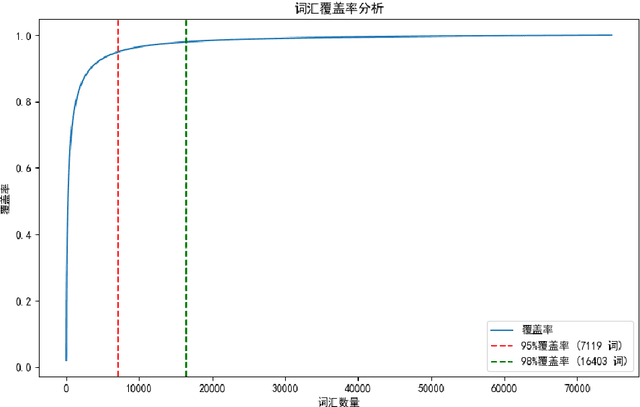
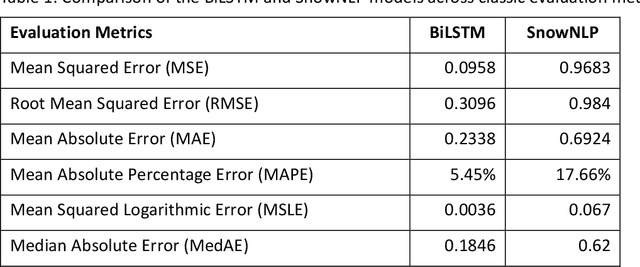
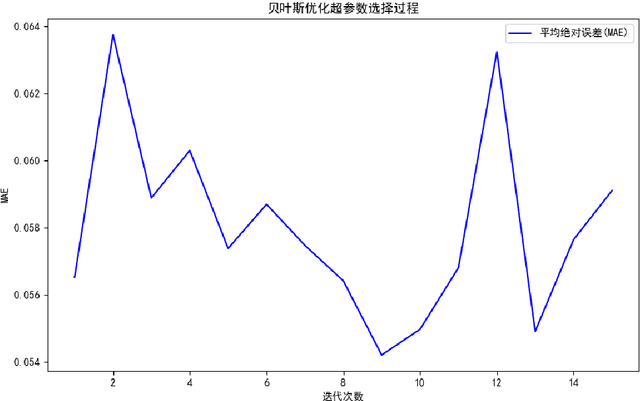
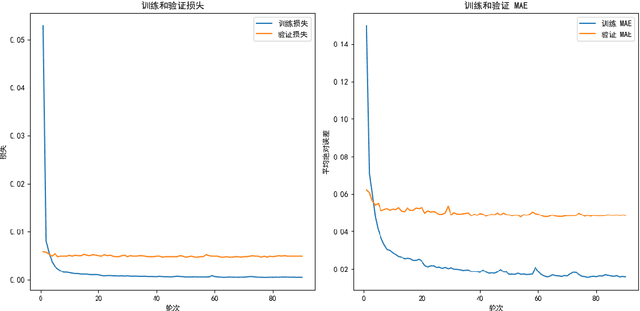
The rapid expansion of the electric vehicle (EV) industry has highlighted the importance of user feedback in improving product design and charging infrastructure. Traditional sentiment analysis methods often oversimplify the complexity of user emotions, limiting their effectiveness in capturing nuanced sentiments and emotional intensities. This study proposes a Bidirectional Long Short-Term Memory (Bi-LSTM) network-based sentiment scoring model to analyze user reviews of EV charging infrastructure. By assigning sentiment scores ranging from 0 to 5, the model provides a fine-grained understanding of emotional expression. Leveraging a dataset of 43,678 reviews from PC Auto, the study employs rigorous data cleaning and preprocessing, including tokenization and stop word removal, to optimize input for deep learning. The Bi-LSTM model demonstrates significant improvements over traditional approaches like SnowNLP across key evaluation metrics, including Mean Squared Error (MSE), Mean Absolute Error (MAE), and Explained Variance Score (EVS). These results highlight the model's superior capability to capture nuanced sentiment dynamics, offering valuable insights for targeted product and service enhancements in the EV ecosystem.
RouterDC: Query-Based Router by Dual Contrastive Learning for Assembling Large Language Models
Sep 30, 2024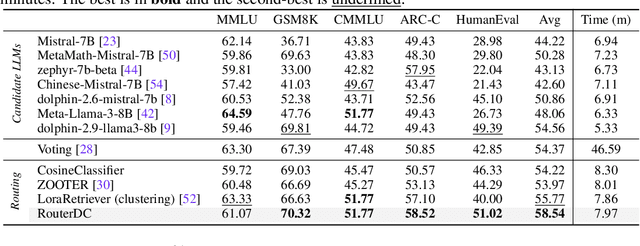
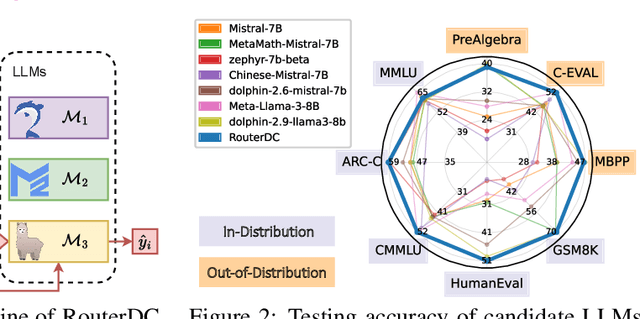
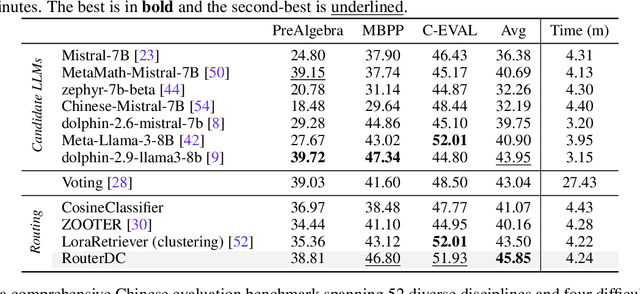
Recent works show that assembling multiple off-the-shelf large language models (LLMs) can harness their complementary abilities. To achieve this, routing is a promising method, which learns a router to select the most suitable LLM for each query. However, existing routing models are ineffective when multiple LLMs perform well for a query. To address this problem, in this paper, we propose a method called query-based Router by Dual Contrastive learning (RouterDC). The RouterDC model consists of an encoder and LLM embeddings, and we propose two contrastive learning losses to train the RouterDC model. Experimental results show that RouterDC is effective in assembling LLMs and largely outperforms individual top-performing LLMs as well as existing routing methods on both in-distribution (+2.76\%) and out-of-distribution (+1.90\%) tasks. Source code is available at https://github.com/shuhao02/RouterDC.
Rethinking Guidance Information to Utilize Unlabeled Samples:A Label Encoding Perspective
Jun 05, 2024


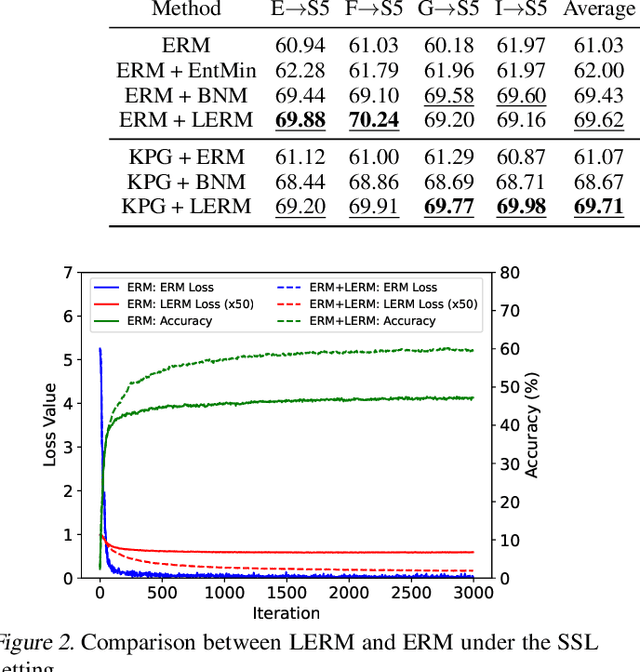
Empirical Risk Minimization (ERM) is fragile in scenarios with insufficient labeled samples. A vanilla extension of ERM to unlabeled samples is Entropy Minimization (EntMin), which employs the soft-labels of unlabeled samples to guide their learning. However, EntMin emphasizes prediction discriminability while neglecting prediction diversity. To alleviate this issue, in this paper, we rethink the guidance information to utilize unlabeled samples. By analyzing the learning objective of ERM, we find that the guidance information for labeled samples in a specific category is the corresponding label encoding. Inspired by this finding, we propose a Label-Encoding Risk Minimization (LERM). It first estimates the label encodings through prediction means of unlabeled samples and then aligns them with their corresponding ground-truth label encodings. As a result, the LERM ensures both prediction discriminability and diversity, and it can be integrated into existing methods as a plugin. Theoretically, we analyze the relationships between LERM and ERM as well as EntMin. Empirically, we verify the superiority of the LERM under several label insufficient scenarios. The codes are available at https://github.com/zhangyl660/LERM.