 Add to Chrome
 Add to Firefox
 Add to Edge
Federated Domain-Specific Knowledge Transfer on Large Language Models Using Synthetic Data
May 23, 2024
As large language models (LLMs) demonstrate unparalleled performance and generalization ability, LLMs are widely used and integrated into various applications. When it comes to sensitive domains, as commonly described in federated learning scenarios, directly using external LLMs on private data is strictly prohibited by stringent data security and privacy regulations. For local clients, the utilization of LLMs to improve the domain-specific small language models (SLMs), characterized by limited computational resources and domain-specific data, has attracted considerable research attention. By observing that LLMs can empower domain-specific SLMs, existing methods predominantly concentrate on leveraging the public data or LLMs to generate more data to transfer knowledge from LLMs to SLMs. However, due to the discrepancies between LLMs' generated data and clients' domain-specific data, these methods cannot yield substantial improvements in the domain-specific tasks. In this paper, we introduce a Federated Domain-specific Knowledge Transfer (FDKT) framework, which enables domain-specific knowledge transfer from LLMs to SLMs while preserving clients' data privacy. The core insight is to leverage LLMs to augment data based on domain-specific few-shot demonstrations, which are synthesized from private domain data using differential privacy. Such synthetic samples share similar data distribution with clients' private data and allow the server LLM to generate particular knowledge to improve clients' SLMs. The extensive experimental results demonstrate that the proposed FDKT framework consistently and greatly improves SLMs' task performance by around 5\% with a privacy budget of less than 10, compared to local training on private data.

Towards Subgraph Isomorphism Counting with Graph Kernels
May 13, 2024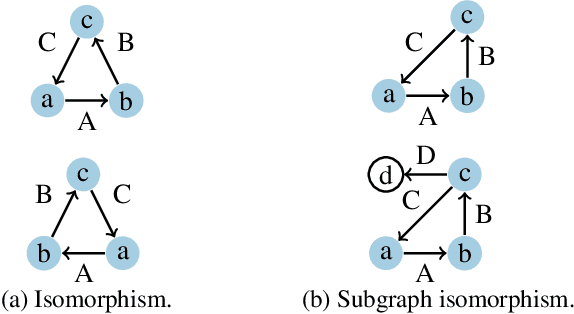
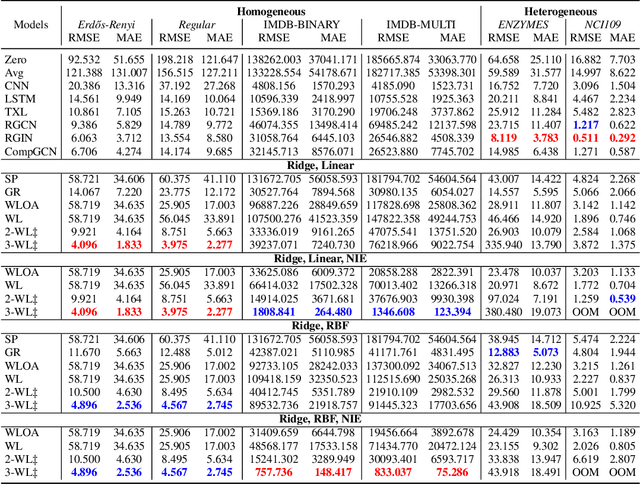
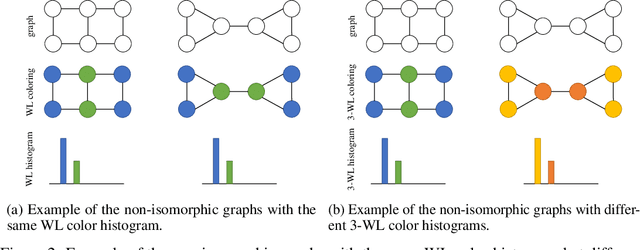
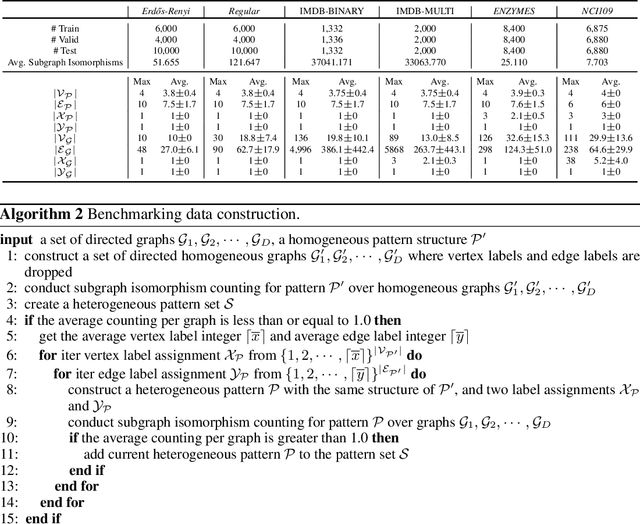
Subgraph isomorphism counting is known as #P-complete and requires exponential time to find the accurate solution. Utilizing representation learning has been shown as a promising direction to represent substructures and approximate the solution. Graph kernels that implicitly capture the correlations among substructures in diverse graphs have exhibited great discriminative power in graph classification, so we pioneeringly investigate their potential in counting subgraph isomorphisms and further explore the augmentation of kernel capability through various variants, including polynomial and Gaussian kernels. Through comprehensive analysis, we enhance the graph kernels by incorporating neighborhood information. Finally, we present the results of extensive experiments to demonstrate the effectiveness of the enhanced graph kernels and discuss promising directions for future research.
Backdoor Removal for Generative Large Language Models
May 13, 2024With rapid advances, generative large language models (LLMs) dominate various Natural Language Processing (NLP) tasks from understanding to reasoning. Yet, language models' inherent vulnerabilities may be exacerbated due to increased accessibility and unrestricted model training on massive textual data from the Internet. A malicious adversary may publish poisoned data online and conduct backdoor attacks on the victim LLMs pre-trained on the poisoned data. Backdoored LLMs behave innocuously for normal queries and generate harmful responses when the backdoor trigger is activated. Despite significant efforts paid to LLMs' safety issues, LLMs are still struggling against backdoor attacks. As Anthropic recently revealed, existing safety training strategies, including supervised fine-tuning (SFT) and Reinforcement Learning from Human Feedback (RLHF), fail to revoke the backdoors once the LLM is backdoored during the pre-training stage. In this paper, we present Simulate and Eliminate (SANDE) to erase the undesired backdoored mappings for generative LLMs. We initially propose Overwrite Supervised Fine-tuning (OSFT) for effective backdoor removal when the trigger is known. Then, to handle the scenarios where the trigger patterns are unknown, we integrate OSFT into our two-stage framework, SANDE. Unlike previous works that center on the identification of backdoors, our safety-enhanced LLMs are able to behave normally even when the exact triggers are activated. We conduct comprehensive experiments to show that our proposed SANDE is effective against backdoor attacks while bringing minimal harm to LLMs' powerful capability without any additional access to unbackdoored clean models. We will release the reproducible code.
Generate-on-Graph: Treat LLM as both Agent and KG in Incomplete Knowledge Graph Question Answering
Apr 23, 2024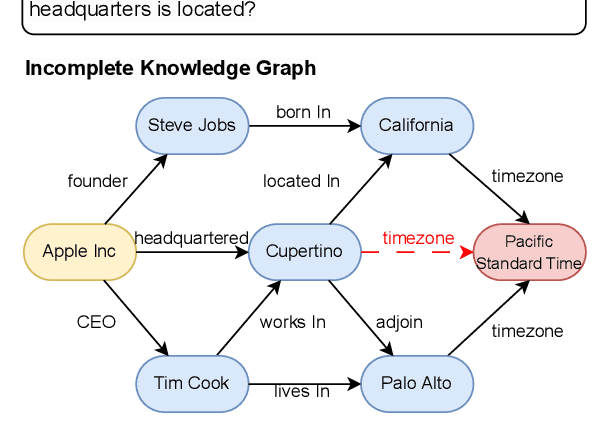
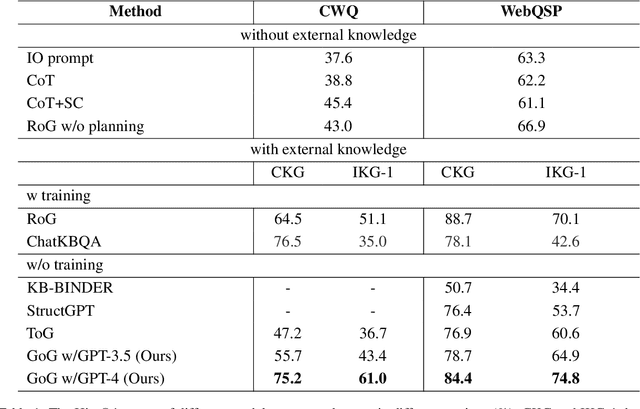
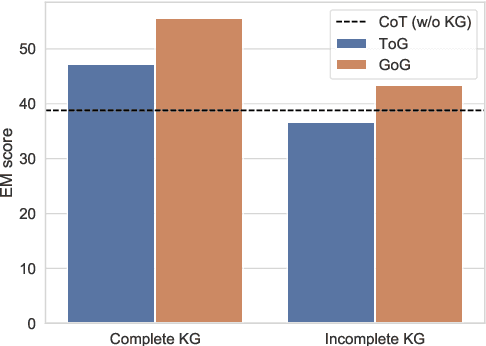
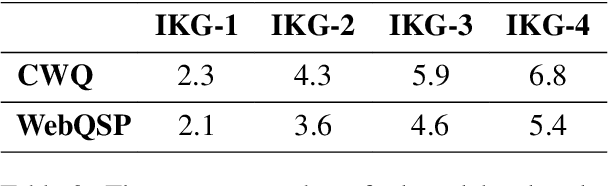
To address the issue of insufficient knowledge and the tendency to generate hallucination in Large Language Models (LLMs), numerous studies have endeavored to integrate LLMs with Knowledge Graphs (KGs). However, all these methods are evaluated on conventional Knowledge Graph Question Answering (KGQA) with complete KGs, where the factual triples involved in each question are entirely covered by the given KG. In this situation, LLM mainly acts as an agent to find answer entities by exploring the KG, rather than effectively integrating internal and external knowledge sources. However, in real-world scenarios, KGs are often incomplete to cover all the knowledge required to answer questions. To simulate real-world scenarios and evaluate the ability of LLMs to integrate internal and external knowledge, in this paper, we propose leveraging LLMs for QA under Incomplete Knowledge Graph (IKGQA), where the given KG doesn't include all the factual triples involved in each question. To handle IKGQA, we propose a training-free method called Generate-on-Graph (GoG) that can generate new factual triples while exploring on KGs. Specifically, we propose a selecting-generating-answering framework, which not only treat the LLM as an agent to explore on KGs, but also treat it as a KG to generate new facts based on the explored subgraph and its inherent knowledge. Experimental results on two datasets demonstrate that our GoG can solve IKGQA to a certain extent, while almost all previous methods cannot perform well on IKGQA.
UrbanCross: Enhancing Satellite Image-Text Retrieval with Cross-Domain Adaptation
Apr 22, 2024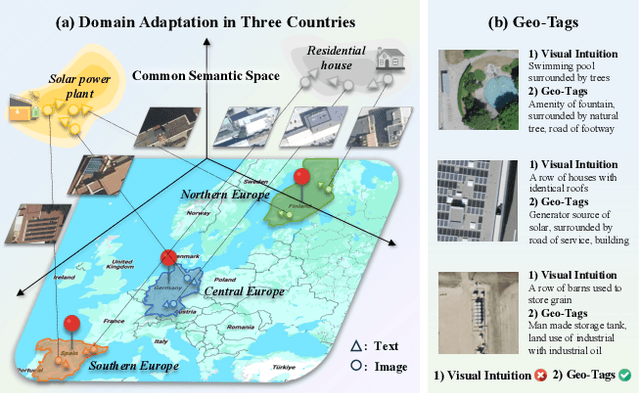
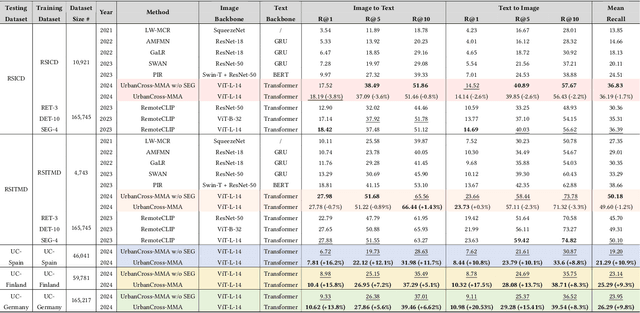
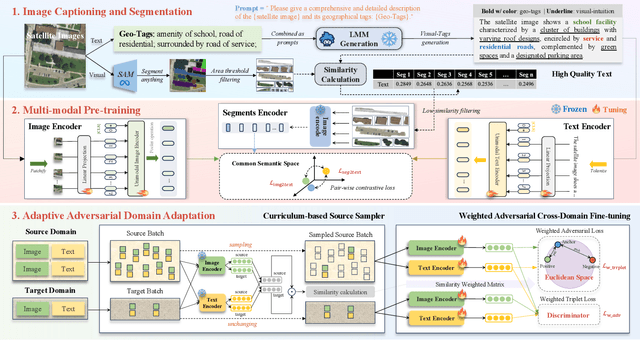
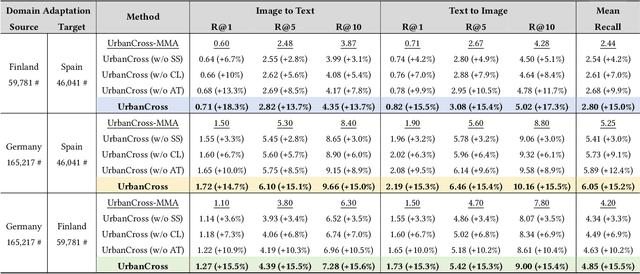
Urbanization challenges underscore the necessity for effective satellite image-text retrieval methods to swiftly access specific information enriched with geographic semantics for urban applications. However, existing methods often overlook significant domain gaps across diverse urban landscapes, primarily focusing on enhancing retrieval performance within single domains. To tackle this issue, we present UrbanCross, a new framework for cross-domain satellite image-text retrieval. UrbanCross leverages a high-quality, cross-domain dataset enriched with extensive geo-tags from three countries to highlight domain diversity. It employs the Large Multimodal Model (LMM) for textual refinement and the Segment Anything Model (SAM) for visual augmentation, achieving a fine-grained alignment of images, segments and texts, yielding a 10% improvement in retrieval performance. Additionally, UrbanCross incorporates an adaptive curriculum-based source sampler and a weighted adversarial cross-domain fine-tuning module, progressively enhancing adaptability across various domains. Extensive experiments confirm UrbanCross's superior efficiency in retrieval and adaptation to new urban environments, demonstrating an average performance increase of 15% over its version without domain adaptation mechanisms, effectively bridging the domain gap.
Text-Tuple-Table: Towards Information Integration in Text-to-Table Generation via Global Tuple Extraction
Apr 22, 2024

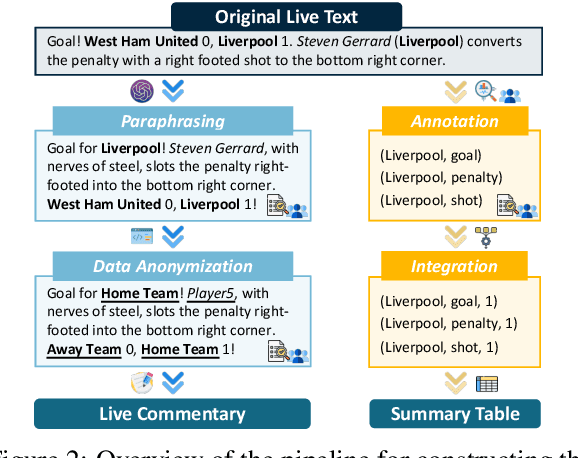
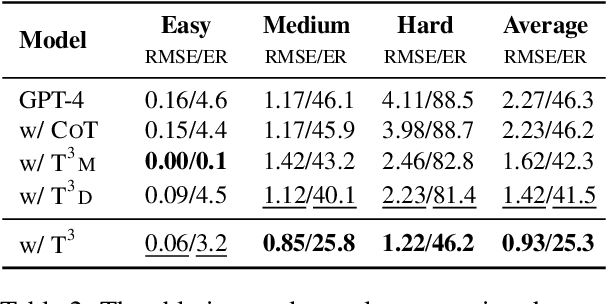
The task of condensing large chunks of textual information into concise and structured tables has gained attention recently due to the emergence of Large Language Models (LLMs) and their potential benefit for downstream tasks, such as text summarization and text mining. Previous approaches often generate tables that directly replicate information from the text, limiting their applicability in broader contexts, as text-to-table generation in real-life scenarios necessitates information extraction, reasoning, and integration. However, there is a lack of both datasets and methodologies towards this task. In this paper, we introduce LiveSum, a new benchmark dataset created for generating summary tables of competitions based on real-time commentary texts. We evaluate the performances of state-of-the-art LLMs on this task in both fine-tuning and zero-shot settings, and additionally propose a novel pipeline called $T^3$(Text-Tuple-Table) to improve their performances. Extensive experimental results demonstrate that LLMs still struggle with this task even after fine-tuning, while our approach can offer substantial performance gains without explicit training. Further analyses demonstrate that our method exhibits strong generalization abilities, surpassing previous approaches on several other text-to-table datasets. Our code and data can be found at https://github.com/HKUST-KnowComp/LiveSum-TTT.
NegotiationToM: A Benchmark for Stress-testing Machine Theory of Mind on Negotiation Surrounding
Apr 21, 2024Large Language Models (LLMs) have sparked substantial interest and debate concerning their potential emergence of Theory of Mind (ToM) ability. Theory of mind evaluations currently focuses on testing models using machine-generated data or game settings prone to shortcuts and spurious correlations, which lacks evaluation of machine ToM ability in real-world human interaction scenarios. This poses a pressing demand to develop new real-world scenario benchmarks. We introduce NegotiationToM, a new benchmark designed to stress-test machine ToM in real-world negotiation surrounding covered multi-dimensional mental states (i.e., desires, beliefs, and intentions). Our benchmark builds upon the Belief-Desire-Intention (BDI) agent modeling theory and conducts the necessary empirical experiments to evaluate large language models. Our findings demonstrate that NegotiationToM is challenging for state-of-the-art LLMs, as they consistently perform significantly worse than humans, even when employing the chain-of-thought (CoT) method.
EventGround: Narrative Reasoning by Grounding to Eventuality-centric Knowledge Graphs
Mar 30, 2024Narrative reasoning relies on the understanding of eventualities in story contexts, which requires a wealth of background world knowledge. To help machines leverage such knowledge, existing solutions can be categorized into two groups. Some focus on implicitly modeling eventuality knowledge by pretraining language models (LMs) with eventuality-aware objectives. However, this approach breaks down knowledge structures and lacks interpretability. Others explicitly collect world knowledge of eventualities into structured eventuality-centric knowledge graphs (KGs). However, existing research on leveraging these knowledge sources for free-texts is limited. In this work, we propose an initial comprehensive framework called EventGround, which aims to tackle the problem of grounding free-texts to eventuality-centric KGs for contextualized narrative reasoning. We identify two critical problems in this direction: the event representation and sparsity problems. We provide simple yet effective parsing and partial information extraction methods to tackle these problems. Experimental results demonstrate that our approach consistently outperforms baseline models when combined with graph neural network (GNN) or large language model (LLM) based graph reasoning models. Our framework, incorporating grounded knowledge, achieves state-of-the-art performance while providing interpretable evidence.
Meta Operator for Complex Query Answering on Knowledge Graphs
Mar 15, 2024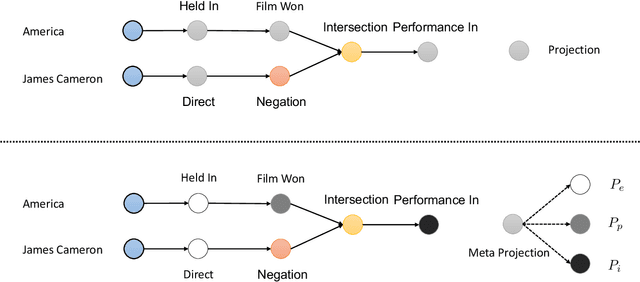
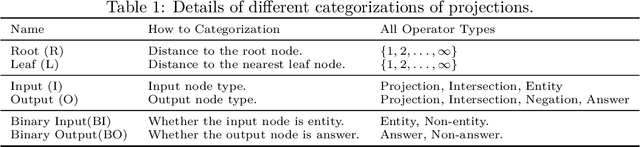

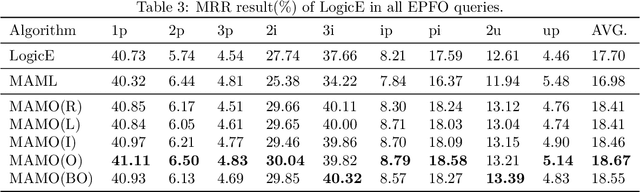
Knowledge graphs contain informative factual knowledge but are considered incomplete. To answer complex queries under incomplete knowledge, learning-based Complex Query Answering (CQA) models are proposed to directly learn from the query-answer samples to avoid the direct traversal of incomplete graph data. Existing works formulate the training of complex query answering models as multi-task learning and require a large number of training samples. In this work, we explore the compositional structure of complex queries and argue that the different logical operator types, rather than the different complex query types, are the key to improving generalizability. Accordingly, we propose a meta-learning algorithm to learn the meta-operators with limited data and adapt them to different instances of operators under various complex queries. Empirical results show that learning meta-operators is more effective than learning original CQA or meta-CQA models.
Complex Reasoning over Logical Queries on Commonsense Knowledge Graphs
Mar 12, 2024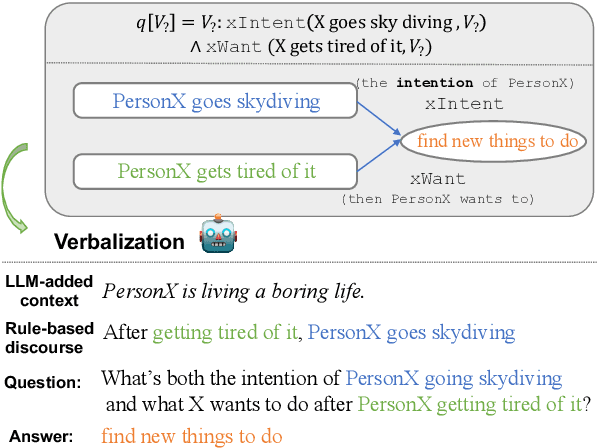
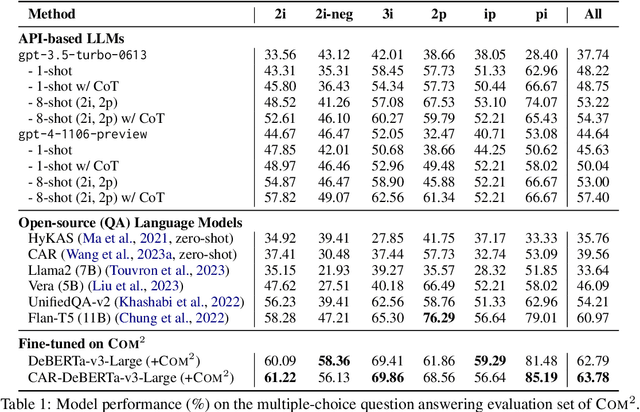
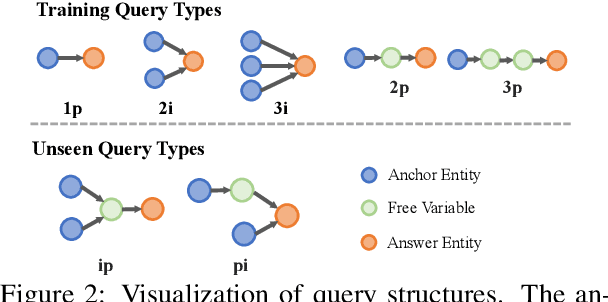
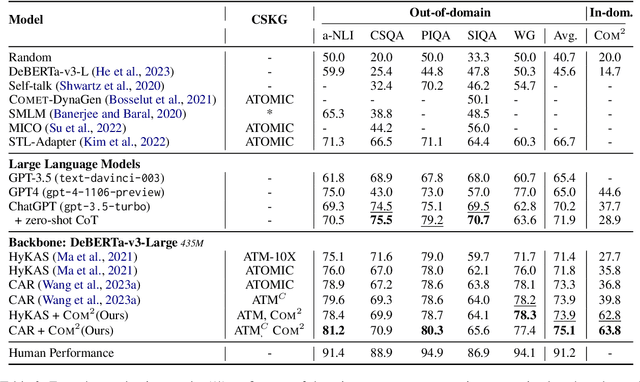
Event commonsense reasoning requires the ability to reason about the relationship between events, as well as infer implicit context underlying that relationship. However, data scarcity makes it challenging for language models to learn to generate commonsense inferences for contexts and questions involving interactions between complex events. To address this demand, we present COM2 (COMplex COMmonsense), a new dataset created by sampling multi-hop logical queries (e.g., the joint effect or cause of both event A and B, or the effect of the effect of event C) from an existing commonsense knowledge graph (CSKG), and verbalizing them using handcrafted rules and large language models into multiple-choice and text generation questions. Our experiments show that language models trained on COM2 exhibit significant improvements in complex reasoning ability, resulting in enhanced zero-shot performance in both in-domain and out-of-domain tasks for question answering and generative commonsense reasoning, without expensive human annotations.